Dahlia Flower Arranging Gardeners Tips

Dahlia Flower Arranging Gardeners Tips

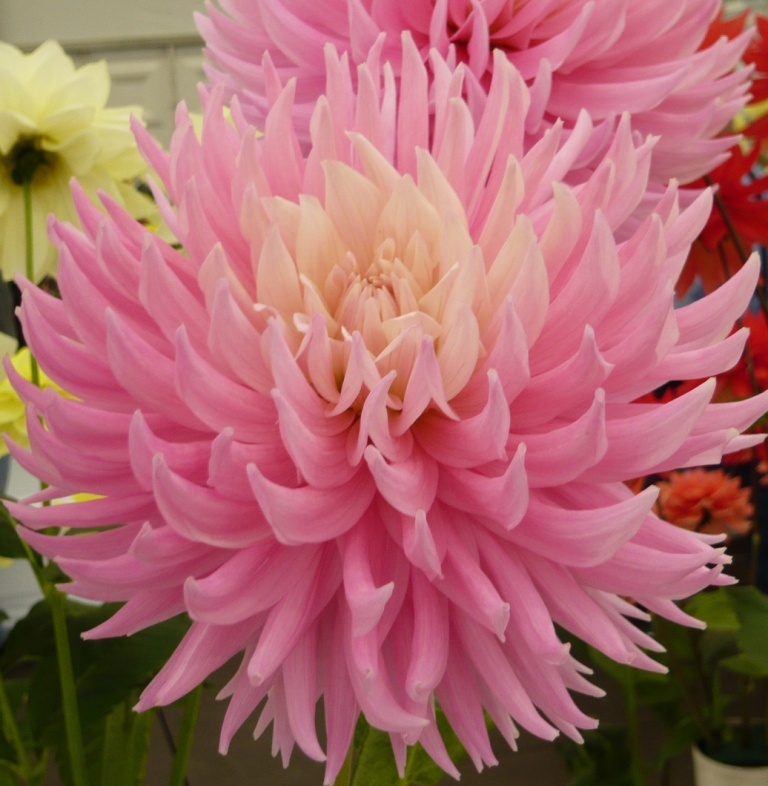
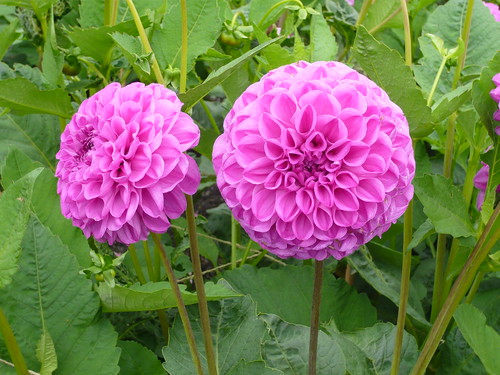
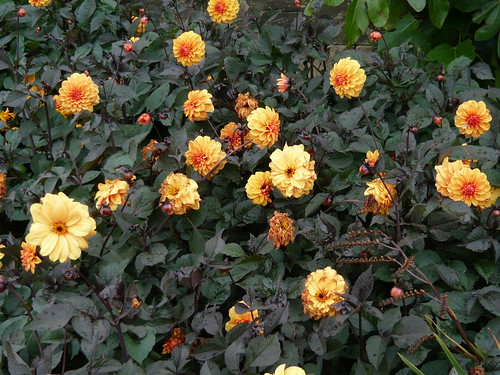
The pompom and decorative types of Dahlia are the best for flower arranging. The large headed flower types are difficult to arrange.
There is a tremendous variety of colour and shades to suit every decorative scheme. Grow varieties and shades that suit your house.
Eden Project Dahlia

Starting and Cultivating Dahlia

  • Plant late May or June. The larger plants will need staking.
  • When plants are 12-18″ high nip out the growing point to encourage side shoots which become flowering stems.
  • Mulch the plants and water generously. Fortnightly foliar feed is recommended.
  • Lift tubers in winter and store frost free. Large tubers can be divided before replanting.
  • For more on Dahlias read easy and easier dahlias even though the even-easier dahlias are grown from seed.
  • Thompson & Morgan supply plants and seeds.

Conditioning and Arranging Dahlias

  • Dahlias like a little sugar in the water.
  • An asprin or drop of bleach in the water will control algae growth. Change water every other day.
  • Put the ends of the stems in a little boiling water, then give them a long, deep drink.
  • The bright colours mean they can be used as a focal point in a mixed display
  • Dahlias are free flowering and provide a good supply so we prefer large bunches.
  • Pink Dahlias seem to blend well with purple, red and other pink flowers

Dahlia

Varieties of Dahlia

  • Some Dahlia are better cut flowers than others. Single flowers often do better than doubles.
  • Older varieties to consider include Angora cactus type, Lilac Time, Gold Crown and Chorus Girl
  • Red varieties Doris Day and Cherry Ripe or white Polar Bear are said to be good doers.
  • I have seen Trentonian, old gold and copper; Waverlet Pearl, apricot; Isabel McElney, salmon pink and Fancy Free, pale copper also recommended.

Turn your arrangements into botanical works of art – here are some examples and clubs you could join.

To grow a generic mix of flowers for arrangements and bouquets check out Thompson & Morgan

Alstroemeria Flower Arranging Gardeners Tips

Alstroemeria Flower Arranging Gardeners Tips

Alstromeria

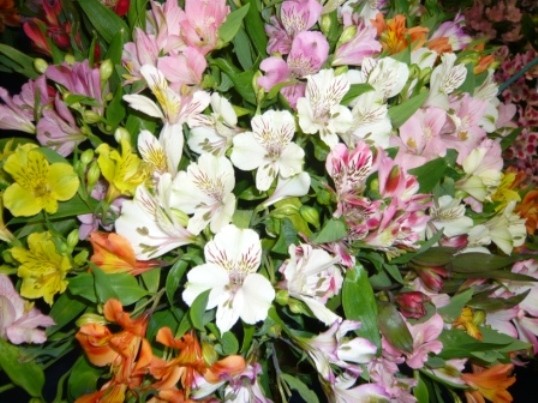
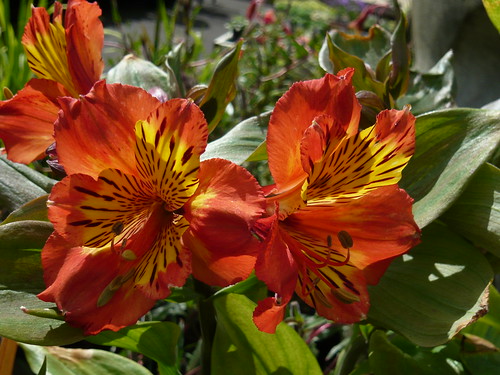
Ligtu hybrids are the plant of choice to grow for flower arrangers. Once established these perennials clump up to give a profusion of multi-headed flowers. The colour range (see photogenic flowers) is impressive ranging from cream, red, orange shades of pink and mottled colouring.
Growing on tall stems up to 3 feet long Alstromeria make lasting and colourful cut flowers.

Alstroemeria

Starting and Cultivating Alstroemeria

  • Always buy pot grown plants and take care of the roots when planting. They have both thick juicy roots and hairy feeder roots that are quite delicate.
  • March or April are good months to plant in a sheltered spot.
  • Pick sparingly in the first couple of years to allow plants to build up.
  • You can support with pea sticks but I find my varieties stay erect and firm.
  • Cut or pull out stems that have finished flowering.
  • For more quick growing tips read link.
  • Thompson & Morgan supply plants and seeds. Seeds need patience and some skill.

Conditioning and Arranging Alstroemeria

  • A long drink in deep water after picking is all that is really needed.
  • Seedheads can be attractive. Dry them upside down then they can be used in full length arrangements or as individual florets cut off for smaller displays.
  • The bright colours mean they can be used as a focal point in a mixed display
  • Alstroemeria look good in a vase of there own with a little green foliage
  • Alstroemeria can be left long stemmed or cut short for different sized displays.

If you do not have green fingers then you can buy Alstroemeria from florists. They may have been grown in Columbia or Peru (they are called Peruvian lilies after all) but they should still last several weeks. Turn your arrangements into botanical works of art – here are some examples and clubs you could join.

To grow a generic mix of flowers for arrangements and bouquets check out Thompson & Morgan

Tricks of the Garden Centre Trade

Tricks of the Garden Centre Trade

Chevin garden centre

I have observed several tricks of the Garden Centre trade and I am sure there are many more. I am only concerned with those that damage or discourage gardeners unnecessarily. To remain in business nurseries and garden centres need to work with gardening customers not against their best interests.

Dubious Habits and Tricks

  • Putting stock out for sale at the wrong time. This is most prevalent in spring when plants ‘grown soft’ in a hot house environment are put out for sale and to die a premature death unless over cosseted by the buyer.
  • Selling stock too late in the season for the gardener to get any value from the purchase. This often applies to exotics which have only a narrow flowering window and need an expert to get back to any form of glory.
  • Dressing plants up cosmetically just to move the stock. e.g. Early pruning of diseased leaves without treating the cause.
  • Selling bare root plants plonked in a pot with loose compost but no new root growth.

Good Habits and Tricks

  • Keeping the tops of pots weed free and able to absorb appropriate watering.
  • Selling timely plants that have been hardened off. I do not want a Dutch glasshouse plant straight off the lorry if it is not going to thrive.
  • Specializing and growing their own stock that the garden centre fully understands and being willing to pass on the knowledge.
  • Good trained staff, sensible opening hours and a tidy display of healthy products.

Help us Learn More Tricks

If you have fallen foul of a trick or dubious practice let us know.
If you have received excellent service let us know.
If you are a garden centre or nursery and want to raise a point similarly let us know.

Growing Trillium Spring Flowering Perennials

Growing Trillium Spring Flowering Perennials

Trillium.

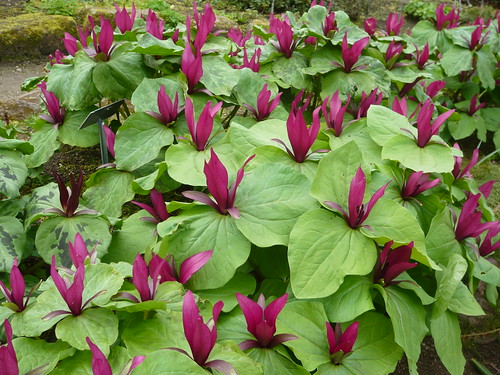
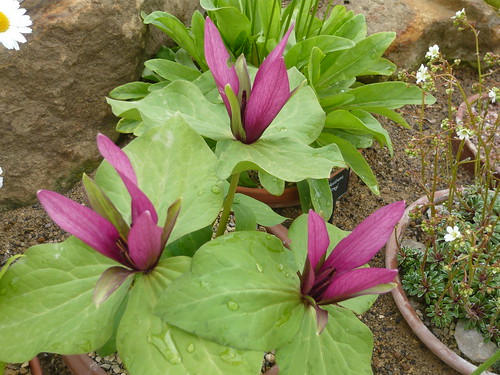
Trillium are idea plants for woodland gardens or a shady border. The three petals produce an interesting triangular pattern often enhanced by the three sepals that cover the bloom and open to allow the flower to shine through.

What are Trilliums and how to Care for Them

  • Trilliums are a species of rhizomatous, herbaceous perennials.
  • The large green leaves are often mottled with maroon markings.
  • Trilliums thrive in deep, moist, slightly acidic soil and originate from North America and Asia.
  • Trillium should be planted when they have plump rhizomes and fresh roots that haven’t been allowed to dry out.
  • They respond well to good feeding with organic matter.
  • Trillium are also known as Wake Robin, Birthroot and Toad shade.

Best of 60 Varieties

  1. Trillium luteum (agm) has long lasting lemon scented, narrow yellow flowers. Flowers sit above ovate, patterned green leaves and plants grow about 12″ high. The flowers are long lasting with a lemon scent.
  2. Trillium errectum (agm) is generally dark red or purple as above and forms a large clump over time. Do not pick the flowers as the plant needs all the energy it can muster to grow for next season. This variety is one of the more vigorous at 18-20″ high and flowers in early spring with resistance to some frost.
  3. Trillium Grandiflorum (agm) has large cup shaped white flowers with green sepals and wavy petals. The flowers can light up a shady spot and contrast well with the dark green foliage.

trillium

Advice from RHS on Trilliums

‘Although trilliums are moisture lovers, they will not tolerate waterlogging.

They will not thrive on heavy, wet clay soils. Planting in raised beds is a solution. Another is to dig out the clay to a spades depth and fill with a mixture of loam, garden compost, well rotted manure and composted bark bulked up with sharp sand. Mound the material so it is at least 10cm (4in) above the surrounding soil level. This allows plants to root deeply but avoids them sitting in waterlogged conditions over winter.

Trilliums should be planted about 7-10cm (2 1/2 – 4in) deep. The best time for planting is late summer as it gives the rhizomes time to establish good root systems before the following growing season.

Keep well watered during dry weather in spring and early summer. Apply an annual mulch of well decayed organic matter in early spring. A light application of a balanced fertiliser in late winter is also beneficial.

Trilliums do not really thrive in containers as they prefer a moist, rich garden soil. But you can try them in pots of sandy loam, such as John Innes No 3 with added gritty sand.’ (see below)

Trillium

Feed your Fruit Trees so your Fruit Feeds You

Feed your Fruit Trees so your Fruit Feeds You

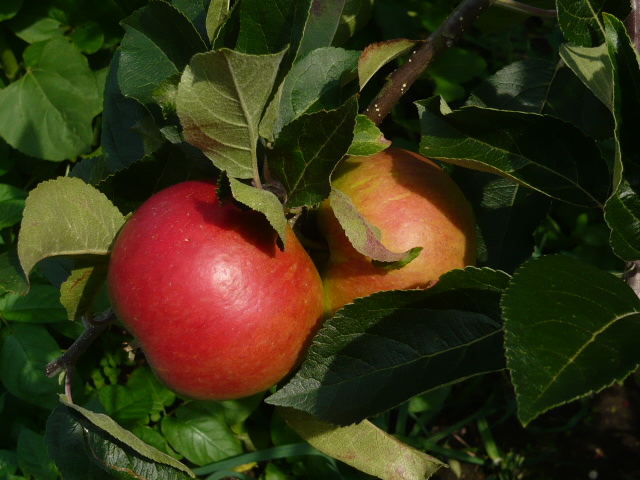
Think of all the fruit your trees and shrubs produce and then equate that to the goodness that must have been taken out of the soil. Now consider the effect of heavy and continuous rain that leaches away nutrients particularly nitrogen and potassium. So a bit of extra feeding is in order. This can only help your fruit trees and bushes feed you with juicy fruit.

Why Feed Fruit Trees

Healthier bushes and trees produce bigger and healthier fruit.
Correct feeding encourages blossom and flowering.
Feeding helps create disease and drought resistance making your plants stronger.
Feeding replaces the goodness taken out by heavy cropping.
Mineral deficiencies can be corrected such as the yellowing between the leaf veins in early summer due to magnesium deficiency. For that use a foliar spray of Epsom salts with a teaspoon of washing up liquid as a wetting agent.

Feed your Soil to Feed Fruit

Sandy soils have an open structure that allows water and nutrients to drain through quickly. Mulch with well rotted compost to improve the soil structure whenever you can.
Clay soils are slow to dry out (or warm up in spring). If they are waterlogged the nutrients dissolve into the ‘soup’ but that drains out as the soil dries just when the fruit need feeding. Again compost helps the soil structure.
Sour soil will compact forcing water to run away. It mat also become covered in moss. Clean up the area and again add a well rotted organic mulch.

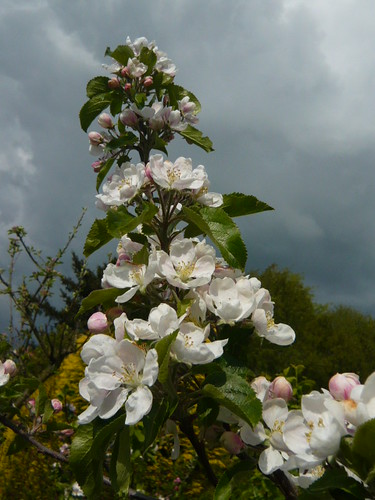
Apple blossom

Gardeners Tip Feeding Fruit Trees

Soft fruit need high amounts of potassium for bud and fruit development.
Stone fruit, pears and apples need potassium and extra nitrogen.
Sulphate of potash or rose fertiliser in granular form is a vital feed. Add a top dressing, of 1 oz per square yard, to the surface of well forked soil around the rooting area which is just beyond the branch canopy.
Feed in late winter when the soil is moist and the fertiliser can be taken up as the fruit start to grow.
Use liquid tomato feed or other high potash content liquid feeds in summer for a quick boost.
Apples like nitrogen so feed with Growmore at 5oz per square yard or use sulphate of ammonia if the soil is in poor condition.
Think about each individual tree’s needs and treat it to a mulch and feed accordingly.
Phosphates are usually available to your fruit from most garden soils most of the time!
Avoid over feeding that creates sappy on sustainable growth. An annual feed is more than enough if your soil is in good heart.

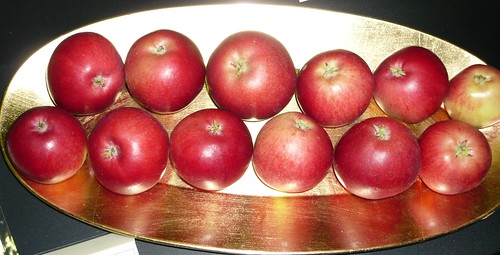
Autumn apples

Organic Winter Pansy

Organic Winter Pansy

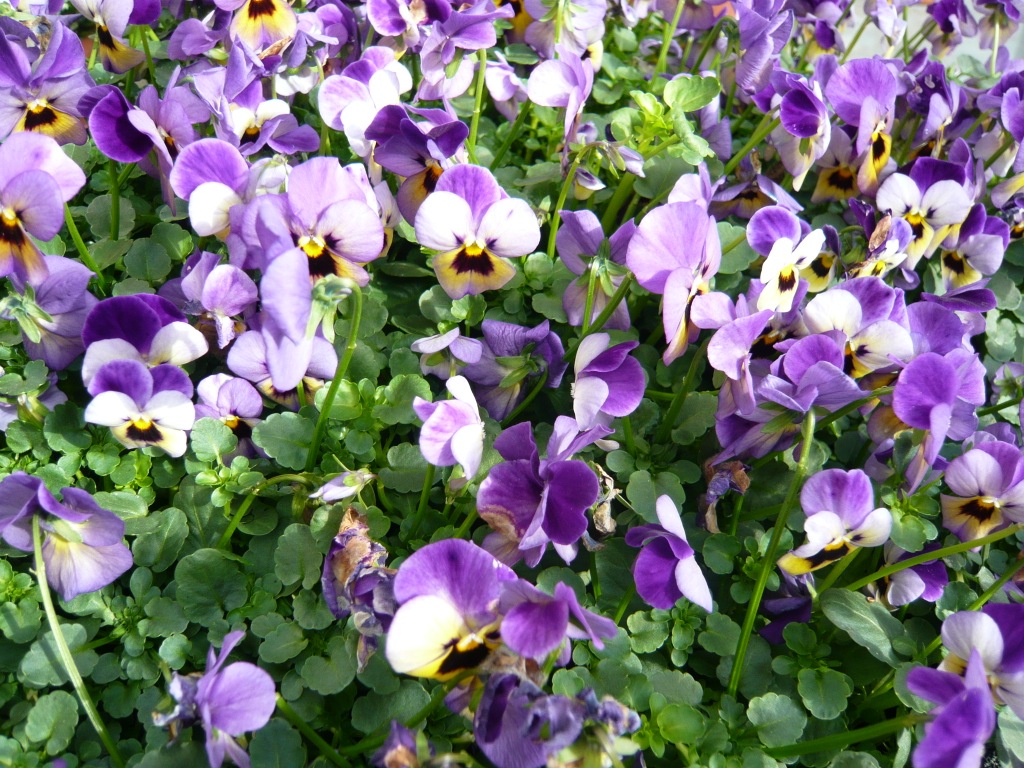
Winter pansies won’t get eaten by aphids it is too cold. Pansies don’t need fertiliser to put on a good show in fact you don’t want lush growth in winter.

Helpful Hints for Better Winter Pansies

  • Pansies face the sun so view them from the south to avoid looking at their backs.
  • Low winter light means white and pale colours show up far better than the dark colours.
  • Smaller flowers will be more plentiful and will hold their shape, larger flowers tend to flop
  • A mulch of bark chippings or gravel will help prevent mud splashes
  • Most winter pansies are best in autumn or spring but RHS trials recommend ‘Nature’ White, Ocean or Yellow, Ultima Silhouette, Panola Daffodil and Skyline Yellow Blotch.
  • Plant in pots or in sheltered sunny positions for the best show
  • It is too late to plant seeds this season but retailers have a good selection on sale at the moment. I have bought some cheaply from Aldi and as I update this post I can report they did  winter flowering species proud. They came back well even after hard frosts.

Winter pansies start to come into their floral own in February and March.

Try Thompson & Morgan  for winter pansy seeds and plants.

Bergenia for Winter Foliage & Spring Flowers

Bergenia for Winter Foliage & Spring Flowers

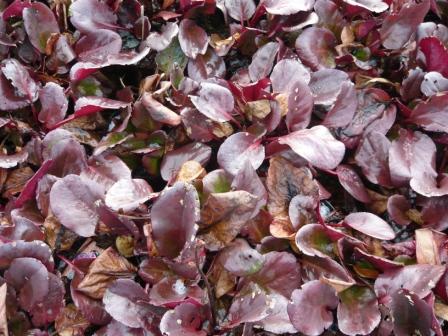
The best Bergenias have leaves that turn  a strong colour in Autumn. These purple leaves look good in the December garden when compared to the ‘Elephant Ear’  green varieties of Bergenia. These plants tend to be lusty and the rampant, leathery leaves may need cutting back to keep the plant in control.

Easy Bergenia Growing

  • Bergenia ciliata make good ground cover plants 1 -2 foot tall depending on the variety.
  • Bergenia cordifolia varieties have smaller leaved varieties that appeal to me for this red and purple winter leaf colouring.
  • Cuttings from the rhizomes are easy to root and plants spread naturally in most conditions including shade.
  • The lime green varieties may be larger leaved and more robust if you wish to cover large areas.
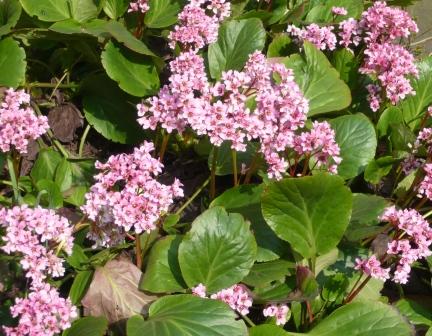
  • They flower on stems of pink bells in clusters. Begenia Eroica is said to flower for longer.
  • Dead head the flowers for a continuation of flowering.

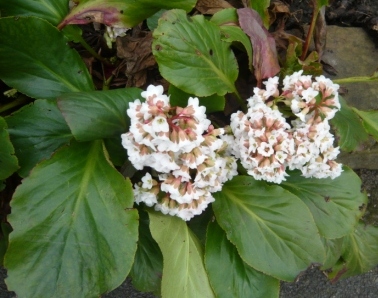
white-berginia

  • This flower is clear white but the buds are a rose pink.
  • Bergenia have large succulent stalks and like a dampish shady spot
  • The rhizomes spread and the plant is useful for covering large difficult areas like scree banks. It is too large to sit well in all but the largest rockeries.
  • Bergenia varieties including Bressingham White, Baby Doll, Rotblum and Bergenia cordifolia are shade tolerant although better sun means better flowers.
    pink-berginia

Bergenia has some medicinal properties and uses see

Bergenia from amazon

Senecio Silver Sunshine now named Brachyglottis

Senecio Silver Sunshine now named Brachyglottis

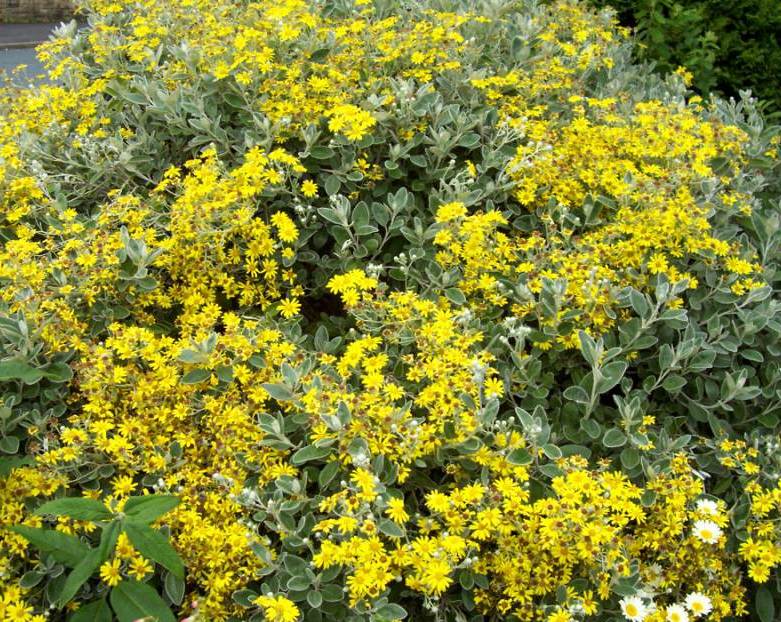
seneci

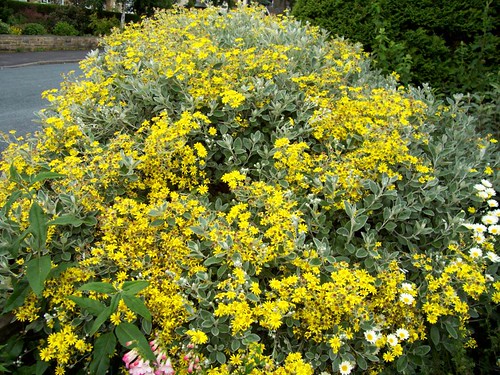
Senecio Silver Sunshine is an attractive shrub (now renamed Brachyglottis) with small silver leaves. It grows to about 3’6″ and flowers with masses of small yellow daisy like flowers through the summer.
This particular plant is quite vigorous and overdue for a trim when it has flowered.

Gardeners Tips on Brachyglottis

  • It is evergreen or ‘eversilver’ and can be grown as a foliage plant.
  • Prune aggressively in spring to stimulate foliage and keep tidy. It will go woody quite easily but will quickly reclothe the woody bits in May/June
  • Don’t bother collecting the seeds, propagate by semi-ripe or hardwood cuttings in summer or autumn
  • Buy small plants and avoid ones that have a woody base
  • Brachyglottis monroi AGM is also a variety worth growing sometimes called Monro’s ragwort

Where to Grow Brachyglottis

  • Grow this ‘Sunshine’ variety as an informal hedge. Space your planting every couple of feet for a dense shrubbery.
  • These plants grow well at the seaside as it stands up to strong winds and salt-laden air.
  • Brachyglottis with stand low levels of water
  • Grow with other Mediterranean plants or as groundcover for a sunny site.
  • Plant with other daisies like Anthemis in a courtyard or gravel gardens
Top Ten Tree Barks to Grow in UK

Top Ten Tree Barks to Grow in UK

Bark is the outer covering of main trunks, woody stems, branches and roots of trees and other woody plants, as distinguished from the cambium and inner wood. Many trees grown for bark look better as the tree matures and need to be grown in enough space to develop. Some of the following varieties are best in Parkland or woods.

Book Cover

Top Ten Trees for Bark

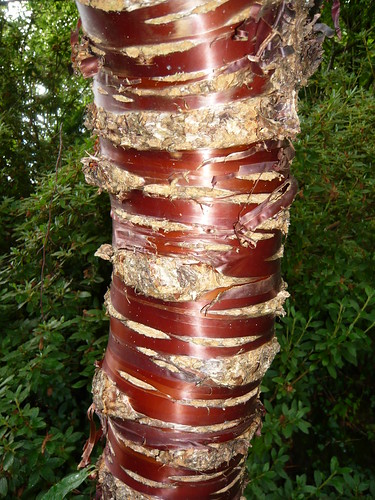
  1. The above Prunus ‘Bird Cherry’ bark looks very colourful in strong sunshine.
  2. Acers often have interesting bark try Acer rufinerve with distinctive green bark and patterns of greyish markings particularly good on old trunks.
  3. Betula Papyrifera or the Paper-bark birch has shining white bark, the large leaves turning pale gold early autumn. The native birch bark can be effective but some varieties are dirty grey in colour so take care when selecting plants.
  4. Parrottia Persica has grey bark flaking away in a pattern resembling the London Plane. It is early flowering and the leaves turn brilliant gold and crimsons in Autumn.
  5. Arbutus x Arachnoides strawberry tree has a distinctive trunk and branches that are a cinnamon red.
  6. Zelkova Sinica with smooth grey bark which peels away in scales to reveal a rusty-colored under bark.
  7. Eucalyptus has several species with interesting, peeling, grey bark and scented leaves when crushed.
  8. Juglans Nigra Or the black walnut with grey, deeply furrowed bark is quite striking.
  9. The Scots pine, Pinus sylvestris is too large for most gardens but smooth pink or red bark in the upper part of the tree is worth looking for.
  10. The well-named Redwood Sequoia never loses its astonishing red colour but again it is a large tree.

For more read Bark

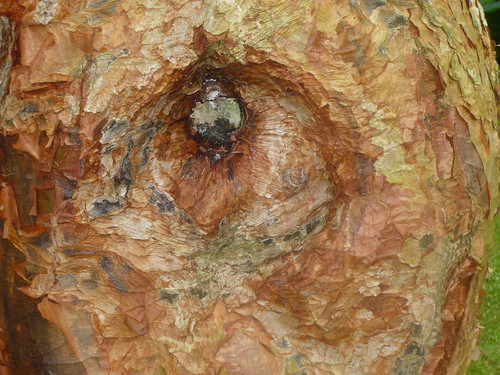
The roots, knott holes and boles of trees can also have there attractions and are worth developing and cultivating if you have the space.

Tree Bark

.

White Verbascum and White Mulleins

White Verbascum and White Mulleins

verbascum-close
This close up photo shows a typical verbascum inflorescense with many flowers packed tightly round a flowering stalk.

Verbascum Pixie series are a range of plants with shorter flowering spikes. Typically they grow to 18″. Verbascum Pixie White is a favourite with an award for garden merit agm. The flowers open from the bottom of the flowering stalk that makes a long lasting show.
Flowers can be picked for indoor display.
Removing spikes will encourage new flowers later in the season.

verbascum

White Verbascum Varieties

Verbascum chaixii Album is white with a red centre and is one of about 96 species of Verbascum according to a wikilist.
Verbascum ‘Flush of White’ is a prolific flowerer.
Verbascum chaixii ‘White Domino’ and White Blush are other Mulleins with white flowers and a coloured eye.
Verbascum phoeniceum ‘Temptress White’ and other white verbascum photos

Other Verbascum Tips

Verbascum are also known as Mulleins.
Verbascum do not need much moisture and can survive on dry alkaline soil. Rich soil makes Mulleins grow taller.
Plants of Verbascum can produce a great number of seeds.
Other colours available include Copper Rose and violet called Violetta.
Verbascum Banana Custard is a strong yellow flower.
Verbascum Pink Domino has dark eyed rose-pink flowers and can flower 4 feet tall
Verbascum Austriacum and Letitia are yellow flowering perennials.