Saxifraga Irvingii

Saxifraga Irvingii

Saxifraga x irvingii 'Jenkinsiae'

This is a lovely low growing alpine. It flowers in early spring (here pictured flowering in Feb).

it goes without saying that like other alpines, this Saxifraga will benefit from a well drained position to avoid rotting away in a cold waterlogged soil.

It is very low growing, though easily earns its place for its attractive foliage and one of the earliest ‘pink’ flowers of the season.
Saxifraga x irvingii 'Jenkinsiae'
Companion plants

This saxifraga was being grown in rockery of Oxford Botanic Gardens. Nearby were Cyclamen coum, Iris reticulata and snowdrops. Also consider dwarf Alliums such as Allium cyaneum.

An even earlier Saxifraga is Saxifraga burseriana.

See also: ‘Growing Cushion plants‘ Common name for some Saxifraga’s

Saxifraga Irvingii at Saxifraga society

Alpine Garden society

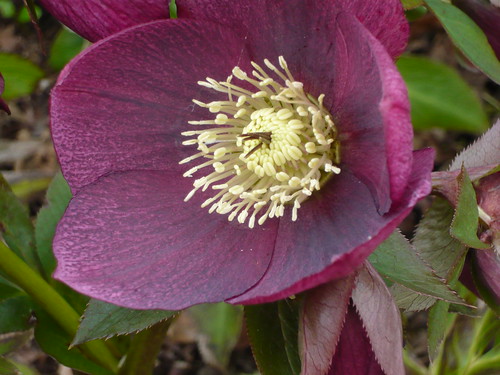
Helleborus Purpurascens

Helleborus Purpurascens

Helleborus purpurascens

This lovely Helleborus could be planted in a ‘black flower’ garden it is so dark.

Growing Helleborus Purpurascens

  • Looks great next to snowdrops (white on purple, creates good contrast)
  • Flowers in Jan, Feb, March.
  • Dies back during Summer, so be careful not to disturb in summer.
  • Hardy against all but strongest frosts.
  • Grows well in shade or partial shade
  • Not too fussy, but prefers humus rich soil – well drained, but retains moisture.
  • Leaf mould makes excellent soil conditioner.
  • Avoid acidic soil. Prefers neutral or alkaline.
  • In summer, removed tattered foliage.

Related

Growing Pulmonaria and Lungworts

Growing Pulmonaria and Lungworts

pulmonaria officinalis

 Pulmonaria Officianalis Red Start has been in flower since mid-January in my Yorkshire garden. The colour is a but special for this time of year.

The lungworts are the genus Pulmonaria of flowering plants / herbs in the family Boraginaceae, native to Europe and western Asia. The name is derived from the Latin pulmo (the lung). There was a time when Lungworts were used to treat pulmonary infections and that is how they got their name.

Features of Pulmonaria

  • There are many different varieties and can easily set seed. If you want to keep track of names and varieties, prevent setting seed and propagate by division.
  • Good companion plants include Helleborus Orientalis, Snowdrops and winter aconite.
  • Flowers in blue or red arrive as early as February
  • Makes excellent ground cover in shady spots.
  • Pulmonaria are liked by bees for their nectar.

Tips for Growing Pulmonaria

  • Cool shady spots. Dislikes drying out in winter.
  • To avoid mildewed leaves, keep well watered, and remove any infected leaves.

pulmonaria officinalis

Hellebore Heaven or Hell

Hellebore Heaven or Hell

Lenten rose or Christmas rose the Helebores have a big claim to be heavenly plants.

Hellebore

I get fascinated by different plants at different times of the year and currently it is the colour of Hellebores that are exercising my imagination. Am I right in contrasting the deep purple bracts above with a devilish or even hellish colour. Perhaps that is taking things a bit far for a plant that starts the year as the Christmas Rose and becomes the Lenten Rose.

Read More Read More

Gardeners Tips on Ground Cover Plants

Gardeners Tips on Ground Cover Plants

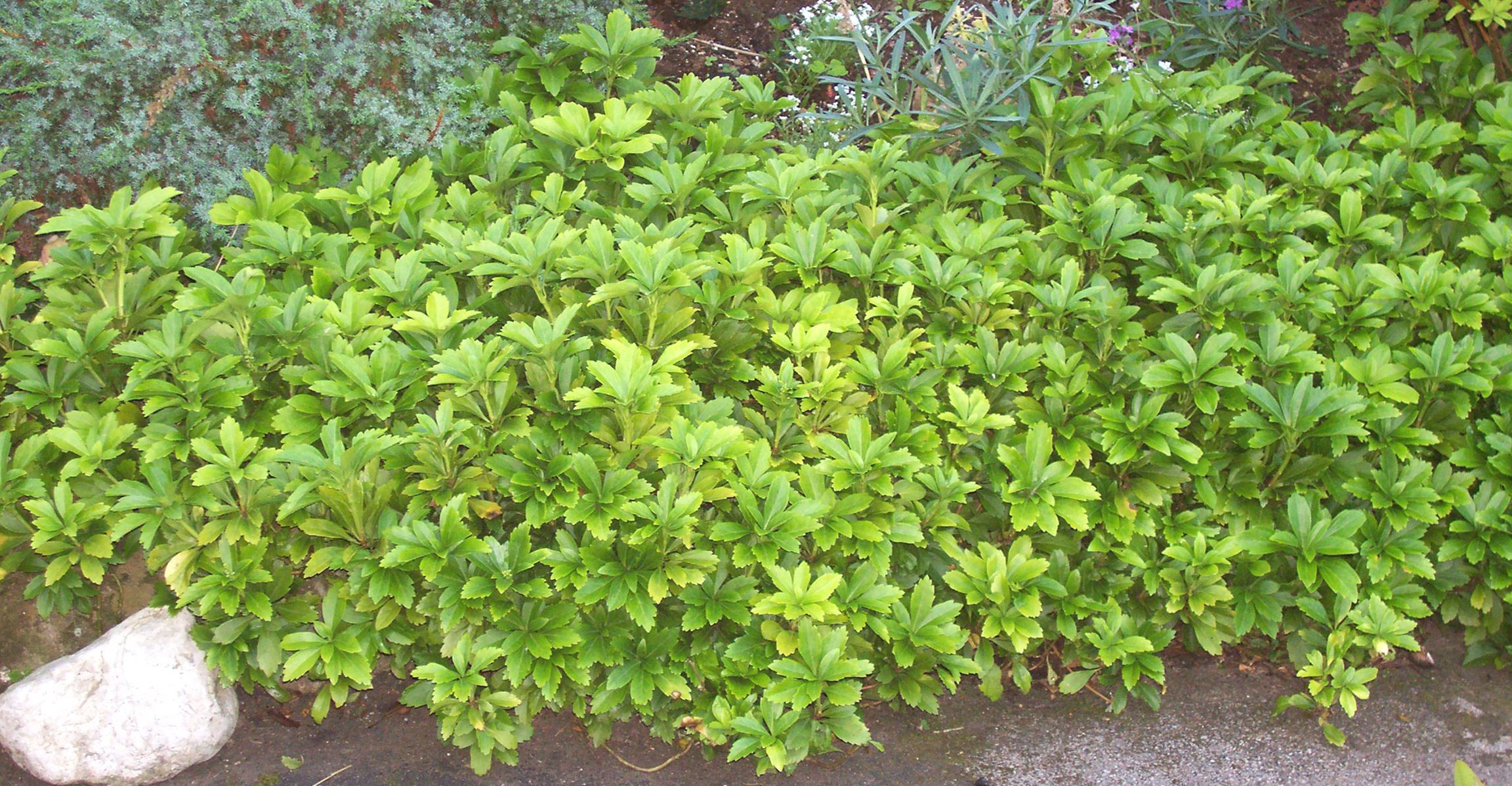
Reasons to consider ground cover for your garden

  • Ground cover can be designed to be low maintenance
  • Good cover will soften edges and sides of paths
  • Soil on slopes or banking can be held in place
  • Difficult areas with access problems can be covered in style
  • Bare soil can be unsightly unless covered
  • Good plant selection can make a feature of ground cover
  • Ground cover can add balance and harmony within the garden

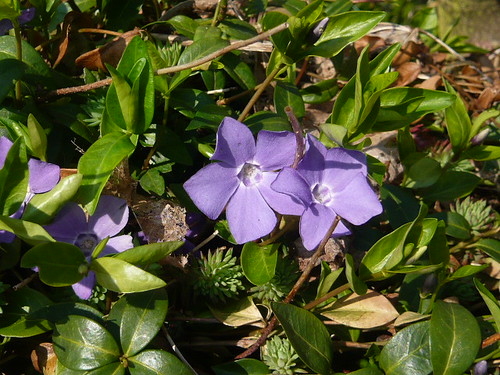
Vinca ground cover

Plants for Ground Cover Situations

Read More Read More

Dahlias of all Types with Tips

Dahlias of all Types with Tips

Hungry feeders and thirsty plants can repay a bit of support with oodles of colourful flowers.

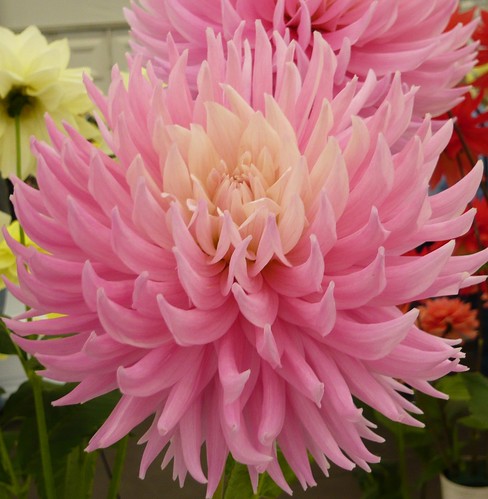
Harewood Dahlia

Dahlia Types

  • Cactus or semi-cactus like this Dana, Super (red) or Morley Lass a pale yellow
  • Single flowered dahlias are open centred flowers up to 4 inches in diameter with a single ring of florets around a central disc. There are self colours or some bicolours.
  • Collarette similar to singles with a extra ring of shorter florets around the middle
  • Ball dahlias or the smaller pompon have tight spherical flowerheads
  • Decorative dahlias are classified for shows in large (over 10 inch blooms), medium, small and miniature sizes
  • Other miscellaneous dahlias that don’t fall into another category often linked to the flower formations of other plants like Chrysanthemeum, Anemone, Paeony, Orchid or Water-Lily forms.
  • Annual bedding dahlias from seed

Dahlia

Cultivation tips for Dahlias

  • Start tubers into growth in March in a frost free environment
  • Thin to 3 shoots and stop them if they get to 6 inches. Spare shoots can be rooted as cuttings.
  • Read More Read More

Rowan – Mountain Ash – Root and Branch Review

Rowan – Mountain Ash – Root and Branch Review

mountain ash

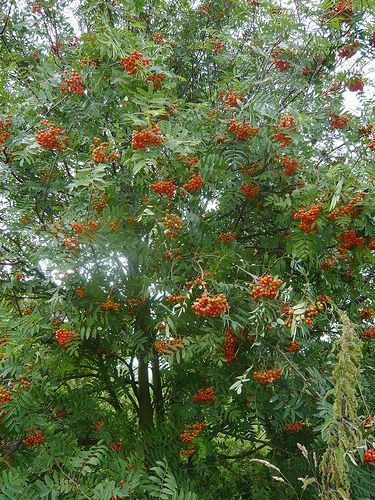
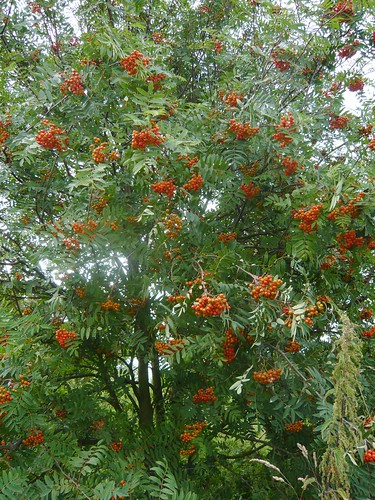
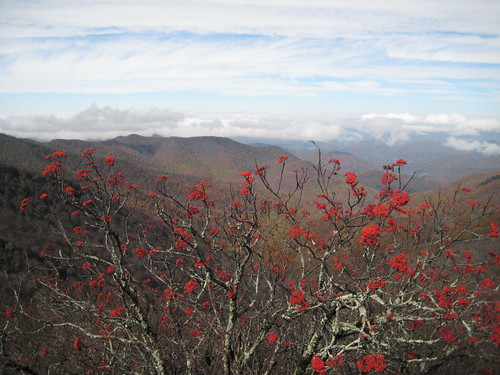
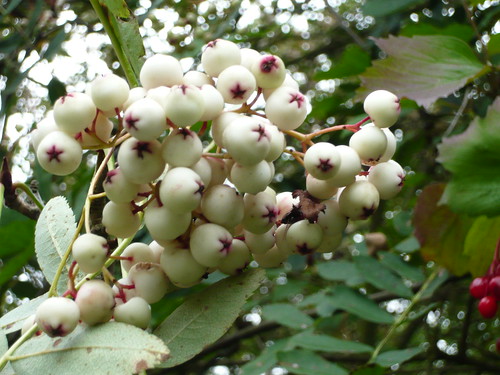
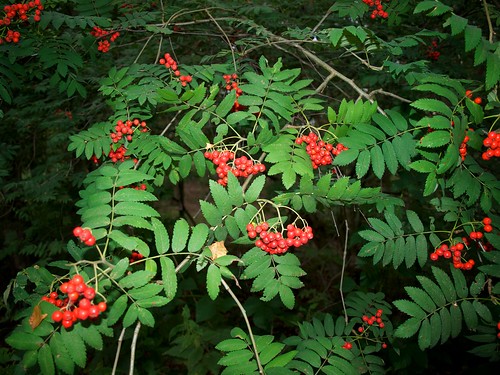
The Rowan or Mountain Ash is a member of the same family as the rose and is part of the large Sorbus genus. The trees can be quite singular in appearance when shaped by wind on high moors and mountains.

Key Features of the Mountain Ash

  • Latin name – Sorbus aucuparia other common names Rowan, Whitebeam trees or European Mountain Ash
  • Height – up to 50 feet
  • Type of tree – Deciduous
  • Leaves – pinnate with terminal leaflet andtwo rows of long, green, serrated, oblong leaflets
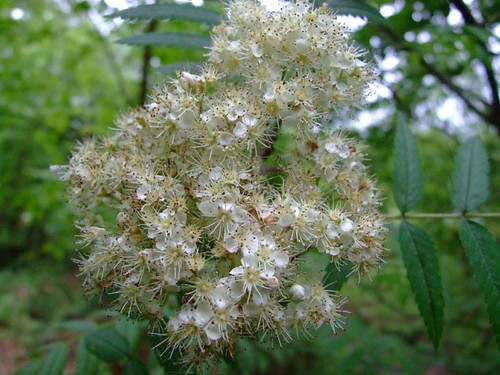
  • Flowers – large flat-headed clusters in creamy white. scented
  • Fruit – orange to red berries half inch diameter
  • Bark – smooth silver-grey
  • Family – Rosaceae

Origins and Distribution of the Mountain Ash

  • At home on high ground.
  • Common in the UK and Europe.

Mountain panorama with rowan

Uses and Attributes of the Mountain Ash

  • Valued for the Rowans ornamental qualities.
  • Berries are great bird food.
  • Revered by Druids, Norse and in Greek legend to ward off evil spirits
  • Rowan jelly made from the berries is a traditional ‘tart’, accompaniment to game and venison.

Rowan DSCF8583

Gardeners Tips for the Mountain Ash

  • The berries and colourful autumn leaves make this a good and hardy specimen tree.
  • Berries can vary in colour depending on the species from white, yellow, red or orange.
  • Grows well even in very acid soil but may not live as long on thin chalky soil

Sorbus

Other types of Mountain Ash

  • Sorbus is a large genus including hardy trees grown for ornamental qualities that include attractive flowers, ornamental foliage which colour richly in autumn and produce berry like fruit.
  • There are 3 sections of Sorbus; Aucuparia sorbus have pinnate leaves with numerous leaflets. Aria section have simple toothed and lobed leaves while Micromeles group are similar to Aria but have deciduous calyces.
  • Sorbus aucuparia has 5 sub species and a parent to numerous hybrids.
  • Sorbus aucuparia ‘Beissneri’ and Sorbus aucuparia ‘Fastigiata’ have an AGM.

Mountain Ash comments from elsewhere

  • ‘The rowan is also prominent in Norse mythology as the tree from which the first woman was made, (the first man being made from the ash tree). It was said to have saved the life of the god Thor by bending over a fast flowing river in the Underworld in which Thor was being swept away, and helping him back to the shore’. Trees for Life.
  • In the UK the Rowan is known as a tree associated with witchcraft, protecting people and dwellings.

Sorbus berries on mountain ash

Credits
Rowan DSCF8583 by hedgerowmobile CC BY-NC-SA 2.0
Mountain panorama with rowan by moonlightbulb CC BY 2.0
Lijsterbes by ednl CC BY 2.0

Read about our series on British tree reviews with a bakers dozen fact sheets
Lijsterbes

Leyland Cypress – Root and Branch Review

Leyland Cypress – Root and Branch Review

high trees 007

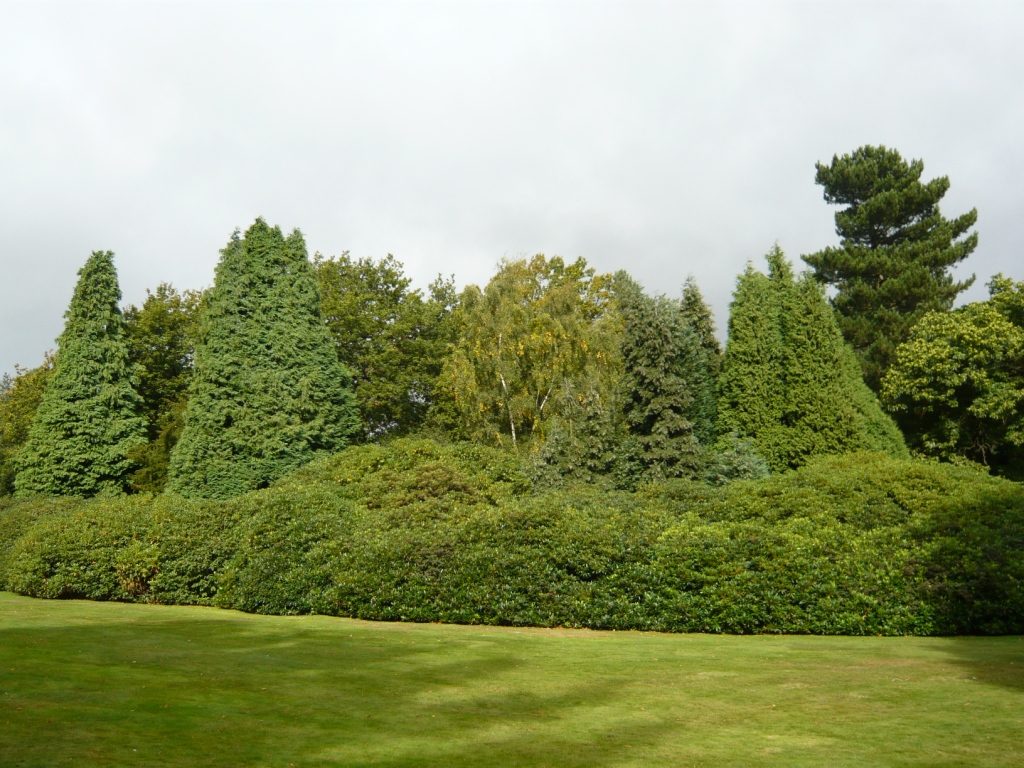
If you want a quick wind break or tall hedge then Leylandii may be the tree for you. If you to annoy the neighbors then this is the tree most likely to cause friction.

Key Features of the Leyland Cypress

  • Latin name – Leylandii x Cupressocyparis other common names; Leylandii is a cross between Nootka Cypress and Monterey Cypress
  • Height – 130 foot
  • Type of tree – Evergreen Conifer
  • Leaves – sprays of green scale-like leaves
  • Flowers – clusters at tips of leaves yellow male & green female
  • Fruit – spherical; brown cones
  • Bark – reddish grey with ridges
  • Family – Cupressaceae

Origins and Distribution of the Leylandii

  • Created in Wales by crossing Nootka Cypress and Monterey Cypress .
  • Widely spread throughout the UK by plants grown from cuttings .

Uses and Attributes of the Leylandii

  • Used in ornamental hedges and garden dividers.
  • Useful as a bird sanctuary for nesting and cover.

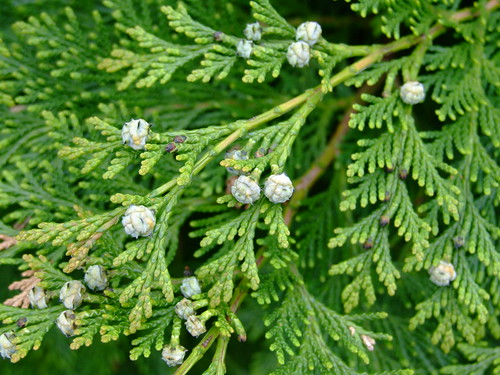
leyland cypress cones DSCF7563

Gardeners Tips for the Leylandii

  • Rapidly out grows its welcome in many gardens.
  • The cause of disputes over hedges and light for neighbors.
  • Leyland Cypress needs light but is tolerant of high levels of pollution and salt spray.
  • Trees do not transplant well. If the plant you are thinking of buying is pot bound leave it alone

Other types of Leyland Cypress and Cupressus species

  • Most of the Cupressus genus have a conical or columnar habit
  • There are over 30 forms of Leyland Cyprus arising from open pollination and breeding including Green Spire, Haggerston Grey and Naylor’s Blue.(one of the fast-growing, pyramidal, evergreen tree with scaly blue-green leaves held on flattened branchlet sprays. This vigorous conifer can grow over 100 feet tall, though it usually reaches around 80 feet tall and spreads 15 feet in a garden).
  • Cupressus macrocarpa are golden leaved and Cupressus funebris is a weeping form

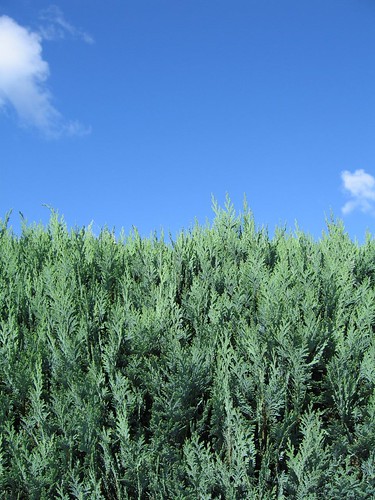
Leylandii Sky

Leyland Cypress comments from elsewhere

  • To avoid brown patches, hedge trimming should be carried out during the growing season and hedges should not be cut into older, leafless growth. Leyland cypress can cause skin irritations..
  • Leyland cypress only lives for twenty to twenty-five years. I’ve found that trees left to grow large may have limited root support and are the first to blow down during high winds.

Read about our series on British tree reviews with a bakers dozen fact sheets

Credits

leyland cypress cones DSCF7563 by hedgerowmobile CC BY-NC 2.0
Leylandii Sky by steve_w, CC BY-NC-ND 2.0

Pollinators For Green Gardening

Pollinators For Green Gardening

Flowers in May

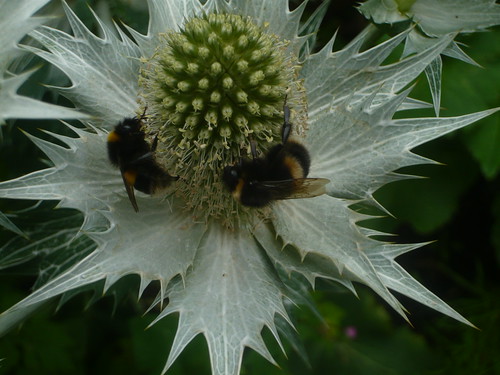
The press have had a field day talking about the reduction in the numbers of bees. It is a problem gardeners can do a bit about but bees are not the only pollinators that need a timely helping hand.

Habitat for Pollinators

  • Health and safety are issues for insects just as they are for gardeners. Look after both.
  • Often forgotten, but insects need a source of fresh water. A shallow sloping bowl will provide a landing place for safe drinking.
  • Insects can be predatory but that is nature. Gardeners need to cater for all life and insects down the food chain to give beneficial insects the best chance of survival.
  • Pollen and nectar are key food sources for insects. see below.
  • Do not be obsessively tidy, leave places to hide, breed and sleep.
  • A log pile, rough grass, bed of nettles, brambles, old plant stems and ivy are worth cultivation ( I mean having but not cultivating)

Pollination

Health Issues for Pollinators

  • Do not use insecticides!
  • Do not use herbicides, they will kill off useful plants and chemical residues can alter the natural balance in a garden.
  • The aim should be to have a balance with nature allowing all living things a space in the green garden.
  • Pollination is less of an issue for the gardener who basically just wants healthy plants that are resistant to attack from all the environment can throw at them. In these cases optimum gardening can come from Integrated Pest Management or IPM.

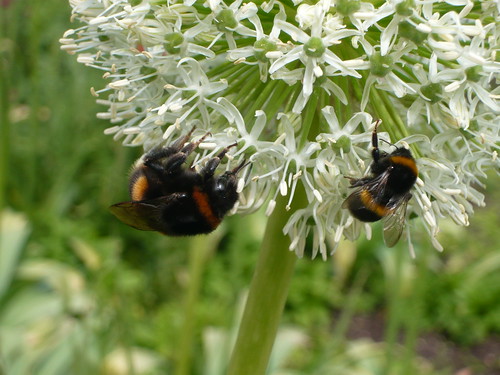
Bee Happy

Food Sources For Pollinators

  • Flowers are key to feeding many insects.
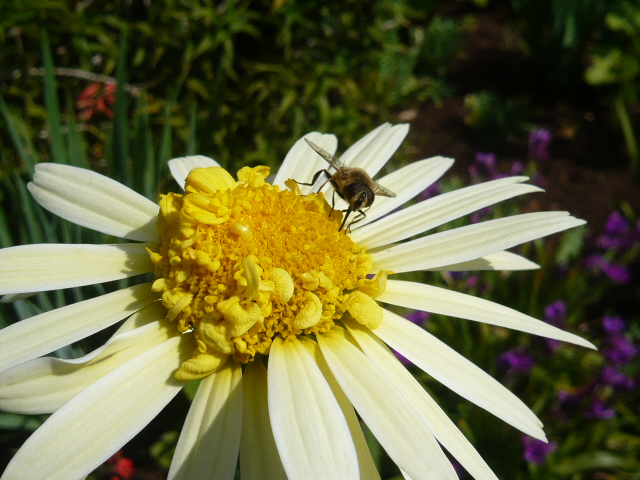
  • Single flowers where the centre is accessible are great. Asters, daisies, herbs, dahlias, sages and buddleia are known for attracting insects
  • Native species of plant and wild flowers are likely to provide appropriate food sources rather than exotic imported or over bred or F1 plants.
  • Grow flowers for July and August when nectar and pollen food sources are surprisingly scarce.
  • Clover and lawn daisies can be encouraged in a lightly mown lawn.
  • Pot plants can add to the food store via cosmos, marigolds, tagetes and toadflax.
  • Grow plants that open sequentially up the stem like foxgloves so bees can feed without having to seek out new sources.

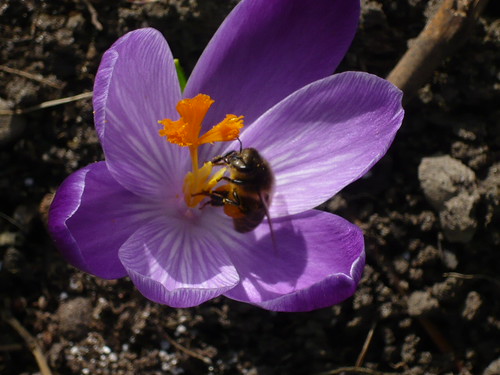
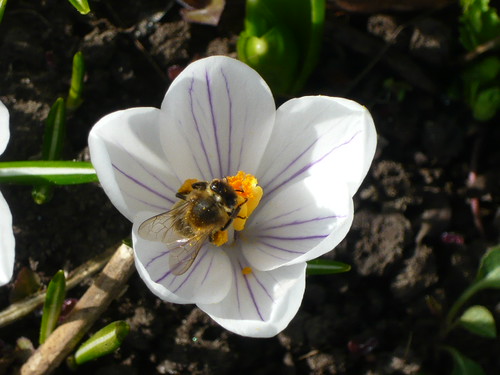
Pollination crocus

Pollinators Other than Bees

  • Mites, Ants and creepy crawlies.
  • Wind can blow pollen from one plant to another. Just look at the catkin pollen that gets blown around in spring or grass pollen on high pollen count days.
  • Moths and butterflies, birds, bats and beetles can often be species specific pollinators. Plants attract the pollinators they need by scent, colour and a range of individual techniques.

.
Credits
Pollination Makes The World Go Around
Sympathy Planting and Vegetable Pollination
Grow Seedheads for Wild Life
Pollination of Crocus by Insects
Sarah Raven and Daily Telegraph for some of the food plant ideas.

What is Integrated Pest Management
Integrated Pest Management (IPM) is an effective and environmentally sensitive approach to pest management that relies on a combination of common-sense practices. IPM programs use current, comprehensive information on the life cycles of pests and their interaction with the environment. This information, in combination with available pest control methods, is used to manage pest damage by the most economical means, and with the least possible hazard to people, property, and the environment. Read more USA gov

Integrated Pest Management books from Amazon

Organic Pond Habitats for Green Gardeners

Organic Pond Habitats for Green Gardeners

Book Cover

One of the best habitats that a gardener can create is one containing water. Ponds, bog gardens, streams or just a bird bath, all forms of water do their bit for the green gardener. ‘….ponds are one of the most appealing and vibrant small-scale wildlife habitats. Almost one in ten British gardens actually have a pond…’ according to Wildlife Trusts in their Wildlife Pond Handbook by Louise Bardsley

Who Uses a Pond Habitat

  • Frogs, toads and newts use ponds to breed.
  • Insects and worms use ponds for food and as dwelling places.
  • Birds like a drink of water and an occasional bath and butterflies like a drink too.
  • Fish add to the charm of a pond but unfortunately provide food for visiting herons in my garden.

Type of Pond Habitat

  • The larger the expanse of water the better in terms of environmental impact.
  • Preformed ponds are popular for the smaller garden. Made from rigid plastic or rubber they are long lasting and easy to install.
  • You can make your own pond and shape it with butyl liner.
  • Ensure your pond has an area where the depth is two feet or more to prevent a total freeze up.
  • The pond should have at least one gentle slope or beach area where wildlife can access the pond.
  • Fill the pond and let it stand for two weeks before adding fish and plants

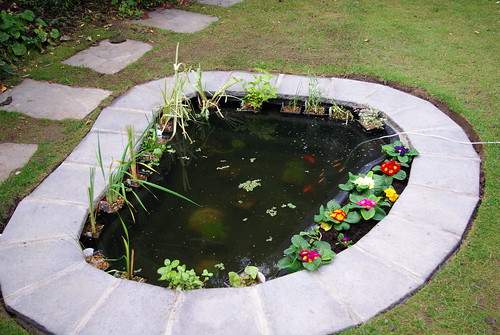
Garden Pond with fish

Plants for your Pond

  • Oxygenators such as Myriophyllum spicatum use up excess nutrients and supply oxygen to the pond.
  • Floating plants can drift on the surface and curb the growth of unwanted algae. Try frogbit Hydrocharis morsus-ranae.
  • Avoid balnket weed and invasive Myriophyllum aquaticum
  • The choice of ornamental plants is large from Water lilies through to Iris

Organic Tips for your Pond

  • Submerge a bag containing barley straw in the pond in early spring. This contains a natural algicide and will help control blanket weed which grows in the sun.
  • Use a rake to remove excess blanket weed but leave it on the side of the pond so creatures can return to the water rather than ending up on the compost heap.
  • A balanced pond without too many fish will not need any extra additional chemicals or food supply.
  • Rocks and rounded pebbles can enhance the surrounding area and build island habitats. Use local and ‘found’ stone.

Book Cover

Other Interesting Pond Related matters

Frog Spawn hints and tips
More Tips on growing Water Lilies
Ecology of water in the garden
Dealing with weeds in ponds
Pond plants and pond care
Gardening with water features

Credits Garden Pond with fish by pnt103 CC BY-NC-SA 2.0