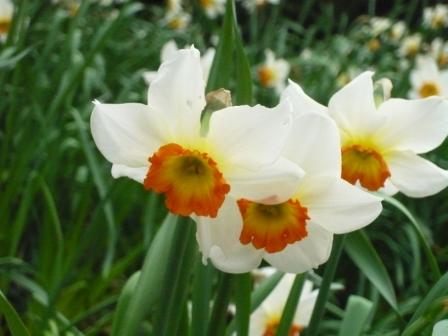
The International Daffodil Register And Classified List 2008 compiled by Sally Kington needs to be studied to be able to name the varieties shown.
Lady Margaret Hall Oxford April 2010 where studying and gardening went hand in hand.
But perhaps more gardening than studying.
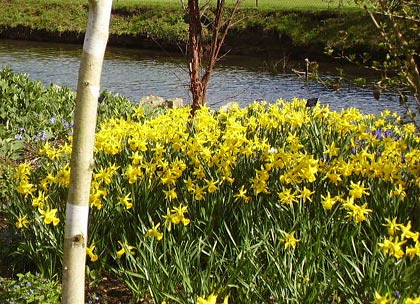
This picture was taken in late March at the University Botanic Gardens Oxford. I’m not sure of the variety, but they remind me of tete a tete. The White betula (Birch) provides an interesting contrast to the lush green of early spring. In the background is the River Cherwell, flowing under Magdalen Bridge
Misty Christ Church Meadow Oxford
Sunrise at Christ Church Meadow Oxford
The International Daffodil Register And Classified List 2008 compiled by Sally Kington needs to be studied to be able to name the varieties shown.
English Elms have been dying in there millions since the 1970’s. A further outbreak of Dutch Elm disease in the 1990’s make the growing of Elm in the UK a dangerous business.
Key Features of the Elm
Latin name – Ulmus minor Ulmus procera other common names English Elm, Field Elm or Atinian Elm
Height – 100 feet
Type of tree – Deciduous
Leaves – green alternate ovate deeply toothed, slightly hairy underneath
Flowers – reddish petalless in clusters
Fruit – Small central seed surrounded by membraneous wing
Bark – Grey brown becoming cracked
Family – Ulmaceae
Origins and Distribution of the Elm
Not native to the UK despite being called the English Elm but probably brought over by the Romans.
Found in North America and Turkey.
Planted in parks and gardens in Australia, UK and Europe.
Uses and Attributes of the Elm
Durable and waterproof timber was used in waterwheels, coffins and ship building.
Romans used the Elm to support grape vines.
Gardeners Tips for the Elm
Dutch Elm disease (DED)has ravaged the British Elms and the ‘Constable like landscapes’.
There is a conical variety Ulmus ‘Wredei’ that could suit a garden but I am waiting for the DED to die out .
Other types of Elm
Ulmus Sapporo ‘Autumn Gold’ is a fast grower and can reach its final height of 15 metres in almost the same number of years . Said to be a disease resistant Elm it is not as stately as the original. It is a hybrid of Japanese Elm and the dwarf Siberian Elm, Ulmus pumilia, and is highly resistant but not immune to DED.
Ulmus hollandica hybrid varieties used be common over much of Europe and Britain. They occur naturally wherever English Elms and Wych Elms Ulmus minor and Ulmus glabra respectively have a chance to interbreed but again they are susceptible to ‘DED’
Elm comments from elsewhere
In the 1970s a virulent strain of a fungal disease arrived on imported Canadian logs. It was spread by beetles and fanned out killing between 15-30 million trees. It was called Dutch Elm disease as that was where the research in to the cause of the trees death was done
Read about our series on British tree reviews with a bakers dozen fact sheets Credits
Elm tree in spring by BillLongstaff CC BY-SA 2.0
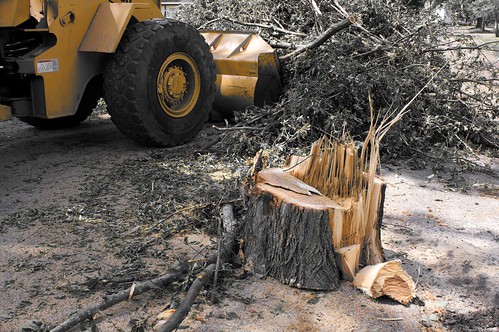
Another one bites the dust by Unhindered by Talent CC BY-SA 2.0 ‘Another elm in our neighborhood succumbs to Dutch Elm, making 5 or 6 big boulevard elms that have been removed around our corner in the last few years.
These were gorgeous old trees, which provided us with shade in the summer and shelter from January’s bitter north winds. We’re working on planting new trees, but those will be more for the next generation than ours.’
Special Elm Trees by Island 2000 Trust Conservation CC BY-NC 2.0 ‘Our elm project aims to in part replace the many thousands of English Elms lost to the Island through Dutch Elm Disease with the resistant cultivar of Wych Elm Ulmus LUTECE. We buy in and distribute between 500 and 1000 every year and we’re now in our 4th year of the scheme. The original work on LUTECE was done by Butterfly Conservation and Andrew Brookes at Portsmouth University particularly with regard to the conservation of White-letter Hairstreak. We’re on the look-out for more resistant strains too, particularly those based on English Elm.”Here are some of our special resistant LUTECE elms about to be planted out in Totland. West Wight has suffered dreadfully from the renewed outbreaks of DED since 1995 and we’re keen to do what we can to restore an elm component to the landscape. There’s still plenty of elm at a lower level in hedges and as suckers from felled or dead taller trees but there are almost none left as field and hedgerow trees. These are alongside One Horse Field (a Gift to nature Project).’
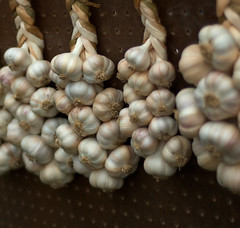
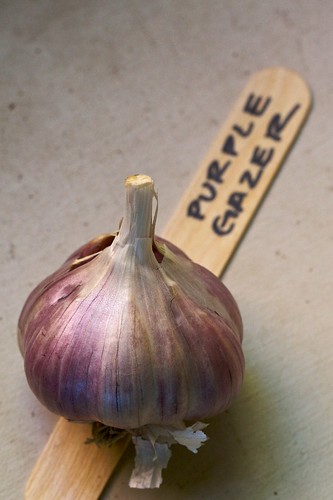
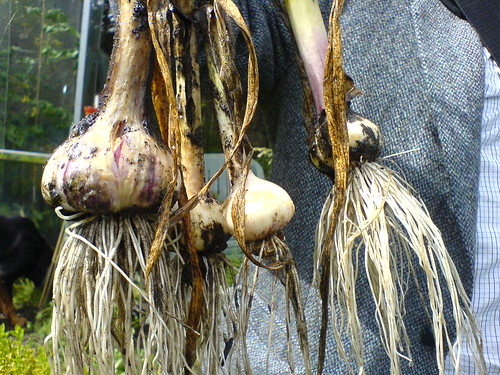
Garlic is increasing in popularity in the UK and a wide selection of varieties are now available. They grow well under glass or poly tunnel but also produce worthwhile crops in most sunny gardens and allotments.
Top Ten Varieties for the UK
Solent Wight – a heavy cropper with large cloves
Albigensian Wight – spring or autumn planting good keeper
Purple Wight a ‘hard neck’ best used fresh as it is a poor storer
Long Keeper large white bulbs to harvest in July from autumn planting.
Early Wight another ‘hard neck variety’ with AGM in purple variety
Luatrec Wight fat pink cloves with white outer skin and a good keeper.
White Pearl autumn planted will store reasonalble well.
Pink Lady a pink skinned bulbs and gloves that can be eaten raw.
Germidore softneck variety that is well adapted to British conditions. Produces large, white bulbs with a mild but rich flavour.
Chesnok Red a hardneck variety from Georgia with attractive purple striping and a lovely, full-bodied flavour. Lovely choice for baking as it has a lovely creamy texture. Great for garlic bread!
Elephant Garlic would be in many best top ten lists but is closely related to the Leek side of the allium family  see Gardeners tips
Credits
Planting Garlic by Chiot’s Run CC BY-NC 2.0
Garlic by mrwalker CC BY-NC-SA 2.0
‘It’s that time of the year to plant garlic. I’ve read that you should plant it around fall equinox, which I missed by about a month. I received my planting garlic the day before we left on vacation and just planted it on Sunday. I ordered 2 garlic samplers from Gourmet Garlic Gardens again this year. Each year I’ve grown garlic, I’ve tried a few different method for planting. I’m hoping this year I’ll finally be able to grow nice big heads of garlic. Mine usually end up being small, but they’re still quite tasty. I chose a free-draining area of the front garden and amended the soil heavily with compost.
For specific varieties planted and planting directions from another site visit:Â chiotsrun.com/2010/10/28/planting-garlic/’
Continuing on our theme of garden weeds – these are some of the most common garden weed types, which you will invariably have faced at some time.
Couch Grass.
A very common weed which spreads through a system of fine underground stems. On a dry day try digging with a fork and on regrowth try spraying with Glyphosate. Covering with a mulch or solid layer is a good way of weakening or killing the plant.
Horsetail
See Dealing with horsetail. Has been around for 60 million years, if you have some in your garden you will see why. One of the most difficult weeds to eradicate.
Nettles.
Quite easy to deal with. If you are not in a rush, make repeated cuts at the base of the plant and put stems on compost. Nettles make excellent compost and are an excellent mix of stems and leaves. Young leaves can even be eaten and are quite nutritious. Nettles are also good for wildlife.
To kill off the plant use fork or spade to lift up the clumb of yellowish roots. These are not too deep. Also responds well to weedkiller.
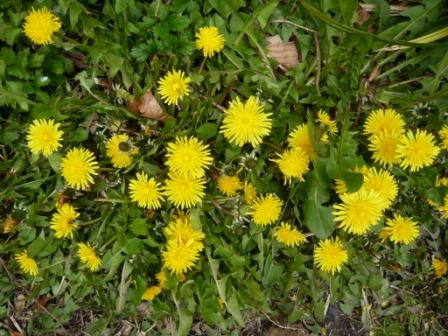
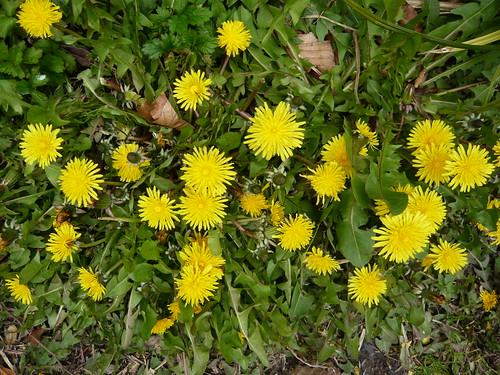
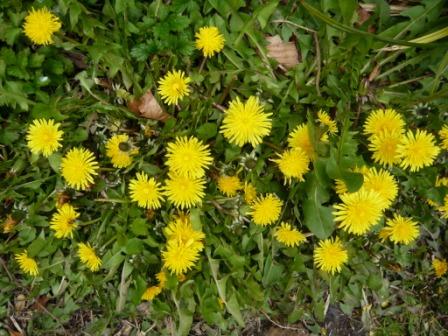
Dandelions
In spring these will suddenly grow very vigorously. Before you know it they will have set seed and will be a problem for years to come. Therefore, the best time to act is before they set seed in late April.
They have a simple long tap root. It is hard to lift up the whole tap root without breaking off the lower part which will send up new shoots. However, it can be satisfying to try and dig up the long single tap root. Will respond to repeated weed killer sprays.
Dock Leaves.
As the saying goes where there are nettles, there will also be docks. Similar to dandelions. long tap root and can easily regrow from the smallest part.
Bindweed.
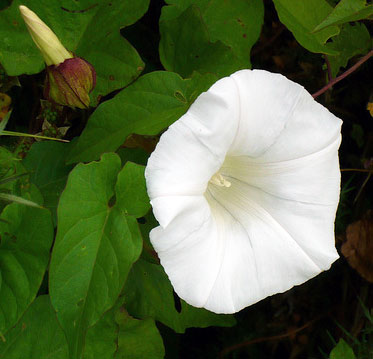
Grows through deep connection of underground white roots. Also flowers (actually very attractive) and sets seed. The roots can be a pain to dig up. But, for deep infestations, it is best to try and dig up most of the roots.
One helpful tip is to put a cane in the ground. The bindweed will grow up the cane, making it easier to apply weedkiller and avoid surrounding plants. See Bindweed Control
Ground Elder.
– Another tough nut you don’t want to see in your garden. Can spread rapidly if left unchecked. Requires hard work to get rid of it. Japanese Knotweed.
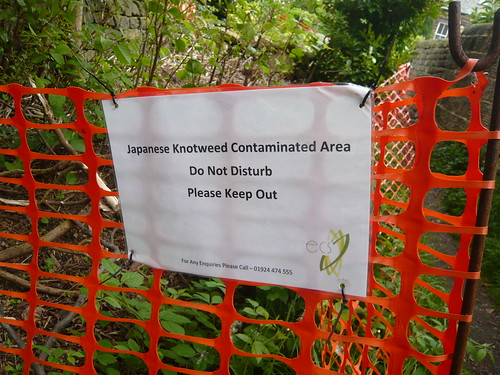
Could well lay claim to being the worst ever weed. If you have it in your garden Good luck – either that or consider moving. More on Knotweed
More Common Garden Weeds
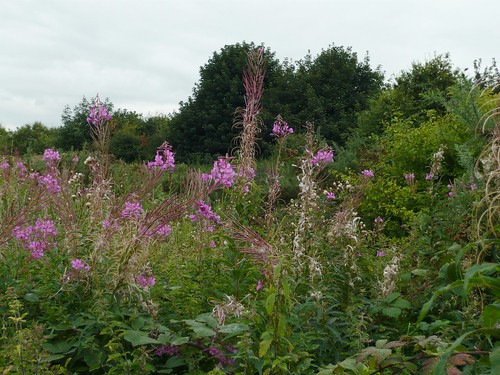
Broad Leaved Willowherb. Can set thousands of seeds. Not too difficult to deal with in small quantities.
Budleia – In one sense makes an attractive plant – loved by butterflies, but, has immense powers of reproduction, growing in most unlikely of situations.
Thistle. A good hoeing should be enough.
Cleavers. – Stick to your clothing. hoeing should be fine to get ride off.
Ramsons (Wild Garlic) tough weeds
Bittercress
Shepherd’s Purse
Broad Leaved Plaintain. – Not too bad.
Creeping Buttercup – a vigorous spreader. Can grow in middle of crass and through the border. Needs its roots tackling.
Knotweed problems have not gone away but panic isn’t the solution.
Warning About Knotweed
It is an offence to plant or otherwise cause the Japanese Knotweed to grow in the wild.
Japanese Knotweed is classed as ‘controlled waste’ and as such must be disposed of safely at a licensed landfill site and buried to a depth of at least 5 m.
This law also applies to the surrounding soil.
Infringement can result in an unlimited fine and you can also be held liable for costs incurred from the spread of Knotweed into adjacent properties.
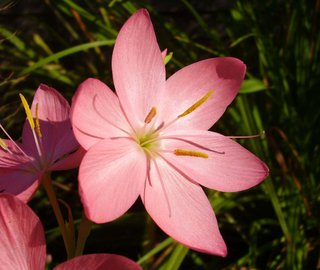
Try a new flower to go with seasonal rain. This 2015 update on my attempts to grow Rain Lilies
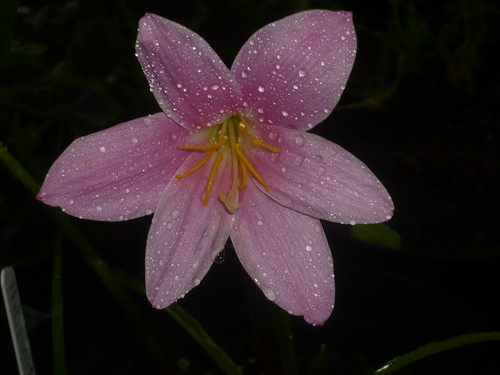
I discovered a 6 inch pot in my greenhouse with a label saying Habranthus but I don’t know where I got the contents from. There were a couple of short, green, narrow leaves and little else until this week when flowers erupted from the soil on 4 inch stems with petals nearly as long.
I water my greenhouse with a hosepipe spray except when I am adding fertilizer and recently I have been misting over all the pots and plants. You can see how the spray has stuck to the Habranthus flower.
Habranthus is a genus in the Amaryllidaceae family with species from Central and South America extending into southern North America. They have narrow, linear or strap-shaped leaves. Their flowers are very similar to Zephyranthes and both are called rain lilies.
This variety of Habranthus is flowering in late Summer (Sept) and offers a delicate touch to colour with minimum fuss. Habranthus bulbs should be quite hardy in the UK.
‘A weed is any plant growing in the wrong place’ – but some weeds are more wrong than others.
Unfortunately weeds are not weedy but more thuggee.
Weeds: The Story of Outlaw Plants: A Cultural History
Problems Caused by Weeds
At their worst weeds can take over and suppress all other growth.
Weeds take water and nutrition from the soil and rob your plants.
Other cultivated plants can’t fight weeds and give of their best at the same time.
Weeds can throttle and kill weaker species and cast a shadow over others.
Pest & Weed Expert:
Declare War
Before we get onto chemical warfare you can fight weeds at there own game.
Cover the weeds with a membrane to exclude light. Cardboard or layered newspaper may work and you can plant through this covering. Add at least 2″ of mulch and soil on top.
Hand weeding is the Rolls Royce method. You have to keep up to this job on a regular basis.
When digging over a patch take care to remove all perennial weeds and bits of their roots. (Don’t compost the roots).
Annual weeds can be hoed so the roots can’t access water and thus die.
The Book of Weeds
Chemical Warfare
Weed killers are available from most garden centres.
Glyphosphate is a systemic chemical that enters through leaves to kill roots. It is ineffective and dissipated as soon as it hits the soil. Spray in autumn and spring on growing weeds but avoid your cultivated plants.
Selective chemicals are available for lawns.
Weeds and What They Tell Us
Gardeners Special Tips
Do not let weeds seed. Cut off weed flowers even if you can’t remove them.
Do not compost seeding weeds as they may not be killed by the heat of the compost.
Kill weeds when they are young.
Early recognition and control of weeds leads to savings in the cost of herbicides and aggravation
If you want to pick a bunch of flowers like these next spring first you need to buy and plant your bulbs.
The best selection is generally available first.
Buying Spring Bulbs
From August the bulbs start arriving in the nurseries and Garden centres.
I have bought my first selection of miniature Narcissus Little Gem. They will grow 6-8″ high (or short) and flower sulphur yellow.
I have in mind to grow them in pots in the cold greenhouse.
Another variety I am on the look out for is ‘Cedric Morris’ which often has flowers by Christmas. It is the earliest daffodil I know and beats the first snowdrop and winter aconite into flower.
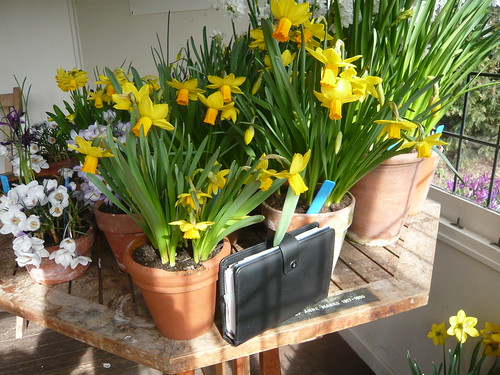
Below is a display of small Narcissus shown to scale against my filofax.
Narcissus Bulbocodium var. Nivalis.
Comes from Portugal, where often found in damp peaty soil. Also does well grown here in pots. Can also be naturalised in grass.