Japanese Gardens – Key Features

Japanese Gardens – Key Features

Kyoto Garden London

London Holland Park’s water feature in Kyoto Garden.

The composition of enduring elements such as buildings, stones and paths that harmonise with the surroundings are critical factors in a good Japanese garden.

The waterfall plays an important role in Chinese and Japanese landscape. Japan’s earliest known manual of gardening—the Sakuteiki—describes ten different forms of waterfall stipulating the proper height and width of a cascade.

Japanese gardens are a living art form, in which the plants and trees are ever changing. As they grow and mature they are constantly sculpted and pruned to maintain and enhance the overall composition. Over time it is only as good as the careful and qualified maintenance that it receives by those trained in the art of pruning.

A space in the garden for contemplation or meditation fits with the Buddhist and Daoist philosophy

On a more war like footing the features in a Samurai garden include those listed here.

Book Cover


This book explores ‘five classic styles: Stroll Garden, Tea Garden, Courtyard Garden, Dry Garden and Pond Garden. …….. It is an inspiring and accessible guide to designing and creating a Japanese garden…’

Extending the Bulb Flowering Season

Extending the Bulb Flowering Season


Tulips

Spring flowers are always well received as a way to herald the coming summer. Because spring bulb flowers are highly valued take the opportunity to extend the flowering season, especially in key pot locations.

Start with a careful selection of varieties. Early season, mid season and late varieties exist for Tulips and Daffodils. Crocus are a bit harder but there are autumn varieties for flowering of late bulbs.

How To Have Bulbs flowering for several weeks in Spring

  • Choose sets of bulbs to flower at different times throughout the spring and place into aquatic baskets or transferable containers.
  • For the  early flowering bulbs, plant these in a greenhouse to help their early flowering. Then plant the ‘aquatic baskets’ into the target pot.
  • As a general rule, bulbs need to be planted at a depth of 2-3 times the bulb height.
  • After the first bunch of bulbs have finished flowering, you can remove the aquatic basket and place another set of bulbs into the ornamental pot. In this way you can have  3 -4 sets of flowering bulbs in the same ornamental pot throughout spring. This is an excellent way to give the impression you are an expert gardener.
  • People will be impressed by the long flowering season of your pot, and they may not even realise how you are able to do it.
Sow Red Salad Seeds

Sow Red Salad Seeds

Red food stuff is a popular trend at the moment. Good leafy crops add vibrancy to a salad and you are probably eating well if you grow them yourself.

Book Cover

Seeds of fast leafy salad crops can be sown until the end of July and they will be ready to start picking in about 50 days. Loose leaf Lollo Biondi and Lollo Rossa will be ready from about this time and you can pick individual leaves as you need them. Give them some cloche protection in September and you may be picking through October.

Salad seedlings are nutritious and at the peak of flavour so try Red Mustard or Red Chard for early picking but with added colour for your salads. The spring onion North Holland Blood Red is also worth eating as you thin our the crop.

For something with a bit more kick Rocket, Radiches or Nasturtium leaves may suit or try Mizuna or the leaves of Beetroot.


Supporting Role of Stakes, Ties and Canes

Supporting Role of Stakes, Ties and Canes

Lush growth in May and June will create abundant growth and plenty of colour. But by mid summer and early autumn a shabbiness of middle age may have crept into your borders. However a border that has been carefully staked and tied in spring and summer will not lapse into slovenly habits.

Tips for Using Canes

  • It makes sense to support single-stem plants like Hollyhocks, Delphiniums and Gladioli early in the season but it is never too late. When tying stems to a cane make a loose figure-of-eight with the twine or a tight knot will damage the the stem.
  • You can make your own ‘pea sticks’ from Hazel, Elm suckers, Beech or even Fir.
  • If you want to grow your own canes then the bamboo Phyllostachys nigra produces unobtrusive black canes.
  • Use thick canes if possible – buy 8 foot canes and cut in two with a fine hacksaw at a joint
  • Freshly bought canes can be cut with secateurs
  • Single canes are not appropriate for multi stemmed plants as the string just makes a noose for the plant to flop into. Put two canes at the back and at least one in the middle then a web of string can provide several supports.
  • If your string slips down the cane your effort will be wasted. use a clove hitch knot slid down from the top of the cane and keep the know just above a joint.

Off the Peg Plant Supports

  • Circular wire grids too set above a plant for it to grow through are available but are not cheap. The green plastic covering on the wire isn’t totally natural in appearance.
  • Interlocking stakes with a hook to link to the next stake helps make a support shape appropriate to the plant can work quite well. I use these for Peonies.
  • Semi circular hoops for the border edges are available to hold plants back from lawnmowers
  • Part off the peg and part DIY you can use a wire grid supported in 4 corners to cover a wide area of the herbaceous border.
  • Obelisks and a variety of cast iron towers are available for training climbing plants

Special Staking for Special Plants

Ornamental Grass & Design

Ornamental Grass & Design

There are many families, species and varieties of grass suitable for ornamental purposes. Wether you want a prairie grass-scape, a potted plant or a focal point in a formal garden then there is a grass to suit. Grasses are well suited to a range of landscaping projects.

Book Cover

The Fescue, Pennisetum, Panticum, Carex, Miscathus, Stipa and many other species are covered below. A recommended variety is given where ever possible along with shore notes. Grasses are perennial unless stated to be annuals.


Gardeners Tips Recommended Varieties

Read More Read More

Common Lawn Weeds and Treatment

Common Lawn Weeds and Treatment

Book Cover
Bellis or Daisy is recognised by it’s flat rosettes of oval leaves and small white yellow eyed flowers. They tend to form colonies that hug the ground to smother out nearby grass. From the boots of the ‘My old mans a dustman’ song, ‘it takes such a job to pull them up that he calls them daisy roots’ the best treatment is a selective weed killer that may need a couple of applications. Alternatively each root can be dug out by hand.

Dandelion leaves are recognised by long hairless coarsely toothed leaves that form large rosettes. They form dense mat to suppress the nearby plants or grass. The flowers are bright yellow and self-seed freely from Dandelion clocks the globular seed heads we blew as children. The long tap root will regrow unless removed completely or killed by systemic weed killer. Spot treat the weed with a touchweeder or selectively apply a weed killer. Burning and boiling water on the leaves may have some impact on crazy paving but i don’t find it works on lawns.

Buttercups stunt nearby plants and make the lawn look uncared for. remove by hand or normal weed killers.

Clover has shamrock shaped leaves (not real rocks as you find in rockeries). Clover stays green in drought and as a leguminous plant its roots provide nitrogen for grass but the pink or white flowers are intrusive. As clover thrives on poor soil feed the lawn and use a grass box on the mower to remove seed heads. Lawn sand may be used to treat the problem.

Plantains have large leaf rosettes that can smother grass and compete for vital nutrients. Fork out by hand or treat individually.

Annual meadow grass hosts harmful eelworms and is hard to control with weed killers. The leaves are short tufts and strap shaped with tiny coarse flowers. in summer they can die back leaving patches. Feed the lawn well and use the grass bow when mowing. really bad investations may need re sowing or turfing.

Moss is a dense low growing mat of greenery that affects badly drained lawns. It is too short to be cut by a mower but a lawn that itself is cut too short can attract moss instead of grass. Feed the lawn with a weed and feed fertiliser or use lawn sand containing a moss killer. Scarify and improve drainage by forking over the lawn

Lawn Tool Tips

Read More Read More

Mixed Penstemon Plants

Mixed Penstemon Plants

penstemon

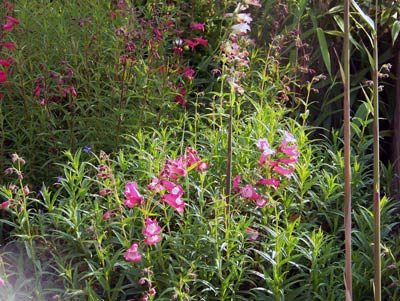
Penstemon’s have been an excellent, low maintenance plant for me. They can start flowering in June and still be flowering 4 months later in October. They mostly require well drained soil and protection from heavy frosts. Dead heading is advisable as it will encourage new flowers.

Once or twice a year, I would recommend adding a general fertiliser applied at the base of the plant, taking care to follow the manufacturers instructions. They don’t need a heavy manure of strong nitrogen feed as this will just encourage excessive leaf growth and make them more susceptible to aphids.

Read More Read More

How To Get A Bigger Tomato Crop

How To Get A Bigger Tomato Crop

Tomatoes are great fun to grow. They can also be very rewarding; to get a bigger crop follow these simple but effective tips.

  • Pinch out side shoots to focus energy on forming fruits rather than green growth.
  • Pinch out the growing tip when 6 trusses have formed Allowing only 5 -6 branches enables the energy of the plant to be focused on the 5 trusses; this will maximise the yield.
  • Cut away ruthlessly any diseased or dying leaves. It is important to allow sufficient air to circulate, especially around the base of the plant.
  • Keep the area clean and tidy, this helps to minimise the spread of fungal diseases common in tomatoes.
  • When the flowers are blooming, give the plants the odd flick with your finger, this helps to pollinate the plant. This can be useful, if there are not many bees in your greenhouse.
  • As temperatures rise, keep the plants well watered. Also it helps to water down the greenhouse in the morning. This helps keep the temperature lower.
  • Feed little and often with tomato food
  • Stake plants to support the growing weight of the tomatoes.
  • In October take the green tomatoes and place next to ripe apples, this will help the green tomatoes ripen extending the cropping season into October and November.

I always under perform on my greenhouse tomatoes – against my brother-in-law at least.
This year I am trying lots of varieties including old favourites, Ailsa Craig, Moneymaker, Shirley and Gardeners Delight. Hopefully at least one of them will live up to my demands and if not it will be down to my inconsistent watering, failure to feed properly or not pinching out or removing excess leaves.

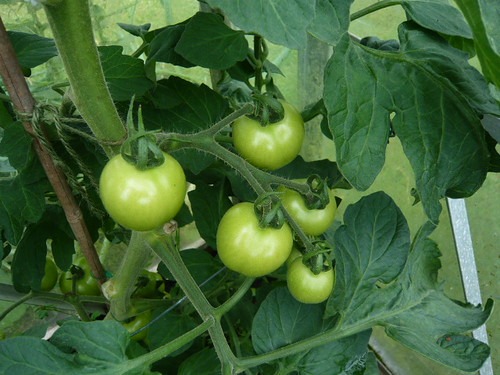
Green Tomatoes

Some other hints and tricks of the trade

  • Add a spoonful of sugar to your watering can every now and then
  • Pinching out side shoots helps increase the fruit yield and if the shoot is about 4” long it will probably root as a cutting in moist soil and give you an extra plant.
  • Grow a bush variety like Supersweet 100 in between cordons in your greenhouse for greater variety and use of space
  • To encourage good pollination and fruit setting tap the plants to dislodge pollen as you go past
  • Try a ‘Tumbler’ tomato in a hanging basket for small cherry tomatoes
  • Remove growing tip from greenhouse plants in August or when 6-7 trusses have set. Outdoors when 4-5 trusses have set
  • Put a couple of banana skins under each plant -it may be an old wives tale but they do have lots of Potash
  • Stake plants in the greenhouse and run a support wire to tie heavy crops too
  • Grow some French Marigolds close to tomatoes to discourage aphids and white fly
  • Spread the fluff from your Hoover around the base of established plants
  • Wrap green tomatoes in newspaper at the end of the season so they can ripen slowly

See also: Tips for growing tomatoes

Saxifraga Fortunei Cherry Pie

Saxifraga Fortunei Cherry Pie

Saxifrage Fortunei Cherry Pie

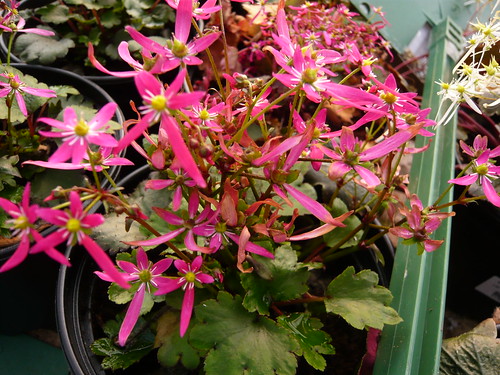
Saxifraga Fortunei ‘Cherry Pie’ looks good from late August through Autumn with these cherry coloured flowers. It is recommended as a good plant for moist woodland as it is happy with partial shade. Grows 8-10″ tall with flowering spikes above bright palmate, green leaves.

The Saxifrage society modestly claims to be ‘the only international organization dedicated to the best plants in the world; the genus Saxifraga or Rockfoils and its relatives.’ They have 480 species to go at in three groups or sections the “mossies” (Saxifraga), the “silvers” ( Ligulatae) and the Kabschia and Engleria subsections ( Porphyrion).

Book Cover

I am just getting interested in growing some of these plants and I will see how I get on. The Saxifrage Society is to be represented with a display stand at the RHS Harlow Carr Alpine weekend 15-17 April 2016.

For some it becomes a consuming passion or so I am told. Many saxifrages come from mountain habitats that make them well-suited to rock gardens, troughs, and containers.

The increasing interest in Alpines and rock-gardening has resulted in the introduction of countless new varieties

Plant Autumn Crocus

Plant Autumn Crocus

autumn-crocus
From obenson flickr

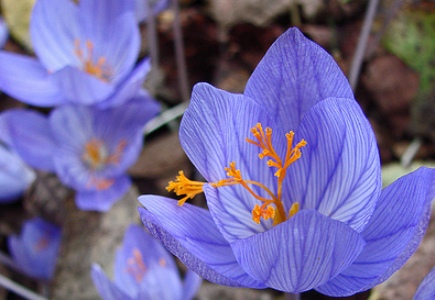
I have just bought and planted some Autumn ‘Crocus Speciosus’ AGM that were part of a birthday present. I could have waited until summer to plant the bulbs. Flowering bright blue are about 4 inches tall. I hope to see the blue veined flowers with  deep yellow stamen  by October  followed by leaves in spring. The thin flowering stems find it difficult to withstand wet and windy weather and are inclined to flop but I have given them some shelter in the rockery.

Autumn crocus are not cheap but they can last for years given favorable conditions. Autumn crocus or meadow saffron is a poisonous member of the lily family.

Autumn Crocus Tips

  • Plant about 4 inches deep and be prepared for them to flower a bit later the first year.
  • Try other varieties of Autumn flowering crocus of which there are many including the saffron Crocus sativus, Crocus goulimyi, Crocus pulchellus, Crocus agrippinum and Crocus nudiflorus, Crocus clusii, Crocus laevigatus Fontenayi, Crocus pulchellus and Crocus Zephyr
  • Excellent for naturalising in wild gardens, rockeries and between shrubs according to my packet instructions (but they are unlikely to say good chance of failure).
  • Many colchiums and autumn crocus they can flower without soil indoors prior to planting out.
  • Increase your stock via freshly ripe seed or dig up the corms when the leaves fade in spring pulling them apart and replant the cormletts.
  • Mice can be troublesome because they eat the Crocus corms so protect them if you are troubled.

Other Resources
National Council for Conservation of Plants and Gardens ‘Conservation through Cultivation.’