Codiaeum Technicolour Plants
Codiaeum Technicolour Plants

Madiera mch11 360

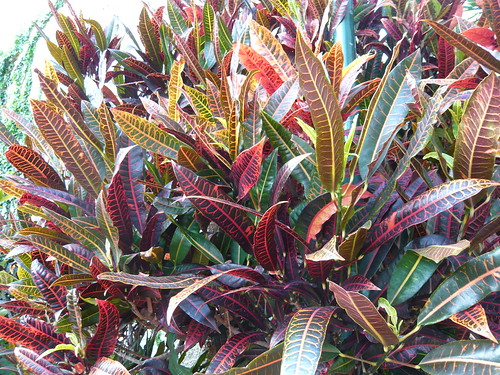
Codiaeum variegatum is a houseplant or tender shrub with multi-coloured leaves.

Growing and Cultivation Tips

  • The veins and patterns in the leathery leaves can be quite startling with reds, yellows and bright greens predominating.
  • Leaves may be oval, sword like or forked.
  • Flowers are white and small on long racemes.
  • As part of the Euphorbia family the sap is white and can cause itrriation.
  • Codiaeum variegatum is also known as the variegated Croton or the garden Croton.
  • All Crotons like plenty of water. Even in winter they need watering.
  • Do not spray the leaves or feed through the leaves.
  • Good light and plenty of sun encourages good colouring.
  • Warm moist conditions and a temperature above 60 degrees Fahrenheit suit them best.

Popular Cultivars of Codieaum

Apple Blossom What Gardeners Need to Know

Apple Blossom What Gardeners Need to Know

apple blossom

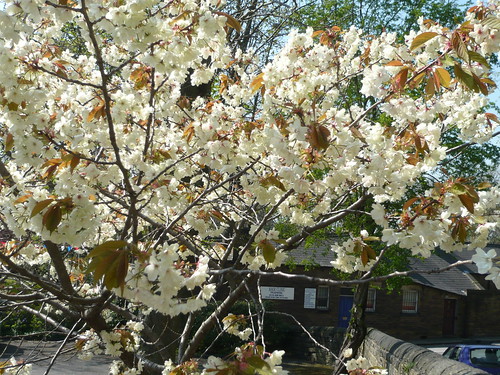
Great April weather has produced a harvest of blossom on my apple trees. With no danger of frost and plenty of insects there should be no problem with pollination. Even the later flowering apples trees have open blossom and this means the essential cross pollination by more than one species will be taking place.

Pollination & Propagation

  • Apples are self-infertile and will pollinate themselves. Some varieties need more than one variety near by and flowering at the same time to get good pollination.
  • Apple trees are broken into 4 key pollination groups. One cultivar can be pollinated by a compatible cultivar from the same group or an ajacent group eg. A with A, or A with B, but not A with C or D. Bramleys need 2 pollinators.
  • Apple pips will not necessarily come true to the parent plant. Most new apple trees are propagated by grafting.
  • The type of root stock then dictates the ultimate size of the apple tree. Small roots will grow small trees.

april apple blossom

Getting Good Fruit – Dropping & Thinning

  • The sheer volume of blossom can’t be converted into fruit by any apple tree. The resources of food and water would be more than they can cope with. This is why there is a ‘June Drop’ when baby applets are dropped from the tree as part of the natural selection process.
  • To get good sized, even fruit you need to accept that fruit needs space to grow. Thinning the apples so that two or three grow from one spur will boost the size of fruit.

Read More Read More

May Flowering Ornamental Shrubs

May Flowering Ornamental Shrubs

Spring Blossom

I received a book for Easter entitled ‘Ornamental Shrubs for Temperate Gardens May Flowering’ by Edward Hyams.
Since its publication in 1965 the botanic names of the odd variety may have changed (this is a continued source of annoyance to me as soon as I learn one Latin name it is changed into another). However the awe that spring blossom can produce may let me forget this minor issue.

This is my selection from over 50 shrubs and many species that Hyams recommends for May flowering.

Caragana – a broom like shrub
Castanea alnifolia or pumila – sweet chestnut shrubs
Ceanothus
Cercis siliquastrum – Judas tree appropriate given my gift.
Cestrum from the Solanaceae family
Clematis
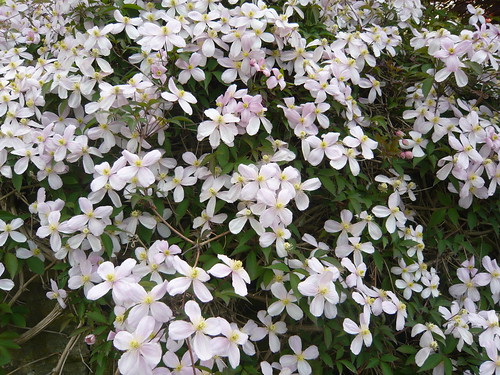
Clematis from alpina, montana or patens groups.
Crataegus – hawthorns, look out for prunifolia
Cytisus and Genista – brooms including burkwoodii crimson flowers and goldfinch cream

Read More Read More

Growing Marguerites – Argyranthemum

Growing Marguerites – Argyranthemum

Madiera mch11 343

Marguerites are a small genus of plants ‘Argyranthemum’. They are part of the wider daisy family and look very similar to Chrysanthemums.

They can be frost tender plants originating from Madeira and the Canary Islands.

Whilst Marguerites are shrubby perennials they are usually treated as annuals and propagated from cuttings or seed each year.

Marguerites Varieties

  • Some plants are named Marguerites because of their appearance. All are daisy like with a central yellow disk and white, yellow or pink petals.
  • Argyranthemum frutescens is a yellow flower often called the Dill daisy.
  • Argyranthemum gracile produces prodigious quantities of white flowers during summer and well into autumn.

Growing Tips

  • marguerites make summer bedding plants for borders, containers and often for use in hanging baskets.
  • Through warm summers  the plants remain in flower for long periods.
  • Some also have very attractive foliage with finely cut leaves .
  • Take basal cuttings in the late winter.
  • In mild areas plants may over winter outside with top-growth getting cut back but underground regrowing in spring.
  • Grow in full sun and well-drained soil.
  • Pinch out the growing tips to encourage a compact habit.
  • Plants will tolerate some wind.

Marguerite Daisy also called the Ox-eye daisy and Anthemis or Golden Marguerite are not true Argyranthemum but are available from Thompson & Morgan

Marguerite as Standards

  • Some Marguerites are grown as standards on long stems and are kept from year to year.
  • These standard plants really must be kept frost-free.
  • They don’t need much, if any, water in winter.
  • Treat like tender Fucshias for storing and propogation
  • Keep the Marguerites ticking over through winter so they start growing from the top not the base. Pinch out lower growth.
  • Take cuttings in case you lose your main plants.

0764525557Book Cover

Growing Okra or Ladies Fingers

Growing Okra or Ladies Fingers

Okra

Abelmoschus esculentus or Okra aka lady’s fingers or gumbo is a flowering plant in the mallow family.The seed pods are popular as a vegetable in Caribbean cookery.

Growing Okra

  • Okra is grown for its edible, hairy, green seed pods.
  • Originating in Africa, the plant is cultivated in tropical and warm temperate regions around the world.
  • Okra likes hot, sunny, humid conditions, a challenge for any British gardeners.
  • A conservatory, greenhouse, low glass frame or cloche is best and a second covering of plastic over plants will help raise humidity more.

Read More Read More

Big Purple Plants

Big Purple Plants

021

What is purple and where do you draw the line between dark pink and dirty red? How much blue should be included to make a purple plant? Does it really matter anyway?

My selection starts with a small Lewisia flowering freely in my garden wall.
As we have said before Lewisia is a ‘trendy’ plant flowering in a range of bright almost neon colours. Give them a try, they thrive in the dry.

Peony

This tree peony flower is 10″ across and too stunning to leave out of this picture post. The petals are very thin and the flower will only last a few days but it is worth the garden space as it is one of the first of my Peonies to flower.
As often happens the colour in the flower is more intense at the base of the petals where this Peony is almost a black/purple.

Cornwall 151

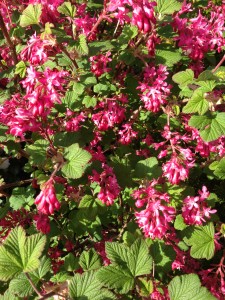
The flowering Currant is a garden favourite as one of the early purple flowering shrubs that takes over from the spring abundance of yellow.

g 001

Easy African Violet Care – Saintpaulia

Easy African Violet Care – Saintpaulia

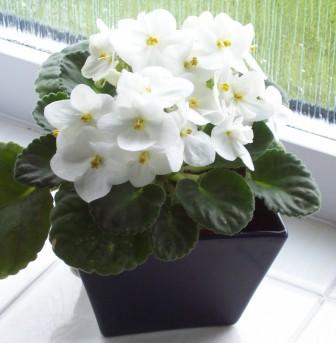
Not all violets are violet coloured at least not African Violets.

More plants die from over watering than lack of water and this is particularly true for African Violets. These blue, pink, white and violet or bi-coloured plants are native to mountainous tropics and need very little water. Here are some gardeners tips to avoid killing your favourite African Violets – Saintapulia.

Watering Tips

  • Only water African Violets when the soil is dry and I mean dry!
  • Soak the plant with (soft) warm water when it is begging for a drink.
  • Let all the surplus drain off. Do not leave any water in the saucer.
  • Top or bottom watering are both acceptable but it may be easier for beginners to start with bottom watering to avoid drenching the fleshy leaf stalks.
  • Read More Read More

Novel Eco Gardens

Novel Eco Gardens

‘Novel Ecosystems’ is a catch all phrase to encompass the changes in an environment created in part by human contact.

From an ecological stand point the free movement of ‘life’ forms that  integrate with the new surroundings creates a localised eco-sytem. Consider this from the point of view of a garden that contains many imported plants, non-native species and even crops grown out of season. We gardeners intervene in ‘New Ecological World Order’ either consciously or otherwise.
Book Cover

Eco Changes in the Garden

  • Conversion of greenbelt and pasture to housing or building on new sites can set up a domino of changes.
  • The commercialisation of the horticultural industry since the Tulip Mania of 17th century has seen a growth in imported plants.
  • Plant explorers seeking new, exotic or different species brought diversity back to the UK.
  • The quest by gardeners for something new, better or different encourages change.
  • Cross breeding has created may hybrids between native and invasive plants.
  • New intentional and unintentional ecosystems created in areas of urbanization

Eco Problem Plants

Read More Read More

Favourite Fruit Varieties

Favourite Fruit Varieties

What is your favourite fruit?

Currants

From the Ribes currant family I prefer the Red currant for making pies. However I also grow Black currants R nigrum for the intense flavour. They bear fruit from new shoots made the previous year so prune some old wood in winter.
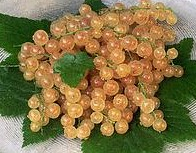
I have just tried White currants last year and they are similar in cultivation to Red currants but need little or no pruning.

Soft Fruit

  • I have just planted a new bed of strawberries. My previous attempts were in a shady place and didn’t excel. This time I have tried a variety called Loran plus a dozen plants from my brother in law type unknown. The plants have had three wet weeks to get established and by the end of next month will be ready for the winter rest.
  • Raspberries were not brilliant this year but made 18 jars of jam. Many of the canes are up against a hedge and therefore short of water much of the year so I am content with the result.
  • It is a long time since I grew Loganberries and I pick wild blackberries again for pies
  • A thornless Blackberry may be suitable for a child friendly garden
Sculpture in Garden Harmony

Sculpture in Garden Harmony

Sculpture at Harlow Carr

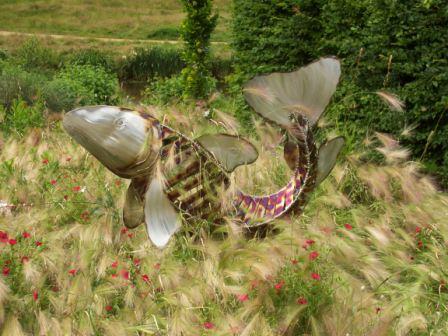
Harlow Carr the RHS garden in Harrogate has a series of gardens through the ages. This sculpture is part of the offering for the Festival of Britain 1951. To me it looks a lot more modern than that but certainly none the worse.

Which came first the sculptural design or the planting scheme? Either way the two combine in a special harmony that needs to be seen. The light wind (yes it can be a light wind in Yorkshire) was moving the oat grass around the leaping fish in a realistic impression of the sea. The colouring on the fish scales was picked out by the flowers that were subservient in the overall design.

Design Tips  from The Harlow Carr Fish

  • Simple planting schemes can be very effective.
  • Don’t use too many varieties of plant.
  • Seed heads can give movement and contrasting effects
  • Link the key elements of any sculpture to the planting in shape, form, colour or style.
  • There was a pond just beyond the fish that linked themes together
  • Consider the impact for each season before starting planting.

Book Cover

See Barbara Hepworth sculptures in the Yorkshire Sculpture Park