Browsed by
Author: hortoris

Growing Ferns and Shuttlecocks

Growing Ferns and Shuttlecocks

fern


Growing Shuttlecock Ferns

My ferns are making a spring comeback and this Ostrich Feather Fern looks like its name. As the fronds uncurl its other common name the Shuttlecock Fern will also be appropriate. However its real name is Matteuccia Struthiopteris the only fern in this particular family. To find out more visit The British Pteridological Society.

The fronds distinctive shape make the fern easy to identify. The ostrich fern looks best grown in groups on its own in dappled shade in woodland. The plant spreads slowly by underground rhizomes and can build up large groups.

Cultivating Ferns

  • Ferns grow in light woodland and most prefer damp and an open structure to the soil with a high humus content.
  • Larger types with delicate fronds dislike windy conditions
  • Ferns are shallow rooted and resent being disturbed.
  • Plant in early autumn to allow roots to settle before winter. Avoid relocating ferns once planted.
  • All soil will benefit from added humus but in sandy soil this and a thick mulch are essential.
  • In a harsh winter mulch to protect the crowns.
  • Once the danger of frost has passed the previous years fronds should be cut back.
…

Read More Read More

Deadheading Gets More Flowers

Deadheading Gets More Flowers

Don’t let them seed until you have had the fill of flowers from your plants.

171

Encourage your plants to go on flowering by taking off the dying and dead flowers to encourage more flowers.

Why is deadheading necessary?
Cutting off the spent flowers before they put energy into seed production is called Deadheading. It is worth doing that now (Mid April) to your Daffodils so the bulbs get the energy for next year.
Many plants particularly bedding plants will flower again and again if deadheaded. Flowers are pre-programmed to go on flowering until they have set seed, as part of species survival. Once they have set seed they stop flowering.
Deadheading tidies up plants that may otherwise get damaged or look unsightly.
Many shrubs will put energy into new growth for next season.
You can extend the flowering period or get a second flush of flowers on Lupins for example.
Deadhead to stop prolific plants from self-sowing in places you do not want and all weeds.


How you Deadhead

Prune the spent or finished flowers or pinching them off with your fingers.
For plants with lots of tiny flowers it may be easier to deadhead by shearing back the whole plant.
Cut off Lupin spikes as the bottom flowers turn to seed so you get a second flush.

What not to Deadhead

Plants grown for the beauty of the seedhead like late flowering clematis Honesty and Nigella.
Plants grown for their winter berries such as Pyracantha and Roses grown for Hips (Rugosa types).
Ornamental grasses and plants that will not flower again that year like Poppies.
Plants that keep on flowering or self-deadhead like Alyssum and modern Petunias.
Plants where you want to collect the seed or self sowers.
…

Read More Read More

Growing Water Loving Caltha aka Marsh Marigolds

Growing Water Loving Caltha aka Marsh Marigolds

Marsh Marigold

Pond life can be enhanced with Marsh Marigolds also known as Kingcup, Mayflower, May-blobs, Water-bubbles and botanically as Caltha palustris. It grows well in wet meadows, marshes, stream sides and wet woodlands. The leaves are kidney shaped and a glossy, deep green.

Cultivation of Marsh Marigolds

It grows well in shade or partial sunshine and likes damp roots.
Marsh-marigold can be propagated by sowing fresh seed on a good quality seed compost.
Available in aquatic sections of garden centres or from wild seed merchants.
Propagated by division in spring, removing some of the larger leaves to reduce water loss through transpiration.
Ensure that plants are well watered during the establishment phase.

Varieties and Descriptions
Marsh Marigold has yellow petals or sepals and yellow stamens
Caltha palustris ‘Flore Pleno’ has double yellow flowers with greeny-yellow centres.
Caltha palustris alba is more compact and has single white flowers.
…

Read More Read More

Hippocratic Oats & Medical Garden Conditions

Hippocratic Oats & Medical Garden Conditions

Hippocratic Oats

Do you suffer from Plumbago
Is your back a little sore
Or perhaps it’s Pyracanthus
Which you caught in Singapore
You’ve a nasty little Hosta
Which I think I’ll have to lance
And I notices a Spirea
Has been leading you a dance
Are you getting forgetful
Is Nemesia the cause
Does your Antirrhinum pain you
When you’re walking out of doors
You’ve had Skimmia Rubella
I can see it in your nose
And Cornus Capitosa
Has played havoc with your toes
How is your Viburnum Tinus
Have you lost your sense of smell
Use Syringia Reflexa
That should help to keep it well
I’m afraid your Macrocrocarpus
Isn’t really up to scratch
And do avoid Nigella
It’s a nasty thing to catch
Still I think you are doing nicely
Watch your Quercus in your knees
Take your Berberis twice nightly
Cheerio! Next patient please!

Doctor G. Arden

Herbal treatments for none of the above see

Get Ahead of the Garden Game

Get Ahead of the Garden Game

Gardeners get ahead of the game as experience tells them to remember earlier lessons.

mauve-garden

A garden is for life not just Spring and Summer so you need to play a long game and plan ahead. Our top tips for 12 months time follow but you also need to think about the medium and longer term.
Trees will grow more rapidly once established like the Cupressus I have just had to cut back. Conifers may grow 10% a year and as these had grown to over 24 feet when the situation really needed a 10 foot maximum I had a problem and a lot of work to do.

Shrubs need space to spread and as you plant them think what they will be like in 3+ years. You do not want to be moving prize Camellias or Peonies once they are established.  Plant short lived  or less important plants near them that can be discarded as your prize shrub matures. Hedges get thicker and wider even with regular pruning so allot enough space when you set out. Do not let them get out of hand and block light, paths or  access.

Hard landscaping is even more permanent than most plants. Marry your landscaping to the key core trees and plants you want to build the garden around. Prepare in detail and put in long lasting foundations not quick fixes.

Top Tips for a Grand Garden Next Year

  • Feed your bulbs and let them die down naturally. Order more bulbs now.
  • Grow biennial plants from seed eg. sowing Wallflowers from June and pinching out the plants to make them bushy.

…

Read More Read More

My Double Daffodils

My Double Daffodils

Twice as much pleasure? Well for Mothering Sunday double Daffs will go down a treat.
Double daffodils

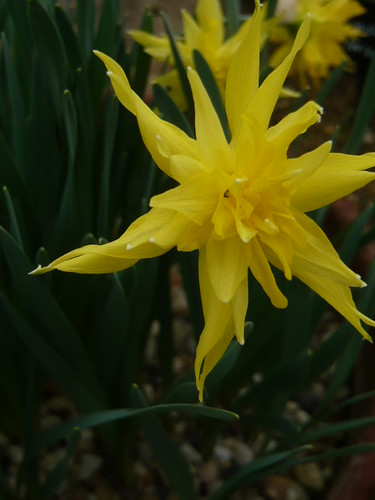
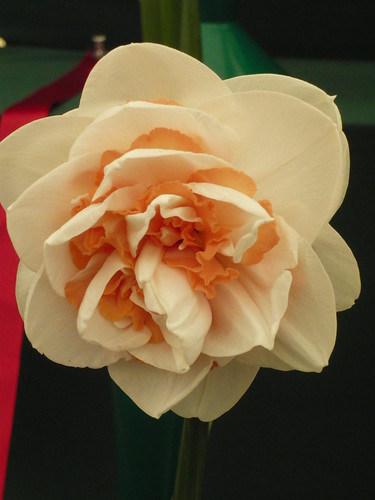
Double the pleasure from Daffodils with extra petals or crinkly trumpets.
I am always on the look out for plants I want to grow next year. I am aiming for shock and awe varieties of common plants and specimen plant of an unusual nature. If I don’t make a note of them in my garden note book I will forget.

Rip Van Winkle Daffodil
My choice of Double Daffodils
Delnashaugh or Repleat have an apricot-pink centre and the slightly smaller Mary Copeland is also unusual.
Dick Wilden is a sulphur coloured sport of Carlton and Golden Ducat or Von Sion are other all yellow doubles.
I grew Winston Churchill this year for cutting. A bit later flowering so I am now enjoying the scent.
Obdam is the only pure white I have found but I can tolerate White Marvel, Acropolis and Bridal Crown in my white bed.
After the point above I then discover that Thompson Morgan sell 2 other white doubles, Erlicheer and Daffodil poeticus Plenus.
Rip van Winkle has an unusual petal shape that appears to be a double.

Daffodil selection

Just a final word for Cheerfulness a really go doer from the Tazetta Division 8 not quite a double but with puffy centre petals that look the part.

As with many flowers please have a close look and take your time to appreciate the fantastic choice we gardeners have available.
Daffodil selection

Wildflower Seed Suppliers

Wildflower Seed Suppliers

new-picture-3

In addition to our sponsors, Thompson Morgan click on advert to buy your seeds and sundries, the following companies supply Wild Flower seeds and plants.

Reputable suppliers will not take plants from the wild or endanger any threatened species. Most offer advice and will help select a range of seeds appropriate for the location and region where they are to be grown. Native species will perform better and be more use to wildlife. Seed mixtures are usually available and are an economic and successful way to buy.
wild flowers

Top Suppliers

  • British Seed Houses Ltd  01925 654411
  • John Chambers 01933 652562
  • Landfill Flowers Ltd 0151 7371819
  • MAS      01249 819013
  • Emorsgate Seeds  01533 829028
  • Naturescape  01949 851045
  • Natural Surroundings  01263 711091
  • HV Horticultural   01747 811778
  • Yellow Flag Wildflowers   01452 311525

Website for Wildflower Plants

Top 5 Variegated Bamboo

Top 5 Variegated Bamboo

bambusa-variegata

Variegated Bamboo are available in several varieties but with over 1000 bamboos to choose from that is not a surprise. The best range of bamboos in the UK are available from Moor Monkton Nursery. After my top 5 variegated bamboo list there are some tips on growing and buying bamboo.

Top 5 Variegated Bamboos

  1. Arundinaria viridistriata ‘Pleioblastus’ is a decorative dwarf bamboo with wonderful variegated foliage making it a highly desirable addition to your garden. The bright yellow and green streaks provide an eye catching focal point when planted in large planters or in your border and it will grow to approx 1.2m.
  2. Phyllostachys aureosulcata spectabilis has a combination of rich custard yellow stems slashed with green streaks. An exotic looking bamboo with stems that look red in sunlight. Ht 3m.
  3. Bambusa multiplex ‘Alphons Karr’ is an unusual bamboo with decorative canes that are pink at first then turn bright orange-yellow with fine green stripes between the nodes. Grows to approx 3m in a clump and ideal for growing in a large pot or it can be grown indoors. …

    Read More Read More

Green Roof Of Sedum or Grass

Green Roof Of Sedum or Grass

Bear the weight of wet soil in mind but enjoy the fun of a green roof. Try maintain easy access to make life simpler.

grass-roof

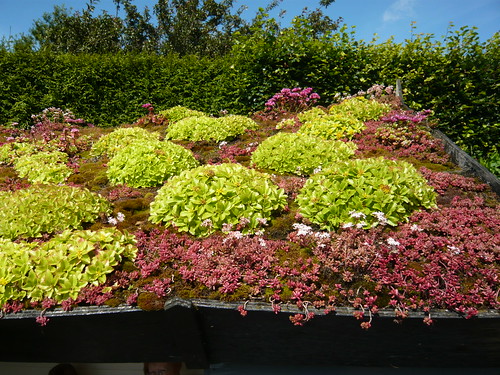
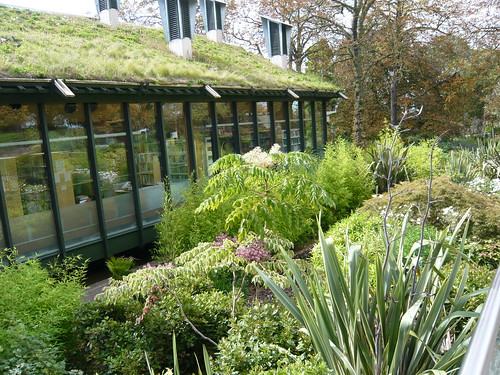
The Ecology Building Society as befits it’s brand values has a green roof on it’s HQ building. Green roofs can be a mixture of grasses or Sedums or both and all have similar benefits.

Benefits of Green Roofing

Golden Acre green roof

  • Improves energy efficiency with a natural thermal insulation.
  • Green roofs remove CO2 from the atmosphere to maintain the area of green plant growth.
  • Providing a natural and safe area for insects and a aesthetically pleasing wildlife habitat.
  • Good sound insulation is provided by the layers needed for a green roof.
  • Water and run off drainage control is increased.

Further Tips

  • The independent Green Roof organisation ‘livingroofs’ has more information.
  • Seed mixes are available containing plants able to withstand the rigours of a roof top environment species such as Chives, Oregano, Blue fax, White Stonecrop, Tunic flower and Ornamental grasses.
  • Sheffield University hosts the Green Roof Centre

Green roof

Gardening for Wildlife

Gardening for Wildlife

Book Cover

This book is a joint publication between RHS and the Wildlife Trusts and covers a surprising array of subjects in an easy to follow manner. I have picked up some quick tips to put on my Twitter feed.

The Wildlife Trusts

  • With 765,000 members The Wildlife Trusts are the largest UK voluntary organisation dedicated to conserving the full range of the UK’s habitats and species, whether they be in the countryside, in cities or at sea.
  • Wildlife Trusts manage 2,256 nature reserves covering more than 90,000 hectares. They stand up for wildlife, inspire people about the natural world and foster sustainable living.
  • Wildlife gardening is much more than just making friends with the local birds, hedgehogs and dragonflies. It’s a way of connecting to the whole web of life. Years ago the countryside was rich in wild plants and animals but today that’s no longer true. Many of the creatures that thrive in gardens – for example frogs, goldfinches and sparrows are having a hard time in their old haunts.
  • Gardeners can make a real difference. Key garden features are trees and hedges, dead wood, water, and a real variety of plant shapes and sizes. Once we provide these simple needs, we can see gardens not just as our outdoor rooms, but as an interconnected network of green patches that together amount to a very special nature reserve whether in the heart of the metropolis, or within the wider countryside.

Tips for Wildlife Gardening …

Read More Read More