Browsed by
Author: hortoris

Wordsworths Daffodils

Wordsworths Daffodils

one-or-two-daffs

Even William Wordsworth probably saw fewer daffodils at a glance than appear in this shot. Intensive planting in grass land have now naturalised into producing a fine spring display(with some litter).

‘I wondered lonely as a cloud that floats on high o’er vales and hills

When all at once I saw a crowd a host of golden daffodils’


Tips for Buying Daffodils

  • Visit a Daffodil Show this Spring – Your local or regional spring daffodil show is a perfect place to view many different types of daffodils. You can easily find out which varieties do well in your part of the world.
  • Order Early – This is not a marketing gimmick. Early orders generally get the pick of the crop. Your chances are better of getting exactly what you order with no surprises. Catalogues are generally sent in spring and early summer.
  • Compare Prices – Prices are not the same. Our opinion is that you do get what you pay for. Cheap bulbs are generally cheap for a reason. Smaller bulbs generally give smaller and fewer flowers. If it seems too good to be true it probably is!
  • Be Aware – Some General Bulb Merchants routinely change bulb names and some may even substitute varieties without your knowledge. Ask other gardeners on Web forums about their experiences with specific suppliers. Try choose a specialist supplier.
  • Read the Fine Print – Check the guarantee. Terms vary widely. Will they replace or refund in case of problems. Are the bulbs guaranteed true to name?
  • Choose a variety – make sure you variety is fit for purpose. If you want cut flowers or varieties for naturalising seek out appropriate types

…

Read More Read More

Grow Stir Fry Vegetables

Grow Stir Fry Vegetables

garlic and chillies help spice up a stir fry and are easy to grow at home.

pak-choi

Oriental vegetables are at the heart of a good stir fry and are quite easy to grow from seed. Here we look at Pak Choi, Japanese Onions, and Lemon Grass but peppers are also easy to grow in a cold greenhouse.

Pak Choi can be grown as a baby leaf or left to mature into thick, succulent stems of white and green. These quick maturing Oriental vegetables are rich in Vitamins A and C and also contain calcium and iron. They also can be ornamental in a garden.
Three unique hybrid Pak Choys or Chinese cabbage for salads or stir fries come from Thompson Morgan.

  1. Purple – An eye catching reddish-purple top leaf contrasts with the green undersides and the bright green stems. Purple F 1 ‘s  purplish colour is enhanced by cooler autumn weather. Also found as purple Choy Sum.
  2. Green – Produces vibrant apple green stems. Ready to harvest in 30 days from sowing as baby leaf or 45-70 days as semi-mature to full size heads. Earlier and later sowings can be made under cloches or fleece to produce a supply of baby leaves.
  3. White – Produces pure white, juicy stems. Also ready in just over a month and flowers leaves and stalks can all be eaten.

Japanese Onion Shimonita is a novel Japanese salad onion with extremely thick tubular foliage. Plants given a wider spacing can achieve huge stems similar to leeks. The flavour is unusually sweet lower in the stems and more pungent towards the leaves. The plants are winter hardy.

Lemon grass Cymbopogon citrates is harder to grow as a half-hardy perennial needing a minimum temperature of 50F. The wonderful lemon-scented grass is a real delicacy that is essential in oriental dishes and an excellent addition to soups, curries, sauces and fish dishes. Germination can be slow but it grows surprisingly tall in the right conditions up to 5 ft.

For bulk try Romaine lettuce leaves and some mushrooms – the world is your oyster!

Prune Hard Hardy Shrubs

Prune Hard Hardy Shrubs

These shrubs should shoot back after they are given a hard prune.
Pyracantha

Hedging
Box
Privet – Ligustrum
Yew -Taxus
Pyracantha
Holly – Ilex
Ivy – Hedera

Rose Hip
Flowering Shrubs
Forsythia
Honeysuckle – Lonicera
Potentilla
Lilac – Syringa
Weigela
Wisteria
Santolina
Rose
Hydrangea
Clematis
Gardeners Tips 2011 Choysia
Other Shrubs
Bamboo
Berberis
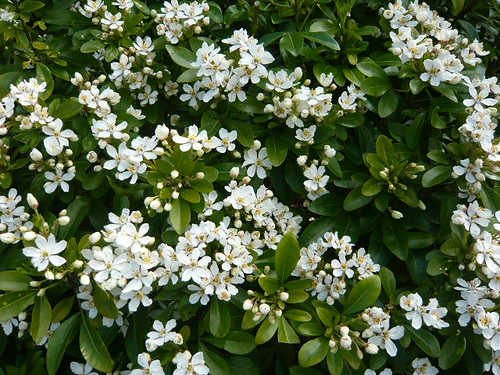
Choisya
Quince – Chaenomeles
Euonymous
Mahonia
Pholadelphus
Spirea
Vines
Mahonia 'Charity'

Alstromeria Floral Display

Alstromeria Floral Display

alstromeria1

As you may know Alstromeria are one of my favourite cut flowers. They are long lasting, showy and easy to arrange. The flowers in the Mothers day vase probably came from Columbia but it makes me resolve to grow more varieties locally this year.

A disaster happened in the garden this week 2008 when a clump of red Alstromeria were dug over by accident and the fleshy roots were chopped to bits. As they tend to be deep rooted I hope all is not lost. It is a warning to watch where you dig when herabaceous plants have withdrawn into the soil for winter.

Now in retrospect I know more about the fleshy roots. They are not crucial to survival. The plants survived and have clumped up very well. I was encouraged to buy some more named varieties from Hayloft plants. They arrived this week.
Spitfire, Callisto, Cahors, Sirus and Saturne are the varieties I chose. Red, orange, pink yellow orange and shocking pink respectively all with the yellow flecked petals. …

Read More Read More

Tips for Growing Annual Lobelia

Tips for Growing Annual Lobelia

Fine seed slow to bulk up – our tip is to buy kinder pots or germinated seedlings unless you want a lot of plants.

Photo cc by storebukkebruse

Lobelia annuals can be excellent fun to grow. Given the right conditions they can grow quickly after a slow start and   flower from June until late autumn.

The blue or purple Lobelia are often coupled with Alyssum for the edge of borders to give a cottage garden effect. …

Read More Read More

Spring Spraying Fruit Trees Against Pest and Disease

Spring Spraying Fruit Trees Against Pest and Disease

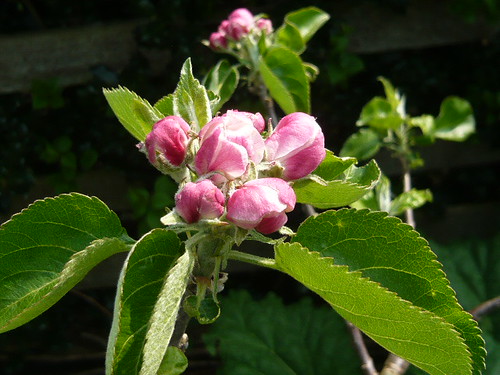
Spring spraying of apple and pear trees is essential to avoid various troubles. Leaf, blossom and fruit problems need tackling with controlled spraying at the right time. It is a mistake to wait until you see signs of attack because it will be too late to remedy the problem, prevention is better than cure.
apple blossom
The first spray against scab and fungal problems should be made around mid-April. Traditionally Lime sulphur was used to control fungi, bacteria and insects living or dormant on the surface of the bark. That tends to burns leaves so it is not used on evergreen plants. Modern methods spray with Copper Sulphate, Bordeaux mixture or a fruit tree recommended systemic fungicide such as Dithane.Start spraying in April, again after petal fall and at the end of June, failing that read the instructions on the bottle. …

Read More Read More

Top Tips for Cut and Come Again Leaf Crops

Top Tips for Cut and Come Again Leaf Crops

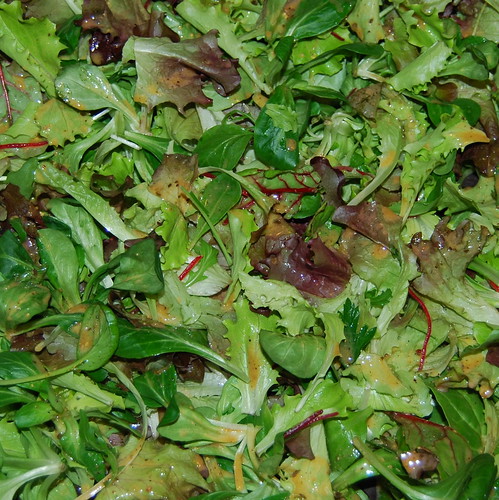
‘Eat your greens’ and your reds, whites and purples in a mixed salad.

Grow leaf crops from seed and use the leaves as needed. When the leaves are 2-5 inches  high, which will take four to five weeks, they’re ready to eat. Loose-leaf lettuces need to have leaves harvested regularly.  In the fridge they’ll keep for three days or so.

Vegetables raised as cut-and-come-again crops can be planted much closer together than you normally would since the veggies are not going to be maturing into full sized plants before harvest time. …

Read More Read More

Russell Lupin and Lupin Origins

Russell Lupin and Lupin Origins

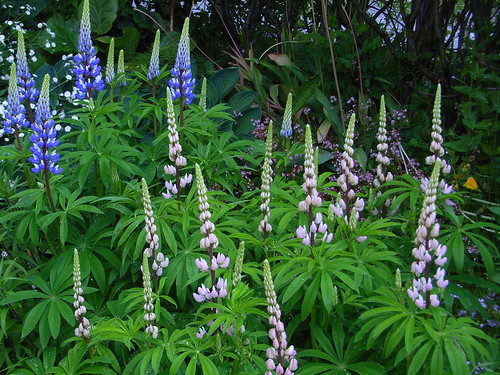
Rustle up some space for Lupins a grand perennial favourite.

Photo cc by Magnio

Originally Lupins (Lupinus polyphyllus) were introduced into Britain from North America in 1826. They had the blue flowered spikes we occasionally saw on railway embankments with some whiter flowers. Fast forward to 1937 and the RHS awarded its highest honour to a ‘ jobbing gardener’ George Russell for developing a strain of Lupins that caused a sensation.

Photo CC  by Thor Thorson 1

Russell developed his Lupins by rigorous selection of seedlings, aiming and achieving a central stalk or spike totally obscured by colourful flowers. Many of us would cut back Lupins after flowering to prevent the setting of seed and weakening the plant, but to George Russell that was the opposite of his intent.

…

Read More Read More

Ranunculus from Alps to Florist’s Bulbs

Ranunculus from Alps to Florist’s Bulbs

Buttercup is more than a cough syrup or a yellow meadow flower!

Ranunculus

With their many-petals and peony-like flowers, Ranunculus asiaticus tubers make delightful additions to border or container plantings. They are also highly valued as long-lasting cut flowers. Early spring plantings will produce summer flowers or they can be planted in autumn to flower in early spring.

  • Ranunculus ficaria enjoy a warm, sunny position, in soil which remains moist during the growing period.
  • Also known as Persian buttercups they grow 12-15 inches tall.
  • Like many bulbs and corms they will rot if the ground is waterlogged.
  • …

    Read More Read More

Tips for Growing Aubergines in the UK

Tips for Growing Aubergines in the UK

Aubergine

Grow Eggplants from Seed

  • Fill a pot with seed compost then firm lightly.
  • Scatter a few seeds across the surface – not too thickly
  • Cover with a thin layer of soil or vermiculite, water and label.
  • Place in a propagator or warm spot or on a windowsill with a plastic bag over the top to help germination. Remove bag when seeds have germinated in about 7-10 days.
  • When seedlings are 3cm tall give each their own 7.5cm pot.
  • Pot into a larger pot with general purpose compost when roots show through drainage holes.
  • When plants are 25cm tall, stake with a cane and pinch out the top to make new branches.
  • Plant into large pots for a sunny sheltered spot or grow in a greenhouse
  • Pinch out the growing tip when 18″ high and the side shoots when 3/4 fruit are set
  • Feed, using a high potash feed, when the fruit has set .
  • Aubergines can suffer from blossom end rot, so ensure that plants do not dry out.

Watering
Aubergines are incredibly thirsty and dry compost will quickly lead to a check in growth.
Ensure that the plants never dry or the fruit will be poor and tough.

Feeding
The first flowers will appear when the plants are quite small.
Give high potash feed when first flowers show.
When this happens feed weekly with a liquid feed tomato fertiliser.

Cropping
Fruits can be harvested with scissors or a sharp knife about August-September
Each aubergine or eggplant will produce up to 3 or 4 fruits, depending on variety and the weather.
Pick when skin is shiny and fruit is a good size.

Aubergines from Thompson Morgan

Aubergine and Varieties to Grow

  • Egg-plants or Aubergines are related to potato, tomato and deadly-nightshade.
  • Aubergines may survive outside in mild areas but they like warmth.
  • Old varieties had bitter flesh that needed salting but modern varieties are now much more palatable.
  • Outdoor fruits will be smaller.
  • For the small fruited cultivars it might be six inside and three out of doors
  • Aubergine Baby Rosanna F1 produces an abundance of golf ball sized, bitter free baby fruits throughout the summer on dwarf plants.
  • Spineless plants of Aubergine Calliope produce a heavy crop of oval, baby fruits that mature to a cream streaked purple colour.
  • Traditionally coloured black varieties include Florida High Bush and Moneymaker F1.

Seed varieties from Thompson Morgan
…

Read More Read More