Browsed by
Author: hortoris

Flower Arranging – Corkscrew Hazel
Flower Arranging – Corkscrew Hazel

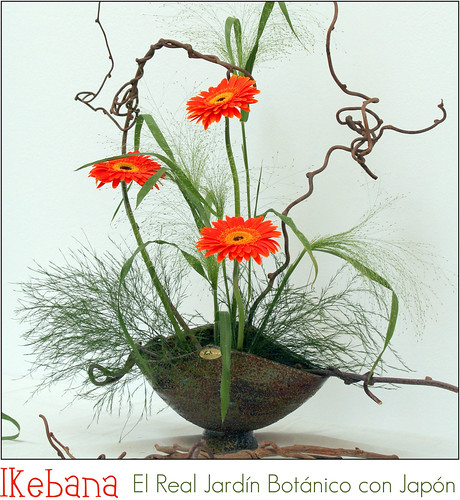
Ikebana

Growing Corkscrew Hazel for Flower Arrangements

  • Corylus avellana Contorta is also known as Harry Lauders Walking Sticks or Corkscrew Hazel
  • It is a slow growing deciduous shrub that can grow to 20′ wide and 25′ high when mature.
  • Corkscrew Hazel looks best in winter and from February-March there are pendant male catkins on the bare branches.
  • Propagation is best done by layering branches.
  • When in leaf the mid green leaves give an ugly deformed appearance.
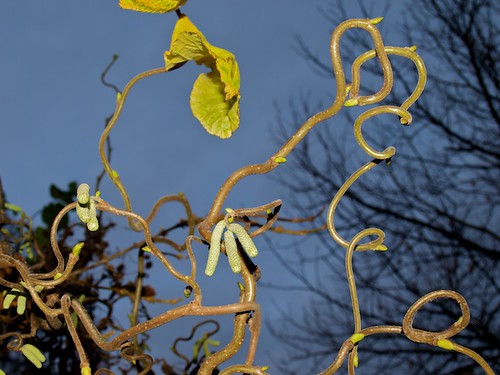
Corylus avellana 'Contorta'

Special Tips for Flower Arranging with Corkscrew Hazel

  • Use the twisted stems and bare twigs in winter arranging.
  • Twigs in bridal bouquets can add movement and interest.
  • Corkscrew Hazel are popular as a base for Ikebana
  • Catkins will gradually lengthen and become more yellow when kept in water for several weeks.
  • Twigs can be dried and used year after year. They can also be painted for Christmas.
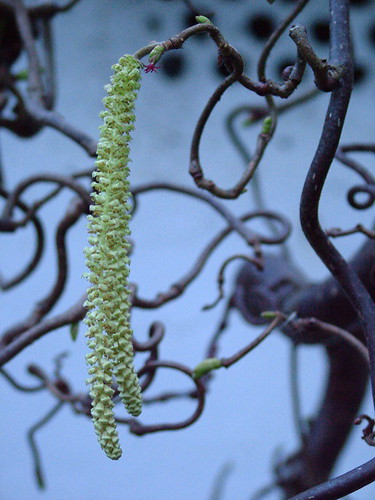
Spring

A full array of books on Flower Arranging and related subjects is available from Amazon. You will find more advice and artistic inspiration amongst this selection.

Special Tips for Flower Arranging with Contorted Willow

  • I have included Contorted Willow with Corkscrew Hazel as the issues, effects, tips and methods are quite similar.
  • Twigs and stems can be dried and used several times or be sprinkled with glitter for Christmas.
  • The cut twigs will last several weeks and eventually the willow leaves will open on the stem.
  • Contorted Willow is available under several names including Salix matsudana Tortuosa (Salix babylonica tortuosa), Salix x erythroflexuosa or common names Dragons Claw and Tortured Willow.
  • Salix the Willow family are more vigourous than the Corylus Hazels

Contorted Willow
Credits
Ikebana by M. Martin Vicente CC BY-NC-ND 2.0
Corylus avellana ‘Contorta’ by Stadtkatze CC BY-NC-SA 2.0
Spring by David Davies CC BY-SA 2.0
Contorted Willow by touring_fishman CC BY-NC-SA 2.0

To grow a generic mix of flowers for arrangements and bouquets check out Thompson & Morgan

Book Cover
Ikebana: The Art of Arranging Flowers by Shozo Sato and Kasen Yoshimura

Corkscrew Hazel and Contorted Willow are plants that both produce twigs that add movement and style when flower arranging. Mix with just one type of flower as less is generally more with Hazels and Willows.
Turn your arrangements into botanical works of art – here are some examples and clubs you could join.

Other plants discussed in this series
Dahlia
Euphorbia
Pittosporum
Alstroemeria
Fatsia Japonica
Phormium
Flower Arranging – Phormium

Flower Arranging – Phormium

phormium
Encyclopaedia of Flower Arranging Techniques: A Comprehensive Visual Guide to Traditional And Contemporary Techniques by Marcia Hirst

Growing Phormium for Flower Arrangements

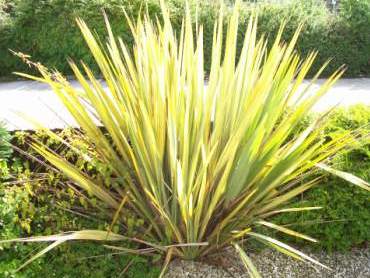
  • Phormium or New Zealand Flax is an evergreen, clump forming, hardy perennial.
  • The long strap shaped leaves contain fiber that makes a cord used for tying.
  • In winter it is wise to protect plants with a deep mulch of straw, bracken or dry leaves.
  • Phormium Cookianum can have 4 feet long leaves, Variegatum are green with creamy white margins.
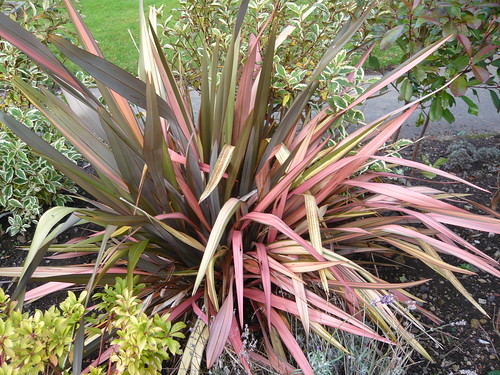
  • Phormium Cookianum Triclour leaves are red, yellow and green.
  • Phormium tenax is the other popular hybrid with a variety of leaf colours including pink and bronze, orange-red, salmon, yellow and other shades.

Book Cover

Special Tips for Flower Arranging with Phormium

  • Cut a few leaves to include in your arrangement.
  • Modern or European style arrangements with limited amounts of flowers and foliage show the leaves off to best advantage.
  • Condition by plunging into a deep bucket of tepid water for 24 hours.
  • The leaves can be sprayed with leaf shine or smeared with a small amount of cooking oil to enhance the appearance.
  • Phormium have a long vase life of several weeks if the water is changed regularly.

A full array of books on Flower Arranging and related subjects is available from Amazon. You will find more advice and artistic inspiration amongst this selection.
I would also recommend the Harrogate spring flower show where I am always stunned by the floral arrangement amongst the plants on display.

To grow a generic mix of flowers for arrangements and bouquets check out Thompson & Morgan

Credits
Architectural Phormium
Low Allergy Garden Phormium
Architectural Phormium

Turn your arrangements into botanical works of art – here are some examples and clubs you could join.

Other plants discussed in this series
Dahlia
Euphorbia
Pittosporum
Alstroemeria
Fatsia Japonica
Corkscrew hazel

Flower Arranging – Euphorbia

Flower Arranging – Euphorbia

Euphorbia

Growing Euphorbia for Flower Arrangements

  • Spurge, Milkweed or Euphorbia is a genus of hardy shrubs, succulents and perennials that are striking in appearance and invaluable in the garden or for flower arranging.
  • Leaves are usually lance shaped and stems contain a milky sap that can irritate your skin.
  • Varieties to grow for flower arranging include;
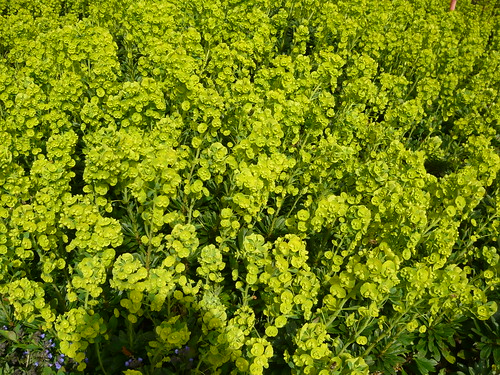
    Euphorbia amygdaloides robbiae with evergreen rosettes of dark green leaves and lime green bracts.
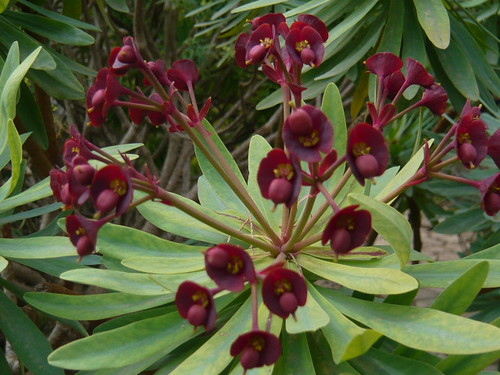
    Euphorbia amygdaloides purpurea a marooon stemed variety.
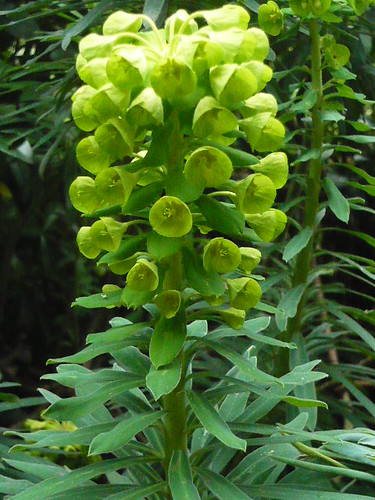
    Euphorbia characias wulfenii with blue green leaves that grow up to 4 feet.
    Euphorbia polychroma with bright yellow bracts.
    Euphorbia myrsinites is a prostrate form with grey glacous leaves
    Euphorbia griffithii is a hardy perennial that dies down each winter but young foliage is reddish green and the flowers are orange-red.
  • These plants are interesting and easy to grow and add shape and texture to your garden.

Euphorbia atropupurea

Special Tips for Flower Arranging with Euphorbia

  • Do not cut when the Euphorbia are too immature or the stems will wilt.
  • Cut stems must immediately be sealed by flame to stop sap oozing out.
  • Resinge or reseal if you trim the ends when re-cutting.
  • Vase life should be 7-10 days if conditioned in a bucket of water overnight first.

A full array of books on Flower Arranging and related subjects is available from Amazon. You will find more advice and artistic inspiration amongst this selection.

I would also recommend horticultural flower shows where I am always stunned by the floral arrangement amongst the plants on display.

Book Cover

Top Ten Euphorbia selected from a range of a over 2000 varieties in the genus.

Euphorbia

Euphorbia are a wide range of plants many of which are suitable for flower arranging where the bracts and leaves both add interest.
Turn your arrangements into botanical works of art – here are some examples and clubs you could join.
To grow a generic mix of flowers for arrangements and bouquets check out Thompson & Morgan

Other plants in this series
Dahlia
Pittosporum
Alstroemeria
Fatsia Japonica
Corkscrew hazel
Phormium

Flower Arranging – Pittosporum

Flower Arranging – Pittosporum

Pittosporum Tenuifolium 'Tom Thumb'

Growing Pittosporum for Flower Arrangements

  • Pittosporum is a genus of evergreen shrubs and small trees that grow well in coastal areas and sheltered situations.
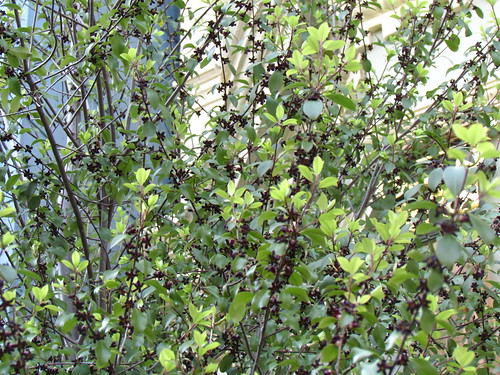
  • The popular cut foliage has pale green undulate leaves on black twiggy stems.
  • Pittosporum tennuifolium is the most popular species with florists and gardeners as it is hardy
  • Other colours of leaf are available including Pittosporum tennuifolium Purpureum (above), Pittosporum tennuifolium Variegatum with crinkled greeny white leaves and Pittosporum tennuifolium Warnham Gold.

Book Cover
Flower Arranging by Mark Welford and Stephen Wicks

Special Tips for Flower Arranging with Pittosporum

  • The dense nature of the leaves on the black twiggy stems makes Pittosporum a good filler for a hand tied arrangement.
  • Before using the stems split them and stand them in a bucket of cold water overnight.
  • Bunches can be wrapped in cellophane as a gift or used in a bridal bouquet
  • To make a hand-tied bunch hold the stem of the first piece of plant in your hand and gradually add one piece at a time. Spiral the the stems in one direction only as you build up your design. When the bunch is complete tie off with raffia or twine at the point where your hand held the bunch. Finally trim the bottom of the stalks to the same length (it might even stand up on it’s own.)

Pittosporum in the rain

A full array of books on Flower Arranging and related subjects is available from Amazon. You will find more advice and artistic inspiration amongst this selection.

I would also recommend the Harrogate spring flower show where I am always stunned by the floral arrangement amongst the plants on display.
Pittosporum

Credits
Pittosporum Tenuifolium ‘Tom Thumb’ by áš›Tilly Mint ášœ, CC BY-NC-SA 2.0
Pittosporum in the rain by wallygrom CC BY-SA 2.0
Pittosporum tenuifolium by chuck b. CC BY 2.0

Pittosporum tenuifolium

Pittosporum tenuifolium can be used for flower arranging to good effect due to the dense nature of the crinkly edged leaves on dark stems. grow in sheltered locations to get plenty of useful foliage.

To grow a generic mix of flowers for arrangements and bouquets check out Thompson & Morgan

Other plants discussed in this series
Dahlia
Euphorbia
Alstroemeria
Fatsia Japonica
Corkscrew hazel
Phormium

Flower Arranging – Fatsia Japonica

Flower Arranging – Fatsia Japonica

Bold and glossy Fatsia Japonica is easy to grow and incorporate into your flower arrangements.

ARALIACEAE 五加科 - Japan Fatsia (Fatsia japonica) 八角金盤

Using Fatsia Japonica for Flower Arrangements

  • Fatsia Japonica or Aralia Japonica is also known as ‘Fig Leaf Palm’.
  • It is a useful evergreen shrub growing up to 15 feet tall.
  • It tolerates maritime conditions and temperatures down to minus 10 C.
  • Panicles of milky white, globular flowers are produced in Autumn followed by black berries.
  • Can be underplanted with Hostas to provide two sources of flower arranging material.

Book Cover
Church Flowers: The Essential Guide to Arranging Flowers in Church by Judith Blacklock

Special Tips for Flower Arranging with Fatsia

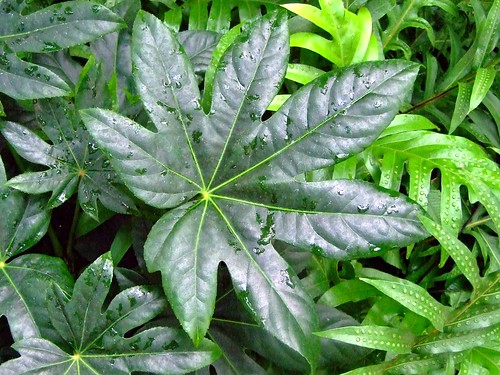
  • Fatsia has hand shaped, leathery leaves are apple-green in colour.
  • The bold shiny leaves work well in traditional flower arrangements.
  • The different sized leaves which the plant produces are useful for different types of arrangement.
  • The leaves should be cut a day before arranging and given a long deep drink.
  • The edge of the leaves or fingers can be clipped to a shape that suits your arrangment.
  • The leaves can be laid flat to form a green base of splayed finger shapes.

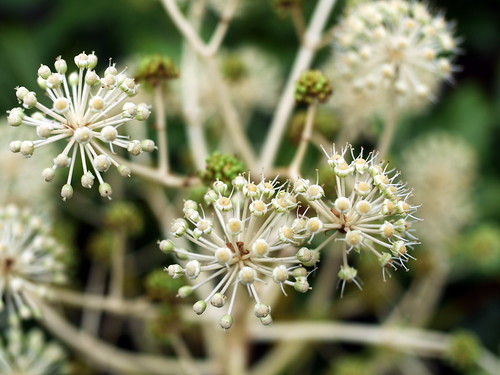
Fatsia japonica Flowers

A full array of books on Flower Arranging and related subjects is available from Amazon. You will find more advice and artistic inspiration amongst this selection.

I would also recommend the Harrogate spring flower show where I am always stunned by the floral arrangement amongst the plants on display.

To grow a generic mix of flowers for arrangements and bouquets check out Thompson & Morgan

Other plants discussed in this series
Dahlia
Euphorbia
Pittosporum
Alstroemeria
Corkscrew hazel
Phormium

Credits
ARALIACEAE 五加科 – Japan Fatsia (Fatsia japonica) 八角金盤 by kaiyanwong223 CC BY-NC-SA 2.0
Fatsia japonica Flowers by the justified sinner CC BY-NC-SA 2.0

Rose Pruning in Spring is a Snip

Rose Pruning in Spring is a Snip

Rose Pruning In Spring

  • Pruning in Spring will generate good growth and flowering later in the year.
  • To avoid weak stems prune hard leaving about 12″ on tall Old Fashioned or HT roses and 6″ in short roses. Cut out all spindly growth and very thin stems.
  • Prune in spring to encourage strong stems in an open cup shape of branches.
  • Prune at 45° slopping away from an outward-facing bud.
  • Use good sharp tools it makes rose pruning easier
  • Feel free to reshape your roses at anytime as you would other plants. Roses want to grow and produce seeds via flowers and they will benefit from deadheading and judicious trimming.
  • Water, feed and mulch after pruning.
  • See how the experts prune:

    Rose Snip Tips in Spring

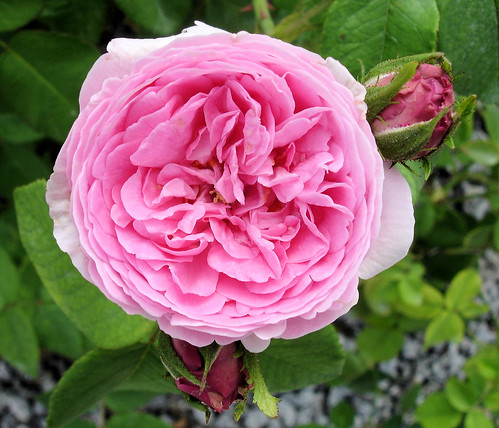
    • The Bourbon type rose De la Maitre-Ecole above will have a fantastic scent when in bloom during mid-summer if you care for it from spring.
    • Fertilize with rose fertilizer that has equal amounts of NPK plus trace elements.
    • Mulch new and young plants with well rotted compost or bark not grass clippings.
    • If planting new roses some people put a banana skin at the bottom of the hole for extra potassium but I would be happy with bone meal.
    • New trees need watering particularly if there is a dry spring.
    • Spray with a fungicide in March or April
    • Give roses space to develop but you can under plant with small bulbs or violets

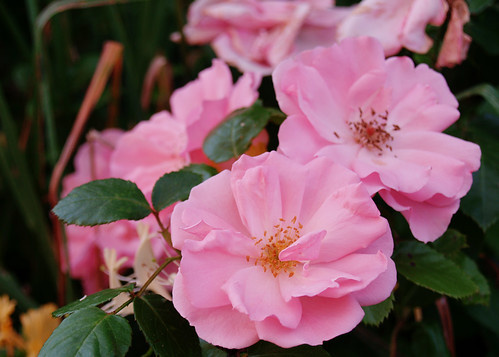
    our roses
    Other Resources
    25 Types of Rose

    Photo Credits
    from Getrud K CC BY-NC-SA 2.0 source
    our roses by EssjayNZ CC BY-NC-SA 2.0

    Snip away at your roses in spring before Easter and the new stems and leaves will help produce some great summer flowers. For big flowers on HT roses dis-bud so just one good one is allowed to flower per stem and you will be rewarded by potentially growing the ‘best in show’.

Top Spring Garden Shrubs

Top Spring Garden Shrubs

It is only just April and the colour is showing in the early shrubs. These are some of my favourites.

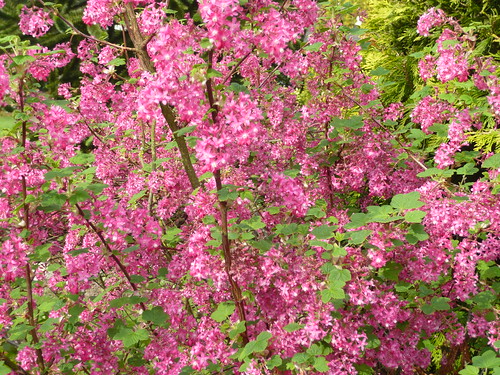
Ribes

Flowering Currant ( Ribes Sanguineum)

The small currant leaves can’t hide the large amount of red or pink flowers hanging from all the leaf joints in tassel like profusion. On one tassel I have just picked there are 11 star like flowers open and at least as many buds to still open. A great show of pink and red at this early stage of the season when these colours are harder to find. They don’t last very long but are a worthwhile plant to grow. The leaves have a strong and pleasant currant smell

  • Cuttings are easy to root and I just cut a 10″ length and push it into a patch of garden where I want a new plant.
  • They often grow wild on patches of land or a friendly neighbour would give you several cuttings. Look for a colour that you like and ask after it has finished flowering or at the backend of the season.
  • Plants can grow to 5 feet and more so keep pruning out some of the old wood and trim the plant to a manageable size.
  • Pruning should be done shortly after flowering – cutting back to a new bud.
  • I grow them in sun and shade at they both perform.
  • You often see them at coastal areas so they do OK by the sea

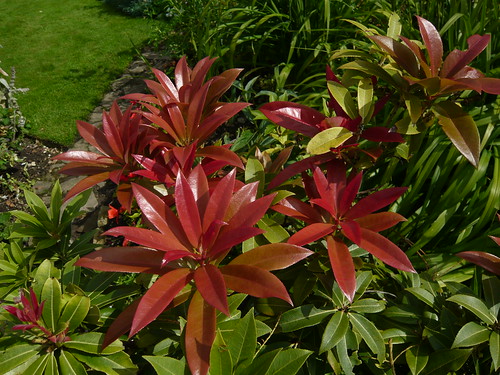
Pieris Japonica

Pieris japoninca

Pieris japoninca

These shrubs are usually grown for the new bright red leaves that start emerging during April. This does them a disservice as the mature bushes are now covered in clusters of white flowers shaped like lily of the valley. This shape of flower gives the plant a common nick name of ‘Lily of the Valley Bush’.

  • Pieris Forest Flame has red leaves that eventually turn pink then green. They grow slowly but robustly.
  • Pieris Mountain Fire is another variety whose name implies where it came from and what to expect. Whilst ‘Flaming Silver’s new leaves are pinkish and the remaining foliage is variegated with white edges
  • The new Katsura range have darker leaves, red or pinkish flower tassels but I have found it less vigourous.
  • Pieris like a moist acidic soil
  • Cuttings can be taken in June or July when flowering has finished. They are more difficult to root than Ribes but the plants are worth the effort

Pieris Katsura hybrid

Mid April and the Flowering currants are giving way to the Pieris japonica exchanging pink for red in floral terms and berries for small clusters of bell shaped flowers.

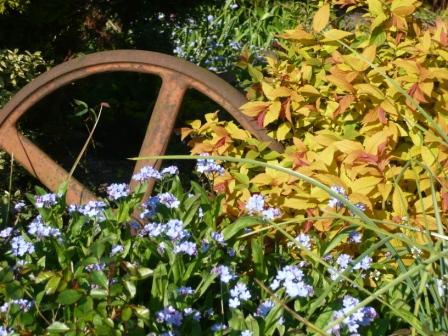
Spirea Magic Carpet.

Spirea leaf just bursting on this orange leafed variety. The white blossoming Spireas flower at the end of the month

Growing Vanda Orchids

Growing Vanda Orchids

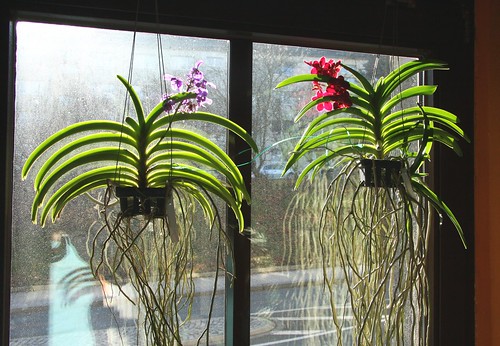
vanda-paperbark

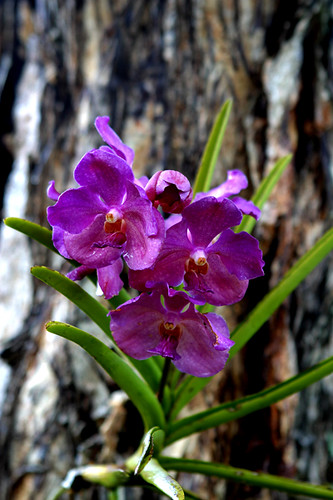
For growing Vanda orchids all you need is warmth and humidity although a foliar feed is often beneficial. Vandas are tropical orchids that live on trees with the aerial roots hanging free.

Simple Growing Method

  • Grow Vandas in a tall cylindrical vase with the roots trailing to the bottom. Wedge the shallow pot holding the crown in the top.
  • In summer fill the vase with tepid water and leave for 25 minutes then pour it all out.
  • Every fortnight add some Orchid food to the water.
  • Grow the Vanda at 60 degrees Fahrenheit or above
  • Vandas grown in baskets or high temperatures require watering more often.

Vanda Orchideen

What is a Vanda Orchid

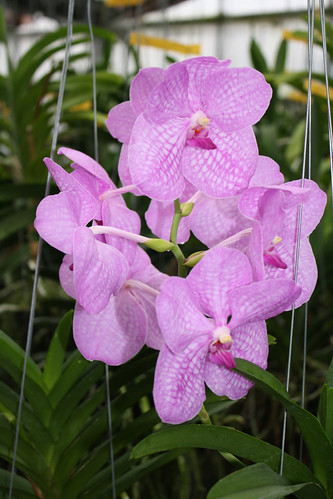
  • Vandas flower in rich colors, including blue, purple, red, orange and yellow.
  • The flower spikes usually carry 8 to 10 blooms and last for several weeks.
  • These Dutch grow Vandas are displayed in a light window situation.
  • The distinctive strap like leaves form a stem as they develop and grow. The flower spike rises from the base of the leaves.
  • The shallow pot is their to add stability.

Vanda

What are Ascocendas

  • Ascocendas are a cross between Vandas and Ascocentrum
  • Most find their origin in Thailand, Myanmar, India, Java and the Philippines.
  • They are also evergreen epiphytes with an upright leaves.
  • They can bloom twice or three times a year with long lasting flowers.

  • Credits
    vanda-paperbark by maxful CC BY-NC-SA 2.0
    Vanda Orchideen by blumenbiene CC BY 2.0
    Vanda by NjuTIKA, CC BY-NC-SA 2.0

Shrubs for Cutting Garden Foliage

Shrubs for Cutting Garden Foliage

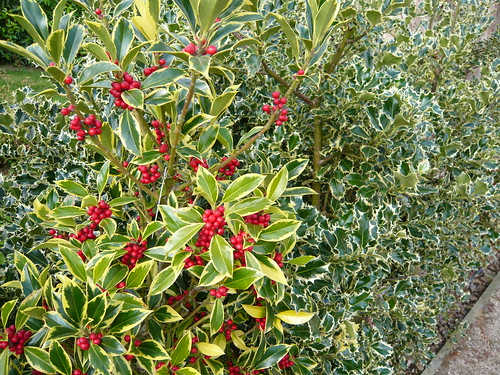
Hollies

A well stocked cutting garden can be a flower arrangers delight.
The gardener in the family can earn significant brownie points if they can provide foliage to complement the flowers.

What Makes a Cutting Garden

  • A part of the garden dedicated to growing plant material for decoration and flower arrangements is called a cutting garden.
  • A cutting garden is not meant for display. You can mix colours and plants. You can plant closer together to encourage quick straight growth and feed plants with a view to harvesting as they reach their peak.
  • Good horticultural practice of soil preparation, feeding and caring regimes will boost crops.
  • Foliage from trees and shrubs should be harvested when the shrub is sufficiently established to regrow.
  • Many trees and shrubs will be located throughout the garden. They do not need to be in a special area but take care with the end appearance after you have harvested for your display.

…

Read More Read More

Berry Bushes for Birds

Berry Bushes for Birds

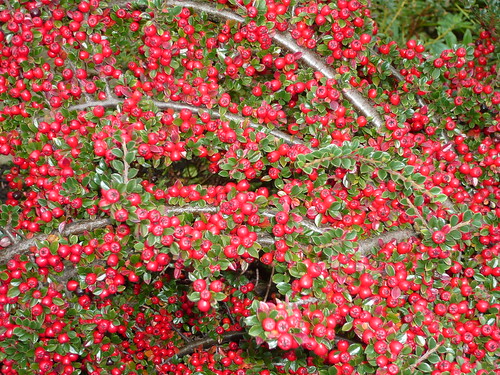
cotoneaster berries

If you like birds in your garden encourage them with appropriate plants.

Some birds like the seeds in the berry others are keen on the fruit as a whole. Fieldfare, redwings blackbirds thrush and sparrows are just some birds that like a berry good feed.

Deciduous Berry Bushes

  • Berberia thunbergii will thrive in full sun producing small flowers and long lasting red berries.
  • Dog woods like cornus alba will produce creamy white flowers followed by grey coloured berries. Cornus florida is a tree rather than shrub with red berries.
  • Malus floribunda or Crab Apples are potentially very decorative and produce an abundance of fruit.
  • Mountain Ash or Sorbus aucuparia is a small tree with sprays of orange or red berries in autumn.
  • Viburnum trilobum has glossy leaves turning red in autumn. The berries are bright scarlet.
  • Most of these berry bearing bushes have good autumn leaf colour. They all earn there place in the garden.

…

Read More Read More