Browsed by
Author: hortoris

Snowdrops at the Harrogate Orchid Show

Snowdrops at the Harrogate Orchid Show

Snowdrop woods

At month I visited Bramhope and the local Harrogate Orchid show. I guess I could post quite a few pictures of Orchids but the grounds of the hotel were full of Snowdrops hence the photo above.

Wether it is growing naturally outdoors or displayed indoors the visual impact is one of the key areas where we seek perfection.The way an item is displayed or shown to others is one of gardening’s greatest skills.

So I have succumbed with these display shots

Orchids show 2010
The host societies display in the main room.

The display case below had a deep recess but with a matt black backing it looked more like a picture frame. Also ideal for Auriculas I would imagine.

Orchid display case

For me and many others visitors to the show it was the scented Orchids that seemed to attract the most attention. For me the star of the show was Dendrobium kingianum with a very strong hyacinth-type scent to the flowers. The flowers were less than an inch across and pure white with a hint of purple.
Dendrobium like plenty of bright filtered sunlight but not direct sunlight that may burn the leaves. They can be difficult to re-flower if they do not receive sufficient light.

As usual there was a good mix of suppliers and other interested parties. For a small show the number of exhibits seemed to fill every nook and crannies in the hotel. Next year look out for the dates or consider joining.

New Plant Ideas

New Plant Ideas

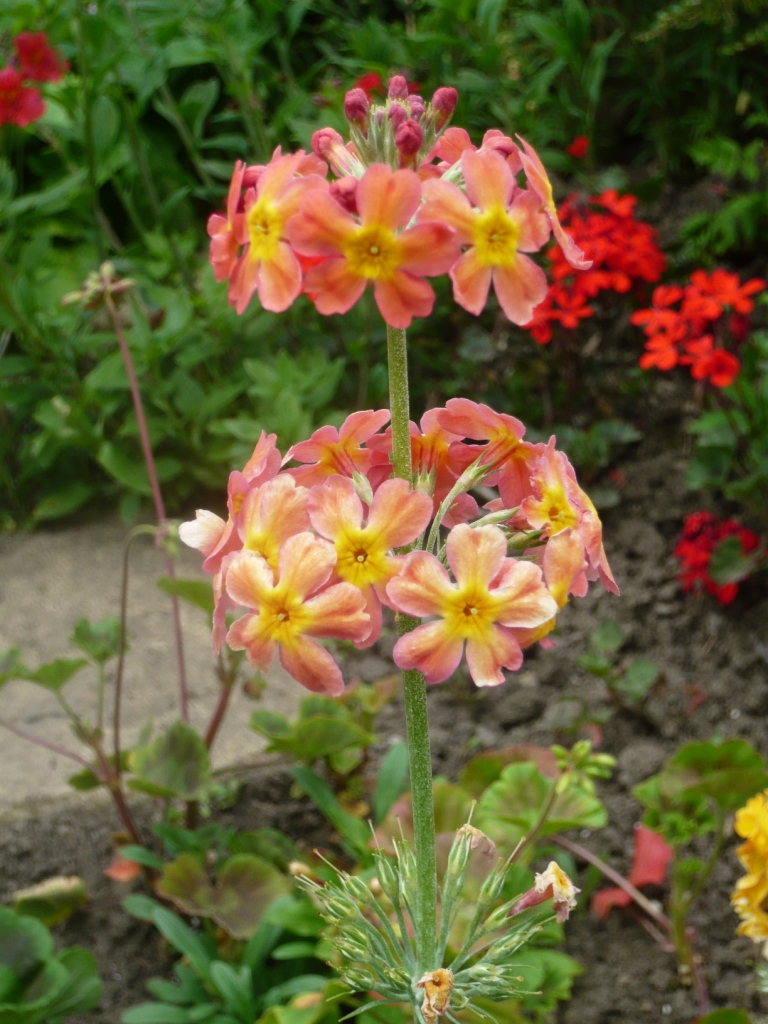
Auricula

Try something that you don’t often see in your neighbours garden for this summer. There are many new varieties of traditional plants like this fancy Auricula or new seed packets on sale.
Horticultural suppliers are always breeding new stock and launching plants when they have built up salable stock levels. My guess is that the multi-coloured Coreopsis will be popular this year. The Limerock series is being pushed by the RHS with Lavender Pink ‘Passion’, Apricot Pink ‘Dream’ and Ruby Red ‘Ruby’ available at £14.99 each (not quite a snip).

Gerbera ‘Sweet Hardies’ are the new form of hardy Gerbera. Up to now the flowers have been smaller and less attractive than the tender types.

Frilly petaled Roses are being imported from USA for this years Chelsea show. If  Harpageant ‘Easy Does It’ catches the eye, with its range of colours that blend through Red, Peach and Apricot at different stages of the flowers life, then I would seek out one for my garden.

Variegated Impatiens Masquerade has unusual lime green and green foliage to offset the red flowers. …

Read More Read More

Growing Hepaticas The Japanese Way

Growing Hepaticas The Japanese Way

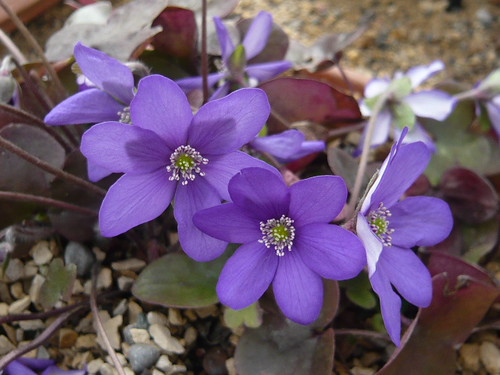
Hepatica nobilis Cobalt

Hepaticas deserve the cult status they have long enjoyed in Japan. In early spring the most beautiful cultivars are displayed in all their glory.

Japanese Methods of Growing Hepaticas

  • Hepaticas are strongly grown in Japan where new cultivars and hybrids can change hands for large prices.
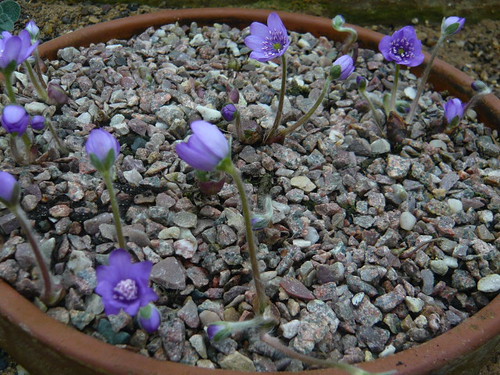
  • Growers in Japan developed special pots called Tanba-Yaki pots (similar but smarter than our ‘Long Toms’) for their Hepaticas. They are made from clay and deeper than our traditional pots.
  • Hepaticas enjoy sunshine whilst in flower but the Japanese move the pots into the shade for the rest of the year.
  • The Japanese name for Hepaticas is Yuliwariso which translates as ‘the plant that breaks through the winter snow’.
  • Grow in moist well drained soil containing leaf mould. Woodland slopes can work very well.
  • Hepaticas are still a Japanese cult plant and there are several hundred forms available to collectors. British alpine specialists are beginning to obsess about these little flowers, which belong to the Ranunculus family and come in various colours and forms.
  • There are more than 650 forms of these rarefied Japanese miniature forms in cultivation.

Hepatica nobilis

Hepaticas Cultivation

  • This photograph was snatched at Harlow Carr alpine house. Such an environment saves them from becoming water logged.
  • On bright sunny days Hepatica flowers open wide to display their simple beauty and unobtrusive charm.
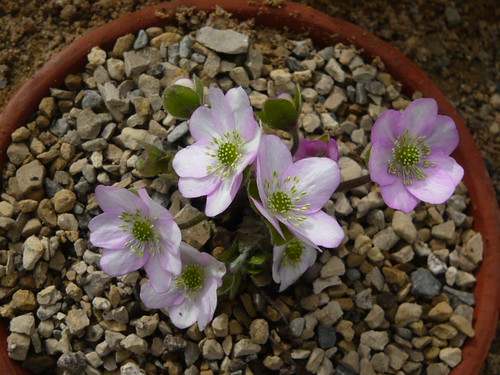
  • The colour range includes mainly blue, pink and white in single, semi-double or double forms.
  • The colour and form of the stamens also vary so that all sorts of delightful combinations are possible.
  • Hepaticas are small clump-forming, almost evergreen herbaceous perennials with attractive lobed leaves, usually green, but some varieties having beautiful variegations or marbling on the upper surface.

Hepatica pyrennaica Apple Blossom

Hepaticas Growing Tips

  • Hepaticas are among the most beautiful flowers of early spring. February and March is the best time to see them in flower.
  • Also known as liver-leaf they are small herbaceous perennials of the buttercup family (Ranunculaceae).
  • Hepaticas are tolerant of alkaline limestone soils.
  • Hepaticas grow in deeply shaded deciduous woodland and scrub or grassland in full sun.
  • They like cool roots and a humid atmosphere.
  • Bare rooted plants can be bought from February to October.
  • Seed is dispatched mid April – May, within 48 hours of gathering as it must be sown fresh. Even then it is slow to germinate taking 9-24 months so be patient.
  • Pollination is by butterflies, moths, bees, flies and beetles.

Hepatica nobilis rosa (II)

Varieties and Species of Hepatica

  • Hepatica nobilis the blue flowered are the easiest variety to grow. They may be slow to become established but are long lived plants.
  • Hepatica pyrennaica Apple Blossom or Elison Spence varieties
  • Hepatica japonica is a variety or range of cultivars that are based on Hepatica nobilis
  • Hepatica transsilvanica has larger blue, white or pink flowers.
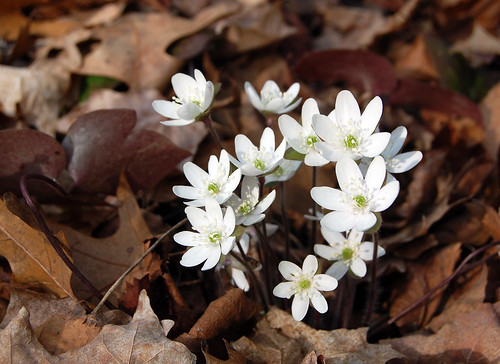
  • Hepatica acutiloba looks like a cluster of small Hellebores.

Sharp-lobed Hepatica

Credits
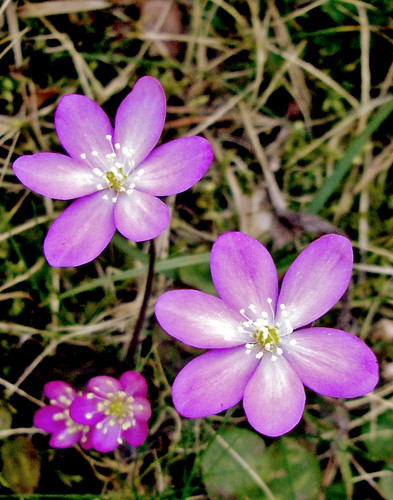
Hepatica nobilis rosa (II) by .Bambo CC BY-NC-SA 2.0
Sharp-lobed Hepatica by pchgorman CC BY-NC-SA 2.0

Source of comments, tips, plants and seeds Ashwood Nursery

Read Hepatica Old new kid on the block

Hepatica the Old ‘New Kid’ on the Block

Hepatica the Old ‘New Kid’ on the Block

A pot grown favourite is still trying to make its mark in main stream gardening.

Hepatica pyrennaica Apple Blossom

Hepatica nobilis cultivation has been popular as a ground cover plant. Blue purple flowers like a simple Anemone flower in blue/purple at about 4 inches high. Now special varieties are capturing the hearts of British growers and alpinists.
They are named after their leaves which look like the three lobes of the human liver.

Leaves and Foliage

  • The leaves are basal and dark leathery green, each with three lobes.
  • The foliage, which follows the flowers, can be almost as interesting as the blooms.
  • Some leaves are arranged in glossy green clover shapes with delicate, dark markings. Others are almost bronze, or marbled, with a pale variegation.

The Flowers

  • Flowers with doubled petals and a range of colour patterns have been developed
  • Hepatica reaches a height of 3-4” and flower from February to May. Flowers may be white, bluish purple or pink; they are supported singly on hairy, largely leafless stems.
  • Hepatica var. japonica f. magna flowers are large and come in shades of blue, purple, red and white, green and occasionally yellow, with contrasting colours for the stamens.
  • Some Hepaticas come with frilly centres, or totally double. Some have two-tone petals and their variations are even more subtle than those seen in auriculas, but you do have to peer closely to appreciate them.

Hepatica nobilis Cobalt

Growing Conditions

  • Hepaticas are not easy to grow and dislike dry conditions.
  • In the wild they grow on sunny mountain slopes and under deciduous trees up to 3,300ft high.
  • Hepaticas are renown for their tolerance of alkaline limestone derived soils
  • Hepatica will grow in both sandy and clay-rich substrates in deeply shaded deciduous woodland and scrub associated with limestone.
  • Moist soil and winter snowfall is a requirement but they dislike dry frost.
  • In spring they need shade and to be kept a little drier through the summer.

Varieties and Species

Hepatica nobilis var. pyrenaica (H. pyrenaica) – Pyrenees slightly easier to grow
Hepatica nobilis var. japonica (H. japonica) – Japan
Hepatica nobilis var. nobilis – European Hepatica – Alps north to Scandinavia
Hepatica nobilis var. pubescens (H. pubescens) – Japan
Hepatica nobilis var. acuta Sharp-lobed Hepatica –
Hepaticanobilis var. obtusa Round-lobed Hepatica – North America
Hepatica transsilvanica – Carpathian Mountains and Transylvania slightly easier to grow

Read Growing Hepatica in Pots or Gardens

Books on Primula, Auriculas and Polyanthus

Books on Primula, Auriculas and Polyanthus

Book Cover
The Primula; Being the Report on the Primula Conference Held at South Kensington, 1886, Together with a Report on the Orchid Nomenclature Conference,

Comment on Primula Books

The internet can’t give you all the knowledge and joy that a book can provide. I am biased as I collect gardening books but am drawing the line at buying books that are digital publications of the Wiki content (sorry I have included one book in this list of books on the Primula family.)
Books and records on the history of plants and how they have been grown, bred and developed can add extra interest for the gardening amateur, professional or obsessional alike.
This is just a list of some of the books in English about Primulas and related species that are available, even if currently out of print.
Part of the fun is adding to a collection via secondhand book shops and I hope to add to this list as I realise other books are in publication.

Book Cover

Primula by John Richards

Primula The Complete Guide by Mary A Robinson shares a fount of knowledge from her nursery in Lincolnshire.

Generic Primula Books

Primulas by Sidney Clapham (1973)
Primulas by A. G Puttock (1957)
Primulas Old and New by Jack Wemyss-Cooke
The Genus Primula In Cultivation And The Wild. by J. J. Halda (1992)
Hardy primulas by H.G Lyall (1959)
Primrose and Polyanthus by Peter Ward
Synoptic Guide to the Genus Primula by G. K. Fenderson
A Plantsman’s Guide to Primulas (Plantsman’s Guide Series) by Philip Swindells (23 Mar 1989)
Primulas of the British Isles (Shire natural history) by John Richards (Jun 1989)
Primulas Of Europe & America. by Smith GF & Burrow B & Lowe D B an excellent Alpine Garden Society Guide
Asiatic Primulas Gardeners’ Guide by Roy Green
‘Primula’ Wikipedia consolidated articles
Book Cover

Auricula and Polyanthus Books

Book Cover
Primroses and Auriculas Wisley Handbook by Peter Ward
The Auricula: History, Cultivation and Varieties by Allan Guest
Auriculas Through the Ages: Bear’s… by Patricia Cleveland-Peck
Auriculas for Everyone: How to Grow and Show Perfect Plants by Mary A. Robinson
Auriculas and Primroses by W.R. Hecker (22 Apr 1971)
Auriculas: Their Care and Cultivation (Illustrated Monographs S) by Brenda Hyatt (22 Jun 1989)
Auriculas by Roy Genders (1958)
Auriculas by Gwen Baker and Peter Ward (5 May 1995)
Alpine Auriculas. by Telford Derek (1993)
Florists’ auriculas and gold-laced polyanthus by C.G Haysom (1957)
The auricula its culture and history. yr. 1898 by George William Johnson (1 Jan 1847)

Book Cover
Auriculas: An Essential Guide (Crowood Essential Guides) by Paul Dorey

Primroses and polyanthus by Harold Charles Taylor (1954)
The polyanthus for garden exhibition and market (Foyle’s Handbooks) by Roy Genders (1958)
The POLYANTHUS : Its History and Culture. by Genders Roy (1963)

I am happy to receive any additions or corrections to this list via the comments section.

Auriculas for Everyone
Mary A. Robinson.
GMC Publications.
ISBN 1-86108-149-9
£14.50 plus £2.50 p&p

Auriculas
G.Baker & P.Ward
B.T.Batsford Ltd.
ISBN 0-7134-7366-5

Book Cover

The Auricula: History, Cultivation and Varieties Allan Guest

Auriculas – Their Care and Cultivation
B.Hyatt Cassell, London.
ISBN 0-304-34070-7

Gooseberry History

Gooseberry History

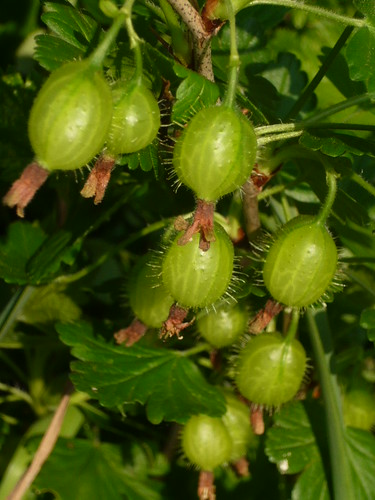
Gooseberry

One of the first fruits to be available for the kitchen and table each year, the gooseberry is an old stalwart. Rhubarb is earlier but is not a true fruit but a herb, still both are good in crumbles.

Gooseberries Since the Middle Ages

  • Great show varieties have names redolent of our military past such as Roaring Lion, Hero of the Nile, Wellingtons Glory or my favourite Hampson’s Tantararara. Far better than the soppy names used for plants in the 21st century.
  • Gooseberry bushes can easily live for 30-50 years and are one of the reasons for their longlived popularity
  • Edward I had gooseberry bushes planted at Tower Bridge in 1275
  • The young leaves were eaten and used as a diuretic according to 16th century Herbals.
  • Gooseberry clubs were popular in England from the 19th century
  • Gooseberries make jam and are grown for pectin for other fruit jams.
  • Gooseberries thrive in most parts of the British Isles.
  • The world record berry weighs 2.19oz and is from the Woodpecker variety
  • The phrase “to play gooseberry” comes from the days when the fruit was a euphemism for the devil.

Gooseberry Shows

  • Competitive gooseberry shows were wide spread but growing for size rather than flavour has fallen out of favour. A handful of shows still survive.
  • Egton Bridge, on the North York Moors National Park, is the setting for the oldest surviving gooseberry show in the country.
  • The show is held in August each year as it has been since 1800. It is organised by the Egton Bridge Old Gooseberry Society.
  • Gooseberry shows were particularly popular over the North of England but have dwindled from about 170 to only 20.
  • Show photos

Links and Sources

Gooseberry

Regal Pelargonium Images

Regal Pelargonium Images

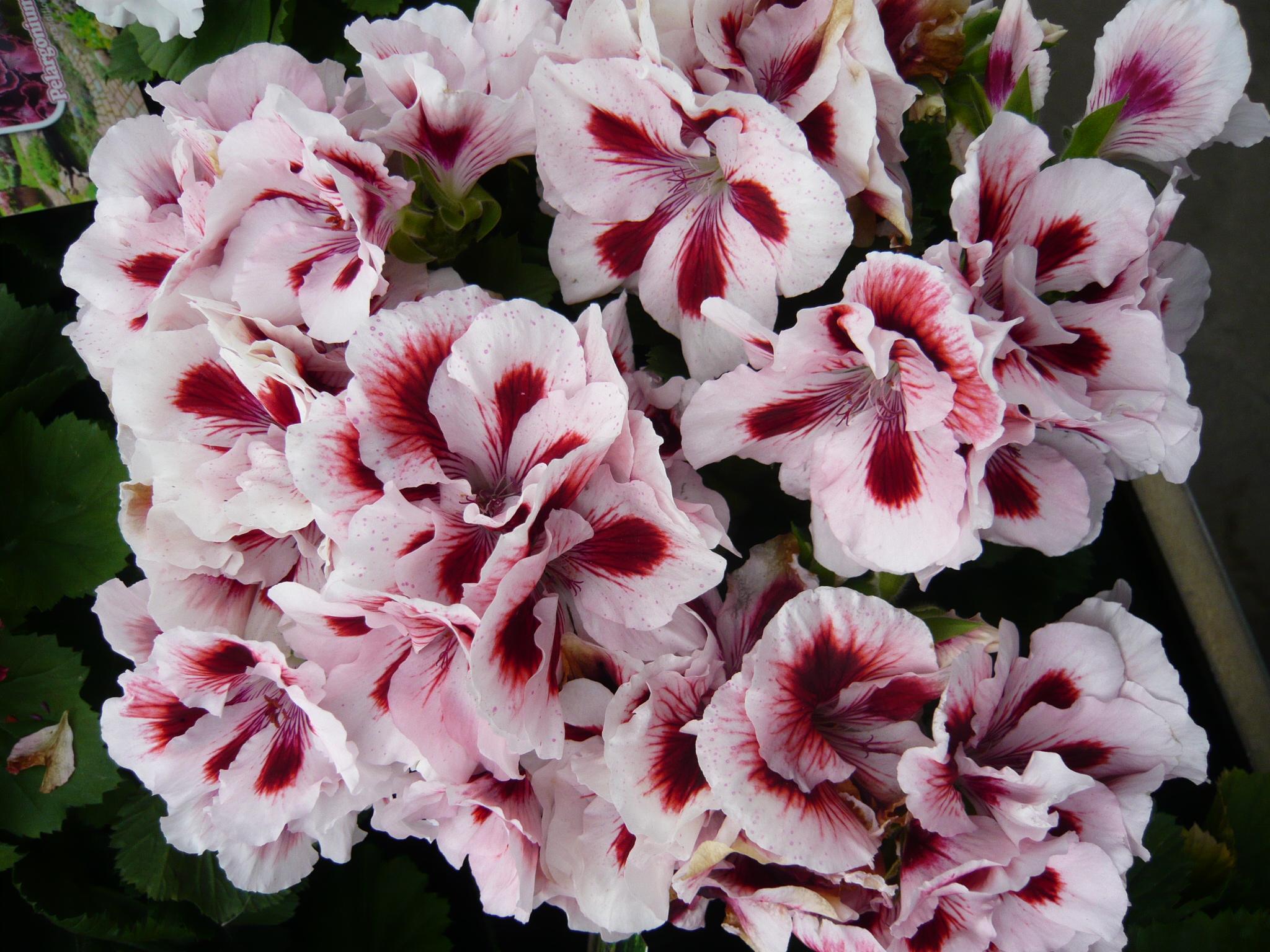
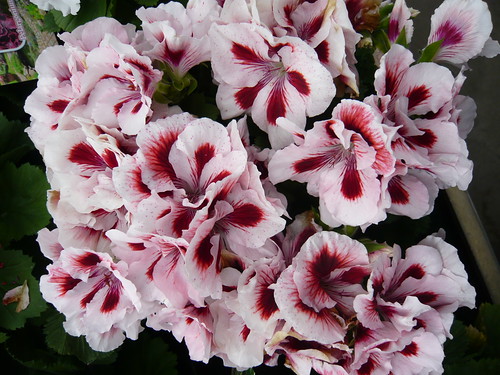
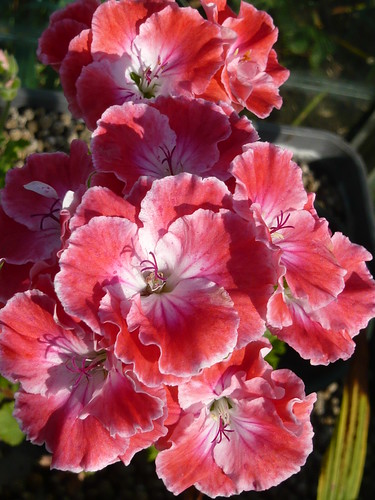
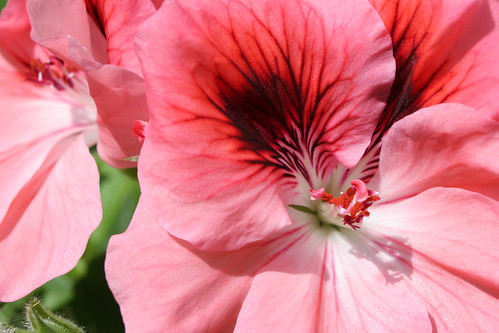
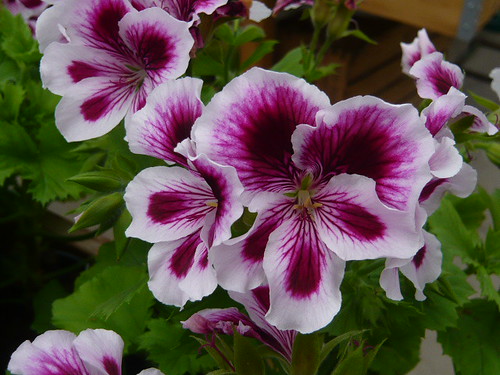
Sumptuous flowers from a houseplant we often call a geranium.
Regal pelargonium

Regal Pelargonium prefer a clay pot and plenty of calcium, so hard water is ideal for watering rather than rain water which will be softer.

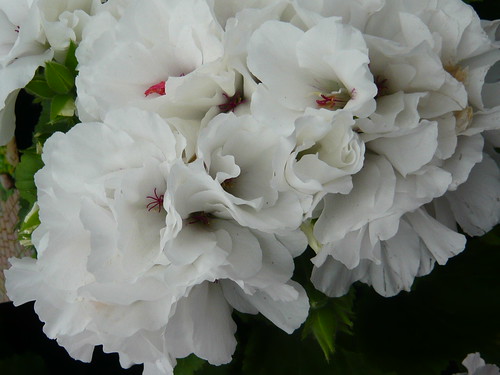
Regal pelargonium

Regal Pelargonium do not require as much cutting back and require a slightly higher winter temperature than zonals.

Regal pelargonium

Never allow Regal Pelargonium plants to dry out completely as the roots will seal and blackleg will kill your plant.

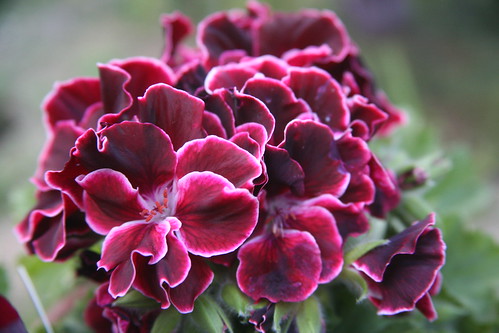
Regal Pelargonium Mrs Innes Rogers

Deadhead old flowers frequently and feed regularly with high potash so that they will perform as well as your Zonals.

Pelargonium regal
Growing Regal Geranium Pelargonium

Regal Pelargoniums

Build Your Regal Geranium Collection

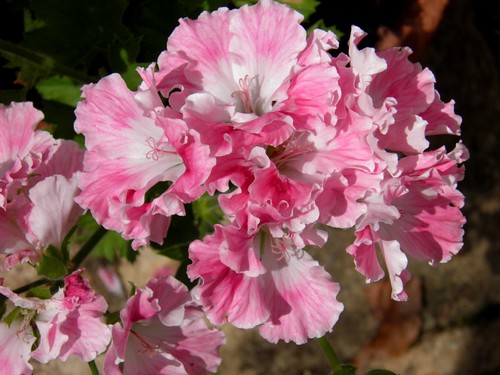
pink regal pelargonium

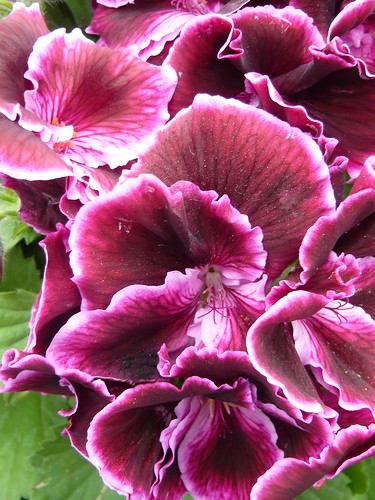
Crimped edges on some petals add to the allure.

IMG_2434

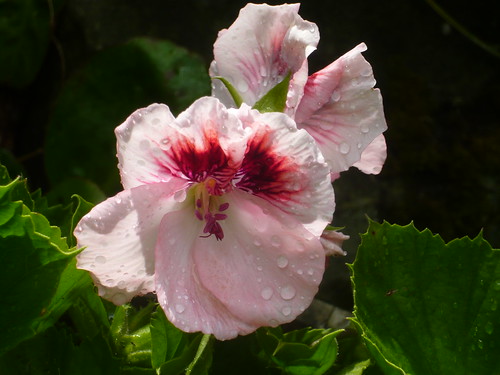
‘Apparently this is a Regal Pelargonium’ sure is David(ed).

regal pelargonium

Other links and information on Pelargoniums

Top 10 Scented leaved Pelargoniums
Pelargonium Grandiflorum and other ‘Geraniums’
Stellar Pelargonium – Bird Dancer Geranium
Photogenic Pelargonium
The Secret of Geranium (Pelargonium) Cuttings
Growing Regal Geranium Pelargonium
Miniature Pelargonium
Dwarf Pelargonium aka Geranium
Tips for Growing Geraniums (Pelargonium)

Credits
Regal Pelargoniums by Destinys Agent CC BY-NC 2.0
pink regal pelargonium by Chris & Angela Pye CC BY-NC-SA 2.0
IMG_2434 by DavidQuick CC BY-NC-ND 2.0
Swanland Nurseries Pelargonium Cultural tips

Thompson & Morgan supply seeds and plants in season.

Cotoneaster Horizontalis Growing Tips

Cotoneaster Horizontalis Growing Tips

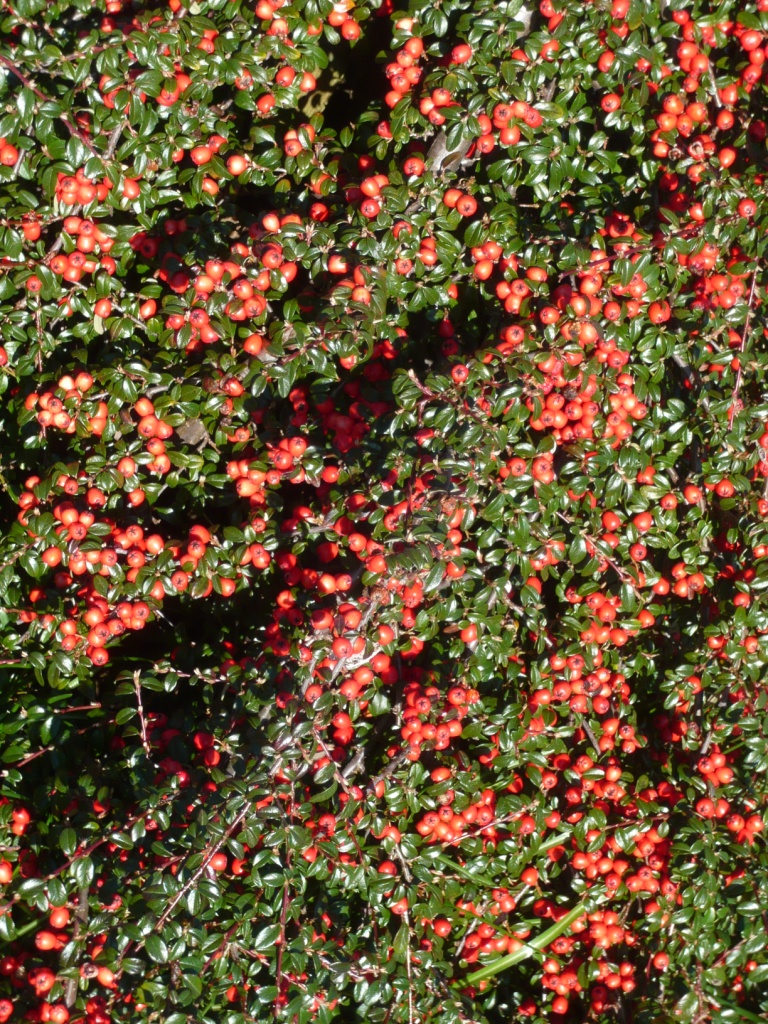
Not always a bird favourite but a prolific berryer alll the same.

Marks for the juicy red berries 65%, for the colourful leaves 25%, for the arching branches 25% and for arithmetic 12%.

Cotoneaster Information

  • An important genus of hardy ornamental shrubs ranging from prostrate to 10 feet high varieties. They tolerate most soil and conditions some growing up north facing walls.
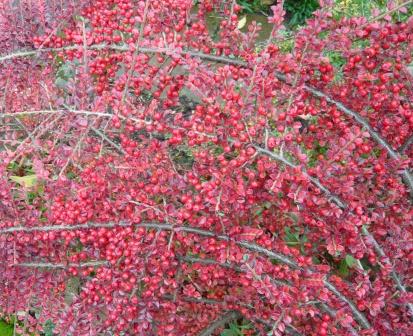
  • As can be seen the leaves turn from green to strong autumn colours and most varieties bear fruit much loved by the birds in my garden.
  • Small white flowers can smother the branches in June and they attract bees and hover flies but are not troubled by pest or disease.
  • My Cotoneaster horizontalis has herring bone style branches covering a 2 foot wall and 6 square yards of an ugly, old patio. This variety of Contoneaster is drought tolerant.
  • My ‘Hilliers Manual of Trees and Shrubs’ (a great Christmas present for the enthusiast) lists over 70 of the 300 species with short write-ups on each and the RHS Plant Finder tells you where to source them.
  • Originally from Japan

bird on fence

Growing Cotoneaster Horizontalis for Landscaping

  • Cotoneaster Horizontalis is a good low growing shrub for use as groundcover or to grow on a bank. In this situation they need little or no maintenence or pruning.
  • A group of Cotoneaster Horizontalis growing in harmony with a taller shrub can make a distinctive feature
  • I have a self sown seedling in the top of a wall and the arching branches disguise the more formal wall shape.
  • Cotoneaster Horizontalis can be trained as an espalier or against a wall.

November 2011 - Cotoneaster horizontalis

Propagation of Cotoneaster Horizontalis

  • Cotoneaster horizontalis will root where the spreading branches touch the ground and this helps its spread. You can take rooted cuttings in this manner.
  • Plants produce prolific seed via the red berries. They are easy to grow from seed.
  • Can be propagated from Semiripe-hardwood cuttings

Read more: growing Cotoneaster as small trees

Credits
bird on fence by *Psycho Delia* CC BY-NC 2.0
November 2011 – Cotoneaster horizontalis by muffinn CC BY 2.0

Growing Vinca Periwinkles

Growing Vinca Periwinkles

Are Vincas a ‘cool’ plant to grow? You may think so but I couldn’t possibly comment.

009

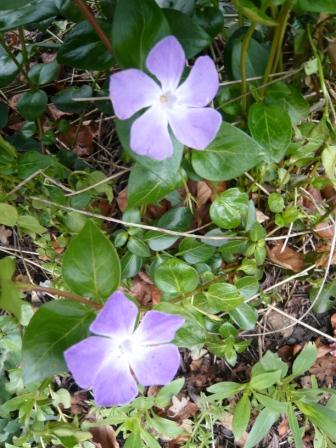
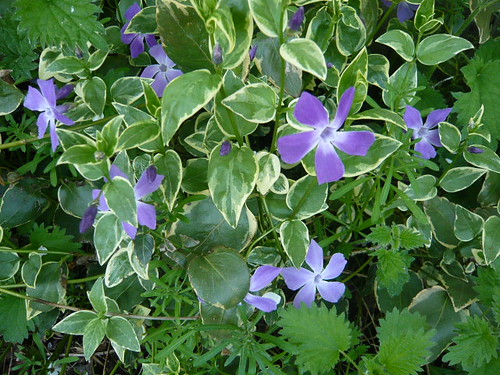
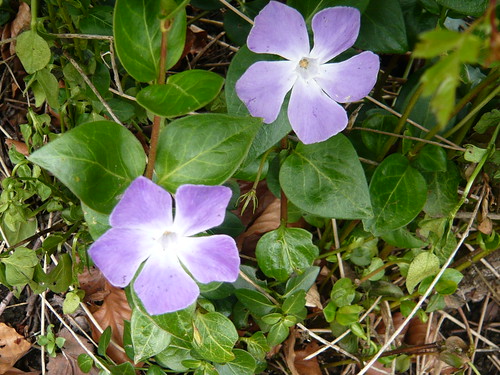
Vinca is a low growing herbaceous perennial suitable for ground cover. Vincas generally have sky blue or royal blue star shaped flowers on unkempt enthusiastic foliage.

Vinca Species and Varieties

  • There are several species and hybrids including Vinca major and Vinca minor. The minor species are slightly less robust and slower growing.
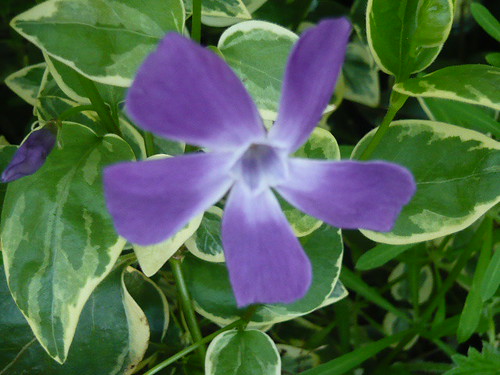
  • Vinca minor ‘Argenteovariegata’ shown above flowers from April all through summer.
  • Vinca difformis includes the pale pink ‘Jenny Pym’, with rounded flowers in late autumn. Vinca difformis needs a warm position.
  • White flowering Vincas include  ‘Alba’ and ‘Snowmound’.
  • Alba Aureovariegata has golden variegation and pale blue flowers,
  • Vinca Multiplex is a double flower with dark plum purple flowers.
  • Catharanthus roseus ‘Mediterranean Lilac’ or Vinca rosea the rosy Periwinkle casn be grown from seed.

Vinca

Tips for Growing Vinca Periwinkles

  • The trailing habit makes them suitable for use in containers.
  • Propagate from runners that are prolific.
  • Vinca major and Vinca minor are able to spread rapidly and are sometimes considered weeds. These pictures show how they are colonising a railway embankment and ousting the nettles.
  • Vinca will grow in poor, dry and slightly shaded conditions.
  • The creeping and arching stems  make an attractive carpet of bright green foliage with  the single blue flowers as an added bonus.

010

How to Dig a Hole for Plants

How to Dig a Hole for Plants

Dig a £10 hole for a £5 plant!
tree planting at United House of Prayer
‘A big hole for a big tree.’

It is often the easy gardening jobs that can be done better by a professional gardener but can you dig a better hole for planting?
For a long time I have just plonked plants in willy-nilly but then I started thinking about the place my plants were going to live for the rest of their lives.

Holes are Homes for Your Plants Roots

  • Roots anchor a plant safely in the soil.
  • The soil then provides water, air and nutrition for the plants growth.
  • Most roots are nearer the surface than you think. 95% of tree roots are in the top foot of soil.
  • The best soil is at the top. Sub soil is underneath the top soil and can be very compacted and lacking in humus and or drainage.
  • If top soil in thin you can break up the sub soil but do not bring it to the surface.
  • Read about healthy and unhealthy roots

Tips on Plant Holes

  • The hole should be appropriate for the plant your are planting both now and in the future as your plant grows.
  • Dig the hole at least twice as wide as your root ball but not necessarily twice as deep.
  • Most plant pots are round but roots want to have free reign. Aim for a square or oblong hole to discourage roots turning round and round.
  • Break up the bottom of the hole to aid drainage.
  • Add compost particularly if the soil is dry and sandy.
  • A slow release fertilizer can be added and mixed with the soil you will use for back filling. Bone meal, Growmore or blood fish and bone are suitably organic.

Tips for Planting into Holes

  • Plants grown in pots should be planted at the same depth. Put a cane across the hole and nestle the plant in place so the soil level showing on the plant is level with the top of the hole.
  • Clematis are an exception to the plant it level rule, they are best planted 6″ lower than their previous planting depth.
  • Trees and larger plants will need staking. Put your stake in place first so roots are not damaged.
  • Roots that are twisted around the growing pot should be teased out. Compacted soil around the root ball should be gently separated.
  • Pour water into the hole and let it drain away before planting. Keep trees and shrubs well watered for the first year.

Apollo Habtamu Planting his tree at the KMIS tree planting day

Credits
tree planting at United House of Prayer by nowyou33 CC BY-NC 2.0
Apollo Habtamu Planting his tree at the KMIS tree planting day by ILRI CC BY-NC-SA 2.0