Browsed by
Author: hortoris

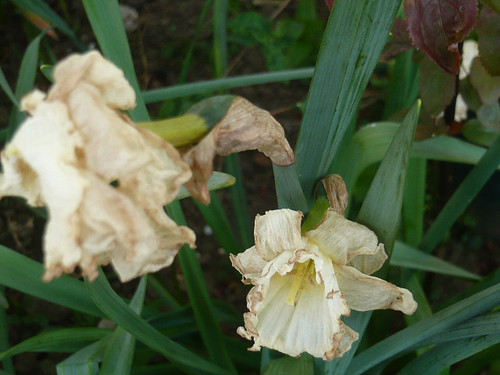
Dead Daffodil Deadheading and Splitting

Dead Daffodil Deadheading and Splitting

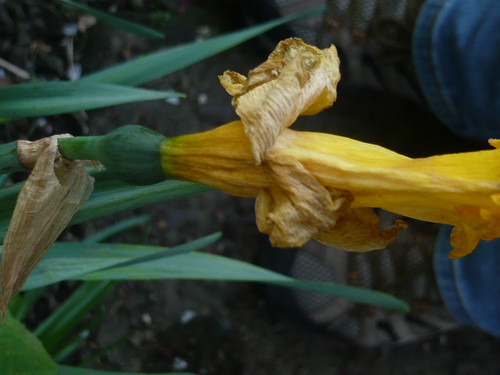
Lift and divide overgrown clumps of Narcissus. Replant at the same depth with the foliage intact or wait until autumn.
058

By now your Daffodils will have given good service in the garden and it is time for them to move on.

Dead Daffodil Tips

  • Deadhead Daffodils by cutting or pinching off the old flower and the seed capsule behind the flower. This redirects energy back into the bulb not the formation of seed.
  • Leave all the leaves on the plant. This allows photosynthesis to continue putting energy back into the bulb.
  • Spray or water the leaves with a foliar feed of weak fertilizer (about half normal strength).
  • Do not tie leaves, plat or tidy them with a rubber band.
  • When the leaves start to yellow 8 weeks or so, then it is safe to clear them.
  • If the Daffodils are in the grass you still need to leave them uncut.
  • Give the pruned deadheads a decent burial in the compost heap.

Other Daffodil Tips

  • Blind Daffodils are ones that haven’t flowered. This can be because they are too immature and need feeding up.
  • It may be that the bulbs have become too cramped and close together. These can be split and replanted but wait until the leaves have died back.  Splitting is best be done in September if you can remember where they are growing.
  • Planting your  daffodils in a large flower pot which is sunk into the ground. You can then lift the pot and put it out of the way to die back or wait for splitting at the end of each season.
  • Daffodils are Narcissus and all these comments apply to your narcissus bulbs.
  • Always pick plenty of Daffodils for the vase. This is just early deadheading.
059

Flower Arranging Dahlias

Flower Arranging Dahlias

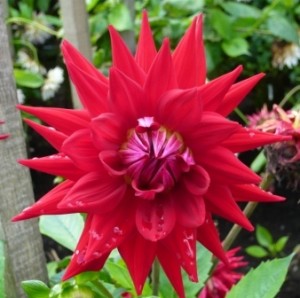
cactus-dahlia

Not Dahlias again you may say but this is ‘The First Amongst Sequels’ or more photographs from my summer selection. Dahlias are a great cut flower for arranging and displaying and there is no better flower for continious cutting.

Dahlia Flower Arranging Tips

  • Pompom or decorative types are the best for flower arrangers as the large headed Dinner-plate types are so difficult to arrange.
  • Dahlias like a little sugar in the water and an aspirin discourages the formation of green algae
  • Put stems in a little boiling water and then give them a long drink.
  • Pick flowers when they have opened, tight buds will not give of their best.
  • One flower can be the focal point of an arrangement or table center-piece.
  • When planting select colours that you will want to pick for your house.
  • Pink flowered varieties such as Jerry Hoek or Delicious go well with mauve Asters and give a lift to a red arrangement.

…

Read More Read More

Dahlia History and the Blue Dahlias

Dahlia History and the Blue Dahlias

Wish List

Today’s hybridisers are still seeking the true blue Dahlia. We would also like one with a scent and if it was frost hardy that would be a triple bonus but then again it may not be a Dahlia at all. If you want to name a variety you have selected and grown yourself the National Dahlia Society publish the rules for naming and the register of existing names is maintained by the RHS.

Dahlias a History

The National Dahlia Society publish a history of the Dahlia from which the excerpts below have been taken
…

Read More Read More

Famous Celebrity Gardeners

Famous Celebrity Gardeners

Who features amongst your top famous Gardeners?  Percy Thrower‘   Geoff Hamilton or  Alan Titchmarsh are in the traditional mold along with Geoffrey Smith, Beth Chatto and perhaps Peter Seabrook although he is more a journalist as Alan Titchmarsh is a TV presenter.

The modern off-cumdens like Monty Don, Diarmuid Gavin and Charlie Dimmock seem to be all form over substance. An outsider in this modern category could be Adrian Fisher the designer of over 500 mazes and setting 6 Guinness world records. He has also designed over 40 hedge mazes, including those at Leeds Castle, Blenheim Palace and Scone Palace.

Gertrude Jekyll, Christopher Lloyd and Roy Strong inspired my father but then so did Adam the Gardener from the Sunday Express so whoever you put at the top of your list do not forget the true number one – you or your spouse.

‘Lloyd George knew my gardener’ engraving caption competition send in your own caption on the comments page.

I was a bit cruel to our Water gardener Charlie Dimmock so will promote one of her books ‘Enjoy your Garden’.
Book Cover

I have just read Royton Heath‘s tome on Collectors Alpines. A prolific alpine plantsman he has helped many rock and trough gadeners to understand the speciality of these small alpine forms. His books and broadcasting rates him amongst my list of celebrity gardeners of note.

A femail gardener that is easy to listen too is the earth Christine Walkden with her distinctive Lancashire accent.

Fronds Found in Yorkshire

Fronds Found in Yorkshire

yorkshire-december

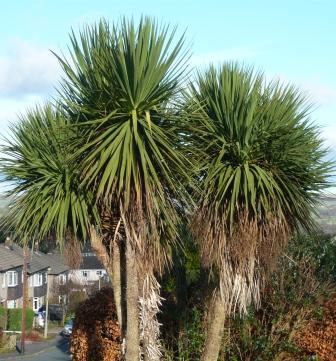
Is this Maderia or Yorkshire?  Are they Palm trees,  stonking great Yuccas or something else?
The houses in Menston, Yorkshire with the Wharfedale scene on the horizon gives the game away, it is not a photograph of exotic climes. This just shows what can be achieved in a another English garden. The copper beech hedge, still to show leaf colour, is more normal in these suburban gardens.

Whilst these tree specimen are now about 20 foot tall there are many tropical transplants that have been surviving in our gardens. After a mild winter with little snow or hard frosts it will be interesting to see what damage if any has been done. The worst I have noticed is the bent conifer branches due to snow, poor Camellias and the burnt edges of the young Choysia leaves.

At the moment I can’t do anything about it due to the snow covering that is keeping the tender plants under a blanket sheltered from artic winds.

Roll on late spring when the Yorkshire moors will be covered in heath, heather and ferns.

More Space for More Crops

More Space for More Crops

new-picture-2

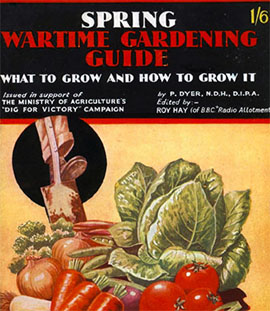
Gardening will help in the war against economic recession. These tips give you some ideas how to increase the area you cultivate and the number of crops you can grow even if your garden space is restricted.

More Growing Area for a Small Garden

Grow Bags and Containers

  • Grow bags can be stood on paths or waste land and can be used for many crops like onions, salads, tomatoes or courgettes.
  • Make your own grow bag, if they are too expensive, with ordinary soil in a plastic bag. To help water retention I have used those packets of silica they use to keep electrical products dry.
  • To get a deep grow bag I cut them in two and stand them on there ends for crops I want to cosset.
  • There are a wide range of baskets and boxes that can be fixed to a wall or fence to increase your growing area.
  • You can make a raised bed on hard standing. I have put 10 inches of soil over an old tarmac drive and it is fine for leafy crops.

…

Read More Read More

Growing Young Courgettes

Growing Young Courgettes

Italians call them Zuccini and there is a tasty variety of that name but we call them courgettes or baby marrows. Left too long before picking they become less tasty marrows but young Courgettes are great Veg!

Growing Courgettes is easy if you follow a few simple tips.

  • Sow on the edge or point down, to avoid wet rot, in April-June.
  • Allow 2-3 feet between plants
  • Seed can be quite expensive 25p each but a couple of plants will feed a family.
  • Keep Courgettes well watered and fed, they grow quickly and their main constituent is water.
  • Feed twice a week with a liquid  feed such as Tomorite or Phostrogen
  • Keep them slug free or the fruit will be eaten first. The spiny leaves will be left for a later snack but that won’t help you.
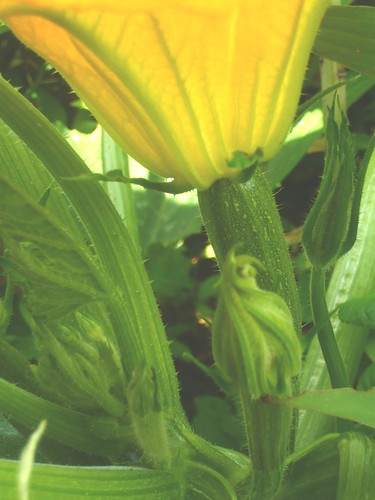
  • There are male and female flowers on each plant. The female has a baby fruit behind it see picture above and when pollinated it will swell and grow.
  • The male flower just has a slim stalk but can pollinate several females. (see below).

…

Read More Read More

Selecting, Siting, Planting and Growing Rhubarb

Selecting, Siting, Planting and Growing Rhubarb

Plan your planting of Rhubarb and prepare the ground then you will be growing crumbles and pie fillings for years.
Select a variety or two, chose the growing site and care for your plants then ‘the jobs a good one!’

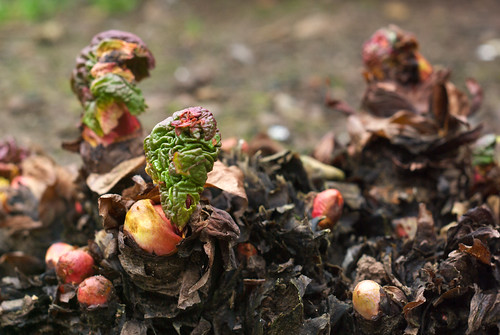
Unforced Rhubarb

Varieties of Rhubarb to Select

  • Victoria, with thin stalks of rosy red that turn pink and green towards the tip is a late season cropper.
  • Timperley Early AGM is the earliest to be harvested with long stems and a good flavour.
    Raspberry Red is a mid-late season variety of deep red stalks.
  • Stocksbridge Arrow, is an old favourite in the West Riding of Yorkshire the home of there rhubarb triangle.
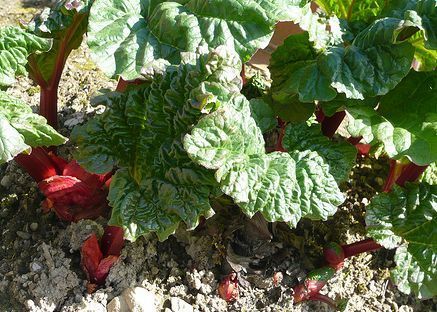
  • Champagne (shown above) is one of the best varieties.
  • …

    Read More Read More

Wallflowers for Scent

Wallflowers for Scent

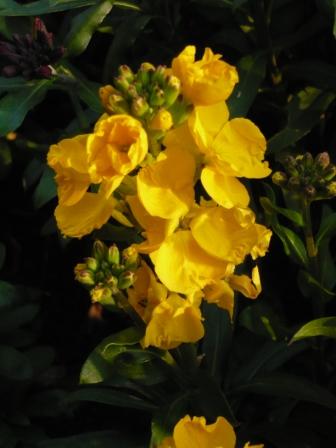
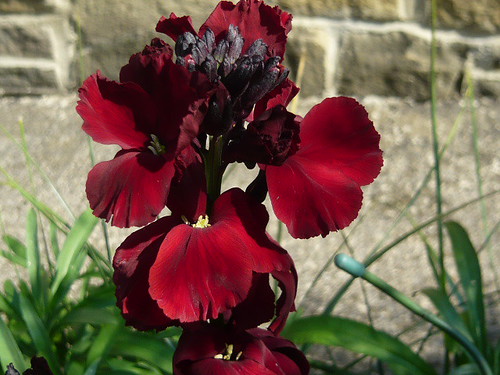
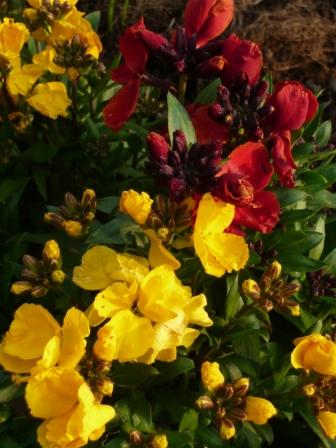
Good wallflowers are not to be sniffed at – well actually they are as I find them one of the most aromatic flowers.
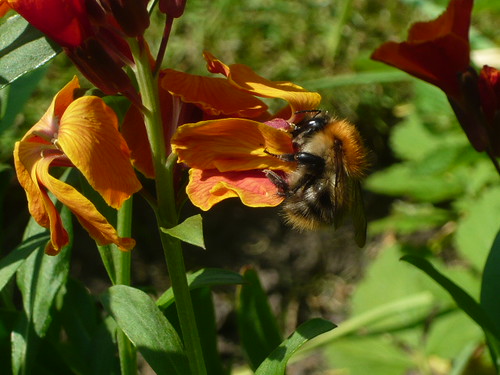
Oh to Bee a Wallflower

You can’t beat wallflowers for scent in the spring garden. On a still morning and through the day the aroma is quite intoxicating. I am looking at seed catalouges now to buy the seeds I want to sow in June – July 2009 to grow sturdy bushy plants to flower next spring 2010. In truth most varieties will do and I will probably get some cheap packets from a local store.

  • The bushy plants will be grown by pinching out the growing tip in September to encourage the bushy growth and they will be planted in the flowering position in Autumn when the space is cleared.
  • Plants may survive more than on flowering year but become very leggy so treat as biannuals.
  • Wallflowers are related to brassicas like cabbage and cauliflower so do not plant them where you want to grow these vegetables next year

yellow-wall-flower

121

As wallflowers pass their best they need to be turfed out to make room for new annuals or plants such as Dahlias.

Tips for Growing Wallflowers.

  • I can’t wait for Wallflowers to self seed as they look very leggy and seldom do as well as newly sown plants.
  • If some plants have grown in neglected spots you can leave them as they often survive several years.
  • Sow Wallflowers for next year from July onwards – they are best grown as biennial plants.
  • In Autumn pinch out the growing tips of seedlings to make bushy plants.
  • Try growing Wallflowers in tubs or old pots. They can be moved into place for the scent and colour in spring, then the pots get replanted for summer.
  • I think the red bedder varieties smell the best but scent is in the nose of the sniffer.

Thompson Morgan’s Wallflower collection is available by mail order from this list.

wallflowers