Browsed by
Category: Gardening

General gardening tips and hints

Good Tips for Saving Water in the Garden
Good Tips for Saving Water in the Garden

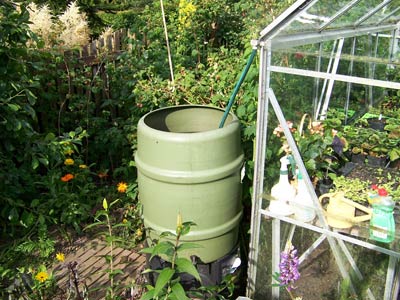
water butt

Recent years, have seen an increase in the number of hot dry spells here in the UK. Conserving water has therefore become increasingly important. Conserving water does not just save money (for those on water meters), but also helps the environment and helps maintain a healthy garden.

1. Install Waterbutt.

The water butt here is attached next to the greenhouse roof, so fills quite quickly. Don’t just install one water butt if you have a large garden use several storage devices for saving water in the garden. Note it is a good idea to use a lid to prevent water evaporation and insect infestations.

2. Saving Grey Water for the Garden.
Grey water from the bath, shower, washing up or washing machine can be used for Saving Water in the Garden. Never use water from toilets or dishwashers nor water containing bleach on your plants. Some experts recommend not using saved grey water on food crops such as soft fruit or vegetable crops.
Grey water can start to smell if stored so get it out intpo a bucket and use it as soon as possible.

3. Mulch in Spring.

In late spring, when the ground has warmed up and the soil is thoroughly moist, you can add a generous organic mulch to the top of the soil. This will help to keep the water moisture for longer. If you are adding organic matter, such as rotted manure, to the soil, it will also help improve the condition of the soil and improve its water retention capacities. This is particularly important for sandy soils.

4. Don’t Fight Conditions.

If you live in a hot, dry climate or have a poor sandy soil, don’t try to grow lots of moisture loving plants. Instead, choose plants which thrive in dryMediterranean conditions. These are often plants with thin greyish leaves, for example, lavenders. This does not mean you will be restricted to growing cactus, there are many colourful plants which can thrive or  at least tolerate dry conditions e.g. pelargoniums.

5. Water Properly

When watering make sure the watering reaches the roots of the plants. If you water frequently but little, the watering may do more harm than good. This is because the water won’t penetrate and so the roots will be encouraged to grow up to the surface. Therefore, it is better to encourage deep roots through infrequent watering. This way you use less water, but, it is more effective.

6. Water in Evening.

If you water in the morning, the water is more liable to evaporate in the day’s sun. If you water in the evening, it gives chance for the water to soak down into the ground.

7. Water into a sunken pot.

If you have target plants or trees to water, it is helpful to sink  a pipe or plastic pot into the ground. This means the water is targeted to the roots of the plant and doesn’t run off the top of the soil. Water deeply and infrequently for effective results with minimum water usage.

8. Don’t use a sprinkler

A sprinkler is an ineffective way for watering a border. Alot of water is wasted; it is better to target the water directly to base of plants; watering those who need it most.

9. Rainwater Harvesting
The concept of capturing rainwater and storing it for later use is well documented from pre-Roman times. New underground systems are available as a retrofit so you can save water for your garden and household use. Read more from the UK Rainwater harvesting association

10. New Build Rainwater Capture
Progressively new houses are being built with better capture systems. It saves drainage work and run off issues as well as providing an eco-friendly supply of water.

11. Drip Feed Water Saving
Irrigation systems such as those based on drip feed watering is very useful for the greenhouse and containers. No water is wasted and the gardener is in control.

12 Self Watering Pots and Trays
Put a saucer under your garden planters and pots. I water from the bottom by filling the saucer. Some pots now have integral water holding facilities useful for salad crops and hanging baskets.

GARDEN HOSE - WATER
Hosepipe and sprinkler ban – not yet in the North of the UK

Credits
Best Time to water your garden
How to water your garden
Xeriscaping and Other if in drought Watering Tips
GARDEN HOSE – WATER by Beth Kingery CC BY 2.0

If you know of any other tips for conserving water in the garden, please let us know in the comments below.

Greatest Gardening Tips – Gardening Solutions

Greatest Gardening Tips – Gardening Solutions

Frosty the flowerpotman

In the last few years every business seems to have been christened ‘something solutions’. I even saw ‘gardening solutions’ painted on a pick-up full of hedge trimmings.

 H2O The Gardening Solution – Tips

  •  The only garden solution needed is H2O or good old water!
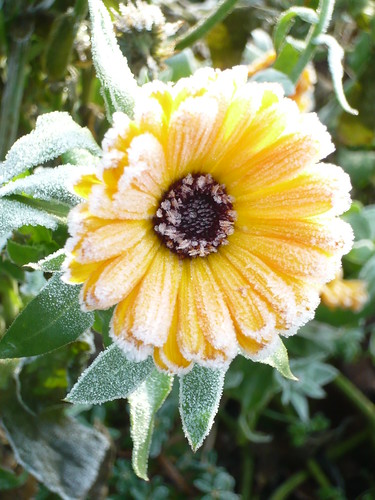
  • What you do not need at the wrong time of year is H2O in the form of frost!
  • H2O in the  form of snow is a mixed blessing. It can act as a thermal blanket and winter signal but it can also bend and damage weak plant growth.
  • Additives to H2O such as NPK is called by gardeners ‘fertilizer’. This is good stuff if used in sensible quantities. Like me plants can get overfed!
  • Water in the soil, to the exclusion of air will drown and kill a plants roots. More houseplants die from drowning than drought or any other cause.
  • In the same way that you wouldn’t willingly jump in a frozen lake or put your hand in boiling water then do not put your plants through rough treatment. Room temperature water is better than a cold douche!
  • Do not let water stand on top of bulbs and corms as they can rot. Provide good drainage and water houseplant bulbs from the bottom.

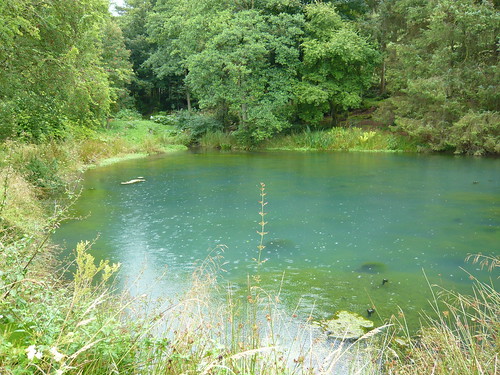
Pond Algea

Where to Get The Greatest Gardening Tips

  • Gardeners Tips aims to supply the greatest gardening tips that you will need for your UK garden. Many of our tips work equally well in other parts of the world and we are pleased our tips are read in 34 countries.
  • Garden centers and particularly nurseries will offer advice on the stock you are thinking of buying but remember their main purpose is to sell and make money.
  • Talk to other gardeners or join your local horticultural society. It is one of the best ways to learn more.
  • If you want a book on the subject you can purchase Greatest Gardening Tips in the World by Steve Brookes available from  Thompson & Morgan.
  • Garden chemical suppliers offer free instruction sheets available at garden centers. Bayer currently offer a Garden Pest Spotter that is useful.

water

Gardening Solutions – Water Problems

  • Hail and heavy rain can shred the leaves of plants in next to no time. Protect your prize possessions from such threats
  • Water can carry bacteria and young seedlings can get a disease called ‘damping off’ (wilting and dying). Use clean water from a clean receptacle and add some Bordeaux mixture if you get problems.
  • Bought compost and peat can be hard to wet ie it wont absorb moisture. A drop of soft soap in the water will help but but compost that contains a wetting agent.
  • For some reason I dislike water retaining granules but they do work for many people -I do my thing and you do yours but hey that’s gardeners for you.
Help Growing Dahlia from Seed

Help Growing Dahlia from Seed

Flowers-Dahlien

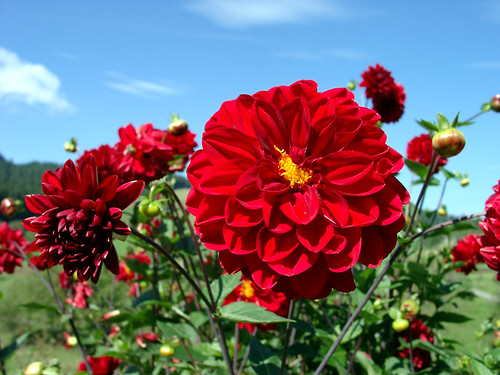
Description of Dahlia variabilis

  • Dahlias flower in late summer until the first hard frost.
  • Flowers are plentiful and very colourful
  • Tuber grown Dahlias can be 5 feet tall but the annual varieties we are suggesting are good bedding plants up to 12″ high.

Cultivation Tips for Dahlia

  • Dahila Bishops Childern is fiery mix of such striking colour, yet with the innocent flower faces of Bishop’s Children.
  • Mid-height, and blends extremely well into borders. However, be warned that a colour eruption may occur!
  • Spectacular in bedding and containers, and as a cut flower.Height: 60-75cm (24-30 inches). Planting distance 12-18 inches.
  • Treat Dahlias grown from seed as annuals. They grow and flower well enough to start again next year.

Special Growing Tips for Dahlia

  • Dahlia have been extensively bred and crossed since they were first discovered in Mexico
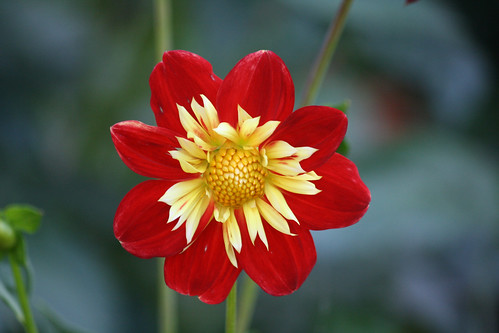
  • Flowers are now available in a wide variety of forms from plain single daisies to complex collarettes and cacti flowered plants

Varieties, Species and Types of Dahlia

  • Pompone have round heads of a self-colour but good mixes are available
  • Redskin, Bishops Childeren and Showpiece have dark almost purple leaves

Horticulture Sources and Advice

  • You can often obtain seeds or plants from our mail order company of choice Thompson & Morgan
  • They recommend seed sowing as follows ‘Sow February to April. Germinate at 20-30C on the surface of a good free draining, damp seed compost. Apply a layer of compost or vermiculite, ¼in deep. Place in a propagator or seal container inside a polythene bag until after germination which usually takes 7-21 days. Do not exclude light at any stage, as this helps germination.
  • Transplant seedlings when large enough to handle into trays or 3in pots. Grow on in cooler, well lit conditions for 10-15 days before planting out after all risk of frost, 12in apart.’

Dahlia pinnata (Dahlie Flamenco)

Credits
Flowers-Dahlien by uwelino CC BY-NC-SA 2.0
Dahlia pinnata (Dahlie Flamenco) by Acinet CC BY-NC-SA 2.0

Green Garden Habitats for the Environment

Green Garden Habitats for the Environment

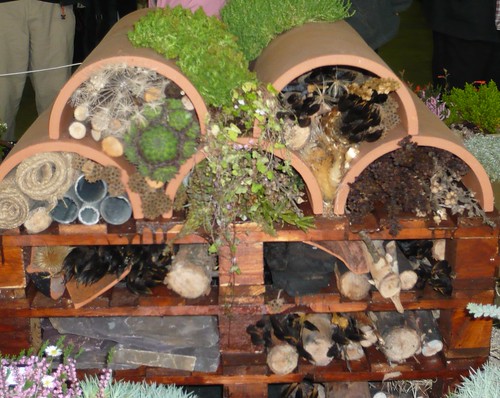
Insect house

Healthy, environmentally friendly habitats are areas where wildlife can breed and thrive in safety. They are easy to create in your garden in fact you will want the features anyway. A little prior planning and thought about the wildlife environment can make your feature into a green habitat at little or no cost.

Dry Stone Wall Habitats

  • My first garden had a dry stone wall that formed the boundary with the moorland beyond. It was a great feature of sandstone build without any cement or mortar, a labour of love.
  • The damp nooks and crannies form hiding places for slugs and snails but also accommodate frogs and toads.
  • Mice, spiders and other beneficial insects use a dry stone wall for safety, breeding and a source of food supply. You can even get birds nesting in the larger crevices.
  • A micro climate grows around a wall. The stone holds heat and protects from wind to the benefit of butterflies, moths and slow worms.
  • Even an arranged pile of rocks and stone can provide some of the benefits but a pukka dry stone wall from local stone is very environmentally friendly.

Green Man Made Habitats

  • Nature can be given a bit of help particularly in a built up environment.
  • Support birds with feeders, nesting boxes and plants that provide food.
  • Create a ‘bug home’ with bricks and twigs to feed and house a variety of insects.
  • Keep part of your garden untidy. Leave nature to take its course. Let an old tree trunk decay or pile up some fallen logs.
  • Plant insect and seed friendly plants

Woodland Edge Habitats

  • Think in terms of a three layered approach to woodland. The top layer is for tall forest trees such as Ash.
  • The second layer is tall shrubs and smaller trees like yew, holly and blackthorn. With climbers such as honeysuckle and clematis vitalba you will get evergreen cover and a winter habitat.
  • The lower layer is a woodland floor for spring like primroses violets, bluebells and wild garlic.
  • Each tier attracts its own abundant array of wildlife.

Hedge Habitats

  • Hedges beat walls and fences in to a ‘cocked hat’ when it comes to being green.
  • They provide safe corridors for birds and small mammals to pass through from one area to another.
  • Mixed native hedging plants will provide food, nesting and shelter for many creatures.
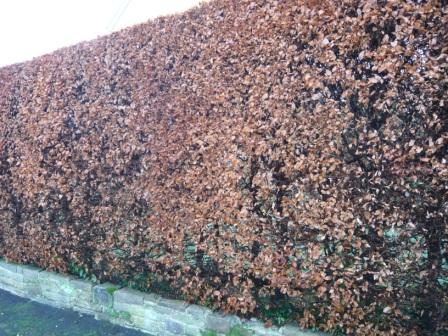
  • Hornbeam, beech, privet and yew all can be clipped to make a formal hedge whilst still maintaining the wildlife benefits.
  • Berberis, dogwoods, hazel, spindle holly and dog roses are all worth considering for a less formal hedgerow.

Wetland Habitats

  • Ponds are a great boon to creating a green habitat
  • Bog gardens may be suitable if you have a source of running water to keep the soil in good moist condition.
  • Large expanses of wetland area to attract migrating birds are beyond the scale and scope of most gardens.

Compost Heap as a Habitat

  • Make your compost heap one of the green habitats.It contains more life than you can believe.
  • Worms and microbes need living accommodation and where can be better than in good compost.
  • Turn the heap if you want to discourage rats from visiting to eat the kitchen refuse and take advantage of the warmth. They are one creature I wish to discourage.

Read Dry Stone Wall Planting
Hedgerows worth watching

Quick-Fix Garden Spring Clean

Quick-Fix Garden Spring Clean

Some time spent maintaining the general appearance of your garden can be worthwhile at any time of the year. A clean tidy garden will put the focus on the plants and design of your garden rather that the bits that are out of place. Do not let the untidy catch the eye.

In early spring you get a good view of any structural problems and can correct any damage and untidy appearance caused in winter  whilst giving your hard landscape areas a bit of spit and polish.

A Bit of Timely Maintenance

  • Clean up areas that lead into the garden – steps, porch, paths and driveways.
  • Tidy paths and roads around the outside of the garden.
  • Tidy up the garage, car-port, greenhouse and garden shed.
  • Sweep and wash-down the driveway. Clean garden furniture.
  • Clear up overgrown paths, collect up old canes and prune back overhanging shrubs.
  • Repair broken fencing. Apply wood preserver where needed.
  • Tidy ragged edgings to make walkways and the driveway look smart.
  • Spray any weeds pushing up through gravel or tarmac.
  • If part of the garden is given over to pebbles, clean up the organic bits and pieces that work their way in between them.
  • Pick up litter and weeds from public paths around your garden edge.
  • Remove algae and slime from paths with a cleaners or pressure wash.
  • Mulch can cover a multitude of unsightly problems. Peat substitutes, bark or gravel can provide a face lift.
  • Gleaming windows give a house that groomed look. Brush down the cobwebs around the window frames and wash the paint work.

Organic Face Lift

  • Weed borders and garden beds. It’s easier to do just after rain when the ground is softer and the weeds come out easily, root and all.
  • Replace dead plants in empty beds and borders they are a sign of neglect. Hoe and rake the soil if you are waiting for new stock.
  • Rake the lawn to remove leaf-litter, twigs and other green debris.
  • Mow, weed and feed the lawn. Trim the edges neatly.
  • If you’ve let pot-plants die plant some ready grown annuals or herbs from a garden center.
  • Cut back tree-branches overhanging the driveway, paths and lawn area to make the garden look spacious and open.
  • Prune shrubs, dead stalks and stems. Make sure the shears are clean and sharp, it will make things easier for you and the plants.
  • Deadhead flowers and clear up any dead petals and flower-heads
  • Mulch makes plants stand out and is good for them . Invest in mulch for an instant makeover.


Product Reports

Path Cleaning and Cleaners
Garden Disinfectants
Best Weed Killers
Wood Care
Fence Care

10 Quick Gardener’s Tips

10 Quick Gardener’s Tips

Artichoke

If you like fast results in your garden try these ten Quick Gardeners Tips covering design, cultivation and money saving.

Money Saving Tips

  • When making new lawns just make the surround or outer edge with turf about 18-24 inches wide so you can then cut a straight edge. Sow seed in the middle to save money. Take care the ground level is not raised by the turf.
  • Buy small plants and grow them on if you do not have the patience to grow from seed or trust your skill with cuttings.
  • Epsom salts watered on sickly plants will help green them up at a low cost.(2oz =1 gal tablespoon per rose)

Cultivation Tips

  • Plants tend to put strength into their weakest parts so clean up or prune out broken and weak shoots.
  • Sow wallflowers in June for a colourful, scented display the following spring.
  • Companion plant mint, garlic, violas, borage, clematis, marjoram or geraniums they will all work well with Roses

Simple Design Tips

  • The eye sees flowers in hot reds and yellows as appearing nearer. Blues seem to be further away so plant them at the back of borders to make the border seem deeper.
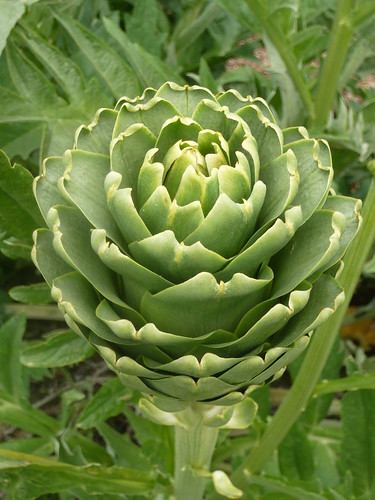
  • In a small garden mix vegetables & flowers like lettuce & lobelia or peas and sweet peas. Use some vegetables just because they are quite decorative or architectural like our Artichoke pictured.
  • If a plant is good or one of your favourites grow a lot in drifts not dotted around randomly.
  • For fun and added interest name sections of your garden. If it is too large or has an unkempt area have a reservation or butterfly reserve, other areas may be named after people, styles or other themes.
Wildlife Gardening in UK

Wildlife Gardening in UK

wildlife
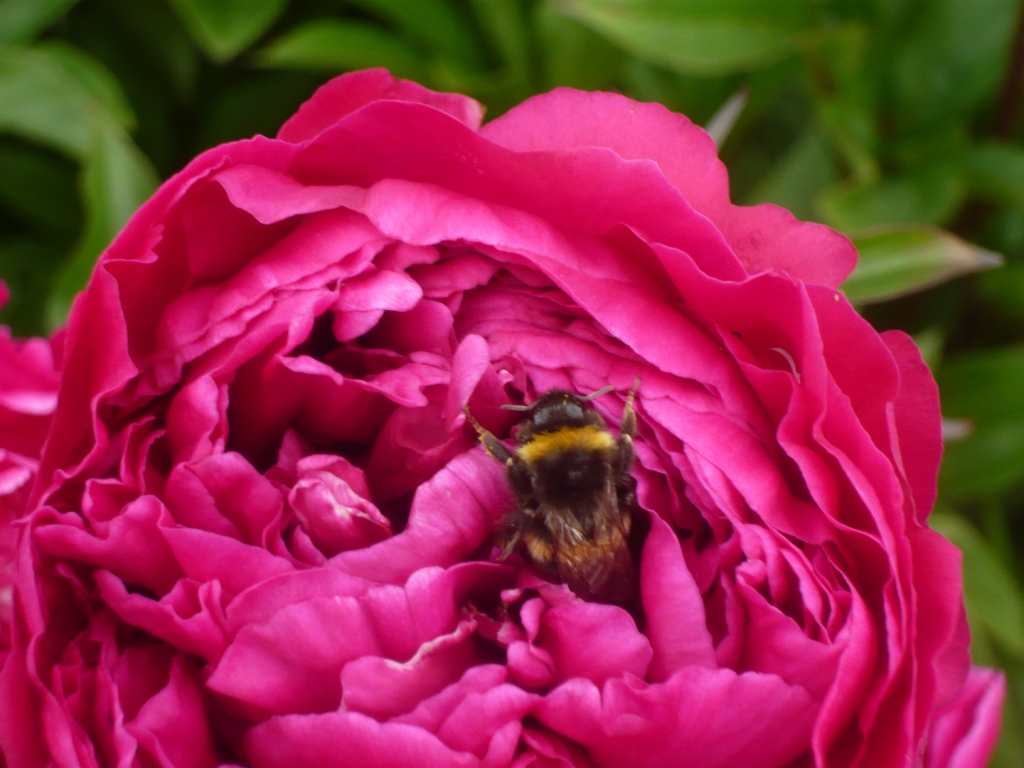
(Bees in the Garden)

Attracting Wildlife into Your Garden

As well as beautiful flowers, attracting wildlife into your garden can make it more interesting and provide extra all year round interest. If you attract the right kind of visitors, you will also be able to help defeat some of the common garden pests.
Aim for a balance with nature, slugs eat waste, frogs eat slugs, some birds eat insects and all have a place in a wildlife friendly garden.

wildlife

How To Encourage Wildlife Into Your Garden

  • Good Source of Water. A good source of water will attract many visitors who will come to rely on this source of vital commodity. Water can help attract butterflies, frogs, toads, birds and many more.
  • Provide Shelter. A key issue is making wildlife feel at home. This involves having some tall trees and bushes for birds to feel safe in.
  • Don’t Keep garden too tidy. It is tempting to always want to clean things up. But, a few well placed plants and objects will encourage wildlife to stay.
  • Bird Tables. Bird tables need to be protected from predators and so need to be high up off ground, well away from jumping cats.
  • Year Long Round Mix of nectar rich flowers. Attracting wildlife is complementary with growing some of our most popular flowers. Flowers rich in nectar will attract butterflies and hoverflies. Try growing plants such as buddleja, Foxgloves, Lilac, Michaelmas Daisy. Some less popular plants like Globe Thistle are also very good for wildlife.
  • At the end of the growing season, don’t cut everything back. Old Sunflower stems and seeds will provide valuable food during early winter and other stems provide shelter.
  • Don’t harm wildlife, through slug pellets. At least, scatter them properly under the surface (overkilling slugs and wildlife).
  • Grow Some Nettles in back of garden. Nettles are a great plant for making compost and attracting wildlife.

Related Posts

Tips for Growing Sweet Violets – Viola odorata

Tips for Growing Sweet Violets – Viola odorata

A century ago Sweet Violets were part of the Victorian way of life. Florists and street vendors sold them and ladies carried or wore them. Since ancient Greek times and through medieval times Sweet Violets were more than a flower or scent, they were used as a sweetener, a deodorant and medicinal uses. They were also a symbol of love used on St Valentines day and there are many Violet stories surrounding Napoleon and Josephine where the flowers are still popular in France.

Gardeners Tips For Growing Sweet Violets

  • Grow from seed or propagate from the stolens (runners)
  • Sweet Violets like a moist soil.
  • Feed them with a high potash feed or low nitrogen feed to optimise the flowers.
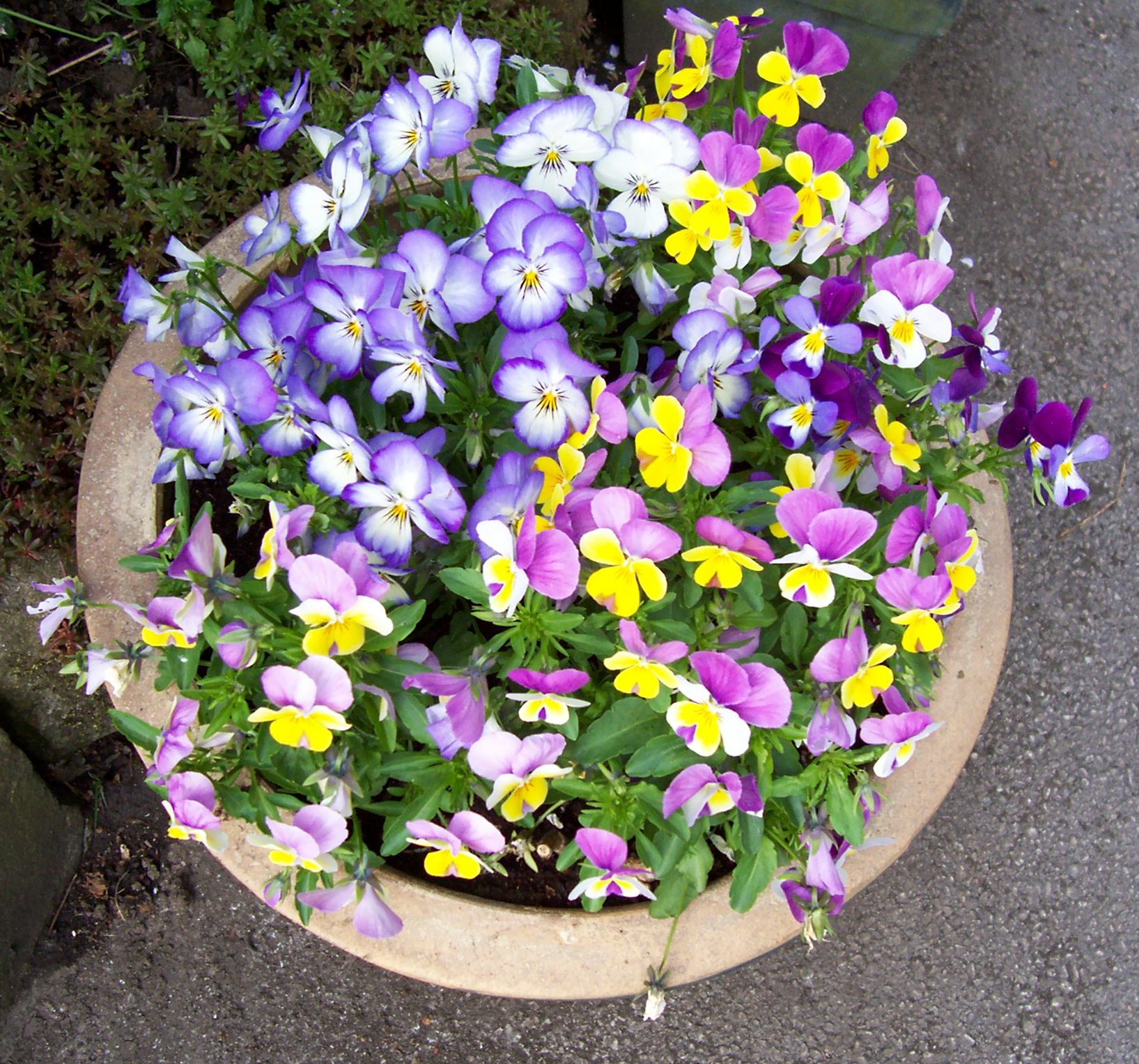
  • Violas are very easy to grow and tolerate of most soil types.
  • Viola odorata are perfect for partial shade and once established multiply quickly.

Recognising Sweet Violets – Viola odorata

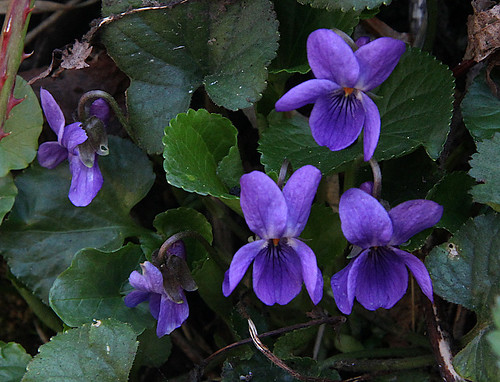
  • Viola odorata is a perennial that spreads by runners and grows about 4″ high.
  • In the wild they grow in light woodland or under a hedge row in a humus rich soil.
  • The scented flowers are available in white as well as the deep violet.
  • Viola odorata has short spurred flowers that are very fragrant and a dark – purpleish blue colour.
  • The leaves are rounded, almost heart shaped with crinkled edges.

Viola odorata var. subcarnea
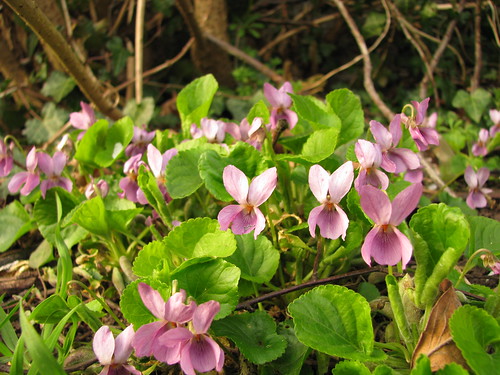
Also available in Pink is the viola odorata subcarnea.

Other Links for Viola odorata

Read about Growing Dogs Tooth Violets
For other fragrant and scented plants read Gardeners Tips
Look at the Violet Group on Flickr

Viola varieties available from Thompson & Morgan

Credits
Sweet Violet by Strobilomyces cc
Viola odorata var. subcarnea by –Tico– CC BY-NC-ND 2.0
Maarts Viooltje by hans zwitzer CC BY-NC-SA 2.0

Maarts Viooltje

Growing Cosmos – Easy Annuals

Growing Cosmos – Easy Annuals

Cosmos

Cosmos! What a stonking name for a plant evoking all the constellations in the Universe.

Growing Cosmos

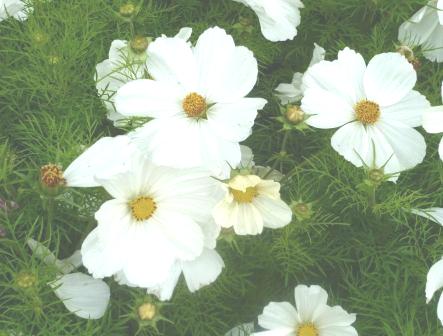
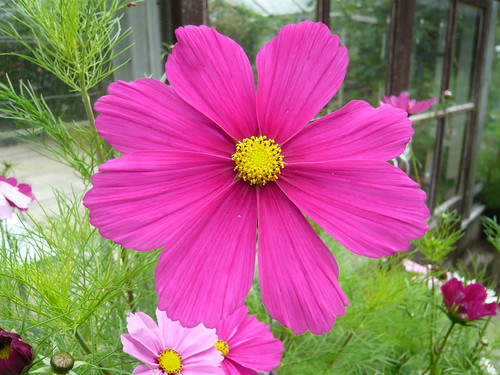
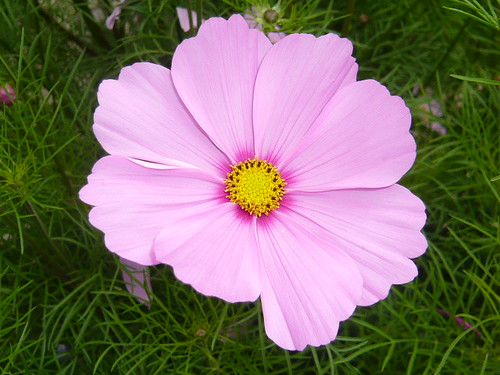
  • Cosmos flowers are a ring of broad petals and a center of disc florets similar to a daisy.
  • Cosmos flowers are 2-4 inches in diameter.
  • There is a lot of color variation including white, pink, orange, yellow, chocolate and scarlet colors.
  • Most Cosmos bloom heavily but die with first frost.
  • Leaves are fine and delicate and therefore the plants do not over shadow other flowers.
  • Cosmos get quite tall at up to four feet but in rich, fertile soils tend to produce unusually tall, lanky plants.

Cosmos

More Growing Tips from Seed

  • Smaller Cosmos are lovely in containers, showing off some of the finest lacy foliage of any annual.
  • Sow 3mm deep in spring at 21-24C in a good seed compost. Keep soil damp but not wet, sealing in a polythene bag after sowing is helpful.
  • Germination usually takes 5-10 days.
  • When seedlings are large enough to handle, transplant and grow on in cooler conditions.
  • Gradually acclimatise to outdoor conditions for 10-15 days before planting out after all risk of frost 60cm apart.
  • Plant in a sunny spot on light even poor quality well drained soil.

Cosmos
Useful Links

BBC Gardeners World – Gardening site of BBC

Royal Horticultural Society

Thompson Morgan seed varieties available

See more tips and help on Help growing Cosmos or search in the box center right.

Autumn Sunshine for Gardeners

Autumn Sunshine for Gardeners

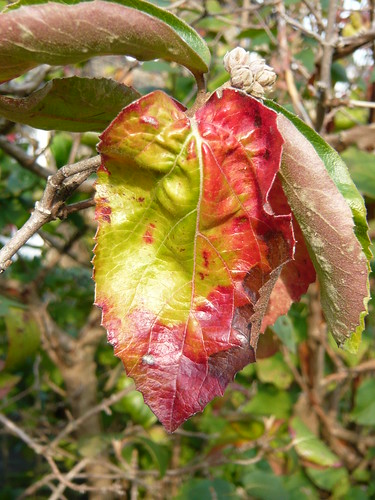
Leaves Autumn 049

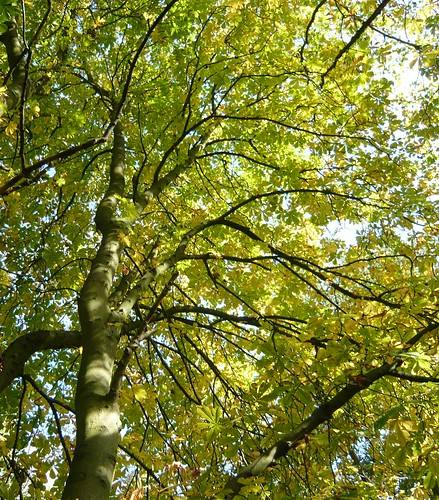
Make the most of the autumn sunshine it is warming and creates warm colours in the leaves of our plants and trees.
Chlorophyll is leaving the leaves of plants and only background colouring caused by the remaining chemicals is visible until the leaves fall.

Leaves Autumn 065

What Happens in Autumn Sunshine

  • A green leaf is green because of the presence of the pigment chlorophyll.
  • During the growing season chlorophylls’ green color dominates and masks out the colors of any other pigments that may be present in the leaf. Thus the leaves of summer are characteristically bright green.
  • The green helps capture the sunshine and convert the energy into plant sugars and thus growth. This is called photosynthesis.
  • During winter, there is not enough light or water for photosynthesis.
  • In Autumn the shorter days signal winter and trees begin to shut down their food-making factories.
  • The trees will rest and live off the food they stored during the summer.

Leaves Autumn 018

Why do Leaves Change Colour

  • Loosing leaves is one way of a plant disposing of waste chemicals.
  • It has been suggested that autumn colours may be a warning signal towards insects that use the trees for food.
  • Trees need some sort of protection to survive freezing temperatures and harsh winters. Stems, twigs, and buds are equipped to survive extreme cold so that they can reawaken when spring heralds the start of another growing season. Tender leaf tissues would freeze in winter so plants must either toughen up their leaves (evergreens) or dispose of them.