Browsed by
Category: Gardening

General gardening tips and hints

Top Ten Don’ts in Gardening

Top Ten Don’ts in Gardening

Kew 295

Top Ten Don’ts in Gardening

  1. Don’t worry about getting it wrong, have fun and enjoy.
  2. Don’t buy expensive, exotic plants that you saw on holiday because they are better grown in hot countries or conditions (like the orchids above).
  3. Don’t set your sights on having a manicured bowling green type lawn unless you are a dedicated bowls player willing to act like a full-time groundsman.
  4. Don’t make your life too difficult. Put high maintenance plants where you can reach them and paths and stepping stones where they can give you good access.
  5. Don’t forget to keep everything looking tidy, trim lawn edges and put pots and tools out of sight (it’s what a garden shed is for as well as resting in).
  6. Hawaii Tropical Botanical Garden

  7. Don’t skimp of the quality of your main tools like your spade, trowel, watering can and fork but avoid wasting cash on gadgets and gizmos.
  8. Don’t forget this year nationally frost will kill more annuals by early planting than insects will kill by eating.
  9. Don’t ignore your plants need for sunlight, water, food and a growing medium.
  10. Don’t judge your garden against the glossy pictures in gardening magazines (they will have been touched up) or from flower shows where prize exhibits will have been selected from 100’s or 1000’s of plants.
  11. Don’t let anyone put you off, garden the way you want, enjoy the results and share your enthusiasm.

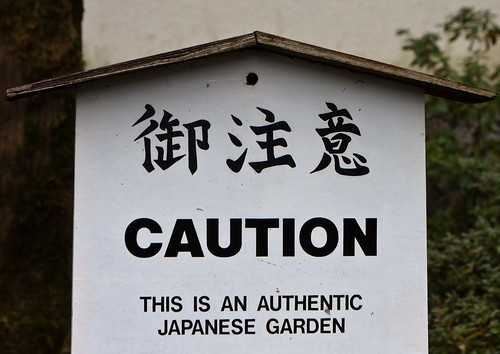
Caution: Japanese Garden

Credits
Hawaii Tropical Botanical Garden by pablo_marx CC BY-NC-ND 2.0
Caution: Japanese Garden by ~dgies CC BY-NC-ND 2.0

Gardening Holidays to Dream About

Gardening Holidays to Dream About

Real gardeners don’t want to go on holiday between April and September as there is too much fun to be had in the garden at home. There are other matters that come into play and well planed holiday can also give a keen gardener new interests and ideas.

Temptations are now wide spread in the form of organised tours
Alternatively you can make your own arrangements which retains flexibility and the opportunity to please other members of the family. In addition to UK resorts like  Cornwall and the Scilly Isles there are many hidden gardens in The Languedoc region of France, Monet’s Garden at Giverny, Gardens of Tuscany, the Italian Lakes, Sorrento, Ischia,  and Green Spain to list but a few.

Hot Compost Tips & Heaps

Hot Compost Tips & Heaps

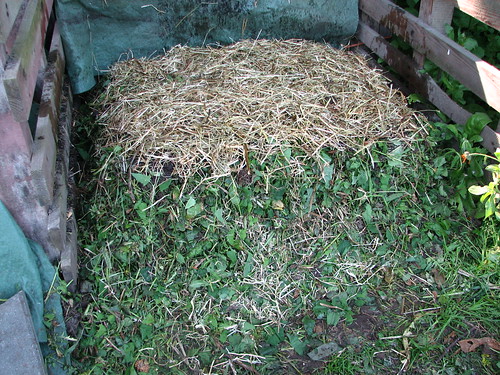
layered aerobic compost

Heat in a compost heap is good. A hot compost tip will kill off pathogens and many unwanted seeds whilst it creates good friable compost.

What is a Hot Compost Tip

  • Hot compost heaps are just that, hot, they can be so hot you can’t keep your hand in (though why you should want to put your hand in the middle of a compost heap I am not sure).
  • The heat is generated by the decomposition process helped by all the biological activity. Microbes, worms and insects need food, air and water to generate this activity. They feed on the plant matter or one another so that takes care of food.
  • Much garden refuse contains enough water but if the compost is dry or the weather dries the compost out then some extra water can be added.
  • A hot compost process encourages quick breakdown and recycling of compostable waste.

Turning The Compost Heap

  • To get air into the compost as it rots down the heap needs to be turned after an initial decomposition period say 8-10 weeks
  • Special ‘Tumbler compost makers’ and spinners are now available so that compost can be turned within a plastic drum. You turn the drum daily or weekly to aerate the rotting compost. This speeds up the composting process significantly.
  • Turning the compost stops the top forming a crust that fails to rot
  • The compost should be turned so that any compost at the sides or back is brought into the middle so decomposition is even and homogenious
  • Turning the compost gives a chance for excess water to be redistributed so the heap doesn’t smell
  • If the heap is large turning the top two thirds on to a separate pile may leave one third compost ready to use.
  • Compost compacts and reduces in size by at least a third as it rots. Without turning it can be more compacted than your own soil.

Credits
layered aerobic compost by adstream CC BY-NC-ND 2.0

Different Methods For Dealing With Slugs

Different Methods For Dealing With Slugs

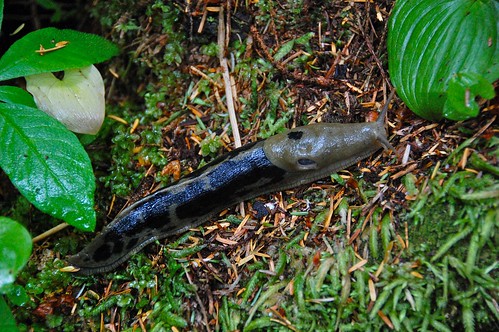
Slug

Do not be content with a single method of deterring slugs. Alan Titchmarsh told us years ago to ‘use several organic methods and reapply them regularly.’
Why settle for one remedy when you have a veritable arsenal of multiple methods for dealing with slugs.

Organic Slug Methods

  • Encourage more slug predators. Ground beetles are the thing and they love undisturbed clumps of Cocksfoot or Timothy grass. Frogs are also a useful predator to slugs
  • Read more about biological pest control methods with multiple nematodes to kill your slugs
  • There are now numerous packaged products to part you from your cash in return for parting you from your slugs.
  • Hoe the ground and bring the slug eggs to the surface for birds to eat.

Book Cover

Copper Based Slug Methods

  • Slugs dislike copper (unlike local metal thieves). You can use copper pipe hammered flat or lightening conductor.
  • Copper tape is sold for slugging it to slugs at most garden centers
  • Copper bands or collars can be very effective against slugs. Use them around your brassicas.
  • Copper tools like trowels are satisfying to use but may not do much to your slug population.
  • Slug and Snail Shocka is a large mat impregnated with copper.

Take extra care around slug favourites!

Chemical Slug Methods

  • If you want to know why you should slug your slugs with some form of chemical treatment look at my Hostas on this page.
  • For hard to find slugs and snails I still use a sprinkling of the old blue pellets.
  • Slug Pellets and Slug Exterminator at Amazon

slug
So Alan may be right a multi-punch mix and match approach may work. You can never do too much to deter slugs and snails from chomping your delicate plants.
If Frank Bruno was a gardener he would slug slugs with more than one punch at once.
However slugs were around before modern gardeners and you could adopt a policy of live and let live.

Credits
Slug by frankenstoen CC BY 2.0
slug by “Cowboy” Ben Alman CC BY-NC-ND 2.0

Improving Garden Biodiversity Top Ten Tips

Improving Garden Biodiversity Top Ten Tips

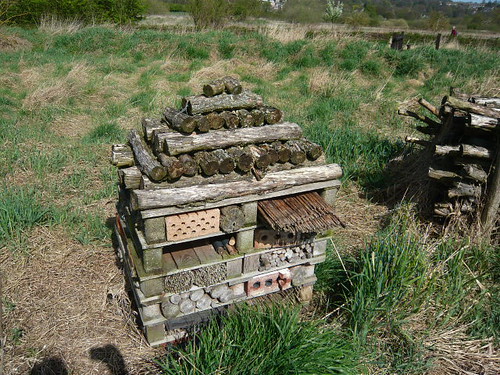
Insect home

Every garden has the potential to do more for biodiversity. It need not cost and it may be fun to improve the biodiversity in your garden.
Just undertaking one item from the following top ten tips will help. If you already do all of them then give each one a make over or a little extra space and time.

Top Ten Biodiversity Tips

1. Log piles of dead wood host fungi and insects.
2. Pond life includes amphibians like frogs or newts but a pond also supports many insects and a variety of other creatures.
3. Compost heaps are not only good for creating compost but host worms and insects.
4. A Bug Bivi or multi-habitat insectarium can be made to a size suitable for all gardens. see photo
5. Wildflower meadows or just uncut grass develops wildflowers and grubs.
6. Single flowers preferably from UK native plants provide insects with pollen, nectar and food.
7. Mixed hedges are homes and security for birds and insects.
8. Climbing plants trained up walls help wildlife not catered for elsewhere.
9. Leaf piles can host over wintering hedgehogs and leaf mould from rotted leaves is good soil conditioner.
10. A mature tree can provide a habitat for a host of species and shade and shelter for ground dwellers.

Comment on Improving Garden Biodiversity

Balance in a garden is most important and I like the idea of ‘a bit of everything’ rather than a glut of one feature. However you need to start somewhere so have a go from the list.
Bees are important to pollination and currently receiving large amounts of attention but do not forget the worms and fungus that complete the recycling process.
Create a Butterfly Garden link
Get Butterflies in Your Garden link

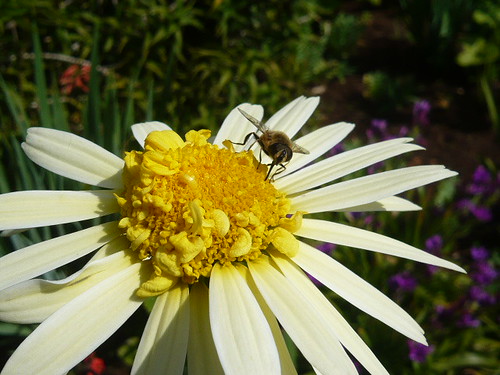
Madiera insect

Uncommon and Common Garden Weeds

Uncommon and Common Garden Weeds

weeds

‘A weed is a plant that is growing in the wrong place.’
‘A weed has little virtue and lots of drawbacks!’
‘A weed aint necessarily weedy, it can be quite aggressive.’

Common Weed Problems

  • Some weeds grow in the expense of your cultivated plants taking nourishment, sun and space from more needy subjects.
  • Nettles and brambles not only invade but get their retaliation in first by stinging or scratching the unwary.
  • Weeds that self-seed freely such as dandelions and willow herb end up growing in the most inconvenient spots.
  • Lawn weeds like clover and common daisies advertise the gardeners lack of application and break up the nice green sward we are aiming to grow.
  • Bindweed can choke your prize flowers sooner than you can say columbine.
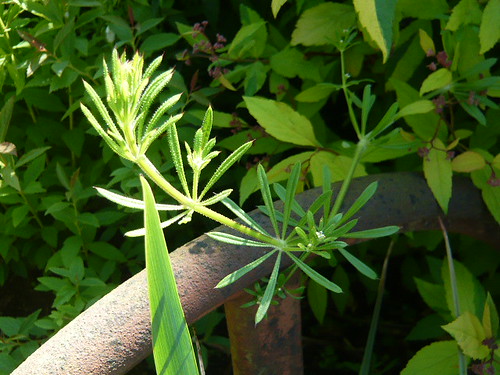
Sticky Weed

Common & Uncommon Garden Weeds

Below is a list of over 100 weeds . I think I will hand my garden over to nature and let them thrive. (well may be not all of them).

Meadow-grass, Barren brome, Black bent, Black bindweed
Black medick, Black nightshade, Black-grass, Bracken
Bramble, Broad-leaved dock
Bulbous buttercup, Canadian fleabane
Caper spurge, Cat’s-ear, Charlock, Cleavers
Cock’s-foot, Coltsfoot Common amaranth, Common bent
Common chickweed, Common couch
Common fiddleneck, Common field-speedwell
Common fumitory, Common hemp-nettle
Common mouse-ear, Common nettle, Common orache, Common poppy
Common ragwort, Common sorrel, Common toadflax, Corn chamomile
Corn marigold , Corn spurrey Cow parsley, Creeping bent
Creeping buttercup, Creeping soft couch grass
Creeping thistle, Curled dock
Cut-leaved crane’s-bill , Daisy, Dandelion
Dwarf spurge, Evening-primrose, Fat-hen
Field bindweed, Field forget-me-not
Mare’s or horsetail, Field Madder, Field pansy, Field penny-cress
Flixweed, Fool’s parsley, Gallant soldiers, Garlic mustard
Giant hogweed, Goat’s-beard
Greater plantain Ground elder, Ground-ivy , Groundsel
Hairy bittercress, Hairy Tare, Hedge bindweed , Hedge mustard
Hemlock, Henbit dead-nettle Himalayan balsam, Hoary cress
Hogweed, Ivy-leaved speedwell, Japanese knotweed, Knotgrass
Lesser celandine, Lesser trefoil, Long-headed poppy, Meadow buttercup
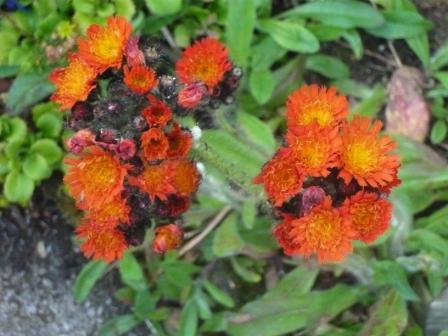
Mouse-ear-hawkweed, Mugwort, Nipplewort
Onion couch, Oxford ragwort, Pale persicaria, Parsley piert
Perennial rye-grass, Perennial sowthistle
Perforate St John, Petty spurge, Pineappleweed, Prickly lettuce
Prickly sow-thistle, Procumbent pearlwort
Red dead-nettle, Redshank
Ribwort plantain , Rosebay willowherb
Rough meadow-grass , Rushes, Scarlet pimpernel
Scented mayweed, Scentless mayweed, Selfheal Sheep’s sorrel
Shepherd’s purse, Slender speedwell, Small nettle, Smooth hawk
Smooth sow-thistle, Soft brome
Spear thistle, Spear-leaved orache Sticky mouse-ear, Stinking chamomile
Sun spurge, Swine cress Thale cress, Thorn-apple
Thyme-leaved speedwell, Volunteer cereals, Volunteer oilseed rape
Volunteer Potato, Wall Barley Wall speedwell, Weed Beet
White campion, White clover Wild radish, Wild-oat Water Avens
Winter wild-oat, Yarrow, Yorkshire fog
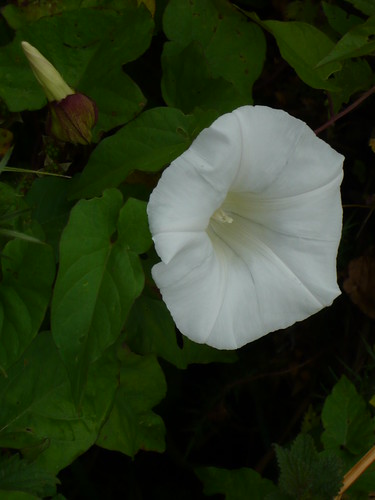
Bind Weed

Dealing With Weeds in Ponds

Book Cover

Weeds: The Story of Outlaw Plants by Richard Mabey

Book Cover
The Book of Weeds by Kenneth Thompson

Other Resources

Most Common Weeds
Common Lawn Weeds
Weed control of Avens
Horsetail and Mares-tail
Why war with weeds
For tips on Organic weed management visit Garden Organic
Royal Horticultural Society RHS ‘Gardening for All’
National Council for Conservation of Plants and Gardens ‘Conservation through Cultivation.’
BBC Gardening


Shape and Form in Your Garden

Shape and Form in Your Garden

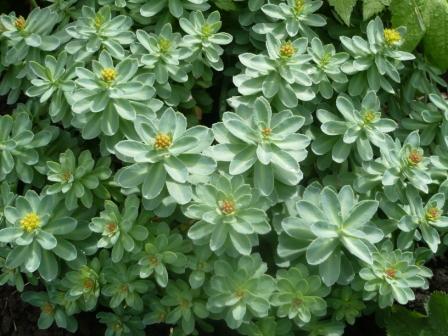
sedum

Sedum Rhodiola rosea

A garden needs visual variety and I hope we show some of that on Gardeners Tips. I know the senses we tend to focus on are sight, taste and smell but hearing and touching have their place.

Seeing Your Garden

  • Colour is often the most striking way our sight is stimulated but take time to consider and inspect the subtle variations you can achieve from leaves, barks and young shoots as well as flowers.
  • If you like topiary you will understand the impact of form and structure in your garden. Structural design can impart the essence of a gardens formality, informality or sense of fun by the features chosen and the way they are implemented.
  • The Form some plants take is also important and often the leaf or petal arrangements can be very attractive in their own right – Mother Nature knows what she is doing.
  • Texture can be seen and felt and soft grasses can complement furry leaves.

Read More Read More

Best Value Cold Frames

Best Value Cold Frames

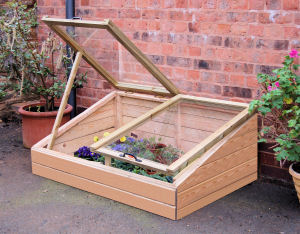
coldframe

Series of well ventilated cold frames.

Cold Frames are an excellent low cost method for developing and growing young seedlings. Cold frames make a good alternative to the the cost and size of conventional greenhouses.
To some extent you can make your own cheap cold frames. See this post – Home Made Cold Frames. I have just used a redundant double glazing unit to make a cold frame for my alpine plants.

Cold Frame


A good cold frame needs to have an easy mechanism for allowing air in. The cold frame can then be closed at night to protect seedlings against frost. This wooden variety helps keep the heat in. For best results keep at a south facing wall. The wood also makes quite an attractive feature for the garden.

The only problem with cold frames, is that  once you realise how useful they are, it soon becomes full and you start wanting a greenhouse! Of course, a cold frame can be an excellent choice for those who find the greenhouse overflowing at this time of the year.

Cheapest Cold Frames

Some of the cheapest cold frames can be bought for under £50. This Gardmen cold frame holds 6 seeds trays (1000mm *650mm) and can be bought for less than £50. Cold Frames at Amazon.co.uk

The smallest Greenhouses (6ft * 6ft) will come in at over £200. Greenhouses

Mulch around Red Shoots of Spring Peony

Mulch around Red Shoots of Spring Peony

Peonie

A four foot square clump of plump new peony shoots were highlighted at Kew Gardens by the grey, gravel mulch around them. I have not suffered from slugs on Peonies, nor have they had problems with rotting, so I do not put gravel around my plants. However if it is OK for Kew then I guess it is OK for me. At least it would be a decorative improvement on my bare soil.

Ask two gardeners about mulch and you will get three answers. For example when asking about mulching Peonies I got these answers ‘Three popular choices are straw, compost or dry leaves.’ ‘Some popular spring mulches are shredded bark, pine nuggets or straw.’ So no gravel there then!

Planting too deeply may prevent the peony from flowering, they do better for a bit of frosting on the crown apparently. Peonies can live for over 50 years and mine flower just fine so I am leaving things as they stand ie. very occasional autumn mulch when the compost heap has generated compost to spare .

peaonie

Tips Prior to Mulching

  • Remove any weeds that are growing near the peony shoots or stems. Weeds take water and nutrient and look bad.
  • Fertilise in spring with a dry compound like growmore.
  • Fertilise again in autumn with a potash based feeder.
  • Remove ant rotting vegetation that may harbour fungus or disease.
Childhood Shrubs Privet and Golden Privet

Childhood Shrubs Privet and Golden Privet

Privet
Privet in flower

Privet ‘Lingustrum Vulgare’

Where has all the ‘Privet’ gone? In my youth it seemed as though every small garden was kept private by a neatly clipped Privet hedge. If it wasn’t clipped it went hay wire.

  • Privet is usually described as evergreen or semi-evergreen.
  • It loses some leaves in the winter, but not all of them and will grow almost anywhere
  • Green privet must be kept cut otherwise it becomes very open and loses its effect.
  • Particularly good in windy areas and by the sea.
  • Privet can withstand very hard pruning to get it back in shape
  • Privet is hard to remove as the roots are tenacious.

privet lives
Privet Hedge around tennis court.

The posh gardens near us had golden privet that was light green with a yellow stripe but most of us had a dark green hedge. There are Yellow-leaved varieties available which are smaller than the green-leaved type.

  • Yellow Ligustrum ovalifolium aureum has wonderfully scented if fairly ordinary looking white flowers in the spring.
  • Height and spread: 12ft x 12ft
  • Growth needs cutting twice a year but leaves can be bisected. Clipping may take away most of the flowers.
  • Propagation by cutting is very easy

Credits
Privet by jwinfred CC BY-NC-ND 2.0
privet lives by Yersinia CC BY-NC-SA 2.0