Browsed by
Category: Flowers and Plants

Annual, perennial and interesting flowers with advice on culture, information, tips and recommended varieties

Top 10 Vegetable Seed Suppliers

Top 10 Vegetable Seed Suppliers

Last year we reviewed seed companies for general seed supply and offered a deal with Unwins. Now we have an arrangement with Thompson Morgan which has just been rated by the Daily Telegraph as having the best overall range from a review of 8 seed catalogues. They have many unusual veg varieties and are good on potatoes and salad leaf mixes. This review is of Vegetable and Herb seed suppliers.

Edwin Tucker & Sons did not feature in our general seed review and scored highly with the Daily Telegraph. ‘very wide range, best for oriental vegetables with clear informative catalogue. Good value for money’.

Suttons good for beginners but the range is sadly getting smaller and smaller.

D T Brown are good value for money with a range that ‘is dependable in harsh climates’.

Chiltern Seeds emphasises heirloom varieties and has good selection of oriental veg. I like the quirky catalogue descriptions and buy some products from them.

Simpson’s Seeds seem to specialise in tomato and chillies seed with umpteen varieties on offer. Good for selling young vegetable plants.

Organic Gardening Catalogue has many unusual varieties of vegetables and herbs but a limited range.

Wallis Seeds remains one of our favourites with 32 pages of densly packed listings of all traditional veg and a few surprises. They supplied me quite a lot of seed this season.

The RHS have a members distribution scheme but only a small number of veg and herbs are offered. It would be an opportunity to increase the cultivation of heritage varieties if they could source adequate stock.

How To Make Your Garden Eco Friendly

How To Make Your Garden Eco Friendly

Sunflowers

There is a lot more interest in organic and eco friendly gardening. There is no better place than the garden for taking practical steps to help the environment. These are some simple suggestions that are quite easy to implement in your own garden.

Dealing With Slugs

The ubiquitous slug pellet can be quite damaging to wildlife, birds or cats may eat them by mistake. Instead of slug pellets there are many organic methods you can use.

  • Beer traps. Slugs are attracted to sunken pots of beer and drown in the beer.
  • Slug Nematodes. These are a nematode which are a natural foe of the slug. Watered into the soil they will prevent slugs growing in a certain area for upto 4 weeks.
  • Physical barriers to pot plants
  • Encouraging frogs – see pond.

Dealing With Pests.

Rather than use chemical sprays which kill many types of insects, try attracting insects who will do the job for you. One of the best ways to deal with pests such as green fly is to encourage their natural predators. For example, it is possible to attract more ladybirds, which will devour a huge amount of green fly. To attract ladybird grow plants that they like such as buddleia. You can also try ladybird boxes to help overwinter them.

Wildlife Pond

A pond will make an attractive feature for any gardener and will definitely help the organic gardener. In particular try to encourage frogs. Frogs will do a great job in eating slugs, one of the great pests of the garden. To encourage frogs, make a pond which easily accessible from the edges and provide enough cover. If you have fish, try protecting the frog spawn.

Composting.

Composting should be looked upon as an art in itself. There is great satisfaction in taking part in the natural recycling process of the garden. A well maintained compost heap will provide a steady supply of organic fertiliser and soil improver. If you have a neighbour who just send their lawn clippings to the tip, offer to take them and use them in your own compost heap. Well rotted compost is better than artificial fertilisers because it also acts as a soil conditioner. see: how to make good compost

Read More Read More

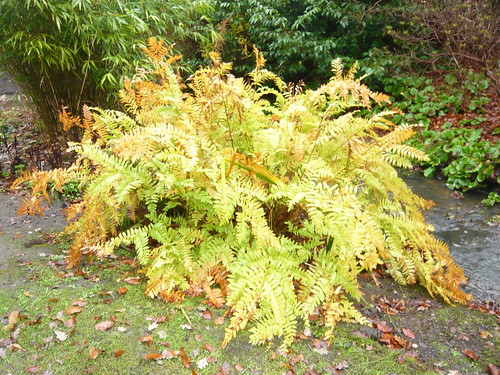
Royal Fern Osmunda Regalia

Royal Fern Osmunda Regalia

Osmunda Regalia

Some ferns are at their best as the Autumn sun shines through the colouring fronds. This Royal Fern looks bright and cheerful despite the overcast sky and the semi-shaded position. That may be due to the wet streamside location where it can grow to 4 feet tall.
Other members of the Osmunda family include Osmunda cinnamomea cinnamon fern and Osmunda claytoniana the interrupted fern.

The fronds of ferns can be either fertile or sterile and usually grow side by side from the same plant. On the underside of fertile fronds small brown dots or ‘Sori’ contain spores from which ferns reproduce. Osmunda can also propagate via root division.

For Hart’s Tongue evergreen ferns  see

Leucogenes Leontopodium – New Zealand Edelweiss

Leucogenes Leontopodium – New Zealand Edelweiss

Leucogenes Leontopodium

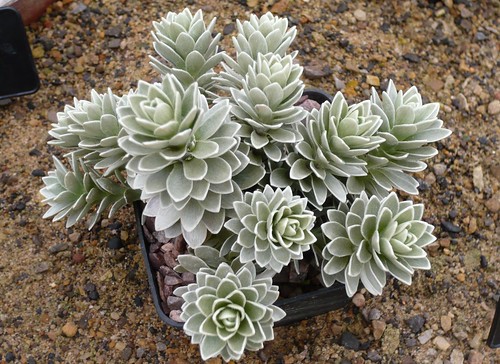
Growing inside an alpine house in a three inch pot this “Leucogenes Leontopodium” is also called the New Zealand Edelweiss. It is a herby plant similar to its European Edelweiss cousins. In the Northern Hemisphere I expect this plant will produce white flowers around June.

Leucogenes Leontopodium is a small perennial herb with a woody base. The leaves are densely covered in silky hairs giving it a grey appearance. Clusters of flowers are surrounded by woolly bracts in summer.

Leucogenes grandiceps is a similar plant from the South Island of New Zealalnd

Leontopodium alpinum or Edelweiss grows amongst the rocky limestone mountains of Europe. The plants can be grown from seed but are protected when in the wild.

Attract Bees in Organic Gardens

Attract Bees in Organic Gardens

insects

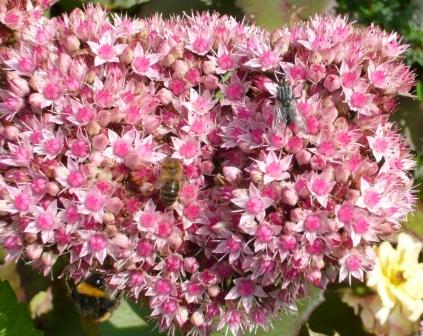
Bees, Flies, and Wasps all display their liking for the nectar from this Sedum spectabile. Insects are attracted by colour, fluorescence and iridescence and by pollen which gives them proteins and fat.  Scent is only one form of attraction for Bees. In the following selection of plants there are many attractions for the apairian population and you can grow them  to help your Bee population

Plants to Attract Bees

  • Flowers with open structures like Rudbeckias, Erigerons, and the early Doronicum
  • Most daisy like flowers and Calendulas, Asters and Cosmos
  • Bees seem to swarm together around Monarda, Verbenas, Echinops, Teazels, Scabious and of course the Sedums.
  • Natural gardens of indigenous species are one of the key food plants for bees
  • Flowering  herbs like Thyme, Sage and Lavender are bee magnets.
  • Ceanothus, Heather, Pyracantha, Broom and Hebe also attract Bees

Experiment with other plants and flowers  in addition to this list as the population of bees has been struggling in the UK in recent years.

Organic Seeds

How to make your garden ec0-friendly

Skimmia for Buds and Berries

Skimmia for Buds and Berries

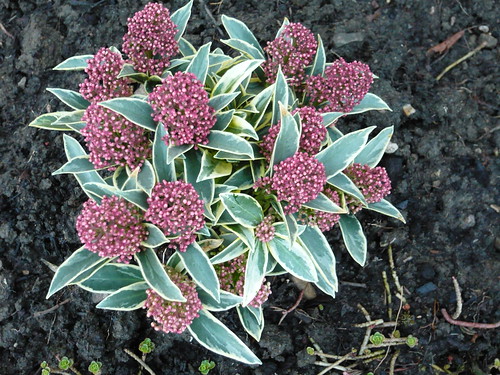
Variegated Skimmia Magic Marlot

Skimmia is a slow growing, aromatic, evergreen shrub with a compact habit. Skimmia Japonica grows in a dome shape with leathery leaves and the flowers can be followed by red or black berries. Skimmia laureola has dark green leaves which smell when crushed. The flowers on this variety are clustered on the end of the shoots.

How and Where Can I Grow Skimmias?

  • They are tolerant of shade and seaside conditions though some cultivars do not like an alkaline soil.
  • The flowerbuds look like pink flowers (above) and slowly develop during late autumn before finally opening to reveal the small white flowers in late winter.
  • Most Skimmias are single sex plants therefore, if you want berries (below), you will have to grow both male and female plants.
  • Skimmias are slow growing and should not need pruning
  • Plants are hardy and would fit in too a low maintenance area
  • Skimmias can be grown in containers

Read More Read More

Seed Tips and Succesful Seeds

Seed Tips and Succesful Seeds

Sowing the Seeds of Success

All good gardeners know that seeds are on your side they want to grow and thrive. Apart for some weedy exceptions that I will save until the end of this article seeds can be coaxed into blooming excess with only a little know how.

Help From the Seeds.

Every seed tells a story and you can learn to read that story by considering the parent plant and the seed itself. To set seed most plants need to be pollinated male to female and many plants are self-fertile. Having taken a deal of trouble to attract pollinators or pollination most plants package up the seeds and plan how to distribute them.

Berries and fruit have a soft or pithy outer case to help. Birds ingest elderberries and deposit the seed where they will.

Poppies have a pepperpot shaker type seed head that allows some ripe seed to be sprinkled each day over several days or weeks.

Aquilegia seed pods contort and twist to ping out seeds in a squirting motion so they travel a distance.

Dandelion seeds have feathery tufts to allow the wind to blow them where you don’t want them (but I said I would save these comments to the end)

So from these examples you can see seed pods protect and help distribution of the seed.

Seed Size and Features

Read More Read More

Winter Garden Tips

Winter Garden Tips

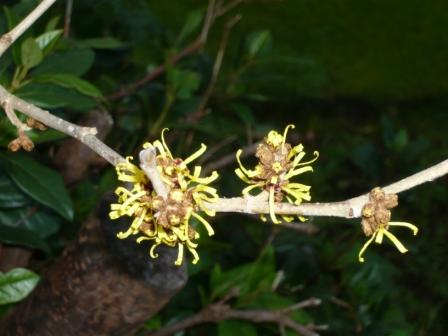
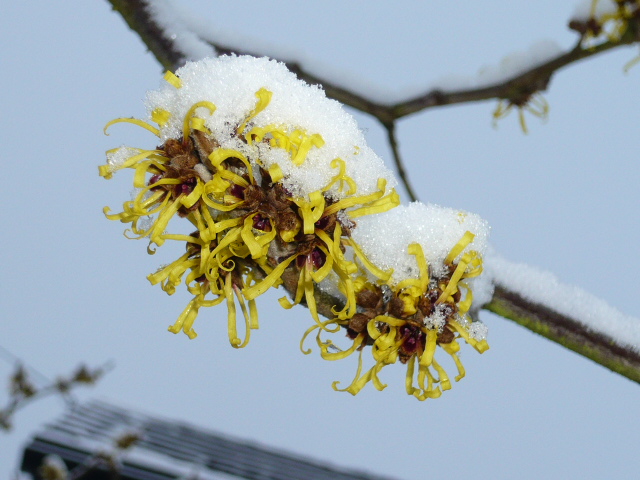
witch-hazel

You can start your  gardening on New Years Day or as soon as your hangover is cured. Do not have too many resolutions or you won’t keep any of them. I find it is a good idea to know roughly what you want to achieve in the year without being too specific as to how. For my part I have decided to have more soft fruit and ‘Shock and Awe’ type garden features.

Steps for January

Fruit

  • Prune apple trees and thin out the fruiting spurs. In my case buy cordons or ballerina trees.
  • Cut out any dead or diseased wood and spray trees with winter tar oil wash to deter insects. Leave the plums till later.
  • Remove any big buds on black currant bushes.
  • Cover a rhubarb crown with a forcer to get early, thin, pink stems.
  • Plant any new trees or shrubs – I want a dessert gooseberry
  • Tie up raspberry canes and check for loose ties on trees and wall trained fruit.

Vegetables

  • Order any seeds from a reputable supplier and sprout potatoes in a box with the rounded rose end upper most
  • Sow some broad beans when it is mild
  • Lime the vegetable patch that grew brassicas last year. Do not lime your potato patch.
  • Plan where crop rotation is going to be.

Flowers and Shrubs

  • Tidy the borders and plant lilies and Antirrhinums
  • Ventilate your cold frame
  • Check frost protection for new young shrubs
  • Spray roses and the surrounding ground against black spot and mulch Rhododendrons

Lawns

  • Service the lawn mower ready for spring
  • Keep clear of dead leaves Rake mossy areas

Greenhouse and Indoor Plants

  • Clean staging and fumigate the greenhouse
  • Take cuttings of late flowering chrysanthemums
  • Keep houseplants on the dry side in the best light
  • Pick sprays of Daphne & forsythia to flower indoors

General

  • Don’t rush into doing anything too early but be prepared for your busy period
  • Do any construction work except concreting during a frost
  • Sow leeks and onions in boxes and even some lettuce and peppers in the warmth.
  • Look closely around your garden there will be treasures to uncover. Hellebore niger, Winter Jasmin and Witch Hazel (above) are all flowering

February Tips

garden

Garden Tasks for February

  • Finish Planting trees and shrubs. The earlier trees and shrubs can be planted the better
  • Prepare Soil. If the soil is not frozen it is a good time to prepare the soil through digging where necessary.
  • Finish Pruning of Roses or other shrubs
  • Towards the end of February, you can start dahlia tubers and similar tubers such gloxina and Begonias indoors.

Vegetable Garden in February

  • Sow early crops under glass. Early vegetables can included mustard, cress, parsnips, broad beans and lettuce.
  • Towards end of the month you can start thinning out seedlings
  • Prune Autumn fruiting Raspberries. Autumn producing raspberries want to be cut back to 6 inches as they fruit on new growth.

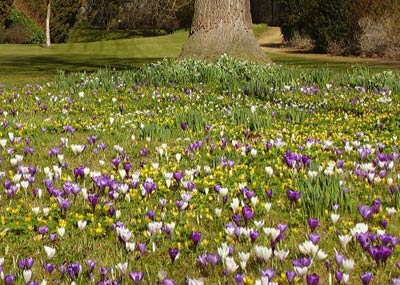
crocus

A bed of crocus

Things to Enjoy in the February Garden

  • Early bulbs – snowdrops, crocus, early daffodills.
  • Early primulas –
  • Early pansies
  • Camellia Japonica
  • Daphne

flower
Related