Browsed by
Month: April 2014

Books on Primula, Auriculas and Polyanthus

Books on Primula, Auriculas and Polyanthus

Book Cover
The Primula; Being the Report on the Primula Conference Held at South Kensington, 1886, Together with a Report on the Orchid Nomenclature Conference,

Comment on Primula Books

The internet can’t give you all the knowledge and joy that a book can provide. I am biased as I collect gardening books but am drawing the line at buying books that are digital publications of the Wiki content (sorry I have included one book in this list of books on the Primula family.)
Books and records on the history of plants and how they have been grown, bred and developed can add extra interest for the gardening amateur, professional or obsessional alike.
This is just a list of some of the books in English about Primulas and related species that are available, even if currently out of print.
Part of the fun is adding to a collection via secondhand book shops and I hope to add to this list as I realise other books are in publication.

Book Cover

Primula by John Richards

Primula The Complete Guide by Mary A Robinson shares a fount of knowledge from her nursery in Lincolnshire.

Generic Primula Books

Primulas by Sidney Clapham (1973)
Primulas by A. G Puttock (1957)
Primulas Old and New by Jack Wemyss-Cooke
The Genus Primula In Cultivation And The Wild. by J. J. Halda (1992)
Hardy primulas by H.G Lyall (1959)
Primrose and Polyanthus by Peter Ward
Synoptic Guide to the Genus Primula by G. K. Fenderson
A Plantsman’s Guide to Primulas (Plantsman’s Guide Series) by Philip Swindells (23 Mar 1989)
Primulas of the British Isles (Shire natural history) by John Richards (Jun 1989)
Primulas Of Europe & America. by Smith GF & Burrow B & Lowe D B an excellent Alpine Garden Society Guide
Asiatic Primulas Gardeners’ Guide by Roy Green
‘Primula’ Wikipedia consolidated articles
Book Cover

Auricula and Polyanthus Books

Book Cover
Primroses and Auriculas Wisley Handbook by Peter Ward
The Auricula: History, Cultivation and Varieties by Allan Guest
Auriculas Through the Ages: Bear’s… by Patricia Cleveland-Peck
Auriculas for Everyone: How to Grow and Show Perfect Plants by Mary A. Robinson
Auriculas and Primroses by W.R. Hecker (22 Apr 1971)
Auriculas: Their Care and Cultivation (Illustrated Monographs S) by Brenda Hyatt (22 Jun 1989)
Auriculas by Roy Genders (1958)
Auriculas by Gwen Baker and Peter Ward (5 May 1995)
Alpine Auriculas. by Telford Derek (1993)
Florists’ auriculas and gold-laced polyanthus by C.G Haysom (1957)
The auricula its culture and history. yr. 1898 by George William Johnson (1 Jan 1847)

Book Cover
Auriculas: An Essential Guide (Crowood Essential Guides) by Paul Dorey

Primroses and polyanthus by Harold Charles Taylor (1954)
The polyanthus for garden exhibition and market (Foyle’s Handbooks) by Roy Genders (1958)
The POLYANTHUS : Its History and Culture. by Genders Roy (1963)

I am happy to receive any additions or corrections to this list via the comments section.

Auriculas for Everyone
Mary A. Robinson.
GMC Publications.
ISBN 1-86108-149-9
£14.50 plus £2.50 p&p

Auriculas
G.Baker & P.Ward
B.T.Batsford Ltd.
ISBN 0-7134-7366-5

Book Cover

The Auricula: History, Cultivation and Varieties Allan Guest

Auriculas – Their Care and Cultivation
B.Hyatt Cassell, London.
ISBN 0-304-34070-7
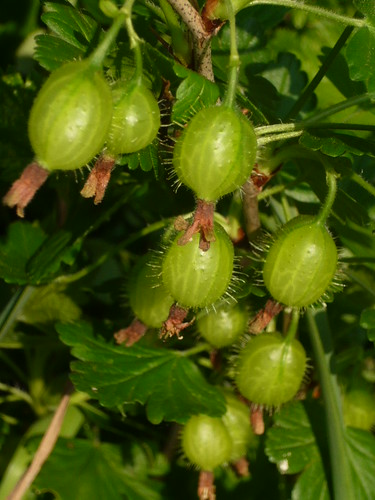
Gooseberry History

Gooseberry History

Gooseberry

One of the first fruits to be available for the kitchen and table each year, the gooseberry is an old stalwart. Rhubarb is earlier but is not a true fruit but a herb, still both are good in crumbles.

Gooseberries Since the Middle Ages

  • Great show varieties have names redolent of our military past such as Roaring Lion, Hero of the Nile, Wellingtons Glory or my favourite Hampson’s Tantararara. Far better than the soppy names used for plants in the 21st century.
  • Gooseberry bushes can easily live for 30-50 years and are one of the reasons for their longlived popularity
  • Edward I had gooseberry bushes planted at Tower Bridge in 1275
  • The young leaves were eaten and used as a diuretic according to 16th century Herbals.
  • Gooseberry clubs were popular in England from the 19th century
  • Gooseberries make jam and are grown for pectin for other fruit jams.
  • Gooseberries thrive in most parts of the British Isles.
  • The world record berry weighs 2.19oz and is from the Woodpecker variety
  • The phrase “to play gooseberry” comes from the days when the fruit was a euphemism for the devil.

Gooseberry Shows

  • Competitive gooseberry shows were wide spread but growing for size rather than flavour has fallen out of favour. A handful of shows still survive.
  • Egton Bridge, on the North York Moors National Park, is the setting for the oldest surviving gooseberry show in the country.
  • The show is held in August each year as it has been since 1800. It is organised by the Egton Bridge Old Gooseberry Society.
  • Gooseberry shows were particularly popular over the North of England but have dwindled from about 170 to only 20.
  • Show photos

Links and Sources

Gooseberry

Regal Pelargonium Images

Regal Pelargonium Images

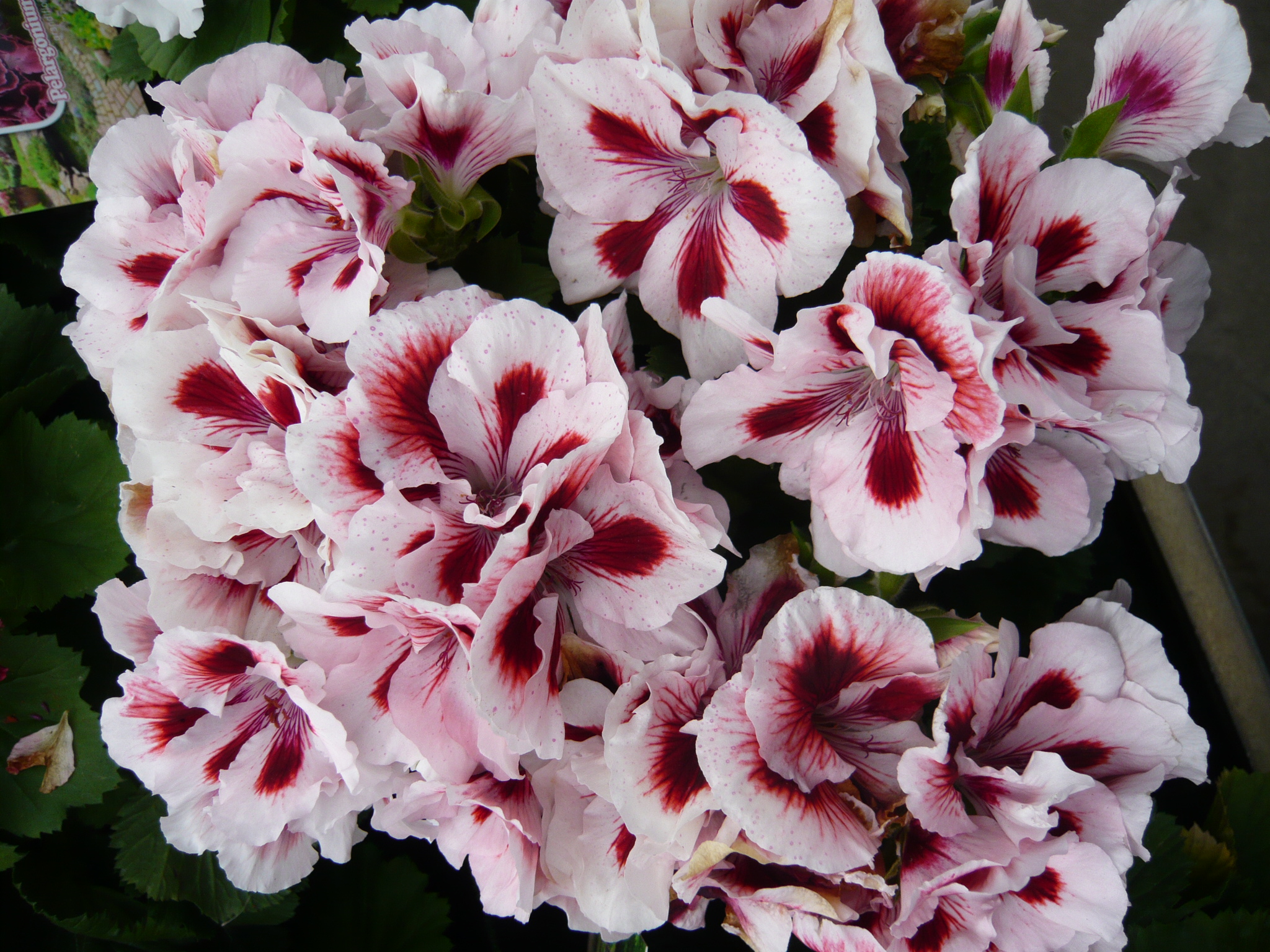
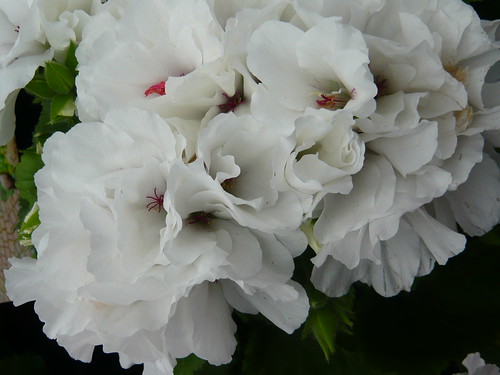
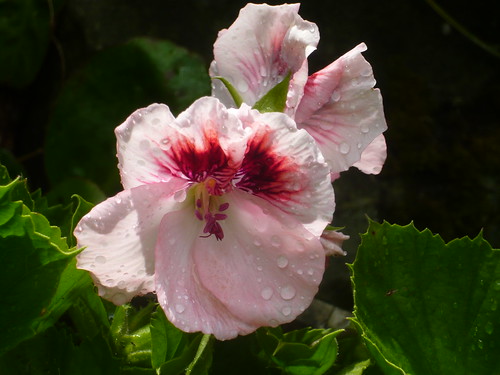
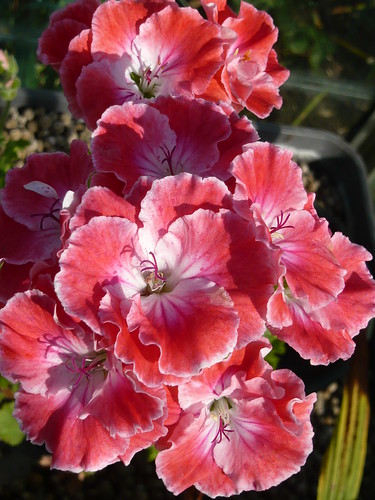
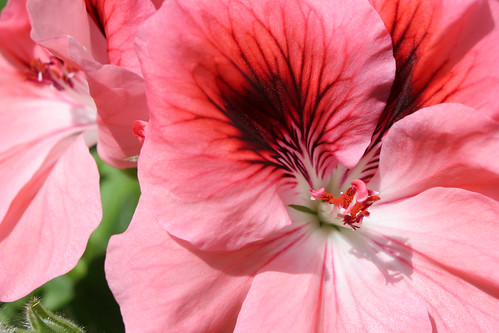
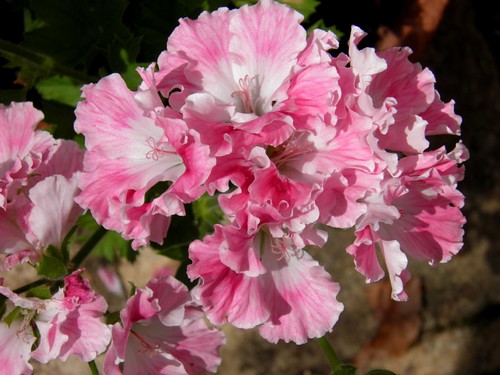
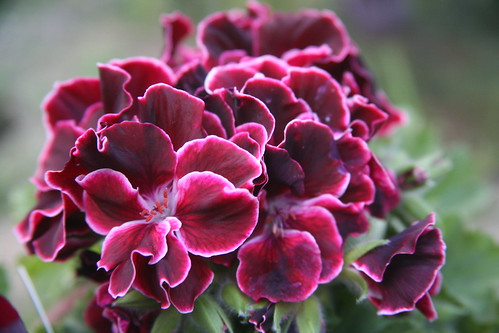
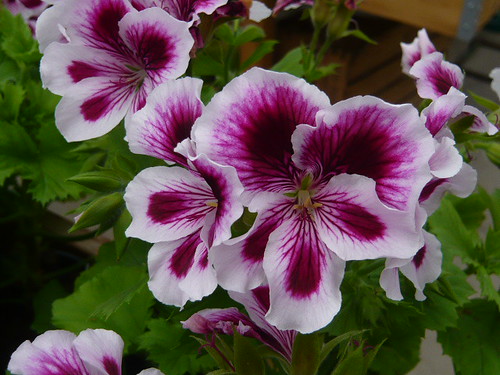
Sumptuous flowers from a houseplant we often call a geranium.
Regal pelargonium

Regal Pelargonium prefer a clay pot and plenty of calcium, so hard water is ideal for watering rather than rain water which will be softer.

Regal pelargonium

Regal Pelargonium do not require as much cutting back and require a slightly higher winter temperature than zonals.

Regal pelargonium

Never allow Regal Pelargonium plants to dry out completely as the roots will seal and blackleg will kill your plant.

Regal Pelargonium Mrs Innes Rogers

Deadhead old flowers frequently and feed regularly with high potash so that they will perform as well as your Zonals.

Pelargonium regal
Growing Regal Geranium Pelargonium

Regal Pelargoniums

Build Your Regal Geranium Collection

pink regal pelargonium

Crimped edges on some petals add to the allure.

IMG_2434

‘Apparently this is a Regal Pelargonium’ sure is David(ed).

regal pelargonium

Other links and information on Pelargoniums

Top 10 Scented leaved Pelargoniums
Pelargonium Grandiflorum and other ‘Geraniums’
Stellar Pelargonium – Bird Dancer Geranium
Photogenic Pelargonium
The Secret of Geranium (Pelargonium) Cuttings
Growing Regal Geranium Pelargonium
Miniature Pelargonium
Dwarf Pelargonium aka Geranium
Tips for Growing Geraniums (Pelargonium)

Credits
Regal Pelargoniums by Destinys Agent CC BY-NC 2.0
pink regal pelargonium by Chris & Angela Pye CC BY-NC-SA 2.0
IMG_2434 by DavidQuick CC BY-NC-ND 2.0
Swanland Nurseries Pelargonium Cultural tips

Thompson & Morgan supply seeds and plants in season.

Cotoneaster Horizontalis Growing Tips

Cotoneaster Horizontalis Growing Tips

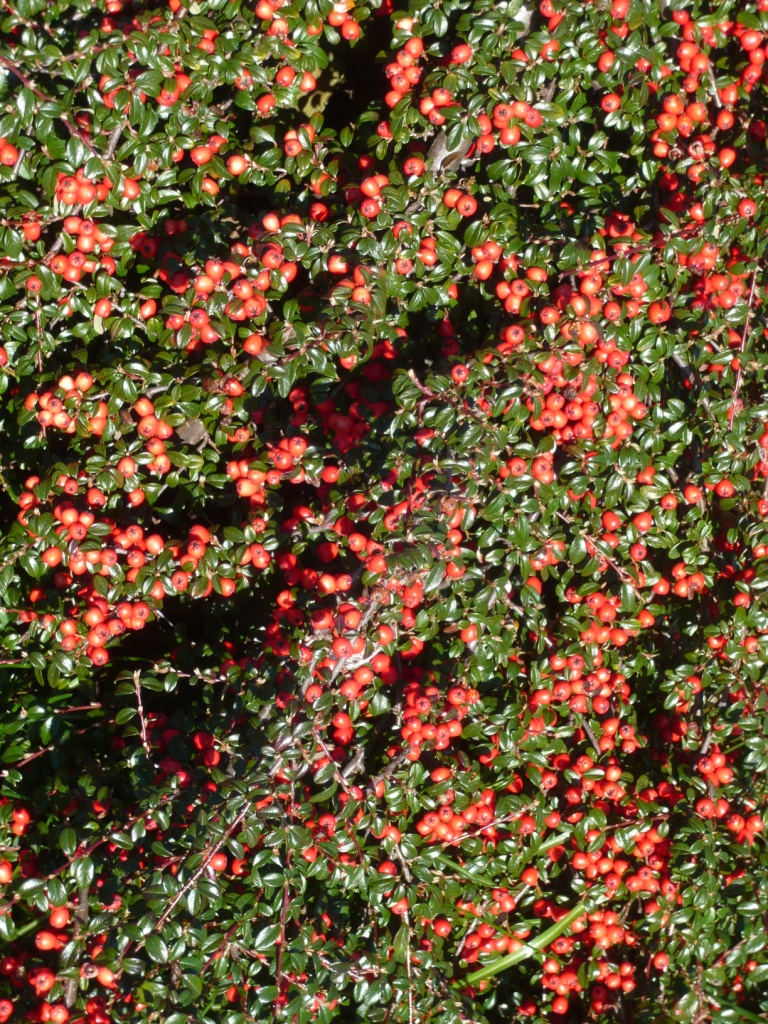
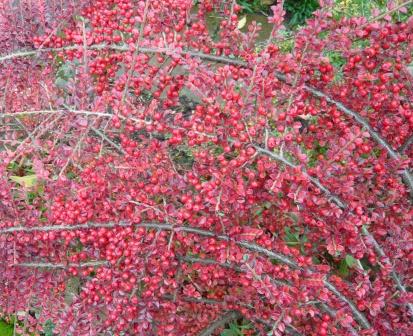
Not always a bird favourite but a prolific berryer alll the same.

Marks for the juicy red berries 65%, for the colourful leaves 25%, for the arching branches 25% and for arithmetic 12%.

Cotoneaster Information

  • An important genus of hardy ornamental shrubs ranging from prostrate to 10 feet high varieties. They tolerate most soil and conditions some growing up north facing walls.
  • As can be seen the leaves turn from green to strong autumn colours and most varieties bear fruit much loved by the birds in my garden.
  • Small white flowers can smother the branches in June and they attract bees and hover flies but are not troubled by pest or disease.
  • My Cotoneaster horizontalis has herring bone style branches covering a 2 foot wall and 6 square yards of an ugly, old patio. This variety of Contoneaster is drought tolerant.
  • My ‘Hilliers Manual of Trees and Shrubs’ (a great Christmas present for the enthusiast) lists over 70 of the 300 species with short write-ups on each and the RHS Plant Finder tells you where to source them.
  • Originally from Japan

bird on fence

Growing Cotoneaster Horizontalis for Landscaping

  • Cotoneaster Horizontalis is a good low growing shrub for use as groundcover or to grow on a bank. In this situation they need little or no maintenence or pruning.
  • A group of Cotoneaster Horizontalis growing in harmony with a taller shrub can make a distinctive feature
  • I have a self sown seedling in the top of a wall and the arching branches disguise the more formal wall shape.
  • Cotoneaster Horizontalis can be trained as an espalier or against a wall.

November 2011 - Cotoneaster horizontalis

Propagation of Cotoneaster Horizontalis

  • Cotoneaster horizontalis will root where the spreading branches touch the ground and this helps its spread. You can take rooted cuttings in this manner.
  • Plants produce prolific seed via the red berries. They are easy to grow from seed.
  • Can be propagated from Semiripe-hardwood cuttings

Read more: growing Cotoneaster as small trees

Credits
bird on fence by *Psycho Delia* CC BY-NC 2.0
November 2011 – Cotoneaster horizontalis by muffinn CC BY 2.0

Growing Vinca Periwinkles

Growing Vinca Periwinkles

Are Vincas a ‘cool’ plant to grow? You may think so but I couldn’t possibly comment.

009

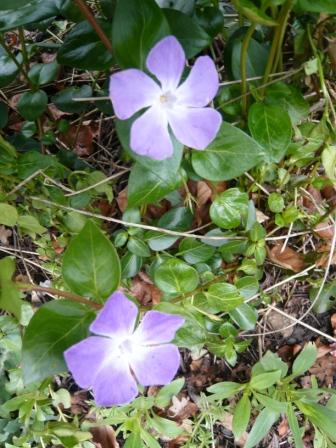
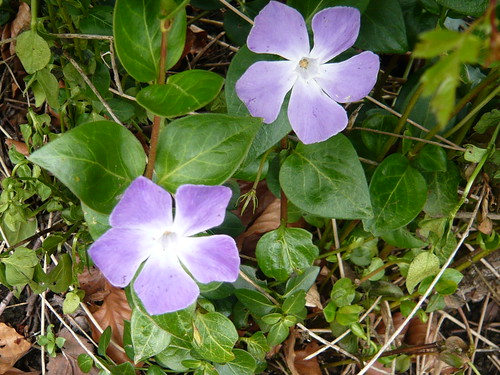
Vinca is a low growing herbaceous perennial suitable for ground cover. Vincas generally have sky blue or royal blue star shaped flowers on unkempt enthusiastic foliage.

Vinca Species and Varieties

  • There are several species and hybrids including Vinca major and Vinca minor. The minor species are slightly less robust and slower growing.
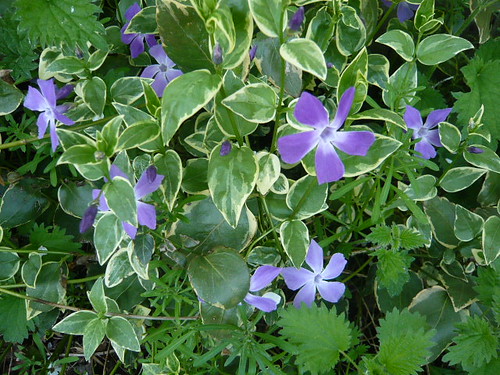
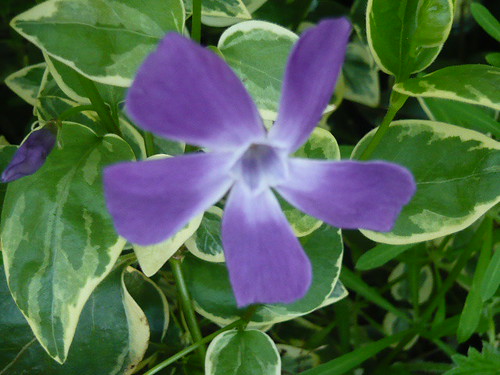
  • Vinca minor ‘Argenteovariegata’ shown above flowers from April all through summer.
  • Vinca difformis includes the pale pink ‘Jenny Pym’, with rounded flowers in late autumn. Vinca difformis needs a warm position.
  • White flowering Vincas include  ‘Alba’ and ‘Snowmound’.
  • Alba Aureovariegata has golden variegation and pale blue flowers,
  • Vinca Multiplex is a double flower with dark plum purple flowers.
  • Catharanthus roseus ‘Mediterranean Lilac’ or Vinca rosea the rosy Periwinkle casn be grown from seed.

Vinca

Tips for Growing Vinca Periwinkles

  • The trailing habit makes them suitable for use in containers.
  • Propagate from runners that are prolific.
  • Vinca major and Vinca minor are able to spread rapidly and are sometimes considered weeds. These pictures show how they are colonising a railway embankment and ousting the nettles.
  • Vinca will grow in poor, dry and slightly shaded conditions.
  • The creeping and arching stems  make an attractive carpet of bright green foliage with  the single blue flowers as an added bonus.

010

How to Dig a Hole for Plants

How to Dig a Hole for Plants

Dig a £10 hole for a £5 plant!
tree planting at United House of Prayer
‘A big hole for a big tree.’

It is often the easy gardening jobs that can be done better by a professional gardener but can you dig a better hole for planting?
For a long time I have just plonked plants in willy-nilly but then I started thinking about the place my plants were going to live for the rest of their lives.

Holes are Homes for Your Plants Roots

  • Roots anchor a plant safely in the soil.
  • The soil then provides water, air and nutrition for the plants growth.
  • Most roots are nearer the surface than you think. 95% of tree roots are in the top foot of soil.
  • The best soil is at the top. Sub soil is underneath the top soil and can be very compacted and lacking in humus and or drainage.
  • If top soil in thin you can break up the sub soil but do not bring it to the surface.
  • Read about healthy and unhealthy roots

Tips on Plant Holes

  • The hole should be appropriate for the plant your are planting both now and in the future as your plant grows.
  • Dig the hole at least twice as wide as your root ball but not necessarily twice as deep.
  • Most plant pots are round but roots want to have free reign. Aim for a square or oblong hole to discourage roots turning round and round.
  • Break up the bottom of the hole to aid drainage.
  • Add compost particularly if the soil is dry and sandy.
  • A slow release fertilizer can be added and mixed with the soil you will use for back filling. Bone meal, Growmore or blood fish and bone are suitably organic.

Tips for Planting into Holes

  • Plants grown in pots should be planted at the same depth. Put a cane across the hole and nestle the plant in place so the soil level showing on the plant is level with the top of the hole.
  • Clematis are an exception to the plant it level rule, they are best planted 6″ lower than their previous planting depth.
  • Trees and larger plants will need staking. Put your stake in place first so roots are not damaged.
  • Roots that are twisted around the growing pot should be teased out. Compacted soil around the root ball should be gently separated.
  • Pour water into the hole and let it drain away before planting. Keep trees and shrubs well watered for the first year.

Apollo Habtamu Planting his tree at the KMIS tree planting day

Credits
tree planting at United House of Prayer by nowyou33 CC BY-NC 2.0
Apollo Habtamu Planting his tree at the KMIS tree planting day by ILRI CC BY-NC-SA 2.0

Flower Arranging – Corkscrew Hazel

Flower Arranging – Corkscrew Hazel

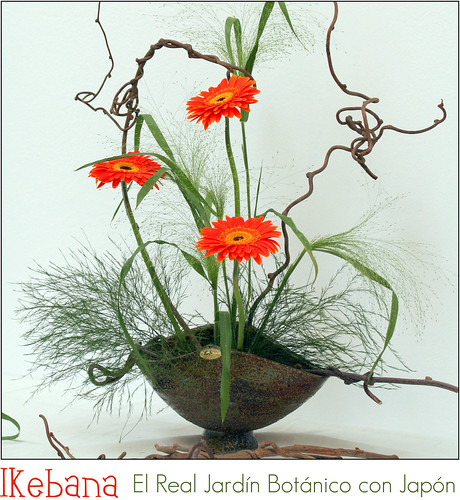
Ikebana

Growing Corkscrew Hazel for Flower Arrangements

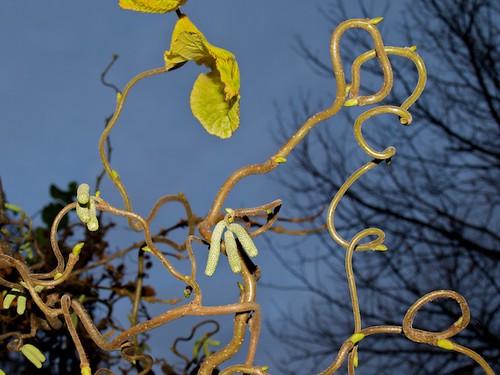
  • Corylus avellana Contorta is also known as Harry Lauders Walking Sticks or Corkscrew Hazel
  • It is a slow growing deciduous shrub that can grow to 20′ wide and 25′ high when mature.
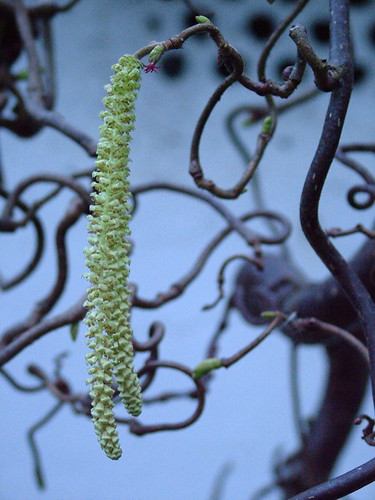
  • Corkscrew Hazel looks best in winter and from February-March there are pendant male catkins on the bare branches.
  • Propagation is best done by layering branches.
  • When in leaf the mid green leaves give an ugly deformed appearance.

Corylus avellana 'Contorta'

Special Tips for Flower Arranging with Corkscrew Hazel

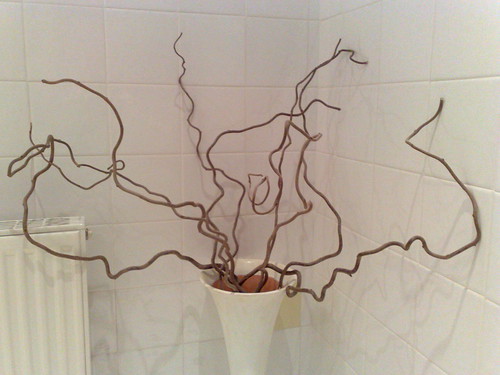
  • Use the twisted stems and bare twigs in winter arranging.
  • Twigs in bridal bouquets can add movement and interest.
  • Corkscrew Hazel are popular as a base for Ikebana
  • Catkins will gradually lengthen and become more yellow when kept in water for several weeks.
  • Twigs can be dried and used year after year. They can also be painted for Christmas.

Spring

A full array of books on Flower Arranging and related subjects is available from Amazon. You will find more advice and artistic inspiration amongst this selection.

Special Tips for Flower Arranging with Contorted Willow

  • I have included Contorted Willow with Corkscrew Hazel as the issues, effects, tips and methods are quite similar.
  • Twigs and stems can be dried and used several times or be sprinkled with glitter for Christmas.
  • The cut twigs will last several weeks and eventually the willow leaves will open on the stem.
  • Contorted Willow is available under several names including Salix matsudana Tortuosa (Salix babylonica tortuosa), Salix x erythroflexuosa or common names Dragons Claw and Tortured Willow.
  • Salix the Willow family are more vigourous than the Corylus Hazels

Contorted Willow
Credits
Ikebana by M. Martin Vicente CC BY-NC-ND 2.0
Corylus avellana ‘Contorta’ by Stadtkatze CC BY-NC-SA 2.0
Spring by David Davies CC BY-SA 2.0
Contorted Willow by touring_fishman CC BY-NC-SA 2.0

To grow a generic mix of flowers for arrangements and bouquets check out Thompson & Morgan

Book Cover
Ikebana: The Art of Arranging Flowers by Shozo Sato and Kasen Yoshimura

Corkscrew Hazel and Contorted Willow are plants that both produce twigs that add movement and style when flower arranging. Mix with just one type of flower as less is generally more with Hazels and Willows.
Turn your arrangements into botanical works of art – here are some examples and clubs you could join.

Other plants discussed in this series
Dahlia
Euphorbia
Pittosporum
Alstroemeria
Fatsia Japonica
Phormium

Flower Arranging – Phormium

Flower Arranging – Phormium

phormium
Encyclopaedia of Flower Arranging Techniques: A Comprehensive Visual Guide to Traditional And Contemporary Techniques by Marcia Hirst

Growing Phormium for Flower Arrangements

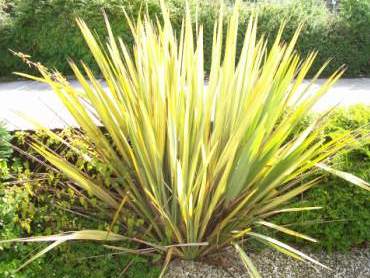
  • Phormium or New Zealand Flax is an evergreen, clump forming, hardy perennial.
  • The long strap shaped leaves contain fiber that makes a cord used for tying.
  • In winter it is wise to protect plants with a deep mulch of straw, bracken or dry leaves.
  • Phormium Cookianum can have 4 feet long leaves, Variegatum are green with creamy white margins.
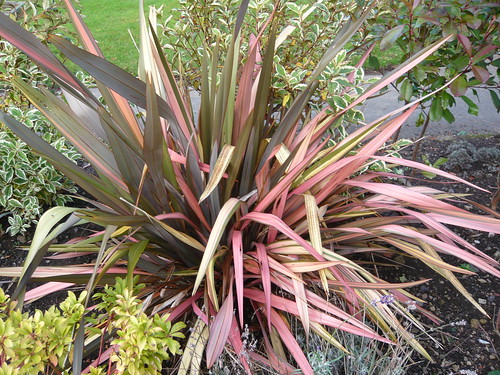
  • Phormium Cookianum Triclour leaves are red, yellow and green.
  • Phormium tenax is the other popular hybrid with a variety of leaf colours including pink and bronze, orange-red, salmon, yellow and other shades.

Book Cover

Special Tips for Flower Arranging with Phormium

  • Cut a few leaves to include in your arrangement.
  • Modern or European style arrangements with limited amounts of flowers and foliage show the leaves off to best advantage.
  • Condition by plunging into a deep bucket of tepid water for 24 hours.
  • The leaves can be sprayed with leaf shine or smeared with a small amount of cooking oil to enhance the appearance.
  • Phormium have a long vase life of several weeks if the water is changed regularly.

A full array of books on Flower Arranging and related subjects is available from Amazon. You will find more advice and artistic inspiration amongst this selection.
I would also recommend the Harrogate spring flower show where I am always stunned by the floral arrangement amongst the plants on display.

To grow a generic mix of flowers for arrangements and bouquets check out Thompson & Morgan

Credits
Architectural Phormium
Low Allergy Garden Phormium
Architectural Phormium

Turn your arrangements into botanical works of art – here are some examples and clubs you could join.

Other plants discussed in this series
Dahlia
Euphorbia
Pittosporum
Alstroemeria
Fatsia Japonica
Corkscrew hazel

Flower Arranging – Euphorbia

Flower Arranging – Euphorbia

Euphorbia

Growing Euphorbia for Flower Arrangements

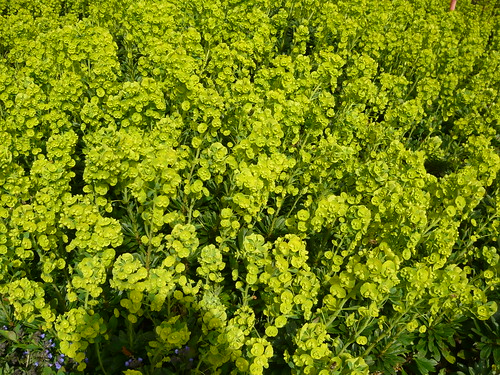
  • Spurge, Milkweed or Euphorbia is a genus of hardy shrubs, succulents and perennials that are striking in appearance and invaluable in the garden or for flower arranging.
  • Leaves are usually lance shaped and stems contain a milky sap that can irritate your skin.
  • Varieties to grow for flower arranging include;
    Euphorbia amygdaloides robbiae with evergreen rosettes of dark green leaves and lime green bracts.
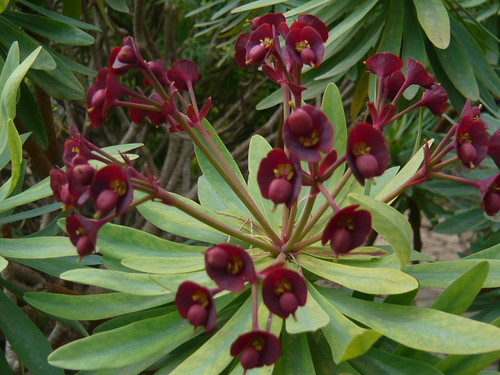
    Euphorbia amygdaloides purpurea a marooon stemed variety.
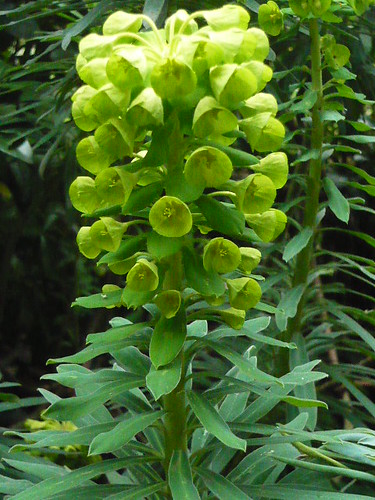
    Euphorbia characias wulfenii with blue green leaves that grow up to 4 feet.
    Euphorbia polychroma with bright yellow bracts.
    Euphorbia myrsinites is a prostrate form with grey glacous leaves
    Euphorbia griffithii is a hardy perennial that dies down each winter but young foliage is reddish green and the flowers are orange-red.
  • These plants are interesting and easy to grow and add shape and texture to your garden.

Euphorbia atropupurea

Special Tips for Flower Arranging with Euphorbia

  • Do not cut when the Euphorbia are too immature or the stems will wilt.
  • Cut stems must immediately be sealed by flame to stop sap oozing out.
  • Resinge or reseal if you trim the ends when re-cutting.
  • Vase life should be 7-10 days if conditioned in a bucket of water overnight first.

A full array of books on Flower Arranging and related subjects is available from Amazon. You will find more advice and artistic inspiration amongst this selection.

I would also recommend horticultural flower shows where I am always stunned by the floral arrangement amongst the plants on display.

Book Cover

Top Ten Euphorbia selected from a range of a over 2000 varieties in the genus.

Euphorbia

Euphorbia are a wide range of plants many of which are suitable for flower arranging where the bracts and leaves both add interest.
Turn your arrangements into botanical works of art – here are some examples and clubs you could join.
To grow a generic mix of flowers for arrangements and bouquets check out Thompson & Morgan

Other plants in this series
Dahlia
Pittosporum
Alstroemeria
Fatsia Japonica
Corkscrew hazel
Phormium

Flower Arranging – Pittosporum

Flower Arranging – Pittosporum

Pittosporum Tenuifolium 'Tom Thumb'

Growing Pittosporum for Flower Arrangements

  • Pittosporum is a genus of evergreen shrubs and small trees that grow well in coastal areas and sheltered situations.
  • The popular cut foliage has pale green undulate leaves on black twiggy stems.
  • Pittosporum tennuifolium is the most popular species with florists and gardeners as it is hardy
  • Other colours of leaf are available including Pittosporum tennuifolium Purpureum (above), Pittosporum tennuifolium Variegatum with crinkled greeny white leaves and Pittosporum tennuifolium Warnham Gold.

Book Cover
Flower Arranging by Mark Welford and Stephen Wicks

Special Tips for Flower Arranging with Pittosporum

  • The dense nature of the leaves on the black twiggy stems makes Pittosporum a good filler for a hand tied arrangement.
  • Before using the stems split them and stand them in a bucket of cold water overnight.
  • Bunches can be wrapped in cellophane as a gift or used in a bridal bouquet
  • To make a hand-tied bunch hold the stem of the first piece of plant in your hand and gradually add one piece at a time. Spiral the the stems in one direction only as you build up your design. When the bunch is complete tie off with raffia or twine at the point where your hand held the bunch. Finally trim the bottom of the stalks to the same length (it might even stand up on it’s own.)

Pittosporum in the rain

A full array of books on Flower Arranging and related subjects is available from Amazon. You will find more advice and artistic inspiration amongst this selection.

I would also recommend the Harrogate spring flower show where I am always stunned by the floral arrangement amongst the plants on display.
Pittosporum

Credits
Pittosporum Tenuifolium ‘Tom Thumb’ by áš›Tilly Mint ášœ, CC BY-NC-SA 2.0
Pittosporum in the rain by wallygrom CC BY-SA 2.0
Pittosporum tenuifolium by chuck b. CC BY 2.0

Pittosporum tenuifolium

Pittosporum tenuifolium can be used for flower arranging to good effect due to the dense nature of the crinkly edged leaves on dark stems. grow in sheltered locations to get plenty of useful foliage.

To grow a generic mix of flowers for arrangements and bouquets check out Thompson & Morgan

Other plants discussed in this series
Dahlia
Euphorbia
Alstroemeria
Fatsia Japonica
Corkscrew hazel
Phormium