Help Control Moss

Help Control Moss

Moss will recur if the growing conditions are not changed. Killing moss is not a one time operation. Moss stultifies other plants.

Help Moss Control on Pots

  • On newly purchased pots of trees, shrubs or perennials there is often a growth of moss. Remove it to avoid importing new problems into your garden.
  • Peel moss and weeds off the top of the pot and bury it 12″ deep.
  • Moss on patio pots needs to be removed annually in spring. I then top dress the pots with new compost.
  • Covering with grit or pebbles will control the moss.
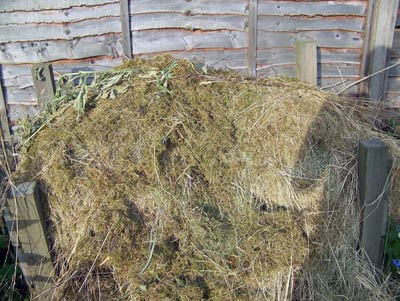
moss

Readers Question: Is it OK to Compost Moss?

‘I have just been raking a lot of moss from my lawn. It’s surprising how much moss I was able to rake off and naturally I would like to compost it.’ Then I want to cure the problem.

Like any organic matter, moss will compost down and make compost over time but it may take a long time!. However composting is not a good cure and I would avoid putting it on my heap for fear of spreading the moss around.

I would dig a hole under my runner bean trench and bury the moss at least 12″ deep.

One trick, as with any composting is to mix it with other materials, such as grass clippings and woodier plant stems. If mixed together the moss should compost down  depending on how well watered and aerated the compost heap is. Moss grows from spores and it is possible they will not be killed by the heat in your compost bin.

Other uses for moss include lining the inside of hanging baskets. These days, artificial linings are used, but, moss has many properties including water retention which make it excellent for lining an hanging basket
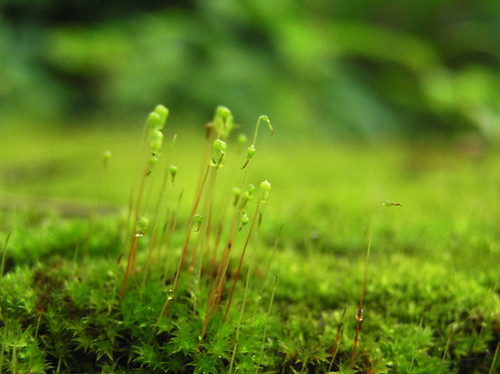
Moss 01

Background Facts on Moss

  • There are thousands of different types of moss.
  • Mosses are used on green roofs due to, reduced weight loads, increased water absorption, no fertilizer requirements, and high drought tolerance.
  • Mosses do not have true roots so do not absorb water or nutrients from soil.
  • Some mosses grow on trees but are not parasitic on the tree.
  • Moss can be used in bonsai to cover the soil and enhance the impression of age.
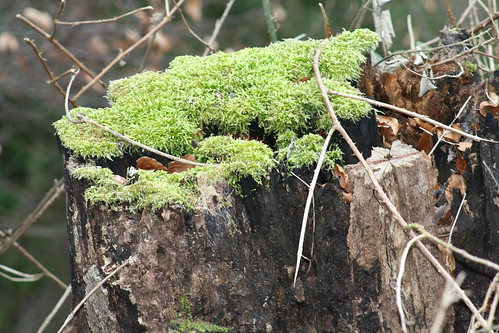
Moss on tree stump

Help with Problems & Cures for Moss

  • Moss can colonise a badly drained or compacted lawn and look unsightly.
  • Unwanted moss can grow on paths and roofs.
  • Moss growth on seed pots can smother seedling emergence.
  • Moss growth can be inhibited by

Cutting the supply of water through better drainage.
Increasing direct sunlight.
Increasing the soil pH with the application of lime.
Regular hoeing and disturbing the soil around the moss with a rake
Application of chemicals such as ferrous sulfate (e.g. in lawns) or bleach (e.g. on solid surfaces).
Encourage and help competitive plants like grasses.
Top dress plants in containers with sand, gravel, and rock chips for faster drainage to discourage moss growth.
Chemicals products containing ferrous sulfate or ferrous ammonium sulfate will kill moss.

Credits
Moss 01 by Enygmatic-Halycon CC BY-SA 2.0
Moss on tree stump by Pete Reed CC BY-NC 2.0
Moss peat and other products from Amazon

Book Cover
Moss Gardening: Including Lichens, Liverworts and Other Miniatures by George Schenk
Sawfly, Flea Beetle and Leaf Cutter Bees

Sawfly, Flea Beetle and Leaf Cutter Bees

Mid summer can be a time for a couple of creatures that are determined to make certain plants look untidy.


Sawfly larvae love to feed on Solomons Seal polygonatum x hybridum. They start by making holes in the leaves but can strip a plant to bear stalks and untidy veins in no time. Check beneath the leaves and pick off any caterpillar like creatures. A pyrethrum based insecticide will also work to control sawfly.


The leafcutter bee is more a friend than a foe even though they can make you rose leaves look like they have been chewed around the edges. Circles of leaf are cut from leaves and carted away to form cocoons to surround eggs. Damage to plants is unlikely to kill the plant. These bees are great pollinators and are worth leaving alone to get on with being part of your gardens ecology.

Flea beetles can speckle rocket and brassica leaves and leave holes of different sizes. In the main the leaves are still edible and as the insects are so small it is hard to spot them. You can grow under fleece if the problem is severe.

Help Growing Carrots

Help Growing Carrots

Vitamin D from sun to plate via well grown Carrots

Preparation for Growing Carrots

  • Grow in an open sunny site.
  • Remove large stones.
  • Do not feed the soil as this may encourage carrots to split and fork.
  • Rake the soil level and create a fine tilth.
  • Wait until the soil has started to warm up.
  • Select and buy your chosen seed variety.

Sowing and Care

  • Always sow carrot seed thinly.
  • Space 4cm apart to avoid thinning out seedlings later on.
  • Cover seed lightly with about 2cm of soil.
  • Space rows wide enough to access for mweeding.
  • Water the newly sown seed to settle the soil. Repeat every few days if the conditions are dry.
  • Seed should germinate in 15-20 days.
  • Allow 2-3″ apart to get good sized roots.
  • Weed when young and regularly as they develop to ensure the roots have enough moisture.


Photo cc by color line

Other Tips and Advice

Carrots (Daucus carota) are sweet, crisp, vitamin rich vegetables that you can easily grow from seed. I won’t guarantee you will see in the dark but home grown carrots will taste great.

Varieties to grow are listed in a link at the bottom but the short rooted varieties are a good place to start e.g. Amsterdam Forcing, Early Nates or Rondo. Intermediates ‘Royal Chantenay’ and Long Rooted varieties ‘St Valery’. There are 100+ varieties to select from.

Sowing Tips sow according to the instructions on the packet for main crop usually from mid April when the soil has warmed up. Fine soil without stones is the best for Carrots. Do not sow in seed trays or transplant Carrots as the roots will be damaged and the crop useless. Mix the seed with fine sand for even sowing.

Problems to Avoid. Carrot root fly lay eggs and the maggots then eat into your carrots unless you cover the sown seed with horticultural fleece or grow in a raised bed where the plants should grow above the fly ‘fly-zone’.
Fanging or Forking of the roots is caused by stones, too much manure or transplanting carrots. Some times aphids can also be a problem, try a cloche or insecticide.

Growing Tips Water well in dry weather. Start thinning when the leaves are large enough to handle. Carrots need to grow 1-2 inches apart. Eat thinnings from mid June. Mature carrots have a slightly darker foliage.

Harvesting the Crop Carrots can be lifted at anytime but are best eaten when young. They are also best eaten fresh, straight from the ground so only pick what you need.
Grow a mix of varieties to mature at different times. Lift before the frost.

Other Tips Grow golf-ball shaped or short varieties if the soil is stony or clay or you want to use a container. Carrots can be frozen. Larger crops can be stored in a straw clamp or cool damp sand.

Thompson Morgan Seeds to consider buying.

Help Growing on Straw Bales

Help Growing on Straw Bales

Get it right and you can grow bumper crops on straw bales.  It is clean, cheap and environmentally friendly.
The principle is that decaying straw generates heat to form a ‘hot bed’encouraging healthy roots.

Preparing a Straw Bale

  • Watered bales are heavy so get them in the right place first.
  • A polythene membrane will help retain moisture and prevent soil contamination.
  • Water bales thoroughly. If it is very dry soak over 2 or 3 days.
  • Apply 6 oz of dry blood or other nitrogen rich fertiliser over the top of the bale and water in
  • The fermentation will start and the bale heat up. Cover with black plastic to speed up the process.
  • After 4 days remove the polythene and the bale should be warmer than the air temperature
  • Add another 6 oz of nitrogen based fertiliser.
  • Cover for another 4 days then add 12 oz of general fertiliser. The temperature should  peaking at 50 degrees or so.
  • Allow to cool to 38 degrees before planting.

Planting up a Straw Bale

  • With a bucketful of compost make and fill a small hole in the bale. It should be easy to make a small hollow.
  • Add you plants and water carefully.
  • New roots will grow through the compost into the decomposing straw.
  • Chillies, Peppers Tomatoes and cucumbers do well in bales. 2 or 3 plants per bale will give you a good crop.
  • Tall plants need staking but tumbler tomatoes can be allowed to fall over the bales edge.

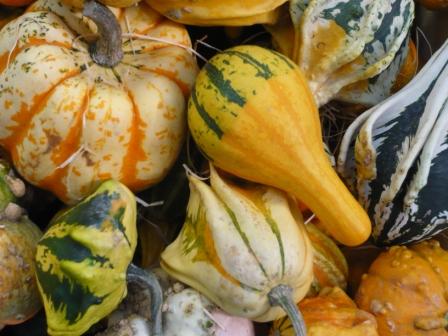
ornamental-gourds

Advantages of Straw Bales

  • Bales are easy to water and retain moisture longer than a grow bag.
  • Drainage is good and ity is hard to over water.
  • At the end of the season the bale can be recycled as a mulch or added to a compost heap
  • Rotting bales give off carbon dioxide which can be beneficial to crops.
  • Ornamental plants as well as vegetables will flourish.
  • Bales are generally cheaper than grow bags.
  • Straw is better than hay the tends to go mouldy.
  • Liquid feeding is required as straw is low in nutrients.
Definition of a Weed

Definition of a Weed

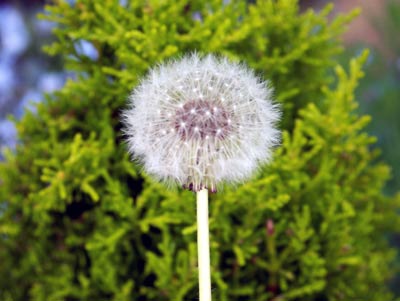
Dandelion

Dandelion – Weed or Plant of beauty?


Some definitions of a Weed

  • A weed is a plant that you don’t want to have in the garden.
  • Alternatively a weed is any plant in the wrong place.
  • What is a weed to one is a prize plant to another. Many ornamental UK plants are a weed in their natural habitat.
  • A weed is a plant that lives whilst other plants die.
  • A weed invades, reproduces, survives and frustrates a gardener.

The question is, what kind of plants fall into the weed  category? As gardeners we sometimes fall into the trap of aiming for perfection and feel guilty about a dandelion growing in the herbaceous border. However, a dandelion has a certain natural beauty. Even its seed heads are beautiful. The problem is we have been conditioned to think that the dandelion is a ‘weed’ and therefore needs to be always removed. Sometimes it is a matter of changing our perspective. Rather than feel guilty about the dandelions in the grass, why not appreciate its simple beauty?

There are many ‘so called weeds’ which actually are quite attractive – eg Daisy’s, Poppy’s, Thistles

This does not mean we want dandelions everywhere, but, we can learn to be more tolerant of plants often considered as weeds

Read More Read More

Berberis Prickly Shrubs & Hedges

Berberis Prickly Shrubs & Hedges

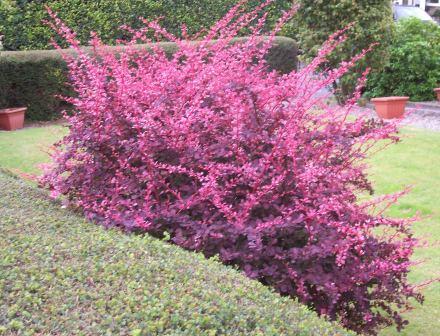
berberis

Prickly shrubs of the Berberis family are ornamental and useful for deterring unwanted visitors. The leaves themselves can be very spiky like Berberis Darwinii with glossy dark green leaves and orange flowers. Alternatively this purple Berberis Thunderbergii has stems that are spiney with sharp needles to deter the most ardent burglars.

How to Grow Prickly Berberis

  • Also called the Barberry the shrubs are hardy, easy to grow and often quite rampant.
  • Prune them into shape in spring and keep cutting to encourage branching and a close network of branches. Berberis can be very useful as part of an informal hedge.
  • The flowers may have a second flush in autumn and the purple or red berries are edible though difficult to pick due to the prickles
  • The species Helmond Pillar for is less robust than most Berberis and as its name suggests grows in a uniform pillar or column shape. My specimen is very slow to grow
  • Berberis georgei is one of my favourites with lots of sterile dark yellow flowers and bright red fruit. It has an AGM
  • Propagate from pencil width cuttings in Autumn but be prepared to wait for a year to get roots although bottom heat will help.

Local gardens Berberis

Further Berberis Tips

  • There are many forms and varieties of Berberis with yellow, pink and orange flowers, colourful leaves and berries so check out the offerings at you local garden centre. There is even a pink flowering variety Pink Pearl.
  • A good book on trees and shrubs will give you more information such as the Hillier Gardeners Guide
  • The only pest I am aware of is Berberis sawfly (Arge berberidis) a European species that was first confirmed in April 2002 where Berberis thunbergii plants had been defoliated the previous year.
  • Read more about Berberis deciduous and evergreen and Other varieties

Berberis and bee

Other Plants to Scratch a Thief

  • Pyracantha
  • Sea Buckthorne Hippophea Raminoides
  • Ulex Europaeus common gorse
  • Mahonia Bealei Winter Sun
  • Crataegus Monogyna Hawthorn
  • Ilex Holly
  • Rosa Rugarosa Rubra Crimson or Double de Coubert
Apple Blossom Time

Apple Blossom Time

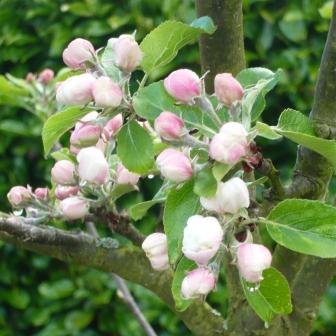
Late blossom arrivals in 2015 looked like being a good year for apple blossom and thus fruit in the North of England. And iut was with some great crops in my Yorkshire garden.

bud-burst

A cold and late spring delayed the buds and blossom until the worst of the weather was over. Energy has been diverted into fruit production rather than new wood after judicious pruning. There has been no significant late frost to damage blossom and there are now many pollinating insects on the wing. Hopefully these are signs that we will have a good crop of juicy apples this year. Just in case here are a few tips to help nature along.

Tips for Better Apples

Read More Read More

Creating A Focal Point in Your Garden

Creating A Focal Point in Your Garden

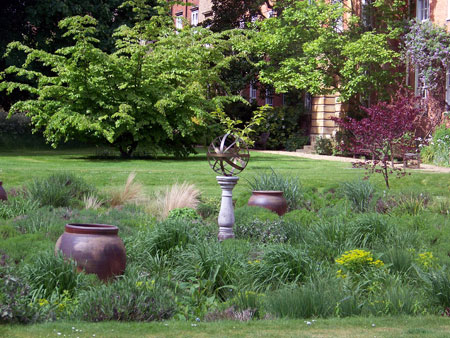
lavender

Sometimes as gardeners, we place all the emphasis on plants. However, a few well positioned ornaments and focal points can heighten the interest and drama within a garden.

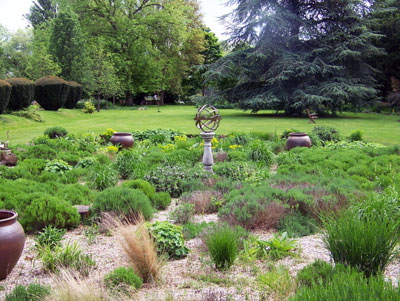
The above photo is from Lady Margaret Hall Gardens, Oxford. This is a sunken garden with a mixture of lavenders, verbena and ornamental grasses. The two earthenware pots and sun dial in the middle of the garden provide a perfect foil and complement to the understated planting.

Box Symmetry

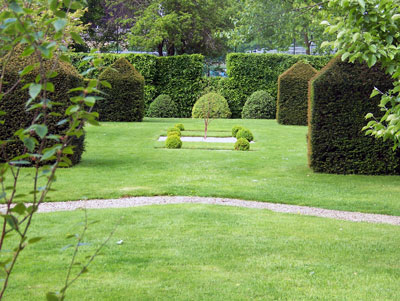
box

In this photo, the eye is steered towards the gap in the end fence. There is a neat symmetry, which helps to provide a relaxing feel to the garden. Notice how, the gardener has encouraged the eye to follow a certain path.

lavender

Focal Point With Plants

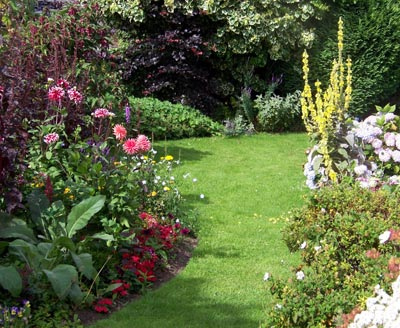
mixed border

Verbascum ‘Banana Custard’ provides a focal point in this mixed border

Photos from Lady Margaret Hall, Oxford and garden in Yorkshire; copyright gardeners tips.

Help Growing Spinach

Help Growing Spinach

You don’t need to have muscles like Popeye to grow spinach. It is a simple leafy vegetable that is undemanding if given the right conditions.

  • It is a long day plant initiating flowering as days lengthen.
  • Good moist conditions give rapid growth and a quick harvest before running to seed.
  • Sowing after mid summer reduces bolting.
  • Bolt resistant varieties include Monnopa, Spokanr and Palco.

Book Cover

Spinach Problems

  • Blight caused by cucumber mosaic virus causes leaf yellowing. burn the plants.
  • Leaf spot causes light brown or grey areas to develop. Chose a new site each year and feed wth potassium sulphate.
  • Downy mildew can by a minor irritants. Thin out the rows and remove infected leaves.


Book Cover

Millipede & Centipede Problems

Millipede & Centipede Problems

From our latest selection of garden pests some of the least voracious are the Millipede & Centipede families.

Millipedes have long bodies with many segments with two pairs of legs to each segment. They are black, dark brown or creamy white with red spots on the underside  with short antennae.

Centipedes are brown or pale yellow with relatively long antennae and only one pair of legs per body segment.

Diet & Control

  • Centipedes feed mainly on insects both good and bad from a gardeners point of view.
  • Millipedes feed on dead plant material but can damage seedlings or exploit damage caused by other pests
  • Spotted snake millipedes exploits slug damage on potatoes, bean seeds and fungi.
  • There is no chemical control
  • Keep seedlings well watered and growing strongly through vulnerable periods.
  • Do not add to compost heaps any infested soil.