Browsed by
Category: Tips Hints and Ideas

Help for the new and not so new gardener

Growing Cannas – Facts and Fancy
Growing Cannas – Facts and Fancy

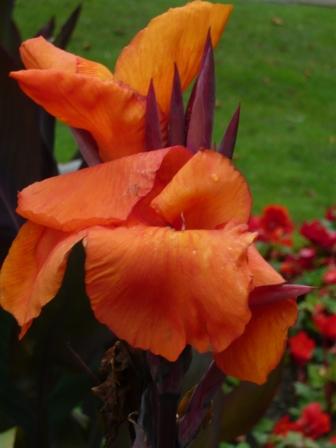
You don’t need global warming to get a warm glow in your garden if you plant some Canna. The fiery hot flowers and leaves on some Cannas are hard to beat and are worth a place in any passionate garden.

What other plant starts flowering in June and keeps flowering right through until the first frosts. Do not deadhead the flowers at any price as new blooms arise from the center of old ones. They flower in shades of red, orange, pink and yellow often bi-coloured with blotches, spots and streaks. The foliage is also a most attractive feature, and can be shades of purple/bronze, red, green and striped.

Growing Canna

  • Rhizomes have to be started into growth in February and you can be certain that if you see a new root, then a new shoot will soon follow. Start them by putting them in a hot place in a poly bag. An airing cupboard is ideal.
  • Part fill a 2 liter pot with peat based compost improved with slow release fertilizer and insecticide and lay the rhizome on the compost. If any shoots are growing, place these pointing upwards. Be very careful with any shoots because they break off very easily.
  • Fill the pot, affix a label showing the variety and the date of planting. Give the compost a good drenching, and sprinkle a few slug pellets around.
  • Place the pot in a warm frost free place. They will grow much quicker if heat is provided.
  • They can be planted out in June in sun, shade or preferably semi-shade.
  • Cannas prefer a damp soil but can survive some drought conditions. Some varieties grow well in bog gardens.
  • Large clumps can be divided in Autumn when the rizomes are stored in a frost free environment. Keep slightly damp.
  • Canna are very strong and sturdy and do not require staking. They are generally insect free in the UK.
Read More Read More

Berry Fruit Cages

Berry Fruit Cages

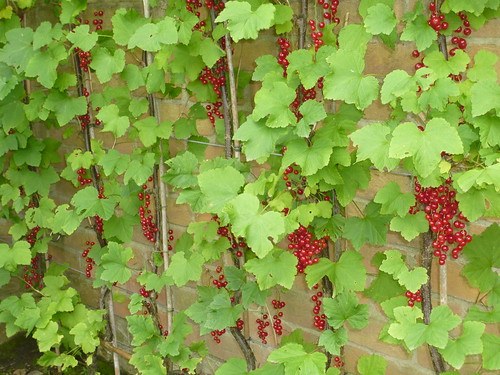
You have grown some bush fruit in an organic garden and as the berries ripen all the birds you have fed through winter decide to feast on your well grown crops. What a good job you protected them in a fruit cage!

red currant

If you do not have a fruit cage yet, you can buy a Two Wests Standard 6′ High Fruit Cage 6′ x 12′ Cage from Amazon.

Blackcurrant and Jostaberry
Blackcurrants prefer a cool, clay-loam soil which is not too acidic pH 6.5.
They are gross feeders and like a rich fertile soil.
Blackcurrants are shallow rooting and require irrigation or good watering when dry.
Protection from frost may be needed for early flowering varieties.

Redcurrant and Whitecurrant

A potash rich, moist, well drained soil with a pH 6.0 is optimum.

Read More Read More

Lawn Games for Summer

Lawn Games for Summer

Book Cover

The top ten garden games need a Lawn and a gardener who bites their tongue occasionally.

French Cricket the game where the feet must stay still and together and the ball is bowled at the feet from wherever it lands. Hitting the ball into another garden or favourite bush is 6 and out except there is no scoring anyway.

Tip it and Run is a short version of cricket with an L shaped pitch where the bowler bowls at the wicket as soon as they have the ball and a batter has to run at right angles a defined distance and back if he tips or hits the ball anywhere.

Croquet need some equipment similar to that show which can be bought from a sports or toy shop or from Amazon.

Carpet Bowls or even bowls if your lawn is large enough. The fun is in the bias that makes the ball roll in a curved line. Unless the grass is very wet it is unlikely to damage the lawn.

Read More Read More

Garden & Allotment Safety

Garden & Allotment Safety

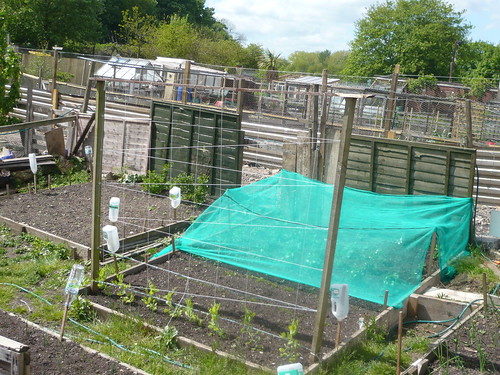
This allotment goes someway towards safety for the gardener, the allotment and the plants.

For personal safety the canes can poke out your eyes so the upturned bottles offer ugly protection. In a garden you can buy designer cane tops and if you spend a lot on the garden this may be a worthwhile finishing touch.

The trailing hose pipe could cause a trip but at least these paths are clearly marked out with the tanalised boards that also raise soil levels. Good well maintained none-slip paths are a must in the garden. Poor paths reflect on the plants, no matter how good they may be and paths are visible all year.

Most things and activities can be dangerous if used incorrectly but a bit of garden common sense particularly with sharp objects can save a lot of pain.

Get an upto date tetanus injjection just incase to prevent wound infection leading to lock jaw.

Bend the knees not the back when lifting and do not strain by over reaching.

For crop safety the mesh netting is keeping the birds off the strawberries underneath. The sun and rain can still get through and this type of fruit cageing is popular for all soft fruit.

The support for Sweet Peas is essential to help them get off the ground and support them whilst growing. They would not be safe from slugs, twisted flower stems and a poor crop yield without some protection.

Beware of communally supplied animal compost it may contain chemicals you do not want on your crops. Hormones and selective weed killers used by farmers and stables are often present in manure.

The site protection has linked fencing, barbed wire along the top and numerous fences and barriers. A bit over done for a garden but essential for an allotment that is unmanned and often out of sight.

Take valuable tools home and have a strong lock up at the allotment and or home. An old rickety shed wont stop the determined.

Valuable features like sculptures and fountains may need to be firmly fixed into the ground using special fittings to frustrate the thieves.

Rose Hips for Gardens & Coughs

Rose Hips for Gardens & Coughs

‘Three cheers for Rose hips’

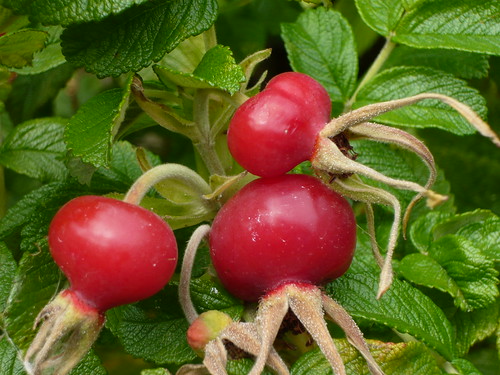
Roses produce hips to carry seeds if we do not deadhead. The colour of the hips (aka heps, haws, Pixie Pears or even Pig’s Noses) vary with some strong reds and bright orange varieties. The wild varieties and species rose are often better hip producers as other roses have been bred for floral purposes. Tip do some research when buying roses to get good hips.
Rose hip
Good Hip Roses

  • Rosa Rugarosa are grown for the hips that follow the flowers. They make a good hedge with masses of small bristly thorns up to 6 feet high. Rugarosa Alba are fragrant white flowers of heavily scented large white flowers June to September followed by large orange-red hips early autumn .
  • The climbing Rose Francis E. Lester has large bunches of small blooms with a strong fragrance. This is followed by masses of small orange hips in autumn.
  • Rosa ‘Geranium’  is a large, vigorous shrub with arching branches and dark-green leaves. In summer, it produces red flowers with prominent yellow stamens, followed by bright-red, long hips in autumn.
  • Rose Macrophylla has clear pink flowers followed by long bristly, flagon-shaped hips.

Rose hip
Using Rose Hips

  • Hips help attract wild birds and  feed them through winter.
  • Many hips from wild roses are colourful and can be used in flower arrangements.
  • Fruiting varieties like ‘Buff Beauty’ ‘Felicia’ and ‘Penelope’ are usually edible and pleasantly sweet, especially if you wait until the frost has concentrated their sugars.
  • Hips are decorative and can look spectacular during winter with a rime of frost.
  • Rose hips are made into syrup for vitamin C and here are some other recipes.

HT roses seem to produce more boring hips.

dog-rose41

Rosehip Syrup, Tea and Cordial
Before setting out for school in the 1950’s I remember taking a spoonful of Rosehip syrup. The vitamin C must have done me some good as I am still here.

Rosehip Syrup Recipes

  • Crush about 2lbs rosehips and put into 3 pints boiling water.
  • Bring back to boil, remove from heat and let stand for 10 mins.
  • Strain through jellybag. When it ceases to drip, return to pan with another 1½ pints boiling water.
  • Pour into a clean pan, reduce by boiling until juice measures 1½ pints.
  • Add 1lb sugar.
  • Stir over gentle heat until sugar dissolves and boil for 5 minutes.
  • Pour into hot bottles and seal.
    With thanks to Hedgerow recipes see

more uses for Rosehips


Other Uses for Rosehips

  • The real reason for Rosehips is to produce pollinated seed from which to grow more roses.

Read More Read More

Bruise Vegetation to make great Compost

Bruise Vegetation to make great Compost

It is no surprise that damaged fruit rots fastest. So it is with your compost. Cut or bruise the green stuff to make quick and friable compost.

  • Find a way to damage any compostable waste eg. run a lawn mower over it or cut into small pieces
  • Shred twigs and stalks – I use an electric shredder but secateurs are just as good.
  • Chop up any hard stems or long shoots with secateurs to about one inch lengths.
  • Leaves and other plant matter will rot quicker if the bugs and bacteria can get at them from more than just one end. So the more cutting, bruising, shredding, tearing, scrunching or chopping the better.
  • A chipper can do the bruising job quicker and a mulching device can be added to new lawn mowers.
If in Drought – Try Xeriscaping your Garden

If in Drought – Try Xeriscaping your Garden

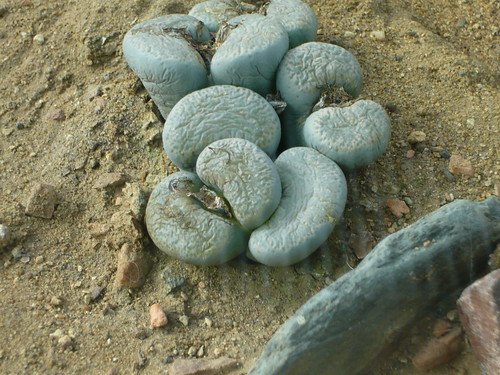
Lithrope

If you are doubtful about this summer’s British weather, and how can you be otherwise, then you may need some tips on watering your garden.

Xeriscaping is the creation of a garden that uses less wate
r. No grass to cut, drought tolerant plants and appropriate landscaping are what you need.

Xeriscaping and Other Watering Tips

  • Pull up weeds as soon as they start drinking your water.
  • Plan and plant wind breaks to stop drying winds.
  • Use plants that generally require less water. Grey and silver plants often need less water.
  • Give one good weekly soaking not daily dribbles.
  • Add humus to the soil to retain water and mulch the surface of the soil.
  • Use larger containers rather than hanging baskets, they are easier to water.
  • Use capillary matting in the greenhouse to aid watering

Water Saving Tips

Read More Read More

Top Ten Miniature Daffodils and Narcissus

Top Ten Miniature Daffodils and Narcissus

canaliculatus
Miniature Daffodils and Narcissus are easy to grow with these simple tips that includes a top ten variety list.
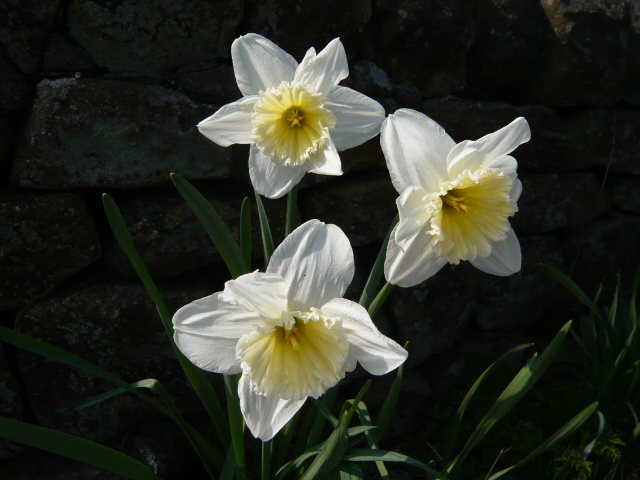
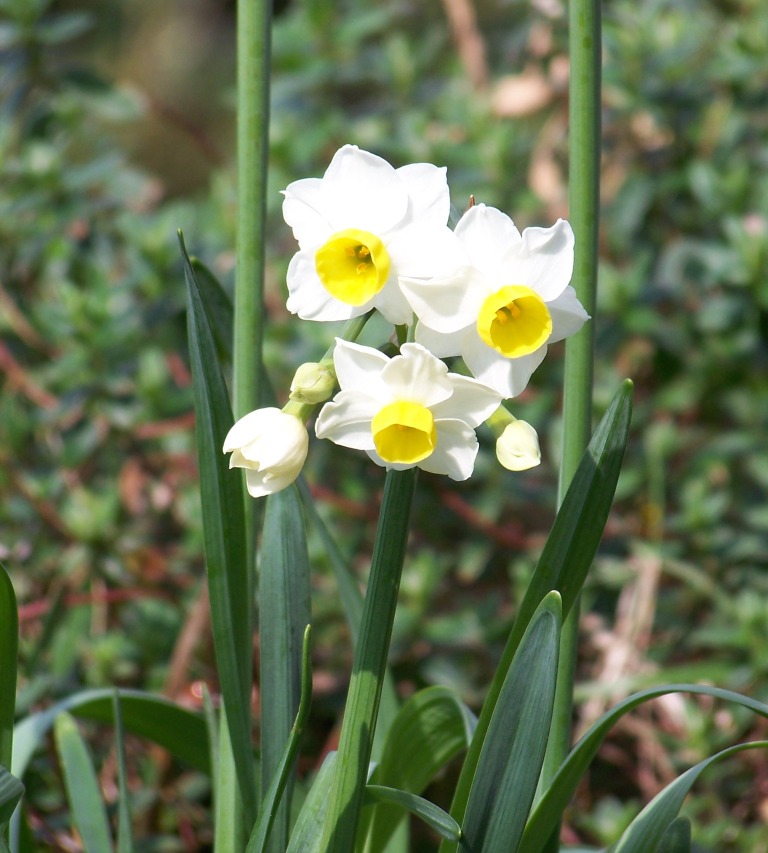
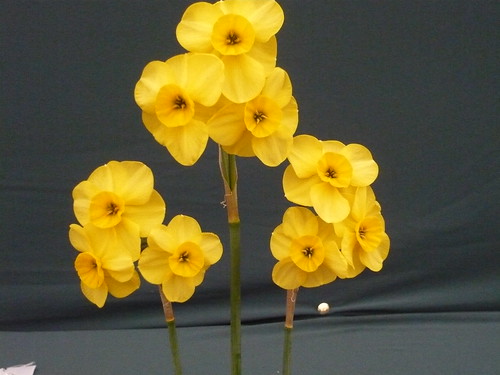
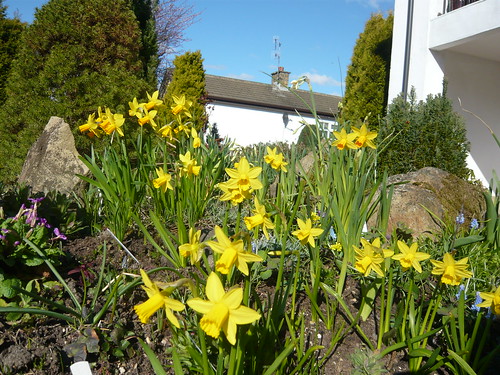
Miniature daffodils grow from 4 inches to just short of a foot. Varieties Minnow, Toto and Canaliculatus have several flowers on the one stem and are particular favourites of mine. Try growing some in pots in the cold greenhouse or as welcome additions to your alpine plants.

Daffodil selection

Top Ten Selection

  1. Little Beauty 5″ with white perianth and yellow corona
  2. Rip Van Winkle
  3. Sun Disc a consistent bulb with round disc shaped yellow flower.
  4. Hawera with reflex bachward pointing petals
  5. Petrel has several ivory-white hanging flowers per stem.
  6. Segovia -with a white perianth contrasted by a neat lemon cup
  7. Snipe A classic 5″ tall white cyclamineus type with a green tinge.
  8. Baby Moon late flowering and scented jonquilla type.
  9. Baby Doll with pink cups and a nice scent.
  10. La Belle with yellow flowers and shallow coronas in orange-yellow with a distinct reddish-orange rim

Daffodils are organised into groups and classes called divisions. Read more about Daffodil divisions that encompass miniature daffodils and narcissus varieties.

miniature daffodil

Tips on Miniature Daffodil and Narcissus

  • Look in spring for successful varieties that you may want to buy for planting this Autumn.
  • Buy pots in bloom this spring so you know what you are getting. Deadhead before the seedheads start to develop and feed the bulbs with a high phosphate feed.
  • One of the smaller varieties is Bulbocodium Conspicuous, yellow hooped petticoat at 4 inches tall with golden yellow flowers.
  • The scented Jonquilla has a couple of varieties that are low growing including Jonquil Single, Sugarbush and the ivory white flowered apricot cup of Waterperry.
  • Cyclamineus varieties tend to be low growing. One of the most popular is the Tete-a-Tete with fluted golden trumpets which bulks up quite well year on year.
  • For something different try the double Rip Van Winkle or the pinky yellow Nanus.
  • Place your order from a reputable bulb supplier during summer so that you get the varieties you want before the best bulbs are sold out. The best time to plant miniature daffodils is from September until mid October. They like to make long roots before flowering and fully produce their leaves first. .

Try growing Narcissus bulbocodium ‘Golden Bells’ commonly called the Hoop Petticoat Daffodil! Bulbs from Thompson & Morgan

Cyclamineus – Div 6 are eye-catching daffodils with reflex petals.
Triandrus Daffodils – Div 5 are a result of breeding from the species N.triandrus. There are mid flowering height and usually 2 to 5 delightful hanging flowers per stem. Available from the Miniature Bulb Co
The Daffodil Society has a list of other bulb suppliers

Autumn Annuals for Late Colour

Autumn Annuals for Late Colour

Mixed Annuals

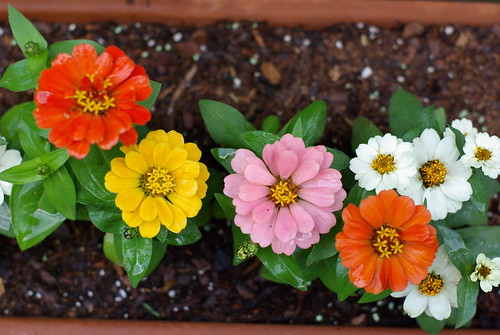
As summer turns towards autumn you may be looking forward to a bold splash of colour from your late flowering annuals. To blanket the ground you can use a mass planting of easy to grow annuals with long flowering characteristics. Below we offer a list of top ten annuals to consider but there are many varieties and species that fit the bill.

Autumn Annual Bed

  • Plan where you are going to plant your annuals for autumn flowering. Consider height, colour and shape of the plants in your selection. Plan low at the front and contrasting colours in opposition
  • Improve the soil with compost dug in to improve water retention.
  • Rake the top soil smooth and mark out a plan of what you want to grow where.
  • Individual potted or plug plants can be set 3-4inches apart.
  • Some plants you can grow from scattered seed to fill the gaps. They may need thinning later.

Marigold

Plant Varieties for Autumn Annuals

  • Low growers to consider include the white Sweet Allysum ‘Little Dorrit’, Tagetes tennufoila ‘Tangerine Gem’ and Viola ‘Maxim Marina’ light blue with dark faces.
  • Zinnias can be free sown and a good mixed packet will flower in red, orange, yellow, pink and cream.
  • Wax begonias semperflorens is a popular low grower that will stand a bit of shade if necessary.
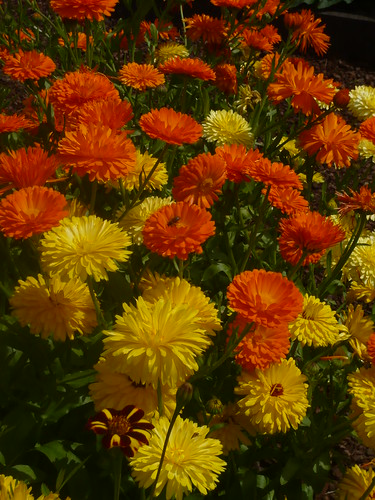
  • I like African Marigolds a big double flower in yellow or orange. French Marigolds are smaller but intensely coloured and will go on flowering until the first frost.
  • Cineraria senecio is a plant grown for it’s light grey- silver finely cut leaves.
  • For mid height and airy foliage try Cosmos ‘Sonata white’ or Mexican sunflowers.
  • If you have some form of support for climbers there are several annuals that work hard to give you a good display including; Ipomea alba or ‘Cardinal’, Mirablis jalapa, Lablab purpureus and the cup and saucer vine Cobaea scandens.
  • I am already over the ten plants and you probably only need 5 varieties repeating in a pattern. However the best value seeds are often from the annual Dahlias which flower for fun.

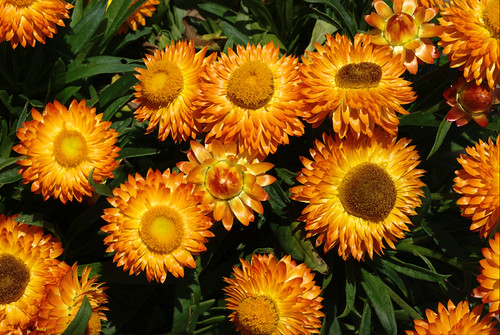
2008-07-08 Mohave Autumn Bronze - Bracteantha

Photo Credits
Mixed Annuals by dbkfrog CC BY-NC-ND 2.0

“2008-07-08 Mohave Autumn Bronze – Bracteantha by rosepetal236 and 2008-07-08 Colorado State University Annual Flower Trial Garden by rosepetal236 CC BY-NC-SA 2.0

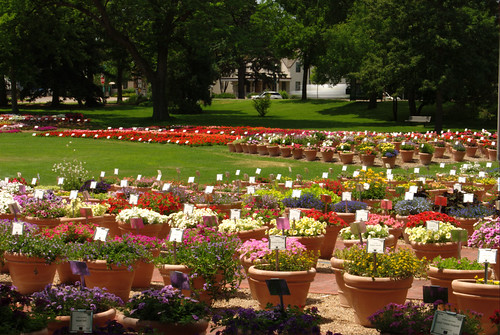
2008-07-08 Colorado State University Annual Flower Trial Garden

Footnotes for Autumn Annuals

Some plants may last more than one season but I recommend treating all these plants as annuals.
Collect the seed in autumn if you want to grow then again and compost the old plants.
Deadhead and pick for indoor use to encourage even more flowers.
In the UK plant in early June to give your annuals chance to develop good roots.

Secrets of Geranium (Pelargonium) Cuttings

Secrets of Geranium (Pelargonium) Cuttings

rosebud-geranium

I couldn’t resist this double pink rose bud Pelargonium ‘Something Special’ which is looking really good at the moment. I intend taking some early cuttings of this plant next month and growing them on for  specimen plants. August to October are good months for taking cuttings to flower the following year.

Pelargonium 'Lord Bute'

Tips on Pelargonium Cuttings

  • Plants flower best when they are mature, full of leaf and well grown. Geraniums need time, usually 10-12 months from cutting to flowering to be at their best.
  • A 3 inch cutting should have several leaf joints (nodes) for potential branching. Some gardeners recommend non-flowering stems but I find it isn’t significant.
  • Take the cutting with a razor blade or sharp knife just above a leaf joint from your stock plant. Trim off all bar one or two leaves and any flower buds. trim back to just below a node.
  • I use 3 inch pots but smaller pots may be suitable or 4-5 cuttings can be put around the edge of a larger pot. Cuttings can also be planted in a hole close to the parent bedding geranium and lifted with soil for potting on for winter.
  • Gritty compost or soil with added sand is a suitable medium. The sand can stimulate root growth. I do not use rooting hormone it isn’t worth the cost as Geraniums root so easily.
  • Pinch out the growing tip to encourage roots and branches.

Pelargonium peltatum

  • Dwarf and miniature plant cuttings can be proportionately smaller but the method is the same.
  • Water the pots from the bottom. Bottom heat will only be needed for late October cuttings
  • Dwarfs, Ivy and miniature Pelargoniums root quite well. I find Regals a bit harder as cuttings.
Nodal Shoot cutting
Nodal Shoot cutting
  • A nodal shoot cutting above is taken by trimming by branching stem into two cuttings.
  • Other than Regals which need nodal cuttings, they can be taken from the  most suitable point of the host plant.
  • A leaf Axil cutting below can be taken if the plant has no other suitable cutting material.
Leaf Axil cutting
Leaf axil cutting

Other links and information on Pelargoniums

Top 10 Scented leaved Pelargoniums
Pelargonium Grandiflorum and other ‘Geraniums’
Stellar Pelargonium – Bird Dancer Geranium
Photogenic Pelargonium
Growing Regal Geranium Pelargonium
Miniature Pelargonium
Dwarf Pelargonium aka Geranium
Tips for Growing Geraniums (Pelargonium)
Other Resources and Credits
Pelargonium ‘Lord Bute’ by douneika CC BY-NC-SA 2.0
Pelargonium peltatum by DowianA CC BY-NC-SA 2.0
Royal Horticultural Society RHS ‘Gardening for All’
National Council for Conservation of Plants and Gardens ‘Conservation through Cultivation.’
Garden Organic National Charity for Organic Gardening.
BBC Gardening
Thompson & Morgan supply seeds and plants in season.