Browsed by
Category: Tips Hints and Ideas

Help for the new and not so new gardener

Rhododendron Care and Deadheading after Flowering
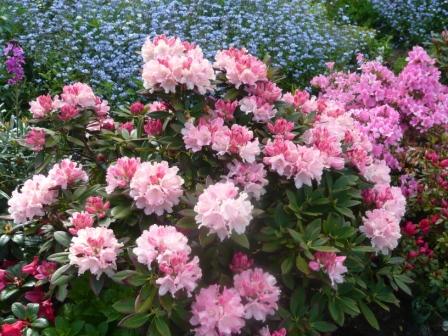
Rhododendron Care and Deadheading after Flowering

now
It is hard to know where to start with Rhododendrons and the 850+ species. Perhaps a good book will help the beginner get an overview.

Book Cover

Failing that there is membership of the RHS specialist section The Rhododendron, Camellia & Magnolia Group.

www.rhodogroup-rhs.org/ This society controls ‘The International Rhododendron Register and Checklist’ of the named 29,000 +varieties, cultivars and group names.

Gardenerstips

  • Look out for plants with the Award of Garden Merit including the following Lepidote species Augustinii, Edgeworthii, Keiskei, Racemosum and Yunnanense.
  • Elepidote species are generally larger and AGM’s include Niveum, Morii, Fluvum, Arboreum and Decorum.

Soon the display of colourful Rhododendrons will falter and be over for another year. I still like the leaf colours, textures and shapes and Rhododendrons are easy to for.
There are some good tips to get a great show next spring, it is never to early too start.
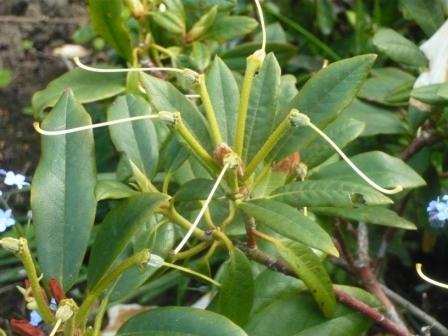
rhodo-seed-heads

Deadheading Rhododendrons

On the above photo the petals have just fallen and the long,  tubular seedheads are just beginning to form.
It is not worth letting the seedheads fill up and develop as you are unlikely to be trying to breed your own from seed. So any energy put into the seedheads is energy lost from next years plant and flowers.
If you look closely on the next picture you will see that at either side of the seed spikes there are leaf buds. Generally there are two leaf buds for each dead flower.
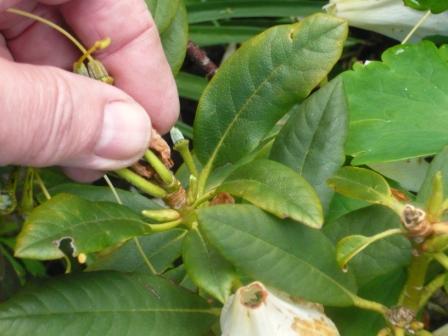
pinch-twist

It can be a long job on a large Rhododendron but I pinch out the seedheads to divert energy back to the shrub and give the leaf buds space to develop.
Pinching the often sticky seedsheads, I give a twist to break the stem just above the new leaf joint. It only takes a little practice, you soon pick up the knack without causing any damage. To me it is therapeutic on a warm spring afternoon to be helping channel the natural energy into plants that have given so much pleasure already.
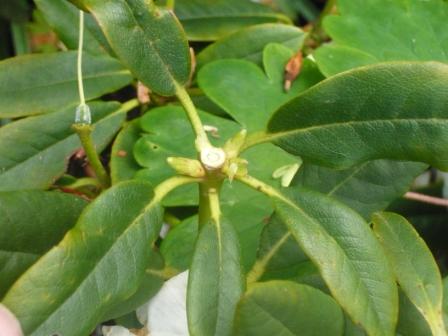
leaf-buds-left

Here you can see the seeds have been removed and added to the compost heap. The light green new buds will generate leaves and new branches that can develop in the space now vacated.
Failing to deadhead is not to say leaving the shrub to its own devices will be a failure but as we are growing for ornamental purposes every bit to care helps. In the wild Rhododendrons manage quite nicely thank you without this TLC.

Rhododendron Care after Flowering

Try some commonsense housekeeping but leave the pruning shears in the shed.
New flower buds for next year are formed on Rhododendrons during summer so I try keep them well supplied with water.
Rhododendrons are shallow rooted so they like a drink and an occasional feed of ericaceous fertiliser.
After flowering and a wet spell in late spring I often give the Rhododendrons a top dressing of peat (Agh! I hear some of you say but it is the natural ericaceous medium for Rhododendrons).
I also sometimes spray with diluted Miracle Grow ericaceous fertiliser.
Keep the area weed free. I find the canopy of Rhododendron leaves works well keeping weeds down.
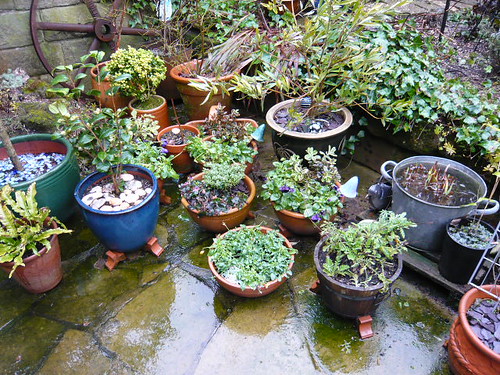
Collecting Containers – Tips for Garden Pots

Collecting Containers – Tips for Garden Pots

052

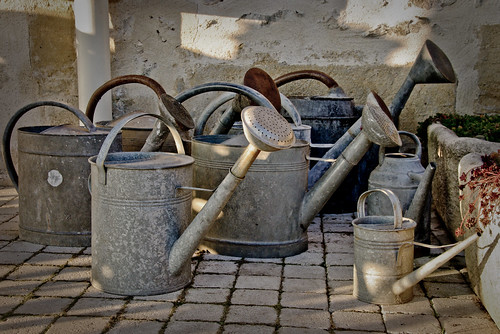
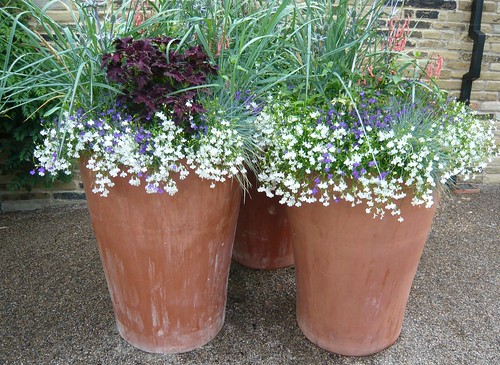
This fine collection of sundry containers were getting a soaking in our summer rain. The wheel at the back only contains fresh air but could become a feature for a ‘Herb Wheel’ if laid on poor soil.

Tips for Containers

  • Small clay feet in threes or fours lift the container off these Yorkshire stone flags. This aids drainage and prevents the base of the container freezing onto a path and then loosing the base when moved.
  • Mulch and decoration on the surface of a pot can be organic with bark or inorganic with a variety of pebbles and stones. Mulch helps prevent moss and keeps the wind & sun off the soil surface.
  • Bear in mind a small pot will constrain the roots and a large tree will become a bit like a bonsai. That can be quite desirable but remember to freshen the compost by replacing the top 2″ annually and fertilizing regularly.
  • Pots can bake in summer and roots become distressed. Black and plastic pots are the worst whilst evaporation through terracotta cools a bit. If in doubt keep moist and shaded.
  • Pots can freeze but bubble wrapping your pots can help hardy plants through winter.
  • Pots located together look better than pepper-potted around. They also help maintain a humidity level in a micro climate (not too important in this wet garden)

Unusual Containers

Long Toms

  • A bog garden can be created in an old galvanised basin without drainage holes. Miniature water lilies are now available for small ponds so give it a try.
  • Long Tom or old Chimney pots are ideal for tall statuesque displays. Try some airy grasses at the back near a wall.

Read More Read More

Tips for Dark Winter Gardening

Tips for Dark Winter Gardening

Book Cover

What can gardeners do in the cold wet months of December and January? The soil will probably be cold and wet as so will be the weather particularly if you live in the north of England.
Stay warm and dry and do all the cleaning and maintenance jobs you have avoided. When the growing season starts in earnest you wont have the time.

One tip for indoors is to invest in a ‘blue light’ or natural light bulb. This can con plants into thinking the days are a bit longer and the light levels a bit brighter.

A top ten tips

  1. Curl up with a good internet connection and browse away on the host of gardening web sites including Gardenerstips.
  2. Ask Father Christmas for a gardening book on your favourite subject or by a popular set of authors like Matthew Biggs, John Cushnie, Bob Flowerdew, and Anne Swithinbank.
  3. Plan your garden campaign for the coming seasons. Record what you want to achieve and the actions that will help you achieve it.
  4. Order your seeds and summer bulbs from a quality supplier.
  5. Check your over wintering plants, cuttings and stored vegetables.

Read More Read More

Successful Watering in your Garden

Successful Watering in your Garden

Watering can be the key to  success in the garden and with your houseplants. Not surprisingly plants without water die !  Plants can drown with too much H²O so watering is a skill worth learning.
It sounds so easy when you are told to ‘water your plants’. Well so it is but there is many a slip twixt watering can and lip. Remember you are watering the soil not the leaves.

Conserving Water in the Garden

  • Dig in bulky organic matter to increase the water carrying capacity of your soil.
  • Keep the surface mulched to avoid evaporation.
  • Keep soil weed free. Weeds compete for moisture and evaporate through their leaves.
  • Wind increases evaporation so build wind breaks.
  • On sloping land sow across the slope reducing run off and soil errosion problems.
  • Plant water hungry plants together where rainfall will be highest. Do not bother to water lawns they will recover from most drought conditions when it rains.

freesia-in-the-rain

I was taken with the though of best tips for watering a garden after a chance discussion. Last night at the Bridge club (or the pub afterward) I was asked about the different growth rates of apparently identical plants. Mike and I put it down to water so here are my top tips

Watering Tips

  • God’s own water is best! If we could arrange a steady drizzel from dusk to dawn through summer our gardens would be lush and our crops juicy and large. A slow steady rain (rather than a thunderstorm) will build up moisture in the soil without water logging or running off too quickly.
  • God’s own water is second best as well. By that I mean rain water caught in a bucket or barrel to be watered in by can or sprayer when needed. I collect rain water off the greenhouse roof (as it may dissolve more chemicals off an asphalt surface). Either way the rain water is softer and more balanced than tap water and is at surrounding temperature when used.
  • I try not to use water from the barrel on seedlings to minimise damping off (rotting caused by microbes).
  • Sprinklers or hose pipes need to be given chance to provide a good soaking so I believe in the longer and slower method so the water can really penetrate the top 4 inches or so of soil. A quick splash can do more harm than good bringing roots to the surface.
  • Read More Read More

Odd tips for Easier Gardening

Odd tips for Easier Gardening

Make your own seed planting tape. Mix some flour and water or non-fungicidal wallpaper paste and squirt a line along a length of paper towel. Sprinkle fresh seed into the goo and place the tape in the seed bed covering to the required depth. The seeds can be seen and get a damp start. Some seeds like carrots can be germinated in the paste then squeezed out of a tubeing in a fine line.

Make a seed shaker for fine seeds like Livingstone Daisy by firstly mix the seed with dry sharp sand. Then put the mix into a kitchen shaker, salt cellar. perforated lidded tin or similar. When sowing the seed will go further and there will be less thinning out.

Buy germinated seedlings in kinder pots or small plug plants ready to prick out or pot on.

To make Willow water containing growth hormones collect new tender shoots, tips and leaves from willow trees. Cut into small pieces and steep until the liquid becomes tea coloured and strain. Use the fluid for soaking the end of cuttings prior to planting or for watering new plants.

A Spade cleaner and tool shiner couldn’t be easier. Fill a bucket with sharp sand mixed with some oil. Clear off the worst of the soil and plunge the spade trowel or fork repeatedly in the mix to clean and shine. Have a can of WD40 handy for spray oiling other tools.

Make your own planting device from a PVC pipe cut to a convenient length of say three foot six sharpen one end and use to draw furrows drop seeds down the tube and turn over to back fill. Other bodging tools can be made from kitchen implements even an old ironing board can become a portable potting bench.

Long Handled Shears. I’ll never forget the first time we bought my mother a pair of long handled shears, it makes the job of cutting edges so much easier and more satisfying.

Go for Low Maintenance areas with ground cover plants and shrubs with a moderate habit that do not need pruning.

Grow easy flowers  from the list selected here. Perennials last many seasons annuals bring the chore of tidying up and replanting.


Quick Tips For Lawns and Grass

Quick Tips For Lawns and Grass

Pointers for Greener Grass on new and established Lawns

If you want a nice new green sward or are content to allow flowers in a natural setting consider these quick tips to help you. Set your expectations and match your actions to the plan for best results.

  • For an economic new lawn use seed but put turf around the perimeter so you can cut a neat edge
  • Seed should be chosen for the type of lawn you want fine grass is no use for lots of family games
  • Keep paving or edging stone lower than the grass so you can mow up to the edge
  • A cheap lawn spreader or seeder can be made out of a jar or tin can with holes in the lid
  • Water with Epsom salts to get rid of toadstools and fairy rings
  • Read More Read More

Easy to Grow Aloe Vera Plants

Easy to Grow Aloe Vera Plants

Aloe Vera
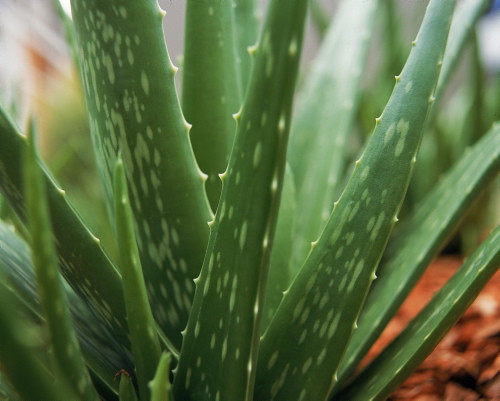
There are around 200 African and 300-400 other species in the genus of Aloe flowering succulent plants. The best known and easiest to grow is Aloe vera, or “true aloe”. In the UK it is not frost hardy and is most frequently grown indoors.

Easy Growing Tips

  • Aloe vera are succulent plants made up from 90% water and hold the water for long periods.
  • Aloe vera stores food, liquid and nutrients in its leaves to compensate for days when it does not have access to water.
  • The leaves are thick to protect Aloe vera from drying out.
  • Aloe vera plants have strong photosynthetic properties and will need more exposure to sunlight than regular plants.
  • In winter they do not need much water as they will grow much slower due to low light conditions.
  • Aloe grow small plantlets as offsets to increase your stock. Also a young spikey stem will root quite easily to grow more plants to pass on to others.

Aloe Vera Indoor Plants

  • There are several uses for the Aloe sap but do not crop a young plant too often.
  • Aloe variegata have a better leaf form with a triangular V section
  • Aloe brevifolia forms a large rosette of leaves in little colonies of small plants
  • Some aloe flower indoors but their shape and form is the main reason for their cultivation.
  • Over watering can cause the thin roots to rot.

Photo Credits

Aloe Vera by Powerhouse Museum CC BY-NC-ND 2.0
Aloë Vera by Rutger Middendorp CC BY-NC-ND 2.0

Aloë Vera

This Aloe vera plant has been grow in a mixed medium of gell to make a welcome novelty gift.

Dangerous and Harmful Garden Plants

Dangerous and Harmful Garden Plants

This is not an exclusive list so always take care.
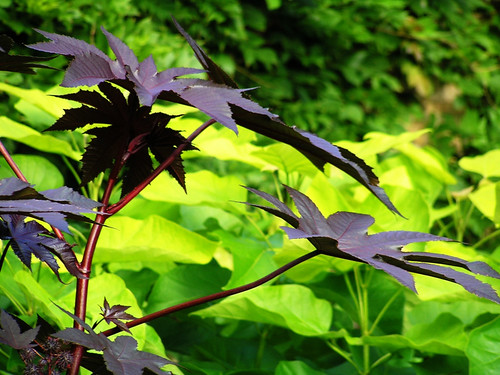
Castor oil plant in August

Hazardous and Dangerous Plants

Not everything in the garden is lovely when it can poison or injure the unsuspecting. The extremely hazardous Poison Ivy and Poison oak related to the Rhus family (Diversiloba, radicans, vernix, succedanea, toxicarium and veniciflua) should be avoided at all cost. Other highly harmful plants are listed below and the effects of eating roots berries or leaves can be serious. Many cause allergies and irritations that also need avoiding.

Tips on Dangerous Plants

  • Don’t let children eat seeds and plants from the garden unless supervised.
  • If you wish to see these types of plant take a trip to the Poison Garden at Alnwick which also includes strychnine opium and cocaine plants under a special Home Office license.

Read More Read More

Tips on Making A Compost Heap.

Tips on Making A Compost Heap.

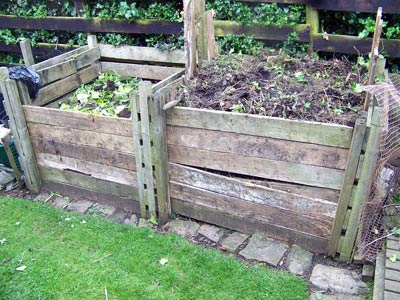
Compost heap

A compost heap is an excellent way of recycling dead plant material and generating the best possible soil fertiliser. A good compost heap also gives a feeling of satisfaction because it helps the gardener to become part of the natural cycle of growth, decay and regeneration. Using a compost heap will also save many unnecessary trips to the local tip. See also: Benefits of Composting

How To Make a Good Compost Heap

The Compost Bin A compost bin should be about 1 square metre. It is important to have a good size, but, it should also be compact because otherwise the generated heat will be dissipated. It is also best to have at least two bins. This enables one heap to rot down, whilst the other is added to. A compost heap should also be aerated and enable water to enter. If you have an enclosed plastic bin, make sure you water where necessary.

Positioning. A compost heap can be really be put anywhere; most people want to choose a spot that is not too prominent. However, if it receives direct sunlight the process of decomposition will be faster.

Base Layer.
At the bottom of a compost heap it is good to use some twiggy material to make sure there is good drainage; if you have a heavy clay soil, you might want to add some grit to provide good drainage. If a compost heap becomes waterlogged, the process of decomposition will slow down and it will become slimy.

Mixing Layers. The next important strategy is to provide a good mix of material when building up a compost heap. For example, grass is a high source of nitrogen and can break down quickly to generate heat. However, grass needs to be mixed with other more woody material, otherwise it will not rot down properly. Similarly on their own stems and twigs will take a long time to rot down unless they have an activator like grass or over very green material. When adding grass clippings spread them out to form a thin, equal layer; then add a layer of more twiggy material. If necessary store a potential layer for adding at the right time.

Breaking Up Twiggy Material. Thick stems will take a long time to break down. If you have a shredder, it will make the job of composting a lot more successful. It will break down the material and enable much faster composting. If you don’t have a shredder, you can just squash the stems or break them in a few places. A rather crude, but effective, tip is to get a spade and hit down on the top of the heap to break a few stems. Even this small step will help quite a lot; what you are doing is to increase the surface area, enabling faster decomposition.

Water. As mentioned before, water is important. It is important to water a compost heap a bit like watering a plant. If there is no water, the compost heap will dry out and will not decompose. If it is waterlogged it will stagnate. Most compost heaps suffer from being dry, so every now and then throw on some water to speed up the process of decomposition.

Cover. When the compost heap is finished with adequate amounts of water, it is good to cover with a plastic coating. This enable the heap to generate more heat, speeding up the process of decomposition; it also prevents excess water.

Aerate. In hot weather when a compost heap is generating a lot of heat it is a good idea to get a garden cane and poke the heap, every now and then. This allows air to enter and expedites the process of aerobic decomposition. A good heap will have steam coming from it when you aerate it.

Read More Read More

Ride on Mower Tips

Ride on Mower Tips

Sit back and enjoy cutting your grass.

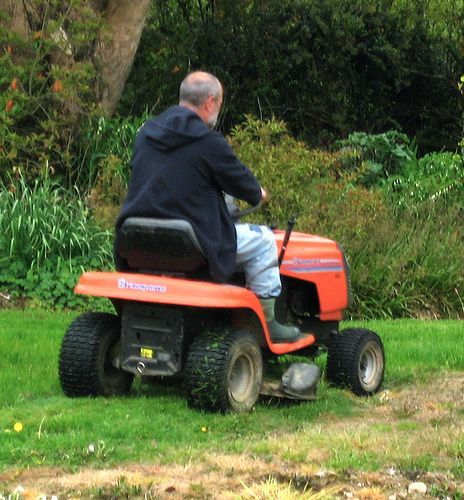
husquvanna

So your grass covers too much area for your small mower and you want to ride in style whilst you cut the lawn, then a ‘ride on mower’ may be what you need.

Ride On Mower Tips

  • Do you plan to cut & collect the grass or just have built in mulching that then distributes it back onto the grass. I would go for one of the hybrids so you can collect long grass at the beginning of the season then turn on mulching to reduce the trips to the compost heap.
  • Ride on mowers are available from Argos at below £1,000, better mowers can be good value around £4,000 but larger more professional models go up to £10,000+. Equate your budget to the amount of work to be done – you don’t need a sledge hammer to crack a nut nor should you send a boy to do a man’s job (these metaphors need mulching).
  • From the large variety of models available make sure you can mount the machine, drive in comfort and feel safe.
  • You can save money buying secondhand. Try retailers who have a good trade in policy and a large throughput.

What you get for your Money

Read More Read More