Browsed by
Category: Gardening

General gardening tips and hints

Tips for Looking After Hanging Baskets
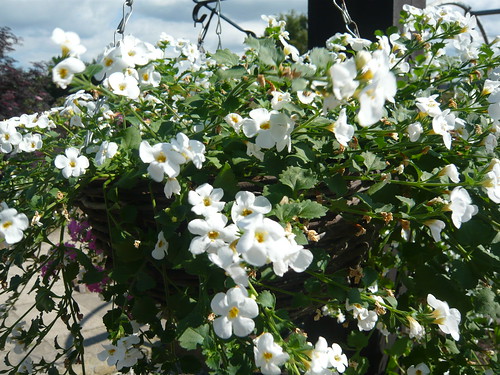
Tips for Looking After Hanging Baskets

golden acre gardens leeds

These tips may seem commonsense but they are always worth repeating.

Tips For Good Hanging Baskets.

  • Water early in the day ‘and or’ in the evening. Give plants a good drink regularly.
  • After 4 weeks in the same compost the nutrients will be reduced and you should add liquid feed. I use half strength fertilizer with every watering.
  • Many hanging basket plants will self deadhead but if you have zonal geraniums in the basket they will benefit from nipping the deadheads off.
  • Turn the basket round, if one side near a wall for example, is growing less well.
  • Look out for aphids on the soft lush growth.
  • If you get unexpected gaps in leaf or bloom you can still  put in new plants.

Hanging Basket Holidays

  • If you go on holiday you need to think about care of your baskets whilst away, even just for a weekend.

    Read More Read More

Growing Begonias From Tubers

Growing Begonias From Tubers

begonias

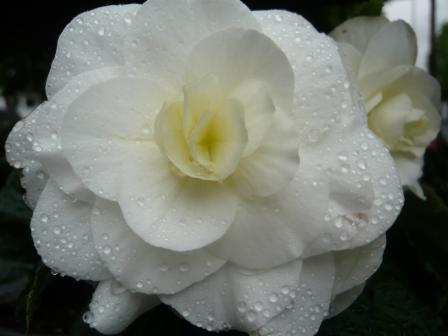
Begonias from tubers are a very rewarding plant. If protected from frost, they are a relative easy plant to grow. They can remain relatively pest free and provide a long flowering season.

You can start plants as early in February in a heated greenhouse or indoors on windowsill. The best temperature is 18-22 degrees. They will start growing at lower temperatures but their growth will be slower.

Keep moist, but, not standing in water or overly damp as this can lead to rot and mildew problems.

Plant the top of the tuber just below the soil surface, hollow side upward.

Which is the top of a Tuber?

You should be able to see where last year’s growth has been cut off. It is the concaved side (dish shaped). You may also see the first buds for new shoots.

When the first shoots appear, make sure the plant gets plenty of light and is rotated if on a windowsill to get a well rounded plant.

The begonias can grow quickly and so might outgrow their first 3 inch pot. Pot on to five or seven inch pots, before they are ready to be hardened off and planted outside.

Read More Read More

Good Soil and How to Get Better Soil

Good Soil and How to Get Better Soil

Book Cover

Soil that is fit for purpose will help your plants grow, thrive and even excel.
Some plants need special soils or composts but good general principles are discussed below and this book will provide detailed information.

Purpose of Garden Soil

  • Soil provides the base to anchor plants through their roots.
  • Good soil holds moisture and air necessary for the health of plant roots.
  • Soil feeds plants with nutrients (NPK) and makes other trace elements available.
  • Soil recycles dead matter and hosts a variety of life forms.


Features of Good Soil

  • Soil consists of “the living, the recently dead and the very dead.”
  • Soil should be able to hold moisture but not become water logged.
  • Excess water should drain away and not puddle under the plant. To prevent puddling the sub-soil, or lower layer of soil below cultivation depth, should be broken up and not compacted.

    Read More Read More

Rose Replant Sickness Causes & Cures

Rose Replant Sickness Causes & Cures

Peace Rose

Old Parks Gardeners have known for many years that to replace a bed of Roses in the same place is asking for problems. New plants become sickly before they get a chance to become established and you can loose a lot of time and money trying to put new roses in the place of old.

How is Rose Sickness Caused

  • No one seems certain why roses get sick if they are planted where old roses used to be. One possible cause is nematodes that the old roses have learnt to tolerate.
  • I believe it is more likely to be fungal growth around the roots.
  • Root exudates contain allelochemicals and when concentration becomes very high, after the roses have been in the soil for several years, they adversely effect new plants.
  • Roses are gross feeders and soil which becomes impoverished will highlight other plant weaknesses.


Common Cures and Treatments for Rose Sickness

  • If you are replanting roses exchange the soil with fresh soil that hasn’t grown roses before. An area 2′ square and deep will be needed so it might be easier to relocate the bed for new plants.
  • It may help to grow and dig-in a crop of Tagettes or french marigolds if the soil is generally in good health. I would also add lots of manure and   humus for roses.
  • Another method for small numbers of Roses is to sink an old carboard box filled with fresh soil and plant in that. By the time the cardboard degrades, the rose sickness should have gone or the Rose be strong enough to resist problems.
  • The only product against rose sickness is Rootgrow, a beneficial mycorrhizae, fungus which adheres to the new Rose roots. It should allow the plant access to moisture and nutrients from a wider area of soil thereby increasing the early vigour.

Try Just Joey when planting new roses

Forcing Flower Bulbs

Forcing Flower Bulbs

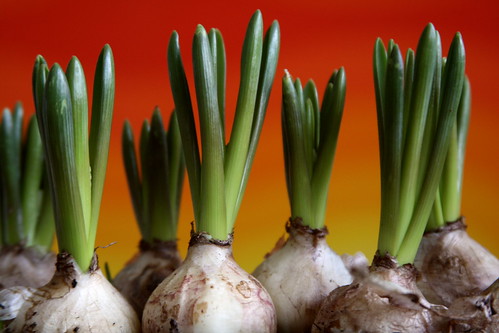
A bowl of flowering bulbs can be delightful in the depths of winter and you can force them to flower as early as Christmas.

Conditions for Forcing

  • Bulbs need at least 4″ of compost for root development and good drainage in the pot.
  • Forced bulbs need a period in the cold at 7-9º Centigrade.
  • Dark conditions are also best
  • If there is no suitable indoor space the pots can be buried outdoors in soil that is not too wet.

Timing for Forcing

  • Plant the bulbs from 1st September until December. The earlier the start the earlier the flower.
  • Short cooling periods equal short stumpy flowers, too long cooling will produce excessively long flower stems.
  • After cooling, bring bulbs into the warmth and they will flower in 2-3 weeks.
Bulb Planting Date No Weeks Chilled
Hyacinth prepared 15.09 -15.12 10-12
Hyacinth unprepared 15.10 -01.12 11-13
Tulip

Blenda, Prominence

Arma, Yellow Present

01.10-01.12 14-15

15-17

Daffodil

Tete-a-Tete

Carlton

01.10-01.12 12-13

14-15

Crocus 01.10-01.11 14-15
Iris Reticula 01.10-01.11 12-13
Muscari 01.10-01.11 14-15

Amaryllis and Paperwhite Daffodils ( Tazeta narcissi) can be put straight into a warm room and do not need the chilling process. Hyacinths can be chilled at slightly warmer temperatures than other bulbs.

Read More Read More

Quick Tips for Roses In June

Quick Tips for Roses In June

Peace Rose

This year my roses are a good bit later to come into full bloom. The cold snap in May undoubtedly caused problems.

A white rugarosa type had all the buds ‘browned off’ by a late frost and guess what colour that left me  -  ‘browned off too’!

Tips for June

  • Deadhead repeat flowering roses to get a second flush. Flowering may stop when seed is set.
  • Cut above the first leaf node and angled away from the leaf.
  • Do not deadhead roses you grow for the hips such as Rugarosa types.
  • If you have any blackspot wash your secateurs between each plant to avoid spreading the disease.
  • Check for suckers, track them back to the roots and pull them off neatly. Cutting them may leave a bit of sucker and you will get two suckers from that one spot.
  • If you are troubled by Aphids, and who isn’t, then use your favourite treatment. I have just organically squashed quite a large crop on the buds of my climber roses.

Getting Bigger Blossoms

  • If exceptional blooms are required nip out the side buds and leave one bud per stem to develop fully. All the energy gets channeled this way.
  • Read More Read More

Wild Flower Bed with Companion Plants

Wild Flower Bed with Companion Plants

Meadow

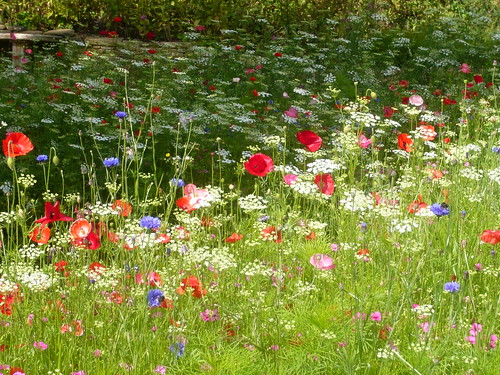
An effective way to use wild flowers  is to mix in some trusted garden plants. Using some  trusted garden stand-bys will provide extra colour and structure to a wild area.

Plants to Support Wild Flower Beds

  • After the Aconites, Snowdrops and Marsh Marigolds the first blooms may be from Primroses or Day Lilies followed by Dianthus to give a mix of vibrant colour.
  • Evening Primrose has yellow bell shaped flowers. Oenothera tetragona flowers in spring on reddish green stems, Oenothera missouriensis  later in the year
  • Campanula the blue white or sometimes pink Bellflower can also look good.
  • Foxgloves give height and structure and you could add some Delphiniums.
  • For some white flowers choose Sneezewort ‘Acillea ptarmica’, Candytuft , Ox-eye daisy or Anthemis punctata
  • Heliopsis, Rudbeckia and Achillea are good looking yellows.
  • Cranesbill geraniums and Columbines can also complement wild flowers.

Wild Flowers

  • You can buy seed mixtures aimed at different locations such as Cornfield mix and others from Thompson & Morgan
  • Many individual plants appeal as wild flowers particularly the daisy and buttercups. Still more wild flowers are scented.
  • The red Poppy is potentially one of the most popular varieties and I would opt for Papaver rhoeas.
  • Wild Orchids are harder to grow but if you have the patience they can be rewarding
  • See also Wild Seed Suppliers
  • Do not forget the humble Dandelion in various leaf forms.

Tips on Wild Seed Sowing

Read More Read More

Yellow and Sickly Leaves caused by Chlorosis

Yellow and Sickly Leaves caused by Chlorosis

Acid deficiency

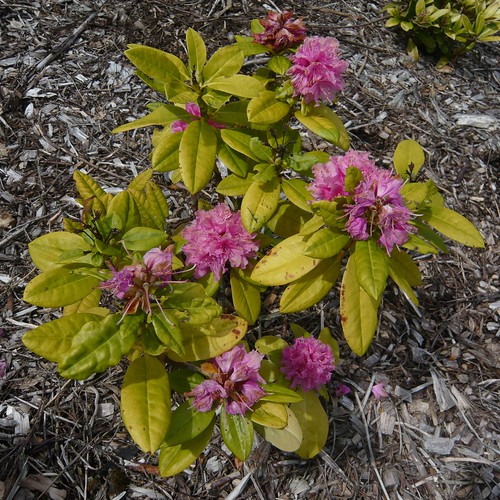
Yellow sickly leaves on acid loving plants is called ‘chlorosis’. It is a nutrition problem as the plant is inhibited from getting the nutrients from the soil. It is easiest to think of it as an Iron or acid deficiency.

Plants affected by Yellowing Leaves

  • Rhododendrons often suffer if the soil is not sufficiently acidic as the picture shows. Eventually the leaves then the shrub dies.
  • Chlorosis in fruit trees is a gradual yellowing of the tissue between the veins of younger leaves will occur while the veins themselves stay green.
  • Azalea, Laurel, Maples, Oaks and other ericaceous plants can show symptoms of chlorosis.
  • Tomato chlorosis crinivrus is a yellowing of leaves but is cause by a virus introduced by white fly. Control the insects and feed the plants.
  • Yellowing leaves on houseplants can be due to overwatering. If your plant has been sitting in water it’s time to let it dry out.

Cures for Chlorosis

  • Water with a liquid feed of ‘Sequestrene’ which is designed for such plants.
  • Fertilizers that contain chelated iron, manganese and magnesium will help improve the colour and health of leaves and plants available from Thompson Morgan
  • ‘Sequestrene’ Granular Iron Tonic is for acid-loving ericaceous plants. It provides iron in a chelated form which can easily be taken up in any soil.
  • Foliar Sprays may be effective as a temporary measure, spray when the symptoms are first noticed with a ferrous sulphate solution.
  • Peat, ericaceaous compost or applications of acid fertilizers, such as ammonium sulphate may help mild cases of iron chlorosis.
  • Do not lime the soil.
  • Treatment the soil directly with flowers of sulphur to lower the pH to 5.5

Buy Chempack for acid lovers

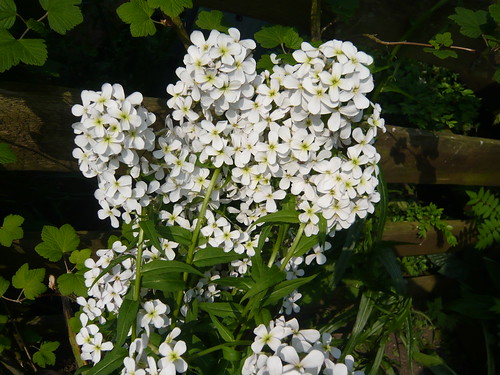
Growing Hesperis matronalis Alba

Growing Hesperis matronalis Alba

Hesperis matronalis Alba

Hesperis is a hardy biennial that flowers in blue, purple or white. It is easy to grow from seed and flowers through summer.

  • The main charm is the scent that you get in an evening from the masses of 18″-36″ high plants.
  • Ideal for the middle of borders, Cottage Gardens, Wild Gardens or a Wildlife Garden.
  • Charming large spikes of single flowers attract hoverflies and insects.

Sowing and Growing Instructions

  • Optimum Germination Temperature: 60-65F (15-18C).
  • Sowing Depth: 1/8 Inch (3 mm).
  • Sow in late spring/early summer  thin out or  plant out in their flowering positions in early autumn.
  • Space the plants 30cm (12in) apart in full sun or part shade.
  • Plants self-sow freely in good soil.

Seeds are available to plant now from Thompson Morgan

Tips for Growing Phlox paniculata

Tips for Growing Phlox paniculata

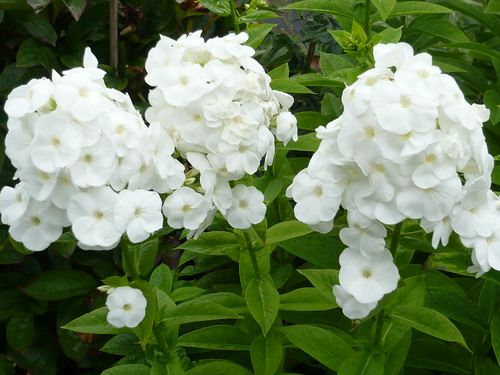
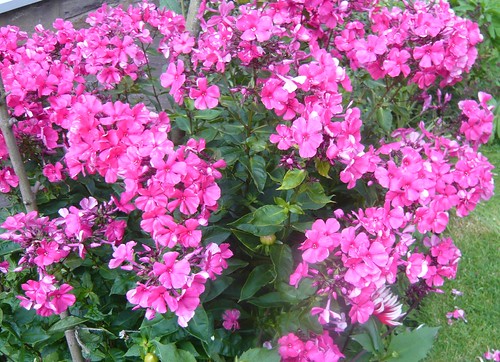
Phlox paniculata

Phlox is a perfect perennial plant, perpetually pleasing people. It is easy to improve your Phlox performance.

Tips for getting good Phlox flowers.

  • On mature clumps of Phlox thin out any  congested, woody stems.
  • Thinning out improves subsequent flowers and increases air flow.
  • After a good rain, mulch around your Phlox to conserve moisture.
  • Phlox responds to the Chelsea chop – cut some of your Phlox back by a half at the end of May. You will then get lush growth and later flowers.
  • I feed with a slow release fertilizer like Growmore in early spring.

Mildew Problems

  • Phlox are prone to mildew but it won’t kill the plant – Phlox will come back next year.
  • Water stress is a main cause of Phlox mildew so water the roots, avoid splashing the leaves and mulch as above.
  • Lack of air circulation is another cause of mildew.
  • In Autumn tidy up all fallen leaves.
  • Mildew attacks young sappy growth so do not over fertilize with nitrogen.

Phlox paniculata

For more Perennial Favourites
Read more about how to grow Annual Phlox
To achieve the pinnacle of success for Phlox see more