Browsed by
Category: Gardening

General gardening tips and hints

Growing Wild Garlic for Cooking

Growing Wild Garlic for Cooking

Wild Garlic

Wild garlic or Allium ursinum is also called Buckram, Bear’s Garlic, Ramsons or Broad-leaved wood garlic. It is a pungent herb normally found growing in profusion in woodland areas.

  • Wild Garlic flowers from the end of May with white flowers on 8″ stems.
  • Wild Garlic can be grown in the garden and is championed for the lush tasty leaves.
  • Foraging for Wild Garlic in woodland is fairly straight forward and it will be found in semi-shaded, moist conditions.
  • Wild garlic has a very similar taste to domestic garlic but is slightly milder.
  • The leaves are delicious raw or cooked and work well in salads and soups.
  • It is easy to grow from seed or bulbs (please do not take them from the wild).

Wild garlic

Shallots for Showing

Shallots for Showing

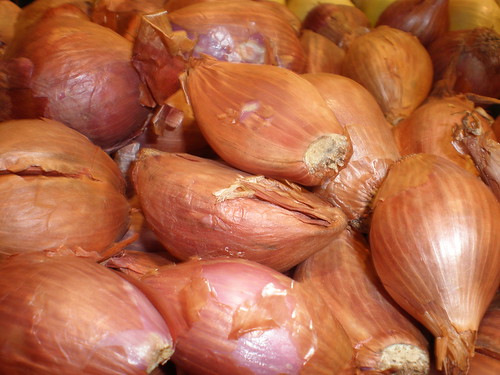
Many shows have 2 classes for Shallots. Small pickling Shallots and ‘Giants’.

Showing Shallots

  • Grow Dutch Yellow for a ‘judge pleasing’ variety or raise Russian Red from seed.
  • Display small shallots in bowls of sand, sawdust or special boxes  for the ‘Giants’. The aim is to keep the bulb in formation.
  • Pickling Shallots should be less than an inch across the waist and uniform.
  • Harvest a few weeks before the show and ripen-off in the sun during the day, bringing them in during the evening.
  • The end of May is a good time to thin Shallots being grown for showing. Carefully remove the center bulb from a cluster without disturbing the remainder.

Other Shallot Varieties

  • Prisma F1, Golden Gourmet or Red Sun are even growers.
  • Pesandor, Jermor and Vigarmor tend to be tubular shaped.
  • Thompson Morgan have good supplies for next season. Place your order when you see what has won this years show.

Show Standards

  • Local shows may have arbitrary judging standards for Shallots.
  • The majority of bulbs often end up misshapen or bulging out, not having good form.
  • The large exhibition type shallot is now awarded a maximum of 18 points because of the degree of difficulty in achieving a perfect specimen.
  • In the  RHS show handbook  ‘shapely bulbs of good form” are considered best.
  • The NVS judges guide goes even further and states that ‘single bulbs of good shape with circular outline’ are meritorious.

Getting Biodiversity in your Garden

Getting Biodiversity in your Garden

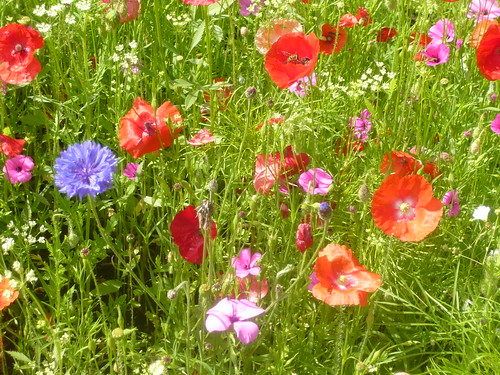
Wild meadow

Wild Areas

  • Leave an area in your garden to grow wild. Let it do as it wishes and follow the seasons.
  • Log piles and rotting brash provide protection, food and habitats.
  • If you have a wild flower meadow grow native plants and grasses.

Native is Best

  • Flowers and plants native to your area feed indigenous populations of birds, insects and fungi.
  • None native plants can take over or undermine local plants.
  • Double flowers and over-bred plants often take up space but offer no food value for wild life.

Variety and Diversity

  • The wider the range of plant families and flowers the better for wild life.
  • Look after the soil to help diverse plants to thrive. It will also help fungus and bacteria which is a good place to start achieving biodiversity.
  • Rotating crops breaks up disease and feeds the soil.

Balance the Elements

  • Create wind breaks or sheltered areas.
  • Ensure a supply of accessible water.
  • Provide some shade in hot areas of the garden.
  • Consider the tops of trees and the roots of plants as habitats. Again variety is a key.
Good and Bad Environmental Companion Plants

Good and Bad Environmental Companion Plants

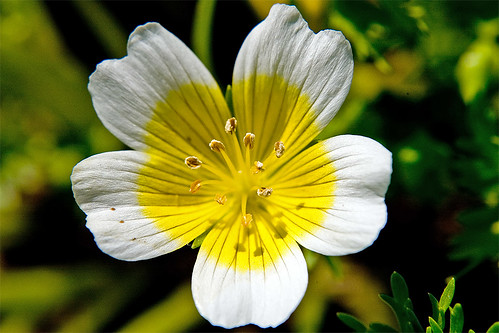
A good plant for attracting wildlife is the Poached Egg plant Limnathes douglasii. (Poached Eggplant sounds like an Aubergine recipe).
A bad companion plant would be the Black Walnut that produces a chemical and heavy shade both of which can inhibit growth.

Creating Microclimates
Hedges, trees and shrubs can provide microclimates by stopping wind. They shelter for a distance up to 10 times their height.
Roots can change microclimates by creating space for air and water to percolate. They also draw different combinations of nutrients.
Weeds try to destroy microclimates by competing for water – get rid of them!
Ponds, bog gardens and streams help make microclimates.

Environmental Companion Tips
Plant a range of different plants including local endemic species
Some plants repel or attract insects and gardeners. Plant big open flowered plants and umbellifers for hoverflies.
Use green manures when the ground is not in use.
Use leguminous plants like peas, beans and clover to fix nitrogen in the soil.

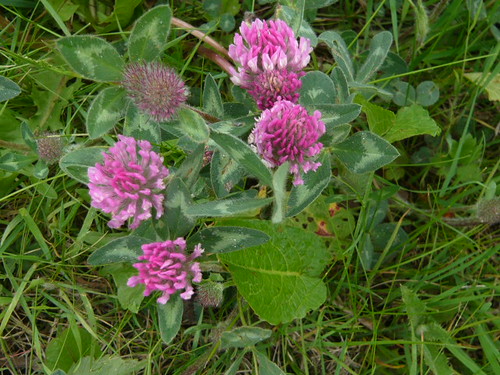
Clover

In Praise of Clover

Read More Read More

Soil Tips for Growing Vegetables

Soil Tips for Growing Vegetables

159

Is your soil so poor nothing will grow in it? No I didn’t think so because weeds will grow anywhere!

Improve Your Soil

  • Rotted farmyard manure, dug in each year, will boost your soils fertility.
  • The rotted farmyard manure breaks down to humus that opens up clay soils and holds moisture in sandy soils.
  • You need to replace the nutrients taken out of the soil by this seasons crops and that is where an annual dose of farmyard manure comes in.
  • Cover the veg-patch with black polythene over winter. This stops goodness leaching out, stops weeds and warms the soil in spring.
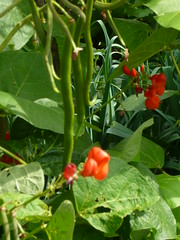
  • I also trench the Runner Bean rows with an extra bottom covering of manure to hold extra moisture.
  • Add lime for growing Brassicas but Potatoes love the slight acidity that often comes with farmyard manure.
Dividing Daffodils to Increase Flowering

Dividing Daffodils to Increase Flowering

daffodil

When bulbs get cramped for space they throw up leaf not flower. To improve the flowering from congested clumps of Daffodils they can be divided in June.

How to Divide Daffodils

  • Tip out the bulbs grown in pots and clean away loose compost.
  • Lift clumps from the border with a spade.
  • Tease apart the bulbs, discard very small or misshapen bulbs.
  • Grade the bulbs by size, the larger bulbs should flower again next year.
  • Smaller bulbs need to be grown on to increase their size – put them 2″ deep in a pot of John Innes No2.
  • Improve the soil before replanting with compost, leafmould and a balanced slow release fertilizer.

For bulbs naturalised in grass, wait until autumn. Strip back the turf then divide the bulbs.
Handle fresh bulbs with care as they bruise easily and that can cause rot.
After replanting water the ground and mulch over the planting spot.

Other Bulbs to Divide

  • Glory of the Snow or Chionodoxa – Divide after foliage dies; plant 3 inches deep.
  • Muscari or Grape hyacinths – Divide in summer replant 3 inches deep.
  • Tulips – Divide after foliage dies and plant 6 to 8 inches deep.
  • Scilla – Divide in summer, plant larger species just below soil, others 3 to 4 inches deep.
Growing Yellow Iceland Poppies from Seed

Growing Yellow Iceland Poppies from Seed

poppy

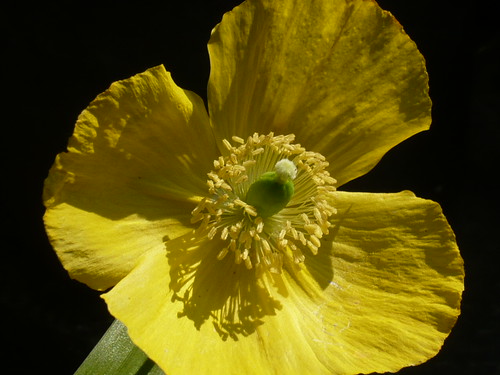
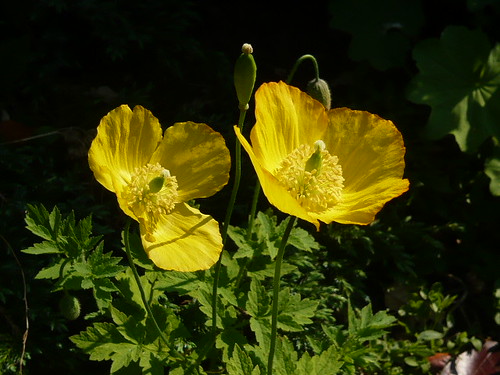
The Iceland Poppy ‘Papaver nudicaule’ is  also known as the Arctic Poppy. They produce single petaled flowers with strong clear colouring. Despite the names they like normal climates but can dry up in a very hot sun.

Description of Papaver nudicaule

  • Iceland poppies are hardy, short-lived perennials generally grown as biennials.
  • The papery, bowl-shaped, lightly fragrant flowers are supported by hairy, stems among feathery blue-green foliage.
  • Iceland poppies grow about 12″ tall and produce a series of 3″ wide flowers from early summer.
  • The wild species bloom in white or yellow but a colour range is available.
  • All parts of this poppy are likely to be poisonous.

poppy

Tips for Growing Papaver nudicaule

  • Iceland poppies create exceedingly minute seeds and long taproots that resent disturbance.
  • Sow seeds outdoors in autumn or early spring in a reasonably well-drained soil.
  • The strongest plants are autumn-sown.
  • Iceland poppies can live 2-3 seasons and self sow prolifically.
  • Iceland poppies last several days in the vase if they are cut just before the buds open and the stem-ends are seared.

Read More Read More

Rabbits a Pest in the Garden

Rabbits a Pest in the Garden

Book Cover

Hungry Rabbits seem to eat virtually anything and I am not keen to satisfy their appetite. Not only that but they can cause other damage to plants and young trees. So in general I am disapproving of rabbits.

Symptoms of Rabbit Damage

  • Rabbits feed on a wide range of vegetables and ornamental plants grazing them close to the ground. My Muscari bulb shoots provided a tasty spring snack.
  • All they leave are short sprouts that may or may not grow back (to provide the rabbits with a second helping)
  • Even rose shoots have been gnawed away on my neighbours prize shrubs.
  • The bark of young trees is often gnawed to sharpen the teeth of the pesky rabbits.

Control of Rabbits

  • Erect a Rabbit proof fence all around the garden of 1″ wire mesh. It needs to be 4 feet high and 12″ buried below ground to stop Colditz style break ins over or under.
  • Use an animal repellent like Renadine or Wild Animal repellent
  • Get a Jack Russel or other suitable dog.
  • Move home

Some Rabbit Resistant Plants

  • Alchemilla mollis or Aquilegia
  • Bergenia or Foxglove
  • Clematis or Euphorbia
  • Dahlia and Peaony
  • Primula and some Hemerocallis
Growing Camassia Bulbs

Growing Camassia Bulbs

cha
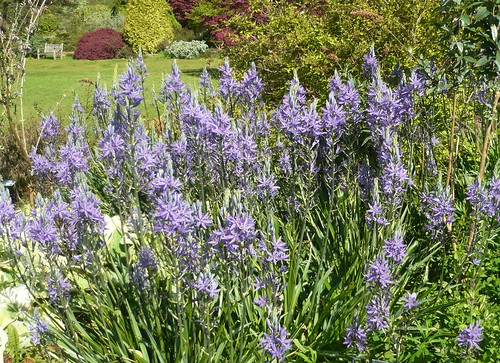
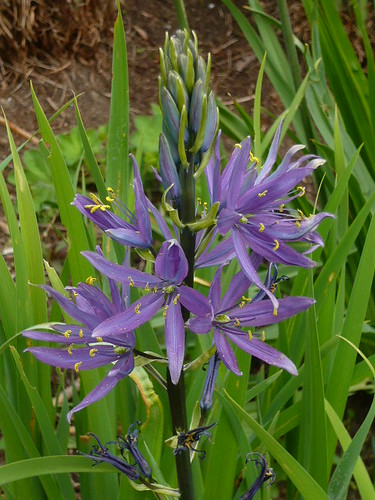
Camassia is a genus of summer flowering bulbs that naturalises well in gardens. The leafless flower spikes have blue and occasionally violet or white star shaped flowers.

Culture and Growing Tips

  • The plant thrives in moist conditions in meadows, alongside streams and near ponds.
  • The soil needs to be high in humus, not waterlogged and otherwise the plant is easy to grow   forming  big clumps.
  • Camassia may be divided in autumn after the leaves have withered.
  • Bulbs should be planted 4″ deep in the autumn. Additionally the plant spreads by seed.
  • Leaves are slow to die down when grown in grass.
  • Flower spikes range from 1′ to 5′ tall dependent on variety.
  • Grow nfrom fresh seed or offsets from around the main bulb

Camassia

Camassia Varieties