Browsed by
Category: Gardening

General gardening tips and hints

Growing and Maintaining Raspberries for Big Crops
Growing and Maintaining Raspberries for Big Crops

The summer Raspberries are now finished and I am eagerly awaiting a crop from my Autumn Raspberries planted 2 season ago.
In the meantime the old Raspberries are getting a bit of friendly treatment.

Cultivation of Early Raspberries.

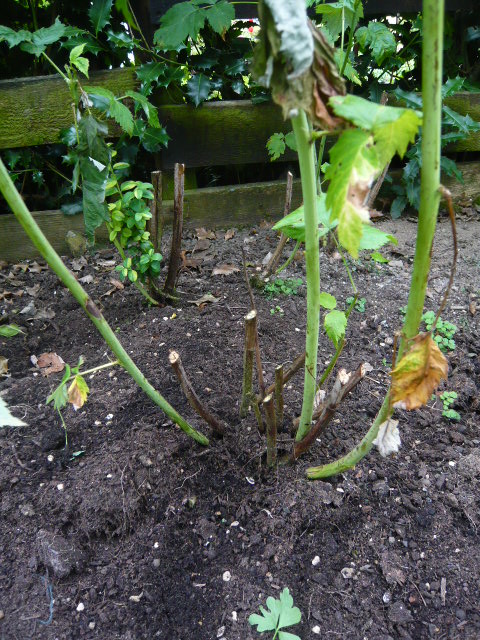
  • The plants throw up canes 3-5 feet high from a stool at ground level.
  • In Summer and Autumn new canes are produced that will carry the flowers and fruit next spring.
  • Canes will only fruit once so old canes should be cut down at ground level after you have harvested the fruit
  • I shred the old canes on to my compost heap.
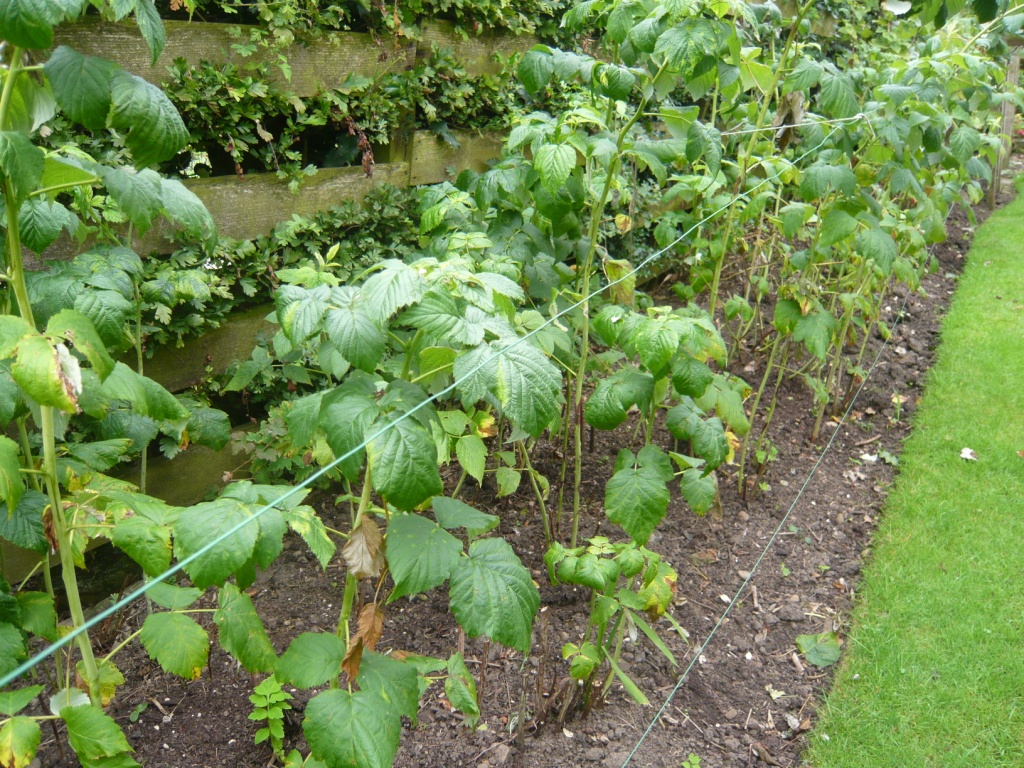
  • New canes need support. I string wire across the row from stout posts at each end.
  • Raspberries are a hungry and thirsty fruit.
  • Feed with general purpose granular fertiliser like Growmore in spring and mulch with well-rotted farmyard manure.

Varieties and Species

  • Grow Raspberries from bare-root plants in the autumn. You can buy several red raspberry varieties mail order from Thompson & Morgan
  • Glen Moy – spine free canes, heavy crops in early summer
  • Glen Prosen – firm fruit in mid-summer
  • Autumn fruiting types include All Gold and Autumn Bliss
Tips for Growing Raspberries for Big Crops

Plant raspberries in rows and trained along a post and wire system to make a hedge of canes.
Avoid a very windy site unless you can put up windbreaks to protect side branches and pollinating insects.
Canes get replaced each year, roots go on for a long time if maintained with water and feed.
Main-crop raspberries fruit on 1-year-old canes that are then cut down to ground level. Then tie in new growth to the support wires and mulch well.

See also
Coloured and species Raspberries
Growing and maintaining raspberries
Raspberries Spring Summer and Autumn

Spanish Salsify -Scolymus Hispanicus & Salsify

Spanish Salsify -Scolymus Hispanicus & Salsify

Common Golden Thistle or Spanish Salsify has golden yellow flowers that look like other members of the Compositeas.

Growing Spanish Salsify

  • The plants prefer light well-drained soil. Occasionally it will be found growing wild but as its name suggests it grows well in Spain where it is also known as Spanish Oyster.
  • Spanish Salsify is a biennial or perennial plant, which grows 2-3′ tall and is very spiny. The stems are branched at the top, with discontinuous spiny branchlets.
  • Cultivation has reduced since Victorian times when it was more popular

Growing for Eating and Cooking

  • All parts of the plant are edible but the roots were originally thought  to have a slight diuretic effect.
  • Root eaten raw or cooked have a sweet flavour that makes an excellent vegetable though it is rather low yielding.
  • The roasted root has been used as a coffee substitute
  • Young leaves and leafstalks can be blanched and used in salads
  • The flowers are used to adulterate saffron as a food colouring
  • In Spain the main uses are in salads or with scrambled eggs .

Read more on the UN Agricultural web site

Ordinary Salsify

  • Grown from seed the roots can be stored for winter use.
  • Salsify Scorzobianca produces slender, parsnip-like white skinned roots. They can be left in the ground and lifted as required. In the spring the tender shoots of Salsify Scorzobianca make an appetising green vegetable.
  • Seeds available from Thompson Morgan
  • The roots have a delicious, delicate flavour likened to Oysters or Asparagus.
  • Salsify is a good source of Vitamin C and potassium.

Chillies for Greenhouse Garden and Home

Chillies for Greenhouse Garden and Home

Chillie

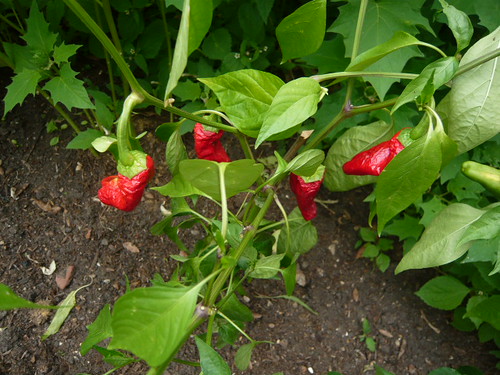
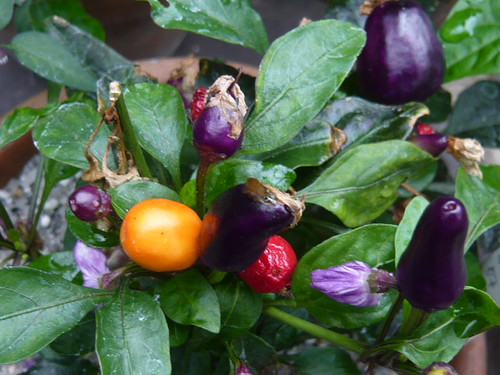
Chillies are a hot plant to grow and a little goes a long way so they are an economic crop for the space.

Growing From Seed

  • Chilli seeds need to be sown early in the year for a long growing and ripening season.
  • Germination can be variable and speed & percentage success is improved with a propagator warmth.
  • Use a gritty soil based compost like Arthur Bowers as Chillies like good drainage.

Chilli Growing Tips

  • Pot on your seedlings into 3″ pots when the leaves are large enough to hold
  • Pot on as they grow into 9 inch pots or larger depending on the variety.
  • Chillies are best grown in a greenhouse or poly-tunnel though they can be grown outside in a sunny spot.
  • Smaller pots can be used for compact ornamental varieties.
  • Shade your greenhouse or conservatory to avoid scorching.

Book Cover
The Complete Chilli Pepper Book: A Gardener’s Guide to Choosing, Growing, Preserving, and Cooking

Chilli Varieties and Heat

  • Cayenne pepper plants will flower and fruit much earlier than varieties such as Habanero, Scotch Bonnet or Naga.
  • The slower varieties require much more heat and light and are best kept in a conservatory or greenhouse to ensure they fruit as soon as possible.
  • Habaneros take over 3 months from potting on to reach maturity.
  • Heat is measured in ‘Scovilles’ .  Sweet Peppers score nil, Jalapenos & Hot Wax 2-8k, Tabasco & Cayenne 30-50k, Habenero & Scotch Bonnet 100-325k and Naga Jolokia upto 855k. Police use a Pepper spray that is rated at 5.3m Scovilles and pure Capsicum is 16m Scovilles. Hot or what?

Solanacea Capsicum annuum

Read More Read More

Memorial Grass Mix for Prince Albert

Memorial Grass Mix for Prince Albert

Green grass

There are grasses for most purposes including bowls, tennis and cricket through to relaxation and leisure activities.
Sorry there isn’t a grass that suits the new Wembley and also sorry I do not know who created this list of grass seed varieties to grow lawns in different circumstances.

Hard Wearing Lawn High Quality

Lawn

Shaded

Position

Chewing’s fescue 55% 80%
New Zealand Crested Dogstail 35%
Browntop Agrostis tenuis 10% 20% 30%
Fine leaved fescue 20%
Sheep’s fescue 40%
Creeping Red fescue 10%

Read more Tips on Lawn Care and Tips for Autumn Lawns

What is Pollination and why is it important?

What is Pollination and why is it important?

067

Pollination is the transfer of pollen (with male hormones) from the anthers of a flower to the stigma to create fertilization and sexual reproduction.

Types of Pollination

  • Some flowers will develop seeds as a result of self-pollination, when pollen and pistil are from the same plant but different flowers.
  • Many plants require cross-pollination, pollen and pistil must be from different plants.
  • Yet other plants will self fertilize from the same flower.

The Need For Pollination

  • Without pollination there would be no seeds or only sterile seeds.
  • Fruit needs pollination so it can mature and grow.
  • Farmers need pollination to produce crops.
  • Insects and animals that are involved in pollination are rewarded by energy food in the form of nectar or pollen.

Specific Pollination Issues

Read More Read More

Questions on Gardening

Questions on Gardening


Some of our gardening books

If you would like to ask a question on gardening, feel free to leave a comment on this post.
Comments on individual posts are always reviewed and answered where possible.

We will try to add the answer as a new post. So check : gardenerstips.co.uk/blog

We will try to focus on common sense gardening advice, avoiding too much technical jargon.

Garden Maintenance DIY Guide

Garden Maintenance DIY Guide

Book Cover

There are numerous books on garden design but not much information on garden maintenance. Some maintenance jobs are ‘as and when’ but others need to be done at least annually. Below are my gardeners maintenance tips.

Maintain Structure Maintenance

  • Keep on top of all repair jobs before they develop into rebuild jobs!
  • Paths need to be safe and that means obstruction free. I am guilty of using paths for seed trays and odd plants that I am waiting to plant out and I have been known to trip or kick them over.
  • Clean up after winter as concrete or flagged paths are often covered in slippy green algae. This needs to be removed or chemically treated.
  • Walls need re-pointing if stones become too loose. The   stones sometimes get loosened by frost or plant roots.
  • Fences may need treating with preservative or supporting if in danger of blowing down.

Maintenance of Services

Why hasn’t it Flowered? Top Ten Reasons

Why hasn’t it Flowered? Top Ten Reasons

015

Twice this week I have been asked why a plant has not flowered despite receiving apparently good treatment. Most plants use flowers to start the reproduction and pollination cycle but below are some of the main reasons for failure.

Reasons for None Flowering

  1. Plants too young and immature, particularly trees and shrubs. Wisteria may take 6-7 years. Biennials grow one year and flower the next.
  2. Frost damage to the buds on early fruit like Plums or to early shrubs Hydrangeas, Camellias etc. Bird, aphid or other damage to flowering shoots.
  3. Planted too late in the season.
  4. Poor cultivar or plant variety with low flowering habit. Some plants are vegetatively reproduced from poor flowering stock.
  5. Poor and incorrect pruning that removes bud potential.
  6. Read More Read More

Aphids and Greenfly Pest Control

Aphids and Greenfly Pest Control

Aphids
All greenfly are Aphids but not all Aphids are greenfly.

What are Aphids

  • Aphids are sap sucking insects,
  • They damage  plants and introduce disease  makinge them enemies of farmers and gardeners alike.
  • There are around 4,400 species and that many flies on some of my plants.
  • The little black Aphids that trouble Broadbeans or Greenfly on Roses are from the Aphid family.
  • Aphids are often specific to one plant species.
  • Aphids breed several time in a season if left untreated.
  • One female hatched in spring may produce billions of descendants from 40 generations in one year

Read Gardening Products Killing Aphids

Pest control including Aphids

Aphids

Tips for Growing Astrantia

Tips for Growing Astrantia

golden acre gardens leeds

Astrantia are unassuming garden perennials now coming into flower from June .

Tips for Cultivating Astrantia

  • Astrantias are superb perennials for the stream edge or a moist border.
  • They may tolerate drier soils as long as the plants are mulched
  • ‘Claret’ is a beautiful variety with deep red pincushion flowers.
  • After flowering, plants can be rejuvenated by cutting them back close to the ground – fresh new foliage and a late crop of flowers start appearing shortly after.
  • Plants do not make big clumps or spread but they can be split in early spring.
  • Grow from fresh seed or buy as plants. Thompson Morgan

Astrantia Varieties and Features

  • Astrantia have star-like flower heads in reds, pinks and pastel shades.
  • The variegated form has an AGM Astrantia major ‘Sunningdale Variegated’
  • Read More Read More