Browsed by
Category: Gardening

General gardening tips and hints

Growing Late Flowering Gaura Lindheimeri
Growing Late Flowering Gaura Lindheimeri

Gaura

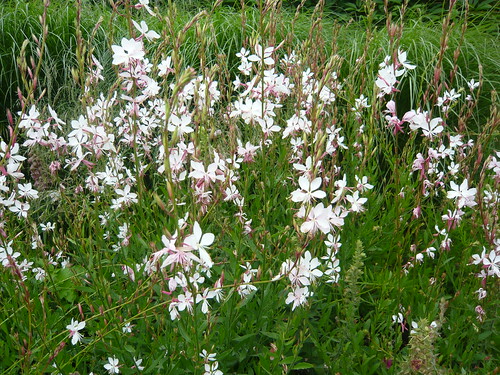
Gaura Lindheimeri is a short lived perennial herbaceous plant growing to 18″-36″ tall from an underground rhizome. Gaura can be treated as a half hardy annual grown from seed and planted out  in mid summer. The plant has an AGM.

Growing Gaura Lindheimeri

  • Gaura is a plant from the prairie and likes a dry sun baked soil.
  • Gaura need space but looks light and airy when flowering after August.
  • The pinky-white flowers clustering on thin hairy stems.
  • Flowers go on appearing for months and  do not need dead-heading.
  • Try the slightly smaller deep-pink form, ‘Siskiyou Pink’ which has stems that are crimson or Cherry Brandy, The Bride Summer Breeze or other named varieties.
  • ‘Corrie’s Gold’ is another Gaura with a gold leaf and white flower.
  • Young plants need to be regularly pinched out to make bushy plants.
  • Mature Gauras do not move well.
  • Gaura Whirling Butterflies has slender stems and leaves are grey-green with ocassional black spots. The multitude of flowers dance above the plant like a host of butterflies when the breeze catches them.


What to do with Garden Non-compostables

What to do with Garden Non-compostables

Waste bag

It seems a waste to put non-compostables into landfill if there is an alternative. Fortunately our local authority provides a green bag and collection service. Your local tip will probably have separate areas for hardcore and other garden waste.

Composting Means and Methods

  • Garden compost heaps are for short term rotters taking 6-12 months.
  • ‘Green bag’ council schemes are better able to cope with problem rotting and are suitable for items listed below.
  • Landfill is far longer term rotting but even this is not suitable for Japanese Knotweed which needs burning.
  • Wormeries are fine for green waste and cooked food and scraps.

What do you Avoid on your Compost Heap

  • Anything that you avoid putting on your compost heap is classified as non-compostable for this purpose.
  • Roots particularly from trees are often too slow to rot down and I green bag them.
  • Pernicious roots sometimes survive the heat of my compost. Then they regrow loads of new plants when the compost is spread. So weeds and perennial roots  get green bagged.
  • Seed heads are green bagged so the council can compost them on an industrial scale.
  • Diseased and infected plant material is also green bagged except honey fungus
  • Excess of one waste product such as twiggy slow rotting stalks sometimes end up in my green bag.
  • Ruble and pure clay can’t be green bagged and needs to go to landfill unless you can create a new use for them like a base for a raised bed or pond.

Read about beginning a compost heap to get more tips and ideas.

Action Tips on November Leaves

Action Tips on November Leaves

Action on Fallen Leaves

  • Clear leaves off lawns or they stifle the grass.
  • Pay attention to leaves trapped amongst grey leaved plants. Rotting leaves will also rot grey and silver leaved plants like Cinneraria or Stachys.
  • Leaves under bushes and shrubs can be left all winter as they will protect roots naturally through the cold spell.
  • Clear excess leaves from drains and gutters to prevent blockages.
  • Sweep leaves off paths as they become slippery when wet and decomposing.
  • Collect leaves to make leaf mold.
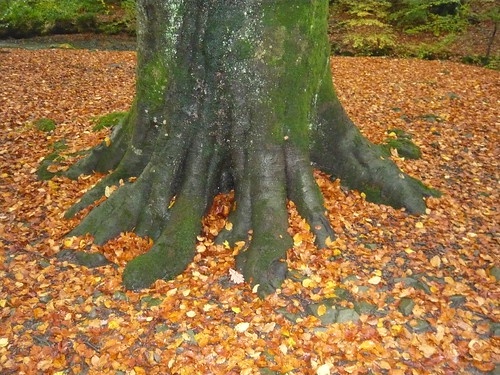
  • Leave leaves where they are good for wild life and the environment.
Growing Aconitum

Growing Aconitum

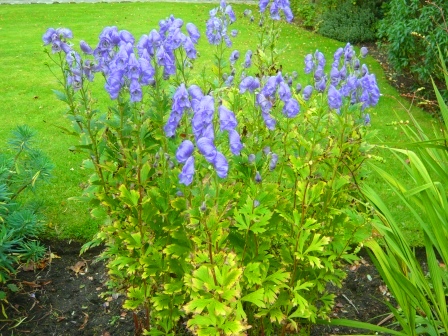
Aconitum is a good autumn flowering border perennial. They do not normally need staking and this variety grows to around 3′ tall. Strong blue or purple flowers predominate in the species but there are some yellow varieties pictured.

Growing Aconitum

  • Aconitum like deep fertile soil and will grow in deep shade.
  • Mulch the crowns in spring with good compost to help retain moisture
  • Cut back stems in late autumn after flowering to prevent wind rock
  • Divide large clumps in early spring as the plants start into growth. Use 2 forks bach to back to pull the plant into sections
  • Beware the plant is poisonous so wash your hands after touching any part of the plant
  • Hide lower foliage by planting at the back and growing lower plants in front

Other Aconitums

  • There are about 250 species of Aconitum
  • They are also known as aconite or monkshood.
  • As Banes they are also called wolfsbane, leopard’s bane, women’s bane.
  • Devil’s helmet or Aconitum is a genus of flowering plant belonging to the buttercup family.
  • Sparks Variety and Stainless Steel are a couple to look out for. However I am seeking  Aconitum x Cammarum a bicolour cross.
  • Try Cottage Garden plants for a selection of hybrids
Bargain Hunt Gardening Month by Month

Bargain Hunt Gardening Month by Month

Iris in rows

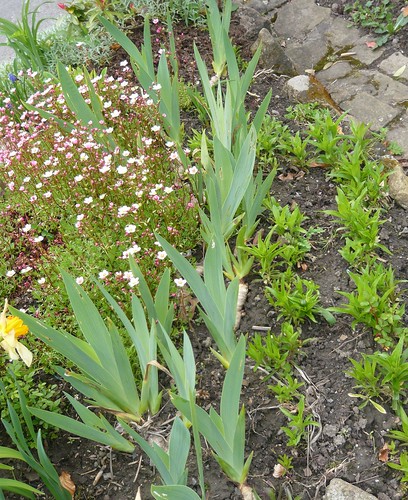
Flag Iris all grown as cuttings from one large overgrown host plant

January

  • Check around the garden for ripe seeds to collect and dry
  • Start sowing perennials on a windowsill
  • Check out garden centre sales

February

  • Keep sowing seeds
  • Divide perennials to get more and better plants.
  • Coppice Hazel twigs or other branches to use as supports. They look more natural than brown canes and are free.

March

  • Plant out hardy perennials under cloches to save indoor space and heating costs
  • Look for free brochures on Open Gardens to visit

April

  • Buy bedding plants such as Fucshi, Verbena and Felicia. Take up to 10 cuttings from each plant. By June you will have a hanging basket full.
  • Sow last years collected annual seeds.

May

  • Take cuttings from your garden shrubs.
  • Visit other gardens and parks

French lavender

June

  • Look out for bedding plant sales at your garden centre
  • Swap plants locally
  • Sow winter ornamental cabbages and pansies from cheap supermarket seed packets.

July

  • Check for bargains at local fetes and plant sales.
  • Attend your local shows and join horticultural societies for seeds and swaps.
  • Pot up Strawberry plant runners to get more plants. When rooted sever from the host plant.

August

  • Take more cuttings of plants you enjoyed in summer.
  • Root cuttings of Lupins and Oriental poppies can increase your plant stock

Poppy

Read More Read More

Autumnal Compostables and Leaf Mold

Autumnal Compostables and Leaf Mold

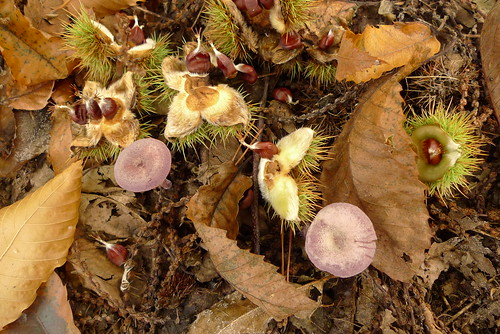
mushrooms, leaves and horse chestnuts

I am an avid composter but it is worth considering what is going into your compost this Autumn.

This photo contains several items that are not idea for my compost heap.

  • When I spread my compost I do not want lots of new saplings springing up in my garden. Some seeds and nuts are likely to survive composting as the heat will not be as great through winter.
  • Leaves particularly Oak,  Horse-chestnut and broadleaved trees will be slow to rot down.
  • Leaves do not provide much sustenance but are great conditioners if rotted down over a couple of years into leaf mold.
  • I have to admit to being uncertain about composting fugus. There seems to be little food value in these mushrooms and they may be spread via the composting process. On the other hand fungi are key parts of a soils organic activity and on balance I would compost these. I would not compost Honey-fungus or anything growing near my fruit trees.

Tips on Making Leaf Mold

  • Rake your leaves together into a pile. Bits of soil,  grass and a variety of leaves are not a problem but make the pile predominantly leaves.
  • Then there are a couple of options:
    • Put the leaves in a wire cage cover and leave to rot.
    • Put the leaves into a large plastic bag and puncture to allow air to enter.
  • Leaves should be damp and can be lightly watered but not left soggy. The rotting will not create heat like normal compost and decomposition will be slow.
  • It may take over a year for the leaves to breakdown and the volume will be a tenth of the leaf pile you started with.
  • Conifers and evergreen leaves will take   three years to compost and are best added in small quantities.
  • Shredding leaves or chopping with a lawnmower first  helps to speed up composting.
Autumn Vegetable Seeds & Sets 60% Off

Autumn Vegetable Seeds & Sets 60% Off

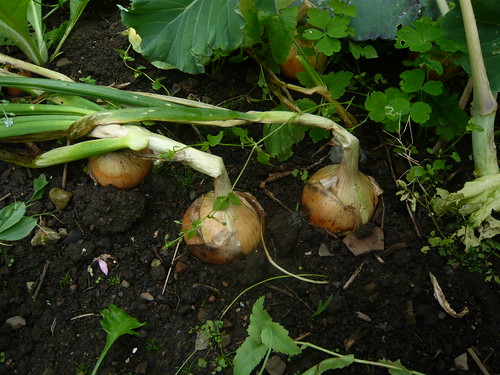
Green Onions

‘Many gardeners swear by planting Garlic, Onions and Broad Beans in the autumn. It’s a time of year when space on the plot becomes available and crops quickly establish before winter sets in. By planting in the autumn, many varieties are ready significantly earlier than spring sown alternatives – this allows you to harvest early and extend your season.

The best crops for autumn planting are Garlic, Onions, Shallots and Broad Beans . Peas such as Douce Provence can also be sown in the autumn for over wintering.’
So advertises a promotion by Thompson & Morgan. Buy your seeds and sets from Thompson & Morgan in the 60% off autumn offer.

Tips for Pruning Climbing and Rambling Roses

Tips for Pruning Climbing and Rambling Roses

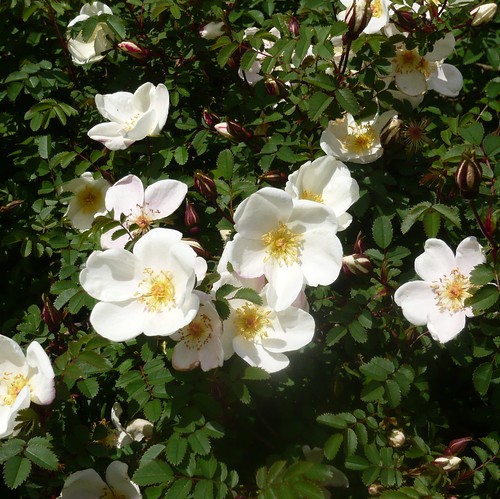
Rambling Rose

Differences between Ramblers and Climbers.

  • Rambling Roses flower only once per year generally around June or July. Climbing Roses repeat-flower from June through to autumn.
  • Rambling Roses are pruned in late summer whilst Climbers are pruned from late autumn through to late winter.
  • Climbing roses are not self-clinging and need support. Ramblers may need some tying in but are better at finding their own support.

General Rose Pruning Advice

  • Use sharp secateurs so cuts are clean. For larger stems, use loppers or a pruning saw.
  • Aim for well-spaced stems that allow free air flow.
  • First remove dead, diseased or dying branches. Prune dieback to healthy white pith.Then tie in any new shoots needed to fill supports.
  • Prune climbers side shoots back by two thirds of their length and tie in.
  • If the plant is heavily congested, cut out a third of old branches from the base to promote new growth. Shorten excessive growth by removing one in three of the oldest stems entirely.

Pruning Young Rose Trees

Read More Read More

Misnamed Plant Species

Misnamed Plant Species

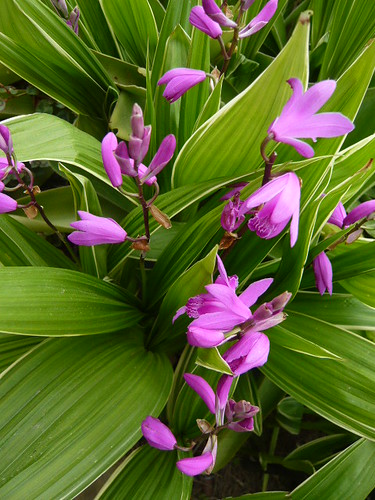
Hols spain 157

It is easy for amateurs to misspell or misname plants and even the experts can get it wrong.

The above plant was named in a botanic garden both as Saxifraga stolonifera and Ophiopogon japonicus. I doubt it is either a saxifraga or a modo grass but it was flowering well and I liked the purple  flowers and white edged leaves.

I would be interested to hear of the correct name if anyone has information on the subject.

Duplicate Species

  • Over the years experts have named   1,000,000+  species but now more than 600,000 species are to be deleted from lists after the most comprehensive assessment of duplication carried out by scientists.
  • ‘For centuries, botanists from different parts of the world have been collecting and naming “new” plants without realising that many were in fact the same. The humble tomato boasts 790 different names, for example, while there are 600 different monikers for the oak tree and its varieties.’ read the rest of this Guardian article.
  • The study of duplicates excludes the impact of hybrids and varietal names.

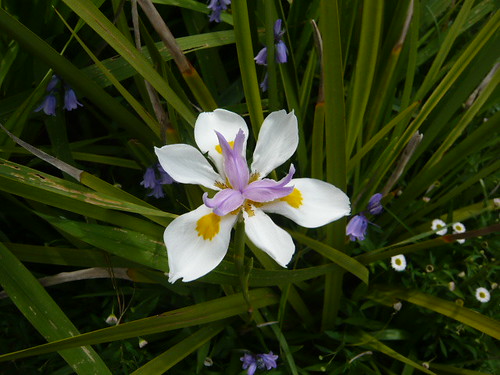
Hols spain 156

I am only guessing when I call this an Iris but it was growing in the same botanic garden in Majorca

Growing and Harvesting Curly Kale

Growing and Harvesting Curly Kale

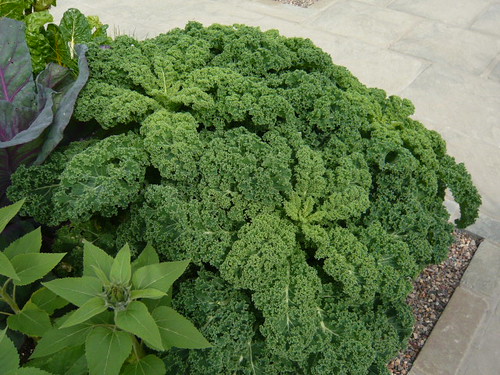
Kale or borecole has returned to popularity as a vegetable. Kale is a form of cabbage Brassica oleracea Acephala and has green or purple leaves.

Growing Curly Kale

  • The leaves do not form a cabbage head but remain open.
  • Some varieties have flat leaves but the flavour and texture is not as refined. These leaves are often used as animal feed.
  • Baby leaves can be used in a salad and have a peppery taste.
  • Black Tuscany Kale has attractive dark green, deeply savoyed, strap-like leaves.
  • The traditional winter hardiness makes this a useful winter to spring vegetable at a time when fresh garden produce is scarce.
  • F1 Kale Reflex has more intensely curled, succulent and nutritious, dark green leaves which stand well without yellowing.
  • Grow Kale from seeds planted in February or March. Some varieties supplied by Thompson Morgan can be grown inside for salads.

Eat the Seasons says ‘Kale is a very handy ingredient for seasonal eaters as it is one of the few green vegetables that is more abundant and flavourful during the coldest months of the year.’

Harvesting Kale

  • Choose a good variety and pick the greenstuff when it is young and tender .
  • Pick from the crown of the plant from November onwards.
  • Remove a few young leaves each time you pick.
  • Use a sharp knife or a sharp downwards tug.
  • Do not gather mature or yellowing leaves for kitchen use as they will be bitter.
  • Stripping of the crown will stimulate the development of succulent side shoots.

For more information on Ornamental Kale read