Browsed by
Category: Gardening

General gardening tips and hints

Plant Names that Match
Plant Names that Match

golden acre gardens leeds

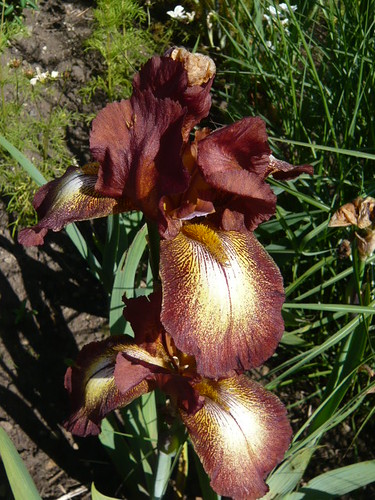
This plant I christened Brown Beard although it may have a registered name, breeders rights or even a plant patent.

It can be fun to select plants because of their name. It may be a persons name or a special event or commemoration that strikes a cord. Gardening should be fun, it is not a competition to see who can remember the most Latin names.

Lily, Rose, Daphne and similar names are easy to match to people (as Daisy and buttercup could be to cows).
When it comes to existing named varieties the Sweet peas and Roses take the bouquet. They have traditionally been named after people usually relatives of the breeder.

Burnby Hall Pocklington

Read More Read More

Growing Indoor Climbing Plants

Growing Indoor Climbing Plants

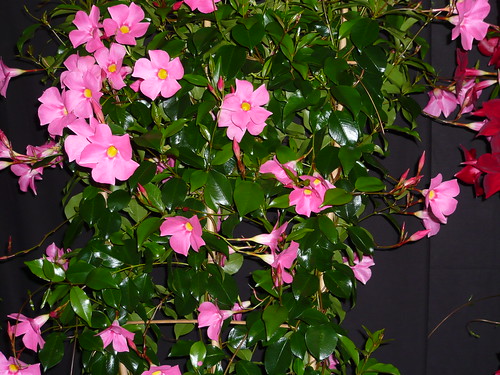
Mandevilla Brazilian Jasmine

Most conservatories have large glass areas and side walls that can be ideal for climbers. Clothing the sides with climbers helps raise the humidity levels and provide shade.

Frost Free Conservatory Plants

  • Passion flowers like Passiflora Amethyist or Passiflora Constance Elliott are nearly hardy even outside.
  • Lapegeria rosea has pink-red bell-shaped blooms from autumn through winter. Use ericaceus compost and train it up a trellis.
  • Annual colour can be provided by morning glories Ipomea lobata.
  • Also an annual Thunbergia Black-eyed Susan are worth considering
  • Evergreen climbers including Ficus and ivies, Rhoicissus rhomboidea Grape ivy, Philodendron scandens Sweetheart vine and Scindapsus aureus Devil’s ivy.

Warmer areas 7º C Plus

  • Bougainvilliea with thrive if given enough space. They grow up to 10′ in a season so beware.
  • Mandevilla Brazilian Jasmine like the one above and Lophopermum are other choices.
  • In smaller conservatories Jamine, Plumbago and Rhodochiton can be kept under control with a bit of trimming.
  • Hoya is a tropical climbing plant with thick leaves and fragrant, waxy flowers.

Supporting Climbers

  • Fix a series of horizontal wires to walls to give the climbers support.
  • On the glass sides fix wires to wooden supports.
  • Alternatively push long canes or trellis into containers for support.
  • Tie twinning stems and tendrils to the supports.
  • Non-clinging plants need more regular tying.
Glasshouse and Greenhouse Preparation

Glasshouse and Greenhouse Preparation

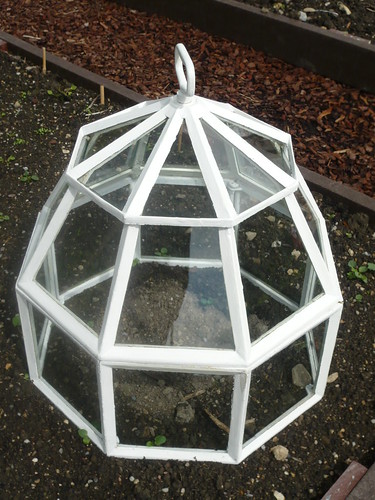
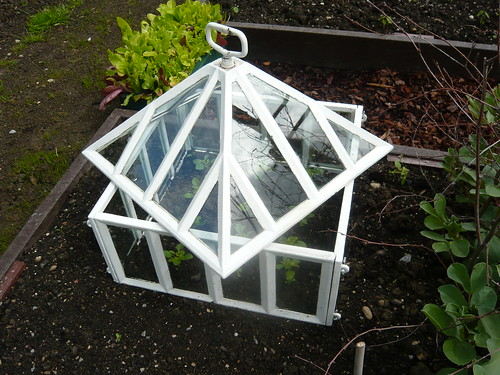
Octagonal cloche

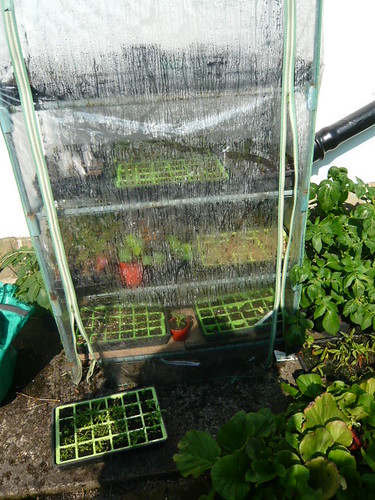
Get the best gardening results from your glass in a cold frame, greenhouse or glasshouse. (The difference I am told is that a glasshouse has controlled conditions).

Preparation  for 2011

  • Make some glasshouse resolutions and stick to them. What will be grown and when. What experiments may be worth trying etc.
  • Plants need light so clean the glass thoroughly inside and out.
  • Take down any bubble wrap insulation and clean with Jeyes fluid. Replace damaged sections before reinstalling.
  • Clean out  guttering and algae from cracks between the glass. A plastic plant label may help you get into tight spaces.
  • Clean and disinfect all surfaces, benches, gravel and capillary matting.
  • Wash any pots taking care to get rid of bugs lurking under rims and on bottoms.
  • Treat wood frames with a wood preservative.
  • Check windows for damage or loose panes.
  • Ventilate well and allow the area to dry
  • Replace any soil or compost according to your resolutions above

Do not forget to clean other equipment like temporary plastic structures, cold frames and cloches.
104

Top Plant Protection

Top Plant Protection

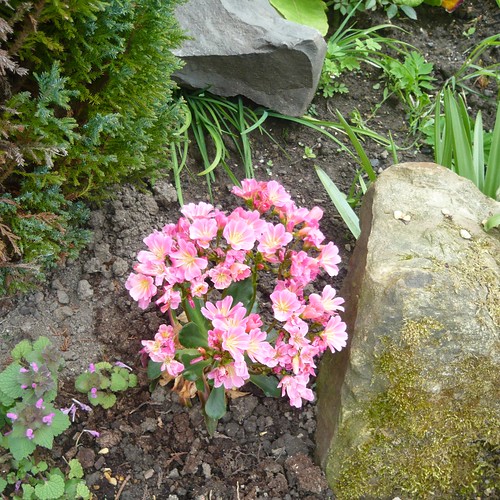
Lewisia

Plants die from too much water more often than any other cause.
Frost and cold damage is the worst winter killer so take precautions.
As a careless gardener I dig up the wrong thing at times and I should protect my plants by taking more care and marking the location of plants that die back.

Keep dormant plants dry

  • Potted plants that become dormant need to be kept dry to avoid root rot.
  • Put a cover of glass or slate over pots of Eucomis and Rhodohypoxis
  • Dahlias and Cannas can be listed or left in pots under the shelter of a house roof

Mulch

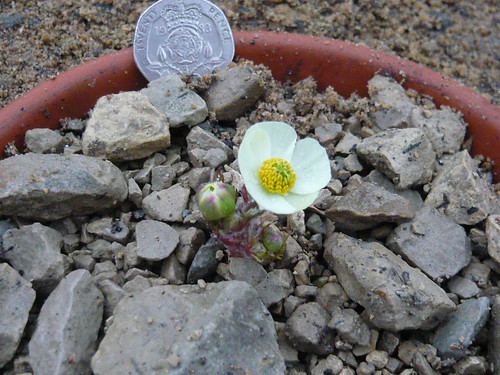
  • Ranunculus  seguieri

  • Cover alpines with a mulch of fine grit. The leaves of Lewisia and other small plants can suffer in the wet.
  • Perennial bulbs of dubious hardiness can be left in the ground if covered with a thick mulch. Hold it down with chicken wire if the area is windy.
  • A thick covering of garden compost protects my hardy Fuchsias, Delphiniums and Peonies through winter.

Wrap and Cosset

  • Tree ferns need to be wrapped in hessian or have a straw blanket wrapped around the crown.
  • Keep the wrapping open for good air circulation or the plant may rot.
  • A wind break can have a surprisingly good effect in protecting some plants.
  • Banana plants should have the trunk well wrapped. The roots will withstand some cold.
  • Fleece is a good blanket for use during inclement conditions.

Shelter

  • Cloche

  • It may seem obvious that a greenhouse can offer winter shelter to tender plants.
  • Agave and Agapanthus will benefit from being under cover during winter.
  • Indoor plants should stay indoors, that is why they are called houseplants. Keep them off cold window sills in winter.
  • Fuchsias and Pelargoniums should be lifted and brought in to a frost free area.
High Fibre Composting

High Fibre Composting

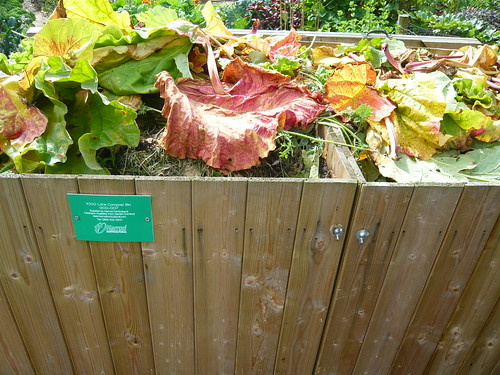
compost bins

A cold composting process with the addition of crumpled paper and torn cardboard has been named High Fibre Composting. Promoted by the Centre for Alternative Technology the compost making process is simple as could be.

Step by Step Cold Composting

  • Add waste to the compost heap or plastic bin as and when it is available.
  • Mix kitchen and garden waste with crumpled paper and torn cardboard.
  • The ratio of waste doesn’t matter but avoid thick layers of any one material.
  • There is no need to turn the heap.
  • The compost should be ready to use in 3 months during summer. In cold weather it will take a little longer.

Pros and Cons of High Fibre Composting

  • As the compost will not heat up weed seeds and plant diseases will not be killed. Do not try compost seed heads and infected plants.
  • Leave the heap open to rain as the heap needs moisture. Water the paper and card if the heap seems dry.
  • Worms are a great help in composting. You can buy extra worms from a fishing tackle shop, go for red worms called ‘Dendrobaena‘.
  • This composting adds carbon back into the soil and will condition your garden.
  • Compost will not have high levels of nutrient so you may need to manure some parts of the garden as well.
  • Given time anything that has grown will rot down using a cold process. However avoid large twigs and lumps of wood and aim for variety of composted material

Enjoy making compost it can be therapeutic for you and the environment.

Sexing Hollies for More Berries

Sexing Hollies for More Berries

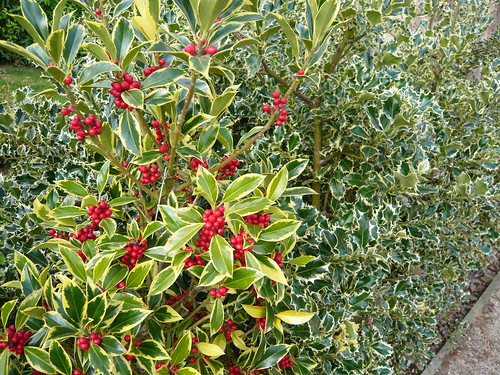
Hollies

Holly or Ilex are a dioecious plants with male and female sexual organs on separate shrubs. Female shrubs bear fruit when pollinated by a separate male plant. If there is no nearby male pollen the female will not berry.

Most plants have bisexual floral structures that contain both male and female reproductive parts. Some times there are separate male and female flowers on the same plant. In both these instances they can self-fertilize but will benefit from cross-fertilization with another plant to improve genetic diversity.

Tips for  Holly Pollination

  • For succesful pollination check your male and female varieties will flower at the same time.
  • Plant a male plant nearby to your female plants.
  • If possible chose a male plant with one parent from the same species as the female.
  • Do not rely on the Holly’s name for determining the sex. (Milk Boy, Golden King and Indian chief are female whilst Victoria and Golden Queen for example are male).
  • Ask your supplier for the right sex plant.
  • Inspect flowers, male plants have stamens but rudimentary carpels. Female flowers have nonfunctional rudimentary stamen.

Pruning Hollies

Read More Read More

Sudden Oak Death & Bleeding Canker

Sudden Oak Death & Bleeding Canker

Beware of Phytophthora ramorum and Phytophthora kernoviaea couple of fungus-like pathogens which affect a range of trees, shrubs and other plants.

  • Ramorum blight or ‘sudden oak death’ is one of the Phytophthora pathogens causing concern in UK woods and forests.
  • Bark canker on oak trees and heavy leaf infestation on the understorey of rhododendrons has led to the death or removal of 4 million trees.
  • Viburnums and Japanese larch are also susceptible to the disease which is in danger of spreading still further.
  • Bleeding canker is a problem for 500,000 Horse Chestnut trees.The inner bark under bleeding patches is usually mottled brown-orange and dead.

These diseases, relatively new to the UK, have been brought in on stock from Asia, Europe and Western USA. The problems could be even worse than Dutch Elm disease so take care.

Action for Gardeners

  • Gardeners should not compost diseased leaves particularly of  viburnum, rhododendron or oaks.
  • Burning  or deep burial are the only safe disposal method.
  • Report any diseased plants to Defra, the Forestry Commission or RHS
  • Disinfect footwear after a walk in the forest.
  • Do not replant of susceptible hosts within 12 feet for at least 3 years.

Download a fact sheet with photographs fera pdf

Cure for Blind Bulbs

Cure for Blind Bulbs

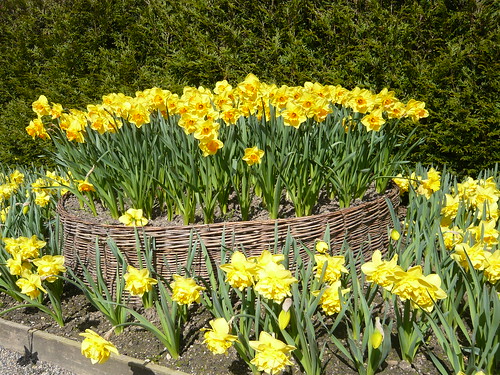
daffodil in willow display

Plants that grow leaves but fail to flower are called ‘Blind’. Often in bulbs such as daffodils, this blindness happens after several successful seasons of flowering.
A crop of strappy green leaves is not what most gardeners aspire too.

Prevention is Better than Cure for Blindness

  • Overcrowding as bulbs multiply congests the plants. Split large clumps and replant when the foliage has just died down.
  • Plant bulbs deep enough. Shallow planting can cause bulbs to be blind. Soil depth 2-3 times the height of the bulb should be above the tip of the bulb.
  • Feed the bulbs with Growmore in spring or a high potash feed if growing in containers.
  • Dry conditions can cause blindness. Water thoroughly and regularly after flowering until foliage dies down naturally.
  • Help bulbs regenerate their strength by leaving leaves on plants and taking seedheads off.
  • Do not knot or tie up the leaves let photosynthesis maximise the bulb size for next year.
  • Do not plant too late in the season and expect a good flower crop.
  • Not true blindness but pests can eat the buds or damage the bulbs so cover with mesh if you are troubled.
  • Young offsets need time to build up to flowering

Some plants are blind for more serious reasons related to their biology. Life can be too short to work on a plant that heredity has decreed it will not flower.
Chose floriferous varieties.
Allow enough time to see if young or recalcitrant plants will flower better in later years.

Other Causes Other Plants

  • Conditions during seed production, as well as during post-harvest processing of the seed can increase blind plants.
  • Germination and growing conditions can have an effect on the occurrence of blind plants.
  • Genetic conditions can have an impact.
  • Blindness in tomato and chillie plants is a disorder concerning the growing point.
Seed Storage Our Best Tips

Seed Storage Our Best Tips

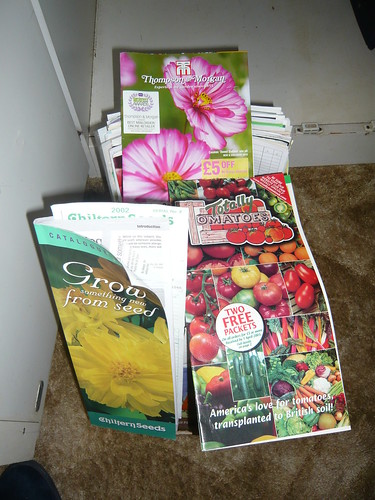
Seed catalogues

‘Fresh is best’ particularly when it come to seeds. However if you have a surplus of seed that you can’t sow immediately they should be stored in a moisture proof container at a low temperature. A fridge compartment is ideal.

Storing Seed

  • Although the majority of seed will remain viable for a year or two, when kept at room temperature, cold storage extends the life considerably.
  • Never store seeds in a greenhouse or garden shed. The high temperature and humidity can kill off the seed in a matter of weeks.
  • Seeds in foil wrappers should be left unopened until ready for sowing.
  • Seed from seed exchanges or collected from your own garden should be sown as soon as practical. (Tender plants may need to wait until March-May)
  • Parsnip seed is not suitable for storing, it needs sowing in the first year.
  • Curcurbits (cucumber and courgettes) will remain viable as seeds for 5-7 years
  • Beware old seed from shops that may also have got too warm. Faded packets, slow sales levels and close use by dates are tell tale signs.

Buy a special seed storage box from amazon for less than £10 or the Burgon and Ball Seed Packet Organiser £19.95

Seed Storage Banks

Kew have a worldwide reputation for seed storage. They divide seed into classes:

  • Orthodox seeds can be dried, without damage, to low moisture contents, usually much lower than those they would normally achieve in nature. Over a wide range of storage environments their longevity increases with reductions in both moisture content and temperature, in a quantifiable and predictable way.

    Read More Read More

Pond Plants and Pond Care

Pond Plants and Pond Care

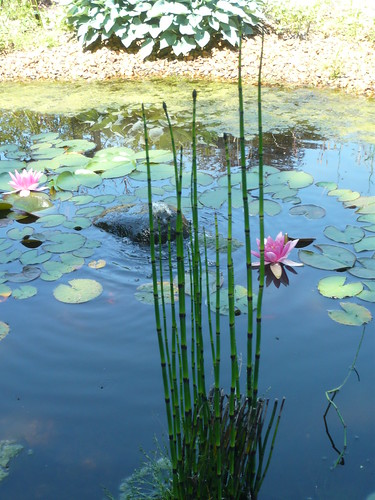
Green Island Triffid

A garden pond can become a miniature nature reserve. Wildlife benefits from the watery environment as do the plants selected below.

Pond Zones

1. The Pond side or Bog area are on the edge of the pond and get their damp  soil from the pond.

2. & 3. Zones are in the shallows around the edge of the pond. They are usually created on shelves near the edge and help amphibians escape the water and are useful for marginal plants.

4. The deeper part of the pond down to the bottom. Containers raised on bricks can help vary the depth of the pond to suit particular plants.

5. This zone is a floating area for plants that do not need to put down roots. This zone is used by oxygenators.

Selection Of Plants

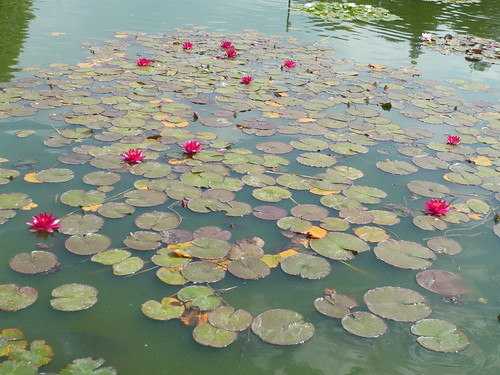
  • Water lilies flower in strong colours between May and September. Zone 4 planting in sunken baskets full of loam. Leaves shade the water which is then loved by fish.
  • Marginal plants like Saururus cernuus (Lizard’s Tail), Oenanthe Flamingo (grown for it’s leaves) and Iris pseudocarpus are zone 2 plants.
  • Pond side I love to see Lobelia Queen Victoria or Iris ensata with some golden rushes Acorus ogon.
  • Native plants for the edges include Water Mint, Creeping Jenny, Purple Loosestrife or Marsh Marigolds. They give a natural feel to a large pond area.

Burnby Hall Pocklington water lilies

Read More Read More