Browsed by
Category: Gardening

General gardening tips and hints

Todays Top Ten Tips

Todays Top Ten Tips

September 6th 2011

  1. Despite the grey overcast skies of the last few weeks there has been very little rain and the soil is dry. Water where needed, particularly the Rhododendrons that are currently filling out their the buds for next years flowers.
  2. It is not too late to deadhead your Pelargoniums ( many people call them Geraniums). They will flower until the first frost or when the daylight fails them.
  3. Pick your ripe tomatoes and strip off any remaining leaves so what little sun we get can ripen off the remainder.
  4. Order your seeds for next year. You can sow many hardy annuals, biennials and broad beans for a quick start next spring.
  5. Turn your compost to get air into the pile of summer grass cuttings and mixed waste. This reheats the rotting process.
  6. Shred or chop twiggy waste and old stems as you put them on to your compost heap to help them rot down.
  7. Tie in Raspberry canes, climbing rose stems and any growth that you think may be damaged by high winds.
  8. Clean the greenhouse glass to maximise the light.
  9. Tidy dead leaves and garden detritus that may harbor pests and diseases.
  10. Give house plants maximum light and continue with a week feed.

September Crab Apple John Downie
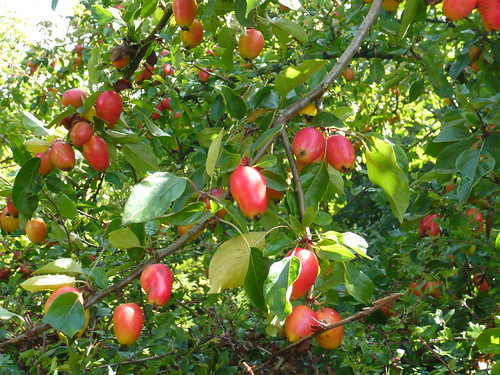
crab apple

How To Take Cuttings for Big Shrubs

How To Take Cuttings for Big Shrubs

Forget 6 inch cuttings, for bigger shrubs use bigger cuttings. Giant cuttings of 18-36 inches may be worthwhile on the following:- Cistus, Euonymous, Hebe, Leycesteria, Weigelia, Pyracantha or Kerria japonica. I have a friend who excels with Roses taken this way.
Also read Gardeners tips Taking cuttings for beginners

Proceedure for Cuttings

  • Water the host plant well the evening before taking cuttings.
  • Take cutting early in the day, keep out of the sun and spray with water to minimise wilting.
  • Select a shoot with plenty of new growth. Cut it off cleanly at the base where it comes from a branch or cut below a swelling leaf node instead.
  • Remove any flowers, lower leaves and soft tips by pinching out
  • If the cutting has a woody bark remove a sliver an inch long to aid rooting.
  • Have available one litre pots full of a free draining mix of grit and multipurpose compost.
  • Dip the end of the cutting in fresh hormone rooting compound, such as Murphy’s, plant and water in
  • Place in a humid environment eg. a plastic bag over the pot supported by canes, so leaves don’t touch the sides, and tied with a rubber band.
  • Keep in a shady spot removing dead leaves regularly.
  • In about 5-6 weeks, when rooted, acclimatise to outside conditions and overwinter in a sheltered spot
  • Plant out in March

Climber Cutting Tips

Read More Read More

Local Show Tips

Local Show Tips

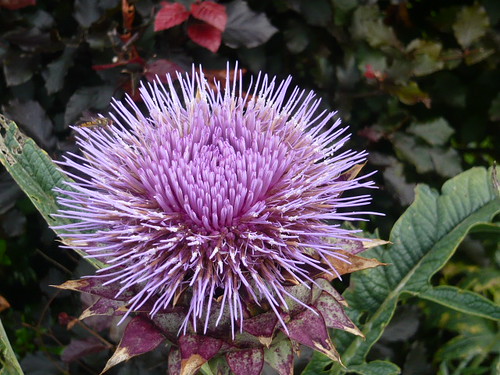
Cynara cardunculus

I entered 10 classes in our village show including a vase of flowers with these Cynar cardunculus. The rules were to have a minimum of three varieties so I included some Sedum and Buddleia to give an Autumn feel to the vase. On the ‘basis of less is more’ I threw away a lot of flowers I had taken but didn’t use. I ended up with a second prize to a marvelous display of umpteen varieties in an airy display.

Local Show Tips on Time

  • Arrive for benching within the stipulated hours and remember it will take you longer than you expect. It gets just as rushed as Chelsea even for your village show.
  • Allow time for tweaking your exhibits, turning to best advantage and cleaning around your exhibit.
  • Judging will be at a set time when everyone had to leave the hall and our show opened to visitors in the afternoon.
  • Speeches, raffles and prize giving took up ‘gardening time’ towards the end of the show before the uncollected exhibits were auctioned off.

Local Show Tips – Presentation

  • Standard vases were provided for floral displays but fruit, vegetables and potted plants used your own imagination.
  • Onions were displayed on sand or rings except some giants that stood out on there own.
  • I entered 3 fruit classes and stood the apples on squares of white paper. I left the natural ‘bloom’ on the apples and came second, again, to some highly polished smaller fruit. (What to do next year?)
  • Several exhibits were mounted on doilies which probably says something about the age of our village. (Seriously with lots of classes for children there were lots of young villagers around.)
  • The best tip I have is aim for zero imperfections, a good small one will beat a big imperfect specimen.
  • Keep the exhibit clean and tidy using only black or white presentation aids.

Local Show Tip – Keep Too Schedule

  • Read the schedule if it says 5 items they do not mean 4 or 6, even if you think it looks better.
  • Make sure you are in the right class and leave the correct marker. We are give a reference ticket to leave under our exhibit so the judges do not know whose entry they are judging but can get a subsequent reference back.
  • I may have been disqualified in the french bean class when I entered flat pole beans, anyway they were nowhere near good enough.

End of the Show

  • I may not have thanked the organisers and volunteers adequately at the Menston 2011 Show so I do so now.
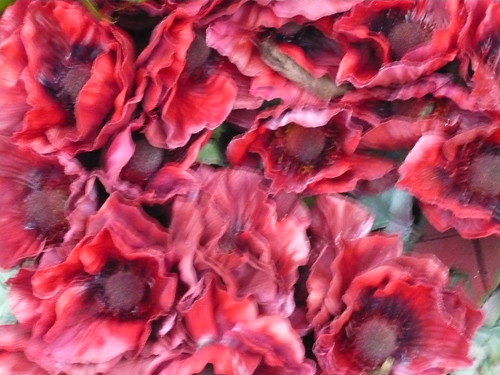
  • Our show will donate the proceeds to the Royal British Legion 90th anniversary appeal. They had a stand, bunting and poppies on display
  • Local shows are for fun and it is the taking part rather than the winning.
  • However you can get a first by being the only entry in a class or in my case by being lucky on one entry. ( not my Pelargoniums or Fuchsias unfortunately)

11.11.Poppies

Read more about Growing Show Gladioli and Show Shallots.

Check out Giant Pumpkin Growing Tips

Winter is Coming to Your Garden

Winter is Coming to Your Garden

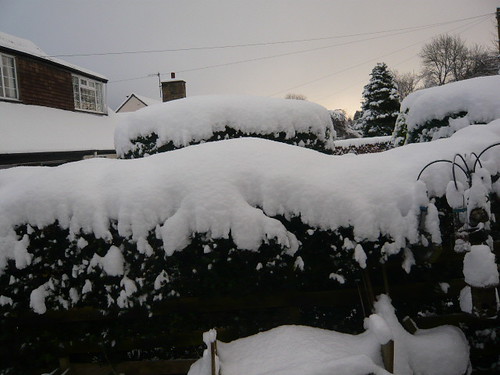
Snow garden

First the bad news! The London Met Office has warned that the winter 2011/12 will be similar to our last three winters with cold and snow caused by high pressure trapped around our Islands.
Now the good news! These long range forecasts are usually rubbish and the opposite may be true.

Even better news for your garden is if you prepare in advance and now is your big opportunity to plan and execute.

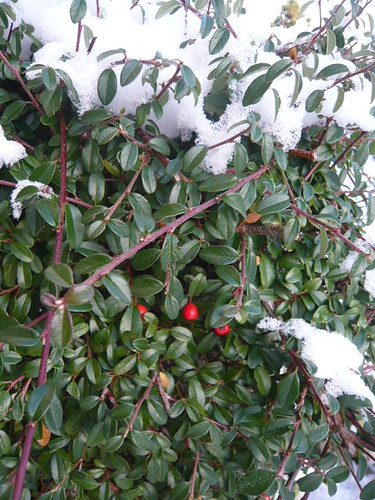
Hedgerow berries

Gardeners Tips Preparing for Winter

  • Leave the berries on your shrubs to provide food and energy for birds.
  • Do not be excessively tidy, piles of leaves and twigs make safe havens for overwintering wild life.
  • Stake susceptible trees and check ties to avoid wind damage.
  • Bring all none frost proof containers into shelter. Wrap tender subjects in hessian.
  • Take cuttings of plants you want to try overwinter just in case. Keep them in frost free conditions.
  • Do not worry snow is a good insulator but the weight can bend even strong branches so be prepared to knock it off before it piles up.

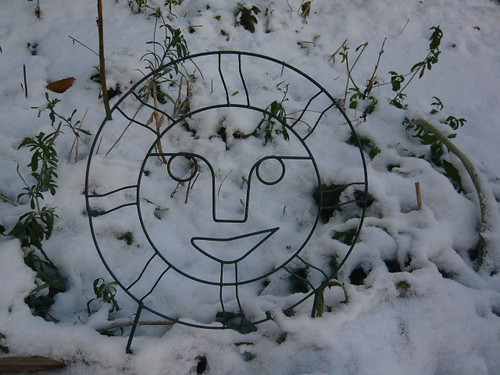
Smile you are on Candid camera

Keep Smiling Plan for Spring Round the Corner

  • Buy and plant bulbs to cheer yourself up during warm spells.
  • Winter pansies, wallflowers, primulas and other plants planted now can get spring off to a colourful start.
  • Get construction and heavy maintenance jobs out of the way so you can concentrate on plants and gardening when the weather improves.
  • Dig your vegetable patch and leave large clods of earth to be broken down by the frost.
  • Sit back, buy your seeds from the many catalogues or mail order and dream of warm spring and summer next year.
Grow Seedheads for Wild Life

Grow Seedheads for Wild Life

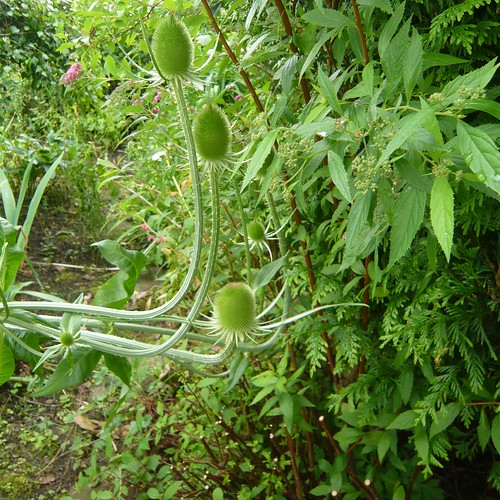
Teasel seedheads

What you can do to help feed wild life and your garden birds.

  • Leave seed heads on your plants like the Teasel (above) which are great for Goldfinches
  • Small mammals like the bigger seeds such as nasturtiums and pulses. Peas and beans can be left on plant not only to collect seeds for next year but as a food for wildlife.
  • Berries are looking good at the moment. Enjoy their looks and as they ripen the birds will also enjoy them as dinner. Pyracantha and cotoneaster seem to be favourites at the moment.
  • Most importantly plan now to have more seed heads for next year
  • Do not be over keen to tidy up. A rough area encourages insects many of which like a feast of seeds. Insects are also more than food for thought.
  • Sun flowers are popular so try several varieties  from a seed catalogue
  • Grasses with plumes and arching flowers look good and taste good
  • Echinacea and Amaranthus are prolific seeders

Try reading a specialist book for more ideas Seedheads in the Garden

Book Cover

I have often wondered if birds and insects can tell different flavours of seeds. Humans could tell an Allium from a Sunflower or a Poppy from a Dill seed so may be wild life can too.

allium seedheads

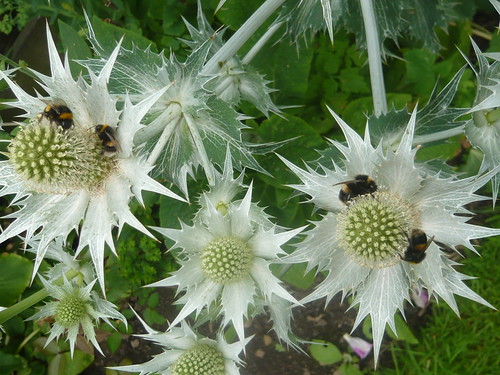
Sea Holly or Eryngium giganteum variety Miss Willmotts Ghost (below) will produce seedheads full of nutritious seeds for the birds and insects.
With all that pollination going on I am not surprised.
Willmotts Ghost

Hedgerows

  • One of the best places to grow seeds is in your hedges.
  • Wild life has shelter safety and food on tap in a hedgerow.
  • You do not need to have an untidy area of the garden.
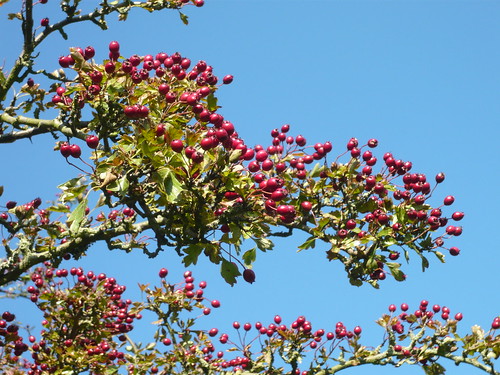
  • Haws

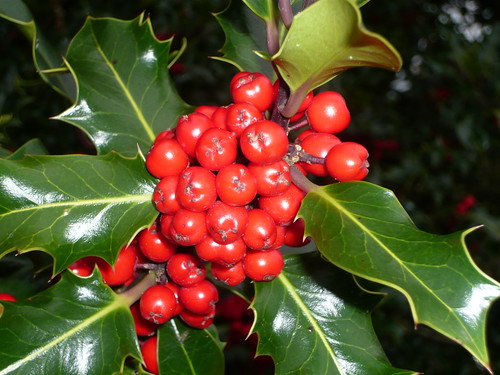
    Hawthorn and Holly are two typically British hedgerow plants that feed our native wild life.

    Holly in the Wild

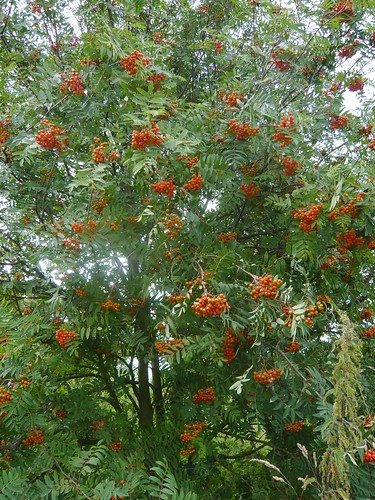
    For a slender and graceful specimen tree that will help feed wild life you could try growing a Mountain Ash, The Rowan or Sorbus aucuparia

    mountain ash

    For those without the desire to grow there own seeds for the benefit of wildlife then there are many great feed mixes available. RSPB supply in large sacks and there are a host of other retailers.
    Please be consistent if you start to feed with bought seed products and wildlife become reliant on your supply.

    Read Pollinators for Green Gardening

Plant Pots that Push the Boat Out

Plant Pots that Push the Boat Out

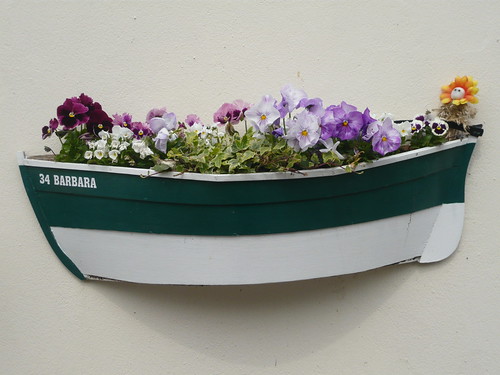
Scarborough

If bunches of flowers can be arranged in a wide variety of containers and vases why not growing plants.

I liked this boat on a wall at Scarborough which was cheerfully full of Pansies. The variegated Ivy provided a bit of light green colour and texture and even the plastic sunflower was not out of place.

Tips for Unusual Plant Holders

  • If you make a creative container ensure there is drainage so plants do not drown. I guess these boats were holed below the plimsoll line!
  • Containers under the eaves of houses or in a rain shadow from the wall will need watering more frequently.
  • Ensure the container can hold enough compost or soil for a good root run.
  • Use water retaining gel or special container compost.
  • Pick of dead flowerheads to encourage new blooms.


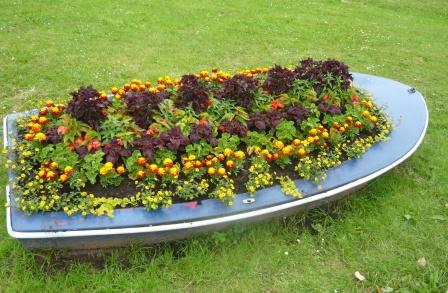
This boat was in a park at Ross on Wye and it would be hard to tend the plants in the middle as the boat was quite large. It creates a whole new mean to houseboat as this is a real gardenboat.


Read Collecting Containers and Growing Veg in containers

Seed Sowing March

Seed Sowing March

107

A great time to be getting your first crop of seeds sown.

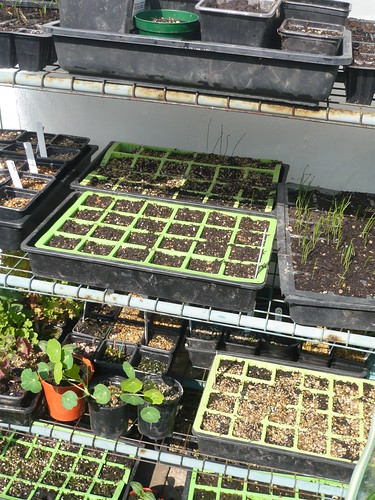
The RHS seeds I ordered were late arriving but landed last week so I have 21 packets to sow this morning.

Covering Seeds

  • There is no need to cover very fine seeds or seeds that need light to germinate. This includes Begonia, Alliums, and Roscoea for example.
  • Covered with a layer of vermiculite most seeds will germinate in 30 days. If covering with compost reduce the depth of cover to little more than the size of the seed.
  • Slower germinating seeds should be covered with grit instead of vermiculite.
  • Place a glass or plastic propagating cover over the top to retain humidity and provide early protection. Ventilate as soon as seeds germinate.

Special Seed Treatments

  • Cold moist stratification involves giving seeds a period of frost or cold to break dormancy. These seeds may take over a year to germinate so do not give up hope. Try 12 weeks in the fridge if there is room.
  • Chipping (nicked with a knife or sandpaper) or softening seed coats may be needed for hard covered seeds like Lupins and Sweetpeas. This is to allow water to enter and start the germination proocess.
  • Warm stratification may be necessary to mature an embryo. Put the seeds in damp compost in an airing cupboard for a couple of weeks prior to sowing.

General Seed Sowing Tips

  • Use commonsense and read the seed packet. Follow the instructions where practical rather than slavishly.
  • Seeds are pre-programmed to grow to maintain the survival of the species – just give them half a chance.
  • Some seedlings resent root disturbance so sow where you want them to grow or in individual pots of a suitable size for the ultimate plant.
  • Do not be too greedy by planting too close, better 5 good plants than 20 poor weedy specimens.
  • Match the growing medium to the size of the seeds. Sow fine seeds in fine compost and bigger seeds in rougher compost
  • Beware of damping off – seedlings dying due to fungus before they grow leaves.


Read Seed Storage tips and When to sow seeds


Apple Spray Programme

Apple Spray Programme

Apple blossom

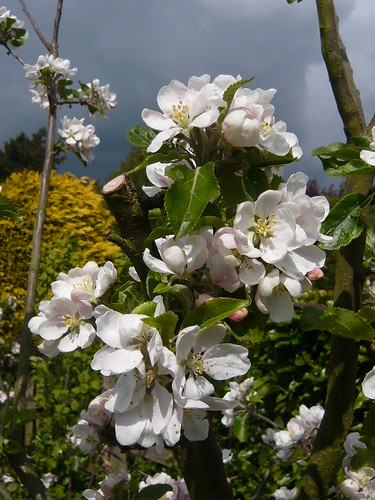
Apple trees can fall prey to a variety of problems.  Start spraying now!
This programme will control capsid, sawfly, wooly aphid, winter moth and codling moth insects. It also should help prevent or treat scab and mildew.

When to Spray

  • When dormant in winter I sprayed with Mortegg tar oil until it was banned by the EU. Now you need to buy a winter wash.
  • At bud burst spray a combination of Tumblebug and a fungicide like Systhane.
  • Again as green buds then pink buds appear a similar spray is needed.
  • At petal fall the worry is aphids so another spray may be needed.
  • For codling moth infestations spray Tumblebug once a month from mid June.
  • I do not spray once the fruitlets have set.
  • Savona is a fatty acid based non-toxic spray that kills by contact and leaves no residue

Organic Spraying

  • ehow have a list of spray methods that use such organic products as oil, copper sulphate, sulphur, Bacillus thuringiensis, and pyrethrin. Only nthe last of these would I think of as organic. see link
  • Best solution is no solution to be sprayed. Grow resistant varieties and wrap fruit in paperbags to keep insects off.
  • Make your own solution from garlic water or one of these recipies
  • Grease bands are worth placing on the trunks of trees each autumn.
Rose Pruning Tips for Healthy Roses

Rose Pruning Tips for Healthy Roses

Peace Rose

It pays to understand the Rose you are going to prune. Shrub roses flower on the previous years wood. Hybrid Tea and Floribunda flower on new wood.

Shrub Roses  (Light pruning)

  • Some flower only once per season, others are repeat flowering.
  • Both types can be congested and prone to disease if not thinned yearly.
  • Non-repeat flowerers are best pruned lightly after flowering.
  • Repeat flowerers can be pruned when dormant taking out slightly more wood.
  • Prune to allow air and light into the shrub.
  • Encourage new growth from the base cut back an occasional old stems to ground level.
  • Light, tip pruning of side shoots helps keep a compact habit

Hybrid Tea Roses  (Hard pruning)

  • HT’s are vigorous plants usually producing a single bloom at the end of each shoot.
  • To encourage new wood on which they flower, ‘harder the pruning the better the flowering’.
  • Shorten stems to about 8″ from the ground
  • Remove all weak shoots entirely.
  • In warm areas cutting back can be slightly less severe 10-12″

Floribunda Roses (Medium Pruning)

  • Floribundas produce flowers in clusters at the end of shoots.
  • A treatment between that for shrubs and HTs works best.
  • Aim to cut to an outfacing bud 2-3″ above last years cut. Once a stem has 3or4 steps in it then cut into old wood.
  • Shorten main stems to 12″ from the ground. Remove weak stems.

Generic Rose Pruning Tips

  • The best time to prune is as roses start into growth. From mid February in the UK.
  • Aim to keep the centre open.
  • Cut out dead and diseased wood then destroy.
  • Cut out crossing or rubbing branches.
  • Newly planted bare rooted shrubs can be pruned to an outfacing bud 3″ high. This helps start a good framework for future years.
  • Deadhead after flowering cutting back to where fresh growth is maturing.

For Climbing and Rambling rose pruning read

Wake up Wildlife after Winter

Wake up Wildlife after Winter

Aphorisms by Sri Chinmoy

As days get longer and light levels increase you will see renewed activity from the wild life in your garden. Do not be too quick with the chemical controls but look to see what you can do to maintain a balanced eco-friendly environment.
Many hibernating creatures eat slugs and pests so they are worth looking after.

Birds

  • By March as gardens start to warm up the birds will be more active and visible.
  • Some birds will be more territorial in spring.
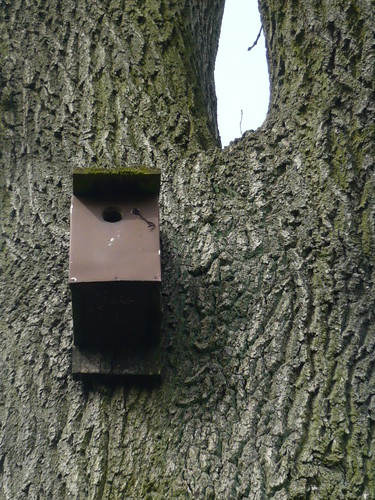
  • Nest boxes can be put up at anytime of the year.
  • If there are few natural nesting sites a ready made box may help.
  • Clean out existing boxes to remove parasites.
  • Breeding birds need to be fit so keep feeding through spring and summer.

Amphibians and Hedgehogs

  • Frogs and toads will soon start to produce spawn.
  • Take care around damp ground so you do not disturb Frogs and Newts   prematurely from hibernation.
  • Be careful cleaning out ponds, raking up wet leaves or moving wood piles.
  • Wildlife may be hungry after hibernation and a hard winter. A small plate of dog food will help hedgehogs.
  • Dry and safe places to awaken from hibernation are key.

Bird box