Browsed by
Category: Environment & Green Gardening

Tips for ecologically friendly gardeners and gardens that green and protect the environment.

Carbon Neutral Garden

Carbon Neutral Garden

tree

They are not making ‘Carbon’ anymore nor is carbon ever totally destroyed. Carbon is one of natures greatest recycling projects. Carbon is present in gaseous form like Methane(CH4), Carbon dioxide(CO2) and Carbon monoxide(CO). Carbon is also dissolved in water particularly the oceans but is naturally present most notably as a solid in rocks such as limestone, minerals like oil and coal plus trees and plant matter.

Do you think about the carbon cycle?

Is your garden carbon neutral?

Are you offsetting your own carbon emissions?

Environmental Benefits of Planting Trees

Common Sense Carbon Neutral

Read More Read More

If in Drought – Try Xeriscaping your Garden

If in Drought – Try Xeriscaping your Garden

Lithrope

If you are doubtful about this summer’s British weather, and how can you be otherwise, then you may need some tips on watering your garden.

Xeriscaping is the creation of a garden that uses less wate
r. No grass to cut, drought tolerant plants and appropriate landscaping are what you need.

Xeriscaping and Other Watering Tips

  • Pull up weeds as soon as they start drinking your water.
  • Plan and plant wind breaks to stop drying winds.
  • Use plants that generally require less water. Grey and silver plants often need less water.
  • Give one good weekly soaking not daily dribbles.
  • Add humus to the soil to retain water and mulch the surface of the soil.
  • Use larger containers rather than hanging baskets, they are easier to water.
  • Use capillary matting in the greenhouse to aid watering

Water Saving Tips

Read More Read More

Get Butterflies in Your Garden

Get Butterflies in Your Garden

Butterfly

16 million gardens adds up to two million acres of garden in the UK. A fantastic resource for food, pastimes, study and wild life.

Butterflies can benefit from the way we garden and provide extra colour and visual enjoyment. Here are some tips to help provide food and shelter whilst creating a good garden.

Caterpillar Food Plants

  • Nettles are a good food for one of our largest butterflies the Red Admiral.
  • Grow nasturtiums near your veg patch to lure white butterfly and their caterpillars away.
  • Grass is a key food and safe haven for many species. Leave a long uncut patch where they can overwinter.
  • Wildflowers used to be available in hedgerows and meadows but so much habitat has been destroyed. You can plant wild flower seeds of local species in your own wildflower patch.
  • The small Holly Blue butterfly and some moths eat Holly and Ivy.
  • White flowers are popular with some species for the camouflage effect.
  • Bird’s-foot trefoil (Lotus corniculatus) is good food for larvae of the Common Blue and also provides nectar.
  • Sunflowers and thistles support Painted Ladies
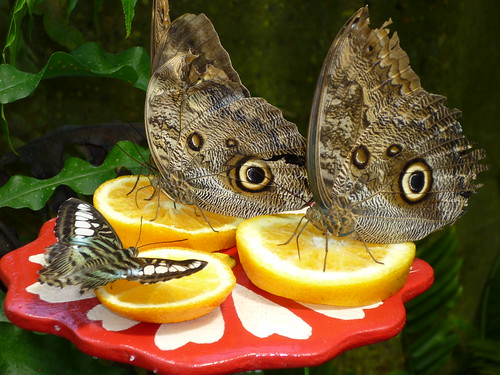
Feeding Time

Butterfly Nectar Plants

  1. Lavender
  2. Origano
  3. Red Valerian
  4. Sedum Ice Plants
  5. Buddleia white or mauve
  6. Michaelmas Daisy
  7. Aubretia
  8. French Marigold
  9. Candytuft
  10. Hebe
  11. Verbena bonariensis
  12. Perennial Wallflower Bowles mauve

Even a window box or container plants can provide energy giving nectar to hungry butterflies. Butterflies like sunshine and will feed more happily if the plants are in a warm sunny spot.

Butterfly
Resources

Alain Picard photographs from Canada under creative commons license on flickr
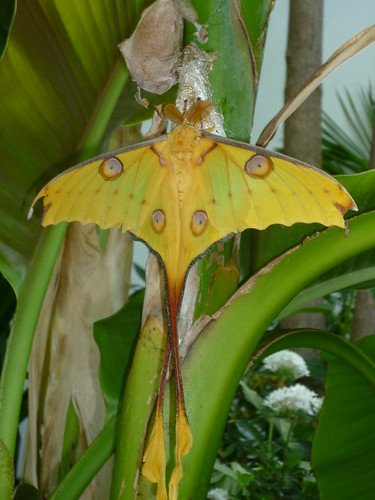
Comet moth (Argema mittrei) emerging from cocoon

Butterfly Conservation.org Said ‘Butterfly numbers in the UK have been declining for decades and in recent years this trend has been accelerating. Numbers of Small Tortoiseshell have declined by 68 per cent and the Peacock by 30 per cent during the 2000s.
Five species of butterfly have already become extinct in the UK and more than half of the 56 remaining species are threatened with extinction. Planting for Butterflies is a chance to reverse this decline. Just put some Lavender in a pot or a bit of Buddleia in your flower bed and you can help make a difference.’

A-Z of British Butterflies

Butterfly seed mixture from Thompson & Morgan
How to attract butterflies in your garden
Create a butterfly Garden

The Butterfly Isles: A Summer in Search of Our Emperors and Admirals by Patrick Barkham from Amazon

Book Cover

Other Photo credits
Butterfly by Alain Picard
Comet moth (Argema mittrei) emerging from cocoon by Kew CC BY-NC-SA 2.0
Feeding Time by Kew CC BY-NC-SA 2.0
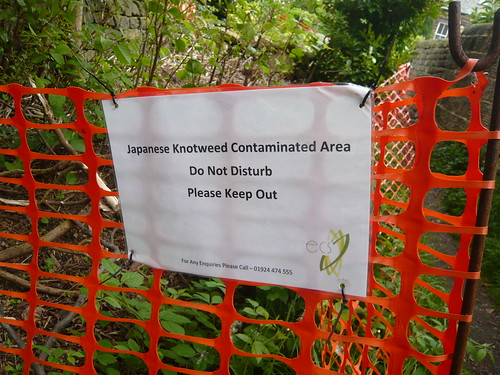
Warning – Problems of Japanese Knotweed

Warning – Problems of Japanese Knotweed

Knotweed problems have not gone away but panic isn’t the solution.
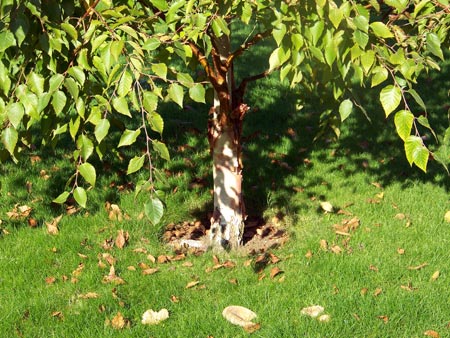
Not Knotweed

Warning About Knotweed

  • It is an offence to plant or otherwise cause the Japanese Knotweed to grow in the wild.
  • Japanese Knotweed is classed as ‘controlled waste’ and as such must be disposed of safely at a licensed landfill site and buried to a depth of at least 5 m.
  • This law also applies to the surrounding soil.
  • Infringement can result in an unlimited fine and you can also be held liable for costs incurred from the spread of Knotweed into adjacent properties.

Read More Read More

Pollinators For Green Gardening

Pollinators For Green Gardening

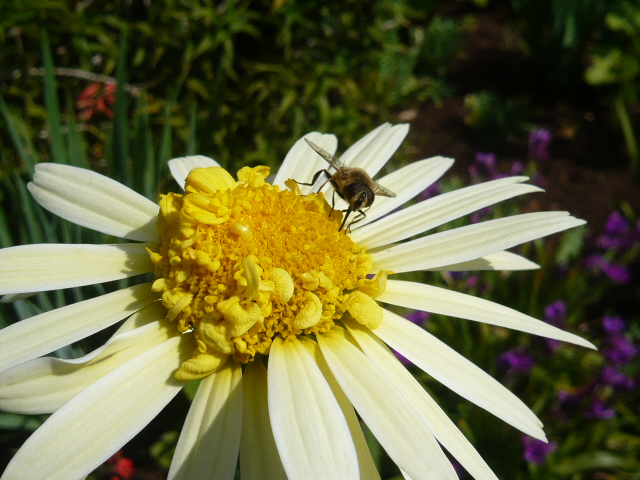
Flowers in May

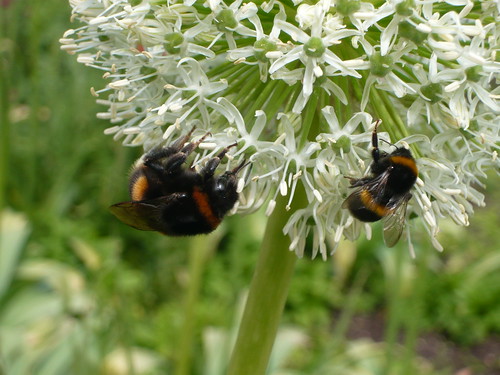
The press have had a field day talking about the reduction in the numbers of bees. It is a problem gardeners can do a bit about but bees are not the only pollinators that need a timely helping hand.

Habitat for Pollinators

  • Health and safety are issues for insects just as they are for gardeners. Look after both.
  • Often forgotten, but insects need a source of fresh water. A shallow sloping bowl will provide a landing place for safe drinking.
  • Insects can be predatory but that is nature. Gardeners need to cater for all life and insects down the food chain to give beneficial insects the best chance of survival.
  • Pollen and nectar are key food sources for insects. see below.
  • Do not be obsessively tidy, leave places to hide, breed and sleep.
  • A log pile, rough grass, bed of nettles, brambles, old plant stems and ivy are worth cultivation ( I mean having but not cultivating)

Pollination

Health Issues for Pollinators

  • Do not use insecticides!
  • Do not use herbicides, they will kill off useful plants and chemical residues can alter the natural balance in a garden.
  • The aim should be to have a balance with nature allowing all living things a space in the green garden.
  • Pollination is less of an issue for the gardener who basically just wants healthy plants that are resistant to attack from all the environment can throw at them. In these cases optimum gardening can come from Integrated Pest Management or IPM.

Bee Happy

Food Sources For Pollinators

  • Flowers are key to feeding many insects.
  • Single flowers where the centre is accessible are great. Asters, daisies, herbs, dahlias, sages and buddleia are known for attracting insects
  • Native species of plant and wild flowers are likely to provide appropriate food sources rather than exotic imported or over bred or F1 plants.
  • Grow flowers for July and August when nectar and pollen food sources are surprisingly scarce.
  • Clover and lawn daisies can be encouraged in a lightly mown lawn.
  • Pot plants can add to the food store via cosmos, marigolds, tagetes and toadflax.
  • Grow plants that open sequentially up the stem like foxgloves so bees can feed without having to seek out new sources.

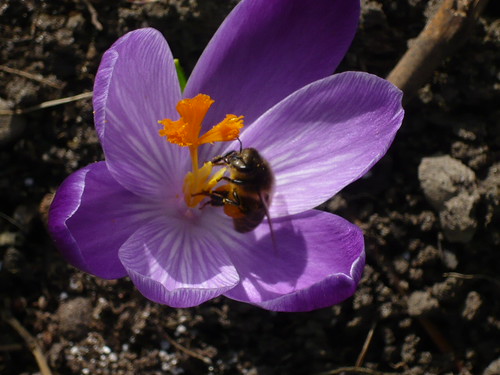
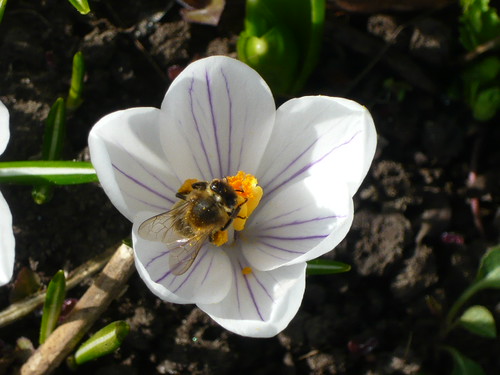
Pollination crocus

Pollinators Other than Bees

  • Mites, Ants and creepy crawlies.
  • Wind can blow pollen from one plant to another. Just look at the catkin pollen that gets blown around in spring or grass pollen on high pollen count days.
  • Moths and butterflies, birds, bats and beetles can often be species specific pollinators. Plants attract the pollinators they need by scent, colour and a range of individual techniques.

.
Credits
Pollination Makes The World Go Around
Sympathy Planting and Vegetable Pollination
Grow Seedheads for Wild Life
Pollination of Crocus by Insects
Sarah Raven and Daily Telegraph for some of the food plant ideas.

What is Integrated Pest Management
Integrated Pest Management (IPM) is an effective and environmentally sensitive approach to pest management that relies on a combination of common-sense practices. IPM programs use current, comprehensive information on the life cycles of pests and their interaction with the environment. This information, in combination with available pest control methods, is used to manage pest damage by the most economical means, and with the least possible hazard to people, property, and the environment. Read more USA gov

Integrated Pest Management books from Amazon

Organic Pond Habitats for Green Gardeners

Organic Pond Habitats for Green Gardeners

Book Cover

One of the best habitats that a gardener can create is one containing water. Ponds, bog gardens, streams or just a bird bath, all forms of water do their bit for the green gardener. ‘….ponds are one of the most appealing and vibrant small-scale wildlife habitats. Almost one in ten British gardens actually have a pond…’ according to Wildlife Trusts in their Wildlife Pond Handbook by Louise Bardsley

Who Uses a Pond Habitat

  • Frogs, toads and newts use ponds to breed.
  • Insects and worms use ponds for food and as dwelling places.
  • Birds like a drink of water and an occasional bath and butterflies like a drink too.
  • Fish add to the charm of a pond but unfortunately provide food for visiting herons in my garden.

Type of Pond Habitat

  • The larger the expanse of water the better in terms of environmental impact.
  • Preformed ponds are popular for the smaller garden. Made from rigid plastic or rubber they are long lasting and easy to install.
  • You can make your own pond and shape it with butyl liner.
  • Ensure your pond has an area where the depth is two feet or more to prevent a total freeze up.
  • The pond should have at least one gentle slope or beach area where wildlife can access the pond.
  • Fill the pond and let it stand for two weeks before adding fish and plants

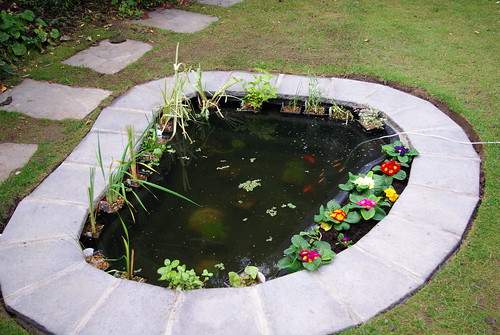
Garden Pond with fish

Plants for your Pond

  • Oxygenators such as Myriophyllum spicatum use up excess nutrients and supply oxygen to the pond.
  • Floating plants can drift on the surface and curb the growth of unwanted algae. Try frogbit Hydrocharis morsus-ranae.
  • Avoid balnket weed and invasive Myriophyllum aquaticum
  • The choice of ornamental plants is large from Water lilies through to Iris

Organic Tips for your Pond

  • Submerge a bag containing barley straw in the pond in early spring. This contains a natural algicide and will help control blanket weed which grows in the sun.
  • Use a rake to remove excess blanket weed but leave it on the side of the pond so creatures can return to the water rather than ending up on the compost heap.
  • A balanced pond without too many fish will not need any extra additional chemicals or food supply.
  • Rocks and rounded pebbles can enhance the surrounding area and build island habitats. Use local and ‘found’ stone.

Book Cover

Other Interesting Pond Related matters

Frog Spawn hints and tips
More Tips on growing Water Lilies
Ecology of water in the garden
Dealing with weeds in ponds
Pond plants and pond care
Gardening with water features

Credits Garden Pond with fish by pnt103 CC BY-NC-SA 2.0

DIY Worm Bin or Organic Wormery

DIY Worm Bin or Organic Wormery

A juicy tip for good fertiliser. Collect the liquid from a wormery, dilute it and use as a foliar feed.
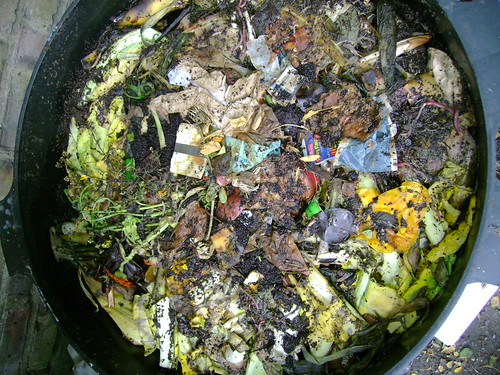
Wormery Top Level: Food Waste

Why have a Worm Bin

  • Worms can efficiently convert kitchen waste in to compost.
  • A free, liquid, organic fertiliser is also produced. Dilute it 10 fold and use on crops and flower beds.
  • Worms bins should be treated as fun. The tiger or brandling worms need feeding and looking after like other pets.
  • A three tier worm bin allows access to finished compost without disturbing the worms good work
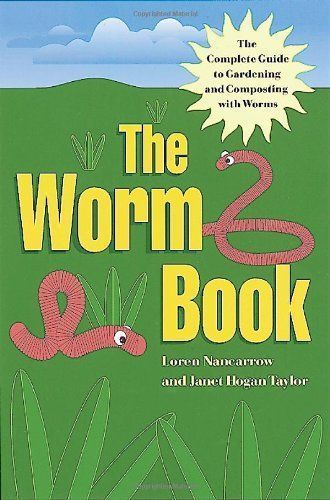
  • Read and be enthralled by The Worm Book

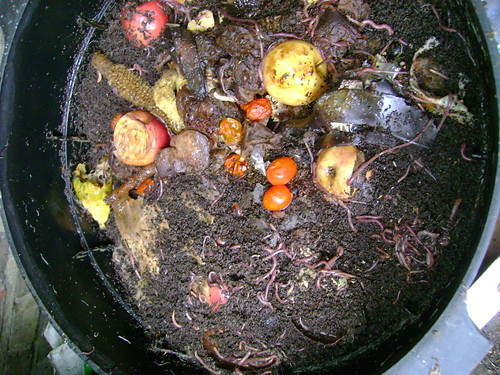
Wormery Mid Level: Food Waste & Worms

Make your Own Worm Bin

  • To avoid buying a wormery or worm bin you can modify an old water butt or similar plastic container.
  • If the bin has a tap you can drain off the liquid fertilizer.
  • If there is no tap drill a dozen half inch drainage holes at the base and stand the bin in a deep saucer to collect the juice.
  • Drill air holes at the top near the lid for ventilation.
  • Add a 4″ layer of grit, gravel or coarse sand to keep the drain holes clear.
  • Cut to shape a piece of old carpet or wood as a divider. Make sure it has holes so liquid can drain through to the grit level.
  • Add 4″ of bedding material (partly rotted garden compost will do). You need plenty of worms (circa100) in the compost, more the merrier
  • After a week gradually start adding kitchen waste including egg shells tea bags, pasta, bread rice, fruit and veg peelings etc.
  • Cover the kitchen waste with damp newspaper at all times to discourage fruit flies and keep worms moist
  • Cover with a tight lid

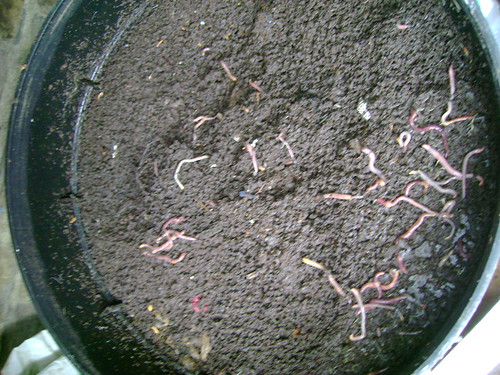
Wormery Lower Level: Worms & Compost

Operating Your Own Worm Bin

  • When the bin is full spread the contents on a large plastic sheet.
  • To coax the worms from the compost place damp newspaper over some of the compost where the worms will then congregate and you can collect them to start a new wormery.
  • Unpleasant smells or dead worms could be caused by over feeding too much waste in one go. Lack of ventilation may be another cause.
  • Small black fly infestations can happen if the bin is left uncovered.
  • Worm bins can become acidic so each month you can add a handful of ground limestone. Do not compost too much citrus peel.
  • Worms have a diet of Dairy Products, Fats, Meat, Feces and Oil.
  • Red worms live and eat in the top six to eight inches of material.
  • Oils

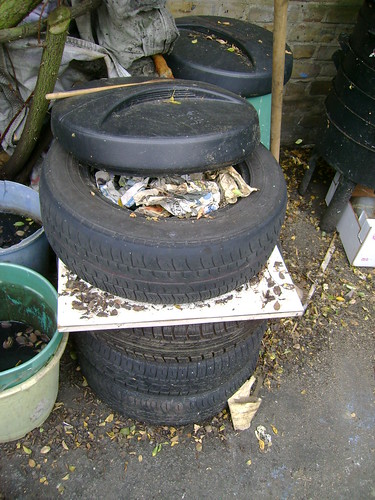
Tyre Wormery

Photo credits
Wormery Top Level, Mid Level and Lower level: Food Waste by London Permaculture CC BY-NC-SA 2.0
Tyre Wormery by London Permaculture CC BY-NC-SA 2.0


For more help read Lorene Nancarrows book.

The Tiger Wormery: Easy Access Composter, includes Worms available from Amazon

Attract Bees in Organic Gardens

Attract Bees in Organic Gardens

insects

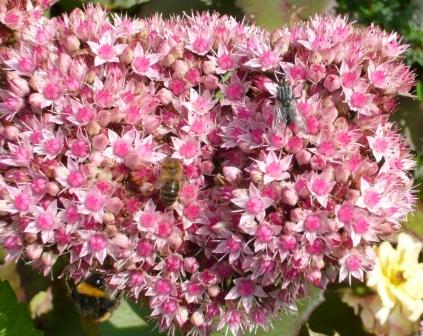
Bees, Flies, and Wasps all display their liking for the nectar from this Sedum spectabile. Insects are attracted by colour, fluorescence and iridescence and by pollen which gives them proteins and fat.  Scent is only one form of attraction for Bees. In the following selection of plants there are many attractions for the apairian population and you can grow them  to help your Bee population

Plants to Attract Bees

  • Flowers with open structures like Rudbeckias, Erigerons, and the early Doronicum
  • Most daisy like flowers and Calendulas, Asters and Cosmos
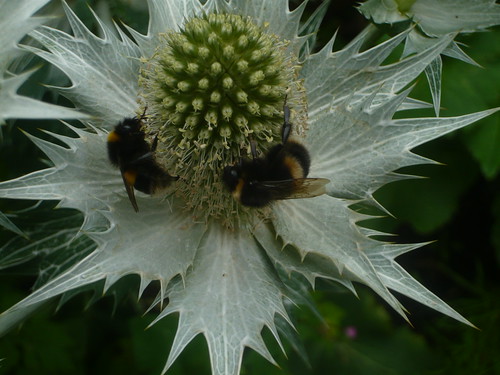
  • Bees seem to swarm together around Monarda, Verbenas, Echinops, Teazels, Scabious and of course the Sedums.
  • Natural gardens of indigenous species are one of the key food plants for bees
  • Flowering  herbs like Thyme, Sage and Lavender are bee magnets.
  • Ceanothus, Heather, Pyracantha, Broom and Hebe also attract Bees

Experiment with other plants and flowers  in addition to this list as the population of bees has been struggling in the UK in recent years.

Organic Seeds

How to make your garden ec0-friendly

Quick Pest and Rabbit Tips

Quick Pest and Rabbit Tips

Book Cover

Insects, grubs and slugs are all garden pests at one time or other but the gardeners ideal is to have a natural balance and enough predators to save your specimen plants. Below are some quick tips of environmentally friendly measures you can take. If everything else has failed you could always play them this record ‘Insecticide’ to create your own Nirvana.

Preventing Pests better than Cure

  • Camomile deters small flies. – Make your own pesticide by infusing flowers in hot water for 10 minutes. French Marigolds, Rue and Tansy also have repellent properties.
  • I dot onion plants around the garden to deter pests and larvae – they don’t take up much space or look out of place. Greenfly do not like garlic so try odd plants grown from garlic cloves.
  • Protect some plants and prevent larvae hatching by surrounding plants with a cardboard collar.

Pest Treatments

  • Birds are amongst the best insect catchers so encourage Robins, Finches and Blackbirds.
  • A pond will encourage frogs or toads who will then eat slugs and snails.
  • Good house keeping, clearing dead foliage, will help control the number of pests by removing their food
  • Sulphur dust or powder can cure mildew on your prize roses but keep it away from ponds as it kills fish.

How Do You Stop Rabbits in the Garden ?

  • Rabbits are harder to repel but scattering dried holly leaves or other spiny leaves is said to keep them off your tender vegetables.
  • Plagues of Rabbits need to be fenced out with wire mesh starting 10″ underground and standing 2 feet high with a top 6″  bent away to stop them climbing (a bit like Colditz).

Read More Read More

Bamboo Uses and the Environment

Bamboo Uses and the Environment

Midland trip 097

There are over 1400 different species of bamboo in the world, 900 tropical and 500 temperate.  Bamboo is a useful component of landscape design, providing shade, wind breaks, acoustical barriers and aesthetic beauty. Bamboo beer, bamboo shoots as a vegetable and small implements are products from the bamboo.

Environment Considerations

In its natural habitat bamboo is very environmentally friendly
Bamboo is the fastest growing plant on the planet, with some species growing over 4ft in just 24hours!
Bamboo can be continuously harvested which is beneficial to the health of the plant.
Bamboos anti-erosion properties are key to it’s reputation as a soil conservation tool. Its roots bind the soil and the stems reduce rain run-off.
It is widely believed that if bamboo were better farmed it would be a renewable source of food, building materials and erosion prevention as well as keeping gardeners supplied.

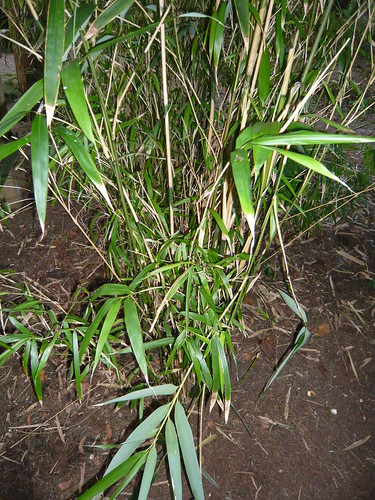
In Happy Mount Park Morecambe this clump of bamboo is used in a children’s adventure play area to add one more use to the growing list of uses.