Browsed by
Category: Flowers and Plants

Annual, perennial and interesting flowers with advice on culture, information, tips and recommended varieties

How To Get A Bigger Tomato Crop

How To Get A Bigger Tomato Crop

Tomatoes are great fun to grow. They can also be very rewarding; to get a bigger crop follow these simple but effective tips.

  • Pinch out side shoots to focus energy on forming fruits rather than green growth.
  • Pinch out the growing tip when 6 trusses have formed Allowing only 5 -6 branches enables the energy of the plant to be focused on the 5 trusses; this will maximise the yield.
  • Cut away ruthlessly any diseased or dying leaves. It is important to allow sufficient air to circulate, especially around the base of the plant.
  • Keep the area clean and tidy, this helps to minimise the spread of fungal diseases common in tomatoes.
  • When the flowers are blooming, give the plants the odd flick with your finger, this helps to pollinate the plant. This can be useful, if there are not many bees in your greenhouse.
  • As temperatures rise, keep the plants well watered. Also it helps to water down the greenhouse in the morning. This helps keep the temperature lower.
  • Feed little and often with tomato food
  • Stake plants to support the growing weight of the tomatoes.
  • In October take the green tomatoes and place next to ripe apples, this will help the green tomatoes ripen extending the cropping season into October and November.

I always under perform on my greenhouse tomatoes – against my brother-in-law at least.
This year I am trying lots of varieties including old favourites, Ailsa Craig, Moneymaker, Shirley and Gardeners Delight. Hopefully at least one of them will live up to my demands and if not it will be down to my inconsistent watering, failure to feed properly or not pinching out or removing excess leaves.
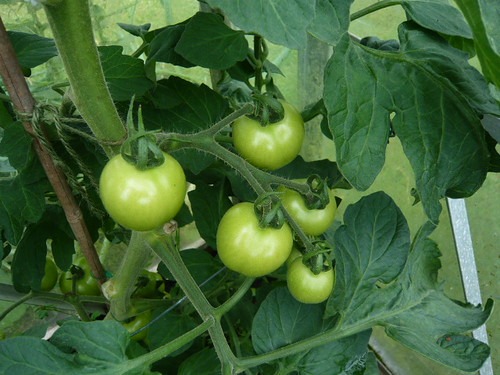
Green Tomatoes

Some other hints and tricks of the trade

  • Add a spoonful of sugar to your watering can every now and then
  • Pinching out side shoots helps increase the fruit yield and if the shoot is about 4” long it will probably root as a cutting in moist soil and give you an extra plant.
  • Grow a bush variety like Supersweet 100 in between cordons in your greenhouse for greater variety and use of space
  • To encourage good pollination and fruit setting tap the plants to dislodge pollen as you go past
  • Try a ‘Tumbler’ tomato in a hanging basket for small cherry tomatoes
  • Remove growing tip from greenhouse plants in August or when 6-7 trusses have set. Outdoors when 4-5 trusses have set
  • Put a couple of banana skins under each plant -it may be an old wives tale but they do have lots of Potash
  • Stake plants in the greenhouse and run a support wire to tie heavy crops too
  • Grow some French Marigolds close to tomatoes to discourage aphids and white fly
  • Spread the fluff from your Hoover around the base of established plants
  • Wrap green tomatoes in newspaper at the end of the season so they can ripen slowly

See also: Tips for growing tomatoes
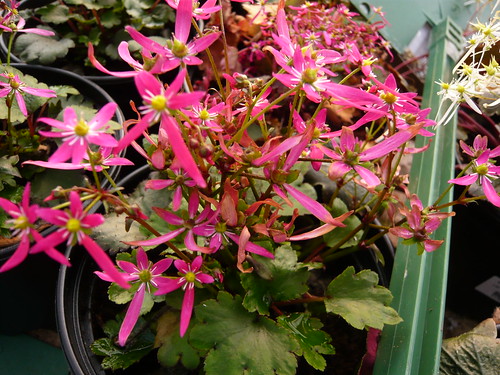
Saxifraga Fortunei Cherry Pie

Saxifraga Fortunei Cherry Pie

Saxifrage Fortunei Cherry Pie

Saxifraga Fortunei ‘Cherry Pie’ looks good from late August through Autumn with these cherry coloured flowers. It is recommended as a good plant for moist woodland as it is happy with partial shade. Grows 8-10″ tall with flowering spikes above bright palmate, green leaves.

The Saxifrage society modestly claims to be ‘the only international organization dedicated to the best plants in the world; the genus Saxifraga or Rockfoils and its relatives.’ They have 480 species to go at in three groups or sections the “mossies” (Saxifraga), the “silvers” ( Ligulatae) and the Kabschia and Engleria subsections ( Porphyrion).

Book Cover

I am just getting interested in growing some of these plants and I will see how I get on. The Saxifrage Society is to be represented with a display stand at the RHS Harlow Carr Alpine weekend 15-17 April 2016.

For some it becomes a consuming passion or so I am told. Many saxifrages come from mountain habitats that make them well-suited to rock gardens, troughs, and containers.

The increasing interest in Alpines and rock-gardening has resulted in the introduction of countless new varieties

Plant Autumn Crocus

Plant Autumn Crocus

autumn-crocus
From obenson flickr

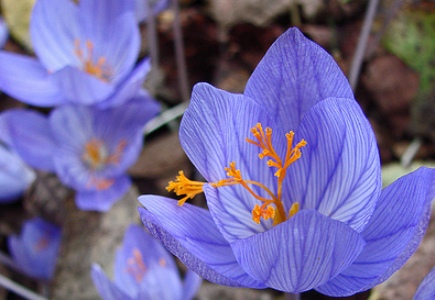
I have just bought and planted some Autumn ‘Crocus Speciosus’ AGM that were part of a birthday present. I could have waited until summer to plant the bulbs. Flowering bright blue are about 4 inches tall. I hope to see the blue veined flowers with  deep yellow stamen  by October  followed by leaves in spring. The thin flowering stems find it difficult to withstand wet and windy weather and are inclined to flop but I have given them some shelter in the rockery.

Autumn crocus are not cheap but they can last for years given favorable conditions. Autumn crocus or meadow saffron is a poisonous member of the lily family.

Autumn Crocus Tips

  • Plant about 4 inches deep and be prepared for them to flower a bit later the first year.
  • Try other varieties of Autumn flowering crocus of which there are many including the saffron Crocus sativus, Crocus goulimyi, Crocus pulchellus, Crocus agrippinum and Crocus nudiflorus, Crocus clusii, Crocus laevigatus Fontenayi, Crocus pulchellus and Crocus Zephyr
  • Excellent for naturalising in wild gardens, rockeries and between shrubs according to my packet instructions (but they are unlikely to say good chance of failure).
  • Many colchiums and autumn crocus they can flower without soil indoors prior to planting out.
  • Increase your stock via freshly ripe seed or dig up the corms when the leaves fade in spring pulling them apart and replant the cormletts.
  • Mice can be troublesome because they eat the Crocus corms so protect them if you are troubled.

Other Resources
National Council for Conservation of Plants and Gardens ‘Conservation through Cultivation.’

Spirea Shrubs

Spirea Shrubs

Spirea

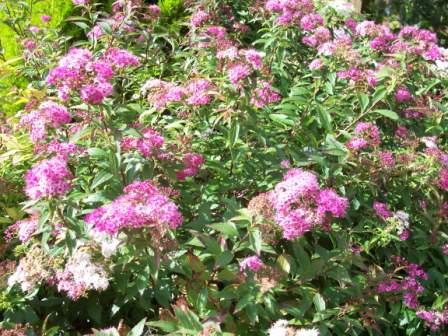
I have two very good Spirea varieties where I have long since lost the names. This example is a strong flowering mauve and white flowering plain leaved type. The other is a pale yellow leaved variety that has great colour in spring as the leaves start.

How hard was it going to be to identify the plants surely it can’t be too hard. I went to my copy of Hilliers Manual of Trees and Shrubs only to find over 80 species, varieties and cultivars described.

Well the next lesson is that I haven’t even considered my Spirea’s habits and Hillier identified those that flower on this years wood and those that flower on previous years wood – how have they thrived on my random pruning regime?

My first shrub is 6 -8 feet wide and currently covered in blossom on the ends of this years growth. I am going to give it a hard prune almost to the ground in March working on the thesis that it is a bumalda- japonica- douglasii .

Read More Read More

Red Hot Dahlias

Red Hot Dahlias

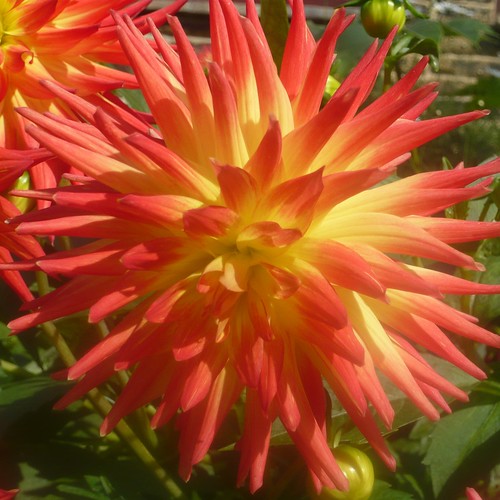
‘Fiery’ hardly does justice to this cactus Dahlia.

Often seen as the preserve of competition growers Dahlias are hot and sexy again. I have just restarted the tubers I lifted last Autumn. I use large tubs in a frost free area until the danger of frost has passed. I can take cuttings from new growth and will get flowers in summer and new tubers.

Many suppliers and thus varieties are available at stockists.  Sarah Raven the gardening commentator is keen to promote the flowers for their intense, hot colours that they can bring to the garden. She is not far wrong and I increase the number of Dahlias I grow each year.

Read More Read More

Daffodils from Oxford And Yorkshire

Daffodils from Oxford And Yorkshire

daffodils

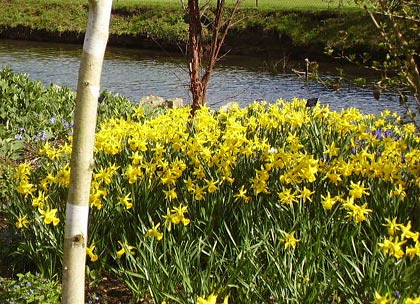
This picture was taken in late March at the University Botanic Gardens Oxford. I’m not sure of the variety, but, they remind me of tete a tete. The White betula (Birch) provides an interesting contrast to the lush green of early spring. In the background is the River Cherwell, flowing under Magdalen Bridge.

Wild Daffodil Facts

  • The wet winter has not damaged the crop of our native wild Daffodil Narcissus pseudonarcissus.
  • This species has pale yellow flowers, with a darker central trumpet and long, narrow leaves are slightly greyish green in colour. The two-tone look is one way to tell them apart from their garden relatives.
  • Wild Daffodil are found amongst the dappled shade of an ancient woodland or pushing up through the grasses of a damp meadow.
  • ‘Daffodil Dale’ aka Farndale near Helmsley in N Yorkshire has glorious wild daffodils in April.
What is AGM – Award of Garden Merit

What is AGM – Award of Garden Merit

This is the Royal Horticultural Society symbol for the Award of Garden Merit ‘AGM’. This award indicates that the plant is recommended by the RHS.

Awards are usually given after a period of trial at an RHS garden.

The AGM is intended to be of practical value to the home gardener. It is awarded therefore only to a plant that meets the tried and tested plant varieties using trial methods and  criteria.

AGM Criteria

  • It must be available in the UK
  • It be of outstanding excellence for ordinary garden decoration or use
  • It must be of good constitution – the award includes a hardiness standard – H4 is hardy through out the UK
  • It must not require highly specialist growing conditions or care
  • It must not be particularly susceptible to any pest or disease
  • It must not be subject to an unreasonable degree of reversion in its vegetative or floral characteristics.

Read More Read More

Miniature Pelargonium

Miniature Pelargonium

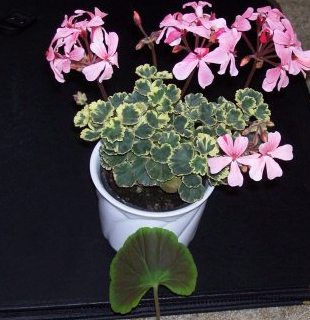
Minature-pelargonium - Golden Chalice

Pelargonium ‘Golden Chalice’

This fancy Pelargonium was new to me. I bought the plant whilst on holiday at a specialist pelargonium nursery in Stokesley Yorkshire some years ago.

As you may be able to see the leaves are a maximum of half an inch wide. This earns it the sobriquet of a miniature bi-colour.

The blooms are pink speckled with red and there is plenty of bud. The flowering should continue virtually on checked through out winter growing it as a house plant. Since it takes up so little space, yet has a distinctive form, I may try to propagate from this stock plant and acquire other varieties to make a miniature collection.

The parent has been a profligate producer of off spring. Many plants have been given away as houseplants and some of my stock is planted in the border. Cuttings root easily and the miniature nature of the plant always attracts attention. I an going to group them together this year and see how they fare.

Pinch out growing tips to make the plant bush out and provide more flowers.

Other links and information on Pelargoniums

Top 10 Scented leaved Pelargoniums
Pelargonium Grandiflorum and other ‘Geraniums’
Stellar Pelargonium – Bird Dancer Geranium
Photogenic Pelargonium
The Secret of Geranium (Pelargonium) Cuttings
Growing Regal Geranium Pelargonium
Dwarf Pelargonium aka Geranium
Tips for Growing Geraniums (Pelargonium)
Thompson & Morgan supply Pelargonium seeds and plants in season.

Seeds For Children to Grow With

Seeds For Children to Grow With

Where are the next Generation of Gardeners?

  • Children will grow with the knowledge they acquire from sowing and cultivating seeds.
  • If they take care the plants will also grow
  • Pea and bean seeds are popular as they are easy to handle and germinate quite quickly. Nasturtiums and sweetpeas are popular flowers.Bulbs and tubers can be great buy get the children to handle them gently and plant the right way up
  • Thompson & Morgan have a good choice of Seeds with a selection for kids.Book Cover

Some of the other varieties good for growing with kids include:

  • Kit for growing Cress – Cress is perhaps the easiest plant to grow, you don’t even need soil; just a small tray and a bit of light
  • Nasturtium – Jeepers Creepers – another fast growing colourful variety – needs little care.
  • Antirhinnum. (and give a prize if they can learn how to spell it correctly.)
Grow your Own Figs

Grow your Own Figs

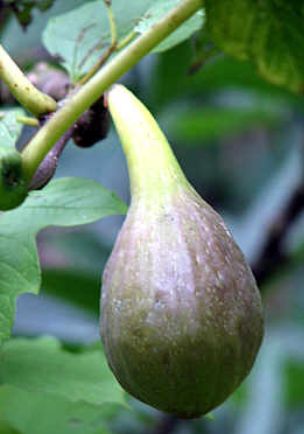
The Brown Turkey fig, Ficus carica, produces large, sweet, juicy figs even in British conditions.

Fig Growing Tips

  • Grown in a large pot they can get upto 12 feet tall but to encourage fruit prune in autumn and keep to a reasonable size about 5 -6 feet tall.
  • Keep  plants well watered particularly when young.
  • Grown against a south facing wall the full sun will encourage both fruiting and ripening.
  • Expect fruit to ripen in August or  September and pick regularly leaving tiny, embryo fruit towards the ends of the shoots will over-winter and  will ripen the following year.
  • Left to grow some Figs varieties can produce very large trees but they are not suitable for the British climate.
  • Fig trees do not need a pollinator so one tree should suffice.
  • Some winter protection may be needed in very hard frost.
  • Constrain the roots to encourage fruit and suppress the desire for the fig to become a large tree.