Browsed by
Month: January 2017

Hostas in Pots / Containers

Hostas in Pots / Containers

hostas

The colour of green.

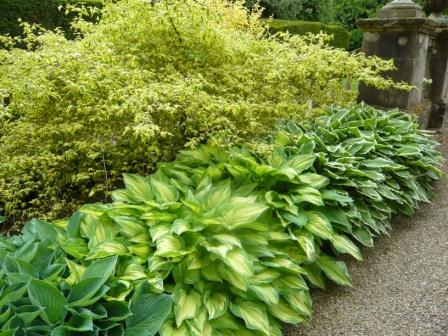
These hostas show how much colour you can have from different shades of green. They do a great job in brightening up this shady spot.

Hostas are an excellent low maintenance plant which are admired for their range of leaf colour. The fundamental problem of hostas is the old enemy the slug. The advantage of growing in pots is that it is much easier to protect them from slugs which for some reason take a particular liking to hostas.

hostas

A lovely gateway into Lady Margaret hall gardens, Oxford

Tips for Growing Hostas in Pots

Hostas do best in shady / woodland environment. In full sun, they may struggle. Though they do like a few hours of sun each day. They also like a moist soil. In pots, you will need to be careful they don’t dry out.
If they are in the shade, they are less likely to dry out, but, it may still be worth adding a few water retaining capsules.

Hostas in Full Sun

Hostas don’t thrive in full sun. You are better off choosing different plants for a hot sunny position. If you really want hostas, generally yellow / golden varieties will do better. Try varieties like ‘sun power’ August Moon, Gold Regal, Golden Sculpture Rising Sun, and Squash Casserole.
Read More Read More

Ideas Growing Hostas

Ideas Growing Hostas

hosta

Facts about Hostas

  • Hostas are attractive foliage plants that prosper in the shade from spring to the first frost.
  • Hosta varieties vary in height from the Blue Angel at 4 feet to  Thumb Nail at 4 inches.
  • Blue green and yellow leaved hosts all like water and the yellow & gold leaved varieties will stand more sunshine like Sun Power .
  • Varied textures are available from smooth, crinkled, puckered and leathery all  to tempt you.
  • Hostas do not seem to die of old age and require minimum maintenance.
  • Read More Read More

Tips for Growing Tazetta Miniature Daffodils

Tips for Growing Tazetta Miniature Daffodils

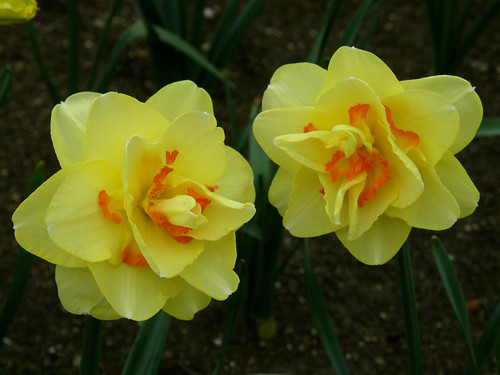
Daffodils are classified into 13 divisions and currently one of the most popular is Division 8 Tazetta Narcissi. These are a group of low growing daffodils that are at home in rockeries or containers.

AMARYLLIDACEAE 石蒜科 - Narcissus (Narcissus tazetta var. chinensis) 中國水仙

Features of Tazetta Daffodils

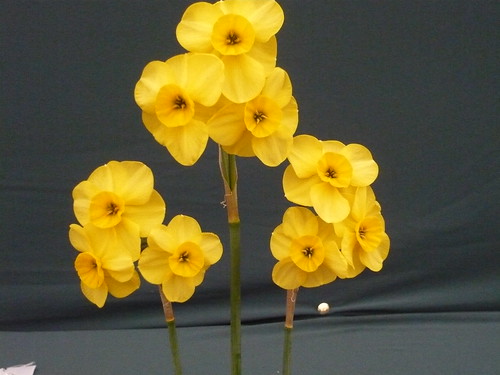
Tazettas have several flower heads per stem and look very showy as a result.
All the varieties flower at about 12 inches high.
Tazettas are popular for pot growing and forcing as they do not need a long period of cold before rooting and growing.
Most Tazettas are well scented.

#2729 daffodils (æ°´ä»™)

Key Varieties of Tazetta Daffodils

Paperwhites are one of the best known Tazetta varieties. They have a good scent and are easy to grow for Christmas flowering or in pot culture.
Cheerfulness has a double perianth (outer petals) and flowers in pure white or as a pure yellow sport often sold as Primrose Beauty.
Cragford is a variety I am growing this year with a plan to cut flowers for indoors. It is scented with white petals and a deep orange / scarlet cup.
Avalanche flowers a bit later in April. It has white petals and lemon coloured central cups.
Geranium is another old favourite with white petals and orange cup.
Scarlet Gem has 4-6 flowers per stem with the best red ey and deep yellow perianth.
Hoopoe has petite yellow scented flowers.
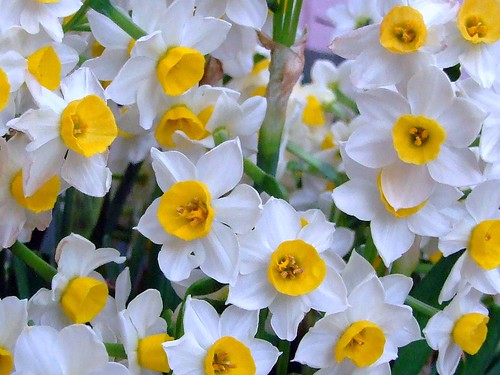
Chinese Sacred Lily Tazettas have creamy white petals with a small, scented and flattened yellow cup.

Narcissus tazetta

Tips for Forcing Tazetta Daffodils

Plant in well drained compost in crocked pots.
Plant so the nose of the bulb is just level with the top of the compost. You can plant the bulbs close together.
Keep the planted-up pot in the cool dark for four to six weeks.
Bring out into brighter light and more warmth until they flower in 6-9 weeks.

Daffodil selection

Other Resources

Daffodils can be ordered now for Autumn delivery from Thompson & Morgan

Other types of Miniature Daffodils and Narcissi Tips
Gardeners tips for Growing Daffodils
Daffodil divisions

Photo Credits
“AMARYLLIDACEAE 石蒜科 – Narcissus (Narcissus tazetta var. chinensis) 中國水仙 by kaiyanwong223 CC BY-NC-SA 2.0
#2729 daffodils (æ°´ä»™) by Nemo’s great uncle CC BY-NC-SA 2.0

Hostas as Slug and Snail Food

Hostas as Slug and Snail Food

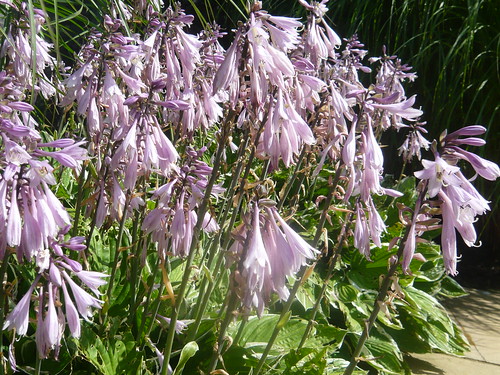
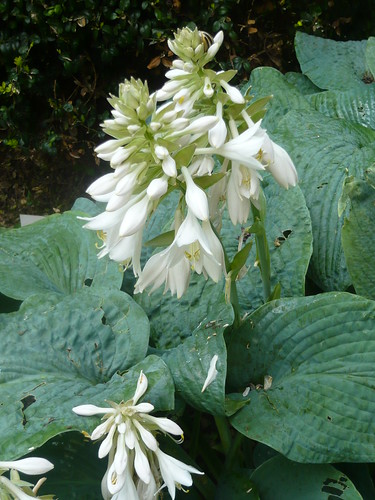
Hosta flowers

Not so long ago my Hostas were in fine flowering fettle. Now as Autumn approaches the slugs and snails are making a meal of the soft juicy leaves that are starting to give up the ghost.

Slug Food

Looking back at earlier photos I realised that the slug damage started along with the flowers but the effect was pleasing enough not to use chemical or biological control.

Hosta flower slugged

I am not going to start dealing with the slugs and snails at this time of the year.
The Hosta leaves will die back anyway and the slugs can provide a tasty snack for the hedgehogs before they hibernate.
The frogs are also still active and with a new pond for them to populate with frogspawn next spring they can feed themselves up as well.

The last Hosta picture should feature with my blue leaved plants. Blue hostas are not as juicy to slugs and snails and you could try varieties such as Blue Angel, Blue Sea or Blue Mouse Ears,

Pond Water Features

Pond Water Features

If you want a cheap and easy water feature bury half a plastic dustbin in your garden. Fill it with rain water from your butt. If you use tap water it will have to stand for a week or more before introducing wild life and will probably go green with algae.

There is still plenty of frog spawn about in local ponds. You can make an escape bridge for the frogs by laying an old log over a corner of the pond. Natural rainfall will replace most of the evaporation except in summer when I let it reduce in depth but you can top it up from the hosepipe. The depth of the old bin makes a safe environment for aquatics but be careful with babies and young children.

We have used our pond as a home for goldfish that the children no longer want. They  lasted several years until they reached a size that the Heron liked. Similarly with golden Orfe they lasted many years and enjoyed basking in the sun on late summer evenings. The pond was mainly sheltered from the direct sun and is a feature in a wooded are of the garden.

Tips for Ponds

  • I find most of the recommended tips are of marginal benefit
  • A floating ball has never prevented a freeze up – but I was lucky not too loose any fish due to ice
  • Netting to stop leaves was also more trouble that it was worth – every couple of years I fish out the ‘sludge’ from the bottom and leave it very close by for creatures to return to the pond.
  • Marginal plants and moisture lovers need more water than the overflow from this type of pond provides.
  • Oxygenating plants work best if they grow below the surface. One of the most vigorous and recommended is Elodea crispa (Lagarosiphon major)

Charlie Dimmock may not approve but as a pond starter kit this is a cheap and quick option. I see you can now buy a Charlie Dimmock Gnome but I think that would end up in my pond

Tommy, Alan and Charlie

In a well known water feature a Gnome was placed on a rock in the center of a pond – The feature was called ‘Gnomeman is an Island’

Two Garden Gnomes walk into a bar. The third one ducks.

Gnomes grow a vegetable that helps brush your teeth – ‘Bristle Sprouts’

Cabbages for Kings

Cabbages for Kings

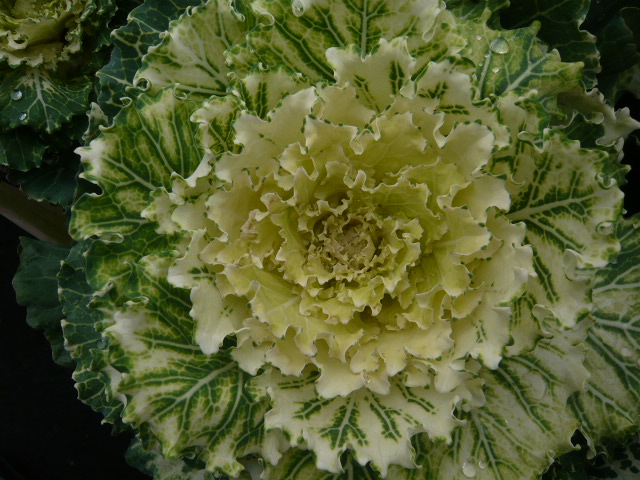
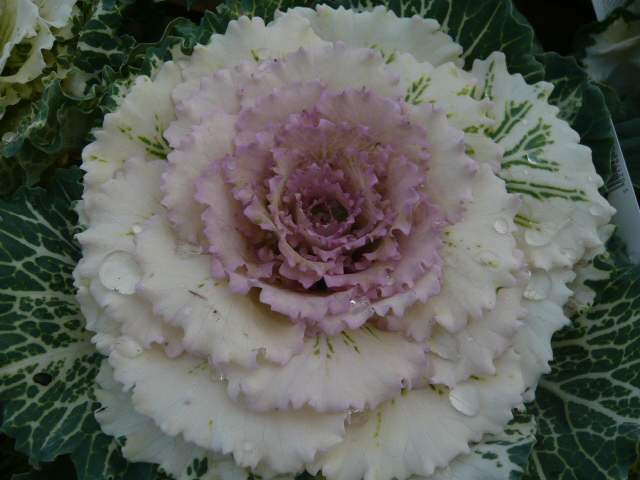
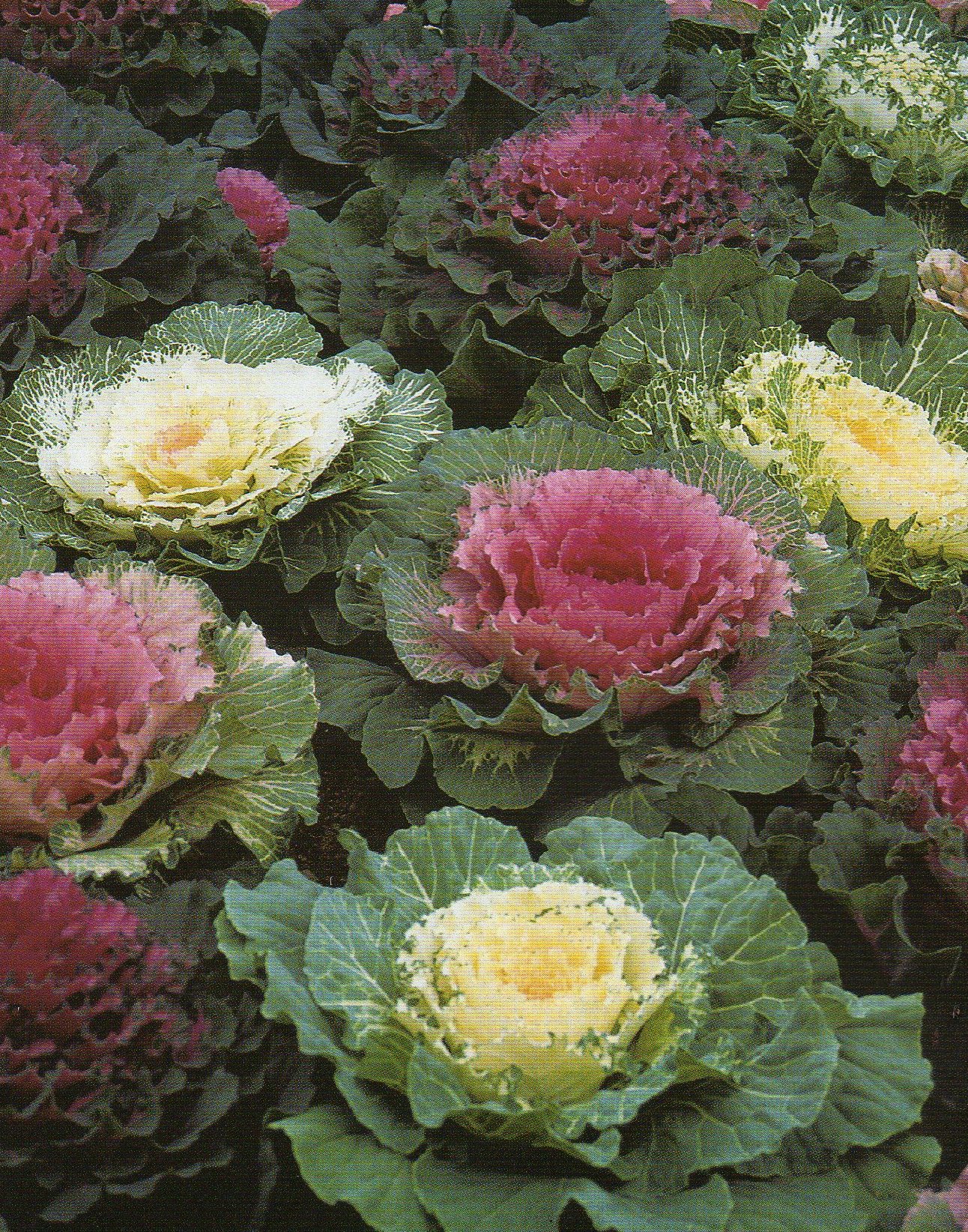
King slugs are feasting on my green and cream ornamental cabbages. It is late in the season and the slugs are helping to reduce the leaf waste from a variety of plants including the dying hostas. Still as I won’t be eating the ornamental cabbage I am not going to loose too much sleep.

I treat my ornamental cabbage as an autumn and winter display. This type of Kale can produce cabbageheads from spring   through  winter. Try ‘Rose Bouquet’, which produces dwarf, solid round heads of   red-pink, surrounded by a ruff of green leaves,  Tuscan cavolo nero, or a good seed mixture.

Super Veg 2017 Ornamental Kale

Super Veg 2017 Ornamental Kale


Kale is the newly rediscovered easy to grow vegetable.

Many plants sold as “ornamental cabbage” are in fact kales. They are grown for the coloured and ornamental leaves which are brilliant white, red, pink, blue or violet in the interior or the rosette. Because they supply colour in winter Ornamental Kale is popular with some designers. The green kales (Borecole) can also be very ornamental. Keep tidy by pulling old outer leaves off


Ornamental kale is every bit as edible as any other variety, provided it has not been treated with pesticides. Special recipes

For more Tips and other Kales

Read More Read More

Evening Fragrance in the Garden

Evening Fragrance in the Garden

If you want to walk around your garden in a summer evening and take in the scent then consider some of the following recommendations.

  • White flowers often smell the best like Nicotiana alata or the taller N. sylvestris
  • Lillium regale can have an almost over powering scent on a still evening
  • Philadelphus ‘Beauclerk’ a large flowered and orange blossom scented.
  • Rose ‘Iceberg’ can come in a climbing form as well as floribunda
  • It may seem obvious but night scented stock Mattihola bicomis are an absolute winner and the seed can be sprinkled freely as the plants are small and unobtrusive. Many plants like this are pollinated by moths and other evening insects
  • A selection recommended by Bob Flowerdew is Zaluzianskya capensis ‘Midnight Candy’ also called night phlox with a marzipan almondy scent an annual grown from seed.
  • Simple jasmine can enhance any scented garden and Hesperis sweet rocket and Reseda odorata Sweet Mignonette can all be added to a list to try. Give each plant an area where its scent isn’t in conflict with another strongly perfumed variety for maximum impact.
Growing Runner Bean – Scarlet Emperor

Growing Runner Bean – Scarlet Emperor

Tips for good Runner Bean crops

  • Prepare the soil to retain moisture by incorporating good compost and/or wet newspaper at the bottom of a trench in winter.
  • Rotate crops to a new patch every year on a three year cycle.
  • Do not feed with heavy nitrogen fertilisers or you will get leaf and less flower.
  • Flowers pollinate best if the air is humid so mist over if there is a dry spell.
  • Water plants well and regularly or stunted ‘C’ curved beans will disappoint
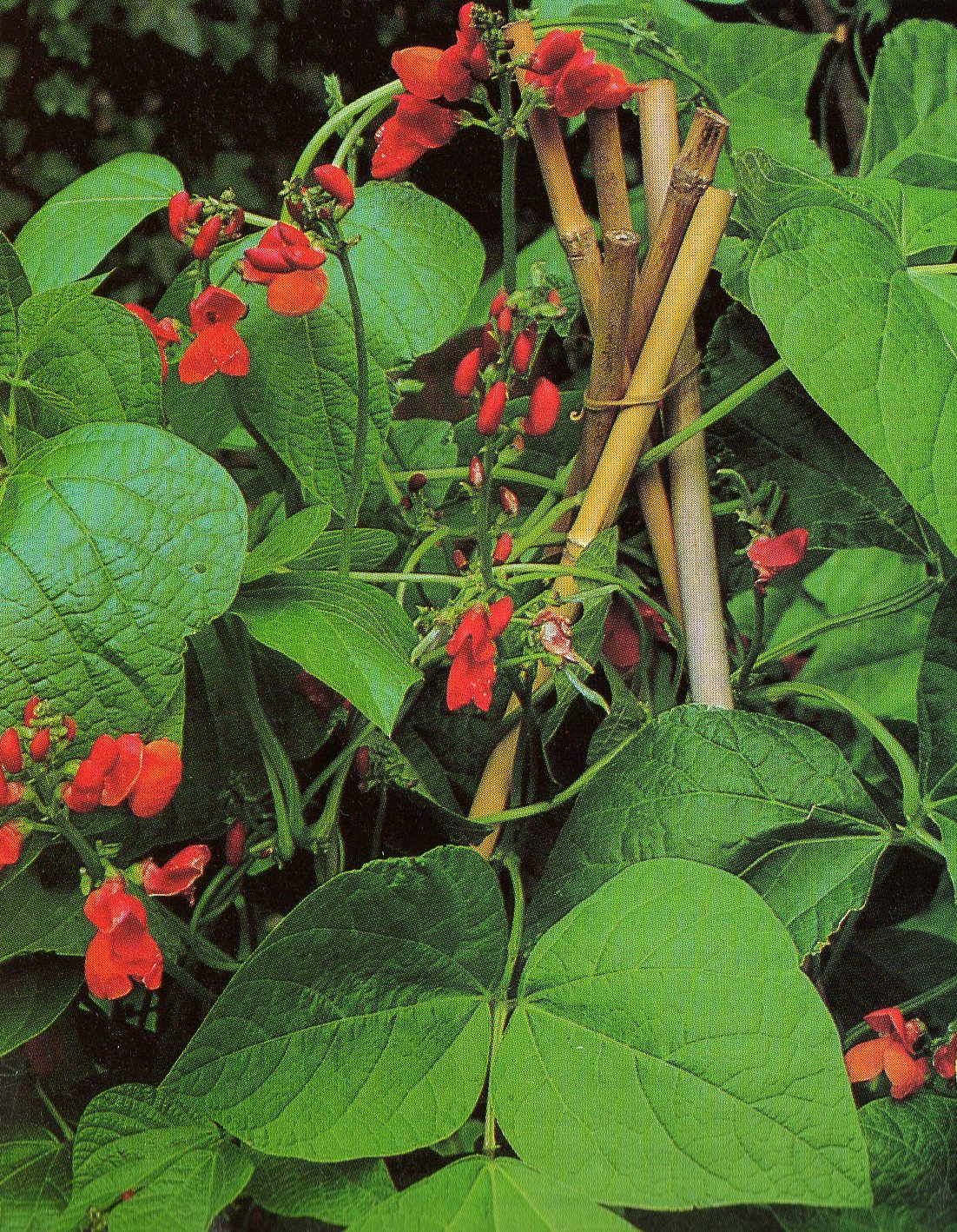
  • Support with a cane each or on a wigwam. I am trying an X shape this year so that the top half of the X encourages beans to hang down outside the plant and be easy to pick.
  • Harvest when beans are still young and have a snap in them
  • Try a variety know for its flavour like Kelvedon Marvel or Red Knight
  • Ruby moon has maroon pods that turn green when cooked and Painted lady has red and white bi-coloured flowers
  • Runner Beans can be grown for the bean inside or for the whole pod to be eaten

Tips for entering Runner Beans for a local show

  • Stick to the schedule for the show – if it says three runner beans submit three runner beans and label the variety correctly
  • Chose straight beans of equal length and form – size isn’t everything
  • If beans need a bit of straightening keep them in a wet towel overnight pressed straight.
  • Grow and take some spares to the show
  • Display as instructed or on black velvet to show off your specimen
  • Collect the seed of good plants for next year and develop your own strain or get good seed from a specialist
  • If you want a giant bean to become a world record you will be looking for bean in excess of 48 inches and it will be too woody to eat.
Delphinium Spires to Aspire too

Delphinium Spires to Aspire too

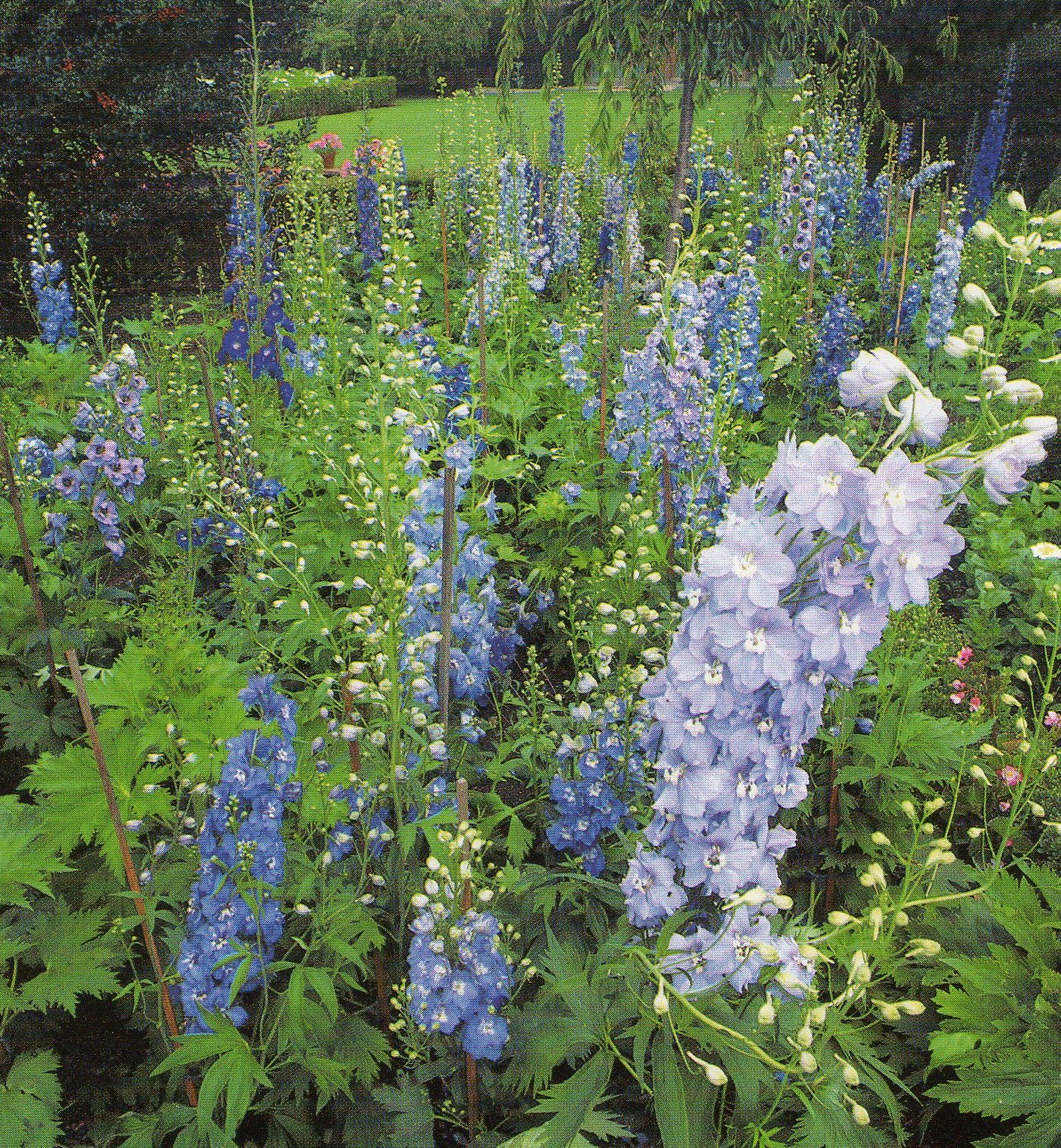
Flower spikes can reach over 6 foot and when massed together at the back of the border look really special. Delphinium are worth the effort to grow successfully and here are some tips to help.

  • Sow seed of Delphinium elatum types in preference to pacific hybrids or buy plant in spring prior to the showing the flowering stem.
  • Add plenty of compost and water well in spring and during flowering
  • Plant near walls or hedges to protect from wind but stake the plants as well to at least two thirds the eventual height tying in the flowers as they grow.
  • Snails and slugs like the jucy foliage so use your favourite slug protection system
  • On established plants remove less vigorous shoots to leave 4-6 strong stems. Use these as cuttings.
  • Feed with a slow release fertiliser such as bone meal
  • Cut flowers off as they fade under the lowest flower then when a new stalk is a foot tall cut out the old stalk and you may get a second autumn flowering
  • Mulch with ‘Strulch’ the organic straw based mulch

Delphinium range to try

Read More Read More