Growing Herbs Outdoors – Tips for Better Crops
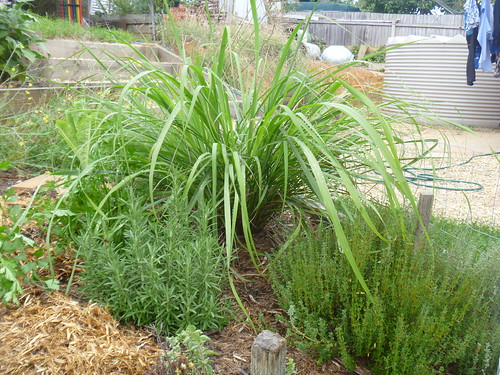
Growing Herbs Outdoors – Tips for Better Crops

Herbs
Some herbs can be difficult to grow in the open garden but it is worth persisting. Here are some simple tips to help get bigger and better crops together with some perennial herb plants to start you off.

Simple Herb Growing Tips

  • Create a wind break to give plants protection.
  • Mediterranean herbs like Thyme, Oregano & Basil need sunshine and a warm spot.
  • Parsley and leafy crops needs plenty of water.
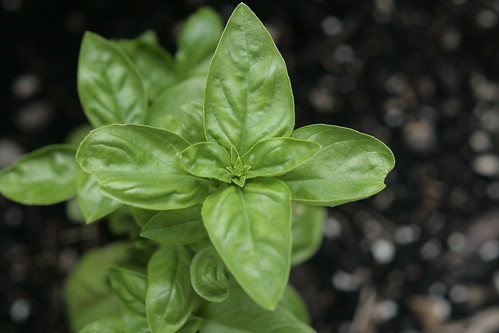
Basil

Grow Better Herb Crops

  • Seedlings bought from a nursery should be hardened off for planting outdoors in a container of open ground.
  • You grow herbs for the flavour so chose strong varieties.
  • Do not let herbs run to seed, crop the growing tips regularly
  • Give herbs adequate space to grow well.
  • Pick the tender shoots not the large lower leaves that are helping the plant to feed.
  • Avoid insect and fungal sprays, you don’t want that rubbish in your mouth!

Perennial Herbs Growing Outdoors

  • Sage cuttings root easily but if soil is mounded over the plant in February the shoots will root and they can be cut off and replanted.
  • Horseradish can be invasive. Plant near a wall and pick all but a couple of roots each winter.
  • Rosemary benefits from being renewed every few years. take cuttings from semi-ripe wood and you will get a constant flow of new plants.
  • Thyme can be grown decoratively amongst your flowering plants.
  • Bay is easy to grow and can produce a shrub large enough to be a wind break for more tender herbs
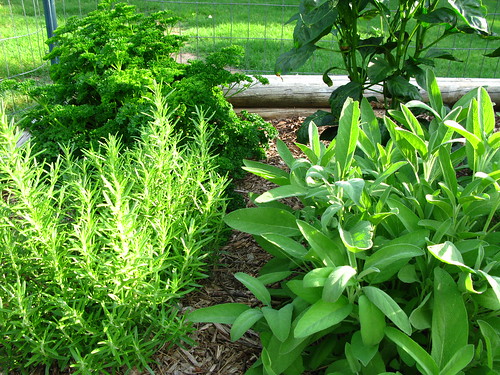
Herb Garden

Herb seeds at Thompson & Morgan

Preserving Herbs

  • Pick leaves of mint, parsley or sage and freeze in ice cubes.
  • Other herbs can be dried in an airing cupboard or microwave then stored.
  • Pour warm wine or cider vinegar or olive oil over lightly crushed herbs. After several weeks remove the herb residue and use the infused liquids.
  • Read Grow Bouquet Garni on Gardeners Tips
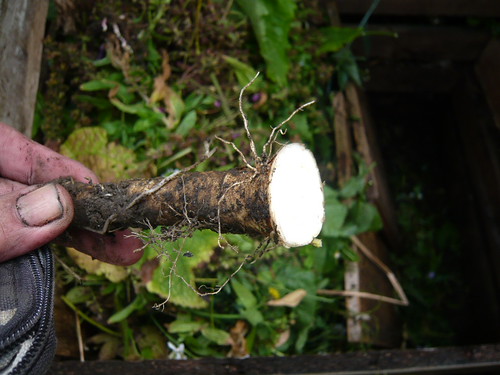
horseradish

Horseradish root is a vegetable but it has such a strong flavour you should treat it like ma herb.
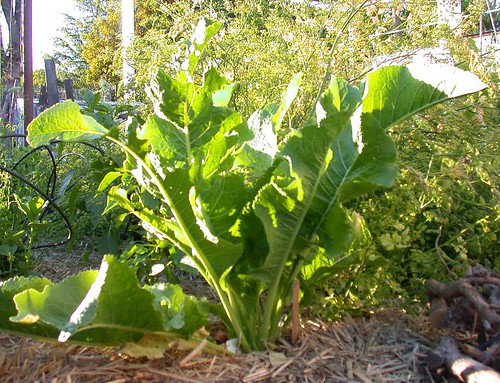
Horseradish-04012009-7967
Credits
Herbs by KatieTT CC BY-NC-SA 2.0 Dill, Parsley, Rosemary Lemongrass, Thyme and Oregano – see flickr for identification
Basil by cinnachick CC BY-NC-SA 2.0
Herb Garden by OakleyOriginals CC BY 2.0
Horseradish-04012009-7967 by graibeard CC BY 2.0

Book Cover
The Ultimate Book of Herbs: The Definitive A – Z of Herbs and How to Grow and Use Them by Lisa Thomas

Book Cover
Jekka’s Complete Herb Book: In Association with the Royal Horticultural Society by Jekka McVicar
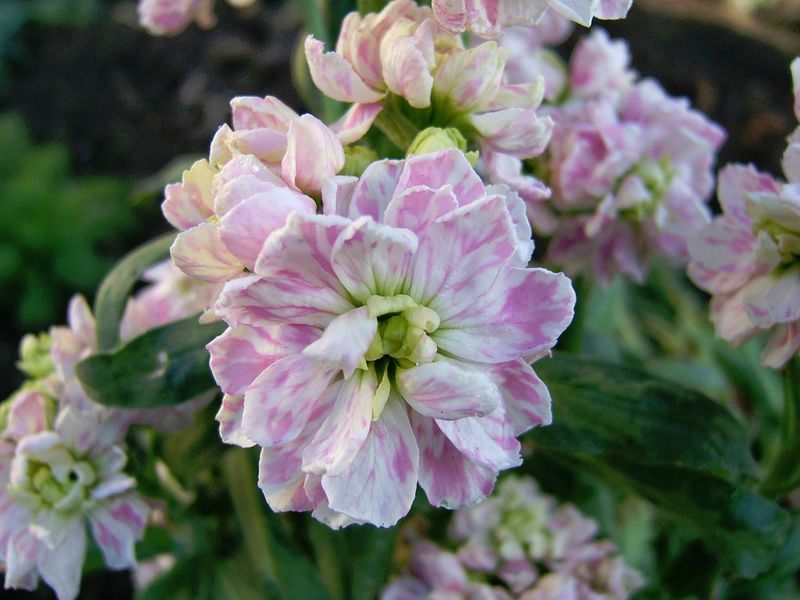
Virginia, Night Scented and Brompton Stocks

Virginia, Night Scented and Brompton Stocks

I bought some seeds thinking they were ‘perfumed’ night scented stock. Alas they are Virginia stock but they can still be sown in June to flower September onward so all is not lost.
Virginia stock
Virginia stock have fragrant sweetly scented flowers similar colours to Night Scented varieties.

You can often obtain seeds or plants from our mail order company of choice Thompson & Morgan

Night-scented stocks

‘Night Scented Stock or Matthiola longipetala or Matthiola bicornis

Deliciously scented flowers which open in the evening. Sow anywhere that is close enough to the house to get the benefit of such a beautiful fragrance. Below windows, patio tubs, window boxes, even a small sowing in hanging baskets.
Try mixing with Virginian Stock before sowing to provide a mixture of attractive flower and fragrance. These annuals flower in summer 12in high.

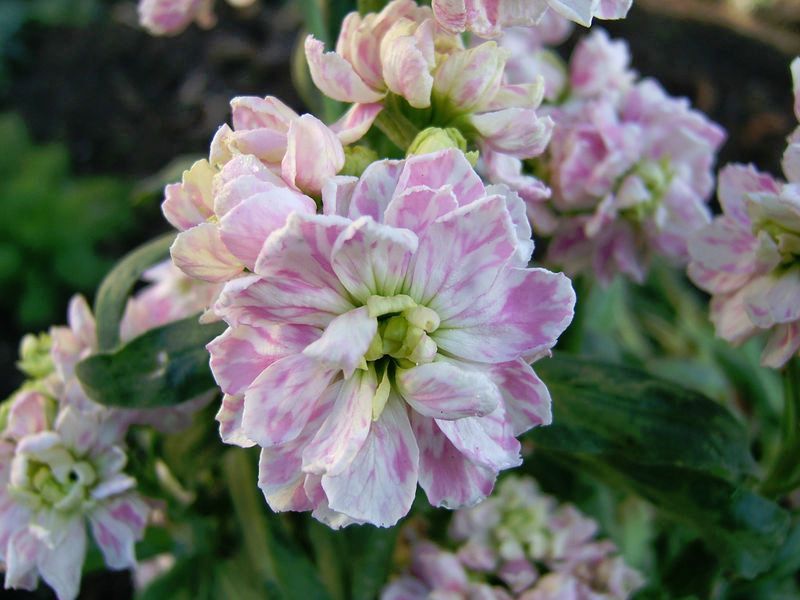
‘Ten Week Stock Mixed’ Matthiola incana, Gillyflower

A hardy annual that is very fragrant and available in muted colours that make excellent garden varieties.
The flowering period is May, June, July, August from seeds sown in March, April.

Matthiola incana

‘Dwarf Mixed’ Brompton Stock

This is a hardy biennial sown in June or July in a cold frame or well ventilated cold greenhouse, but do not exclude light, which is beneficial to germination. Prick out into boxes or pots or direct into the cold frame 6in apart, and overwinter providing good ventilation.
Harden off and plant out in the spring at 12-15in apart. In mild districts on well drained soil the plants can be transferred to their flowering positions in early autumn.
Upright bushy often double flowers producing gloriously scent in a good colour range. They are splendid for cutting.

Photo Credits
Virginia stock by tanakawho CC BY-NC 2.
Night-scented stock by townxelliot CC BY-NC-SA 2.0
Wildfleur This file is licensed under the Creative Commons Attribution-Share Alike 3.0 wiki
Matthiola incana by douneika CC BY-NC-SA 2.0
Brompton stock, mint and white “bluebells” by Marj Joly CC BY-NC-ND 2.0 ‘The stocks have a strong scent and are not for sneezers!’

Brompton stock, mint and white "bluebells"

Organic Fertilizers

Organic Fertilizers

Good fertilizer can sound like a cracked bell – ‘dung’.

Rabbitt fertiliser

Plant food with a natural, animal or plant history should be thought of as organic.

These are some of the best organic plant foods and how they can be used.

Blood Meal – high in nitrogen for grass and leafy growth e.g. Vegetables like Cabbage
Bone Flour / Meal – Nitrogen and Phosphate. Quick acting for strong growth.
Fish Meal – low Potash, high Nitrogen and Phosphate.
Fish / Blood / Bone – Nitrogen and Phosphate. Apply around plants on planting
Poultry Manure – Good all round plant food. Helps for soil preparation and for putting around new plants.
Rock Potash – good for flowers and fruits. Offers slow release of potash over a couple of years.
Seaweed Meal – Nitrogen and Potash. Also excellent source of trace minerals.
Wood Ash – High in Potash. Good for fruits and flowers. Quick acting.

Also consider organic liquid feeds such as:

Compost Tea – home made compost soaked in water and used as a feed.
Comfrey feed – leaves soaked in water for a few days then diluted and used as a feed.
Liquid Seaweed – home brewed or bought as a concentrate.

Garden Scents in Yorkshire

Garden Scents in Yorkshire

The aroma of success is geared to plant selection and location when planting out.

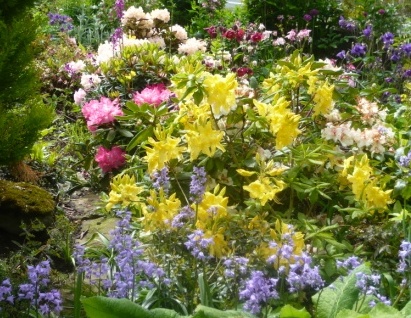
colour-riot

It is easier to capture colour in the garden than to capture scent but scents can stay in the memory evocatively and vividly. As with most gardening a little forethought can help you get far better results from a similar amount of effort.

Getting The Best Garden Scent

  • Choose plants that are known for their scent. Lighter coloured varieties often have more or better perfume.
  • Scent is best when the pollinating insects are at their most active and that often means in the evening particularly for those pollinated by moths.
  • Plant several identical plants together and try not to mix strong scents in the same area as they will conflict.
  • Scent is best sampled on a warm, calm still day and you can help this by designing recesses, arbors, pergolas and hedges to create the still  environment.
  • Aromatic leaves and herbs should be slightly crushed to get the best scent. Do not be afraid to touch plants.
  • Even bark can have a scent like cedarwood (Cedrus atlantica), Juniper virginiana or Betula pendula (Birch).
  • Choose plants for succession Winter Jasmine, Hyacinths for spring, Lily of the Valley in May and Roses for June as examples.

Read More Read More

Scented Garden Flowers

Scented Garden Flowers

Take time out to smell the flowers.
This combination of lavender and a Geranium make a great pairing of colour and scent.

A lavender bed like this creates a wonderfulyl fragrant garden. The important thing is to be bold and plant several plants. The delicate greens and flowers of the lavender provide a great foil for this dark, voluptuous geranium. A garden like this is a real joy to be in. It is very calming and also provides a wonderful aroma. One can’t help but crush the odd leave to enjoy the various aromas.

Scented Climbers

This is an old fashioned sweet pea and gives the classic fragrance and aroma. They make wonderful cut flowers and give a great fragrance even inside.
Other Scented climbers include:

Read More Read More

Lewisias Updated Information

Lewisias Updated Information

Lewisia

I have talked before of Lewisia becoming trendy and offered some growing tips.
I have had more years of experience and like the way my plants are performing.
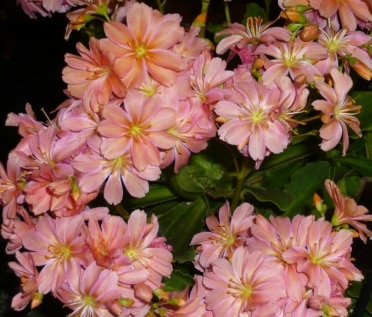
The above plant is flowering amongst the old leaves of the primula that cropped up in the sandy soil of my rockery.

Description of Lewisia

  • From the Portulacaceae family most Lewisias could almost be mistaken for succulents.
  • They produce thick or fleshy, green, shiny waxy leaves in rosettes
  • Lewisia grow 6-10″ high and flower on straight stems that are prone to lean over.
  • Flowers are profuse, round-shaped and occasionally doubles or semis.
  • Lewisia blooms come in bright pink,  apricot, white, or plum red.
  • Most varieties are evergreen but resent damp on the leaves.

lewisia-cotylodion

Tips for Growing Lewisia From post ‘Lewisia Trendy, Bright and Breezy’ Aug 2013

  • Whilst Lewisia are perennial plants are very susceptible to winter wet rot. Over winter under glass if needs be.
  • As Lewisia are very low growing it is common to grow in pots or containers so the flowers can be seen.
  • The clump forming Ashwood Strain is recommended as a particularly good mix producing large semi-double flowers in a wide range of colours.
  • With judicious deadheading Lewisia will bloom from April to the end of September, particularly if kept in an alpine house or cold greenhouse.
  • In an Alpine garden surround the base of the plant with rock chips to prevent rot. Lewisias prefer sites with abundant spring moisture followed by a dry, cool summer.
  • Other species to try include Lewisia; Pygmea, Rediviva, Brachycalyx, or hybrids Heckneri or Phyllellia Obtain plants from Pottertons and various nurseries or your local garden centre.

Varieties of Lewisia

  • Lewisia rediviva, also called bitter root lewisia has thick, fleshy, deciduous leaves and pink to white flowers. Detailed growing information is available here.
  • Lewisia cotyledon has persistent leaves and grows in the form of mat like rosettes. ‘Little Plum’ has deeply veined flowers in white with pink or red stripes.
  • Hybrid lewisias are available as inexpensive seed mixtures.
  • The Alpine garden society lists 100 cultivars and species and in the Alpine Gardener vol 82 No 3. there is a wealth of knowhow about Lewisia cotyledon one of the colourful and popular species.
  • Lewisia tweedyi is shorter at 6″ tall but has 3″ wide blooms in white and cream. Great for a rockery or alpine house.
  • Groups include cotyledon, pygmaea and rediviva.

Bibliography and Sources

Book Cover

Lewisia Roy Elliot AGS

Kew Lewisia monograph series.  The main concern in this work is with the nineteen species of the genus Lewisia, a

More Photographs of Lewisia

National collection of Lewisia can be seen at Ashwood Nurseries

Growing Alstroemeria – Quick Tips

Growing Alstroemeria – Quick Tips

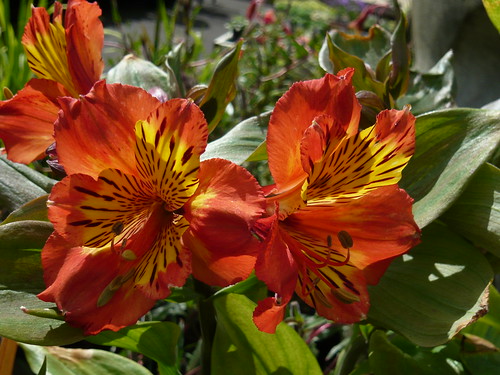
Alstroemeria

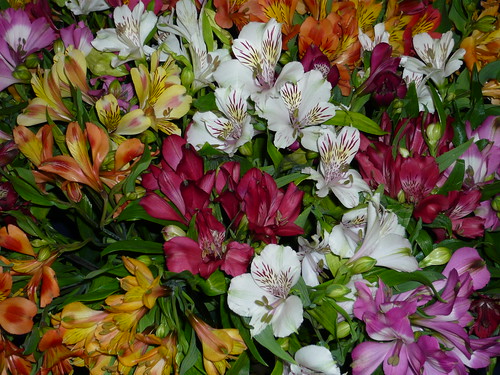
Alstroemeria or Peruvian Lilies make great flowers for picking and are long lasting in a vase. When established they are easy to grow.

Get your plants from Thompson & Morgan who supply plants and seeds. The seeds need patience and some skill.

Culture of Alstroemeria

  • Plenty of organic matter and regular watering  helps Alstroemeria thrive.
  • Alstromeria like a sheltered site in sun or partial shade. They can form good solid clumps and some varieties self seed.
  • Taller 3 feet plus Alstroemeria need staking or they may be knocked down by rain or wind. Ligtu hybrids should be self supporting.
  • Apollo varieties cope well with frost and flower in three or four separate flushes.
  • Deadhead regularly by pulling out the flowering stem.
  • Alstromeria

    Read More Read More

Kalanchoe a Colourful Succulent

Kalanchoe a Colourful Succulent

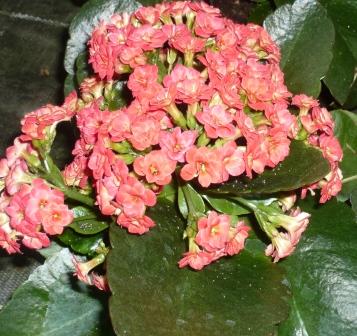
kalanchoe-blossfeldiana

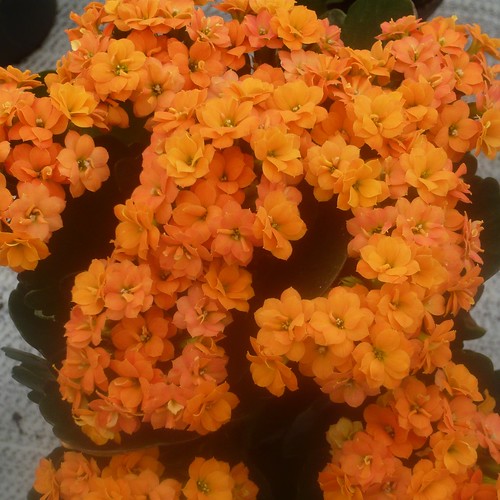
A popular indoor succulent at this time of year the range of Kalanchoe plants available from florists and garden centres continues to grow. Often blooming from autumn through winter these clusters of red flowers are set off by thick dark green leaves. About 12 inches tall these plants are easy to grow if the temperature stays above 10°C

Watering Succulents

Kalanchoe Blossfeldiana

Scented Wild Flowers by Family

Scented Wild Flowers by Family

Opium may be a perfume that owes it’s history derived from wild poppies.
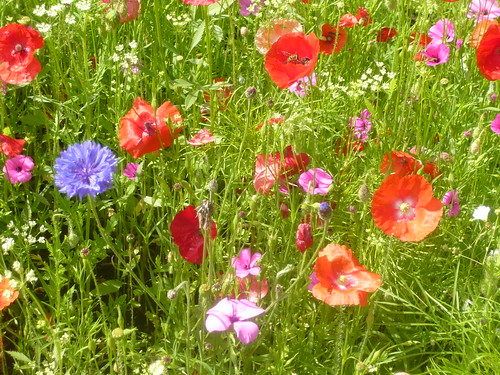
Wild meadow

Masses of wild flowers can produce a scented atmosphere that is second to none. Many plant families have scented species so sniff out your favourite.

Explanation why Wild Flowers are Scented

  • Scent is the oxidisation of essential oils of flowers and leaves.
  • Oils are mainly found on the upper surface of petals.
  • The most scented flowers are those with thick velvet like petals which slow down the evaporation of the scent.
  • Double white flowers like the rose are especially fragrant.
  • Oils are produced in inverse proportion to colour pigment which is why orange and scarlet flowers tend to have less scent.
  • Scent is classified into 10 and more groupings.

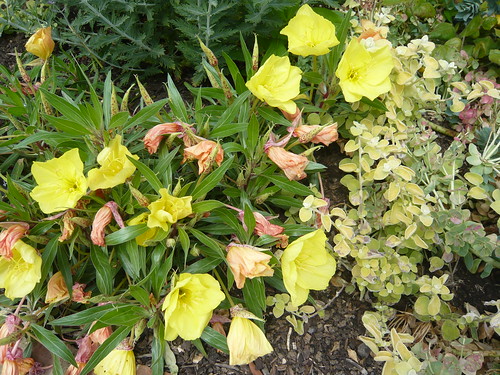
Evening Primrose

Read More Read More

Sculptural Garden Angel

Sculptural Garden Angel

Harlow Carr has several sculptures best seen on a crisp winters day.

garden-angel

Harlow Carr has a garden guardian angel amongst the trees and rhododendrons in the RHS garden. The stainless steel works well in winter with the dark looming trees in the background. This sculpture is one of many that have been introduced into the garden since the RHS took over from the Northern Horticultural society and Matthew Wilson became curator.

An amusing giant wire mesh teapot acts is used for collecting fallen leaves. Woven sculptures made from willow and hazel also feature with large scale ships and fish ready to entertain summer visitors.

Gardeners Tips on Garden Sculpture

  • Give sculpture a chance in your garden but be selective about the pieces you choose and don’t cram in too much.
  • Aim for impact.
  • Read More Read More