How to Store and Keep Apples

How to Store and Keep Apples

After a great crop you want to keep all that apple flavour in storage to use as and when.
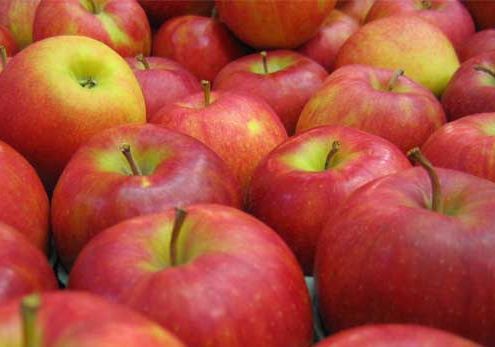
My father stored his apples for up to six months in a cool, dark, humid old outhouse. The problems are the same but now a days the methods are more varied. Still one rotten apple in the barrel…….

Conditions for Storing

  • You need to prevent frost damage. Apple cells rupture and go too brown pulp if frozen.
  • Some gases encourage or speed up deterioration and rotting.
  • Some humid air is needed, not drying drafts which make apples shrivel and go mealy.
  • Some varieties store better and last longer.  Tart, firm skinned, late varieties store best – Cox, Sunset and Blenheim Orange are good keepers.
  • Avoid apples touching one another

Tips on Storing

  • Small quantities can be stored at the bottom of a fridge in the crisper
  • Only store sound, unblemished apples. Leave the stalk in the apple.
  • A large clear plastic bag can be used making inspection easy. Punch half a dozen holes in the bag to limit air ingress.
  • Wrap apples in paper to avoid rot passing from one apple to another and store in cool dark conditions as my Father did. You can use boxes or racks as available.
  • Make apple pies, fillings and apple sauce with damaged or wind fall apples. Puree with a bit of sugar can be frozen, which is good news for my apple pies.
  • Do not store near onions or the apples pick up the smell.
  • My favourite apple store is in the form of cider. hic!

Freezing Apples

For the best results select good sound apples for freezing
Wipe or wash them and then core them
Halve or quarter them according to size then drop cut pieces into water with a little salt or lemon juice to prevent them turning brown
Pack them into freezer bags and then pop them into the freezer. Great for future crumbles and pies
Amazon traditional apple storage
Book Cover

Buy British Flowers

Buy British Flowers

We are used to counting food miles so why not flower miles,  the miles a bunch of flowers incurs in getting to your vase. Many supermarket and petrol station now source flowers from long distances such as South Africa, Venezuela, or Kenya as well as Spain and Holland. If you must buy rather than grow your flowers look for British. Lincoln Cornwall and the Channel islands are normal UK suppliers but there is a trend for even more local supply.

Best Flower Sources in Great Britain

  • Your own garden should have a plentyful supply of flowers measured in flower yards not miles. Where would we be without Sweetpeas?
  • Your neighbors may be willing to give the odd bunch of flowers away and you can reciprocate with your excess Sweetpeas.
  • Allotments dug and fertilised by your own sweat are not just for Vegetable. Try some Chrysanthemums and Dahlias as part of a flower cutting area.
  • Wayside farm gates and smallholdings often have a bucket of locally grown flowers for sale at reasonable prices. Why pay for lots of transport and supermarket margins when you can support a British enterprise.

Is this about British national flowers or a shop owned by George Bernard Flowers or even the wholesale florist in Hull? The picture is the later the former is the main thrust of this section of the article.

National Flowers.

  • The rose was adopted as England’s emblem around the time of the War of the Roses 1455-1485 when Yorkshire sported the white rose and Lancastrians the red rose.The two roses were combined to make the Tudor rose (a red rose with a white centre) by Henry VII when he married Elizabeth of York.
  • In Northern Ireland the shamrock a three-leaved plant similar to a clover is the symbol. It is said that St. Patrick used the shamrock to illustrate the doctrine of the Holy Trinity.
  • The thistle is a prickly-leaved purple flower which was first used in the fifteenth century as a symbol of defence and the ‘Flower of Scotland’.
  • The national flower of Wales is usually considered to be the daffodil and is worn on St David’s day. However, the leek has even older associations as a traditional symbol of Wales
  • Holland and Hungary have both chosen the Tulip whilst France prefer the Iris. Germany have the knapweed and Greenland the willow herb but I guess nothing much flowers in Greenland anyway. Indonesia has cornered the flower market by selecting three national flowers Phalaenopsis, Rafflesia and Jasmine.

The rose, thistle and shamrock are often displayed beneath the shield of the Royal Coat of Arms.  There is a more comprehensive listing on The Flower Expert

Garden Problems Caused by Heavy Rain

Garden Problems Caused by Heavy Rain

Wet summer gardens are something the UK gardeners are having to contend with for the first time in a long time. For St Swithin’s Day I thought I would review the summer so far and provide some tips and ideas in case the wet weather continues.

Extreme garden flood

Garden Problems Caused by Heavy Rain

  • One off heavy rain runs off before the soil gets a chance to soak through. That is not the problem when rain is as continuous as this year.
  • Heavy rain can damage young growth with the force of the rain. If rain is accompanied by wind the driving rain can do even more damage.
  • Rain washes out some of the goodness from the soil and deprives plants of good fertiliser.
  • Waterlogging of your soil can drown the roots of plants.
  • Needless to say wet gardens attract snails and slugs. (The prize for the largest exhibit at many garden shows may be a big fat slug this year!)
  • Lush growth has been put on by hedges and plants that would normally stay quite small.

Garden flood 2

Tips and Ideas for Wet Gardens

  • My runner beans have grown tall but have very little leaf. I have pinched out the tops to encourage growth and flowers lower down.
  • I am adding some granular fertiliser for beans and plants that I would normally have given a liquid feed.
  • Use the lush conditions by planting more leaf crops whilst there is still time.
  • Put gravel around the neck of plants, such as succulents,that may rot if the soil is too wet.
  • Check potted plants and containers to see they are not waterlogged or stood in water. Raise them on bricks if needs be.

Encourage Flowering

  • If you garden for colour and flowers you may suffer most in heavy rain.
  • Deadhead asap and do not let buds get soggy and start to rot.
  • Feed with a high potash fertiliser
  • Prune excessive leaf growth or top out plants that are growing tall and wide at the expense of flowers.
  • Give plants access to as much sun as possible.

Flooded Garden (2)


Photo Credits

Extreme garden flood by johnpaulgoguen CC BY-NC 2.0
Garden flood 2 by Chris & Angela Pye CC BY-NC-SA 2.0
Flooded Garden (2) by Roger Lynn CC BY-NC-SA 2.0 ‘Happy April Fool’s Day! another Photoshop creation using the incredibly fun “Flood” plugin by Flaming Pear

Wild Plants for Butterflies by Height

Wild Plants for Butterflies by Height

This is a selection of wild flowers that have for generation helped provide food for butterflies. They are rich in nectar and even garden cultivated varieties should feature in your butterfly friendly garden. Even nettles feed butterfly larvae.
weedy dandelion
Low Growing plants up to 12 Inches Tall
Primrose and Cowslip.
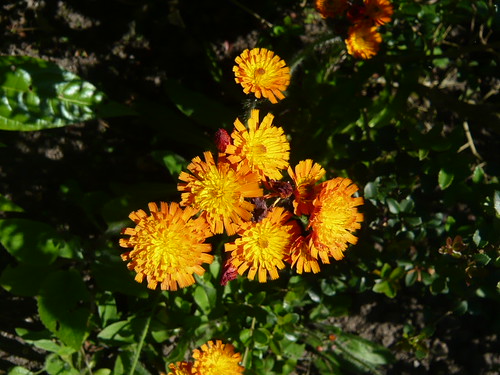
Orange Hawkweed
Daisy
Dandelion
Birds-foot -trefoil
Lesser Celandine
Sweet Violet and Pansy
Thrift
Wild Thyme
White Clover

Read More Read More

Growing Ixora in the UK

Growing Ixora in the UK

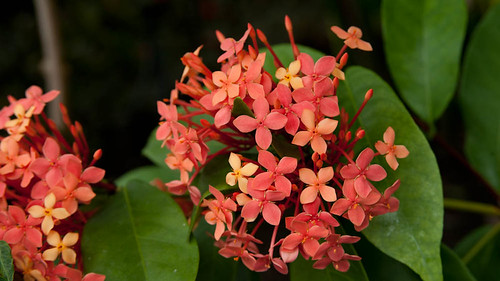
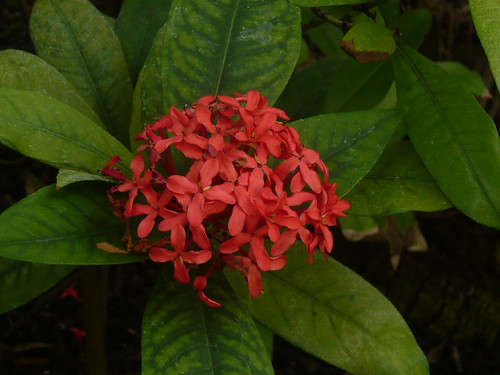
Ixora 'Peter Rapsey'

This updates my earlier post on Ixora with a new photograph from Kew Garden of the variety Peter Rapsey. CC BY-NC-SA 2.0

I liked the look of the Ixora ‘Super King’ (below) although I am unlikely to be able to grow a flowering specimen with my limited heat. That photo was taken at Kew Garden in March 2011.

What is Ixora

  • Ixora are tropical evergreen trees and shrubs. There are said to be around 500 species.
  • Ixora can flower in red, orange and white with 4 petals but are arranged in a profuse ball shape to make a fine display
  • Other names for Ixora coccinea include Flame of the Woods, Needle flower, Jungle Flame, Jungle Geranium.
  • Red ixora flowers are used in Hindu worship as well as in Indian folk medicine.
  • More Photos of Ixora from Google
  • The variety photographed above was Ixora Super King but there are 3 species with this name Ixora casei ‘Super King’, Ixora duffii ‘Super King’ and Ixora macrothyrsa ‘Super King’ or ‘Malay’ so I am still in a quandary.
  • Ixoras do best in full sun in a moist, organic, well drained acid soil .

Ixora 'Super King'

Uses of Ixora

  • Ixora in the wild are often used as hedging and can endure some salt spray on the wind.
  • Ixora are available to grow as bonsai and flower when quite short.
  • As sun lovers Ixora need plenty of light and protection all year round so they only make exotic conservatory plants in the UK.
Artificial Ideas for Roof Gardens

Artificial Ideas for Roof Gardens

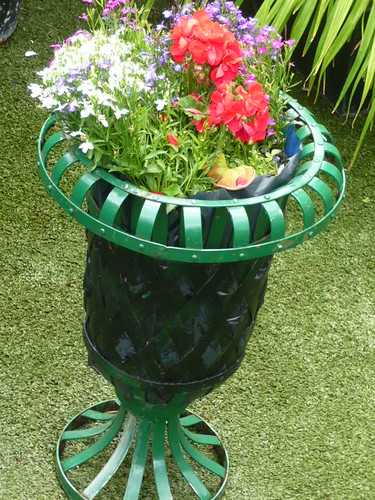
gloucester container

This week I had lunch in the roof garden of the 16th Century ‘Soup Kitchen’ in Stafford. The tables in the restaurant and outside on the pavement had very welcome fresh flowers.
The roof area was flat with a split level but overall it gave me a couple of ideas.

Roof Garden Ideas

  • Artificial grass is light, easy to clean and water resistant. It can look quite realistic if you select carefully.
  • Even heavily perforated containers can be brought into use by the adaptation of black plastic. A series of old braziers contained colourful flowers and herbs.
  • The space was divided by wooden partitions to make smaller ‘rooms’. This protected against the sun and provided some welcome shade.
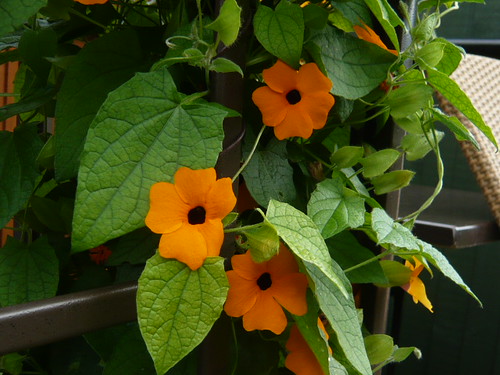
  • Walls and the partitions made places for climbers and scramblers like the Blackeyed Susan below.
  • Ensure you have adequate access for equipment and visitors

Read more about Artificial Grass on Gardening Products
Blackeyed Susan

Visit the Soup kitchen

More Horsetail or Mare’s Tail Weeds to Eliminate

More Horsetail or Mare’s Tail Weeds to Eliminate

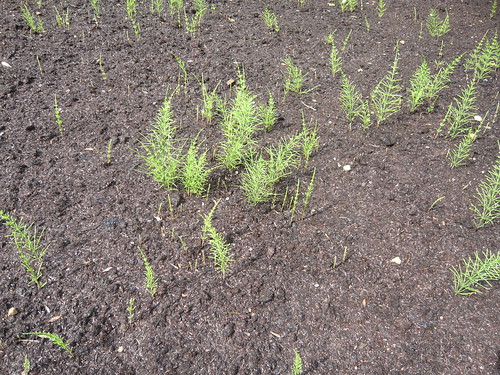
Mares tail

Mare’stail or Horsetail is a common garden weed that flourishes on damp soil. Even the RHS is prone to Horsetail as the picture taken at Harlow Carr Gardens demonstrates. I look forward to seeing how they cope!

Why it is a Problem

  • The plant reproduces by spores that are readily wind dispersed but most problems come from the rhizomes.
  • Rhizomes are extensive both horizontally and vertically and may reach over 5 feet deep depending on substrate.
  • Rhizomes break into small parts and reproduce quickly.
  • Tubers are then produced at the nodes of the rhizomes.
  • You can’t dig it out, although you may weaken the plants if you remove as much root as you can then hoe when you get above 1″ shoots.

Control and Eradication

Canterbury Bells not Cockleshells

Canterbury Bells not Cockleshells

LBA 067
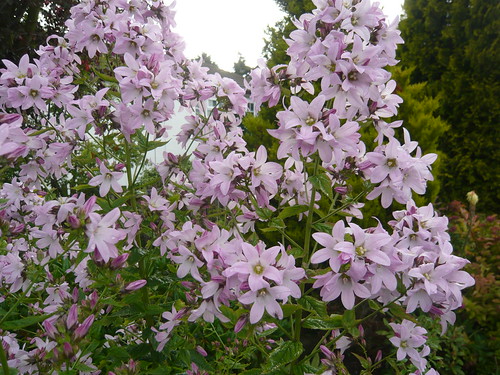
Campanula burghaltii is a showy Canterbury Bell or Campanula. The pale lavender flowers are borne on wiry stems that I find need no extra support. The leaves are leathery in texture and oval in shape.

LBA 062

Canterbury Bells are available in a range of sizes and colours. This Campanula lactiflora has been grown from seed and last year was even better as it made pyramids of flowers. Perhaps I should allow each plant a bit more space.

Bell Flower


This alpine version of the Canterbury Bell seems to be all flower and no leaf. It is performing well in  a moist plunge bed.
Book Cover
Dwarf Campanula by Graham Nichols
See also Campanula for the rockery here or Alpine campanulas.

canterbury bells

This Bell flower has self sown in my garden for many years. The stems need some support but they flower for a long period and I am loathed to pull them all up. I try help the white flowers as they seem less robust.

Read more about Growing Canterbury Bells

Read More Read More

British Apples Worth Growing

British Apples Worth Growing

With over 600 varieties of apple to grow in the UK, you need to refine your search for a good variety. (There may be as many as 2000 worldwide.)

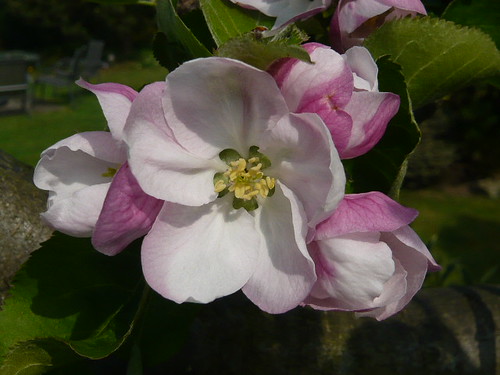
april apple blossom

Here are some British varieties

Ribston Pippin grown in Yorkshire since 1707
Egremont Russet tasty and nutty with white crumbly flesh
Claygate Pearman rich and scented and discovered in a hedgerow in 1820
Chelmsford Wonder a good cooker
Winter Wonder a recent breed which is crisp and juicy
Blenheim Orange, Beauty of Kent and Wyken Pippin may produce more taste than Breaburn, Gala and Pink Lady

Artistic view of Apples

‘Detailed watercolours depict the unrivalled range of form, colour and texture which characterize such varieties as Beauty of Bath, Peasgood Nonsuch, Cox’s Orange Pippin and Egremont Russet in this illustrious book by Rosie Sanders.

Book Cover

Also available from Amazon by clicking on the cover is the new book of Apples

Read More Read More