Browsed by
Category: Gardening

General gardening tips and hints

August Wild Flowers

August Wild Flowers

Augyst Wild Flower Garden

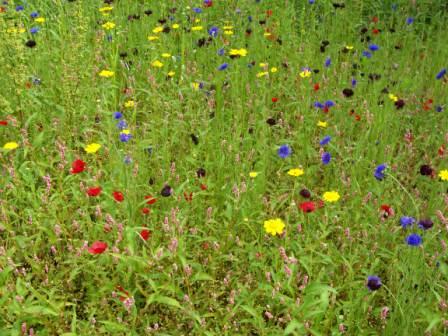
Wild flower gardens are generally thought to be at their best in spring but this colourful patch was a riot of colour in the middle of August.

Gardeners Tips for Wild Flowers

  • Poor soil conditions encourage flowering. Do not fertilise wild flower gardens
  • Group flowers with similar flowering times together. it would look to thin and patchy to have a mix of spring and Autumn flowers together.
  • Do not be too quick to tidy up. Let the seeds develop and drop so that annual plants renew themselves for next season.
  • If possible avoid competition from grass particularly for autumn wild flower gardens as they can choke off the flowering plants.
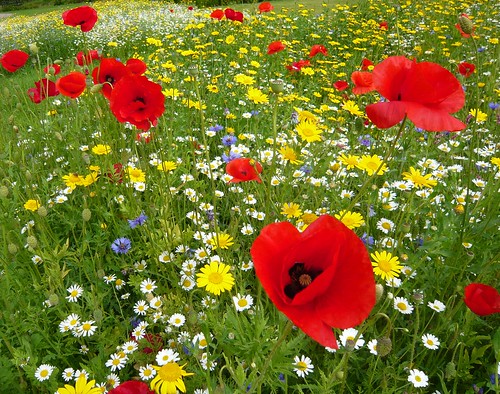
wild flowers

Wild Flower Mixtures

  • General; purpose meadow mixtures may contain, cowslip, oxeye daisy, knapweed, buttercup, campion, vetch and yarrow amongst others.
  • Hedgerow mixtures may have wood avens, plantains, agrimony, cowslip, oxeye daisy and knapweed,
  • Cornfield mixture as above will have corn cockle, cornflower and poppy and Forget-me-not
  • You can also get mixtures for sowing in wet marshes or for pond edges.
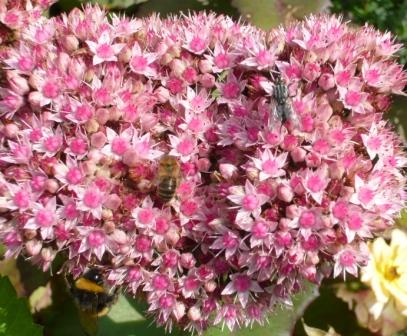
Attacting Insects To Your Garden with Spectabile

Attacting Insects To Your Garden with Spectabile

This Sedum spectabile ‘Brilliant’ has all the insects buzzing with interest. Many butterflies are attracted to various Sedum spectabile or ‘Ice plant’ species. Look out for Red Admirals, Cabbage Whites and other species in your garden.

September is a good time for flowers on these Sedums. They flower into autumn and can look architectural in winter when covered in frost.
Insects can over winter in the old stems so do not be oin a hurry to clear up the old perennials until spring.

Propagation

Read More Read More

Herbs for Drinks, Pillows and Baths

Herbs for Drinks, Pillows and Baths

Herbal Teas, Tisanes and Infusions

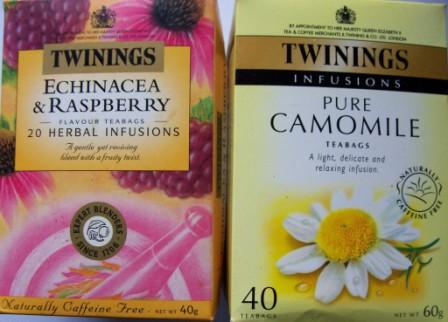
Herb tea made from dried or fresh leaves can be drunk hot or iced. Chamomile tea is popular and can be bought in tea bags but growing your own is more satisfying. Use one or two tea spoonful of leaves, dry or fresh, to a cup of boiling water and steep for five to ten minutes then strain if you wish.

  • Mint, Fennel and Sage can be used to create teas in the same way.
  • Tinctures are make by soaking in alcohol like cider vinegar and raspberries to make raspberry vinegar

Herb Pillows

Herbs were added to straw to deter insects in less sanitary times. Today it would be enough to collect flowers and put them in a small packet or muslin bag and hang it close to the bedhead.

  • Lavenda, Mignonette, Rosemary and Lemon verbena (Aloysia) make suitably restful pillows
  • Eucalyptus leaves are good for congestion with a strong scent when crushed

Herb Baths

Aromatic herbal baths can be theraputic and pleasurable. Hang a muslin bag filled with a handful of leaves under a running hot tap as the bath fills.

  • For stimulation try Basil, Bay, Lemon balm and Verbena, Mint or Rosemary.
  • For relaxation try Chamomile Valerian, Lavender or available scented flowers.
  • Healing herbs can be used such as Calendula, Acillea and Mints

Herbal Remedies

Herbs work as both preventative and curative medicines and the Greeks and Chinese have long been exponents of the craft. Remedies can be very powerful and be treated with respect. Do not ingest with prescription medicines without consulting a doctor.

  • Sage can be used to make a gargle for infected throats
  • Feverfew leaves or Meadowsweet can be chewed to relieve a headache
  • Yarrow tea is said to be good for colds
  • Dock and plantain leaves have long been used to relieve stings
  • Buy a good herbal medicine book
Stonking Stinking Plants

Stonking Stinking Plants

Stinkers are not the sort of plants you want to grow in a normal garden. So here are a few to avoid unless your adenoids stop you getting even the faintest whiff.
Lysimachia punctata

Proper Stinkers

  • Stinking Hellebore gives off the smell of rotting meat to earn the Latin name Helleborus foetidis and warn us that the plant is poisonous. It’s flowers native are beautiful but the whole plant niffs.
  • Stinking Henbane or Hyoscyamus niger has a sickly evil smell that Culpepper says’ the whole plant hath a very ill soderiferous smell’.
  • Stinking Meadow rue has a sticky covering on its leaves that also smell like dead fish
  • Stinkhorn fungus has putrid, spore-laden, phallus-like fruiting bodies that appear almost overnight and to many people it is ‘Top of the Pongs’.
  • Carnivorous plants attract flesh and fecal-loving insects to visit their stinking blossoms but they won’t attract me.
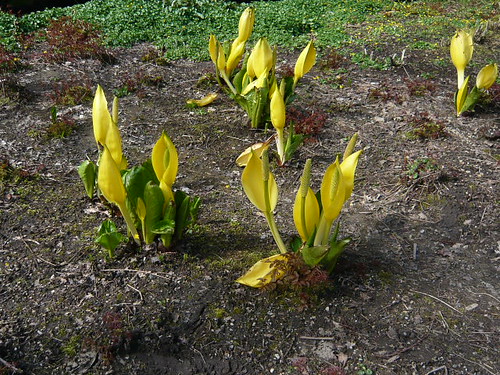
  • The Skunk Cabbage takes some beating as you may expect with a name like that aka Lysimachia punctata

All this without farmyard smells, rotting vegetation, over wet sour compost, garlic breath in the wrong place, animal waste, the list of pet hates is endless. Thankfully there are even more good smelling plants than bad so just watch how you sniff

    Grow and Collect Euphorbia – The Spurges

    Grow and Collect Euphorbia – The Spurges

    Euphorbia

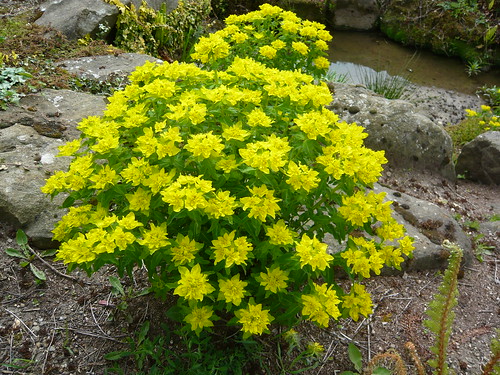
    These acid green flowers provide a strong compliment to the bright greens of spring. This E. cyparissias will spread by root and through seed dispersal

    With over 2000 species in the genera there are many types of Euphorbia from which to build an interesting collection. There are succulents, cacti and spurges from all continents. Try the tall woody thick leaved E. characias to the orange flowered E. griffithii ‘Fireglow’ or ‘Dixter’. That is not to ignore the most popular houseplant Euphorbia pulcherrima the Poinsettias but save those for Christmas.

    Read More Read More

    Award of Garden Merit AGM What, Where & Why

    Award of Garden Merit AGM What, Where & Why

    Whorled Tickseed (Coreopsis verticillata) 'Zagreb' RHS/AGM

    Buy AGM plants & varieties they have been tested by the RHS!

    The Royal Horticultural Society (RHS) is the UK’s leading gardening charity. It conducts a lot of testing and trials of plants. It has key gardens open to the public (free to members) at Harlow Carr, Wisley, Hyde Hall and Rosemore. Plants that pass the trials are awarded AGM (Award of Garden Merit) status and you often see the Trophy Cup mark on plant labels to recognise this.

    Why have an AGM System

    The purpose of the award is to highlight the best plants available to the gardener.

    • It must be of outstanding excellence for ordinary garden decoration or use
    • It must be available
    • It must be of good constitution
    • It must not require highly specialist growing conditions or care
    • It must not be particularly susceptible to any pest or disease
    • It must not be subject to an unreasonable degree of reversion in its vegetative or floral characteristics

    Dianthus - pink
    Dianthus Haytor White AGM

    What is Included in an Award of Garden Merit

    • Plants of all kinds can be considered for the AGM, including fruit and vegetables. An AGM plant may be cultivated for use or decoration. It can be hardy throughout the British Isles, or suitable only for cultivation under heated glass.
    • Every AGM plant has a hardiness rating for example H1 needs a heated greenhouse whilst H4 would be hardy. I like to collect plants with this award as I know the results will be down to me as a gardener not to the breeder of some untested variety.
    • Book Cover

      ‘Plant finder’ is published by the RHS. This book contains over 73,000 plants and where to buy them. Whatever plant you are looking for you should find it in here.
      Handy contact details with maps for over 750 nurseries help you locate your plants and buy them. Plus, having the correct botanical names ensures you find the right one every time.

      There are over 6000 plants with the Award of Garden Merit and they all get recognition in this book.

      At your garden centre or plant retailer look out for the agm symbol on the label.

      Credit
      Whorled Tickseed (Coreopsis verticillata) ‘Zagreb’ RHS/AGM by cliff1066â„¢ CC BY 2.0

    Grow Lupins Growing Lupinus polyphyllus

    Grow Lupins Growing Lupinus polyphyllus

    lupin

    Lupin flower at their best in May and June. A second flush can be encouraged by not allowing the first flowers to set seed and cut them as son as they have flowered. The tall 2’6″ spikes can be very striking in colours from white, deep purple through reds and yellows to various bi-coloured varieties. The old railway cuttings used to have blue and pink Lupins growing alongside the tracks after escaping from old station gardens.

    Read More Read More

    Grow Leucanthemum & Shasta Daisies

    Grow Leucanthemum & Shasta Daisies

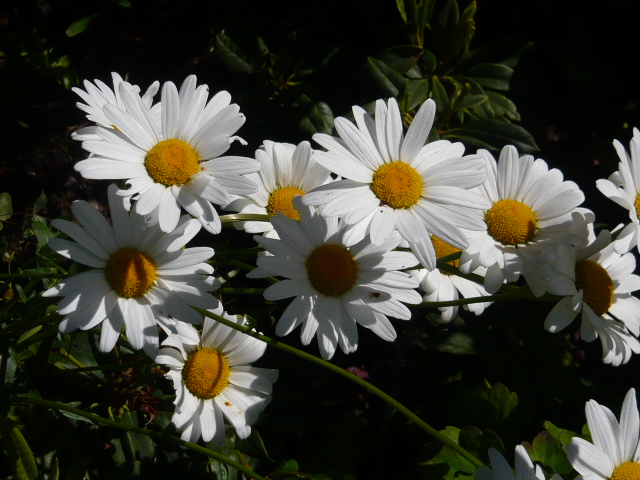
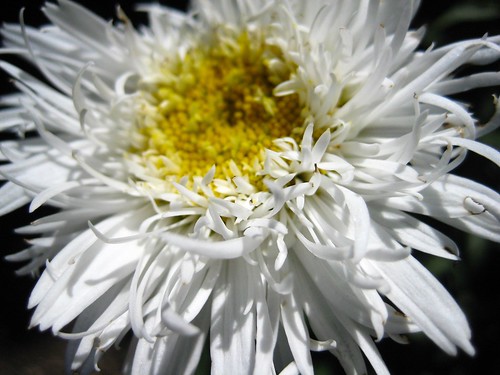
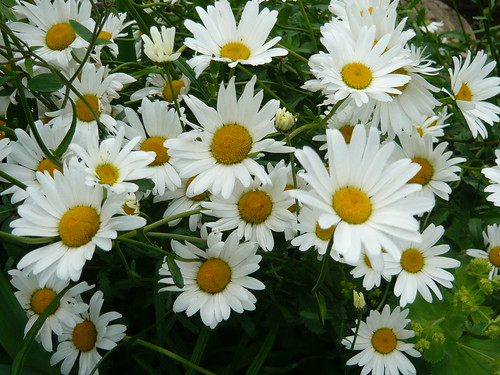
    Leucanthemum is one of the RHS perennial plants of the month. The variety I grow are shasta daisy flowers that are a mass of single white blooms with yellow centres appearing from June to September. They seed and spread prolifically and form robust clumps spreading up to 3′ and flowers are on 2-3′ stems that flop if not supported.

    Sunlight and Shasta Daisy

    Grow Leucanthemum Daisies

    • There are double and semi double varieties like Leucanthemum Superbum ‘Wirral Supreme’ or Aglaia.
    • The old fashioned Leucanthemum Superbum ‘Ester Read’ is popular for old cottage gardens with clumps of fluffy double white flowers growing 2′ or more.
    • Leucanthemum are useful as cut flowers.
    • Plants are floriferous and can be used in many garden situations.
    • Most varieities grow 12-24 inches high but Leucanthemum Superbum Phyllis Smith will reach 36 inches tall at the back of a herbaceous border.

    Leucanthemum

    Read More Read More

    Green Gardening Must Haves

    Green Gardening Must Haves

    It is not hard to be a green gardener although green fingers are often in short supply. Here are some things you can and shouldn’t do to improve the ‘green gardening habits’ you already possess. You must already be some form of green gardener if you garden at all.

    Top Steps to a Green Garden

    • Compost your green waste from the kitchen (no meat or fish). Then use the rotted compost on the garden. If you don’t want a heap try a big bucket or just bury the waste and it will still rot down.
    • Welcome wild life with appropriate plants that provide food and shelter for insects butterflies and other creatures
    • Grow your own fruit like apples and your own veg. You can also grow flowers for the house rather than buy imported flowers from a shop.
    • Conserve water and energy. A mulch will save water and if you apply any water make sure it is directed at the roots and wont evaporate in the mid day sun.

    Rhubarb
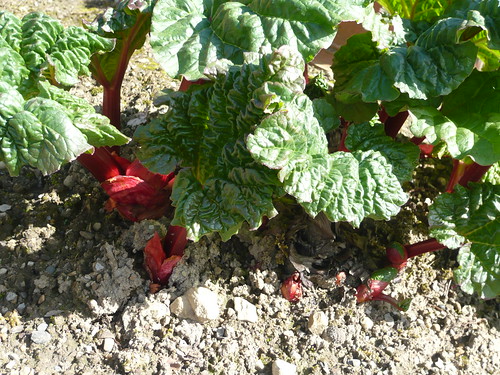
    Home Grown Rhubarb

    Have Nots for a Green Garden

    • Avoid killing creatures by too many noxious chemicals
    • Too much inappropriate hard landscaping can cause flooding and ‘aint green’
    • Too many imported plants have excessive air miles. Annuals should be home grown and native species of tree, hedge and other plants are best.
    • Do not be over tidy, leave some area of long grass and/or a rotting woodpile for insects.
    Creative Mulching

    Creative Mulching

    Mulch can be organic or inorganic and its purpose is to conserve moisture in the soil, suppress weeds, prevent seed germoination and protect the roots of new plants. The right material will look good and cut down on maintenance with less weeding and watering.

    Mulching is the covering of bare soil with a mulch. Choose a mulch that appeals to you and don’t be worried about experimenting.

    Organic Mulch

    • The good old stand by garden compost is one of my favourites that also adds some nutrition
    • Grass clipings. You can use grass clippings straight from lawn mower, as long as they don’t continue weed seeds or weedkiller.
    • Read More Read More