Browsed by
Category: Flowers and Plants

Annual, perennial and interesting flowers with advice on culture, information, tips and recommended varieties

Old-Fashioned and David Austin Roses

Old-Fashioned and David Austin Roses

Book Cover

Old-Fashioned and David Austin Roses by “Barbara Lee Taylor

Instead of the usual division into Gallicas, Damasks, Albas, Centifolias, Moss roses etc. the chapters are divided into History, once-flowering old-fashioned roses, Repeat-flowering old-fashioned roses, David Austin roses, Cultivation, Landscaping with old roses and the book contains over 160 rose varieties. As you read this book you can virtually smell the scent of your successful roses as though it were a warm June evening.

‘Discovering old-fashioned roses is often the beginning of a love affair that lasts a lifetime. These beautiful plants offer you not only fragrance and beauty, but also a fascinating link with the past. In this beautiful yet practical book, some of the most popular old-fashioned roses are described in detail and illustrated in full colour. There is a complete chapter on the work done by David Austin in the 1950s and 1960s to create new English roses. Topics include species roses; Gallicas; Damasks; Albas; Centifolas; Moss roses; Ramblers; China roses; Portlands; Noisettes; Bourbons; Hybrid perpetuals; Teas and early hybrid teas; Hybrid musks; Climbers; Shrub roses & ramblers; Rugosas; David Austin roses; Cultivation; Pruning; and Landscaping ideas.

Gardeners Tip

Plant an Old Fashioned Rose or two as near to your bedroom window as practical. Enjoy the evening scent.

Try Just Joey HT Rose
Eating Nasturtium a Peppery Food Crop

Eating Nasturtium a Peppery Food Crop

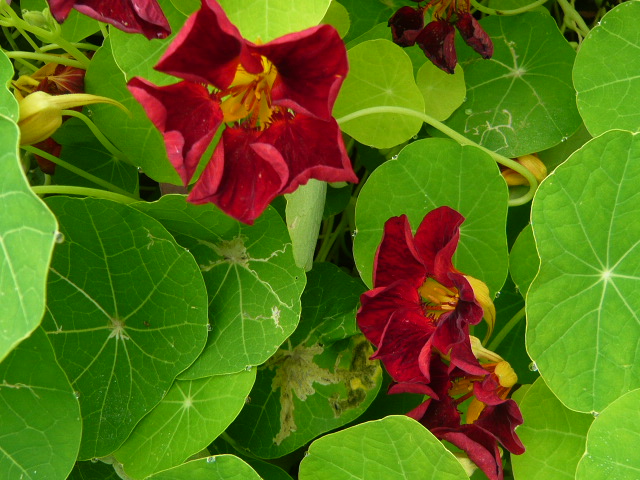
Nasturtium

I think of Nasturtium as an ornamental, annual, flowering plant but my vegetarian children take a different view. For many vegetarians ‘Nasturtiums make a salad’. In the case of Watercress they also make a soup and a vegetable.

Growing Nasturtium Leaves, Flowers and Seed Pods

  • Grow Nasturtiums from seed in your vegetable patch.
  • Rich soil will encourage leaves at the expense of flowers. Nasturtiums grown for decoration need a poor soil.
  • Nasturtium seeds from Thompson & Morgan
  • Before planting Nasturtiums in containers make sure they are well rooted in smaller pots started under cover.
  • Watercress Nasturtium Microphyllum or Nasturtium Officionale are best grown from rooted cuttings. Rooting in water is relatively easy.

Salad: Watercress, spinach and apple.

Eating Nasturtium Leaves and Pods

  • The leaves of the nasturtium plant are edible, with a peppery flavour. They can be tossed into salads mixed with sweeter varieties of lettuce.
  • The flowers make a unique garnish to fresh foods and add a splash of colour.
  • The seed pods can be treated like Capers and pickled or used as a crunchy addition to salads.
  • For tastiest nasturtium leaves, keep the plants well watered, which helps to moderate the spiciness of the leaves and flowers. Keep a bit drier to add a sharper tangy flavour to your summer salads

nasturtiums

Growing Watercress Nasturtium Officinale

  • Watercress is called Nasturtium Officinale or Nasturtium Microphyllum
  • Watercress is traditionally grown in gardens with chalk streams or a good supply of water as a semi-aquatic plant
  • Buy watercress with roots on at your local supermarket
  • An ordinary bunch placed in a bowl of fresh clean water will develop roots. Discard any that turn yellow or do not root and plant the rest.
  • You can grow watercress in a container but keep it exceptionally well watered.

chicken watercress salad

Tip
Growing Nasturtiums near Brassicas can deflect greenfly and white fly on to the nasturtiums to protect your other crops.
Pickling the seed pods of Nasturtium produces a crop similar to Capers.

Nasturtium-FowlersVacola-Num10-9108

Credits
Nasturtium by Dvortygirl CC BY-SA 2.0
Salad: Watercress, spinach and apple. by ulterior epicure CC BY-NC-ND 2.0
nasturtiums by artolog CC BY-NC 2.0
chicken watercress salad by aquino.paolo CC BY-NC-ND 2.0
Nasturtium-FowlersVacola-Num10-9108 by graibeard CC BY-SA 2.0 Pickled Nasturtium seeds look like and taste similar to capers.
Nasturtiums by robynejay CC BY-SA 2.0

Nasturtiums

Garden After the Flower Arranger

Garden After the Flower Arranger


After the flower arranger has taken the scissors and snippers to the plants in the garden I recommend you give your plants a thankyou! Flowers and shrubs will respond again if they are treated properly.

Help Plants After the Flower Arrangers Visit

  • Tidy up the plants from a gardeners point of view. Prune again to reshape shrubs and encourage new young growth. Open up the centre of plants to let in air and light.
  • Water, mulch and feed the woody plants.
  • Water in a liquid feed and or foliar feed after flowers have been cropped to perk up the plants for a further flush.
  • If the plant is exhausted or unlikely to provide a second crop, dig it out and turn it into compost asap.
  • Propagate new plants of favoured selections, the flower arranger is bound to return.
  • Consider deadheading all the flowers that were not up to the job for the flower arranger.

Flower Arrangement

Tips for Selecting Woody Plants

  • Chose plants everlasting plants or thoses that grow rapidly and regrow even after severe and frequent pruning.
  • Select plants that are harvestable early in life.
  • Pick plants that grow numerous stems borne over a long period of time.
  • Desirable features include stems at least 18″ long, retention of flowers, berries and foliage with a good vase life.
  • Boxwood, dogwood, forsythia, Eucalyptus, holly, hydrangea, jasmine, lilac, pussy willow, and corkscrew willow have long been popular in the floral trade.
  • For woody stemmed flowers increase the surface in contact with the water by cutting on a slant or crushing with a hammer.

Flower Arrangement

Credits
Flower Arrangement by lrargerich CC BY 2.0
Flower Arrangement by theclyde CC BY-NC 2.0
Flower Arrangement by dannnnnnny CC BY-NC-SA 2.0


Top 10 Garlic Varieties

Top 10 Garlic Varieties

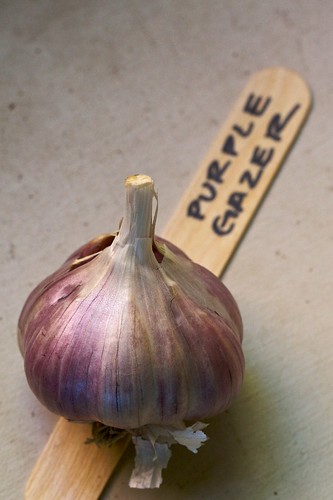
Garlic is increasing in popularity in the UK and a wide selection of varieties are now available. They grow well under glass or poly tunnel but also produce worthwhile crops in most sunny gardens and allotments.

Top Ten Varieties for the UK

    1. Solent Wight – a heavy cropper with large cloves
    2. Albigensian Wight – spring or autumn planting good keeper
    3. Purple Wight a ‘hard neck’ best used fresh as it is a poor storer
    4. Long Keeper large white bulbs to harvest in July from autumn planting.
    5. Early Wight another ‘hard neck variety’ with AGM in purple variety

Planting Garlic

  1. Luatrec Wight fat pink cloves with white outer skin and a good keeper.
  2. White Pearl autumn planted will store reasonalble well.
  3. Pink Lady a pink skinned bulbs and gloves that can be eaten raw.
  4. Germidore softneck variety that is well adapted to British conditions. Produces large, white bulbs with a mild but rich flavour.
  5. Chesnok Red a hardneck variety from Georgia with attractive purple striping and a lovely, full-bodied flavour. Lovely choice for baking as it has a lovely creamy texture. Great for garlic bread!

Garlic
Elephant Garlic would be in many best top ten lists but is closely related to the Leek side of the allium family   see Gardeners tips

To buy a selection of Garlic at Thompson & Morgan

Credits
Planting Garlic by Chiot’s Run CC BY-NC 2.0
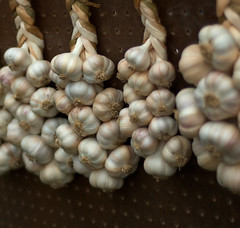
Garlic by mrwalker CC BY-NC-SA 2.0

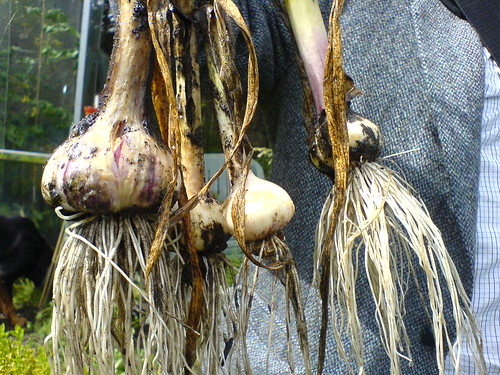
‘It’s that time of the year to plant garlic. I’ve read that you should plant it around fall equinox, which I missed by about a month. I received my planting garlic the day before we left on vacation and just planted it on Sunday. I ordered 2 garlic samplers from Gourmet Garlic Gardens again this year. Each year I’ve grown garlic, I’ve tried a few different method for planting. I’m hoping this year I’ll finally be able to grow nice big heads of garlic. Mine usually end up being small, but they’re still quite tasty. I chose a free-draining area of the front garden and amended the soil heavily with compost.

For specific varieties planted and planting directions from another site visit:  chiotsrun.com/2010/10/28/planting-garlic/’

For more information  read Tricks to get great garlic


Growing Rain Lily Bulbs & Zephyranthes

Growing Rain Lily Bulbs & Zephyranthes

Try a new flower to go with  seasonal rain. This 2015 update on my attempts to grow Rain Lilies

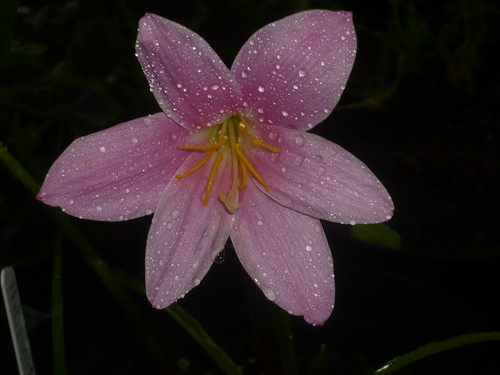
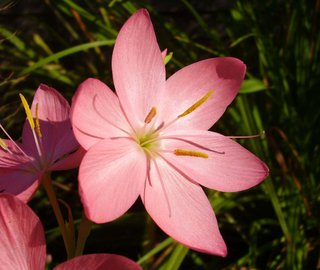
I discovered a 6 inch pot in my greenhouse with a label saying Habranthus but I don’t know where I got the contents from. There were a couple of short, green, narrow leaves and little else until this week when flowers erupted from the soil on 4 inch stems with petals nearly as long.

I water my greenhouse with a hosepipe spray except when I am adding fertilizer and recently I have been misting over all the pots and plants. You can see how the spray has stuck to the Habranthus flower.

habranthus

Habranthus is a genus in the Amaryllidaceae family with species from Central and South America extending into southern North America. They have narrow, linear or strap-shaped leaves. Their flowers are very similar to Zephyranthes and both are called rain lilies.

This variety of Habranthus is flowering in late Summer (Sept) and offers a delicate touch to colour with minimum fuss. Habranthus bulbs should be quite hardy in the UK.

Read More Read More

Spring Narcissus in Pots

Spring Narcissus in Pots

If you want to pick a bunch of flowers like these next spring first you need to buy and plant your bulbs.
The best selection is generally available first.

Buying Spring Bulbs

  • From August the bulbs start arriving in the nurseries and Garden centres.
  • I have bought my first selection of miniature Narcissus Little Gem. They will grow 6-8″ high (or short) and flower sulphur yellow.
  • I have in mind to grow them in pots in the cold greenhouse.
  • Another variety I am on the look out for is ‘Cedric Morris’ which often has flowers by Christmas. It is the earliest daffodil I know and beats the first snowdrop and winter aconite into flower.
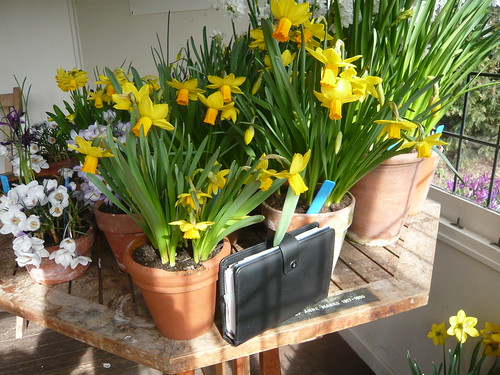
  • Below is a display of small Narcissus shown to scale against my filofax.


narcissus nivalis

Narcissus Bulbocodium var. Nivalis.
Comes from Portugal, where often found in damp peaty soil. Also does well grown here in pots. Can also be naturalised in grass.

Related

Early Narcissus in pots
Tips for Narcissus Growing in Pots

Read More Read More

Saxifraga Irvingii

Saxifraga Irvingii

Saxifraga x irvingii 'Jenkinsiae'

This is a lovely low growing alpine. It flowers in early spring (here pictured flowering in Feb).

it goes without saying that like other alpines, this Saxifraga will benefit from a well drained position to avoid rotting away in a cold waterlogged soil.

It is very low growing, though easily earns its place for its attractive foliage and one of the earliest ‘pink’ flowers of the season.
Saxifraga x irvingii 'Jenkinsiae'
Companion plants

This saxifraga was being grown in rockery of Oxford Botanic Gardens. Nearby were Cyclamen coum, Iris reticulata and snowdrops. Also consider dwarf Alliums such as Allium cyaneum.

An even earlier Saxifraga is Saxifraga burseriana.

See also: ‘Growing Cushion plants‘ Common name for some Saxifraga’s

Saxifraga Irvingii at Saxifraga society

Alpine Garden society

Helleborus Purpurascens

Helleborus Purpurascens

Helleborus purpurascens

This lovely Helleborus could be planted in a ‘black flower’ garden it is so dark.

Growing Helleborus Purpurascens

  • Looks great next to snowdrops (white on purple, creates good contrast)
  • Flowers in Jan, Feb, March.
  • Dies back during Summer, so be careful not to disturb in summer.
  • Hardy against all but strongest frosts.
  • Grows well in shade or partial shade
  • Not too fussy, but prefers humus rich soil – well drained, but retains moisture.
  • Leaf mould makes excellent soil conditioner.
  • Avoid acidic soil. Prefers neutral or alkaline.
  • In summer, removed tattered foliage.

Related