Browsed by
Category: Flowers and Plants

Annual, perennial and interesting flowers with advice on culture, information, tips and recommended varieties

Hyacinth Growing Tips
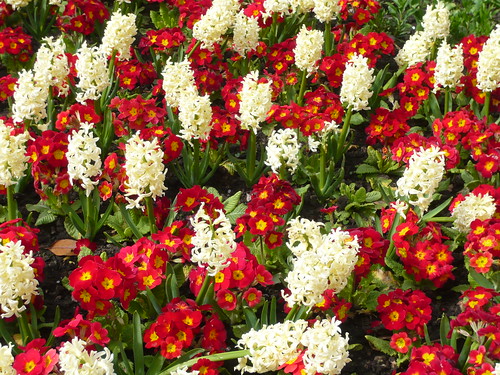
Hyacinth Growing Tips

hyacinth & primrose

Growing Hyacinths

  • Hyacinths like brilliant drainage
  • Hyacinth need full sun and a good baking during summer
  • Feed with a potash fertilizer in early spring to help roots and bulbs.
  • Plant between September and December. Christmas indoor bulbs need to be ‘prepared’ and planted as soon as available.
  • Put an inch of grit in the bottom of a pot to help drainage and cover the top of the bulb with 3″ of soil.
  • Deadhead and allow leaves to die down naturally.
  • Propagate by dividing clumps in early autumn.
Read More Read More

Bulbs to Plant this Autumn

Bulbs to Plant this Autumn

Get your bulb catalogues out and select your planting scheme for a glorious display next spring. Plant some bulbs just to cut for indoor flowers – the bunches will be superior to those you will pay na fortune for in the shops next year and you have the fun of growing your own.

I have planted some smaller bulbs around my rockery for spring flowers.

Selection by Height
‘Crocus Whitewell Purple’ are early flowering with 6 purple petals that open almost flat to display their attractive yellow stamen. They grow 3″ tall.
Narcissus Canaliculatus are multiheaded 4″ high flowers with white petals and yellow trumpets. They do not like dry soil.
For a dry spot I have planted a bulb new to me Ipheion Uniflorum. This has fragrant lilac-blue star shaped flowers 6″ tall.

Read More Read More

Verticillium Wilt Prevention and Cure

Verticillium Wilt Prevention and Cure

Verticillium fungi is a soil-borne fungal disease that can survive for 10 or more years in the soil. I am worried that a variety of strawberries (Hypia) I have just bought may be susceptible and despite treatment with sulphur based products I have to just hope.

Main symptoms
Yellowing leaves, leaf wilting and dieback
Curling leaves and discolored streaks on stems
All can lead to low yields and plant death.


What is Affected

Strawberries, berry canes, including raspberries and blackberries are particularly susceptible to infection.
Tomato, potatoes, peppers and eggplant
Some other vegetables and ornamental plants

Prevention not Cure
Good hygiene particularly clearing dropped fruit in autumn.
Don’t throw wilted leaves or any part of an infected plant onto the compost pile.
If you’ve had wilt don’t plant the same crop in the same ground.
Remove stricken growth or the whole plant

Dwarf Water Lilies for Small Ponds and Barrels

Dwarf Water Lilies for Small Ponds and Barrels

You can’t throw lilies away if Lily is still wearing them (Lonnie Donegan)

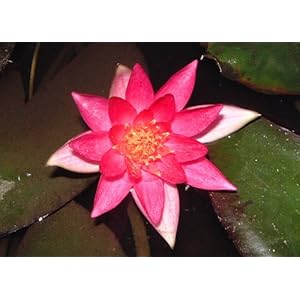
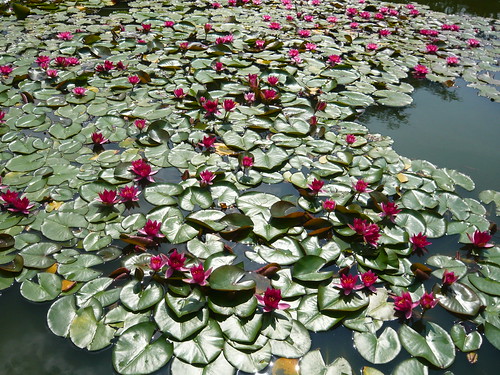
If you have a lake then you can grow some brilliant Water Lilies (Nymphaea). If you have a large pond you can also grow water lilies like those above. However if you have only a small 6 inch deep area of water you can still grow Nymphaea ‘Pygmaea Helvola’ a small water lily with 3 inch yellow flowers.

Dwarf lilies are generally suited to small ponds, while some of the smallest of their kind can safely be used in tubs and half-barrels. They spread 12 to 24 inches and cover 1 – 3 square feet when fully grown.
They need a planting depth of around 6 inches and will produce a series of small but beautiful flowers over the summer.
Available to buy from Amazon

Dwarf and Small varieties to consider

  • Nymphaea ‘Aurora’ – a compact ‘changeable’ variety, suited to tubs as well as small ponds.
  • Nymphaea ‘Paul Hariot’ – another ‘changeable’ it has big flowers for a dwarf variety.
  • Nymphaea pygmaea’Alba’ – a tiny flowering variety ideal for the smallest of water features.
  • Nymphaea ‘Laydekeri’ – various Laydekeri varieties exist that are ideal for even very small ponds.
  • Nymphaea tetragona – “White Pygmy”

Far from mini a mass of water lilies to admire.
Water Lilies

Water Lily Pics and Tips

Water Lily Pics and Tips

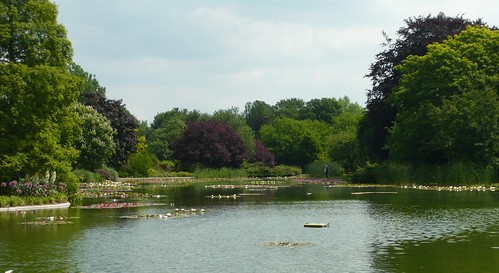
Lily themed week shows some more waterlilies and tips for a happy pond.

Burnby Hall Pocklington

Tips for Growing Water Lilies

  • Different lilies enjoy different depths from 6″ – 48″
  • The native nymphaea alba is too thuggish for all but the largest ponds.
  • Avoid shade,  Water Lilies need sunshine.
  • Water Lilies like still water and do not go well with fountains.

    Read More Read More

Tip for Sowing Peas and Sweet Peas

Tip for Sowing Peas and Sweet Peas

An excellent way to start off sweet peas, is to use a piece of old guttering.

  • Fill the gutter with compost and place seeds at appropriate intervals (3cm apart). They can be sown from March to May
  • Place the piece of guttering at a slight angle so that excess water will drain away.
  • Keep well watered and when the seedlings have reached a height of 5-6 inches they can be planted out.
  • The advantage of using plastic guttering is that it becomes easy to plant out. Just push the seedlings out of the guttering and drop into a hole and the appropriate planting distance.
  • Growing in plastic guttering makes it easier to protect the vulnerable seedlings from slugs and snails. They can also be grow indoors to give the seedlings a head start.
  • Sweet peas grow long roots and need a deep pot
How To Encourage Wildlife into Your Garden

How To Encourage Wildlife into Your Garden

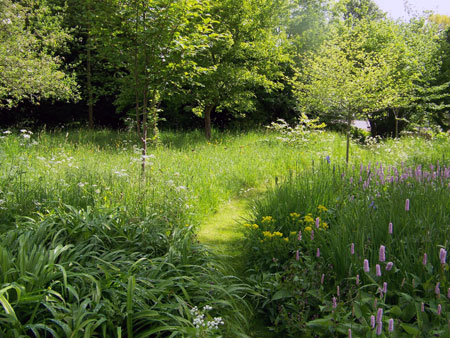
winding path

Some Tips for Encouraging wildlife into your garden:

Stack of Logs.

If you make a small stack of logs and cones, you will provide shelter for a variety of small creatures such as frogs, insects and small mammals. The stack of logs can be attractive in its own right and helps to build up an eco system in the garden.

Nesting boxes.

Choose a variety of nesting boxes for birds and also insects. One of the most useful creatures in the garden is the hoverfly. Former BBC gardeners world presenter, Geoff Hamilton, used to provide nesting boxes especially for hoverflies and ladybird, he even used to harden off the nesting spaces.

Water.

A pond with easy access from the side will be much appreciated by birds, hedgehogs and frogs. Make sure it is easy to access from the sides. In summer keep the pond topped up; this can be very important during very dry periods, when many water sources may dry up.

Read More Read More

Growing Penstemon

Growing Penstemon

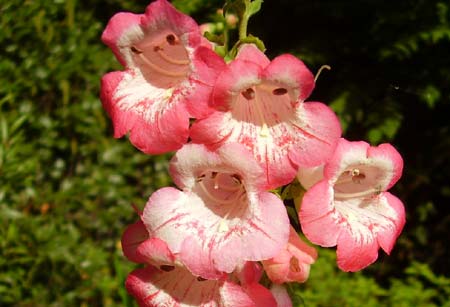
penstemon

Penstemon are one of the most underated herbaceous perennials. Relatively easy to grow they can give an uninterupted display of flowers for several months.

The growing requirements of penstemon are fairly basic

  • Like a well drained soil. Penstemon do not like a heavy waterlogged clay
  • Like full sun. or at least sun for part of the day.
  • Penstemon are hardy, but, early growth may be caught by late frosts. It is advisable to cut back Penstemon in spring time – April /early May This means old growth will provide some shelter from frost. It is important to cut back otherwise they will become woody.
  • Benefits from general fertiliser in early May

Read More Read More

Creating a Fountain in the Garden

Creating a Fountain in the Garden

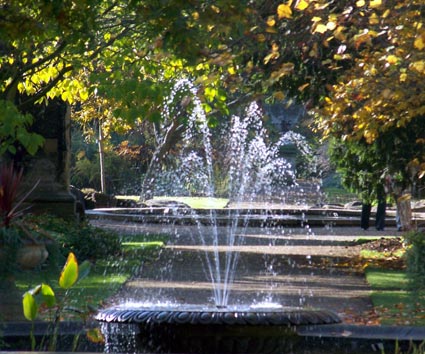
fountain

Fountain in Oxford Botanic gardens.

One of the best ways to enhance a garden is through the addition of a water feature. Water brings a new element to the garden. In this photo the sunlight has caught the spray from the fountain, lighting up the picture.

Benefits of Adding Water Feature to garden

  • Water helps create interest
  • Creates a focal point in the garden
  • Sound is reassuring soothing; it adds an extra element to the garden
  • Children will love them.

Downside of Fountains

  • Moving water can damage plants. Water lilies prefer  still or slow moving water.
  • There is a cost of running and maintenance of a fountain.
  • You need to keep an eye on safety


Sunlight Through Autumn Leaves

Sunlight Through Autumn Leaves

sunlight

I took this photo in Autumn last year, outside Merton College, Oxford near to Christchurch Meadow. The natural sunlight highlights the colours of the changing leaves.
The sugars in the old leaves can create wonderful colours ni autumn