Browsed by
Category: Flowers and Plants

Annual, perennial and interesting flowers with advice on culture, information, tips and recommended varieties

Gardeners Gnome enclature

Gardeners Gnome enclature

Guardians of the Mint
Do you remember Bill & Ben the flowerpot men and their friend Little Weed?
Did they have gnomes in the garden and if not why not. These little stone or pot ornaments do not do any harm except when dropped on slugs.

The word Gnome is more pc than the German equivalent of Garden Dwarves hey-ho as Snowwhite wouldn’t say
Grumpy Gnome home
Keep Calm and talk to your Gnome
Stay off the grass only smoke tobacco
If you want to grow your own food look for bacon seeds

What do you call plant that self sows everywhere? A weed

Free weeds  – Pick Your Own!


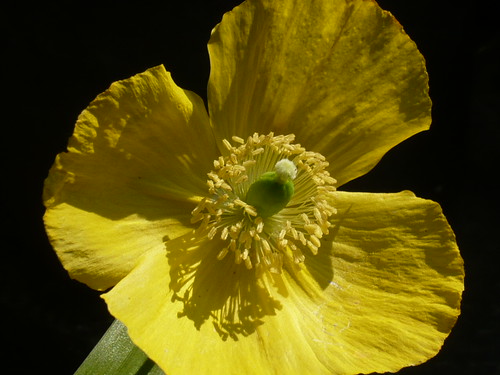
Poppies from Seed

Poppies from Seed

Icelandic Poppy

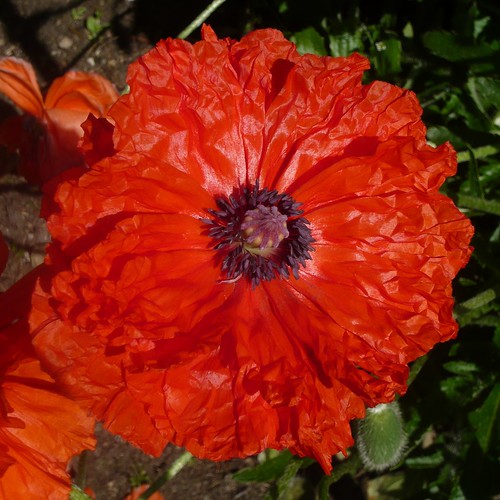
Georgia O’Keefee painted some brilliant portraits of red Poppies some times upto 3 feet wide and high, even bigger than the real thing in my garden.The last photo shows how Red and Green work well together on a canvas or in a garden setting.
Oriental poppies are perennial and most Poppy species are easy to grow from seed of which 50 varieties are available from Thompson & Morgan

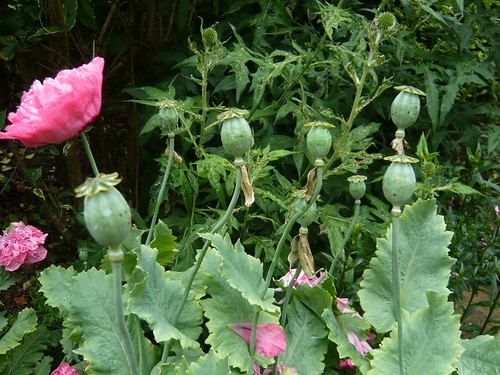
poppy seedheads

Poppy seedheads form in the capsules and when the seed is ripe the lid of the capsule opens to allow seeds to be shaken out. They are not all sown at once by this method so if conditions are not right some seed remains in the pod.
Seed is hard black and long lived.

The Poppy petals are sumptuous is texture and colour and can be very showy through-out summer if you select a range of varieties.


Read More Read More

Pittosporum for Leaves & Flowers

Pittosporum for Leaves & Flowers

Madiera mch11 466

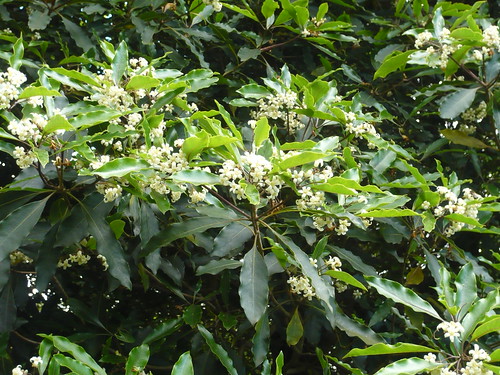
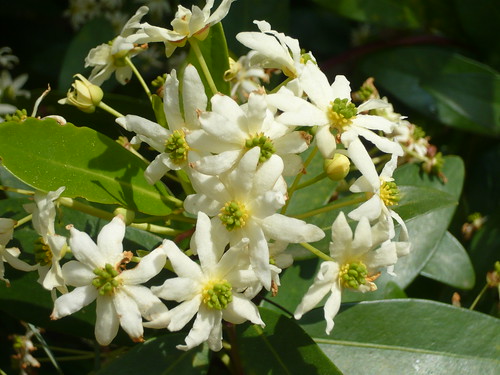
Pittosporum is a large genus of evergreen shrubs or small trees. The foliage is in demand for floristry and the shrubs make an excellent evergreen plant if the conditions are mild.
Most varieties have small scented white flowers and produce better flowers in warm conditions.

Pittosporum are also called Japenese Cheesewood

Cultivation of Pittosporum

  • Pittosporum Dallii and Pittosporum patula and Pittosporum tenufolium are more hardy species in the UK.
  • Pittosporum will grow well in seaside locations if the climate is mild.
  • Most plants originate from Australasia and like hot dry conditions.
  • Some varieties of Pittosporum produce small red berries.
  • Pittosporums can also be grown indoors as bonsai.
  • Larger plants can be used as a climbing-frame for lightweight late-flowering clematis.
  • Pittosporum tenufolium can have leaves with wavy margins and most have interesting colour, from bronzed plum to the bright butter-yellow of `Golden King’.
  • Tenuifolium ‘Purpureum’, has purple-bronze foliage and rapidly makes a decent-sized small tree

Madiera mch11 286

Selected Varieties

Read More Read More

Pomegranate Growing & Health

Pomegranate Growing & Health

005

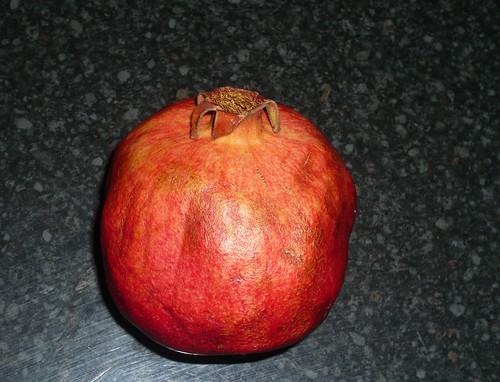
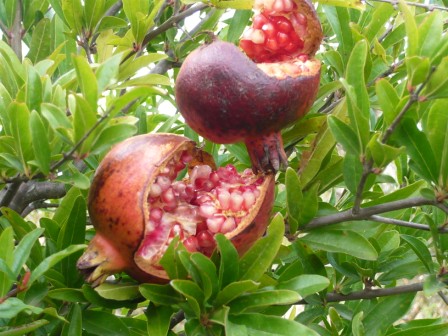
The pomegranate is a native of Iran and Pakistan. The shrub or small tree bears bright red flowers and juicy, if seedy fruit.
Even if placed in the sunniest, warmest part of the garden they will suffer in the UK but with global warming who knows.
pomegranite

The pomegranate Punica granatum can range from a dwarf shrub of 3′ to a small tree of 20-30′.
Pomegranate are supposed to be a frost-hardy bush with glossy green leaves.
I will stick to hot climate grown pomegranates for the sweetness and freshness.

Book Cover

Pomegranate for Health

Some claim recent research points to Pomegranite juice combating many of the conditions of ageing, Alzheimer’s disease, various forms of cancer, heart disease, stroke and hypertension, arthritis, and in protecting the foetus from brain injury. If only a small part was true what a wonder.

More conservatively pomegranate is ‘Naturally rich in Vitamins A, C, E, and Iron, that is great for your heart, circulation and protecting cells against free radicals. Pomegranate is believed to help support the maintenance of the body’s natural free radical defences and is great for your heart and circulation.

It is believed to be one of the most potent antioxidants available, providing Polyphenols and Elligatannins which may help to support the body against cell damaging free radicals.’

Pomegranate is believed to help support the maintenance of the body’s natural free radical defences and is great for your heart and circulation.

Also sold in seed form as Anardana Seeds

Datura, Brugmansia or Angels Trumpets

Datura, Brugmansia or Angels Trumpets

datura

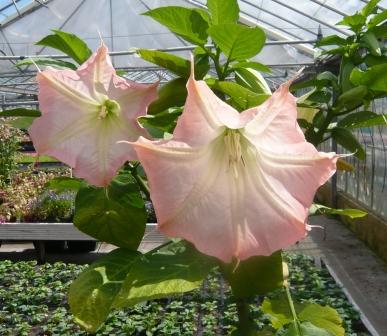
My Datura last year were a perfect white when in flower and I collected fresh seed in good quantity.
I couldn’t keep the plants frost free so they died. Unfortunately none of the seed have germinated so I am without these large trumpet shaped flowers. I was nearly tempted to buy this pink plant for the green house but resisted to spend the money on something more practical like a new Hoe.

The Brugmansia plant is poisonous and this is reflected in some of the common names; it is know by Devil’s Trumpet, Hell’s Bells, Devil’s Weed, Devil’s Cucumber, Sacred Datura, Angel’s trumpet, Moonflower, Thorn apple, Indian apple, Pricklyburr, and Jimson Weed.

Madiera mch11 152

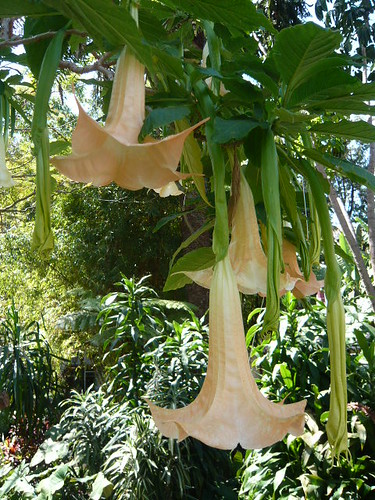
Don’t let this put you off, Datura look great in a large container in a sheltered sunny spot in the garden, indoors or in the conservatory. The scent is fantastic and the scale extraordinary. Plants 6-8 feet high with 18″ trumpet flowers.

Brugsmansia and Datura are explained in far more detail in this book available from Amazon on this link.
Book Cover

Brugmansia Species

  • Brugmansia ×candida is an evergreen shrub growing 10 to 20 feet tall and has white trumpet flowers
  • Brugmansia arborea (tree)
  • Brugmansia aurea
  • Brugmansia insignis
  • Brugmansia sanguinea
  • Brugmansia suaveolens
  • Brugmansia versicolor
  • Brugmansia vulcanicola

More images

Brugmansia differs from Datura in that it is woody, making shrubs or small trees. Brugmansia have pendulous flowers, rather than erect ones. They are both from the Solanacea family.

Read More Read More

Grow Your Own Cheap Violas

Grow Your Own Cheap Violas

Viola self sown

Violas are perennial and grow best in well drained soil that has an open structure to encourage fibrous roots and promote many stems from the same root. They may get a bit leggy so cut back two or three times during the spring and summer to encourage new shoots and more flowers. Aid this by applying a liquid rose fertilizer or seaweed and keep watered.

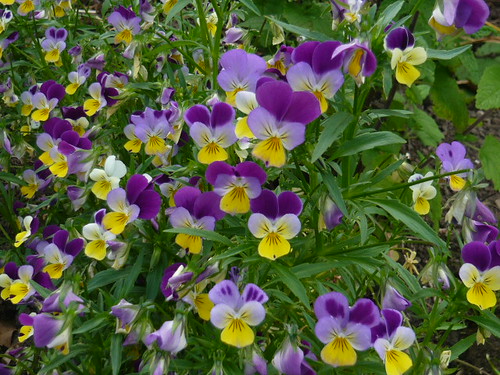
Violas do not have the ‘blotch’ of the pansy but may have dark rays in the blue yellow or mauve petals. Violettas are very similar but with smaller flowers, compact habit and a good fragrance.

Many violas self seed but I try and collect seed from plants that I like. Sow the fresh seed on the surface of the compost but exclude light until they germinate in about 2 weeks.

Propagation to get more Violas for Free

  • In the second week of June cut plants back to within 2 inches of the soil.
  • When the shoots grow back to 3 inches long scatter some fine soil mixed with peat, amongst the shoots and keep well watered.
  • In two or three weeks the shoots will have rooted and can be replanted in a shady spot
  • Pinch out the growing tip to encourage branching
  • Divide plants every two or three years in Spring as they start to grow or in Autumn but the results may not be as good as the rooted cuttings.
  • Alternatively sow fresh seeds in July. Cover lightly but then exclude light for a few weeks until they have germinated. transplant in October to flower next spring.

Violas in Rockery

Read More Read More

Daisy Daises a 20,000 Strong Family

Daisy Daises a 20,000 Strong Family

062

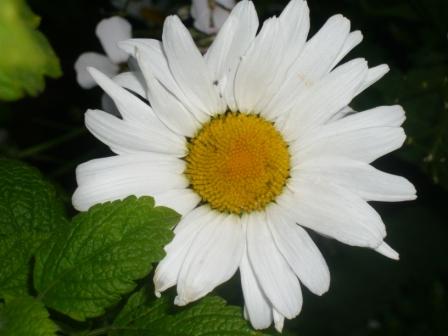
One gardeners Daisy is another gardeners weed. This Ox- Eye daisy is made up from numerous white ray flowers surrounding a bright yellow disk flower or florets the outer white petals are common in many daisies. Bellis perennis is the common daisy growing in meadows and many lawns. Lots of children will be familiar with the Daisy chains made by linking flowers together.

More exotic daisy plants can be discovered in this comprehensive guide.

Book Cover
Daisies are from the Asteraceae or Compositae family that has over 20,000 species from over 1500 genera that includes the Asters, Senicio and Sunflowers.

Read More Read More

Plants for Windy Gardens

Plants for Windy Gardens

windbreaks

Tulips protected by a windbreak.

If you live in an exposed environment with strong winds, you will have to be more selective about the plants you chose. Bear in mind also, windy gardens may soon dry out. You will have to avoid plants which can easily get ‘wind burn’ – acers for example spring to  mind.

Gardeners often see wind as an ‘enemy’ of the garden – blowing over their prize delphiniums e.t.c. But, wind can have beneficial effects. Some plants like bamboo and grasses, look enchanting blowing in the wind. With careful planning, the windy garden can still do well. One tip is simply to see what is thriving in similar environments. Good plants for windy gardens include

Best Plants for Windy Gardens

Bamboo. Chose a non-invasive variety or grow in pots. Bamboo makes a great sound swaying in the wind. It also helps to offer a flexible windbreak, to provide more shelter.

Hydrangea. A low growing shrub with attractive blue or pink flowers in summer. In particular thrives in coastal situation with both wind and salty air.

Scot Heather – grows in a variety of conditions from exposed moorland to the town garden. Only real requirement is an acidic compost.

Sedge – Carex. A grass that looks great blowing in the wind. Tough pliable bronze foliage looks great in the wind.

Sea Lavender – Limonium – A much undervalued annual with attractive flowers in the height of summer, will be fine in windy environments.

Chilean Potato Tree – Solanum Crispum. A fast evergreen climber which will soon cover fence and provide more shelter.

Geraniums and Pelargoniums. These low growing annuals will be fine in windy conditions. This applies to over low growing annuals such as buzy lizzies.

Related

Good Companions Crocosmia and Euphorbia

Good Companions Crocosmia and Euphorbia

Burnby Hall Pocklington

You only need subtle shade changes to achieve a striking effect with well chosen plants. Good companions complement one another in a range of ways.

These Euphorbia and Crocosmia work well together due to the shape and forms of the leaf and the similarity and warmth of colour.
Crocosmia will flower in a hue like that of the Euphorbia but later in the summer – see images.

For more information on Euphorbia read Top Ten Euphorbias

For more pictures and growing tips on Crocosmia see link

Burnby Hall Pocklington

These Malva moschata are easy to grow perennials that flower strongly in mid summer. The pastel shade of pink is also picked out in the eye of the virtually white flower.

Read More Read More

Growing Sedum or Stonecrop

Growing Sedum or Stonecrop

014

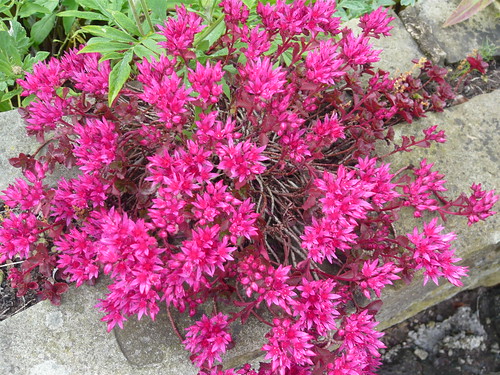
A small name but a large, 400 strong, species. There are many Sedum or Stonecrop family of plants to grow.

Growing Tips

  • Sedum is a succulent plant that stores water in it’s leaves.
  • As with other succulents they are often cultivated with Cacti but are easy to grow in a garden.
  • Sedum varieties can make good ground cover from rose-shaped growths in shades of green, yellow and pink.
  • Sedum are not heavy feeders and do not need good soil. That is why the above plant is growing in my wall.
  • Sedum thrive best in full sun or a good light.

The Sedum society has a seed distribution and cuttings service.  Read more on Sedum and Saxifrages or Sedum Ice Plants

Sedum Matting

Read More Read More