Browsed by
Category: Flowers and Plants

Annual, perennial and interesting flowers with advice on culture, information, tips and recommended varieties

Tips for Growing Tazetta Miniature Daffodils

Tips for Growing Tazetta Miniature Daffodils

Daffodils are classified into 13 divisions and currently one of the most popular is Division 8 Tazetta Narcissi. These are a group of low growing daffodils that are at home in rockeries or containers.
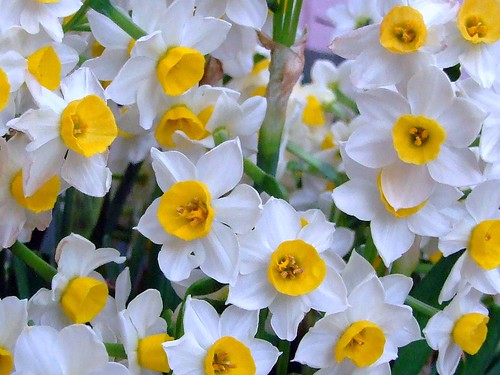
AMARYLLIDACEAE 石蒜科 - Narcissus (Narcissus tazetta var. chinensis) 中國水仙

Features of Tazetta Daffodils

Tazettas have several flower heads per stem and look very showy as a result.
All the varieties flower at about 12 inches high.
Tazettas are popular for pot growing and forcing as they do not need a long period of cold before rooting and growing.
Most Tazettas are well scented.
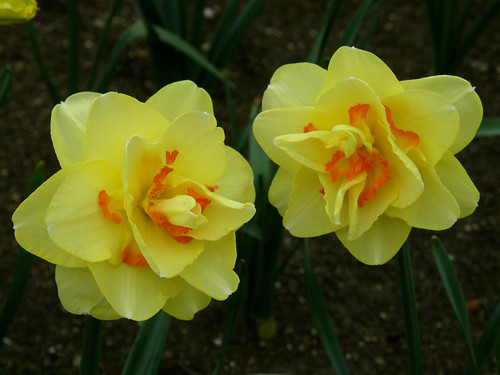
#2729 daffodils (æ°´ä»™)

Key Varieties of Tazetta Daffodils

Paperwhites are one of the best known Tazetta varieties. They have a good scent and are easy to grow for Christmas flowering or in pot culture.
Cheerfulness has a double perianth (outer petals) and flowers in pure white or as a pure yellow sport often sold as Primrose Beauty.
Cragford is a variety I am growing this year with a plan to cut flowers for indoors. It is scented with white petals and a deep orange / scarlet cup.
Avalanche flowers a bit later in April. It has white petals and lemon coloured central cups.
Geranium is another old favourite with white petals and orange cup.
Scarlet Gem has 4-6 flowers per stem with the best red ey and deep yellow perianth.
Hoopoe has petite yellow scented flowers.
Chinese Sacred Lily Tazettas have creamy white petals with a small, scented and flattened yellow cup.

Narcissus tazetta

Tips for Forcing Tazetta Daffodils

Plant in well drained compost in crocked pots.
Plant so the nose of the bulb is just level with the top of the compost. You can plant the bulbs close together.
Keep the planted-up pot in the cool dark for four to six weeks.
Bring out into brighter light and more warmth until they flower in 6-9 weeks.
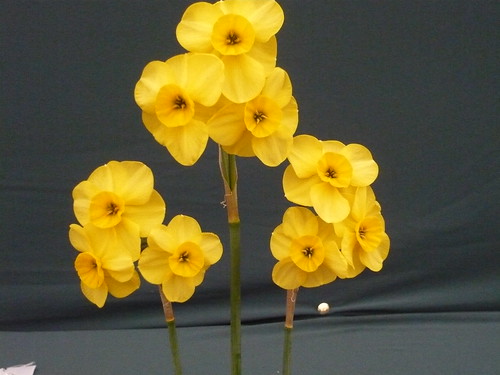
Daffodil selection

Other Resources

Daffodils can be ordered now for Autumn delivery from Thompson & Morgan

Other types of Miniature Daffodils and Narcissi Tips
Gardeners tips for Growing Daffodils
Daffodil divisions

Photo Credits
“AMARYLLIDACEAE 石蒜科 – Narcissus (Narcissus tazetta var. chinensis) 中國水仙 by kaiyanwong223 CC BY-NC-SA 2.0
#2729 daffodils (æ°´ä»™) by Nemo’s great uncle CC BY-NC-SA 2.0
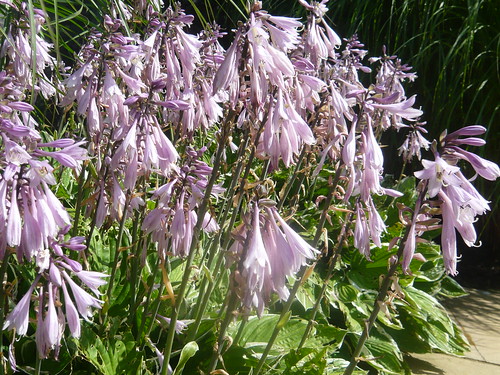
Hostas as Slug and Snail Food

Hostas as Slug and Snail Food

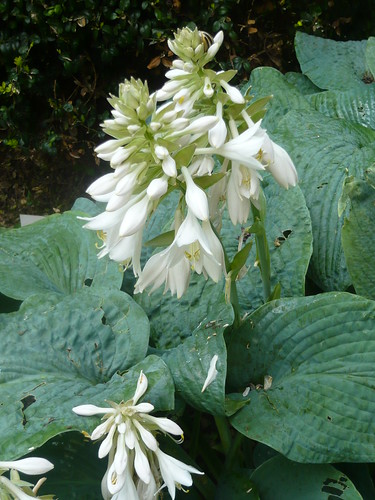
Hosta flowers

Not so long ago my Hostas were in fine flowering fettle. Now as Autumn approaches the slugs and snails are making a meal of the soft juicy leaves that are starting to give up the ghost.

Slug Food

Looking back at earlier photos I realised that the slug damage started along with the flowers but the effect was pleasing enough not to use chemical or biological control.

Hosta flower slugged

I am not going to start dealing with the slugs and snails at this time of the year.
The Hosta leaves will die back anyway and the slugs can provide a tasty snack for the hedgehogs before they hibernate.
The frogs are also still active and with a new pond for them to populate with frogspawn next spring they can feed themselves up as well.

The last Hosta picture should feature with my blue leaved plants. Blue hostas are not as juicy to slugs and snails and you could try varieties such as Blue Angel, Blue Sea or Blue Mouse Ears,

Cabbages for Kings

Cabbages for Kings

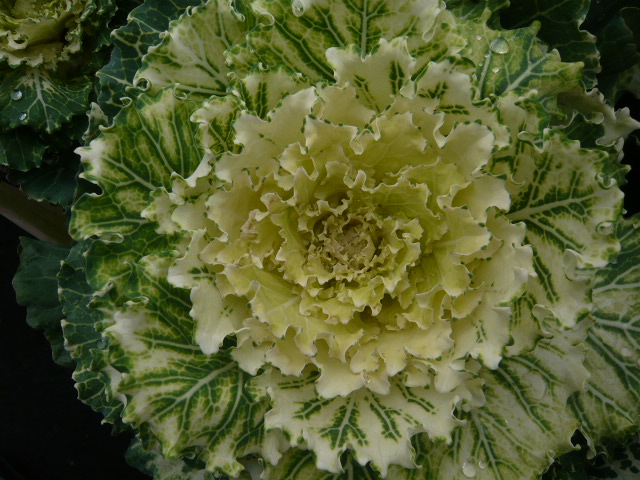
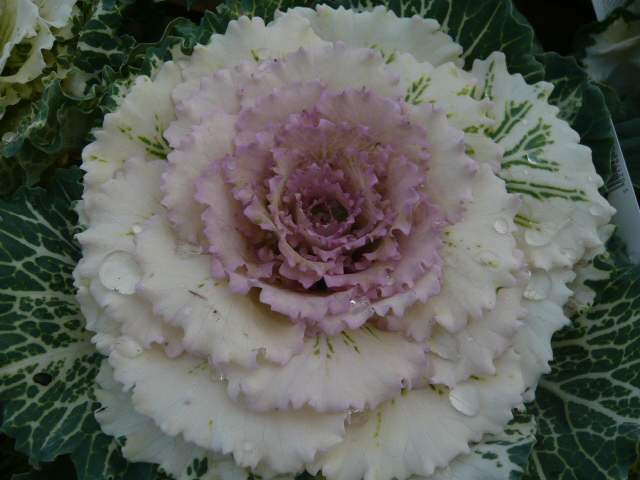
King slugs are feasting on my green and cream ornamental cabbages. It is late in the season and the slugs are helping to reduce the leaf waste from a variety of plants including the dying hostas. Still as I won’t be eating the ornamental cabbage I am not going to loose too much sleep.

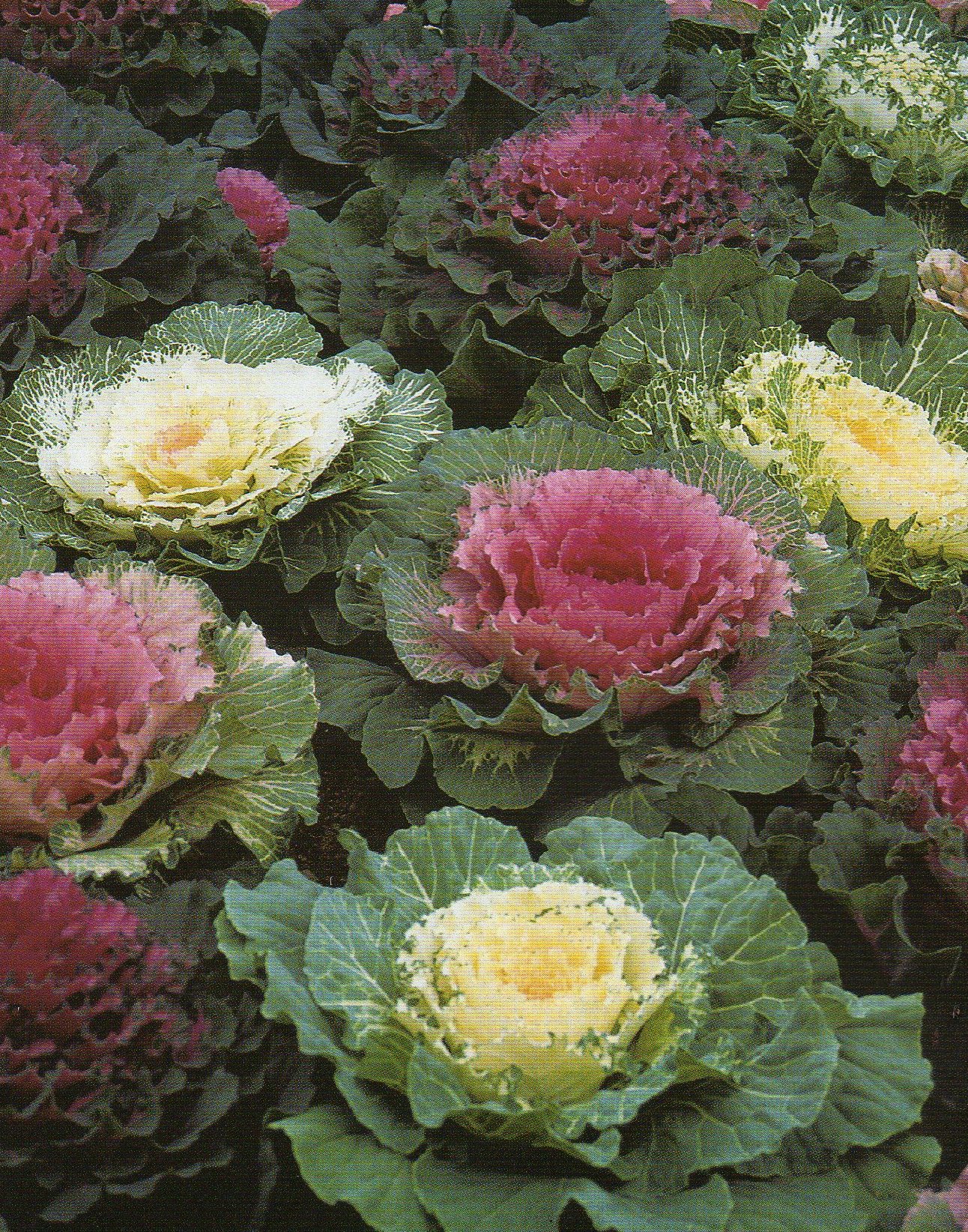
I treat my ornamental cabbage as an autumn and winter display. This type of Kale can produce cabbageheads from spring   through  winter. Try ‘Rose Bouquet’, which produces dwarf, solid round heads of   red-pink, surrounded by a ruff of green leaves,  Tuscan cavolo nero, or a good seed mixture.

Super Veg 2017 Ornamental Kale

Super Veg 2017 Ornamental Kale


Kale is the newly rediscovered easy to grow vegetable.

Many plants sold as “ornamental cabbage” are in fact kales. They are grown for the coloured and ornamental leaves which are brilliant white, red, pink, blue or violet in the interior or the rosette. Because they supply colour in winter Ornamental Kale is popular with some designers. The green kales (Borecole) can also be very ornamental. Keep tidy by pulling old outer leaves off


Ornamental kale is every bit as edible as any other variety, provided it has not been treated with pesticides. Special recipes

For more Tips and other Kales

Read More Read More

Evening Fragrance in the Garden

Evening Fragrance in the Garden

If you want to walk around your garden in a summer evening and take in the scent then consider some of the following recommendations.

  • White flowers often smell the best like Nicotiana alata or the taller N. sylvestris
  • Lillium regale can have an almost over powering scent on a still evening
  • Philadelphus ‘Beauclerk’ a large flowered and orange blossom scented.
  • Rose ‘Iceberg’ can come in a climbing form as well as floribunda
  • It may seem obvious but night scented stock Mattihola bicomis are an absolute winner and the seed can be sprinkled freely as the plants are small and unobtrusive. Many plants like this are pollinated by moths and other evening insects
  • A selection recommended by Bob Flowerdew is Zaluzianskya capensis ‘Midnight Candy’ also called night phlox with a marzipan almondy scent an annual grown from seed.
  • Simple jasmine can enhance any scented garden and Hesperis sweet rocket and Reseda odorata Sweet Mignonette can all be added to a list to try. Give each plant an area where its scent isn’t in conflict with another strongly perfumed variety for maximum impact.
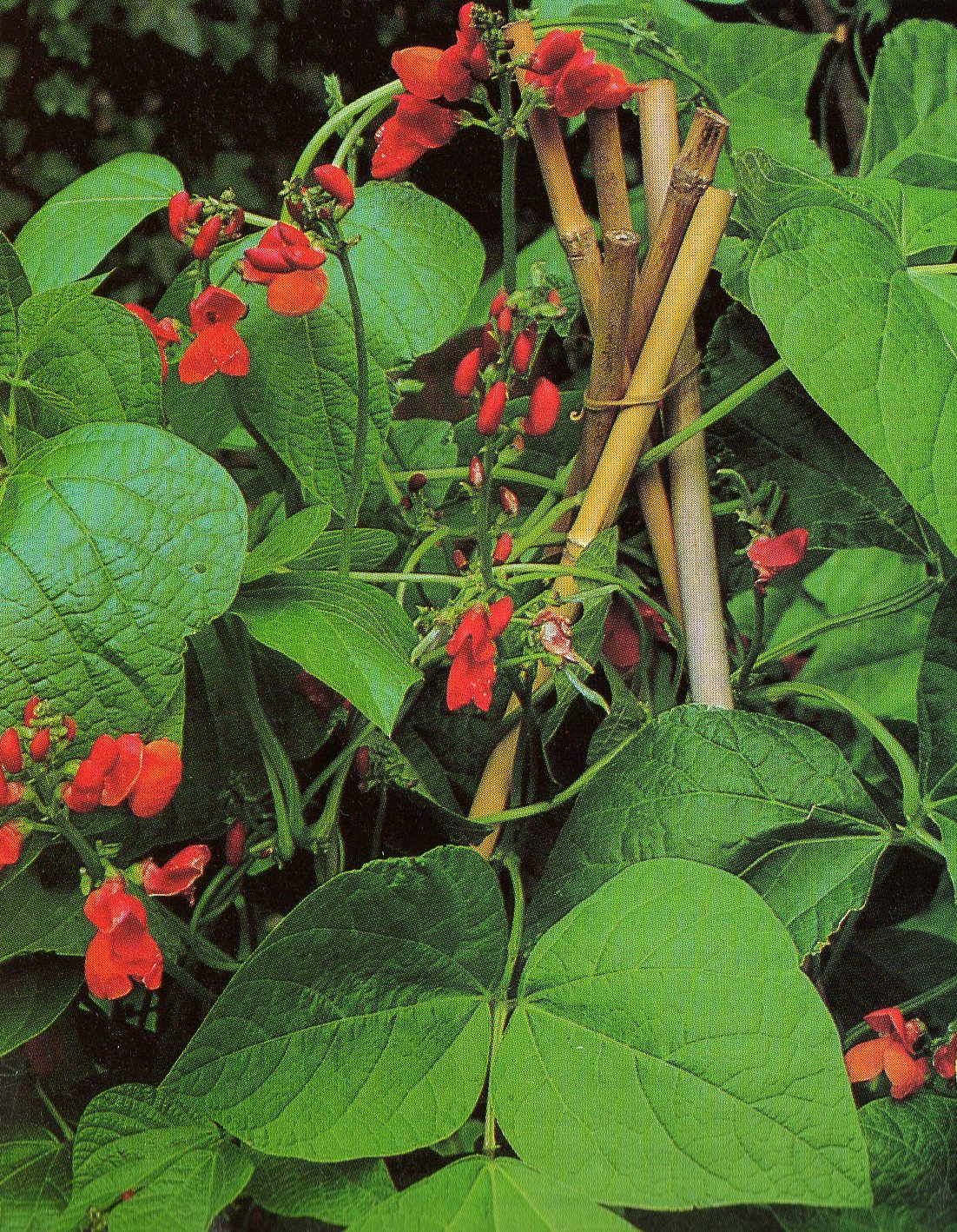
Growing Runner Bean – Scarlet Emperor

Growing Runner Bean – Scarlet Emperor

Tips for good Runner Bean crops

  • Prepare the soil to retain moisture by incorporating good compost and/or wet newspaper at the bottom of a trench in winter.
  • Rotate crops to a new patch every year on a three year cycle.
  • Do not feed with heavy nitrogen fertilisers or you will get leaf and less flower.
  • Flowers pollinate best if the air is humid so mist over if there is a dry spell.
  • Water plants well and regularly or stunted ‘C’ curved beans will disappoint
  • Support with a cane each or on a wigwam. I am trying an X shape this year so that the top half of the X encourages beans to hang down outside the plant and be easy to pick.
  • Harvest when beans are still young and have a snap in them
  • Try a variety know for its flavour like Kelvedon Marvel or Red Knight
  • Ruby moon has maroon pods that turn green when cooked and Painted lady has red and white bi-coloured flowers
  • Runner Beans can be grown for the bean inside or for the whole pod to be eaten

Tips for entering Runner Beans for a local show

  • Stick to the schedule for the show – if it says three runner beans submit three runner beans and label the variety correctly
  • Chose straight beans of equal length and form – size isn’t everything
  • If beans need a bit of straightening keep them in a wet towel overnight pressed straight.
  • Grow and take some spares to the show
  • Display as instructed or on black velvet to show off your specimen
  • Collect the seed of good plants for next year and develop your own strain or get good seed from a specialist
  • If you want a giant bean to become a world record you will be looking for bean in excess of 48 inches and it will be too woody to eat.
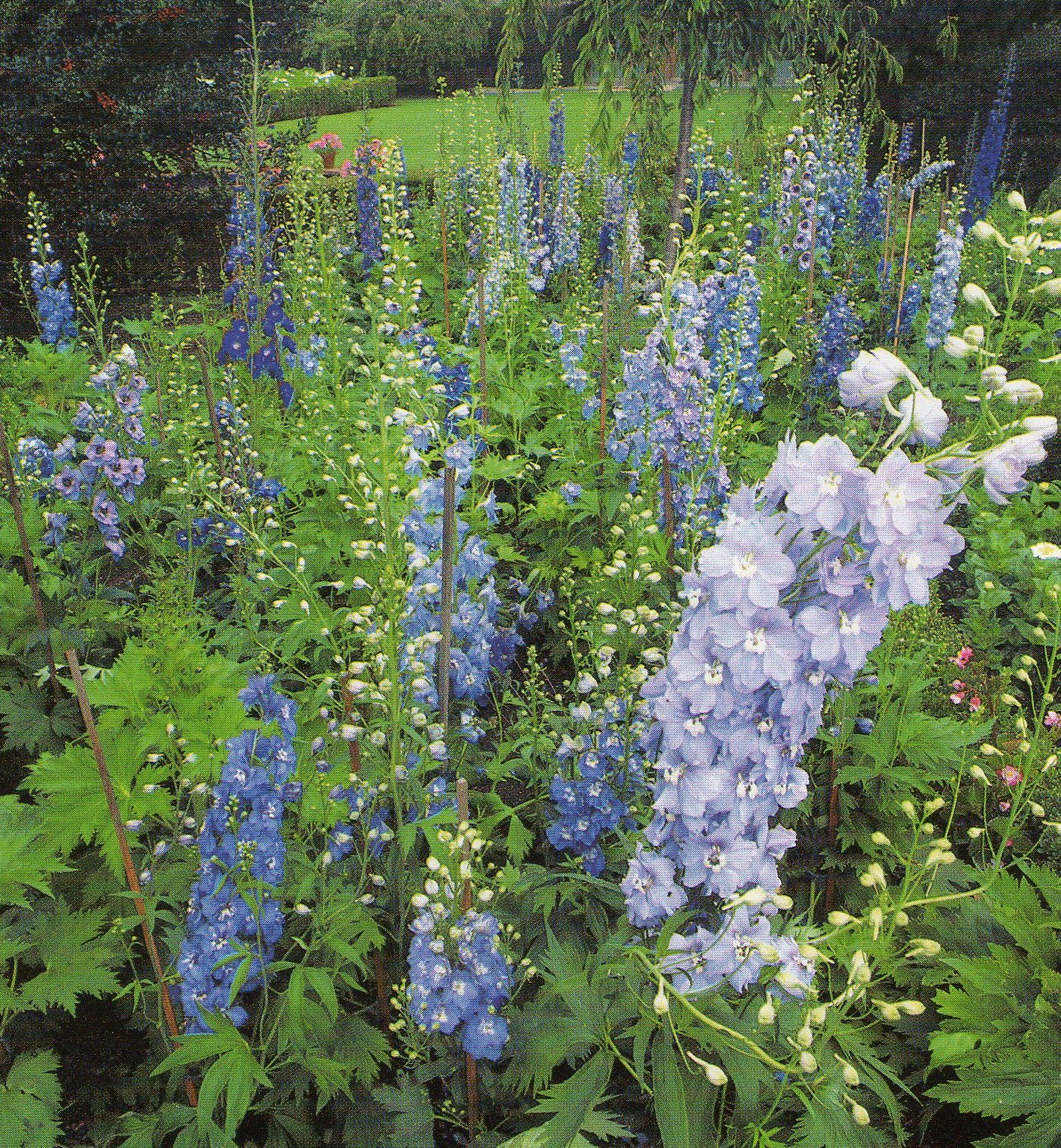
Delphinium Spires to Aspire too

Delphinium Spires to Aspire too

Flower spikes can reach over 6 foot and when massed together at the back of the border look really special. Delphinium are worth the effort to grow successfully and here are some tips to help.

  • Sow seed of Delphinium elatum types in preference to pacific hybrids or buy plant in spring prior to the showing the flowering stem.
  • Add plenty of compost and water well in spring and during flowering
  • Plant near walls or hedges to protect from wind but stake the plants as well to at least two thirds the eventual height tying in the flowers as they grow.
  • Snails and slugs like the jucy foliage so use your favourite slug protection system
  • On established plants remove less vigorous shoots to leave 4-6 strong stems. Use these as cuttings.
  • Feed with a slow release fertiliser such as bone meal
  • Cut flowers off as they fade under the lowest flower then when a new stalk is a foot tall cut out the old stalk and you may get a second autumn flowering
  • Mulch with ‘Strulch’ the organic straw based mulch

Delphinium range to try

Read More Read More

Astilibe Perennials for a Shady Border

Astilibe Perennials for a Shady Border

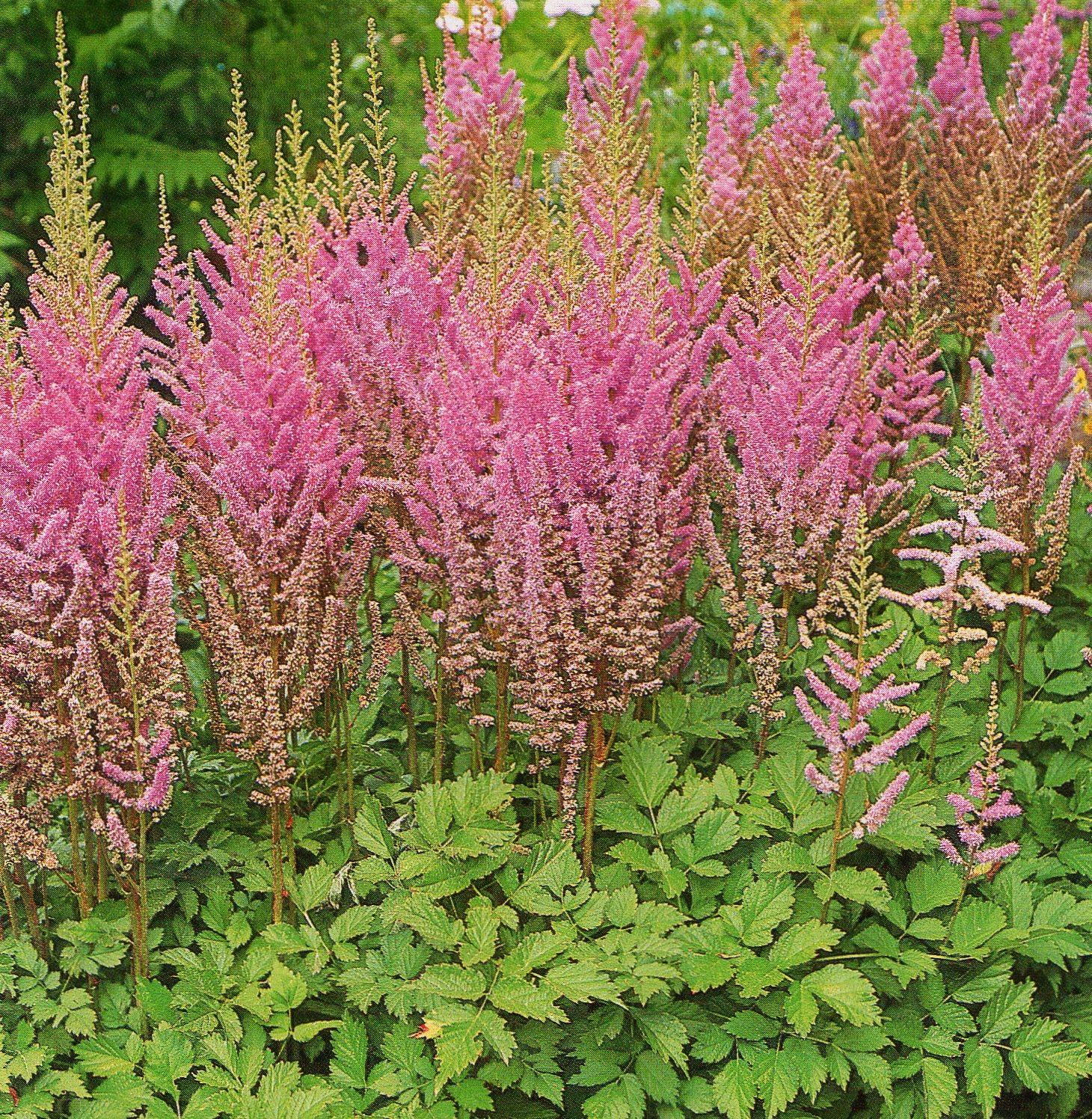
Astilibes chinensis

Astilibes aka False Goats Beard

This summer flowering perennial has good disease and pest resistance. The plumes of flowers stand above fine foliage

Dependant on variety it grows from 12 inches to 4 foot tall with up to a 2 foot spread. The flowers vary from raspberry red (above A. pulmila ) and pinks A. Bressingham Beauty to cream and some clear whites with dark leaves like A. Deutchland.

Compact varieties like Perko, Inshriach Pink, William Buchanan and Sprite will grow less than a foot and are suitable for rockeries.

Tips on Growing Good Astilibes

Read More Read More

New Gardening Year 2017

New Gardening Year 2017

December was a time for reflection on past performance in my Yorkshire garden. I keep old note books and reprise the failures of earlier seasons and as I discover I also repeat many mistakes the following year. That’s gardening for you.

tulips


This blog and list of tips has been established for 9 years and I have updated a number of pages/posts from earlier years as a bunch for next month. This will save me time in January when I want to sort out a new plan of campaign for 2017 garden action. If I follow my own tips I hope it will help me cut down on some mistakes.

002 (2)


Annually I produce a spread sheet of my intentions in the form of a to do list which has reduced from over 210 garden items to almost a manageable number. As the seasons develop the list gets longer and my errors more obvious.


Many thanks to those readers who land on various pages and help by using the adverts or affiliates that helps towards part of the small  costs incurred.

Watering Houseplants

Watering Houseplants

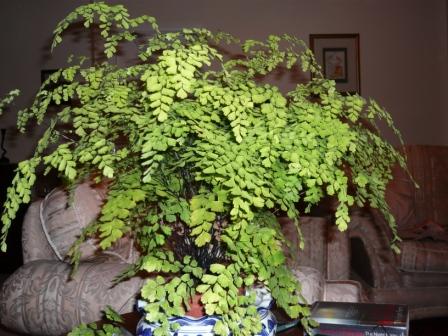
This Maidenhair Fern (Adiantum) houseplant is being killed with kindness by the family waterer. Too much water kills quicker than too little.This plant likes humidity from a mister or being stood on a damp gravel base but doesn’t want to be flooded.

Watering Houseplants

  • Plants that transpire lots of water from large fleshy or soft leaves need more watering.
  • Plants with frail, rubbery or sticky leaves are generally conditioned to survive with less water. Look at the leaves to learn what works best.
  • Most cacti & succulents with juicy leaves are often able to survive dry spells.
  • Plants that are actively growing need more water and the converse is true in winter when growth is slow they need little or no water.
  • Try aim for evenly moist soil from top to bottom after watering
  • Good drainage in needed for the majority of houseplants so if in doubt err on the side of an open compost
  • Stagnant water is a no-no causing chills, decay and harbouring potential pests.
  • The tepid water with no chemicals is OK or try rain water.
  • Ailing plants should be given only little water and no fertilizer.
  • Gloxinia like other hairy leaved plants dislike water on the leaves as the sun’s heat can be magnified and damage the leaf.

Expert Watering