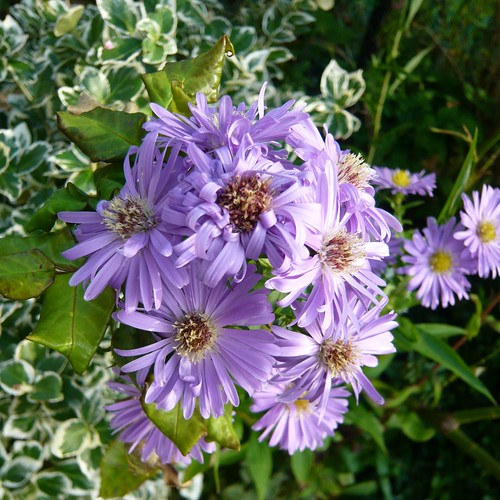
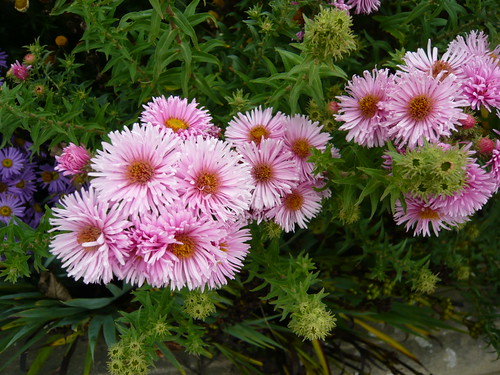
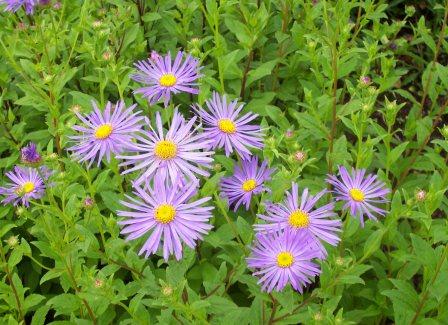
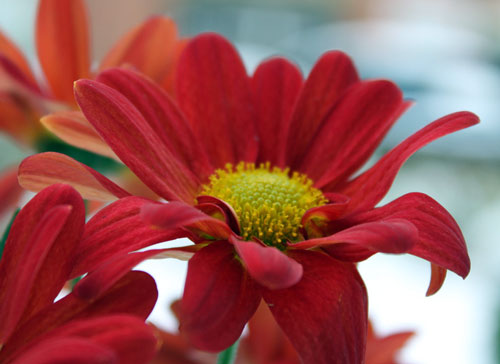
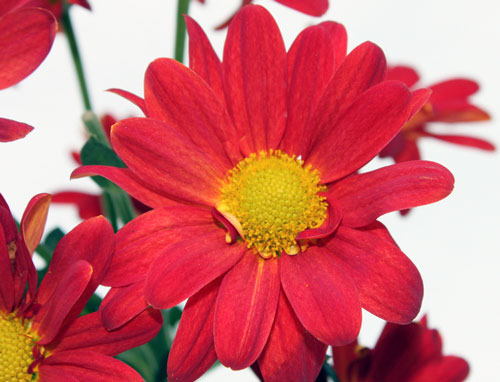
Michaelmas Daisies are hardy perennials flowering late in the summer in a range of bright colours. Aster novi-belgi and Aster novae-angliae are both called Michaelmas Daisies and mixed together make a contrasting rich colour range of long stemmed autumnal flowers suitable for cutting.
Growing Instructions
Germinate seeds between February and July at 68-86F on the surface of a good free draining, damp seed compost.
Do not cover seed. Do not exclude light at any stage, as this helps germination.
Place in a propagator or seal container inside a polythene bag until after germination which usually takes 21-100 days.
Transplant seedlings when large enough to handle into trays or 3in pots. Grow on in cooler, well lit conditions before planting out 12″ apart after all risk of frost has gone.
Clumps of Michaelmas Daisies will develop over the years and can be split to increase the best plants.
The name Aster comes from the Ancient Greek word meaning “star” referring to the daisy like shape of the flower head. They are in the family Asteraceae part of the Daisy clan. There are 500+ species of Aster and many variety of hybrids that are popular as garden plants because of their attractive and colourful flowers.
I have been asked for ideas to create a floral arrangement that fits the description Olympic Torch.
I am not even a gold medal winning gardener, although I do aspire. Nor am I much of a flower arranger!
The spirit of this site is to encourage others to go above and beyond our horizons so I will give it a go with these tips!
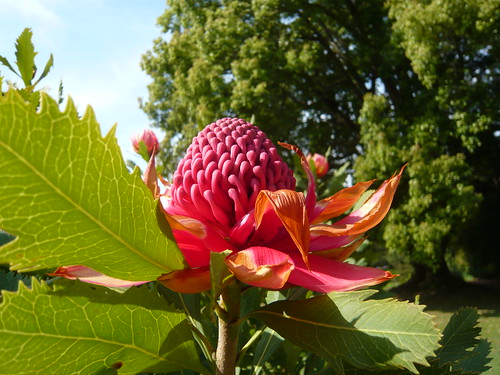
Protea
Design Criteria
The winter Olympics flame pictured above would be hard to replicate in a floral tribute so I am banking on the summer Olympics as being the reason for the display.
Flowers, foliage, greenery, wood and organic matter seem appropriate materials. The Olympics is inclusive of country, sport and to an extent ability.
Size may be important but I will settle for making a statement in a home setting.
Metaphors like a Burning Bush or Torch Lily are to be avoided.
Warm colours should be in vogue despite the crystal blue above.
Baby Myrtle Bottle Brush
Plant Recommendations
Spikes and sword shapes will for the basis of a long thin arrangement.
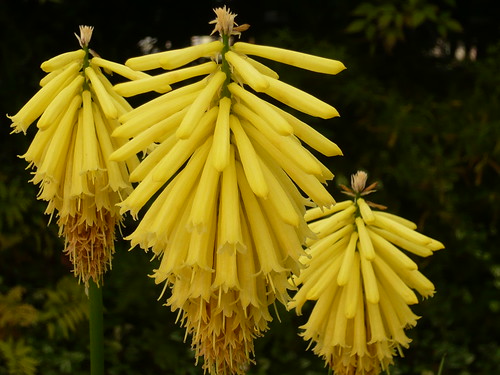
Red Hot Pokers are available in a range of colours including the yellow above and the traditional red and yellow two tone.
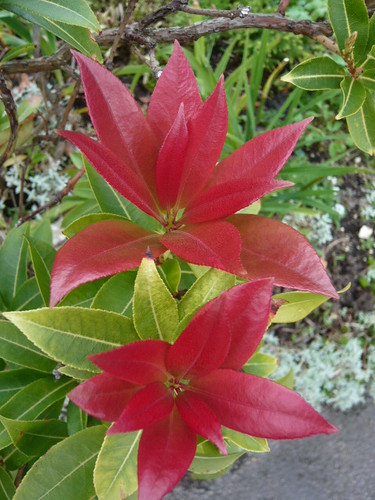
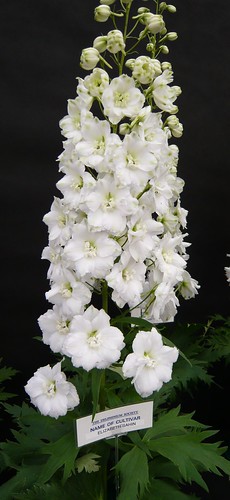
Representing each continent may be a theme worth pursuing and Bottle Brush from Australasia, Proteas from Africa, Alstromeria from South America, a yellow rose from Texas may be too metaphorical, a white Delphinium spikes from Europe and Pieris japonica from Asia for texture and fire red leaves.
Pieris japonica leaves.
As n alternative to red-green leaves you could opt for smokey grey such as Eucalyptus (but they are full of flammable oils and you may end up with a real torch!)
Kniphofia Bees Lemon
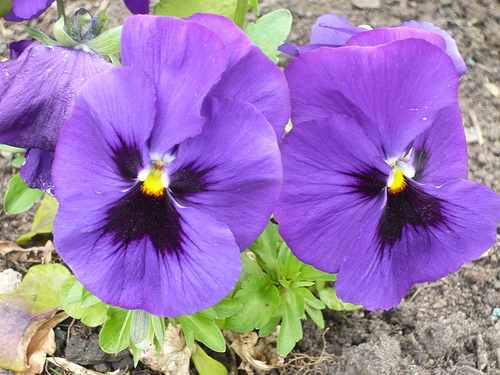
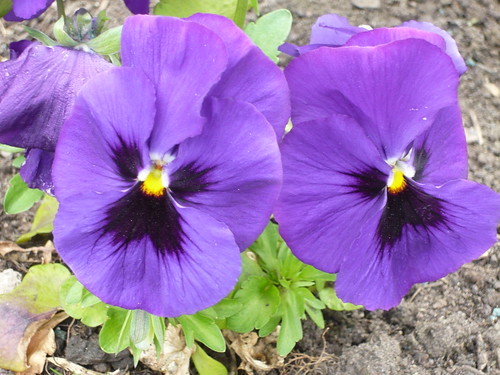
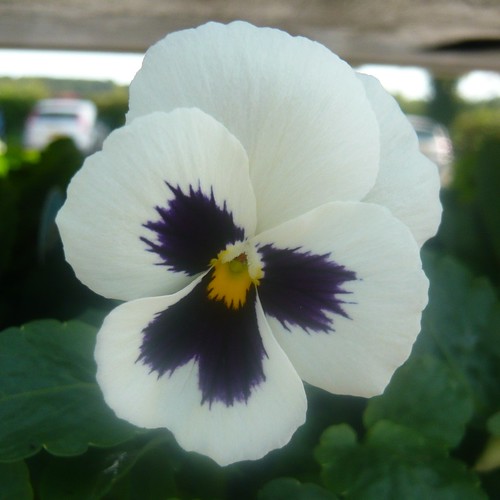
The Pansy face that launched a thousand pot plants.
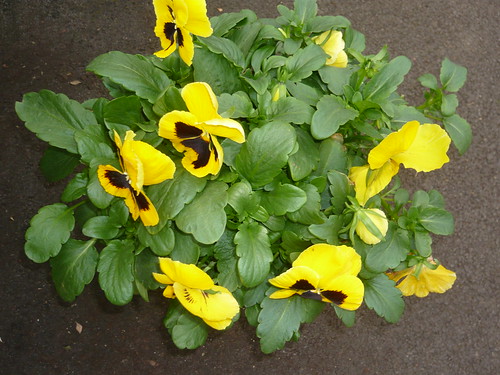
Pansy partners pair up on this plants.
It is the face on a pansy that gives it a differentiation from a viola (and Pansies can’t make music like some violas).
‘Squaring up for a fight’. Is this Pansy one of your favourites? If so vote on the comments section below.
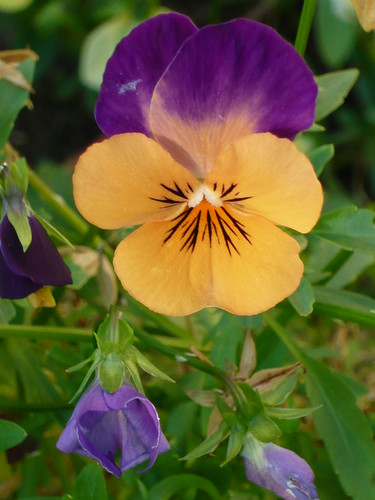
Whiskers rather than a full face put this more in the Viola class but I am a bit of a Joker and so is this flower.
More Sources
Pictures from the Viola Group on Flickr called Violetta Amore Mio ‘Violet my love’
Grow Your Own Cheap Violas from GTips
Growing Pansy All Year Around GTips
Google Pansy images
Seeds and plants from Thompson & Morgan
Violas on the first image courtesy of Toshio
Taking flower photos is often seen as an easier aspect of photography. Even with a simple point and shoot camera you can have very good photos for little effort. However, these tips will enable you to get even better photos and push you into the ‘pro’ category.
Taking flower photos is very much a learning experience. I have added an extra two tips at no extra cost 🙂
Tips for Photographing Flowers
1. Shoot From Different Angles
Taken from same height as flower
There’s a big difference between shooting down on top of flowers and shooting at the same level as a flower. Shooting at same level as a flower, means you might have to get down on your hands and knees but, it gives a more interesting less conventional perspective.
Same Flower from standard above position
2. For close ups Shoot with smallest aperture your lens will allow
If you have a f/5.6 lens use f5.6
3. Try Macro Lens for really close shoot up.
A macro lens allows you to get exceptional close up shots. A macro lens has such shallow depth of field that when a photographing a flower, some petals at back can even be out of focus.
4.Good Quality Tripod
A good quality tripod enables the sharpest picture, it also enables you to use smaller apertures and a longer exposure time.
5. Other Tips to Reduce Camera Shake.
If taking a tripod is difficult, try a monopod.
Remote shot taker. When pressing button, the camera moves causes some camera shake. An external button release enables you to take a shot without moving camera.
For important shots try multiple shot, which automatically takes several shots. At least one will be in super sharp focus.
Very useful is this mini tripod. It supports weight of heavy SLR, but can be folded up into a small bag.
6. Canon Filter
A Canon close-up 500D lens can be fitted to a telephoto zoom lens and is like a traditional lens filter easy to carry around and gives a cheaper way to get macro shots.
7. Best Time To Take Flower Shots
On Cloudy Overcast days. When sun is very bright, flowers can appear washed out. On cloudy overcast days, flower colour can appear more vibrant.
8. The Rain Effect
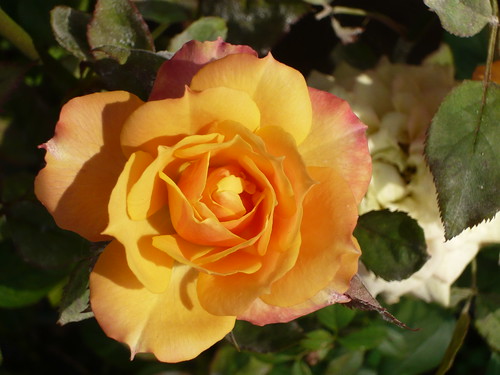
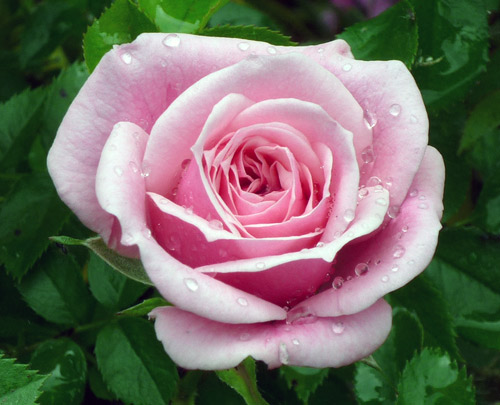
After Rain. Drops of rain on flowers add an extra romance and beauty to flower photos (see Rose top). If it rarely rains – just take a portable sprayer to add your own water – no-one will know you sprayed it!
9. Use Backgrounds for constant Colour.
Daffodil
A solid background helps avoid distracting backgrounds. Black often works very well, especially for white, light coloured flowers.
10. Wind
Trying to hold stem of flower can work. If you have an SLR set a high shutter speed 1/ 125 will help capture and freeze any blowing wind.
11. Use Macro Flash
Indoor Orchid
This orchid and daffodil (black background) was taken with a macro flash
There is much more light so you can use a high f number – small aperture, big depth of field. You can get some very nice results with this. Another bonus is you don’t really need a tripod, there is so much light, you need a very fast shutter speed (1/200)
12. Depth of Field
Don’t limit yourself to close ups of flowers. Also try take flowers, in context. For this you really need a big depth of field (high f setting). This allows less light, so you need a longer shutter speed (perhaps half a second) to compensate. Therefore, a tripod is essential. However, it enables you to capture a field of flowers and just a small number.
Related
Give us some help and your view on photograph composition
Cranberry Ice, Garnet, Ruby Frost, Snowberry, Citrine and Autumn Blush are the varieties that are costing £12.99.
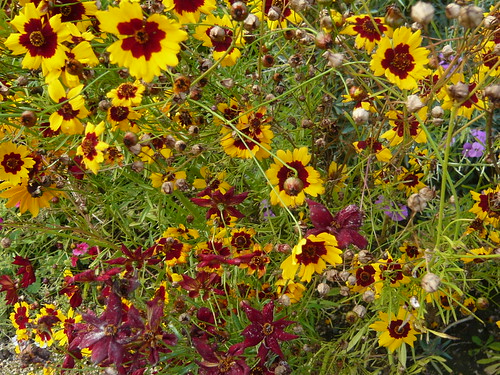
The colour range includes Cream with Red Eye, Red with White Edges and Yellow Eye, Red, Red with Yellow Eye, White with Red Eye and the now famous Yellow.
I was very pleased with the picture of Coreopsis from my garden without any comprehension of the other variety available. That was before I came across the picture below by the Dutch perennials wizard Luc Klinkhamer
Growing Coreopsis
‘Autumn Blush’ is one of the latest and perhaps the most dramatic of the new Coreopsis hybrids with boldly blotched, dark-eyed peachy-yellow flowers.
The plants should have a flush of flowers in spring and again in autumn.
Cut stems back after the first flush of flowers fade to promote a repeat bloom.
Plant in sunshine with dark foliage plants to create a contrast.
Green leaves reach a height of 24″ and spread 24″
Anyway back to my small observations.
Originally I purchased one good plant from a nursery last Autumn and split it into 3 before planting. Two plants are now larger than the original and all are flowering in a nice group.
My plants are flowering very well so I buying some more.
Coreopsis, also called Calliopsis or Tickseed are great additions to my garden design of bright yellow and oranges that will bloom most of the summer. They fit in well with most plants and have a good compact habit.
Coreopsis makes a neat 14 inch tall edging plant as well as nice cut flowers.
Check the habit of the more exotic types as they may not be as compact or floriferous
Coreopsis is attracting a lot of attention from breeders and will be a perennial plant to be reckoned with over the next few years. Watch this space or the one at your garden center.
Other Selections
Coreopsis ‘American Dream’ Thread-leaf Coreopsis, Pink Coreopsis
Coreopsis lanceolata ‘Baby Sun’ Lanceleaf
Coreopsis, Pot of Gold, Longstalk Tickseed
Coreopsis Big Bang ‘Cosmic Eye’
Coreopsis, Pot of Gold, Longstalk Tickseed
Coreopsis ‘Creme Brulee’
Coreopsis grandiflora ‘Domino’ Lanceleaf Coreopsis, Longstalk Tickseed
Coreopsis ‘Dream Catcher’ and Full Moon Big Bang Series
Coreopsis grandiflora ‘Flying Saucers’ Tickseed
Coreopsis verticillata ‘Golden Gain’
Coreopsis lanceolata ‘Goldfink’
Coreopsis ‘Gold Nugget’
Coreopsis ‘Jethro Tull’
Coreopsis ‘Little Sundial’
Coreopsis verticillata ‘Moonbeam’ Thread-leaf Coreopsis, Pot of Gold, Whorled Tickseed
Coreopsis ‘Pinwheel’
Coreopsis ‘Red Shift’
Coreopsis ‘Route 66’
Coreopsis ‘Sienna Sunset’
Coreopsis ‘Snowberry’
Coreopsis verticillata ‘Sunbeam’
Coreopsis ‘Tequila Sunrise’
Coreopsis, Pot of Gold
Coreopsis verticillata ‘Zagreb’ Thread-leaf Coreopsis, Pot of Gold, Whorled Tickseed
from Dayton Nursery Ohio
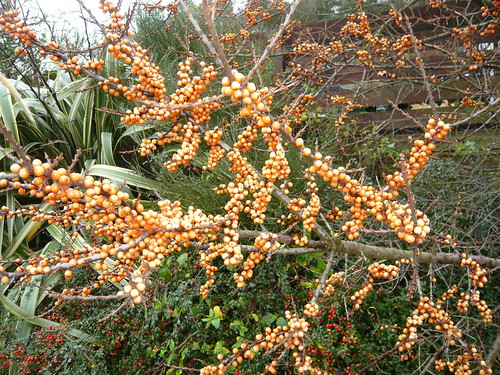
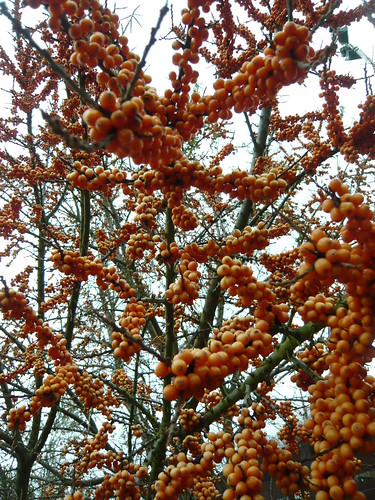
Sea Buckthorn is one of the Hippophae species. The fruit have some medicinal properties and the shrubs have been cultivated for many, centuries. The deciduous shrubs are Dioeceus having male and female plants.
Common sea-buckthorn has distinctive pale silvery-green and branches that are dense, stiff and very thorny.
Propagating Sea Buckthorn
Many seeds are available from the ornamental orange berries.
Seeds should be pre soaked for 24 hours prior to sowing. Old seed is less viable.
Hard wood cuttings taken in winter can increase stock of the shrubs.
Bundles of cuttings are soaked in water and covering 2/3 of their length until the beginning of formation of roots.
Cuttings can also be treated with rooting hormone and placed in pots filled with peat in a bottom heated propagation box. Cuttings can be transplanted when the roots are 1-2 cm long directly to the field.
‘Softwood cutting (15-20cm long) are taken when shoots begin to become woody, remove the lower leaves, leaving 2-4 leaves at the tip and dip into rooting hormone before rooted in media such as sand or perlite and keep special attention to the moisture of media.’ Quote from seabuckthorn.co.uk
Sea Buckthorn oil appears to prevent the effects of aging or to help restore damaged skin.
Some haircare products are made with Sea Buckthorn oil.
Sea Buckthorn oil may help to heal burnt skin. If you have acne, dermatitis, scar tissue, old burn tissue, or radiation markings, try it for a few months to see if there is a noticeable improvement.
Sea-Buckthorn berries have a unique composition including vitamin C, vitamin E and beta-carotenoids
Seed oil is a good source of anti oxidising essential fatty acids and may be used as a dietary supplement.
Forget 6 inch cuttings, for bigger shrubs use bigger cuttings. Giant cuttings of 18-36 inches may be worthwhile on the following:- Cistus, Euonymous, Hebe, Leycesteria, Weigelia, Pyracantha or Kerria japonica. I have a friend who excels with Roses taken this way.
Also read Gardeners tips Taking cuttings for beginners
Proceedure for Cuttings
Water the host plant well the evening before taking cuttings.
Take cutting early in the day, keep out of the sun and spray with water to minimise wilting.
Select a shoot with plenty of new growth. Cut it off cleanly at the base where it comes from a branch or cut below a swelling leaf node instead.
Remove any flowers, lower leaves and soft tips by pinching out
If the cutting has a woody bark remove a sliver an inch long to aid rooting.
Have available one litre pots full of a free draining mix of grit and multipurpose compost.
Dip the end of the cutting in fresh hormone rooting compound, such as Murphy’s, plant and water in
Place in a humid environment eg. a plastic bag over the pot supported by canes, so leaves don’t touch the sides, and tied with a rubber band.
Keep in a shady spot removing dead leaves regularly.
In about 5-6 weeks, when rooted, acclimatise to outside conditions and overwinter in a sheltered spot
Sun and rain are free so optimise the use of these natural resources
Garden on a Low Budget
Collect seeds and start to raise your own plants. Use resources like books, the web or seed company advice flyers to find sowing and storage information. I have several interesting roses grown from collected hips.
Buy small plants so the can establish well and mature. Larger perennials can often be divided before being planted out.
Mulch you garden and key plants with 2-3″ of well rotted organic material. It will condition the soil, keep weeds down and improve water retention. Mulch on top of damp soil not dry soil.
Scare birds off your brassicas with a potato stuck with birds feathers and suspended from a near by tree or make your own scarecrow.
Reuse plant labels after rubbing them down with an abrasive or cleaning agent.
Grow new plants such as fuschia, chrysanthemumns, marguerites and pelargoniums. Many others plants will grow from cuttings.
Buy secondhand tools and invest in a sharpening stone to hone them down.
Make your own compost mixing green and brown waste.
Scrounge form other gardeners, they often have more plants or seeds than they need and most are good hearted souls.
Make do and Mend
Reuse and repurpose items into the garden. You can find interesting containers this way. Just make sure there is a drainage hole.
Repair broken items that can be used in the garden.
Use hazel twigs as canes to support your growing plants.
Make your own crazy paving from ‘found stones’. I have rockeries and small walls from stone I have collected along the way.
Stables often offer free horse muck if you collect it, ditto seaweed.
Do not bother with chemicals in the garden. Sure you may loose some plants but an organic garden tends to get into a form of balance with nature.
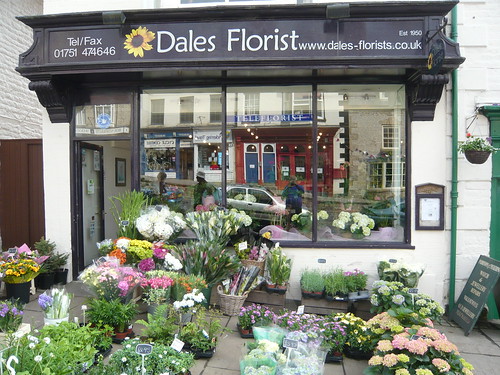
Florists have knowledge and skill when it comes to conditioning cut flowers to prolong shelf and display life.
They have methods of keeping displays watered and fresh including the bag of water or the buttonhole test-tube.
Out of season flowers can be imported by floristry suppliers and we can even get southern hemisphere plants in our winter.
Good florists display bunches and bouquets of flowers and foliage to artistic advantage.
A wide range of floral material is part of a florists stock, when a garden may only have a few species ripe for picking.
Florists produce the wreaths and family occasion flowers when gardeners are too busy or otherwise occupied.
Gardeners and Florists Together
Gardeners are best if QBE (qualified by experience). Florists can opt to train at a college, either full or part time or on the job.
Florists want long flower stems and long life of 3 weeks in shop/vase. Gardeners want insect and disease resistance, variety of colors, and fragrances plus a pleasing growth habit.
One good plant probably equates to the cost of a good bunch of flowers. I know which I prefer.
Florists are unlikely to be a retail outlet for the produce from a garden. You would need to have a specialism and be able to supply over a long period not just when your crop gluts.
I am less happy about the florists trend to supply potted plants but that is one area where the allotment gardener could form a trading relationship with the local florist.
“Consistency is important. Some growers have been disorganized. They want the money up front. This can be a problem in dealing with larger businesses that prefer to send checks once or twice a month.
Bunch properly (check wholesale guidelines). Usually bunches are 10 stems. Bunches should be of consistent quality. Growers who come in with a bucket full of stems in different lengths and quality won’t make a good impression.
Don’t just show up. A lot of local people wait too long to contact the florist. “Someone will just show up with a trunk full of pussy willows, and I’ve already ordered them. Don’t just show up. Call and ask if we’re interested. Have a sample.” And let them know when a product is close to harvest.” source Rodale Institute
Turn your floristry purchases into botanical works of art – here are some examples and clubs you could join.