Browsed by
Category: Articles

Gardening articles that may not include tips

Garden Insurance and Insuring Against Loss

Garden Insurance and Insuring Against Loss

Should you worry about theft and vandalism in your garden?
With the time and investment many people have made it pays to consider insurance cover.

What are Insurable Risks

  • Most commonly stolen items include lawnmowers, ornamental gnomes, tools, furniture, pond equipment, hanging baskets, containers, crops and even specimen plants.
  • Sculptures, York Stone, Slates and other desirables need to be insured.
  • There is also the danger of mindless vandalism, as well as destruction by extreme weather conditions such as snowstorms and gales, or unseen events like falling trees.
  • Outbuildings, garden sheds, summerhouses, barbecues and greenhouses can also suffer damage by fire or sundry hazards.

How Can You Get Cover

  • Regular household buildings and contents insurance usually covers damage to sheds and other outbuildings, as well as neighbours’ property, and third party visitors.
  • Check what cover you currently have as there will be limits and excesses. Unfortunately buildings insurance or contents insurance, for  outdoor possessions is often restricted to a token £500.
  • Read More Read More

Golden Autumn in Lakeland

Golden Autumn in Lakeland

park-sunset

If you want to see England in full Autumn colour visit the Lake District in October.
The Lakes also has several interesting gardens to visit:

  • Japanese Garden Giggle Alley
  • Brockhole is an ornamental terraced garden nestled at the foot of the Langdale Pikes. A wildflower meadow and woodland belie the carefully planted schemes of roses, borders, shrubbery, and rock plants. Good planning means there is always something in bloom.
  • Levens Hall a top topiary garden.
  • Dalemain is a fascinating 5-acre Plantsman’s garden set against the picturesque splendour of the Lakeland Fells. Walk around the richly planted herbaceous borders with blue Himalayan poppies, nearly 200 old-fashioned roses, magnificent Abies Cephalonica, a Tudor Knot Garden and a wild garden with a profusion of flowering shrubs and wild flowers.
  • Holker Hall glorious gardens, parkland and woodlands at Cartmel

sea-clouds

Garden Photos in the Morning

Garden Photos in the Morning

morning

When thinking of when the garden is at its best, we often imagine the sun at its peak -  a hot summers day in the middle of June. However, for taking photos, this can be difficult.

garden

As well as bright sun, there are also some magical moments at other times of the day and year. Early in the morning, the sun light is soft. It’s angle throws a fascinating light onto the garden. The whole garden can be transformed by the different light and angle. Even when the garden is at its quietest, there are still some fascinating and beautiful aspects.

garden

Try setting the alarm and viewing the garden at a different time of the day, you may be surprised.

garden

Early Morning mist highlights this spiders web amidst Verbena bonariensis

Read More Read More

Garden Maintenance DIY Guide

Garden Maintenance DIY Guide

Book Cover

There are numerous books on garden design but not much information on garden maintenance. Some maintenance jobs are ‘as and when’ but others need to be done at least annually. Below are my gardeners maintenance tips.

Maintain Structure Maintenance

  • Keep on top of all repair jobs before they develop into rebuild jobs!
  • Paths need to be safe and that means obstruction free. I am guilty of using paths for seed trays and odd plants that I am waiting to plant out and I have been known to trip or kick them over.
  • Clean up after winter as concrete or flagged paths are often covered in slippy green algae. This needs to be removed or chemically treated.
  • Walls need re-pointing if stones become too loose. The   stones sometimes get loosened by frost or plant roots.
  • Fences may need treating with preservative or supporting if in danger of blowing down.

Maintenance of Services

Quick Tips for Roses In June

Quick Tips for Roses In June

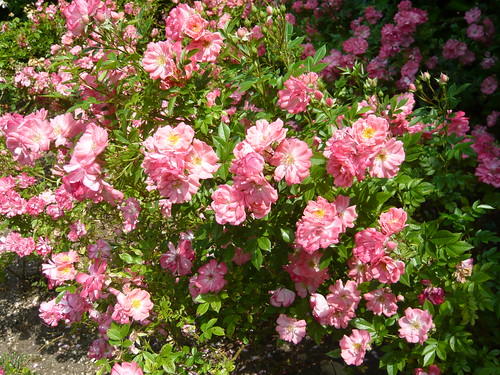
Peace Rose

This year my roses are a good bit later to come into full bloom. The cold snap in May undoubtedly caused problems.

A white rugarosa type had all the buds ‘browned off’ by a late frost and guess what colour that left me  -  ‘browned off too’!

Tips for June

  • Deadhead repeat flowering roses to get a second flush. Flowering may stop when seed is set.
  • Cut above the first leaf node and angled away from the leaf.
  • Do not deadhead roses you grow for the hips such as Rugarosa types.
  • If you have any blackspot wash your secateurs between each plant to avoid spreading the disease.
  • Check for suckers, track them back to the roots and pull them off neatly. Cutting them may leave a bit of sucker and you will get two suckers from that one spot.
  • If you are troubled by Aphids, and who isn’t, then use your favourite treatment. I have just organically squashed quite a large crop on the buds of my climber roses.

Getting Bigger Blossoms

  • If exceptional blooms are required nip out the side buds and leave one bud per stem to develop fully. All the energy gets channeled this way.
  • Read More Read More

Red and Green in the Garden

Red and Green in the Garden

Colourful Tips on garden colour wheel.

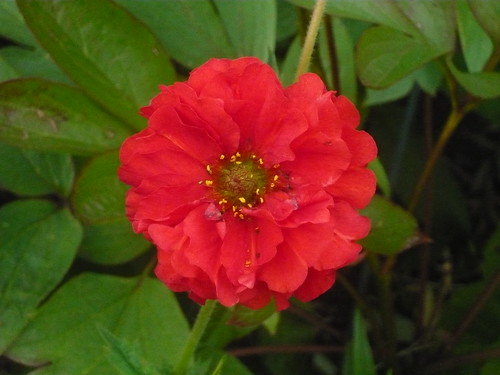
Geum

Red and green are complementary colours that draw plenty of compliments in the right setting. This Geum looks better against the green leaves than it does waving around on its long stems (although it is fine then as well).

Poppy

Another moody shot of a red Oriental poppy against it’s slightly greener leaves. For great artistic paintings you can’t beat red poppies and green leaves.

Hibiscus

Perhaps it is the yellow stamens that catch the eye on this Hibiscus but the glossy green leaves are also a major part of the charm.

Read More Read More

Wild Flower Bed with Companion Plants

Wild Flower Bed with Companion Plants

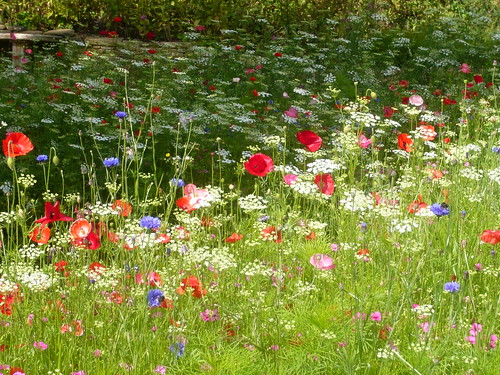
Meadow

An effective way to use wild flowers  is to mix in some trusted garden plants. Using some  trusted garden stand-bys will provide extra colour and structure to a wild area.

Plants to Support Wild Flower Beds

  • After the Aconites, Snowdrops and Marsh Marigolds the first blooms may be from Primroses or Day Lilies followed by Dianthus to give a mix of vibrant colour.
  • Evening Primrose has yellow bell shaped flowers. Oenothera tetragona flowers in spring on reddish green stems, Oenothera missouriensis  later in the year
  • Campanula the blue white or sometimes pink Bellflower can also look good.
  • Foxgloves give height and structure and you could add some Delphiniums.
  • For some white flowers choose Sneezewort ‘Acillea ptarmica’, Candytuft , Ox-eye daisy or Anthemis punctata
  • Heliopsis, Rudbeckia and Achillea are good looking yellows.
  • Cranesbill geraniums and Columbines can also complement wild flowers.

Wild Flowers

  • You can buy seed mixtures aimed at different locations such as Cornfield mix and others from Thompson & Morgan
  • Many individual plants appeal as wild flowers particularly the daisy and buttercups. Still more wild flowers are scented.
  • The red Poppy is potentially one of the most popular varieties and I would opt for Papaver rhoeas.
  • Wild Orchids are harder to grow but if you have the patience they can be rewarding
  • See also Wild Seed Suppliers
  • Do not forget the humble Dandelion in various leaf forms.

Tips on Wild Seed Sowing

Read More Read More

Plants for Walls

Plants for Walls

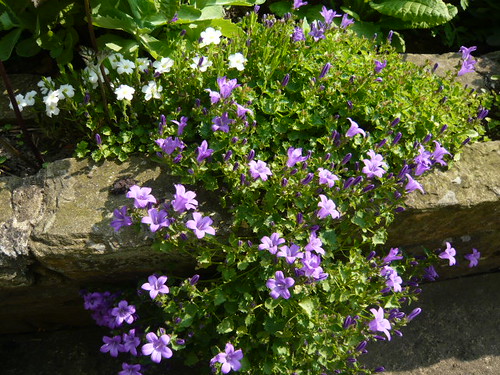
Campanula

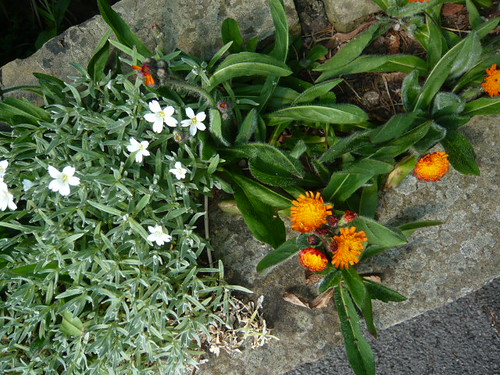
I am fortunate to have a boundary wall that has two skins of stone filled with soil. This makes an habitat for plants that I can use to grow something a bit different.

The Pros & Cons of a Filled Wall.

  • The wall raises the working height and brings plants nearer to eye level.
  • The soil is of poor quality as goodness is leached away. This suits some alpines and nasturtiums.
  • Due to holes somewhere the soil washes out in some spots and I am always looking to refill or stop the leak.
  • The wall is dry and gets hot in the sun although the stone provides some cooler protection for roots.
  • Slugs do not like to climb the wall (just send gardeners up it)
  • wall plants

    Suitable Plant Types for Walls

    • Dry condition lovers and sun seekers like Thyme
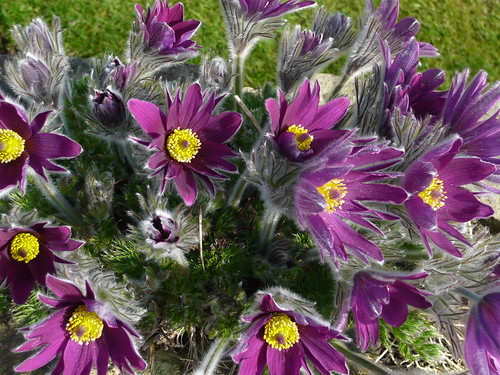
    • Plants that like a baking like Pulsatilla
    • Plants that hold there own water store like Sedums and Houseleeks.
    • Alpines and similar plants with long roots.
    • Trailing plants and poor soil plants.

    Pasque Flower

    Some Plants recommended by Cambridge University Gardening services site
    Crassula sarcocaulis
    Helichrysum ‘Sulphur Light’
    Sedum acre
    Sempervivum ciliosum
    Saxifraga species

    Read More Read More

    Lilac Blossom Time

    Lilac Blossom Time

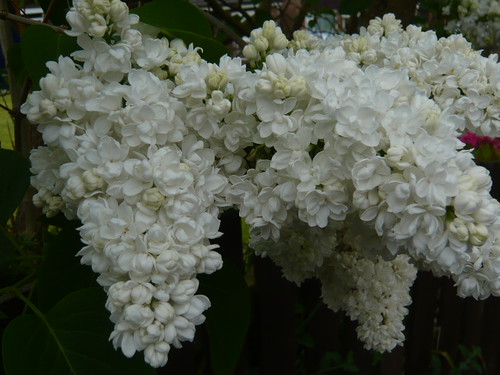
    White Lilac

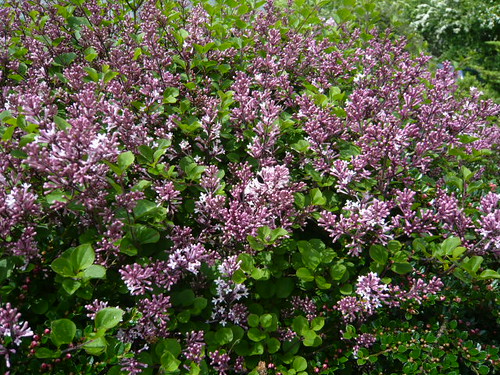
    I think lilac trees are boring for 11 months of the year but for a powerful scent they are hard to beat in late May.

    The White Lilac is every bit as scented as the ‘lilac’ Lilac.

    For tips growing Lilac see this post

    For cut flowers

    • Pick stems early in the morning when full of sap.
    • Put immediately into warm water,
    • Split the stem for 1″ with a sharp knife do not crush.
    • In this way they should last more than 4 days but otherwise Lilac will disappoint.

    Lilac

    Read More Read More

    Interesting Garden Design Tips

    Interesting Garden Design Tips

    Will Over-Scale be a design feature for the next decade. Some at Chelsea think so!

    Consider opting for ‘Over-Scale’ in your Garden.

    • Lots of small plants, beds and ornamentation looks cluttered and uninteresting.
    • Large or very large features can grab the attention and start off a steady exploration of your garden space.
    • A large structural object or disproportioned feature will supply key structure.
    • Over-scale can work irrespective of the size of your garden.

    Key Design Concept Tips

    • Aim for a strong and simple structure that frames your best features.
    • Create elements of mystery and surprise using trees, walls or corners to make  distinct areas.
    • Use diagonals and asymmetry to create interesting routes through the garden.
    • Vary the levels of soil with sleepers or raised beds and of plants with discreet layers of plants. This will get lots of plants into a small space.
    • Think about interesting shade when laying out your garden. Winter gardens may rely on varying shadows.