Browsed by
Category: Articles

Gardening articles that may not include tips

Cotoneaster Horizontalis Growing Tips

Cotoneaster Horizontalis Growing Tips

Not always a bird favourite but a prolific berryer alll the same.

Marks for the juicy red berries 65%, for the colourful leaves 25%, for the arching branches 25% and for arithmetic 12%.

Cotoneaster Information

  • An important genus of hardy ornamental shrubs ranging from prostrate to 10 feet high varieties. They tolerate most soil and conditions some growing up north facing walls.
  • As can be seen the leaves turn from green to strong autumn colours and most varieties bear fruit much loved by the birds in my garden.
  • Small white flowers can smother the branches in June and they attract bees and hover flies but are not troubled by pest or disease.
  • My Cotoneaster horizontalis has herring bone style branches covering a 2 foot wall and 6 square yards of an ugly, old patio. This variety of Contoneaster is drought tolerant.
  • My ‘Hilliers Manual of Trees and Shrubs’ (a great Christmas present for the enthusiast) lists over 70 of the 300 species with short write-ups on each and the RHS Plant Finder tells you where to source them.
  • Originally from Japan

bird on fence

Growing Cotoneaster Horizontalis for Landscaping

  • Cotoneaster Horizontalis is a good low growing shrub for use as groundcover or to grow on a bank. In this situation they need little or no maintenence or pruning.
  • A group of Cotoneaster Horizontalis growing in harmony with a taller shrub can make a distinctive feature
  • I have a self sown seedling in the top of a wall and the arching branches disguise the more formal wall shape.
  • Cotoneaster Horizontalis can be trained as an espalier or against a wall.

November 2011 - Cotoneaster horizontalis

Propagation of Cotoneaster Horizontalis

  • Cotoneaster horizontalis will root where the spreading branches touch the ground and this helps its spread. You can take rooted cuttings in this manner.
  • Plants produce prolific seed via the red berries. They are easy to grow from seed.
  • Can be propagated from Semiripe-hardwood cuttings

Read more: growing Cotoneaster as small trees

Credits
bird on fence by *Psycho Delia* CC BY-NC 2.0
November 2011 – Cotoneaster horizontalis by muffinn CC BY 2.0


Top Spring Garden Shrubs

Top Spring Garden Shrubs

It is only just April and the colour is showing in the early shrubs. These are some of my favourites.

Ribes

Flowering Currant ( Ribes Sanguineum)

The small currant leaves can’t hide the large amount of red or pink flowers hanging from all the leaf joints in tassel like profusion. On one tassel I have just picked there are 11 star like flowers open and at least as many buds to still open. A great show of pink and red at this early stage of the season when these colours are harder to find. They don’t last very long but are a worthwhile plant to grow. The leaves have a strong and pleasant currant smell

  • Cuttings are easy to root and I just cut a 10″ length and push it into a patch of garden where I want a new plant.
  • They often grow wild on patches of land or a friendly neighbour would give you several cuttings. Look for a colour that you like and ask after it has finished flowering or at the backend of the season.
  • Plants can grow to 5 feet and more so keep pruning out some of the old wood and trim the plant to a manageable size.
  • Pruning should be done shortly after flowering – cutting back to a new bud.
  • I grow them in sun and shade at they both perform.
  • You often see them at coastal areas so they do OK by the sea

Pieris Japonica

Pieris japoninca

Pieris japoninca

These shrubs are usually grown for the new bright red leaves that start emerging during April. This does them a disservice as the mature bushes are now covered in clusters of white flowers shaped like lily of the valley. This shape of flower gives the plant a common nick name of ‘Lily of the Valley Bush’.

  • Pieris Forest Flame has red leaves that eventually turn pink then green. They grow slowly but robustly.
  • Pieris Mountain Fire is another variety whose name implies where it came from and what to expect. Whilst ‘Flaming Silver’s new leaves are pinkish and the remaining foliage is variegated with white edges
  • The new Katsura range have darker leaves, red or pinkish flower tassels but I have found it less vigourous.
  • Pieris like a moist acidic soil
  • Cuttings can be taken in June or July when flowering has finished. They are more difficult to root than Ribes but the plants are worth the effort

Pieris Katsura hybrid

Mid April and the Flowering currants are giving way to the Pieris japonica exchanging pink for red in floral terms and berries for small clusters of bell shaped flowers.

Spirea Magic Carpet.

Spirea leaf just bursting on this orange leafed variety. The white blossoming Spireas flower at the end of the month

Get Ahead of the Garden Game

Get Ahead of the Garden Game

Gardeners get ahead of the game as experience tells them to remember earlier lessons.

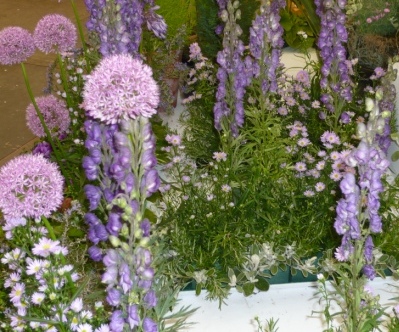
mauve-garden

A garden is for life not just Spring and Summer so you need to play a long game and plan ahead. Our top tips for 12 months time follow but you also need to think about the medium and longer term.
Trees will grow more rapidly once established like the Cupressus I have just had to cut back. Conifers may grow 10% a year and as these had grown to over 24 feet when the situation really needed a 10 foot maximum I had a problem and a lot of work to do.

Shrubs need space to spread and as you plant them think what they will be like in 3+ years. You do not want to be moving prize Camellias or Peonies once they are established.  Plant short lived  or less important plants near them that can be discarded as your prize shrub matures. Hedges get thicker and wider even with regular pruning so allot enough space when you set out. Do not let them get out of hand and block light, paths or  access.

Hard landscaping is even more permanent than most plants. Marry your landscaping to the key core trees and plants you want to build the garden around. Prepare in detail and put in long lasting foundations not quick fixes.

Top Tips for a Grand Garden Next Year

  • Feed your bulbs and let them die down naturally. Order more bulbs now.
  • Grow biennial plants from seed eg. sowing Wallflowers from June and pinching out the plants to make them bushy.

Read More Read More

Green Roof Of Sedum or Grass

Green Roof Of Sedum or Grass

Bear the weight of wet soil in mind but enjoy the fun of a green roof. Try maintain easy access to make life simpler.

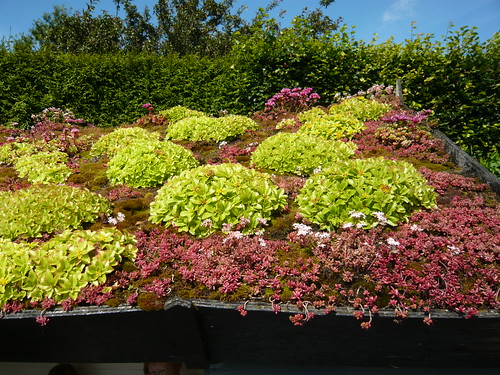
grass-roof

The Ecology Building Society as befits it’s brand values has a green roof on it’s HQ building. Green roofs can be a mixture of grasses or Sedums or both and all have similar benefits.

Benefits of Green Roofing

Golden Acre green roof

  • Improves energy efficiency with a natural thermal insulation.
  • Green roofs remove CO2 from the atmosphere to maintain the area of green plant growth.
  • Providing a natural and safe area for insects and a aesthetically pleasing wildlife habitat.
  • Good sound insulation is provided by the layers needed for a green roof.
  • Water and run off drainage control is increased.

Further Tips

  • The independent Green Roof organisation ‘livingroofs’ has more information.
  • Seed mixes are available containing plants able to withstand the rigours of a roof top environment species such as Chives, Oregano, Blue fax, White Stonecrop, Tunic flower and Ornamental grasses.
  • Sheffield University hosts the Green Roof Centre

Green roof

Apple Blossom – Time for a Photo

Apple Blossom – Time for a Photo

I’ll be with you in a…. blossom time.
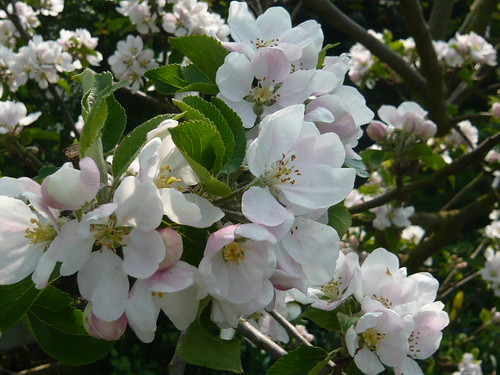
apple

Apple Blossom on Oxford High Street by University Church

apple

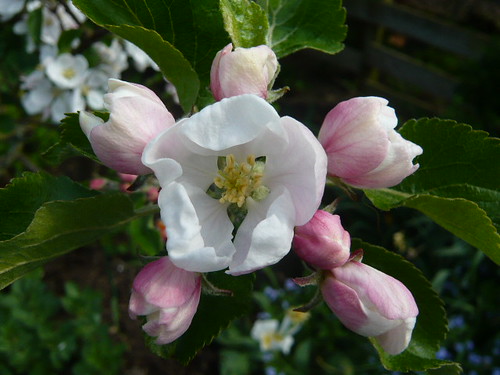
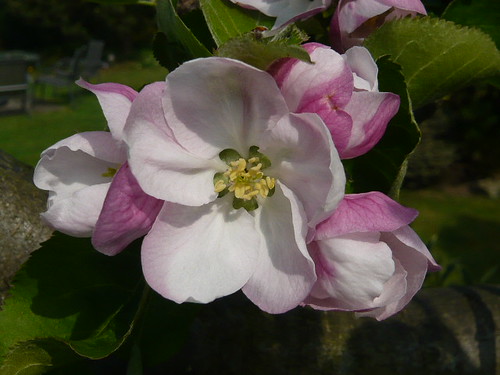
Close up of Apple Blossom against the Sky

apple blossom

apple blossom

Crab apple
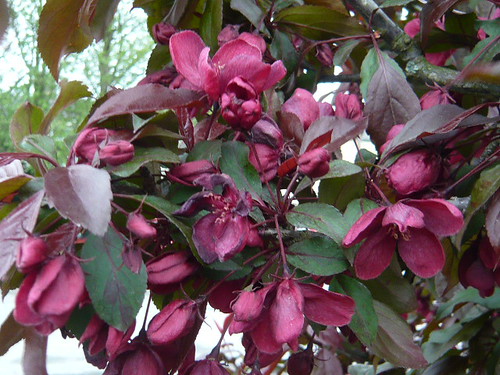
Crab apples have strong blossom

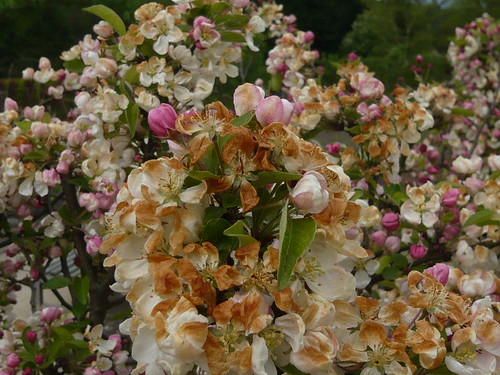
Frosted apple blossom

Beware late frost – it kills blossom and pollinators.

april apple blossom

Prune Hard Hardy Shrubs

Prune Hard Hardy Shrubs

These shrubs should shoot back after they are given a hard prune.
Pyracantha

Hedging
Box
Privet – Ligustrum
Yew -Taxus
Pyracantha
Holly – Ilex
Ivy – Hedera

Rose Hip
Flowering Shrubs
Forsythia
Honeysuckle – Lonicera
Potentilla
Lilac – Syringa
Weigela
Wisteria
Santolina
Rose
Hydrangea
Clematis
Gardeners Tips 2011 Choysia
Other Shrubs
Bamboo
Berberis
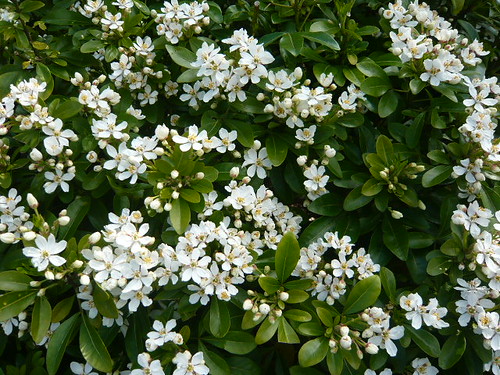
Choisya
Quince – Chaenomeles
Euonymous
Mahonia
Pholadelphus
Spirea
Vines
Mahonia 'Charity'

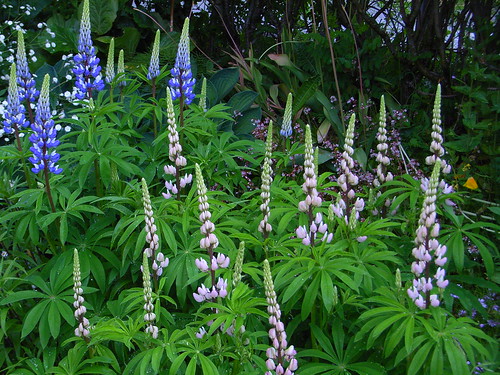
Russell Lupin and Lupin Origins

Russell Lupin and Lupin Origins

Rustle up some space for Lupins a grand perennial favourite.

Photo cc by Magnio

Originally Lupins (Lupinus polyphyllus) were introduced into Britain from North America in 1826. They had the blue flowered spikes we occasionally saw on railway embankments with some whiter flowers. Fast forward to 1937 and the RHS awarded its highest honour to a ‘ jobbing gardener’ George Russell for developing a strain of Lupins that caused a sensation.

Photo CC  by Thor Thorson 1

Russell developed his Lupins by rigorous selection of seedlings, aiming and achieving a central stalk or spike totally obscured by colourful flowers. Many of us would cut back Lupins after flowering to prevent the setting of seed and weakening the plant, but to George Russell that was the opposite of his intent.

Read More Read More

Grow Heathers – Ericas, Callunas and Daboecia

Grow Heathers – Ericas, Callunas and Daboecia

Will you go lassie go?
Heather on the Dales way or Le Tour d’Tykeland
dales way2 039

If you grow heathers you will know why we do and these recommendations come from other Heather growers.

Reasons for Growing Heather

  1. Heathers can provide a rich and changing variety of colour from both foliage and flowers all year round.
  2. Many of the easiest heathers are at their best in the drabbest months.
  3. Heather april

    Read More Read More

Sculptural Garden Angel

Sculptural Garden Angel

Harlow Carr has several sculptures best seen on a crisp winters day.

garden-angel

Harlow Carr has a garden guardian angel amongst the trees and rhododendrons in the RHS garden. The stainless steel works well in winter with the dark looming trees in the background. This sculpture is one of many that have been introduced into the garden since the RHS took over from the Northern Horticultural society and Matthew Wilson became curator.

An amusing giant wire mesh teapot acts is used for collecting fallen leaves. Woven sculptures made from willow and hazel also feature with large scale ships and fish ready to entertain summer visitors.

Gardeners Tips on Garden Sculpture

  • Give sculpture a chance in your garden but be selective about the pieces you choose and don’t cram in too much.
  • Aim for impact.
  • Read More Read More

Weather Permitting

Weather Permitting

‘Underwater gardening is my new hobby’ says a correspondent from the Somerset Levels.

Drought or a rainy wet summer whatever we are going to get there is a book by the doyen of British gardening Beth Chatto. Her garden in Elmstead Market Essex is worth a visit for the gravel garden alone and her treatise on Drought Resistant Planting or gravel gardens are equally captivating.

Book Cover

What on earth can happen after this dramatically wet winter?

If you imagine a wet spring and summer are in prospect then bog gardens and ponds may feature in your plans. Again Beth Chatto’s garden can give you inspiration but if you can’t visit have a look through her book Beth Chatto’s Damp Garden.

Book Cover

Control & Click on these books to buy from Amazon