Browsed by
Category: Articles

Gardening articles that may not include tips

Bamboo Uses and the Environment
Bamboo Uses and the Environment

Midland trip 097

There are over 1400 different species of bamboo in the world, 900 tropical and 500 temperate.  Bamboo is a useful component of landscape design, providing shade, wind breaks, acoustical barriers and aesthetic beauty. Bamboo beer, bamboo shoots as a vegetable and small implements are products from the bamboo.

Environment Considerations

In its natural habitat bamboo is very environmentally friendly
Bamboo is the fastest growing plant on the planet, with some species growing over 4ft in just 24hours!
Bamboo can be continuously harvested which is beneficial to the health of the plant.
Bamboos anti-erosion properties are key to it’s reputation as a soil conservation tool. Its roots bind the soil and the stems reduce rain run-off.
It is widely believed that if bamboo were better farmed it would be a renewable source of food, building materials and erosion prevention as well as keeping gardeners supplied.

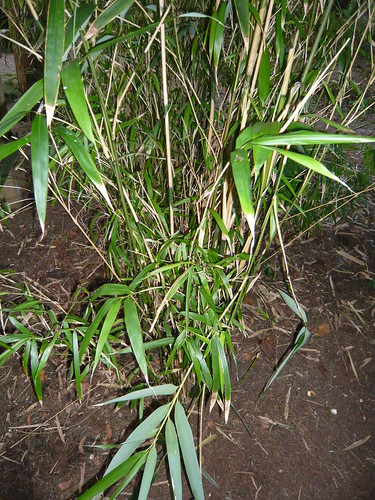
In Happy Mount Park Morecambe this clump of bamboo is used in a children’s adventure play area to add one more use to the growing list of uses.

Seeds to Grow Next Year

Seeds to Grow Next Year

Book Cover
This list of seeds is just a short selection of those I may grow this summer  January is a good time to read seed catalogues

Flowers

Alyssum Carpet of Snow the dwarf spreading variety that grows 8cm high . I bought by weight to get a quantity that will fill parts of the garden with that strong floral fragrance in late summer.

Alyssum Royal Carpet a deep violet I have not tried before – just a packet for fun.

Antirrhinum Tall Cut flowering to about 2 feet tall and useful for cutting. My first choice La Bella F1 were sold out so I will try again next year.

Aquilegia Alans Delight bought to give to a friend called Alan who admired my Aquilegia and has just started an allotment

Gaillardia New Giant Hybrids a two foot tall mix of this desirable perennial.

Helenium Helena a perennial to flower in the first season, bought for cut flowers

Vegetables

Courgette Green Bush for cutting when small a family favourite amongst the vegetarians

Courgette Tuscany F1 as it is resistant to mildew and I am worried about another damp summer

Parsnip Improved Marrow from an organic collection of canker resistant strain

Broad Bean Witkiem Manita for early beans to be sown in February

Broad Bean Masterpiece Long Pod as a contrast to the other beans

Different Pots for Plants

Different Pots for Plants

booted-shooted

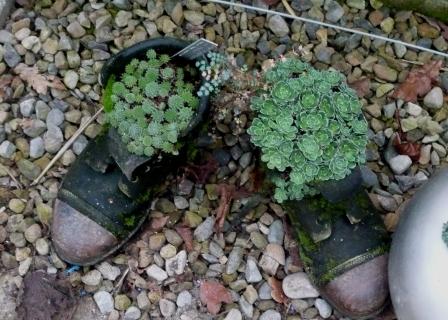
Unusual plant pots can make a different and eye catching features. These old steel capped boots should have had holes in the soles and the alpines are a good choice of plants for this display.  I like the moss beginning to grow on the right boot, I bet the old gardener didn’t let the grass grow under his feet.

Old gardening equipment can be recycled and called into service for a second time. An anodized watering can can be suspended from a tree used as a pot, or more creatively as part of a water fountain in a continious pouring action.  I am envious of the old wheel barrows that have been called into service as a mobile plant pots sometimes with a range of plants you wouldn’t expect to see close up. The extra height makes for less bending and the barrow can be repositioned whenever required. Perhaps they should sell modified barrows just for eye-level plant displays. They would work well on hard landscaped gardens or to show off special plants.

My wild life garden pond is an old plastic dustbin buried in an out of the way spot and disguised by Hellebores.

Whilst not an unusual plant pot I grow all sorts of seasonal plants in pots to be burried in gaps or lifted as I wish. I have a lot of tulips growing in this manner. It also helps to keep plants in a defined geometric shapes and this can be an added attraction.

Give your imagination free reign and let us know what new garden features you come up with.

Golden Winter Colour

Golden Winter Colour

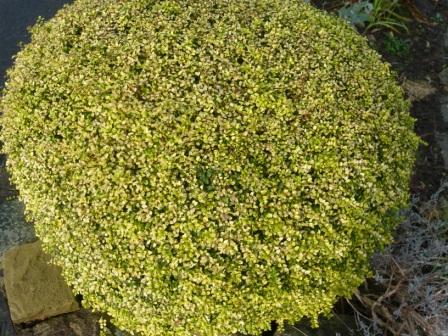
Lonicera nitida Baggessen's Gold

What colours predominate in the grey winter days when greens seem muddy and mud seems very grey. Well I like golden yellow colours and here are a couple of January examples that didn’t take much trouble finding in the garden during a short sunny spell.

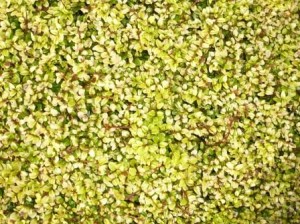
Lonicera nitida ‘Baggesen’s Gold’ tips you off in the title. This relative of the honeysuckle is grown for its leaf and the ability to prune to shape. It will not flower and is easy to propagate from cuttings. Unpruned the leaves can appear bicoloured but young growth will be fresh and bright golden coloured. It is easy to prune and a very forgiving shrub. Close up these small ovate leaves are not made from gold leaf unfortunately.

Tight leaf formation

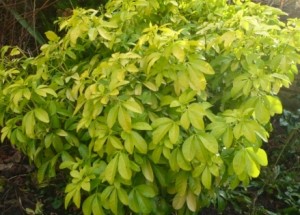
Choisya ternata Sundance was another yellow shrub doing its best in the weak January sun this afternoon. If the winter is too prolonged some young yellow leaves may get slightly frost burnt but despite -8 degrees last week these shrubs are still showing well. I also like the smell of bruised leaves and the delicate white spring blossom. This golden wonder performs even in a crisp winter frost.

Choisya ternata golden sun

Read More Read More

10 New Year Gardening Resolutions

10 New Year Gardening Resolutions

Verbena
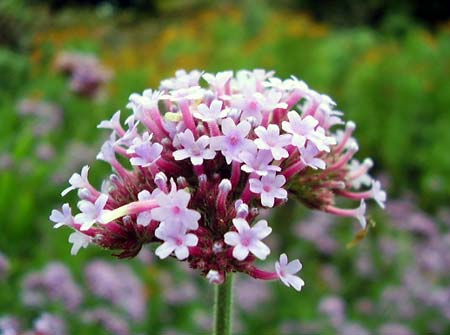
verbena bonariensis

My gardening New Year Resolutions

  1. Enjoy The Garden. Will take time to enjoy the garden without feeling obliged to pick up weeds …
  2. Grow more from seed. There is a thrill in growing things from seed. Will use cold frame and pots to grow sweet peas. – Hard work, but, one plant always worth the effort.
  3. Will be more focused in Doing jobs. A lot of my gardening is done without planning. I just go out in my slippers to pick some flowers and before I know it – I’ve started cutting back a shrub and pulling up pernicious weeds. It means I often do jobs without proper tools or focus. If really target 1 problem at a time with all the right equipment, you can solve it rather than doing things half heartedly.
  4. Be Bolder. As gardeners, we often think what would other people do, what are we supposed to do. I’m going to be bolder in planting sweet peas and tall plants in front garden, which has traditionally been a place of low growing bedding plants.
  5. Time Saving Plans. Some bamboo has become time consuming, because it is sending runners all over the place. Rather than dealing with the endless runners – I’m just going to take it all out and replant something new or a bamboo which definitely doesn’t send runners everywhere.
  6. Build a Pond. A pond will attract more wildlife and add a new element of interest. I have been put off doing it because it is a big project, so I’m going to scale down the size to something more manageable and add it.
  7. Spend as much time Planting as weeding. Last year, I was always weeding and creating wonderful beds of blank soil. The result was I didn’t have enough time to spend time growing plants from seed / diving e.t.c. This is the fun part of gardening so I will do more of it.
  8. Grow Something new. For the past few years, I have been relying on same plants. There is great fun in trying something new from seed – something completely different and see how it gets on.
  9. Visit More Gardens. The best way to gain inspiration from a garden is not through books or talking about it, but visiting other gardens. Visiting  professional and well kempt gardens you come back with lots of enthusiasm for creating a better garden and also combinations of plants which work well.
  10. Clean Tools. A good gardener doesn’t just keep order in the garden, but, also his tool shed. If tools are kept in great working order – blades sharp and well oiled then it makes the whole experience of garden more enjoyable.


Brilliant Garden Colour

Brilliant Garden Colour

Book Cover

Colour for adventurous Gardeners by Christopher LLoyd

Colour to Attract Book Worms

  • My personal favourite plants for colour tend towards the bright, brash and bold of Dahlias, Roses, Gladioli and even Gerbera.
  • I do not have much of an eye for harmony or hazy, pastel shades but go for in your face hot colours that form part of my Shock and Awe campaign.
  • Christopher Lloyd may educate me with his book on adventurous gardeners use of colour but we will see.
  • In the meantime I will keep growing my brash coloured Dahlias.

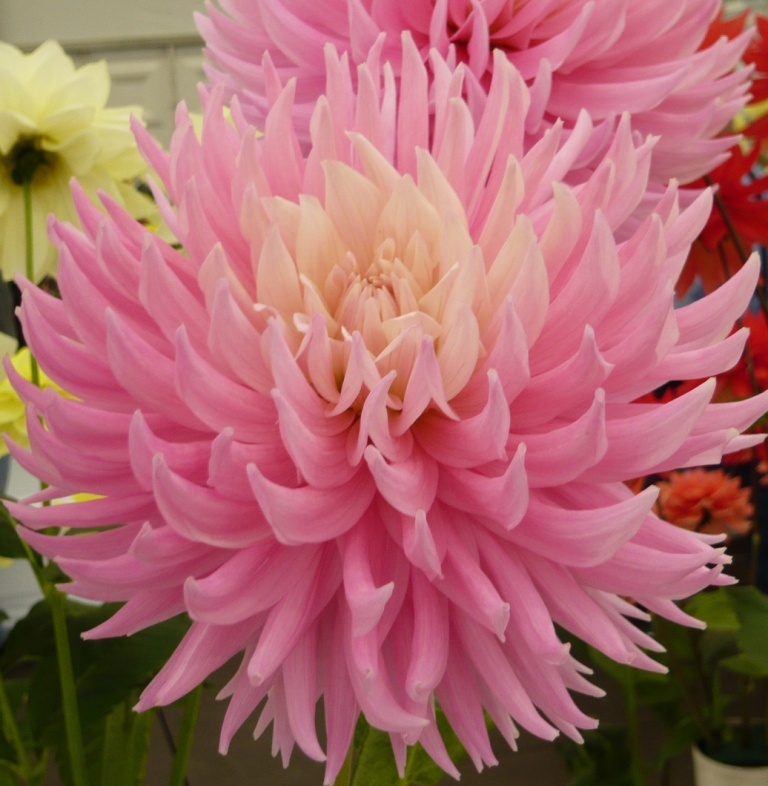
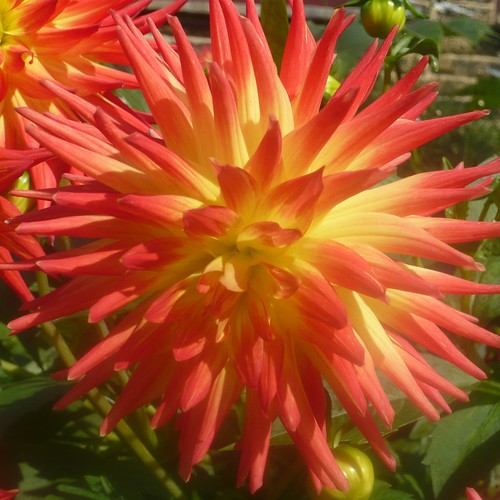
Cactus Dahlia

Read More Read More

Topiary Tips and Sites to Visit

Topiary Tips and Sites to Visit

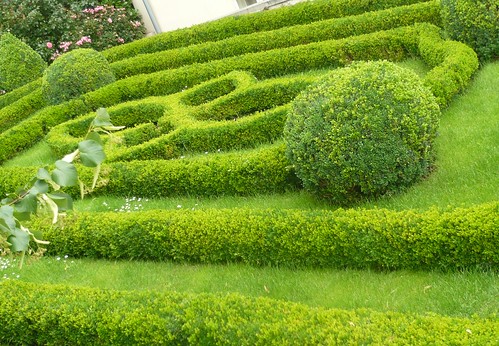
Some evergreen shrubs lend themselves to topiary and simple sculpture shapes. From simple Box hedges as knot gardens to large geometric shapes you can train and prune to get effects with a large range of plants and shrubs.

Good Plants to Start
Yew (Taxus) is a traditional topiary subject that stands hard pruning with it’s fine textured needles and moderate growth rates.
Juniper is a fine textured evergreen with tree, shrub and prostrate forms that respond to pruning.
Holly (Ilex) is a glossy leaved evergreen with various leaf forms depending on variety. It is slow growing and can be trimmed quite hard.
Box (Boxus) is useful for smaller sculpted shapes needing fine detail. It is slow growing.
Cupressus are often used for spiral shapes or cloud pruning.
Bay (Laurel nobilis) has coarse aromatic leaves that are popular for training as a round-headed standard.

Book Cover

Read More Read More

Bright Indoor Bromeliads

Bright Indoor Bromeliads

Try a bromide ‘oops’ I mean a Bromeliad.

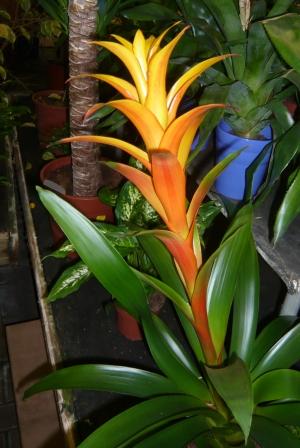
bromeliad

This Bromeliad is a relative of the pineapple and as it is easy to grow indoors it makes a fine house plant. There are a wide range of Bromeliads and a society dedicated to there culture the Bromeliad Society

Bromeliad Tips

  • Grow the Bromeliads for their coloured leaves that spring from the plants center.
  • If flowers are wanted try a dose of epsom salts or magnesium sulphate as this promotes healthy growth, cell structure and the production of chlorophyll.
  • As the inflorescence or coloured spike starts to go brown cut it down to encourage off sets called ‘pups’ and get a new generation of plants.
  • It can be good fun growing from seed as different Bromeliads pollinate one another and you can’t be sure what you will get.
  • For water holding Bromeliads keep the center topped up with soft water.
  • For more data try a reference book  on Bromeliads

Book Cover

Fungi the Good the Bad and the Evil

Fungi the Good the Bad and the Evil

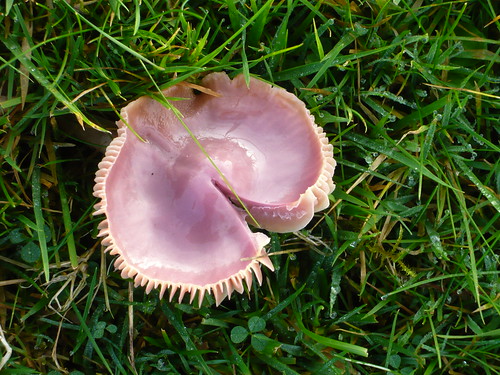
Fungus is all around your garden and we and the garden are better for it. Fungus is a natural process that helps rot down dead plant matter and sometimes produces stunning fungi.

Halloween 039

The first frost of this winter may have turned most fungi fruit to mush but you can brush up with a good book.

Book Cover Identify Mushrooms

Mushrooms and toadstools have a good season in 2014 due to mild weather in October. Like bracket fungi they produce large fruit-bodies as reproductive organs above ground and are called macro-fungi. Some are edible whist others hallucinogenic or deadly poison. The fungus proper is the mycelium a web of of thread-like growth known as spawn in mushroom growing.

Read More Read More