Oxford Botanic Garden Flowers – August

Economists agree this could be a good year for growth
Border at Botanic Gardens –
a reminder of the floral delights to come after the cold winter days.
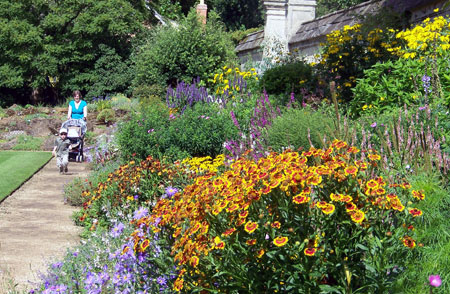
Young kid inspects the border
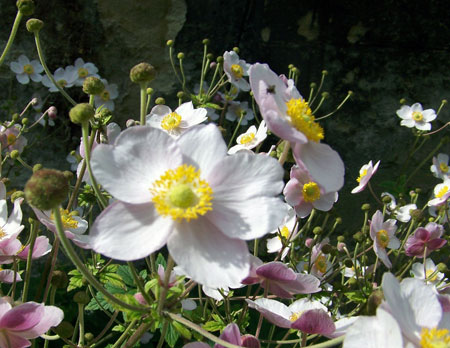
Anemones
Economists agree this could be a good year for growth
Border at Botanic Gardens –
a reminder of the floral delights to come after the cold winter days.
Young kid inspects the border
Anemones
Father 1570-1638 and son 1608-1662 both worked as gardener to the Royal family and are buried at St Marys Church Lambeth. At the Museum of Garden History in Lambeth there is a garden laid out using plants they introduced to the UK after trips to Russia, Africa and North America in the early 17th century.
As early traveling plant collectors both John Tradescants’ were responsible for many plant introductions and curios collected on their travels. Plants include Michaelmas daisy, Cistus, Acer, Maple and Tradescantia
‘Musaeum Tradescantianum’ was the first museum catalogue published. Tradescant willed that the collection was to go to his widow on his death, but Elias Ashmole obtained the collection by deed of gift and established the Ashmolean Museum in Oxford. Some of these original items can still be seen in that museum and Ashmole is also buried at the Museum of Garden History. The tomb of the Tradescants stands beside the knot garden near that of Captain Bligh of the Bounty, and is covered in carvings representing their interests in life which showed them both to be ‘curious men’.

If you are lucky enough to have a stream running through your garden you can plant many colourful plants at the side.
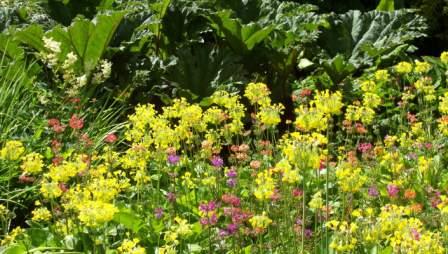 Harlow Carr Candelabra primula by the stream 2008.
Read more about Wild Iris on Gardeners Tips.
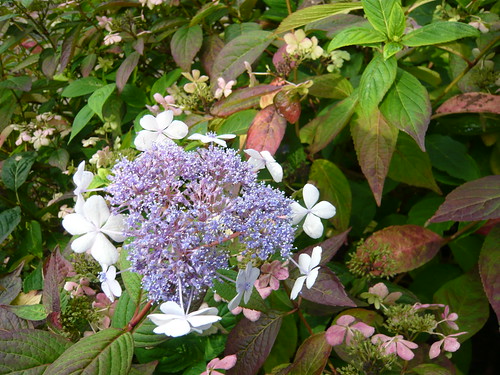
Every colour has its day and for blue that is often in Autumn. This is a selection of our blue to purple plants showing off during mid to late October.
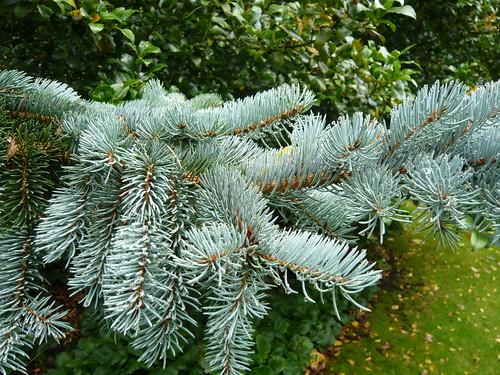
There are not too many plants that form a blue leaf or needles in this case. Eventually this Firs young needles will turn green.
Some Hostas are said to have blue leaves or blue/green.
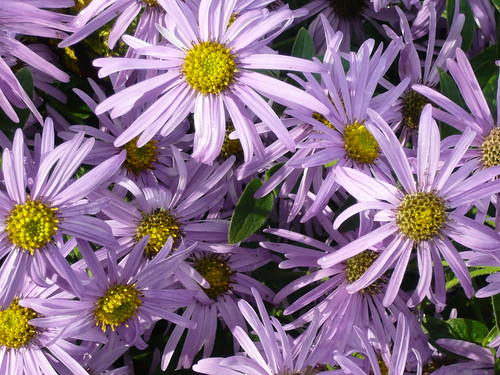
Michaelmas daisies are one of our favourites on Gardeners Tips as you may have noticed.

Blue is a tough colour to get right in the garden. Roses, Dahlia and Narcissus are renown for not having blue varieties. I have cheated with this hard Geranium that was in flower earlier in the year.

Plant selection
Planting Tips
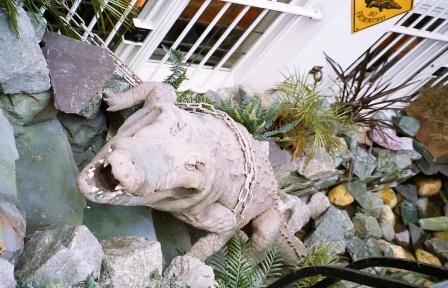
Any space bigger than a bottle can be used to create a garden. This London tennament had a basement flat twelve feet below the pavement and about 5 feet wide. Despite those limitations there was an exotic rock pool, obligatory ferns and phormiums and the London Lizard, the Camden Croc, or the Admiralty Arch Alligator.
If you want a new idea in seeds that will help create an eco-friendly garden try these mixed from Wallis seeds or our seed suppliers.
Beetle and Insect Bank a mixture of grasses to encourage beetles and insects to feed and breed. Can be planted in a small area in the garden
Pollen and Nectar Mix. A good mixture of flowers and grasses for butterflies, insects and birds to feed. A sunny area may be best but a small space will suit.
Wild Bird Mixture of plants producing seed or providing cover for birds. Ideal for small birds like finches, buntings and sparrows.
Clover Mix – red and white clover ideal for butterflies and helpful for bees
Bumble Bee & Butterfly mix to attract what it the name implies plus other insects
…
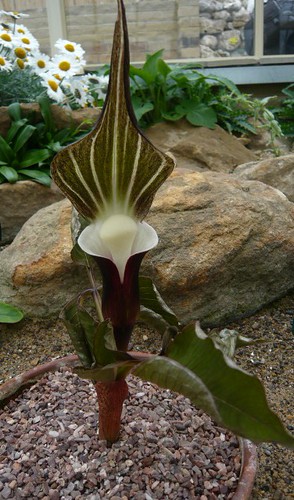
Arisaema sikokianum is a herbaceous perennial plant with vertically patterned flowers.
Characteristics
Other names for Arisaema sikokianum include Shikoku cobra lily, Gaudy Jack or Japanese Jack-in-the-Pulpit.
Arisaema sikokianum is one of 150 species and an unusual woodland plant noted for its unmistakable smoky-purple base, white cup and large hood with purple, green and white stripes.
There is a specialist international society for Aroids or Arum family plants with Arisaema links.

The low growing ivy leaved cyclamen has marbled foliage and Spring or Autumn flowering. It grows from corms that are planted in shade under trees or in rockeries with some cover.
The Autumn flowering C.Neapolitan (Hederifolium) varieties come in shades of pink to the album white
The pictured C.Coum variety is more hardy and flowers in spring.
In hard weather areas it may be necessary to grow in pots and lift them in severe conditions but if conditions suit they will form ground covering clumps.
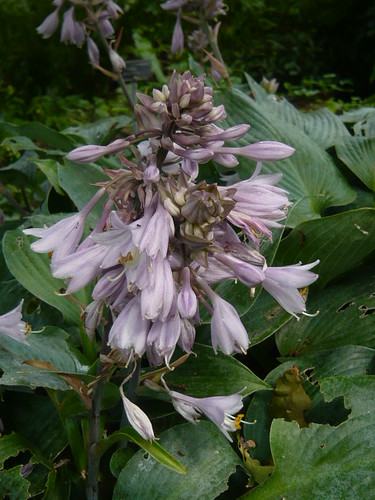
It is the end of this years Hostas but I was lucky to keep most slugs off most Hostas until the autumn ravages start. It is no longer worth protecting the leaves which are due to die back into the Hostas roots to await next spring.
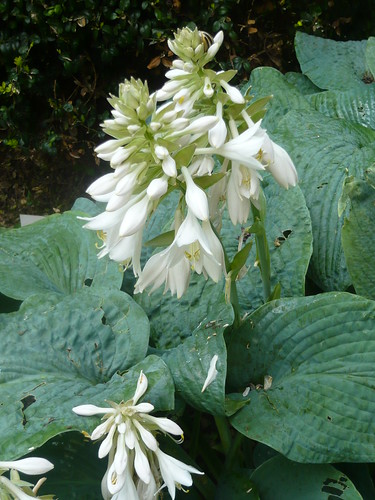
2010 has been a good year for Hosta flowers and I have been keen to see white and purple spikes on my plants.
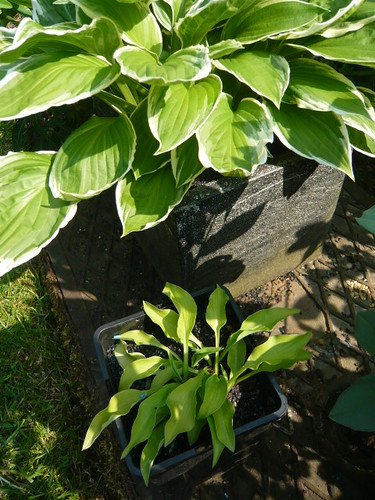
This is a photo of the baby hosta or Dwarf alongside a normal plant. Mini hostas have the less impact when placed directly next to large hostas.
For more on Hostas read