Browsed by
Month: July 2015

Artificial Ideas for Roof Gardens

Artificial Ideas for Roof Gardens

gloucester container

This week I had lunch in the roof garden of the 16th Century ‘Soup Kitchen’ in Stafford. The tables in the restaurant and outside on the pavement had very welcome fresh flowers.
The roof area was flat with a split level but overall it gave me a couple of ideas.

Roof Garden Ideas

  • Artificial grass is light, easy to clean and water resistant. It can look quite realistic if you select carefully.
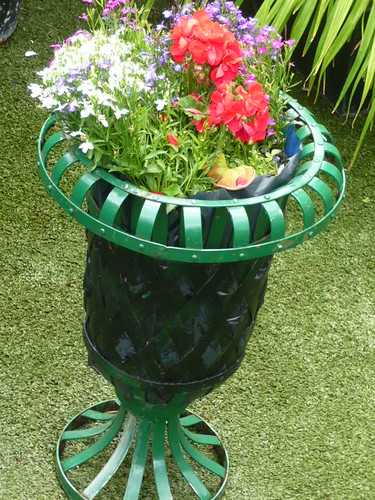
  • Even heavily perforated containers can be brought into use by the adaptation of black plastic. A series of old braziers contained colourful flowers and herbs.
  • The space was divided by wooden partitions to make smaller ‘rooms’. This protected against the sun and provided some welcome shade.
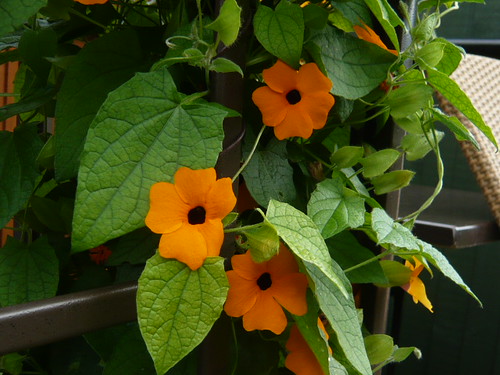
  • Walls and the partitions made places for climbers and scramblers like the Blackeyed Susan below.
  • Ensure you have adequate access for equipment and visitors

Read more about Artificial Grass on Gardening Products
Blackeyed Susan

Visit the Soup kitchen

More Horsetail or Mare’s Tail Weeds to Eliminate

More Horsetail or Mare’s Tail Weeds to Eliminate

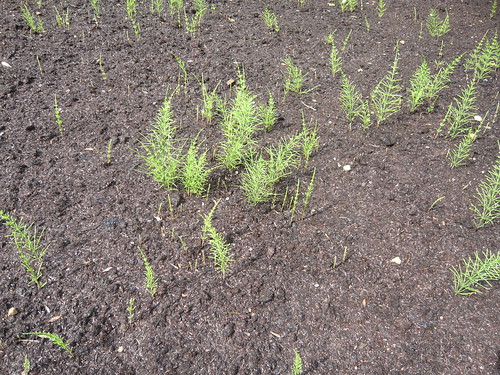
Mares tail

Mare’stail or Horsetail is a common garden weed that flourishes on damp soil. Even the RHS is prone to Horsetail as the picture taken at Harlow Carr Gardens demonstrates. I look forward to seeing how they cope!

Why it is a Problem

  • The plant reproduces by spores that are readily wind dispersed but most problems come from the rhizomes.
  • Rhizomes are extensive both horizontally and vertically and may reach over 5 feet deep depending on substrate.
  • Rhizomes break into small parts and reproduce quickly.
  • Tubers are then produced at the nodes of the rhizomes.
  • You can’t dig it out, although you may weaken the plants if you remove as much root as you can then hoe when you get above 1″ shoots.

Control and Eradication

Canterbury Bells not Cockleshells

Canterbury Bells not Cockleshells

LBA 067
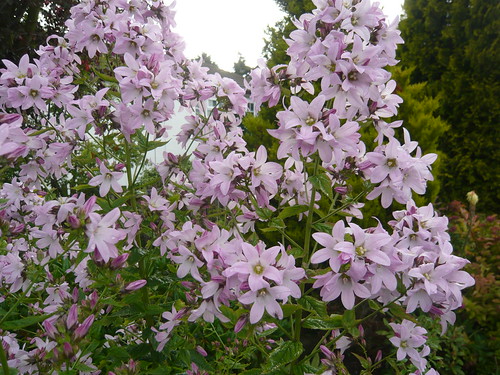
Campanula burghaltii is a showy Canterbury Bell or Campanula. The pale lavender flowers are borne on wiry stems that I find need no extra support. The leaves are leathery in texture and oval in shape.

LBA 062

Canterbury Bells are available in a range of sizes and colours. This Campanula lactiflora has been grown from seed and last year was even better as it made pyramids of flowers. Perhaps I should allow each plant a bit more space.

Bell Flower


This alpine version of the Canterbury Bell seems to be all flower and no leaf. It is performing well in  a moist plunge bed.
Book Cover
Dwarf Campanula by Graham Nichols
See also Campanula for the rockery here or Alpine campanulas.

canterbury bells

This Bell flower has self sown in my garden for many years. The stems need some support but they flower for a long period and I am loathed to pull them all up. I try help the white flowers as they seem less robust.

Read more about Growing Canterbury Bells

Read More Read More

British Apples Worth Growing

British Apples Worth Growing

With over 600 varieties of apple to grow in the UK, you need to refine your search for a good variety. (There may be as many as 2000 worldwide.)

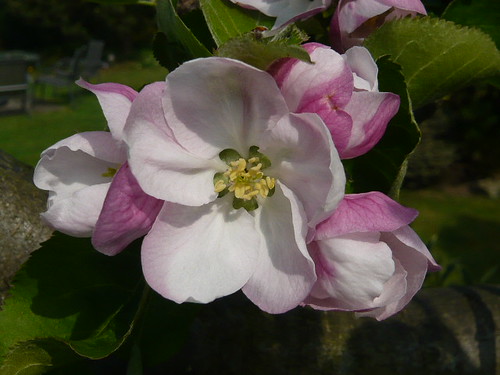
april apple blossom

Here are some British varieties

Ribston Pippin grown in Yorkshire since 1707
Egremont Russet tasty and nutty with white crumbly flesh
Claygate Pearman rich and scented and discovered in a hedgerow in 1820
Chelmsford Wonder a good cooker
Winter Wonder a recent breed which is crisp and juicy
Blenheim Orange, Beauty of Kent and Wyken Pippin may produce more taste than Breaburn, Gala and Pink Lady

Artistic view of Apples

‘Detailed watercolours depict the unrivalled range of form, colour and texture which characterize such varieties as Beauty of Bath, Peasgood Nonsuch, Cox’s Orange Pippin and Egremont Russet in this illustrious book by Rosie Sanders.

Book Cover

Also available from Amazon by clicking on the cover is the new book of Apples

Read More Read More

Top Ten Seeds for Children to Grow

Top Ten Seeds for Children to Grow

Sunflower -Valentine

Top Ten Flower & Veg Seeds for Children to Grow

  1. A Broad bean or runner bean grown in a jar with curled tube of blotting paper to hold the seed against the glass. The roots will start when the bean germinates and then a leaf will form. The bean can be planted or the shoots eaten.
  2. Mustard and or Cress sown on a wet cloth or flannel will germinate by growing a jelly coating and produce a fresh smell. In about 8 days there will be cress to eat.
  3. Sunflower seeds sown in the garden can make giant plants taller than the children. Put a cane in firmly as a stake to tie the growing plant too.
  4. Nasturtium seeds are big enough for even the smallest fingers. Plant in poor soil and they will trail and spread and the flowers leave new seed to collect for next year. The leaves and flowers can also be eaten so use this to teach children what can and can’t be eaten.
  5. Virginia stocks can be sown in a broadcast manner and produce sweetly smelling flowers quite quickly
  6. Forget-me-not can be sown in summer or autumn and will flower in spring when you haven’t forgotten them
  7. Cottage garden selections like Cornflower,
  8. Clarkia, are vquick to mature and flower in summer.
  9. Larkspur all provide a lot of colour for relatively low cost
  10. Calendula are hardy seedlings that do not require any effort other than broadcasting the sizable seed

Perhaps the best idea is to grow a mixture. You can buy seed mixtures aimed at different locations such as Cornfield mix and others from Thompson & Morgan

Five July Garden Flowers

Five July Garden Flowers

At the beginning of June gardeners tips showed five photographs of flowers from my garden. For July I have chosen five spherically shaped flowers (actually they were snapped 30th June but they are still around in July).
You may expect plants to only flower in the months recommended by retailers but nature is not like that. The Alliums should be flowering earlier and be over by July. The Hydrangea and Gazinia are still to give their best.

Allium
Allium Christophii look like a firework display and I am told make good cut flowers. (Mine will stay in the garden for the time being.)

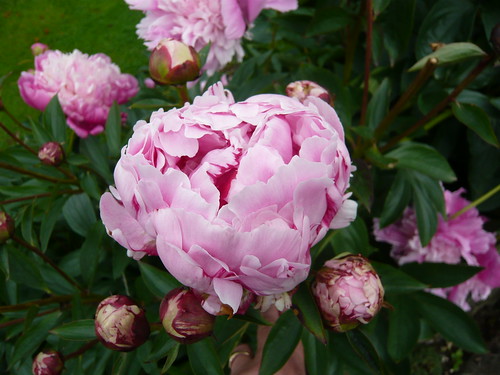
Peony
Despite very poor ‘Peony weather’ my exemplars have survived and not suffered too much damage. It is the flowers I have brought indoors that have quickly shed their petals this year.

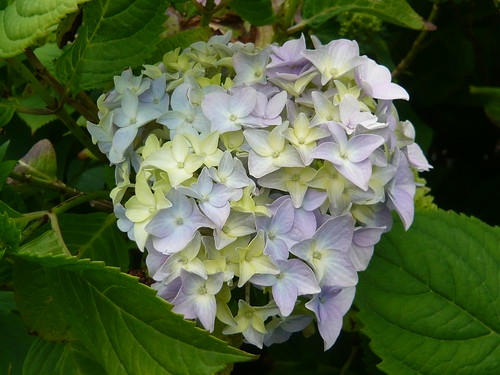
Hydrangea
It is a bit early for Hydrangeas to show full colour but I liked the theme of big round flowers on these photographs.
I have fed this Hydrangea with colourant last back-end and spring so am hoping the blue gets stronger as the flowers open more fully.

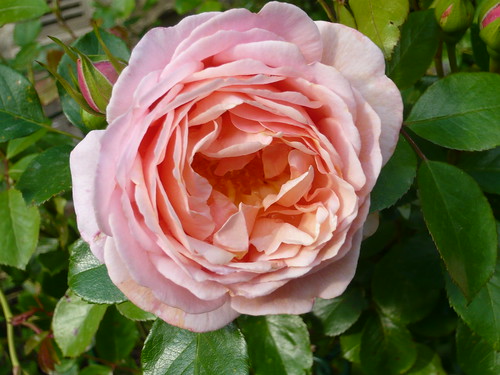
Rose
Where would an English garden be without it’s roses?

Gazinia
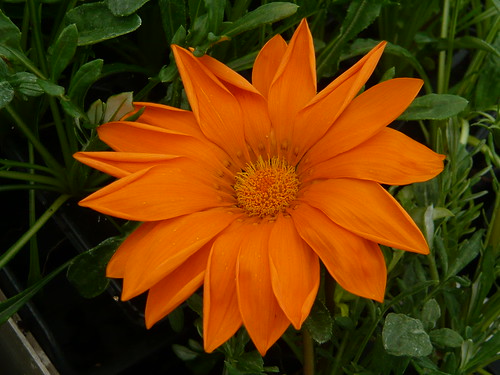
The orange Gazinia is included for the strength and variety of colour. It is a bit of a cheat as it is still under glass when the picture was taken as the rain could have damaged the petals.

Bruise Vegetation to make great Compost

Bruise Vegetation to make great Compost

It is no surprise that damaged fruit rots fastest. So it is with your compost. Cut or bruise the green stuff to make quick and friable compost.

  • Find a way to damage any compostable waste eg. run a lawn mower over it or cut into small pieces
  • Shred twigs and stalks – I use an electric shredder but secateurs are just as good.
  • Chop up any hard stems or long shoots with secateurs to about one inch lengths.
  • Leaves and other plant matter will rot quicker if the bugs and bacteria can get at them from more than just one end. So the more cutting, bruising, shredding, tearing, scrunching or chopping the better.
  • A chipper can do the bruising job quicker and a mulching device can be added to new lawn mowers.
Dactylorhiza foliosa Orchids in your Garden

Dactylorhiza foliosa Orchids in your Garden

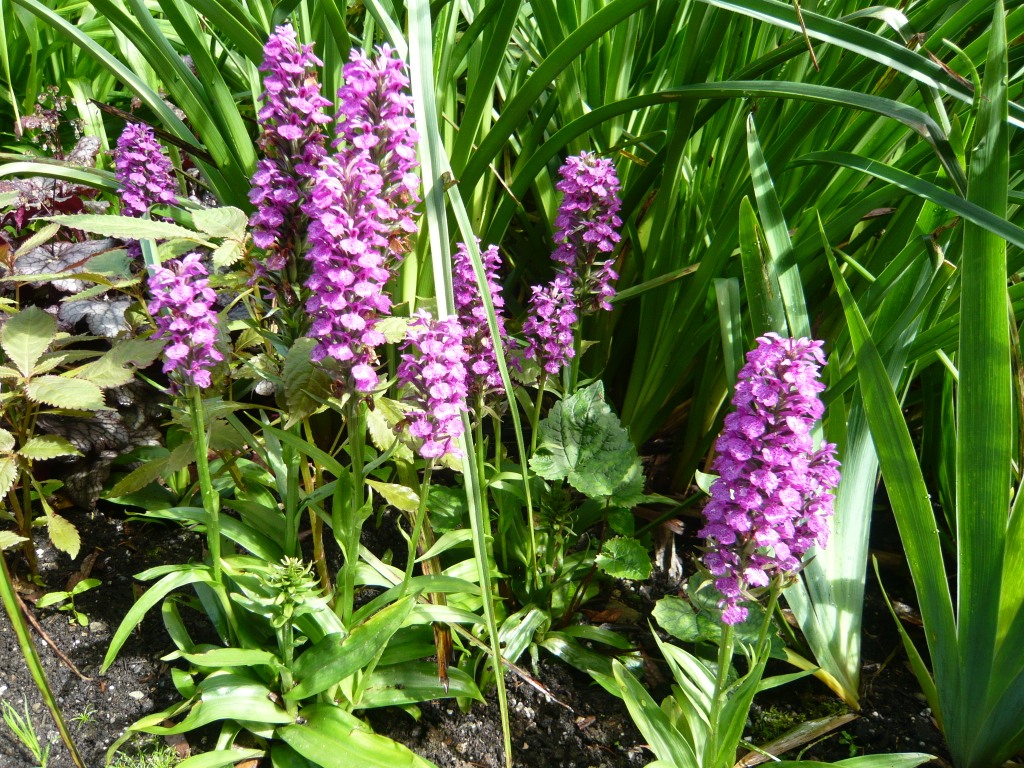
Dactylorhiza foliosa is a hardy Orchid that will grow and flower in a protected spot in your garden. Originally from Madiera the established plants will produce stunning displays of flower in your garden.

dactylorhiza foliosa

Growing Dactylorhiza foliosa

  • This Orchid in a tuberous perennial that will lose its leaves in winter.
  • The tuberous root is hardy but good drainage and some protection with an autumn mulch is recommended.
  • Dactylorhiza in the wild like damp slopes in woodland glades so it is best to try replicate these conditions.
  • Dactylorhiza hybridise easily but young plants take a long time to develop into flowering specimens.

Description of Dactylorhiza foliosa

    • This Orchid will flower during early summer and generally has purple or pink spikes.
    • The leaves are strap like and can be spotted.
    • Plants can grow 2 feet tall
    • Dactylorhiza foliosa is just one of a large number of species and varieties within the genus Dactylorhiza.

Quarry Gardens at Belsay Hall & Castle

Quarry Gardens at Belsay Hall & Castle

A ‘Quarry Garden’ had not registered with my horticultural subconscious until I visited Belsay Hall garden an English Heritage property in Northumberland. Serendipity or deliberate planning has created a fantastic garden space for the 21st Century from a site first developed as a garden at the end of the 18th century.
There are influences from other famous gardeners including Humphry Repton, William Robinson and the designers of the previous 17th century gardens and manor house.
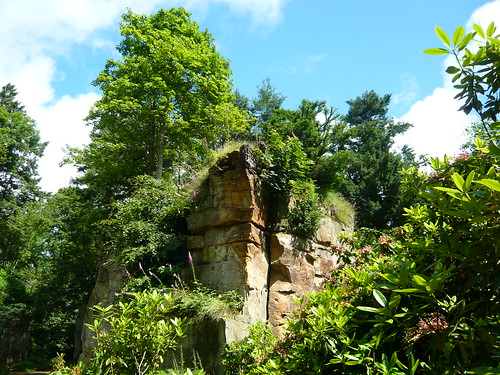
Belsay Hall Castle Garden

Conceiving a Quarry Garden

There are a couple of paths through the quarry leading to the old castle which hosts grand views of the estate from the battlements. These paths go through the West Quarry garden and the East Quarry gardens. see photos

Sir Charles Monck had the hall built in 1817 from local stone dug from his own quarry between the Castle and Hall. Creating a quarry garden was in his mind as the stone was excavated with great care. If the stone had simply been blasted out we would just have a hole in the ground.
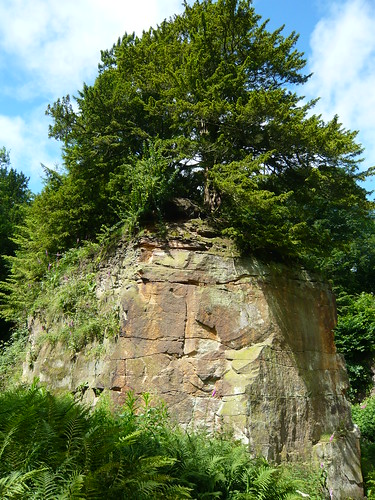
Belsay Hall Castle Garden

The sheer rock sides form a ravine with what has developed into a dramatic garden of significant proportions. The planting of evergreen trees like yews and pines on the rim of the quarry has increased the sense of height whilst the lower story has attracted many plants including Rhododendrons.
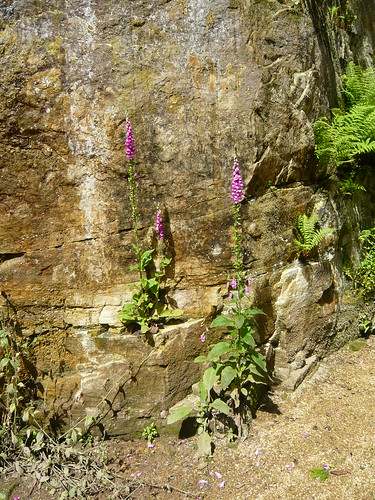
Belsay Hall Castle Garden

The lush, jungle atmosphere was later enhanced by Monck’s grandson, Sir Arthur Middleton, who planted many more exotic and rare shrubs that liked the conditions created by the microclimate within the quarry. Majestic trees are complemented by a collection of ferns that Sir Charles Monck was renown for collecting.
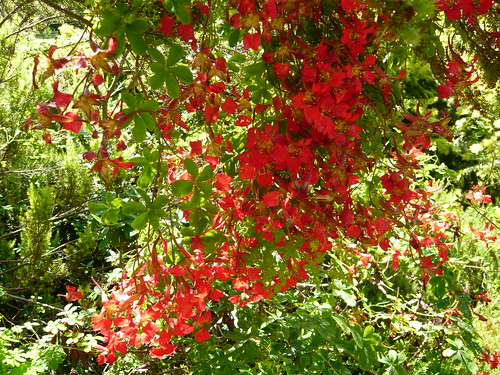
Belsay Hall Castle Garden
This is Trapoleum Tuberosun a relative of the nasturtium twining through a tree heather in the more formal part of the garden.

Gardeners Tips

  • Visit in spring when snowdrops and other bulbs, planted in the early 18th century, are in full bloom.
  • Time your visit to see the display of Rhododendrons in full spate.
  • Be prepared for a walk through the surrounding woods and through the Fern walk.
  • The hall contains no furniture but the architecture is worth studying, the tea rooms are worth eating in and the rest of the garden is designed for a fine day.

Belsay Hall Castle Garden

Bird Bath Tips for the Garden

Bird Bath Tips for the Garden

Book Cover

Birds often struggle through our cold winters in the UK and the USA. I guess that is why some of them migrate.  However in the early spring they will be hatching and fledging so they need access to water and the gardener’s answer is a bird bath and a pond.
Where to Locate Your bird Bath
• Birds will use a bird bath if they feel safe and have an escape route into cover.
• Locate the bath near suitable hedges or trees
• Make it hard for cats to lurk near the bath using vegetation as cover
• Place the birdbath where the birds can see the area around it and where there are no hiding places for predators
• Place away from direct sun as this prevents algae growth in the bath.
What Features are Needed
• A shallow bath is adequate and a deep bath dangerous. Birds can drown so cover deep water or bridge the water with a plank or similar.
• The birds need a place to stand and a perch or twig may help.
• Bird baths on a pedestal are most popular.
• A small diameter bath allows birds to see over the edge and be prepared for danger.
Other Tips for Bird Baths
• Ensure good hygiene by cleaning out every week. Dirty water can spread disease.
• Ensure water during frosty times – this is when birds need it most.
• Nature provides bird baths in ponds and puddles. They are not accessible in freezing weather so like your fish pond it is worth keeping a space ice free.

Design of Bird Baths

  • A good bird bath has a sturdy construction that will not wobble or fall.
  • The bath should be accessible so it is easy to fill and clean.
  • Birds appreciate shallow sloping sides with a shallow approach to water.
  • To allow different species to bathe the water should be 1-4 inches deep.
  • Make sure the surface of the bath is rough so birds can grip it with their claws, and not slip.
  • The vigorous bathing of a flock of starlings can use up a lot of water, so make sure your bird bath is big enough!
  • Whilst you are in DIY mode to help your birds why not add some more feeders and nest boxes.

Book Cover

RSPB advice on Bird Baths

  • The simplest bird bath is a plant saucer with textured finish and a stone in the middle You could set several of these around your garden., but is light enough to make it easy to clean and refill.
  • You could use a dustbin lid sunk into the ground,or supported on stones or posts. If the lid is shiny or slippery, a thin layer of gravel on the bottom (this makes it more difficult to clean though).
  • A shallow stone in the middle will help birds get to the water in comfort.

Related
• Bird Baths from Amazon