Browsed by
Month: February 2013

Perfect Penstemon Growing
Perfect Penstemon Growing

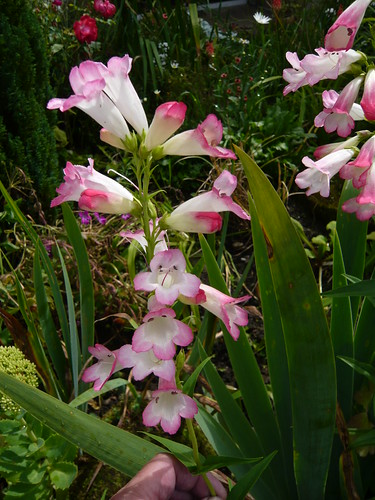
Penstemon is also known as ‘the beard tongue’ and belongs to the family Scrophulariaceae, which contains over a hundred genera including Antirrhinum and Foxgloves. So it is no surprise that the tubular flowers spiral round each stem.
Penstemon are reliable perennials with fibrous roots that do not stray. They are relatively trouble free and resistant to slugs and other garden pests. Keep growing young plants to increase your stock.

Perfect Penstemon Growing

  • Penstemon flower for six months from May to November in a wide range of colours. Reds and pinks are my favourite but purples, blues and white come a close second.
  • They hate cold, wet feet in winter and will die as a result
  • Penstemon mixed hybrids make good cut flowers. Briefly expose the cut end to a flame,   harvest in the morning and condition the stems by soaking them for several hours in warm water
  • Penstemon are happy as bedders in borders, pots and containers in sun or part shade in virtually any well-drained soil. There are varieties for most situations.
  • Border types Penstemons  are more satisfactory when grown in masses rather than individually
  • Penstemon is a good Bee plant attracting pollinating insects into the garden .
  • Dead head regularly by removing the whole flower spike.
  • Top Tip – In the spring when all danger of frosts have passed cut back the old foliage down to the new green shoots. Penstemons can become woody and leggy if they are not pruned annually
  • As plants are not very long lived propagate from cuttings in September (or May) by plunging into gritty soil or compost see Mixed Penstemon

Book Cover

Read More Read More

Plug for Jersey Direct Plug Plants

Plug for Jersey Direct Plug Plants

wall flower

Plug plants are an excellent way to acquire plants without the risks, time, space and effort needed with seeds. They are a fantastic way to buy annuals, perennials or bedding plants to fill your garden with colour or get some part grown veg plants.

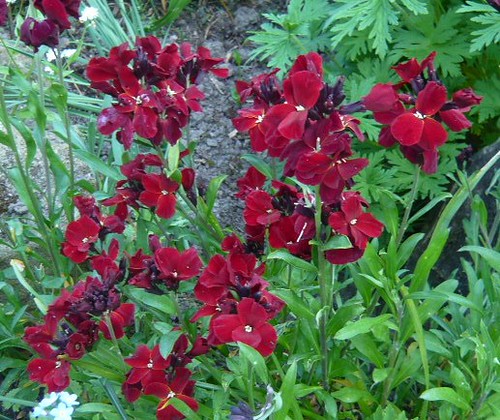
July is a good time to order spring-flowering wallflowers, primroses, pansies and bulbs amongst others. I have just used Jersey Direct for my wallflowers that I want to get in early this year so they have a chance to get bushy. Generally I leave them to get a bit straggly so I must remember to pinch out the growing tip before they start their winter slumber.

If you wish to see what other plants are available as garden ready plugs for delivery from now until October from Jersey Direct click on our button on the bottom right.

March Jobs

Floribunda Roses

Floribunda Roses

Tips Growing Floribunda

  • The term ‘floribunda’ meaning large clusters of flowers has been taken over by rose trees with these floral characteristics.
  • The flowers are usually borne over long periods and are more tolerant than Hybrid Tea roses from which they were crossed with polyantha varieties.
  • When planting prune the roots back to 8 or 10 inches.  It encourages new root growth of the fibrous kind that do the feeding and watering.
  • Prune floribunda roses to a bush shape rather than hard as you would an HT rose. New growth will never be stronger than the stem it grows from so prune out weak stems that are over a year old.
  • With over 20 buds to open on this tree in October this rose has earnt it’s keep this year.

Read More Read More

Icebergs Rosey and Leafy

Icebergs Rosey and Leafy

Rose Iceberg
Rosa Iceberg

Global warming has not made my Iceberg rose melt or disappear. On the contrary it is doing very well.

In the top picks for many rose enthusiast this is one shrub that can look after itself. Any floribunda rose should have lots of buds and blossom and Iceberg doesn’t disappoint. These buds are slightly pink, opening regularly through summer and autumn to display classic white roses.

Compared to other roses this plant is disease resistant, feeds some aphids and has sharp thorns but all is forgiven in lieu of its great display.

Tips

  • Icebergs bloom on new wood so prune before Easter to get good growth.
  • Encourage your Iceberg to grow tall in a ‘White Garden’ – you can also get Iceberg as a climber sport

Read More Read More

Good Value Rockery Tips

Good Value Rockery Tips

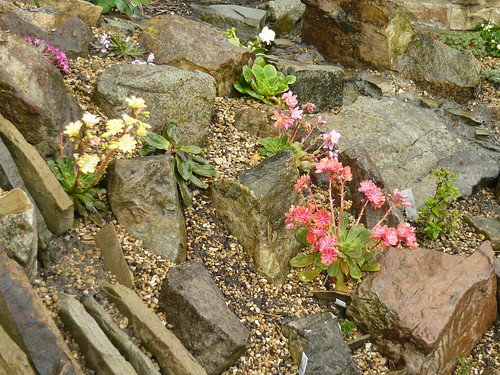
Rawdon Alpine Rockery

Save Money on Your Rockery

  • Less is more so have fewer, quality plants that you maintain to high standards.
  • Scavenge rocks from tips and waste land. Don’t take them from walls or important natural habitats. Each rock will be like treasure trove with many memories attached.
  • Make your rockery small, very small or minute. you can get a rockery in a 12″ plant pot with small rocks squeezed in on their edges.
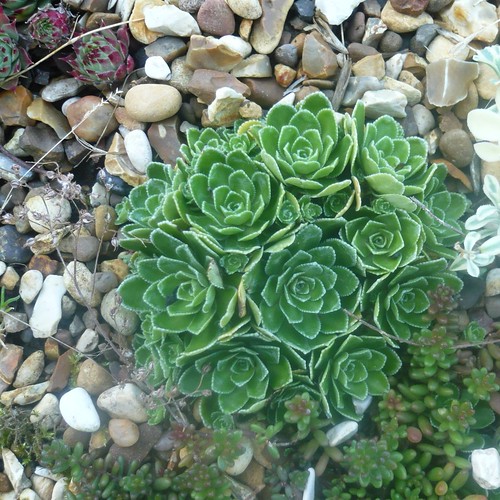
  • House leeks, Sedums and other succulents throw off new plantlets very easily and they bulk up quickly so you don’t need too many plants.
  • Pinch bits from around your own garden.
  • Beg cuttings or ‘off-sets’ from your family, friends or foes.

Rockery
See also Rock Gardens in Miniature

August Wild Flowers

August Wild Flowers

Augyst Wild Flower Garden

Wild flower gardens are generally thought to be at their best in spring but this colourful patch was a riot of colour in the middle of August.

Gardeners Tips for Wild Flowers

  • Poor soil conditions encourage flowering. Do not fertilise wild flower gardens
  • Group flowers with similar flowering times together. it would look to thin and patchy to have a mix of spring and Autumn flowers together.
  • Do not be too quick to tidy up. Let the seeds develop and drop so that annual plants renew themselves for next season.
  • If possible avoid competition from grass particularly for autumn wild flower gardens as they can choke off the flowering plants.

wild flowers

Wild Flower Mixtures

  • General; purpose meadow mixtures may contain, cowslip, oxeye daisy, knapweed, buttercup, campion, vetch and yarrow amongst others.
  • Hedgerow mixtures may have wood avens, plantains, agrimony, cowslip, oxeye daisy and knapweed,
  • Cornfield mixture as above will have corn cockle, cornflower and poppy and Forget-me-not
  • You can also get mixtures for sowing in wet marshes or for pond edges.
Liatris for Cut Flowers and Butterfly Food

Liatris for Cut Flowers and Butterfly Food

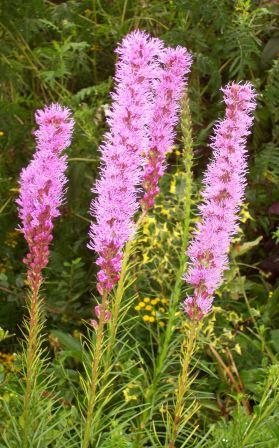
Also grown under the name Gay Feather or Blazing Star. The spikes may look like feathers but are a quite robust 1-2 feet tall. They flower blue, purple or white. I prefer a compact form like Kobold which requires no staking.

Liatris 2

Gardenerstips on Liatris spicata

  • Liatris are long lasting, excellent border and cut flowers
  • Liatris scaricosa, spitica , aspera and punctata are some of the species to consider.
  • Plant 4-6 inches apart in clumps of at least 10 bulbs for maximum impact. These were planted singly and are just bulking up.
  • The soil must be well drained over winter to stop the bulbs from rotting.
  • Fully frost hardy
  • Full sun to part shade Liatris species are used as food plants by butterfly and are magnets for insects particularly in late summer.
  • Good for cut flowers and drying
  • As a general rule divide a plant furthest away from its bloom time. So I would divide Liatris in spring.

Liatris

Propagation from Seed
Sow February to July in trays, pots, etc of good seed compost in a propagator or warm place to maintain an optimum temperature of 70-75F (20-25C). Sow in well drained compost, just covering the seed with compost. Reduce the soil temperature at night during germination.
Liatris

Sweet Potatoes on Trial

Sweet Potatoes on Trial

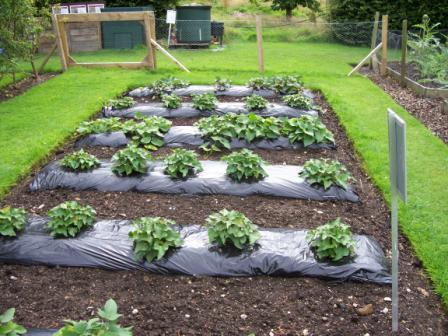
 	Sweet-potato-rhs-trial at Harlow Carr

The RHS have trialled several varieties of Sweet Potato. They picked a wet, sunless season so far but as the plants will be harvested during October (they need a long time in the ground) there is time for a good spurt of hot weather (I am an ever hopeful optimistic gardener).

Normally these plants are difficult to grow successfully in Britain but for those who are a bit adventurous you may want to try this crop next year. If so follow the results of the RHS trials.

Read More Read More

Growing Asparagus in UK

Growing Asparagus in UK

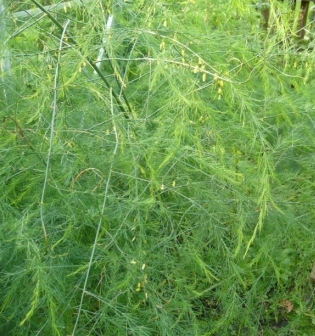
American culture and British cultivation ideas conflict over Asparagus. I will follow the British method of cutting the old ferns in Autumn to about 5cm and mulching. In America, in anticipation of heavy snows, they leave the ferns to protect the plant crowns. My bed will be in its third winter and next spring will see my first crop.

I planted Asparagus varieties Dariana and Gijnlim in a new bed prepared for the purpose.

Read More Read More

Attacting Insects To Your Garden with Spectabile

Attacting Insects To Your Garden with Spectabile

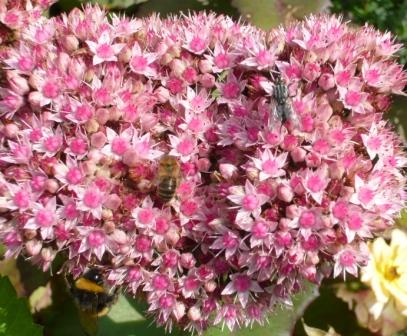
This Sedum spectabile ‘Brilliant’ has all the insects buzzing with interest. Many butterflies are attracted to various Sedum spectabile or ‘Ice plant’ species. Look out for Red Admirals, Cabbage Whites and other species in your garden.

September is a good time for flowers on these Sedums. They flower into autumn and can look architectural in winter when covered in frost.
Insects can over winter in the old stems so do not be oin a hurry to clear up the old perennials until spring.

Propagation

Read More Read More