Browsed by
Month: August 2012

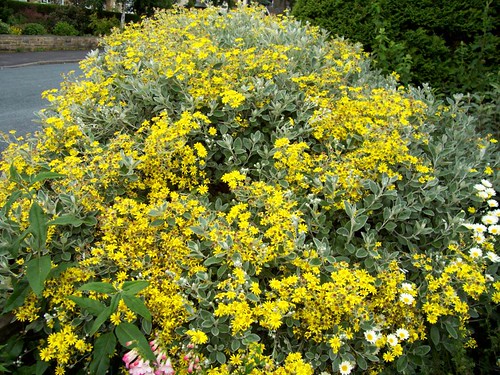
Senecio Silver Sunshine now named Brachyglottis

Senecio Silver Sunshine now named Brachyglottis

seneci

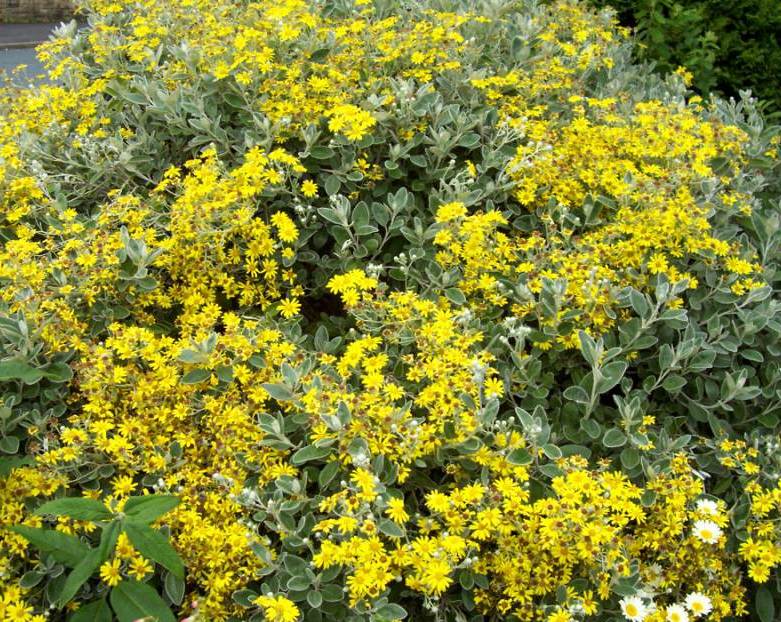
Senecio Silver Sunshine is an attractive shrub (now renamed Brachyglottis) with small silver leaves. It grows to about 3’6″ and flowers with masses of small yellow daisy like flowers through the summer.
This particular plant is quite vigorous and overdue for a trim when it has flowered.

Gardeners Tips on Brachyglottis

  • It is evergreen or ‘eversilver’ and can be grown as a foliage plant.
  • Prune aggressively in spring to stimulate foliage and keep tidy. It will go woody quite easily but will quickly reclothe the woody bits in May/June
  • Don’t bother collecting the seeds, propagate by semi-ripe or hardwood cuttings in summer or autumn
  • Buy small plants and avoid ones that have a woody base
  • Brachyglottis monroi AGM is also a variety worth growing sometimes called Monro’s ragwort

Where to Grow Brachyglottis

  • Grow this ‘Sunshine’ variety as an informal hedge. Space your planting every couple of feet for a dense shrubbery.
  • These plants grow well at the seaside as it stands up to strong winds and salt-laden air.
  • Brachyglottis with stand low levels of water
  • Grow with other Mediterranean plants or as groundcover for a sunny site.
  • Plant with other daisies like Anthemis in a courtyard or gravel gardens
Top Ten Tree Barks to Grow in UK

Top Ten Tree Barks to Grow in UK

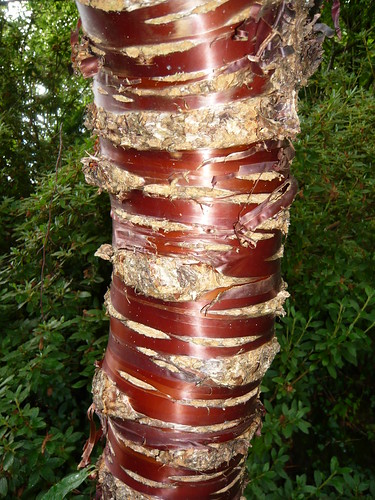
Bark is the outer covering of main trunks, woody stems, branches and roots of trees and other woody plants, as distinguished from the cambium and inner wood. Many trees grown for bark look better as the tree matures and need to be grown in enough space to develop. Some of the following varieties are best in Parkland or woods.

Book Cover

Top Ten Trees for Bark

  1. The above Prunus ‘Bird Cherry’ bark looks very colourful in strong sunshine.
  2. Acers often have interesting bark try Acer rufinerve with distinctive green bark and patterns of greyish markings particularly good on old trunks.
  3. Betula Papyrifera or the Paper-bark birch has shining white bark, the large leaves turning pale gold early autumn. The native birch bark can be effective but some varieties are dirty grey in colour so take care when selecting plants.
  4. Parrottia Persica has grey bark flaking away in a pattern resembling the London Plane. It is early flowering and the leaves turn brilliant gold and crimsons in Autumn.
  5. Arbutus x Arachnoides strawberry tree has a distinctive trunk and branches that are a cinnamon red.
  6. Zelkova Sinica with smooth grey bark which peels away in scales to reveal a rusty-colored under bark.
  7. Eucalyptus has several species with interesting, peeling, grey bark and scented leaves when crushed.
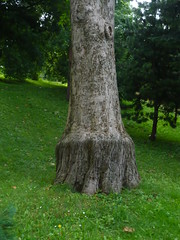
  8. Juglans Nigra Or the black walnut with grey, deeply furrowed bark is quite striking.
  9. The Scots pine, Pinus sylvestris is too large for most gardens but smooth pink or red bark in the upper part of the tree is worth looking for.
  10. The well-named Redwood Sequoia never loses its astonishing red colour but again it is a large tree.

For more read Bark

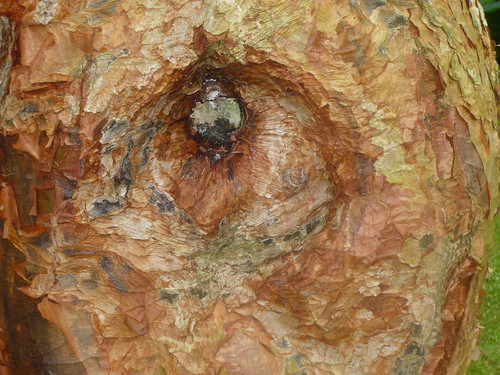
The roots, knott holes and boles of trees can also have there attractions and are worth developing and cultivating if you have the space.

Tree Bark

.

White Verbascum and White Mulleins

White Verbascum and White Mulleins

verbascum-close
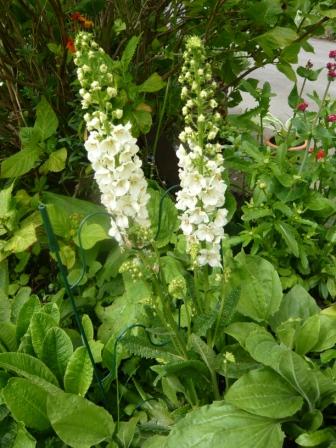
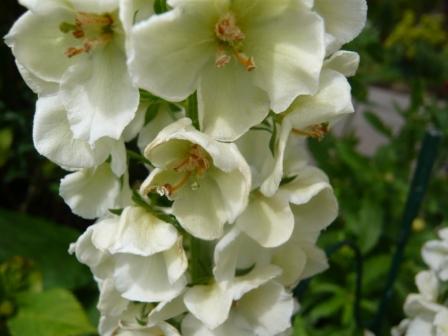
This close up photo shows a typical verbascum inflorescense with many flowers packed tightly round a flowering stalk.

Verbascum Pixie series are a range of plants with shorter flowering spikes. Typically they grow to 18″. Verbascum Pixie White is a favourite with an award for garden merit agm. The flowers open from the bottom of the flowering stalk that makes a long lasting show.
Flowers can be picked for indoor display.
Removing spikes will encourage new flowers later in the season.

verbascum

White Verbascum Varieties

Verbascum chaixii Album is white with a red centre and is one of about 96 species of Verbascum according to a wikilist.
Verbascum ‘Flush of White’ is a prolific flowerer.
Verbascum chaixii ‘White Domino’ and White Blush are other Mulleins with white flowers and a coloured eye.
Verbascum phoeniceum ‘Temptress White’ and other white verbascum photos

Other Verbascum Tips

Verbascum are also known as Mulleins.
Verbascum do not need much moisture and can survive on dry alkaline soil. Rich soil makes Mulleins grow taller.
Plants of Verbascum can produce a great number of seeds.
Other colours available include Copper Rose and violet called Violetta.
Verbascum Banana Custard is a strong yellow flower.
Verbascum Pink Domino has dark eyed rose-pink flowers and can flower 4 feet tall
Verbascum Austriacum and Letitia are yellow flowering perennials.

Oxalis bulbs and Rhizomes

Oxalis bulbs and Rhizomes

Grown from bulbs, rhizomes or tubers the Wood Sorrel and many of it’s relative in the Oxalis family are easy to grow.
The shamrock shaped leaves of this low growing Oxalis flower in red, white, yellow, blue and pink. I bought 70 bulbs for £1 at Focus at the end of May and they have grown well already.

Cultivation Tips and Varieties to Grow

  • Many varieties have a dark purple centre to the leaves or a patterned purple cross as in O. Deppei.
  • O. trangularis has white flowers and dark purple leaves.
  • The lime green of the leaves O. Ironcross is a fresh bright green in spring and this can show off the edges of a border.
  • Most hardy varieties make excellent ground cover or rock plants and flower even in dry shade and poor soil.
  • Oxalis Adenophylla has pale lilac flowers and neat parasol like leaves
  • Better flowering may occur with a bit of high phosphate fertilizer
  • Flowers are sensitive to light levels and often close early in the day
  • Tender varieties need to be dug up and stored like begonia tubers
  • A new red and white funnel shaped flower is now available O Versicolour
  • Many varieties self sow and get into nooks and crannies needing to be weeded out when they become too rampant.

Oxalis cameaphylla rosea

Oxalis roots can be fibrous or woody and be either bulbs, tubers, or rhizomes.
For more information particularly about potted plants from South Africa and America visit the Oxalis web site

Oxalis speciosa
Oxalis speciosa

Botanical Tulipa praestans Gardeners Tips

Botanical Tulipa praestans Gardeners Tips

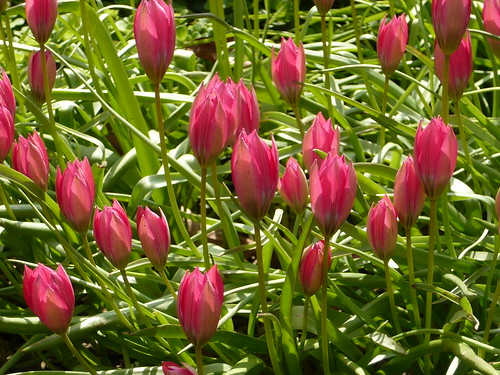
I have just bought some Tulipa praetans Van Tubergen’s variety of botanical tulip bulbs. They should be just right for the sunny side of my rockery.

Tulip

Gardeners Tips for Tulipa praestans

  • They can be planted in a rockery which is where I intend to grow them as they should not exceed 12″ high.
  • I intend to leave them in the ground for several years and not replant annually as I would with species tulips. Hopefully this will give them chance to multiply as they are recommended as perennial.
  • I will scatter them on open ground then plant 3″ deep where they fall, aiming to space them every 3″ or so! I do not want them in formal straight lines
  • These tulips will grow in most soils that are well drained.

Botanical Tulips

  • Botanical tulips are those that are true to their wild state and have not been bred or hybridised to change their characteristics. My bulbs have not been collected from the wild however.
  • Van Tubergen’s variety is a reliable species with clusters of bright red flowers in April.
  • There are several other Tulipa praestans including ‘Fusilier’ bright orange-red and ‘Unicum’ which flowers orange-red with striking white variegated leaves, ‘Shogun’ with warm yellow relatively large flowers.
  • Botanical tulips of which Tulipa praestans is one species are smaller in bulb size, height and flower size than your average Dutch tulips.

Tulip

Crocosmia Best Tips & Photos

Crocosmia Best Tips & Photos

Tip 1.
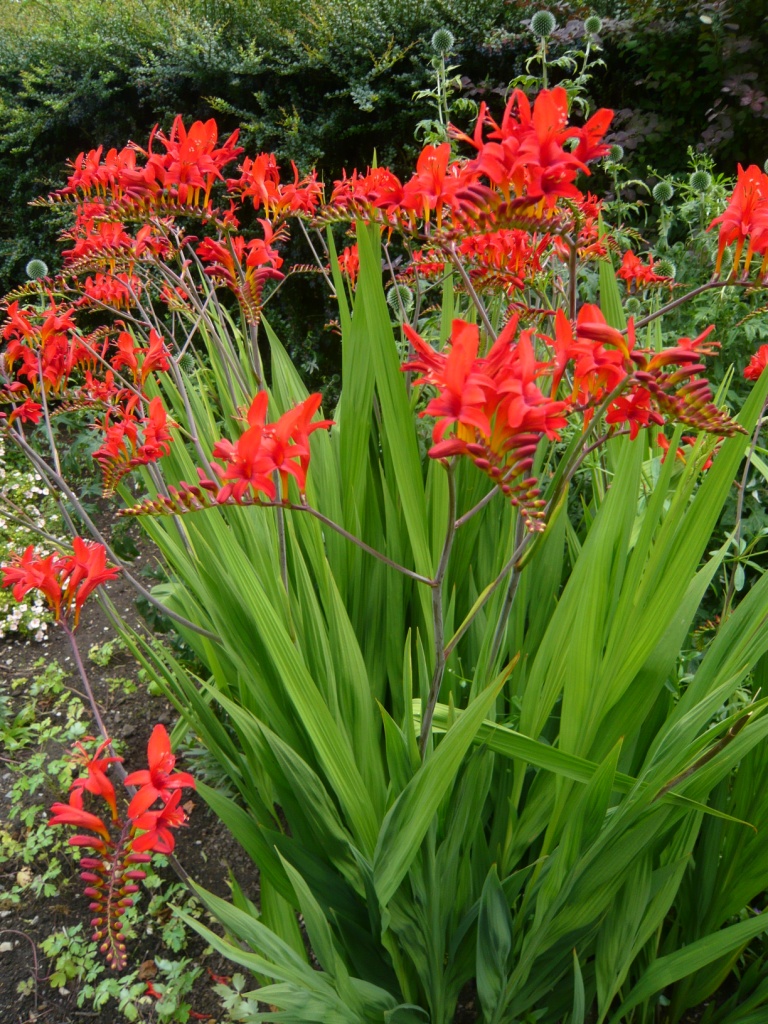
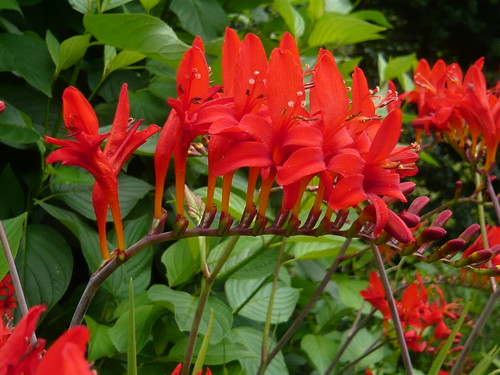
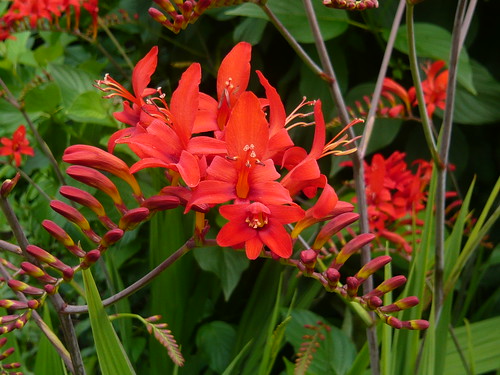
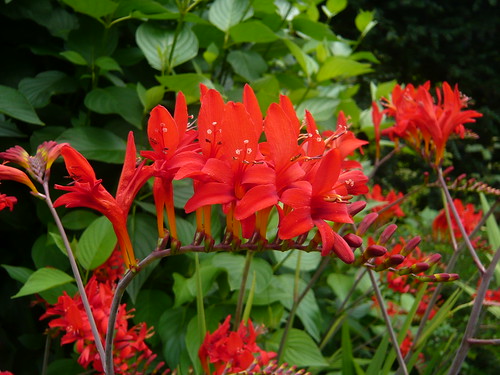
For a strong red Crocosmia the variety ‘Lucifer’ is as red as hell!
Crocosmia

Tip 2.
The corms like lots of water but stop short of water logging the soil.
Crocosmia

Tip 3.
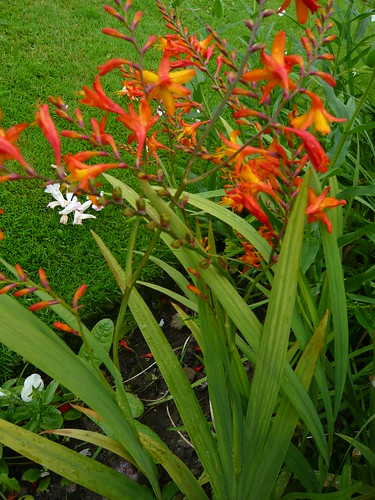
Stems and sword shaped leaves will grow and stand upright but if they are in the shade they will lean towards the light.
Crocosmia Lucifer

Tip 4.
Get new plants by dividing the clumps of corms in Autumn.
Crocosmia

Tip 5.
The strong red shows upwell against the green of the leaves and other green backgrounds in your garden.
Crocosmia

Tip 6.
Other types of Crocosmia include Ember Glow, masoniorum and montbretia varieties or new hybrids

The book ‘Crocosmia and Chasmanthe (Royal Horticultural Society Plant Collector Guide)’ by Peter Goldblatt, John Manning and Gary Dunlop plus a range of Crocosmia products are available from Amazon.

Other Crocosmia Pages

Grow Romantic Red Flowers
Good Companions Crocosmia and Euphorbia
Growing good Crocosmia
Crocosmia Lucifer and other Montbretia

Coloured and Species Raspberries

Coloured and Species Raspberries

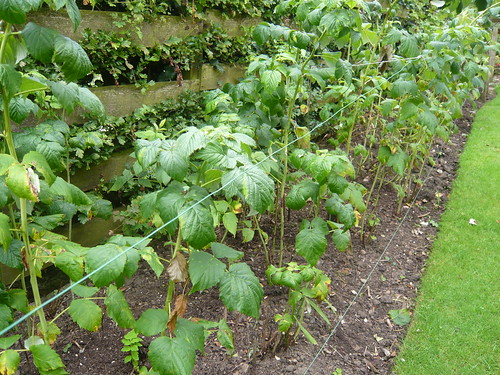
Raspberry row

Red Raspberries

A 20-foot row of raspberries (Rubus idaeus) will yield a good crop over several weeks. Enough for jam, puddings and eating fresh.
A traditional hedge-type planting will yield twice the fruit of single trained canes but takes at least twice the space.
Intensively trained berries are extremely productive on single stems against a wall or fence.
To get the most from red raspberries, plant at least two kinds, an early or main crop variety for heavy early summer harvests, and an autumn or continually-bearing type.

It’s a mistake to cut raspberry canes back in an effort to make the canes self-supporting. You get the best results by tying the canes to two wires at 2-1/2 and 5 feet off the ground. The most fruitful buds are those nearest the top of the canes.

Autumn raspberries fruit on new canes at the end of their first growing season and again the following summer. For heavier crops, prune the canes to the ground after the first harvest in autumn and forego the summer crop. Raspberry ‘Autumn Bliss’ is one of the best and most reliable primocane or autumn fruiting varieties. They produce a heavy crop of large, attractive red berries from late August until mid October.
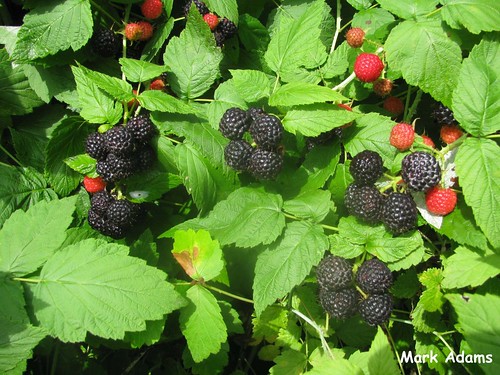
Wild Black Raspberries, SW MO

Black Raspberries

Rubus occidentalis commonly known as “blackcaps” are occasionally cultivated providing both fresh and frozen fruit with a distinctive, richer flavour and high fiber content.
Although closely related to the reds, black raspberries have a distinctive flavor, ripen a little later, and require slightly different training.
Black raspberries spread by bending the tips of their canes to the ground where they root. In an attempt to bend to the ground and root, the canes elongate and become thin and weak at the tips. Unless you want to start new plants, cut these canes back to 3 or 4 feet.
Cut the old canes out after harvest. Since black raspberries don’t throw root suckers, they take much less thinning than reds.

Purple raspberries have been produced by horticultural hybridization of red and black raspberries.

Raspberries

Yellow Raspberries

Raspberry ‘Allgold’ Rubus idaeus is an autumn fruiting yellow raspberry.
There is an orange raspberry also called golden raspberry. It is quite delicious and grows just like regular raspberries – ie on canes held high.
pale-yellow natural or horticultural variants of both the red and the black raspberry species have albino-like fruit resulting from recessive genes that impede production of anthocyanin pigments.

Raspberry Species

credit Wikipedia
Rubus crataegifolius (Korean raspberry)
Rubus gunnianus (Tasmanian alpine raspberry)
Rubus idaeus (European red raspberry)
Rubus leucodermis (Whitebark or Western raspberry, Blue raspberry, Black raspberry)
Rubus occidentalis (Black raspberry)
Rubus parvifolius (Australian native raspberry)
Rubus phoenicolasius (Wine raspberry or Wineberry)
Rubus rosifolius (West Indian raspberry)
Rubus strigosus (American red raspberry) (syn. R. idaeus var. strigosus)
Rubus ellipticus (Yellow Himalayan Raspberry)

You can buy several red raspberry varieties mail order from Thompson & Morgan

Several species of Rubus are also called raspberries that are classified in other subgenera, including:

Rubus arcticus (Arctic raspberry, subgenus Cyclactis)
Rubus deliciosus (Boulder raspberry, subgenus Anoplobatus)
Rubus nivalis (Snow raspberry, subgenus Chamaebatus)
Rubus odoratus (Flowering raspberry, subgenus Anoplobatus)
Rubus sieboldii (Molucca raspberry, subgenus Malachobatus)

Credits

Wild Black Raspberries, SW MO by MarkInspex CC BY-ND 2.0
Raspberries by MonkeyBoy69 CC BY-NC-SA 2.0
Learn From Visiting Japanese Gardens

Learn From Visiting Japanese Gardens

There is always something new to learn from observing others garden and it is mental work not physical labour.
Some of my favourite Japanese gardens are featured below or on other pages.
An alternative or added opportunity to learn can come from one of any number of Amazons specialist books.

Japanese garden

Learn From Visiting These Top Japanese Gardens

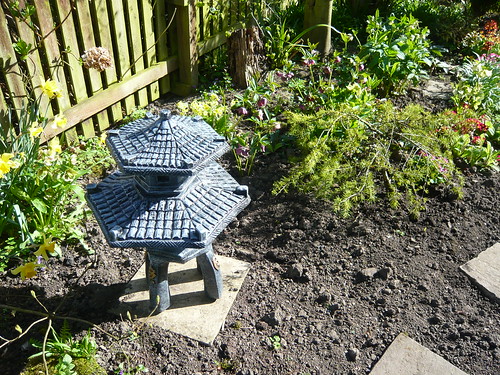
Compton Acres The Japanese Garden at Compton Acres Dorset is one of a collection of “gardens of the world”. It was originally designed and built in 1920 by Japanese architects and workmen. Such was the original owner’s passion for authenticity, every last stone and ornament was brought from Japan. They include stone lanterns, a pagoda, and various carvings.
There are four Japanese-style buildings within the garden – a thatched temple, summer house, sewing bower and imperial tea house. Visitors can follow either of two routes – stepping stones across the water features, or the normal path. The stepping stones lead through a red Torii (shrine gate) with a giant serpent coiled around one of its columns.

The Japanese Garden at Giggle Alley Eskdale looks tremendoud in the sunshine, a rare event in the Lake district.

Newstead Abbey is best known as Lord Byron’s ancestral home. The Japanese garden was laid out in 1907 with many of the original plants, trees and ornamental stonework imported from Japan. It is one of many themed gardens in the grounds of the Abbey, which are Grade 1 Listed in the English Heritage Register of Historical Parks and Gardens.

Rivington Country Park Bolton, Lancashire
Japanese water gardens were laid out by the industrialist Lord Leverhulme at the beginning of the 20th century.

Holland Park London has some interesting features and tips on Japanese gardens

Tatton Park, Cheshire The Japanese garden at Tatton Park is said to be one of the finest examples in Europe. Originally laid out in 1910-13, it was fully restored for Japan 2001, the year-long celebration of Japan-UK relations. It is in the style of a tea garden connected to an island upon which rests a shinto shrine. Every season brings it own beauty, although the spring and autumn are renowned for their colour.

The London School of Oriental and African Studies has an award winning Japanese-style roof garden and a bookshop specialising in Africa, Asia and the Middle East. The garden is dedicated to Forgiveness, which is the meaning of the Kanji character engraved on the garden’s granite water basin. The garden can be accessed from the first floor of the Gallery.

Scarborough in Peasholm Park on the North Bay has a lake and an ornamental Japanese garden.
Heale Garden Wiltshire has eight acres of gardens, including a water garden planted with magnolias and maples surrounding a Japanese tea house. This straddles a fast flowing stream and also includes the terraces and stone lily ponds.

Japanese Garden Elements

1 Water
2 Rocks and sand
3 Garden architecture
4 Garden bridges
5 Stone lanterns and water basins
6 Garden fences, gates, and devices
7 Trees and flowers
8 Fish

Other Things I Have Lernt About Japanese Gardens

Shakkei or borrowed views takes its name from using nature as a natural backdrop.
A tea garden is called a roji niwa.
Izumi ishi-gumi is a stone arrangement to represent a mountain spring.
A Kaiyushiki teien is a garden designed to walk around as opposed to a Kanshoniwa garden which is intended only for contemplation.
Ikebana is a form of Japanese flower arranging

Plant a Plant – Gardening Terms

Plant a Plant – Gardening Terms

Golden Acre sleeper

Plant – to put in the ground for the purposes of growth. You can also plant in a pot or container. To plant is an active verb and the basis of much of gardening.

Plant – a living organism and member of the vegetable kingdom often used as a noun to include trees and shrubs as well as other growing flowers, weeds or herbs.

Plantlet – mini plants or offspring from a main plant as a means of reproducing themselves. e.g. Strawberry runners and Houseleeks (Sempervivum alpinum)

Planter – an ornamental container for plants most often used outdoors.

Plant up – a border or area filled with plants – a container can be ‘planted up’ with a selection of plants.

Plantain – a genus of plants that includes Bananas and a UK weed.

Planting – the act of putting plants, bulbs and roots into a growing medium. A planting is also used as a group term for a collection of plants ie a flower clock can be a ‘planting’ of low growing Sedum and coloured leaved plants.

Plant Kingdom – is a division of living things the other being the animal kingdom. Plant kingdom includes green plants, land plants such as worts and mosses and red algae.

Gardening Plant Tips

  • Bare rooted plants are normally planted out in spring and autumn when the soil is warm and there is sufficient moisture.
  • Plants grown in containers can usually planted at any time.
  • Water new plants once they are planted and keep watering until they become established and able to find moisture for themselves
  • Plant your plants in a good hole about twice the size of it’s rootball.
  • Firm the plant into the ground with a fist or heel so it can’t easily be pulled out or have the soil moved to uncover the roots.
  • Before planting the ground should be prepared by breaking up the soil. Add humus and fertiliser to give your plants roots the best home.
Good Value Alpine Garden Society

Good Value Alpine Garden Society

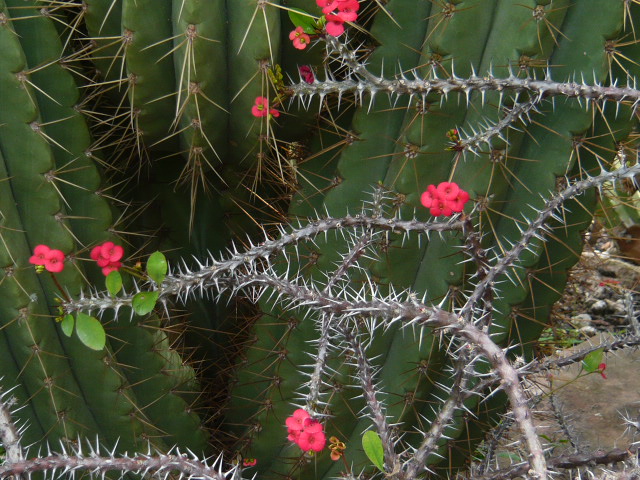
Euphorbia milii

Regular visitors will remember that I recently received a gift of membership too the AGS.

I continue to get good value for money via the magazines, free seeds and the local West Yorkshire Group meetings. A recent talk by Tony Gartwaite with photographs by Mike Ireland was called ‘show stoppers.’

This is an excuse to show some more of my pictures. Hover over pictures for info

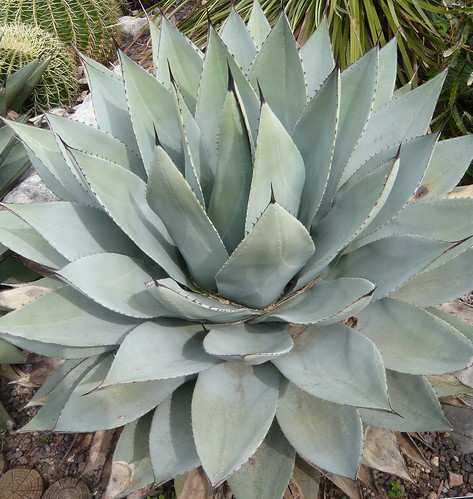
Agave paryi

From the alpine house at Kew.

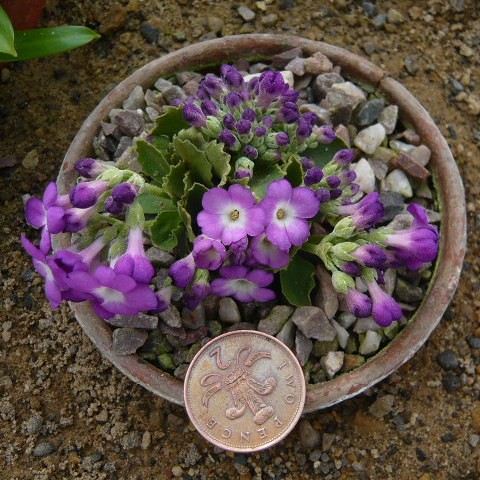
Primula allianii Joan Hughes

I have started a collection of various primulas after spotting this alpine variety Primula allianii Joan Hughes

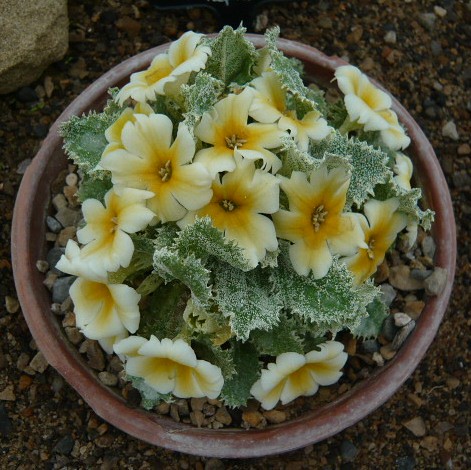
Primula aureata nepal

Primula aureata nepal is a bit harder to grow in my greenhouse.

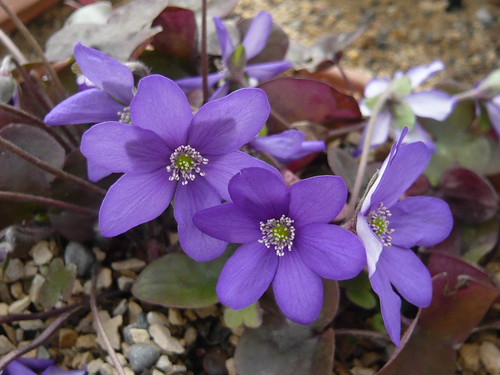
Hepatica nobilis Cobalt
See more about Hepaticas and how the Japanese grow these fascinating plants

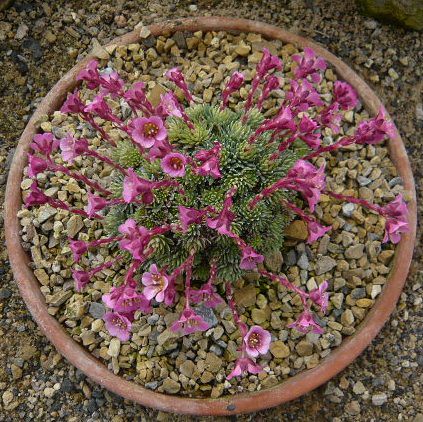
Saxifraga kellever suendermannii

Regular local alpine shows are a good way to pick up tips.
The national shows move around the country so keep your eyes open or check with the AGS
Specialist nurseries also turn out at these shows and it is a chance to get some new stock.