Browsed by
Month: March 2012

Mulch around Red Shoots of Spring Peony

Mulch around Red Shoots of Spring Peony

Peonie

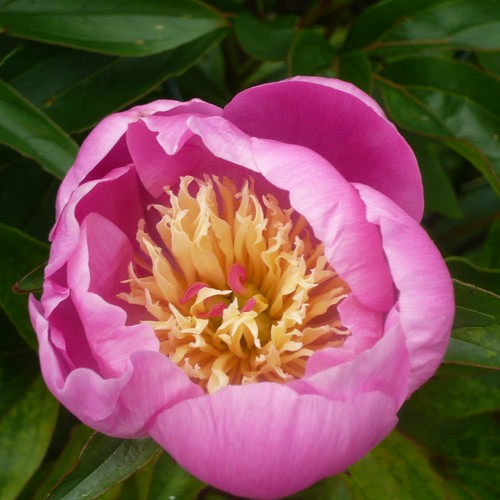
A four foot square clump of plump new peony shoots were highlighted at Kew Gardens by the grey, gravel mulch around them. I have not suffered from slugs on Peonies, nor have they had problems with rotting, so I do not put gravel around my plants. However if it is OK for Kew then I guess it is OK for me. At least it would be a decorative improvement on my bare soil.

Ask two gardeners about mulch and you will get three answers. For example when asking about mulching Peonies I got these answers ‘Three popular choices are straw, compost or dry leaves.’ ‘Some popular spring mulches are shredded bark, pine nuggets or straw.’ So no gravel there then!

Planting too deeply may prevent the peony from flowering, they do better for a bit of frosting on the crown apparently. Peonies can live for over 50 years and mine flower just fine so I am leaving things as they stand ie. very occasional autumn mulch when the compost heap has generated compost to spare .
peaonie

Tips Prior to Mulching

  • Remove any weeds that are growing near the peony shoots or stems. Weeds take water and nutrient and look bad.
  • Fertilise in spring with a dry compound like growmore.
  • Fertilise again in autumn with a potash based feeder.
  • Remove ant rotting vegetation that may harbour fungus or disease.
Contribute to National Gardening Week

Contribute to National Gardening Week

Crocus r us

The Royal Horticultural Society (RHS) has come up with a new wheeze to be launched for 2012. The National Gardening Week will take place from 16th April to 22 April 2012. You can contribute your skills, cash or enthusiasm if you wish.
Not surprisingly National Gardening week is warmly welcomed by the Horticultural Trades Association (HTA) whose members will be looking to benefit your garden and their bank balances.

Early Ideas for National Gardening Events

  • Make your contribution to National Gardening Week by spending early.
  • A Compost Clinic will help with other green initiatives and solutions.
  • Gardening clubs, societies, schools and local organisations are encouraged to participate and arrange special events.
  • RHS will offer a ‘Border-Boosting service’ giving 6 tips and ideas based on a photograph of your garden.
  • Contribute to the Facebook question time sessions that will be supported by scientists and gardeners from the RHS
  • RHS ‘will also be offering 20,000 starter packs with seeds, organising a career day at all four of its gardens and holding masterclasses, including a workshop on seed raising.’

Get Ahead of the Game for 2012

  • Plan early and tidy up your own patch. There is a lot you can do just by adding or changing one garden feature.
  • Start with one item that you can use to Shock and Awe from the start of April. Bulbs would fit this bill in large drifts or containers and window boxes.
  • Rhododendrons and Azalea are currently growing their buds for spring’s big show. Give them a boost of liquid feed and keep the soil moist.
  • Alpine gardens look their best in Spring. Check out your lay-out of rocks, top up grit levels and generally tidy the area now to avoid needing to do so later.
  • If you are stuck for Christmas or birthday presents what about Garden Tokens from HTA. Then you will have money to spend during National Gardening Week.

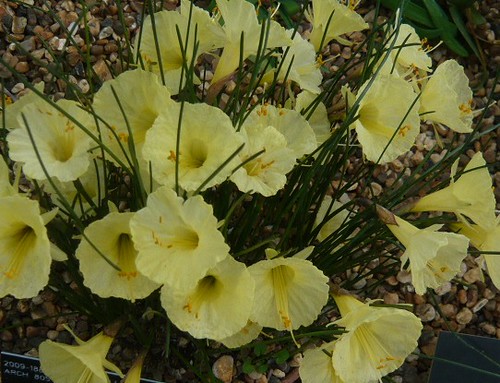
Narcissus romieauxii

More information from the RHS

To join in, please email the RHS at [email protected] telling them who you are and how you would like to get involved with National Gardening Week.

Garden Tokens from HTA

Must Do Contributions During National Gardening Week

  • Do not forget to enjoy your garden.
  • Visit other spring gardens and join in events organised for National Gardening week
  • Invite folk to see the results of your contribution to National Gardening Week
Sensual Scented Tulips

Sensual Scented Tulips

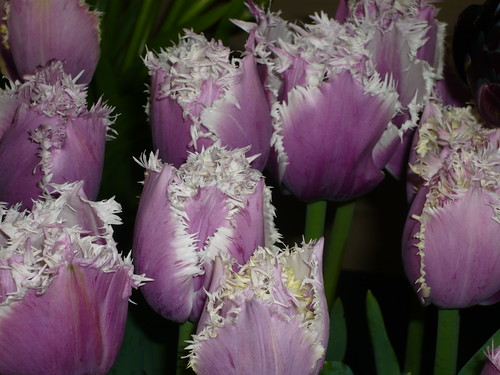
Fringed tulip

You do not always associate Tulips with fragrance but here is a selection that may be worth trying.

Tulips do not need to be planted until November but if you want specific varieties it may be worth getting your order in sooner rather than later.Now is the time to check what is flowering well in your area and select you favourites. I have receive  bulb catalogues in July and the newspaper had a special offer this morning on lily flowers tulips. If you can’t get to a specialist nursery try mail order as your bulbs will be supplied at the right time and in good condition.

Scented Botanical or Species Tulips

  • T. aucheriana rich sweet flowers open flat
  • T. celsiana Persian tulip June blooms delicious scent
  • T. gesneriana scarlet flowers sweetly scented
  • T. primulina primrose yellow flowers smelling of lily of the valley
  • T. saxatillis lilac flowers with primrose scent
  • T. suaveolensscarlet scented blooms
  • T. sylvestris Lemon-yellow with sweet perfume
  • T .fragrans pronounced scent as you would expect with a name like that

Fringed tulip

Other Fragrant Tulips worth Considering

Double tulips which can be planted in pots or near a door :

  • Marquette
  • Mme Testout
  • Murillo
  • Schoonoord
  • Tea rose

Peonie flowered Sensual Scented Tulips

  • Angelique a white tinged pink
  • Upstar series
  • Orange Princess
  • Yellow Mountain

Lily flowered and Parrot Tulips

  • Ballerina yellow flowered
  • Ellen Willmott
  • La Merveille
  • Black Parrot
  • Orange Favourite
  • Prince of Orange
  • Demeter Victory Late flowering White

Read about the Reasons & Varieties of Tulips to order

Here is a selection of sensual scented Cut Flower Tulip varieties

For the visual senses try Green Tulips

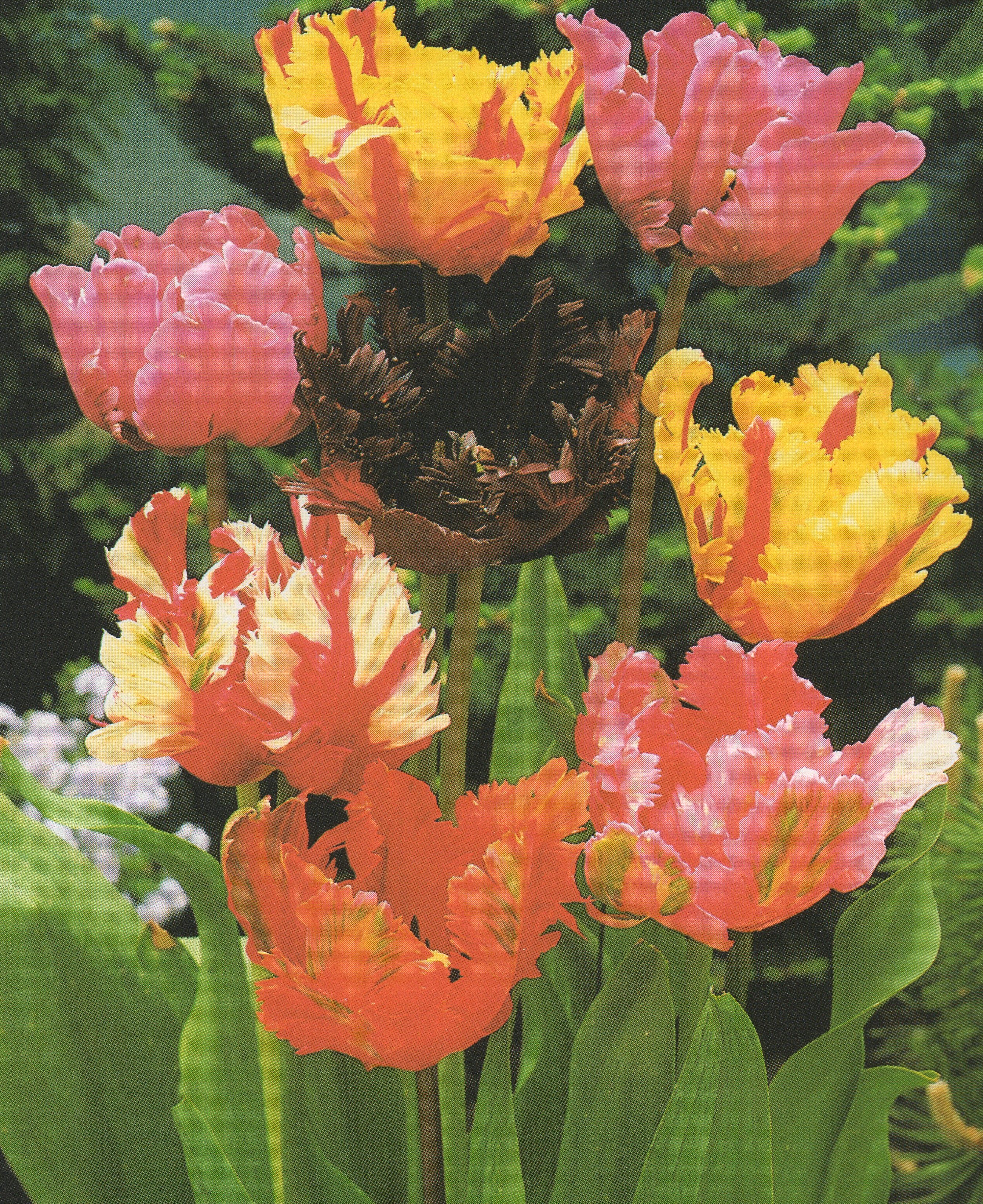
Parrot Tulips

Three Top Seasonal Seedlings

Three Top Seasonal Seedlings

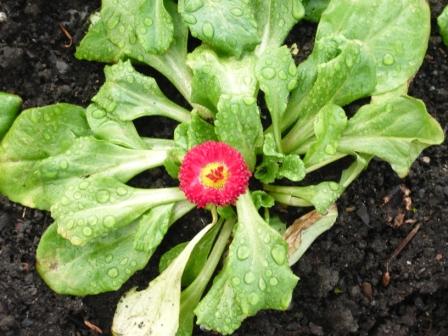
bellis Perennis

Plants can go in to your borders or patio pots now for an early spring show and a bit of early colour. My choice would be from Winter Pansy, Polyanthus and the Red, White or Pink double daisy shown above Bellis Perennis.

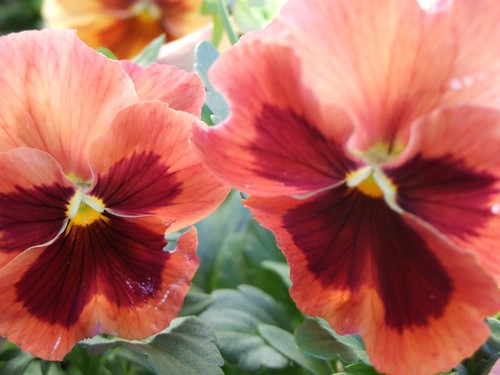
I bought some ‘Red Pansies’ from Morrisons but they are not flowering anything like those below. Mine are so dark maroon that they are almost black.

Winter Color #3

Plant now for Spring Colour

  • If you haven’t grown your own plants from seed buy them from a nursery where they should have been hardened off a bit.
  • If buying from  a supermarket get them used to outside conditions and give them some protection or cover in bad weather for a few days before planting out.
  • Pick a day when the ground isn’t frozen.
  • If it is dry for long periods give the plants some water. (Not a problem in Bradford above)
  • Generally it is too cold for pests but slugs and aphids may make an appearance when it gets warmer.
  • All these plants can flower through winter but should get stronger as the snows disappear after February

Primrose 048

Credit
Winter Color #3 by sirwiseowl CC BY-NC-ND 2.0

Buy Daisies and other seeds at Thompson & Morgan

Lime Free Loving Perennials

Lime Free Loving Perennials

Only a few Lime Free Loving Perennials exist in our gardens. Those that do have often come from Asia or North America.
The plants selected below like moist peat in summer or a raised bed with rock and peat.

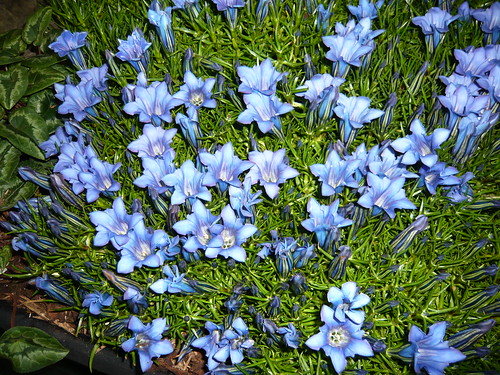
Gentian

Gentian for a mass of true blue trumpet shaped flowers. Originally gentians hail from mountainous regions with acidic soil.

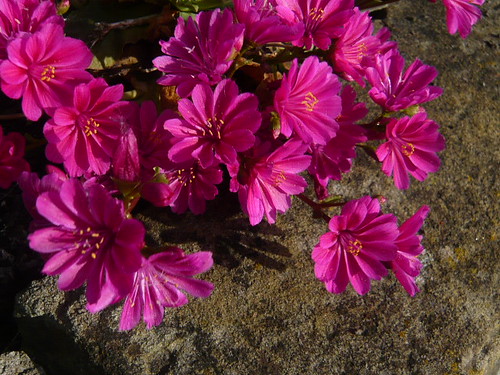
Lewisia

Lewisia has been bred to produce colourful Cotyledon hybrids. They are evergreen with rosettes of strap shaped leaves.
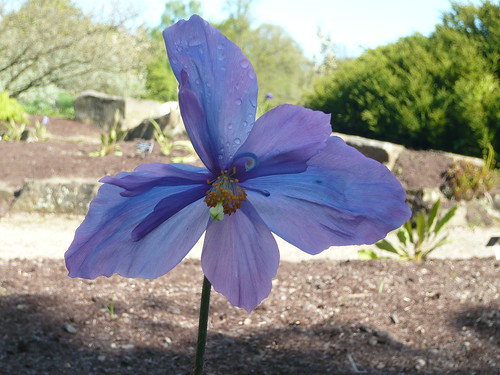
Meconopsis

Mecanopsis betonicifolia or the Blue Poppy grow well in the moist Scottish peat areas so gardeners looking for tips should follow nature.
Phlox adsurgens #1

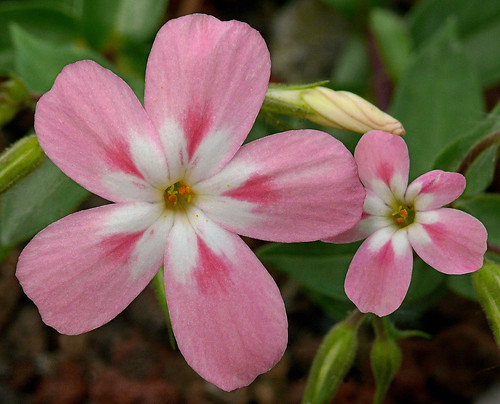
Phlox species adsurgens and stolenifra are pink and white and work well together in the garden. They both make evergreen mats in humus rich well drained soil.
False Solomons Seal - Smilacina..racemosa or stellata..........?
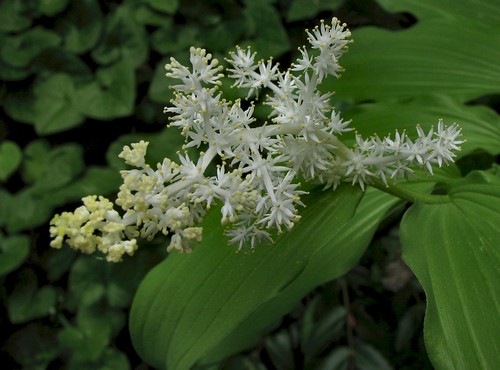
Smilacina racemosa or False Spikenard has plumes of white flowers and attractive foliage in spring and summer.

Where to See Lime Free Loving Perennials

  • Many ferns dislike lime read about our selection
  • Himalayan gardens are often a good place to see lime haters.
  • Gardens that have good collections of Azaleas, Camellias and Rhododendrons have the right conditions for these perennials.

Credits
Phlox adsurgens #1 by J.G. in S.F.CC BY-NC-ND 2.0
False Solomons Seal – Smilacina..racemosa or stellata……….? by Pictoscribe CC BY-NC-ND 2.0

Childhood Shrubs Privet and Golden Privet

Childhood Shrubs Privet and Golden Privet

Privet
Privet in flower

Privet ‘Lingustrum Vulgare’

Where has all the ‘Privet’ gone? In my youth it seemed as though every small garden was kept private by a neatly clipped Privet hedge. If it wasn’t clipped it went hay wire.

  • Privet is usually described as evergreen or semi-evergreen.
  • It loses some leaves in the winter, but not all of them and will grow almost anywhere
  • Green privet must be kept cut otherwise it becomes very open and loses its effect.
  • Particularly good in windy areas and by the sea.
  • Privet can withstand very hard pruning to get it back in shape
  • Privet is hard to remove as the roots are tenacious.

privet lives
Privet Hedge around tennis court.

The posh gardens near us had golden privet that was light green with a yellow stripe but most of us had a dark green hedge. There are Yellow-leaved varieties available which are smaller than the green-leaved type.

  • Yellow Ligustrum ovalifolium aureum has wonderfully scented if fairly ordinary looking white flowers in the spring.
  • Height and spread: 12ft x 12ft
  • Growth needs cutting twice a year but leaves can be bisected. Clipping may take away most of the flowers.
  • Propagation by cutting is very easy

Credits
Privet by jwinfred CC BY-NC-ND 2.0
privet lives by Yersinia CC BY-NC-SA 2.0

Gardeners and the Woodland Trust

Gardeners and the Woodland Trust

In the woods

Woods and trees are vital some would say with hyperbole, essential to life. ‘They have a myriad of different benefits for both wildlife and people. They stabilise the soil, generate oxygen, store carbon, play host to a spectacular variety of wildlife, provide us with raw materials and shelter, inspire our imaginations and our creativity.’

UK Woodland Facts

  • Since 1930 almost 50% of the UK’s ancient woodland has been damaged or destroyed.
  • 85% of remaining woodland has no protection from further exploitation.
  • The Woodland Trust cares for over 1000 woods that are freely open to the public. They have had to fight 310 legal cases over the last 10 years.
  • The UK is the least wooded country in Europe with only 12% woodland. This is despite the woodland trust planting 13 million trees.

Free Trees

  • The Woodland Trust has a range of free tree packs available to schools, youth groups and communities.
  • Plant your tree for the Jubilee and bring your community together to plant free trees from the Woodland Trust. A chance to grow your own food, create new homes for wildlife and bring beautiful autumn colour to your local area.
  • Apply now for the chance to receive a free pack to plant in November 2012 as part of our Jubilee Woods project.
  • The Woodland Trust

Main Woods Owned or Protected by the Trust

  • Blackbush and Twenty Acre Shaw wood.
  • Denge Wood and Dering Wood- Kent
  • Dolebury Warren – North Somerset
  • Folke Wood – Dorset
  • Heartwood Forest – Hertfordshire
  • Joyden’s Wood – Kent
  • Oxmoor Copse – Surrey
  • Paradise Wood – Oxfordshire
  • Skipton Woods – North Yorkshire
  • Staffhurst Wood – Surrey
  • Uffmoor Wood – Worcestershire
  • Wychwood – Oxfordshire
  • Lake Wood
  • Glen Finglas Estate – the Trossachs
  • Brede High wood near Battle Sussex

Credits

In the woods by JR_Paris CC BY-NC-ND 2.0
Vincent Wood by the.approximate.photographer CC BY-NC-ND 2.0

Vincent Wood

Book Cover
A Walk in the Woods: Exploring Britain’s Greatest Woodland by Archie Miles

Protea The Sugarbush in Blandys Garden Madeira

Protea The Sugarbush in Blandys Garden Madeira

Madiera Protea

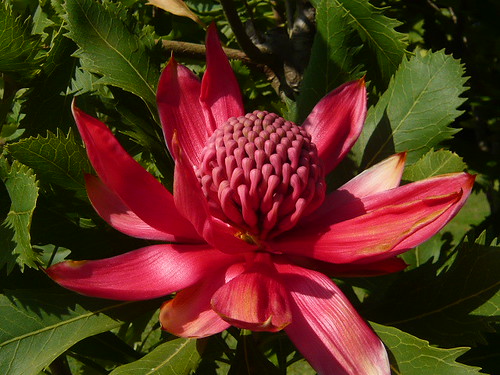
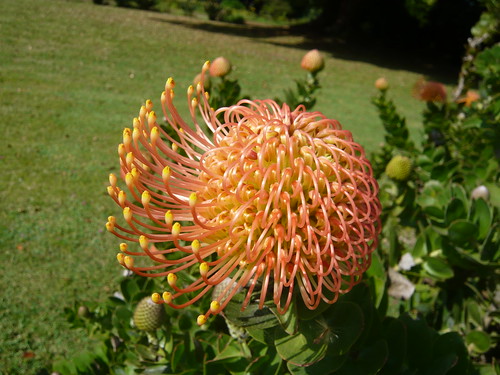
Madeira is one part of the planet with a Mediterranean plus style climate and it rightly enjoys a reputation of being a species-rich biodiverse hotspot. Little wonder then that these Protea grow successfully on the island.

Protea

Madeira is famed for it’s horticultural gardens and is a grand place for gardeners to visit to see the exotic species in the well maintained professional gardens. These pictures were taken at Blandys owned Gardens of Quinta do Palheiro Ferreiro. It would also be a shame to miss out on a visit to the islands botanic gardens, Quinta das Cruzes, Quinta Palmeira and Monte’s Municipal Garden.

Madeira  protea
The Protea is recognised as the national symbol flower of South Africa often featuring on stamps. However there is a whole family of the genus grown in Australasia. The Protea was named after Proteus who took on many forms as a greek god.
Madiera Protea

Proteas are available to buy from Trevana Cross nursery in Cornwall

Tree Roots a Root and Branch Review

Tree Roots a Root and Branch Review

Banyan Tree Roots Black and White

Following a dry winter the insurance industry is again concerned about building subsidence and settlement. Tree roots are often cited as one of the causes of soil shrinkage as they take moisture out of the soil.
Clay soil is known to suffer cracking during prolonged periods without adequate rainfall.
Tree roots can also undermine a buildings foundations if planted too close to a property.

Safe Planting Distances by Species

  • Yew and most shrubs 15 feet
  • Spruce 22 feet
  • Rowan, Birch and Hawthorne 35 feet
  • Beech and Sycamore 50 feet
  • Lime, Ash and Horse Chestnut 65 feet
  • Oak 70 feet
  • Poplar and Willow 120 feet
  • Note the diameter of root spread is generally about half these distances.

Tips and Comments about Tree Roots

  • Typically tree roots are relatively shallow but wide spread. Soil conditions create wide variations in root distribution.
  • 90% of tree roots are found in the top 2 feet of soil and seldom go deeper than 6 feet.
  • Local authorities can make a tree preservation order to prohibit felling, topping, lopping or up-rooting of listed trees. Similar constraints apply to trees in Conservation Areas.
  • Your neighbour can chop the roots of your tree along the boundary line and does not need your permission.
  • Root barriers can be used when planting new trees but it is better to select a smaller or less vigorous specimen.
  • Lopping and pollarding may reduce further root spread and limit transpiration and thus water loss.
  • Much advice says be circumspect about removing a specimen that is presumed to be causing a problem. The distances above are insurance company figures and may be belt and braces.

IMG_0354

Tree Root Designs

  • Taproot systems: where a strong main root descends vertically from the underside of the trunk. Examples include English oak, Scots pine and silver fir.
  • Heart root systems: where both large and smaller roots descend diagonally from the trunk. Examples include birch, beech, larch, lime and Norway maple.
  • Surface root systems: where large, horizontal, lateral roots extend just below the soil surface, from which small roots branch down vertically. Examples include ash, aspen, Norway spruce and white pine.

Tree roots, shack, Kathmandu, Nepal

Credits
Banyan Tree Roots Black and White by Photomatt28 CC BY-NC-ND 2.0
IMG_0354 by Fun with Fred CC BY-NC-SA 2.0
Tree roots, shack, Kathmandu, Nepal by Wonderlane CC BY 2.0
Forestry Commission for root systems

Kauri or Dammar Tree – Root and Branch Review

Kauri or Dammar Tree – Root and Branch Review

Kauri Trees

Revered by the Maori people of New Zealand these ancient trees date back to dinosaurs and even now live for up to 2000 years. Not your average garden tree but a tree to know and protect from further exploitation.

Key Features of the Kauri

  • Latin name – Agathis australis other common name Lord of the Forest or Dammar
  • Height – 165 feet
  • Type of tree – Evergreen conifer
  • Leaves – leathery and oblong
  • Flowers – cylindrical or spherical grey
  • Fruit – cones
  • Bark – smooth and grey shedding thick flakes
  • Family – Araucariaceae

Kauri tree at sunset

Origins and Distribution of the Kauri

  • Kauri Agathis australis is native to New Zealand and only found there.
  • Once widely forested the kauri forest now only covers 18,000 acres.

Uses and Attributes of the Kauri

  • Historically felled by settlers for timber.
  • Other species of kauri give various resins and produce fine grained wood.

Gardeners Tips for the Kauri

  • The New Zealand trees are up to 2000 years old and deserve maximum protection. The trees predecessors were probably around in the Jurassic period.
  • It is an impressive tree reaching 160 feet high, topped by a broad canopy.
  • Young trees grow in conical form and shed lower branches as it matures.
  • The trunk or bole is distinctive and wide up to 18 feet in diameter

Kauri tree from up close

Other types of Kauri and key species

  • The genus Agathis is a relatively small genus of 21 species of evergreen tree.
  • These trees produce gum or resin and are all native to the southern hemisphere.
  • Ancient kauri or swamp kauri has been found buried in salt marshes and radiocarbon dated to 50,000 years ago.

Agathis australis #1

Kauri comments from elsewhere

  • ‘Maori used kauri timber for boat building, carving and building houses. The gum was used as a fire starter and for chewing (after it had been soaked in water and mixed with the milk of the puha plant).The arrival of European settlers in the 17-1800’s saw the decimation of these magnificent forests.’ Dept of conservation.
  • Kauri wood is sometimes preserved in waterlogged soils and excavated wood from trees long buried can be bought from ancientwood.com.

Kauri Tree

Credits
Kauri Trees by Make Some Noise CC BY-NC-SA 2.0 ‘This is the oldest tree known here on the island. It’s estimated to be 2000 years old and this entire forest is really magical. It’s tragic that colonists came and tore these trees down only to make boats out of the trees, but at least now they are protected and hopefully more are being planted.’
Kauri tree at sunset by jjprojects CC BY-NC-ND 2.0
Kauri tree from up close by Piotr Zurek CC BY-NC-SA 2.0
Agathis australis #1 by J.G. in S.F.CC BY-NC-ND 2.0 ‘…. Endemic to the North Island of New Zealand Kauri, Kauri Pine
Shown: Foliage and female (seed) cones….’
Kauri Tree by jen-zed CC BY-NC 2.0