Browsed by
Month: May 2011

Grow Seedheads for Wild Life
Grow Seedheads for Wild Life

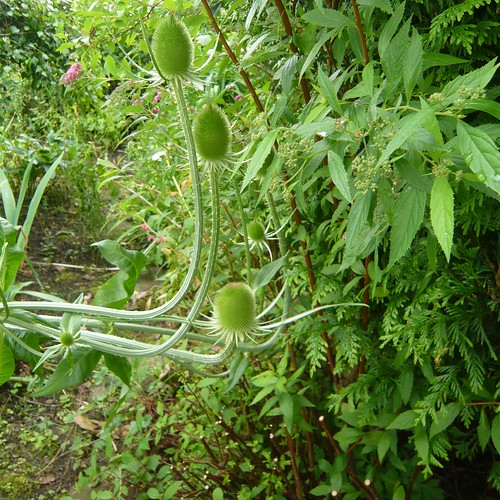
Teasel seedheads

What you can do to help feed wild life and your garden birds.

  • Leave seed heads on your plants like the Teasel (above) which are great for Goldfinches
  • Small mammals like the bigger seeds such as nasturtiums and pulses. Peas and beans can be left on plant not only to collect seeds for next year but as a food for wildlife.
  • Berries are looking good at the moment. Enjoy their looks and as they ripen the birds will also enjoy them as dinner. Pyracantha and cotoneaster seem to be favourites at the moment.
  • Most importantly plan now to have more seed heads for next year
  • Do not be over keen to tidy up. A rough area encourages insects many of which like a feast of seeds. Insects are also more than food for thought.
  • Sun flowers are popular so try several varieties  from a seed catalogue
  • Grasses with plumes and arching flowers look good and taste good
  • Echinacea and Amaranthus are prolific seeders

Try reading a specialist book for more ideas Seedheads in the Garden

Book Cover

I have often wondered if birds and insects can tell different flavours of seeds. Humans could tell an Allium from a Sunflower or a Poppy from a Dill seed so may be wild life can too.

allium seedheads

Sea Holly or Eryngium giganteum variety Miss Willmotts Ghost (below) will produce seedheads full of nutritious seeds for the birds and insects.
With all that pollination going on I am not surprised.
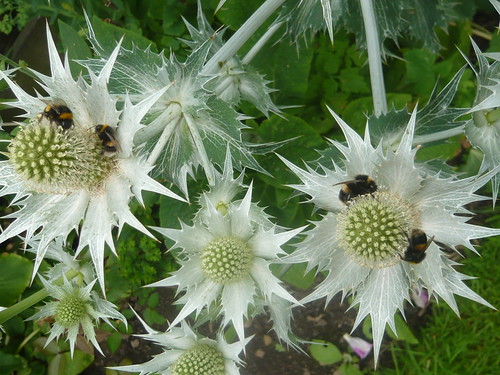
Willmotts Ghost

Hedgerows

  • One of the best places to grow seeds is in your hedges.
  • Wild life has shelter safety and food on tap in a hedgerow.
  • You do not need to have an untidy area of the garden.
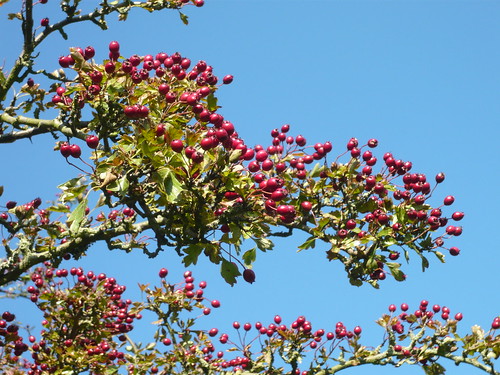
  • Haws

    Hawthorn and Holly are two typically British hedgerow plants that feed our native wild life.
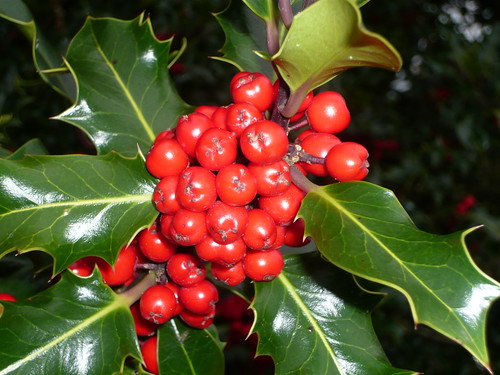
    Holly in the Wild

    For a slender and graceful specimen tree that will help feed wild life you could try growing a Mountain Ash, The Rowan or Sorbus aucuparia
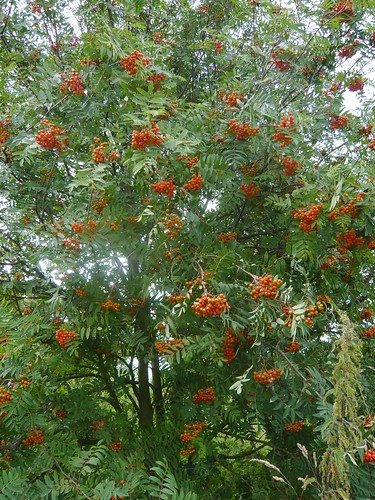
    mountain ash

    For those without the desire to grow there own seeds for the benefit of wildlife then there are many great feed mixes available. RSPB supply in large sacks and there are a host of other retailers.
    Please be consistent if you start to feed with bought seed products and wildlife become reliant on your supply.
    Read Pollinators for Green Gardening

Florists for Gardeners

Florists for Gardeners

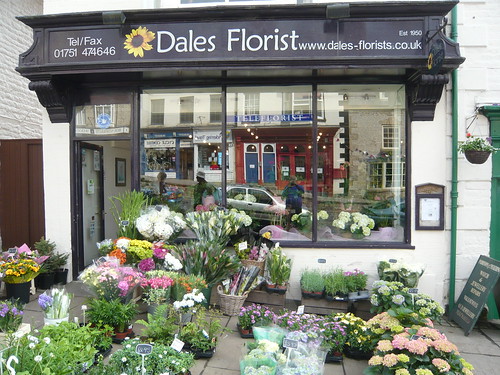
Florist

Florists are Great

  • Florists have knowledge and skill when it comes to conditioning cut flowers to prolong shelf and display life.
  • They have methods of keeping displays watered and fresh including the bag of water or the buttonhole test-tube.
  • Out of season flowers can be imported by floristry suppliers and we can even get southern hemisphere plants in our winter.
  • Good florists display bunches and bouquets of flowers and foliage to artistic advantage.
  • A wide range of floral material is part of a florists stock, when a garden may only have a few species ripe for picking.
  • Florists produce the wreaths and family occasion flowers when gardeners are too busy or otherwise occupied.

Gardeners and Florists Together

  • Gardeners are best if QBE (qualified by experience). Florists can opt to train at a college, either full or part time or on the job.
  • Florists want long flower stems and long life of 3 weeks in shop/vase. Gardeners want insect and disease resistance, variety of colors, and fragrances plus a pleasing growth habit.
  • One good plant probably equates to the cost of a good bunch of flowers. I know which I prefer.
  • Florists are unlikely to be a retail outlet for the produce from a garden. You would need to have a specialism and be able to supply over a long period not just when your crop gluts.
  • I am less happy about the florists trend to supply potted plants but that is one area where the allotment gardener could form a trading relationship with the local florist.

Floristry Qualifications

Tips for Selling to Florists

“Consistency is important. Some growers have been disorganized. They want the money up front. This can be a problem in dealing with larger businesses that prefer to send checks once or twice a month.

Bunch properly (check wholesale guidelines). Usually bunches are 10 stems. Bunches should be of consistent quality. Growers who come in with a bucket full of stems in different lengths and quality won’t make a good impression.

Don’t just show up. A lot of local people wait too long to contact the florist. “Someone will just show up with a trunk full of pussy willows, and I’ve already ordered them. Don’t just show up. Call and ask if we’re interested. Have a sample.” And let them know when a product is close to harvest.” source Rodale Institute

Turn your floristry purchases into botanical works of art – here are some examples and clubs you could join.

See flowers as a business

Herbsville a Home for Herbs

Herbsville a Home for Herbs

I grow Herbs in a herb wheel and I call this home from home ‘Herbsville’. You can design your own herb home – it is a snip!

Golden thyme

Herbs can be grown in a wide variety of situations.

  • Windowsills with 3 ” pots are fine for quick growing herbs you want to snip for the kitchen.
  • I have an old cast iron wheel and the spokes separate out 6 herbs. The larger varieties tend to grow over onto the other sections but the appearance is fine. Rather than call this a herb wheel I have christened it ‘Herbsville’.
  • You can interplant your veg patch or rockery with a range of herbs.

Oil Based Herbs including Lavender, Thyme, Lovage, Rosemary, Sage and Bay are perennial plants

Water Orientated Herbs like Basil and Dill are best treated as annuals

Of the other herbs, Chives & the Onion family need renewing from bulb stock but will last several years.

Parsley gets leggy but can be kept over winter.

Cherville, tarragon, summer savory, oregano, cilantro, marjoram, chervil and  mint are all herbs that can be grown in your herb garden with a small amount of effort.

Spices such as cardamom, star anise, juniper, coriander seeds, nutmeg, cinnamon, cumin and  cloves are all native to hot and often tropical climates. They are not for the average garden in the UK.

See also Top 5 Herbs for Pots and Growing a Bouquet Garni

Plant Pots that Push the Boat Out

Plant Pots that Push the Boat Out

Scarborough

If bunches of flowers can be arranged in a wide variety of containers and vases why not growing plants.

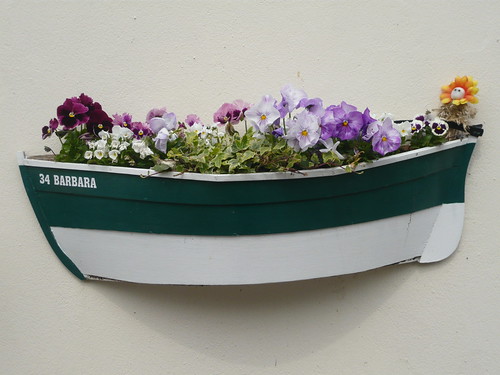
I liked this boat on a wall at Scarborough which was cheerfully full of Pansies. The variegated Ivy provided a bit of light green colour and texture and even the plastic sunflower was not out of place.

Tips for Unusual Plant Holders

  • If you make a creative container ensure there is drainage so plants do not drown. I guess these boats were holed below the plimsoll line!
  • Containers under the eaves of houses or in a rain shadow from the wall will need watering more frequently.
  • Ensure the container can hold enough compost or soil for a good root run.
  • Use water retaining gel or special container compost.
  • Pick of dead flowerheads to encourage new blooms.


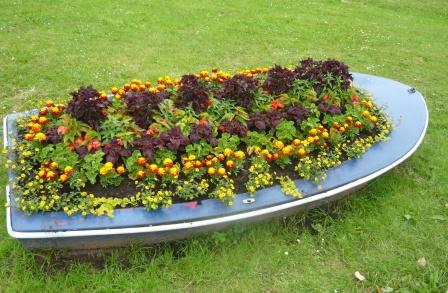
This boat was in a park at Ross on Wye and it would be hard to tend the plants in the middle as the boat was quite large. It creates a whole new mean to houseboat as this is a real gardenboat.


Read Collecting Containers and Growing Veg in containers

Know Your Onions they are Alliums

Know Your Onions they are Alliums

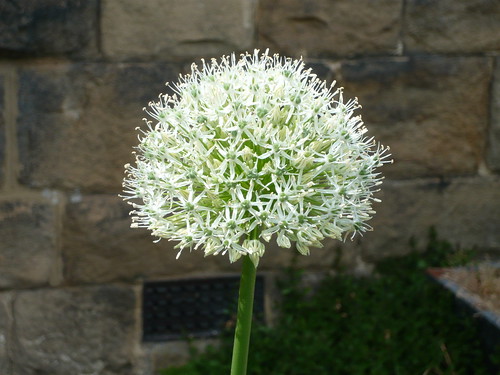
White Allium

Alliums are a significant species of bulbous, herbaceous perennials that usually have an onion odor and taste.

  • Indeed garlic, leeks, onions, chives and shallots are all Alliums.
  • Many alliums are grown as decorative flowers rather than as a food crop.
  • Plants have bulbs that reform annually from the base of the old bulb, or are produced on the ends of rhizomes or the ends of stolons.
  • The bulbs have outer coats that are commonly brown or grey, with a smooth texture, and are fibrous, or with cellular reticulation.
  • Many alliums have basal leaves that go white or wither away from the tips downward before or while the plant flowers.
  • Flowers are produced in groups forming a globe or umbels where the outside flowers bloom first and flowering progresses to the inside

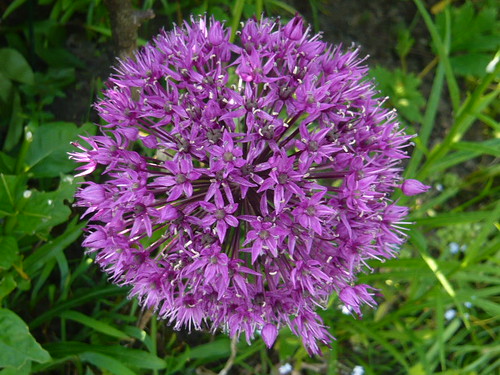
Allium

Read More Read More

Bulbous Plants

Bulbous Plants

Habranthus


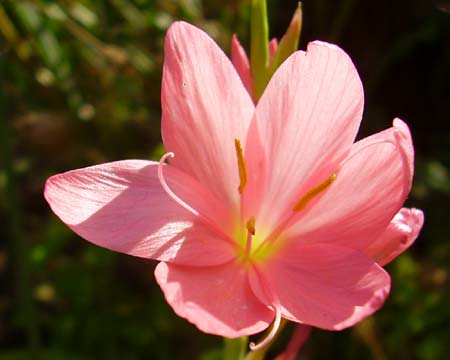
Habranthus along with Zephyranthes and Cooperia is one of several related genera commonly known as rainlilies.
All three have starry, funnelform flowers and are native to tropical and semi-tropical regions of the Americas.
You can get a fuller description from the Pacific bulb society or read Growing Rain Lilies

Babiana Kew Hybrids are star shaped in flower from bulbs growing about 10″ high. The sword like leaves display the pastel shades of the flowers and I am growing them for the first time this year in pots.

Habenaria radaria is also called the White Egret Orchid. White flowers last for 4 weeks and each stem can hold up to 4 flowers.

Gladiolus trichonemifolius commonly called Gladioli citrinis found on wet sandy flats in the winter rainfall areas. It blooms in late winter to early spring and is cream to yellow with brown lines on the lower tepals and a darker yellow center.

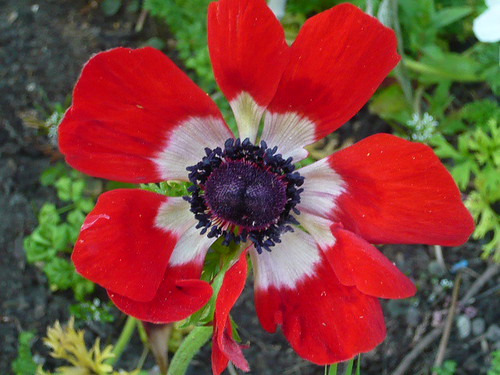
Anemone coronaria ‘Hollandia’ is a strong red with white eye and is known as a poppy anemone.

149

Gold Flowers and Golden Plants

Gold Flowers and Golden Plants

dutch 084

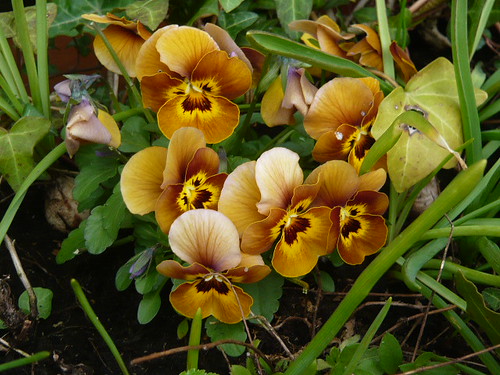
Golden flowers are generally Yellow Gold not Old Gold or burnished gold.

I liked these pansies in what I think of as Old Gold.

Many plants have Gold in there title including;

  • Lantana ‘New Gold’ and ‘Gold Mound’
  • Achillea ‘Gold Plate’ and Achilea ‘Coronation Gold’
  • Asclepias ‘Silky Gold’
  • Bidens ‘Goldmarie’ and Bidens ‘Gold Spark’
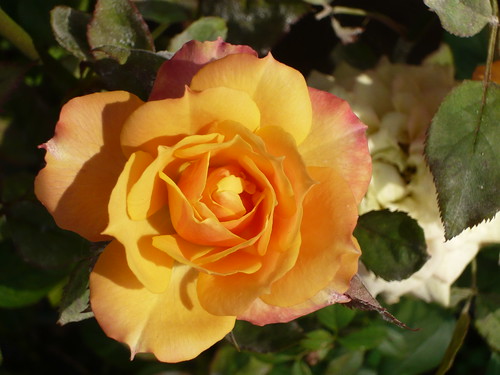
  • Roses Golden Wedding, Golden Years, Golden Wings, Gold Medal, Good as Gold and my favourite Goldbusch.

Just Joey

There are many other plants that have a gold tinge or colour to there leaves.

  • Lonicera Baggins Gold
  • Chamaecyparis obtusa ‘Golden Fern’ and Golden Pygmy
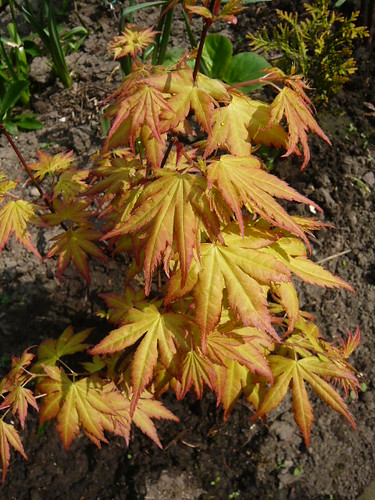
  • Acer japonica
  • Chamaecyparis Lawsoniana Broomhills Gold, Ellwood’s Gold and Burford Gold.
  • Golden Hop is probably as tall as many of the conifers.

Acer japonica


Go for Gold and you may win a medal at your horticultural Olympics. At worst you will have had the fun of growing a special golden plant.

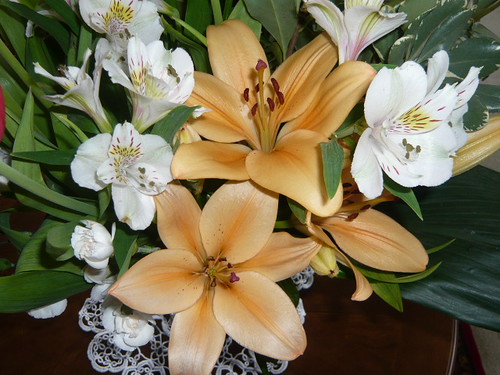
Lily & Alstromeria

Teasels – Dipsacus fullonum

Teasels – Dipsacus fullonum

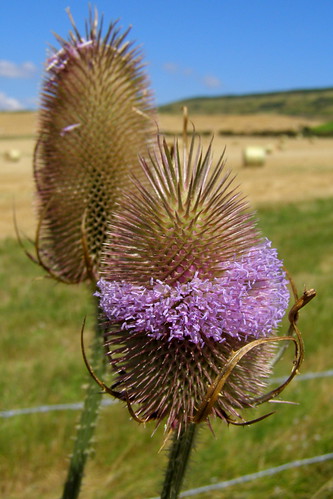
Teasel seedheads

What is a Teasel?

  • The Teasel grows as an errect biennial flowering plant up to 6 feet high.
  • They have sharp downward pointing prickles on their stem.
  • Flowers heads are a cluster of 2000 very small, blue-lilac flowers in a distinctive egg-shape
  • Several leaf-like bracts also branch out from the base of the flower and curve upward around the head.
  • Plants initially produce a basal rosette of leaves and then flowering stems are produced during the second year.
  • Butterflies like to sip the nectar and goldfinches like to eat the many seeds.

Names and Uses of Teasels

  • Teasels are also called ‘Johnny-prick-the-finger’ because of the sharp spikes.
  • Its scientific name ‘Dipsacus‘ derives from Greek and means ‘to thirst’. Potentially due to the way rainwater collects at the base of leaves where the leaf and the stem together form a little bowl.
  • Romans called it ‘Venus’s basin’ and early Christians in Ireland called it Mary’s basin’.
  • The second part of its botanical name ‘fullonum‘ is derived from the term ‘a fuller’. Fuller is the old name for someone who used teasel to comb out wool.
  • In some places teasel is also known by the name ‘brush and comb’. The Irish name Lus an Fhucadora translates as ‘Fuller’s Herb’.
  • Teasel is also named the herbal ‘fracture healer’ to denote its ability to help heal broken bones and sinews. Other medicinal properties include, ointment to cure warts plus kidney, liver and blood tonics

Teasels and Textiles

  • Teasels have long been cultivated for use in the textile industry. It has hooks on the ends of the spikes, and is used in the manufacture of cashmere, vicuna and velour fabrics.
  • The spikes help brush or ‘Full’ cloth. Typical products include tennis balls and billiard tables.
  • 40 yards of cloth would take 3000 teasel until fulling machines were invented.

Teasels

Sources
Photo by Jim Champion on flickr under creative commons license

Conservation Northern Ireland

God’s Own County