Browsed by
Month: June 2009

Bedding Tips

Bedding Tips

bedding

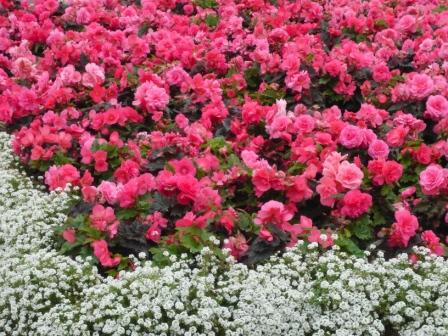
Bedding describes  plants  that are used en masse for a showy display of a temporary nature. They are often annuals but can also be bulbs like Begonia or biennials like wall flowers.

Tips on Bedding Plants

  • Plants need space to develop and you need to remember this when planting out – you do not want bare soil but you want developed flowers. Err on the side of being too close ( A 4″ diameter plant can be spaced every 3″-4″ but no closer).
  • If plants are very small when planted out or are grown in situ then ‘thin’ them out to make space. This means pulling out (or pinching at root level)  and throwing away weak  or over crowded plants.
  • To make a plant grow more bushy pinch out the growing tip. I do this too good effect with bedding Geraniums. More branches will equal more flowers.
  • Take off or deadhead flowers when they have finished. Once a plant starts to set seed it may stop all flower production and think ‘Job Done’.

Design of Bedding

  • Consider the colour scheme you are aiming for – white washes out cool colours like blues but highlights the pinks above.
  • It was common practise to put low plants at the front and tall plants at the rear of a Bed but it is your garden and a bit of variety can make the casual observer take a second look.
  • Consider if you want uniformity and rigid rows or a more natural planting.
  • Not everything needs to be a flower, grasses can add movement and refreshing greens or silver leaved plants can provide highlights.
Dwarf Pelargonium aka Geranium

Dwarf Pelargonium aka Geranium

dwarf

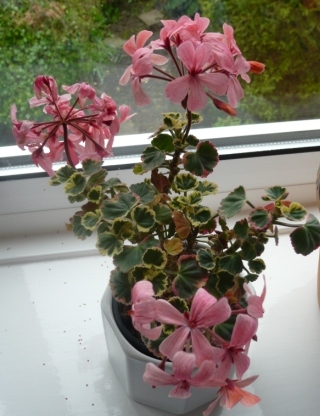
This dwarf Pelargonium (called Geranium) is shorter than a paperback (I mean not as tall) and the leaves are correspondingly small. A perfect little miniature plant with all the habits and leaf colouring of a zonal Pelargonium.

Dwarf Pelargonium Tips and Hints

  • I guess you could grow them outside in summer in the rockery after the Aubretia and spring flowers have finished or in pots indoors and out..
  • I have several cuttings coming along very nicely that I took from this plant in March as I wanted to reshape it for this summer and couldn’t waste the trimmings. I used gritty compost and a normal window ledge and all 6 have rooted. I will cut them back in Autumn for growing slowly onward next spring.
  • I am looking  for other miniature Geraniums to complement this one as they are easier to maintain in good condition than the larger varieties.
  • The following varieties are suitable for exhibitions and I might give one or two a try; Dibbinsdale, Dovepoint, Barnsdale and Clatterbridge according to Fir Trees nursery where I buy my Pelargoniums.
  • I may also try a Dwarf Regal Pelargonium like Lily The pink or Tammy Ann

Read More Read More

Save Water Garden with a Friend

Save Water Garden with a Friend

Older gardeners may remember the water company slogan ‘Save Water bath with a friend’ used during the great water shortages of 1976. Are we in for another summer like 1976? Some thinks so others are still suffering floods and unseasonal cold still as Baden Powell said be prepared. I am suggesting help from friendly gadgets to save water in your garden this summer.

Watering Systems for Pots.

  • For a cheap system of ‘container watering’ use a big container (they hold more soil and water and have less pot surface area to soil) and mulch the top with 2″ of gravel, slate or bark. Plastic containers evaporate less from the sides but the soil gets hotter than with terracotta pots.
  • When you water make sure you give them a long drink. I stand all pots on a saucer and fill it up as well as watering from the top.
  • Self watering pots can be bought with a reservoir that avoid 2out of 3 watering requirements when compared to a normal pot.
  • The Rolls Royce system would be a full irrigation system from a header tank with computer control as used in commercial nurseries. An easy to use irrigation system based on a modular approach can start from less than £20 and be used in the greenhouse, garden or for pots and hanging baskets.

Buy an Thompson MorganIrrigation system from Thompson & Morgan from this link.

Killing Greenfly

Killing Greenfly

greenfly

This daisy is covered with blackfly a close relation of the greenfly. Greenfly can do damage to a plant by weakening it and helping to spread disease.

The importance of getting rid of greenfly depends upon the plant. For example, a daisy like this doesn’t seem to be that affected by infestations and it is often fine to leave it to nature’s control.

greenfly

This hoverfly is an excellent predator of greenfly and blackfly, it can munch through a large quantity of greenfly.

However, if you have prize roses or want to grow cut flowers then you will want to get rid of the greenfly.

Insecticide’s from Amazon

Organic Method of Killing Greenfly

This greenfly killer is based on a fatty acid solution which kills greenfly on contact. The important thing is the spray needs to come into contact with the greenfly. But, it can provide an excellent alternative to chemical pesticides.

Related

Honeysuckle Climbing Lonicera Varieties

Honeysuckle Climbing Lonicera Varieties

honey
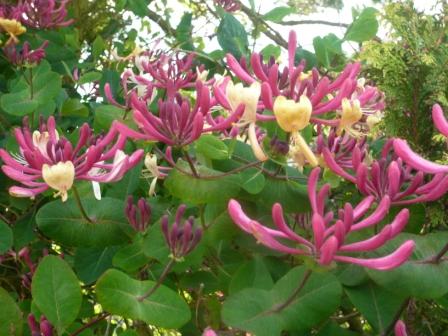
                               Lonicera Heckerottii ‘Gold Flame’

Woodbine is the common name for this Honeysuckle that provides a strong sweet scent in the cottage garden from the end of May. The climbing twining Honeysuckles are part of a large family of Lonicera that also includes a range of shrubby plants.

For sweetly flowering honeysuckle in winter try Lonicera fragrantissima or Lonicera Standishii whilst the best flowering summer species are the evergreen Lonicera Japonica. Sacrificing some scent for colour tryLonicera tellmannianawith flowers that are orange with red streaks on the outside or ‘Dropmore Scarlet’ for a terrific summer show of long scarlet flowers.
Belgica or the later flowering Serotina are true Honeysuckles that with a little support on a wall will scramble away to 10 feet or more. They will twine through branches of other trees quite happily and combine with robust roses to good effect.
Honeysuckle can be cultivated from cuttings and I have one plant that has had progeny in 5 gardens over the last 50 years as I moved house.
Pruning tips:

Read More Read More