Dragon Tree – Root and Branch Review

Dragon Tree – Root and Branch Review

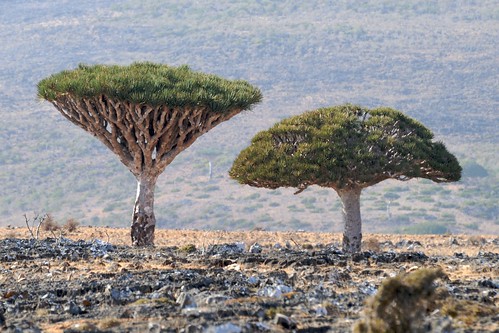
Dragon's Blood trees
A very distinctive and primitive tree. Legend has it that the tree sprang up from the spot where a dragon and elephant spilled blood and battled to death.

Key Features of the Dragon Tree

  • Latin name – Dracaena Cinnabari – other common names inside-out umbrella tree’ or Dragon Blood Tree
  • Height – up to 50 feet
  • Type of tree – evergreen
  • Leaves – Broad based spiky leaves in clusters at the top of vertical branches
  • Flowers – pale yellow clusters
  • Fruit – Yellow berry ripening to black
  • Bark – Rough textured silvery grey
  • Family – Dracaena

Origins and Distribution of the Dragon Tree

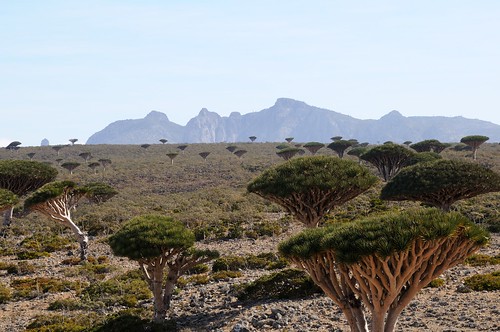
  • Unique to the Indian Ocean island of Soqotra .
  • The island is home to over 200 other plant species that are unique to the island.

Haghier massif and Diskum plateau

Read More Read More

Samurai Garden – Fighting for a Japanese Garden

Samurai Garden – Fighting for a Japanese Garden

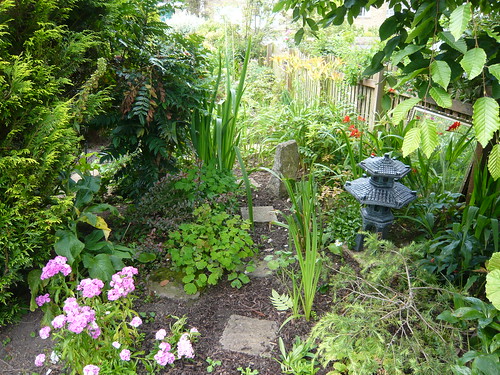
My ‘Samurai garden’ is a small homage to a full blown Japanese garden.
I was attracted to Japanese gardens when I attended a talk at our local garden society. (They are often good events to pick up tips or special plants. I belong to a couple but only attend if there is something of interest.)
After starting on my project I was surprised how many Japanese gardens there were to visit or spot when walking around.

Menston

Samurai Garden Features

  • Sword shaped leaves feature in my garden to provide a green back drop and a military feel. Various Iris and Hemorocallis are getting established. It is surprising how well they do after a couple of seasons to expand the clumps.
  • I have bought a stone Japanese shrine and an interestingly shaped pyramidal stone. There are all sorts of ‘features’ to chose from at most large garden centres.
  • I have cheated and planted bonsai trees in their pots. I hope to partially restrict the growth without having to do bonsai pruning of roots or branches.
  • Acers and Tree peonies are two of my favourite species and they are long term investments.
  • The largest expense was a white chipping/pebble path edged with two kerbs. Despite a weed proof membrane the chippings get dirty, mossy and allow some weeds to root above the membrane.
  • For one year only I ‘planted’ a large framed mirror to reflect images from the garden. I am happy with the result and may clean the mirror and use it next year.

Menston

Garden Samurai Code of Honor

Whilst researching my Samurai garden feature I came across a cancer charity website with the following code of Samurai honor.

1. The most important Garden is finding peace in your heart, soul and mind.
2. Honor and respect the tool that can injure you, especially the tool of your thoughts.
3. Have courage to fight the weeds of life.
4. Bless your garden and curse it not.
5. Perfection cannot be reached but precision can be practiced.
6. Know your enemies, bees can be one of the good guys.
7. Love your garden for hate can lead to destruction.
8. Remember you can plant seeds of joy; but only God can make them grow.

Japanese have regarded places surrounded by natural rocks as dwelling places of the gods. So too with dense clusters of trees and water that have traditionally encircled sacred ground.

Samurai at Banzai Tattoos new location (2 doors down)
The Samurai gardener fighting the devil slug?
by Samurai at Banzai Tattoos new location (2 doors down) by NASA CREW,CC BY-ND 2.0

Japanese Garden at Giggle Alley at Eskdale

Japanese Garden at Giggle Alley Eskdale

Japanese Garden at Giggle Alley Eskdale

Japanese Garden

Features to Expect in a Japanese Garden

  • In Giggle Alley there are winding pathways, stone steps, rockeries and pools of water.
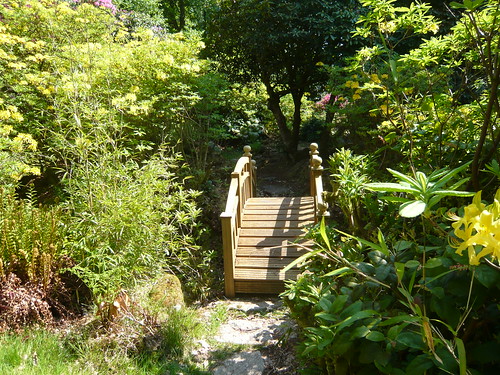
  • The Japanese style bridge over a gurgling stream is pictured below.
  • The planting includes excellent Maples and colourful leaf combinations.
  • Azaleas waft scent around the glades and provide further colour and a sense of harmony.
  • A venerable old Magnolia looks half dead but is flowering at the top of several 20′ high branches.

Giggle Alley Design

  • Designed in 1914 and left to become overgrown since 1949, the garden at Eskdale is currently being renovated.
  • The Forestry Commission created a Design Plan for the Japanese garden 2006-2011 see it on this pdf. You can contribute ideas and comments to the next plan and phase of renovation.
  • This Japanese Garden, in Giggle Alley forest, was the jewel in architect James Rea’s horticultural crown.
  • There are thickets of bamboo, a stunning display of Japanese maples and the heady scent of azaleas in the spring.
  • The whole forest is open to the public.

Japanese Garden

Wild Life in Giggle Alley

Read More Read More

Japanese Garden a Gardeners Project

Japanese Garden a Gardeners Project

043

Despite my garden being full to overflowing after the spring rain I have decided to create a new area for a Japanese Garden. When starting a new project I was advised to have a name that may colour the end result. I opted for the grand title of ‘Japan Land’  This will be a long term project and I won’t rush it as I have on other projects in the past.

Action Plan for my Japanese Garden

  • Read up on the various forms and the nature of Japanese gardens.

Book Cover

  • Decide which area is going to be sacrificed to provide space for the Japanese garden.
  • Draw a rough plan  on a piece of paper and list the features to be incorporated.
  • Walk the patch and see if any plants need to be left in situ. I have a couple of Azaleas that I want to keep.
  • List the gardening problems I have caused in the past that I hope to avoid on this project.

Past Problems to Avoid

  • I generally leave too little space for paths and access.
  • Forgetting  to label or record the location of a particular plant  has meant I do not give any individual treatment until it is too late.
  • Many Japanese favourites are long lived such as Acer, Wisteria and Peonies so I must leave enough space for them to grow and develop.

    Read More Read More

Exotic Gardens to Visit in the UK

Exotic Gardens to Visit in the UK

Baby Myrtle

In the cold wet winter it is a good time to plan where to visit as the year improves. The South West is the obvious place to start your visiting tour of gardens containing exotic plants.

La Seigneurie in Sark has tall walls to protect from wind. The Australian Bottlebrush and New Zealand Tea Tree thrive alongside the oldest surviving 19th century feature of the original layout, the formal rose garden edged with box hedging.

Trebah Garden near Falmouth in Devon benefits from a micro climate created by a deep valley. Tree ferns, gunneras, bamboo and tall Chusan Palms. The camellia collection looks good in spring and Camellias have justly earned their title as ‘Queen of the Winter Flowers’. These beautiful blooms range from deep red to white with all shades of pink in between.  They can be found along Camellia Walk, Petry’s Path and Badger’s Walk.

Abbotsbury Tropical Garden near Weymouth is a 20 acre garden filled with rare and exotic plants from all over the world and was established in 1784. The gardens are well regarded for the  Rhododendron and Hydrangea collections plus the charming Victorian Garden and Swannery.

Abriachan Garden is at the other end of the UK near Loch Ness. The garden and nursery is full of plants from the countries where the owners have previously lived and gardened…….Olearias, Pittosporums and Flaxes from New Zealand; Tea berries and Diddle-Dee from the Falkland Islands.

The Exotic Garden in Norwich becomes quite magical in spring full of hidden corners and riotous colour. ‘The air is filled with the intoxicating scent of Jasmine, Brugmansia (Angels trumpets) and different varieties of Hedychiums and Alpinias. (Gingers). The ridiculously large leaved Elephants Ear, Colocasia esculenta, ‘Mammoth’ with luscious green leaves 2×3 feet in size on long stems. Towering bananas such as the purple Abyssinian banana Ensete ventricosum ‘Maurelii’, form massive canopies to walk under as do the root hardy banana Musa basjoo.’

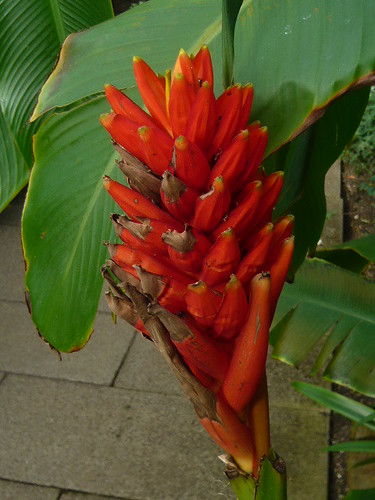
Musa coccinea Red banana

Read More Read More

Ylang Ylang Perfume Tree – Root & Branch Review

Ylang Ylang Perfume Tree – Root & Branch Review

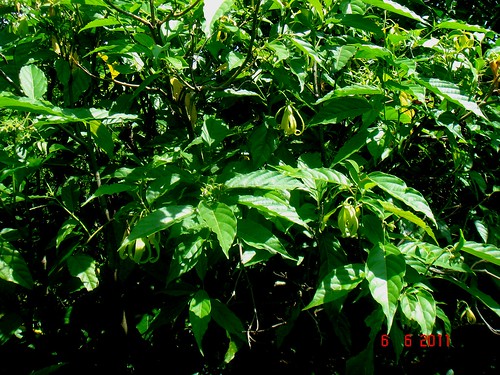
Unassuming in appearance the evergreen Ylang Ylang tree is highly valued for the essential oil it can produce.

Cananga odorata (Lam.) Hook.f. & Thomson

Key Features of the Ylang Ylang

  • Latin name – Cananga odorata , other common names Kenanga kebun, Macassar-oil plant, Perfume tree
  • Height – up to 80 feet
  • Type of tree – evergreen
  • Leaves – Oval green leaves sometimes with wavy edges
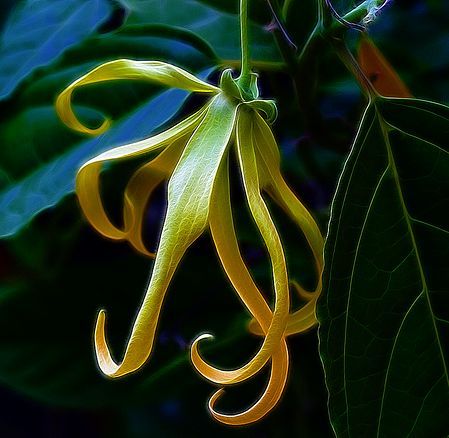
  • Flowers – clusters of fragrant green flowers turning yellow with six long twisted, hanging petals
  • Fruit – clusters of small, oval, black berries
  • Bark – Pale grey
  • Family – Annonaceae the Custard Apples

Read More Read More

Fruit Tree Feeding Tips

Fruit Tree Feeding Tips

pear cordon

Encourage a better fruit crop by feeding your edible and ornamental fruit trees. Fruit trees are heavy feeders and need extra food to crop well.

Nutrition Requirements

  • Nitrogen promotes foliage and vigorous growth.
  • Dessert apples need less than cooking apples and pears. Plums, gages and cherries appreciate more.
  • Phosphorus promotes healthy growth and fruit.
  • Potassium gives fruit good colour, flavour and bud development.
  • Magnesium can stop bitter pit – apply Epsom salts

Feeding Quantities

  • As a rule of thumb, feed apples and pear with Growmore 100g per square meter.
  • If foliage is yellow increase feeding by half and double the quantity for plums and cherries.
  • Organic gardeners can use blood fish and bone plus organic potassium material at 15gm p/sq./m
  • Apples and Pear appreciate a low nutrient mulch like garden compost whilst plums like manure. If possible avoid growing fruit trees in grass.
  • Mulching is very good for organic growing as it preserve natural nutrients and helps make them accessible.
  • Soil can be tested for deficiencies but good husbandry will help create good fruit crops

Other Tips

  • Quince will appreciate some tomato feed in spring.
  • Treat crab apples like pears.
  • Vigorous rootstocks are unlikely to need feeding once they are established.
  • Water is a form of food and a shortage will reduce the number of fruit and stop them swelling.
  • Feed the outer roots not particularly  those  close to the tree trunk.
  • A good cooking apple is a variety where the fruit ‘falls’ when cooked.
Help Improving Your Soil

Help Improving Your Soil

Every gardener wants to have better plants and flowers, but, sometimes we just need to get to the root of the matter so to speak. There is nothing more satisfying than a deep rich loamy soil. Unfortunately, unless you are very luck, you are unlikely to inherit such a soil. Nevertheless it is definitely worth investing the time and energy to improve your soil. Over time looking after your soil will pay dividends.

What is Good Soil?

  • Free draining, yet holds a fair amount of moisture.
  • Good balance of minerals and food.
  • Light, rich texture, should crumble in your hands.
  • Good soil in the right place and suitable for the items you wish to grow.

Keys to Improving Imperfect Soil

  • Water and nutrients are the key to helpful soil.
  • A soggy mess is not the same as a hydroponic growing medium. Add gravel to improve baddly drained soil. Create a soak away if necessary
  • Add organic matter to help retain moisture and make nutrients available for long enough for the plants to benefit.
  • Soil needs to be the ‘safe home for plants so depth for roots, air for health and pathogen free soil is a requirement.

Read More Read More

Help on Planting Technique

Help on Planting Technique

Kew 332

Have a plan in mind and think about the plants you are going to grow.
Fruit, trees and shrubs will be long term investments and mature over time.
Bedding and vegetables may need different treatment, location, maintenance and nutrients.
Special gardens and collections of plants are even more complex. You almost get out of a garden what you are prepared to put into it!

Prepare Your Soil

  • Eradicate nasty perennial weeds such as Dandelions, Bindweed, Couch grass and Ground Elder.
  • Cover with thick black polythene for at least a year to smother the weeds or use a Glyphosphate based weedkiller like Roundup.
  • Dig the soil 2 spits deep (2 spade depths or 20″). If the sub soil is very poor go one spit deep and create a raised bed to lift the height.
  • Incorporate as much organic matter as you can. Use garden compost, rotted manure, spent mushroom compost and even council recycled and composted waste.
  • Do not worry about a few stones but remove builders debris.

Good Fertilizers

  • Dress the soil with a general purpose fertilizer that releases nutrients slowly. Rake into the top 4″ a week or so before planting.
  • Growmore, fish blood and bone or just bone meal may increase overall fertility.
  • Remember NPK stands for Nitrogen to help green leaf growth. Phosphor for strong roots and bulbs, and K for Potassium for fruit and flowers.
  • Proprietary feeds can be expensive and I would only use them once the plants are growing in situ.

Planting and the Hole

  • You may have heard about a £10 hole for a £5 plant. Well, dig a good size hole, break up the soil in the bottom, place the plant in the hole at the same level it was grown at and firm the soil around the root ball or roots.
  • Stamp around the plant to firm it in again and use a cane or stake as needed for support and protection from wind rock.
  • Plant into moist soil, soak container grown plants before planting and water in after planting.
  • Mulch around the plant (but not touching the stem) to conserve moisture.

Read More Read More

Help Growing Rhubarb

Help Growing Rhubarb

If you want to help your  Rhubarb water it even when it is raining!
Rhubarb

Rhubarb Summary Top Tips

  • Encourage strong leaf growth to encourage heavy crops with nitrogen compost and manure. Lime in winter.
  • Stop picking stems by the end of July to allow roots to boost strength for next season.
  • Plant 3 feet apart in friable but well trodden soil.
  • Give a thick mulch around clumps to preserve moisture.

Rhubarb Calendar

  • Plant out new roots with good eyes/buds in November or December.
  • Divide roots in October-December a large 3 year old root may produce 6 plants/offsets.
  • Allow all leaves to die down in autumn before clearing away.
  • Grow from fresh seed sown under cover in September or direct in March
  • Pick early, second early or Late maturing varieties from March to August.
  • Grow your own Rhubarb as it is easy to cultivate and gives a large crop of tender pink stalks.
  • Avoid picking stalks in the first year – let the crowns develop.

Varieties to choose

  • Victoria, with thin stalks of rosy red that turn pink and green towards the tip. It is a late season cropper.
  • Timperley Early AGM is the earliest to be harvested with long stems and a good flavour.
  • Raspberry Red is a mid-late season variety of deep red stalks.
  • Stocksbridge Arrow, is an old favourite in the West Riding of Yorkshire the home of there rhubarb triangle.
  • Champagne is also one of the best varieties but there are lots to choose from at your garden centre or cadge a crown from neighbours.

Read More Read More