Plants for Windy Gardens

Plants for Windy Gardens

windbreaks

Tulips protected by a windbreak.

If you live in an exposed environment with strong winds, you will have to be more selective about the plants you chose. Bear in mind also, windy gardens may soon dry out. You will have to avoid plants which can easily get ‘wind burn’ – acers for example spring to  mind.

Gardeners often see wind as an ‘enemy’ of the garden – blowing over their prize delphiniums e.t.c. But, wind can have beneficial effects. Some plants like bamboo and grasses, look enchanting blowing in the wind. With careful planning, the windy garden can still do well. One tip is simply to see what is thriving in similar environments. Good plants for windy gardens include

Best Plants for Windy Gardens

Bamboo. Chose a non-invasive variety or grow in pots. Bamboo makes a great sound swaying in the wind. It also helps to offer a flexible windbreak, to provide more shelter.

Hydrangea. A low growing shrub with attractive blue or pink flowers in summer. In particular thrives in coastal situation with both wind and salty air.

Scot Heather – grows in a variety of conditions from exposed moorland to the town garden. Only real requirement is an acidic compost.

Sedge – Carex. A grass that looks great blowing in the wind. Tough pliable bronze foliage looks great in the wind.

Sea Lavender – Limonium – A much undervalued annual with attractive flowers in the height of summer, will be fine in windy environments.

Chilean Potato Tree – Solanum Crispum. A fast evergreen climber which will soon cover fence and provide more shelter.

Geraniums and Pelargoniums. These low growing annuals will be fine in windy conditions. This applies to over low growing annuals such as buzy lizzies.

Related

Growing Coloured Conifers

Growing Coloured Conifers

Burton Agnes Pocklington

Conifer trees and plants are available in a range of colours, shapes and sizes. Sequoia conifers are the largest living thing on the planet. Mature trees reach for the skies but rockery or horizontalis varieties are ground hugging by comparison.

What is a Conifer

  • A conifer is a tree that produces seed but has no true flowers.
  • Many conifers have seeds borne on scales that clump together to form cones which are woody when ripe.
  • Junipers and Yews are conifers without cones, using small berries for seed capsules.
  • The foliage is usually narrow and sharp-pointed or small and scale-like.
  • Most conifers are evergreen though Larches loose there their needles annually

Conifer Families

  • The Pine family includes several popular species of conifer including, Firs (Abies), Spruce (Picea abies), Larch (Larix), and Cedars (Cedrus).
  • The big trees like the giant redwood sequoia are from the Taxiadacea family.
  • Monkey Puzzle trees have very large cones.
  • Cypress family includes the Chamaecyparis, Juniperus, Thuja and Cupressus families most often found in gardens.

Colourful Conifers
There are a range of different greens, blues, gold’s, greys and even bronzes. Have a look around your local garden centre. Five varieties to look out for are:

Read More Read More

Good Companions Crocosmia and Euphorbia

Good Companions Crocosmia and Euphorbia

Burnby Hall Pocklington

You only need subtle shade changes to achieve a striking effect with well chosen plants. Good companions complement one another in a range of ways.

These Euphorbia and Crocosmia work well together due to the shape and forms of the leaf and the similarity and warmth of colour.
Crocosmia will flower in a hue like that of the Euphorbia but later in the summer – see images.

For more information on Euphorbia read Top Ten Euphorbias

For more pictures and growing tips on Crocosmia see link

Burnby Hall Pocklington

These Malva moschata are easy to grow perennials that flower strongly in mid summer. The pastel shade of pink is also picked out in the eye of the virtually white flower.

Read More Read More

Growing Sedum or Stonecrop

Growing Sedum or Stonecrop

014

A small name but a large, 400 strong, species. There are many Sedum or Stonecrop family of plants to grow.

Growing Tips

  • Sedum is a succulent plant that stores water in it’s leaves.
  • As with other succulents they are often cultivated with Cacti but are easy to grow in a garden.
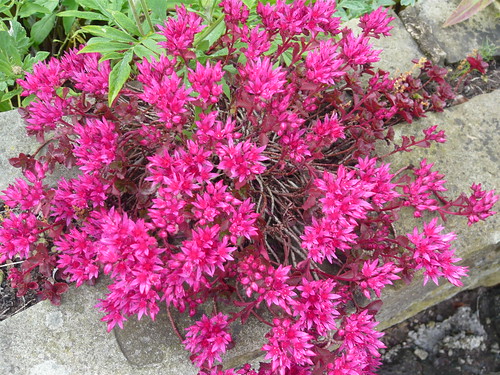
  • Sedum varieties can make good ground cover from rose-shaped growths in shades of green, yellow and pink.
  • Sedum are not heavy feeders and do not need good soil. That is why the above plant is growing in my wall.
  • Sedum thrive best in full sun or a good light.

The Sedum society has a seed distribution and cuttings service.  Read more on Sedum and Saxifrages or Sedum Ice Plants

Sedum Matting

Read More Read More

Growing Runner Beans in a Dry Summer

Growing Runner Beans in a Dry Summer

031

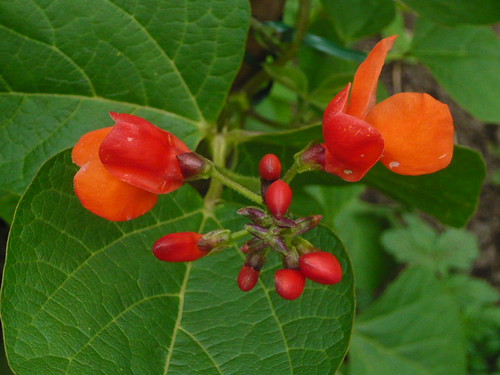
Great Runner Beans need plenty of water retentative and nutrient rich soil. That is why preparation is important but here are some more tips to rescue this years crop.

Preparing Runner Bean Bed

  • Help the soil to retain moisture by incorporating manure, well rotted compost and wet newspaper at the bottom of a deep 12″ trench in winter.
  • Maintain humus rich soil around and above the trench with more compost.
  • Rotate crops to a new patch every year on a three or four year cycle.
  • Use a 2-3″ deep mulch that is open enough to take water down to the roots. Bark chippings may suit.

Plant Out Runner Beans

  • Start off your beans in pots with a deep root run or in open ground.
  • Do not feed with heavy nitrogen fertilisers or you will get leaf and less flower.
  • Support each plant with a cane in a wigwam shape.

Growing On

  • Flowers pollinate best if the air is humid so mist over during a dry spell. I use a ‘Sprayer’ with clean water.

    Read More Read More

Sustain Your Sustainable Garden

Sustain Your Sustainable Garden

Green Island Garden

To coin a phrase ‘Sustainable Gardening is for Life not just a passing fancy’. It is easy to drop sustainable gardening when it gets tough but here are a few tips to help you stay the distance.

Composting

  • Good compost contains huge, free food resources and conserves moisture in the soil. You know you could do more.
  • Save money on fertilizer by adding Comfrey leaves to compost bins to boost nitrogen content.
  • Do not put animal and fish bones on the compost heap but you can crush and bury these bones.
  • Wormeries and worm bins will eat food waste and produce good soil conditioner.

Water Conservation

  • It is more popular to save water when the drought starts but the wise gardener has already got solutions in place. But me more  Butts.
  • Harvest water, it saves money if you are on a meter, even grey water is of use.
  • Use drought tolerant plants such as Alpines and Mediterranean plants.

Recycle, Repurpose and Reuse

  • Pruned stems can be used as plant supports and cut logs can go in a wood pile.
  • Various bits of packaging can be used as planters.
  • Reuse plant pots or donate them to charities who sell plants and are always asking me for contributions.
  • Stones from a rocky part of the garden can improve drainage in another or be used to create a soak-away.

Encourage Wildlife

  • Log Piles and brash piles save landfill and help insects and fungi.
  • Companion planting can attract particular pest predators.
  • Wild life encourages a natural balance in your garden.
  • Leave areas of lawn unmown or create natural garden areas.

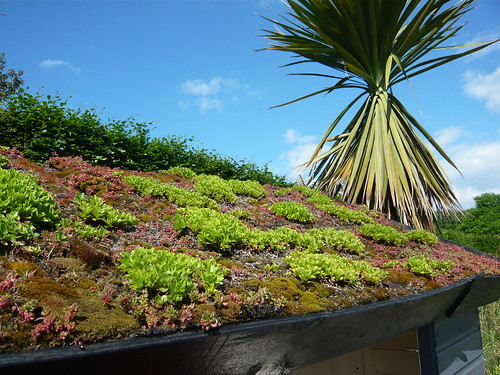
golden acre green roof

Green roofs are sustainable food, water and heat resources, read about Harlow Carr

Extraordinary Leaves in Pictures

Extraordinary Leaves in Pictures

Book Cover
Extraordinary Leaves by Armytage and Schrader is available from amazon.

The horticultural industry put most of it’s effort into flowers, trees and shrubs. Leaves however appear on all most all these plants and repay close inspection.
As this book Extraordinary Leaves shows there is an amazing world out there for those who look closely and want to find new visual and sensual experiences.

Leaves

Ptilostemon casabonae

Read More Read More

Uses for Aromatic Roses

Uses for Aromatic Roses

068

‘Marriage is like life in this….
That it is a field of battle
And not a bed of Roses’

R.L.Stevenson

Uses for Aromatic Roses

  • A large vase of cut flowers, rose buds and full blooms offer a scent experience not to be sniffed at.
  • When drying rose petals, cut out the white heel, dry in an airing cupboard (finish off in a low oven if needed), then use in pot pourri or scent bags.
  • Rose water is meant to be distilled but can be made as follows. Beat a pound of rose petals in a blender and leave to stand in there own juices for 5 hours then cover with water and add a further pound of petals infusing for 24 hours. Boil, strain and bottle leaving it in a sunny position for a couple of weeks. It may need diluting 50% before use.
  • Rose Oil is not for the ordinary gardener as it takes 50,000 roses to make an ounce of oil. Rosa Damascena and Rosa Centifolia are the traditional roses for making oil by distillation but Tea Roses will make a third fragrance of oil.

Cheat your Senses

  • Cheat and grow the rose scented  Pelargonium graveolens.
  • Cheat and buy ready made perfume.
  • Cheat and use synthetic rose oil (not a patch on essential oils though).
  • Do not cheat and be happy to leave the scent in your garden.
  • Grow Old Fashioned Roses (top ten) you will find great perfume and no cheating.

Ehow says ‘… that rose scent is used in various beauty and health treatments and considered a very powerful aphrodisiac? It’s true! The scent of rose is also thought to be a potent scent that heals emotional wounds, anger, resentment, depression, and nervous anxiety. One way to get the full benefits of the rose scent is to use it in combination with bath salts.

Just Joey is as aromatic as its parent Fragrant Cloud.

Easy Herbs to Grow and Eat

Easy Herbs to Grow and Eat

Chive flowers

Basil

  • Scented basil is a key part of Italian cooking and a perfect companion to tomatoes. Eat your own basil in omelettes or as a pesto sauce.
  • Growing from seed on a windowsil in a 3″ pot is easy peasy
  • Pick leaves as needed, pinching out the top encourages growth

Parsley

  • Curly parsley is best used as a garnish and with cold dishes.
  • Flat leaved parsley is used with hot dishes according to Jamie Oliver.
  • Grown from seed Parsley will last through winter as it is a short lived perennial

Coriander

  • With a strong warming taste and very aromatic Coriander can be added in stir fries, couscous and other dishes just before serving.
  • Grow from seed

Mint

  • Mint is available in several flavours all with that refreshing minty taste to accompany new potatoes.
  • Crushing the mint stems brings out extra flavour but chopped leaves are traditionally used in mint sauce with lamb.
  • Mint can be grown from seed but I would buy a plant of your chosen mint type.
  • Mint is long lived and can spread rapidly via stolens under ground.

Chives

  • See them in flower above. Use the edible flowers to decorate a dish
  • A mild onion flavour makes Chives useful in potato salad, cheese sauce and egg dishes.
  • Sprinkle on cheese sandwiches or make a herb butter to serve with steak or chops.
  • Grow from seed and cut leaves as needed.
  • Chive plants will regrow each spring and flower in June.

Buying Herb Seeds

  • Thompson Morgan have a good selection available on this link.
  • Try the windowsill variety pack as a starter.
  • Do not use all the seed at once but resow every few weeks to keep a steady supply of tasty aromatic plants.

Read about Winter herbs or Herbs for Drinks, Pillows and Baths

Gardeners Tips For Spraying Aphids

Gardeners Tips For Spraying Aphids


Aphids

Occasionally a tip comes to us that we have not tried for various reasons. Here are a few of examples:

Organic Aphid Treatments

  • Boil orange peel, lemon and or lime in water & use the solution as an aphid control. Aphids should hate citrus oil.
  • On the same theme steep garlic cloves and chilli left overs as a ‘toxic bug blaster’. (The Oldie summer 2010)
  • When the leaves of tomato plants are chopped, they release   alkaloids. When the alkaloids are suspended and diluted with water, they make an easy to use spray that is toxic to aphids.
  • A simple soap spray, water and some liquid soap can work wonders by dissolving the aphids wax coating
  • Teas made from elderberry or rhubarb leaves can act as a deterrent assuming you use it as a spray.
  • Place banana peels at the base of infested plant. The peels give them a shot of potassium too.

With all homemade sprays, strain out the residue before spraying.


General Aphid Tips

Aphids can do a lot of damage to plants. Firstly they weaken it by drinking the sap. Secondly they can spread disease such as powdery mildew. Aphid action also often attracts ants, who enjoy the sticky residue left by aphids. Ants are not directly a problem, but, they can damage the base of plants and look unsightly.

If you have some prize specimens, keep a close eye for first sign of infestation in April, May. At first sign you can try squeezing them with your fingers or blowing them off with water.

If you are going for organic control, you will want to be encouraging natural predators such as hoverflies and ladybirds. This can be done by using plants which attract the hoverflies. For example stinging nettles and marigolds.

I use proprietary chemicals and spray on a still day

Spray in the evening or early before the adults take flight.
Read more