Plant with the nose up! (The bulbs nose not yours) The bottom of the bulb is where there is a bit of dried root.
Put a marker in the ground to show where you have planted the bulb. I sometimes use some light coloured grit.
Most bulbs already contain the ungrown flower inside the bulb so a bigger bulb should perform better. Choose firm healthy looking stock not dried out damaged bulbs.
Plant your bulbs twice as deep as the bulb is large. i.e.5cm bulb 10cm deep
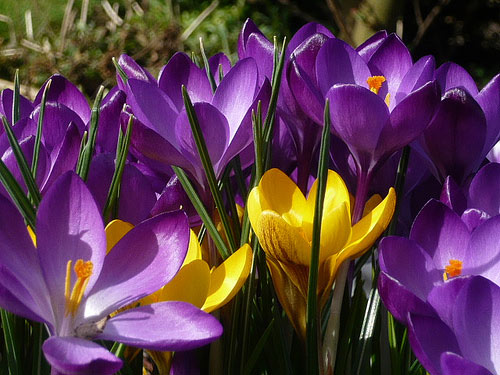
Pick a colour scheme and build a theme around that. Pinks and purples of crocus, tulips and hyacinths may work together.
Alliums or ornamental onions can be planted in November or if frost free in December.
Daffodils need longer in the soil to develop their root systems so get them in now.
Plant bulbs in containers with good drainage holes and crocks in the bottom.
Snowdrops, aconites, grape Hyacinths and crocus should naturalise well in your garden flowering year after year.
After the bulbs have flowered deadhead then to channel energy into the bulb not into seed production. Leave the leaves to die back naturally.
I have been asked for ideas to create a floral arrangement that fits the description Olympic Torch.
I am not even a gold medal winning gardener, although I do aspire. Nor am I much of a flower arranger!
The spirit of this site is to encourage others to go above and beyond our horizons so I will give it a go with these tips!
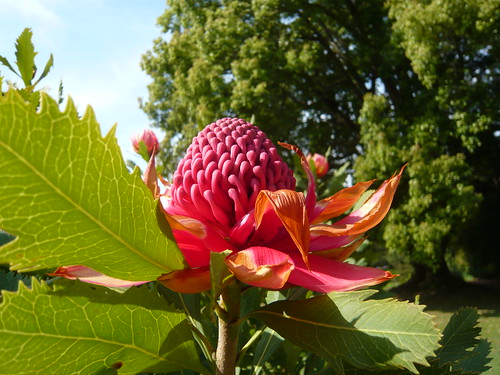
Protea
Design Criteria
The winter Olympics flame pictured above would be hard to replicate in a floral tribute so I am banking on the summer Olympics as being the reason for the display.
Flowers, foliage, greenery, wood and organic matter seem appropriate materials. The Olympics is inclusive of country, sport and to an extent ability.
Size may be important but I will settle for making a statement in a home setting.
Metaphors like a Burning Bush or Torch Lily are to be avoided.
Warm colours should be in vogue despite the crystal blue above.
Baby Myrtle Bottle Brush
Plant Recommendations
Spikes and sword shapes will for the basis of a long thin arrangement.
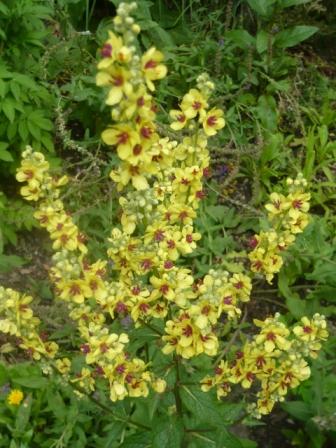
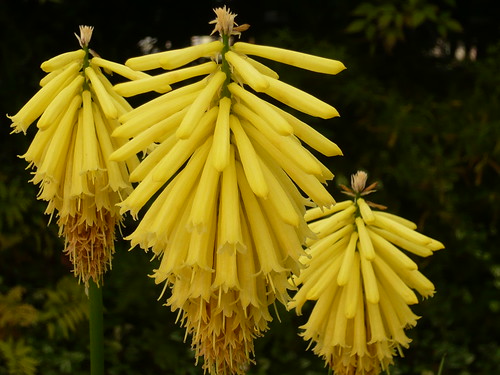
Red Hot Pokers are available in a range of colours including the yellow above and the traditional red and yellow two tone.
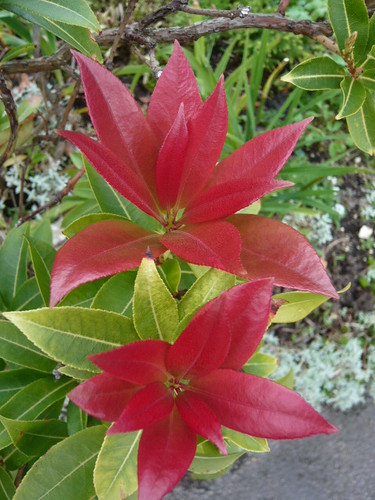
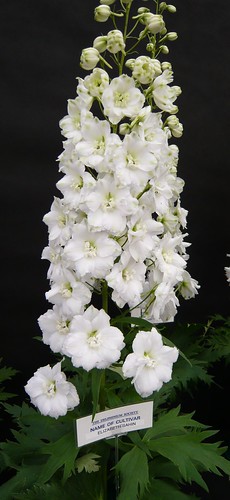
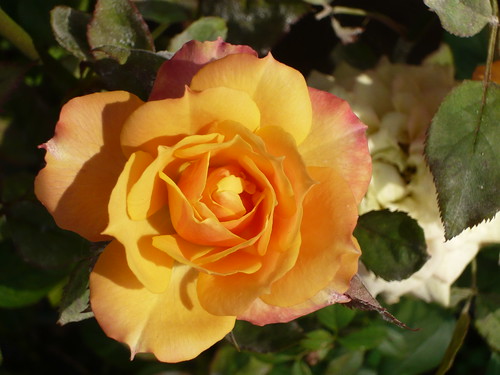
Representing each continent may be a theme worth pursuing and Bottle Brush from Australasia, Proteas from Africa, Alstromeria from South America, a yellow rose from Texas may be too metaphorical, a white Delphinium spikes from Europe and Pieris japonica from Asia for texture and fire red leaves.
Pieris japonica leaves.
As n alternative to red-green leaves you could opt for smokey grey such as Eucalyptus (but they are full of flammable oils and you may end up with a real torch!)
Kniphofia Bees Lemon
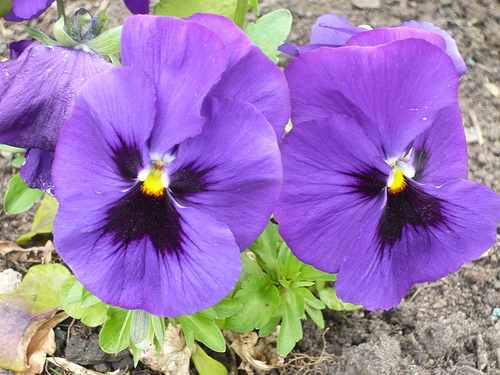
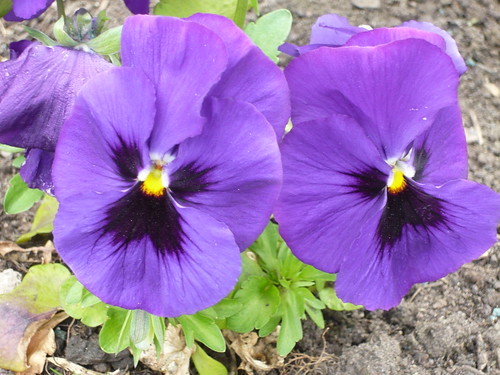
The Pansy face that launched a thousand pot plants.
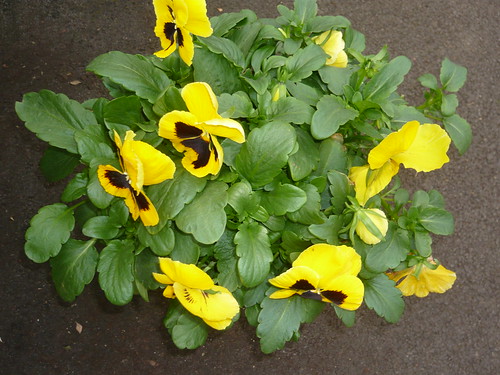
Pansy partners pair up on this plants.
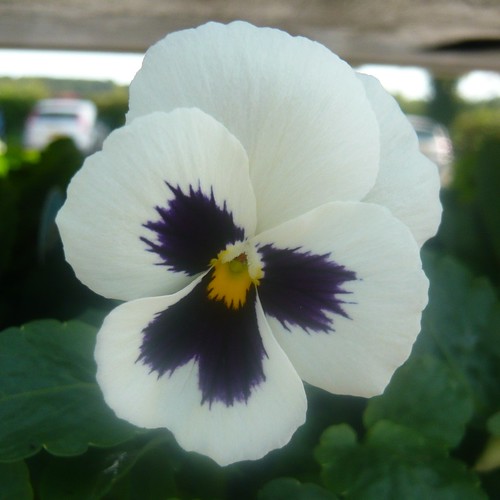
It is the face on a pansy that gives it a differentiation from a viola (and Pansies can’t make music like some violas).
‘Squaring up for a fight’. Is this Pansy one of your favourites? If so vote on the comments section below.
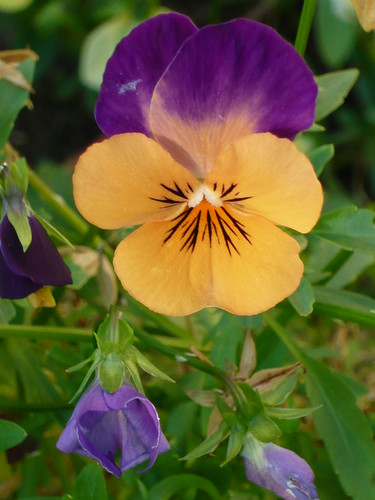
Whiskers rather than a full face put this more in the Viola class but I am a bit of a Joker and so is this flower.
More Sources
Pictures from the Viola Group on Flickr called Violetta Amore Mio ‘Violet my love’
Grow Your Own Cheap Violas from GTips
Growing Pansy All Year Around GTips
Google Pansy images
Seeds and plants from Thompson & Morgan
Violas on the first image courtesy of Toshio
Sort out in your mind the plants that will need frost protection in the coming weeks. It will be too late to get and wrap plants in hessian or move plants indoors once the frost warnings arrive. Being prepared will allow you to enjoy late autumn shows without worry.
If your Busy Lizzies suffered this year, loosing leaves and flowering badly you are not alone. The fungal problems of Busy Lizzies are a concern so do not compost them and plan to grow something else instead next year. Hopefully a one year gap will kill off the problem fungus which is Busy Lizzie specific.
Keep harvesting your runner beans before they turn woody and run to seed.
Collect any seed you hope to save from plants that have finished. Keep them in a cool place in paper bag or envelope
Plant up your spring Daffodil bulbs. Tulips can be planted later.
Indoor bulbs for Christmas flowering need to ‘be prepared’ or treated before you buy them. Hyacinth and Paperwhite narcissus are a couple of my favourites.
Clean your bird feeding stations and plan to continue feeding through winter. I buy bulk seed and keep it dry.
Look around for late flower shows and events. The Harrogate Centenary flower show is on 16-18 September 2011.
Glee, the UK’s biggest garden trade event, is on at the NEC Birmingham on 19-21 September 2011.
Pick a bunch of Chrysanthemums or Dahlias for the house.
Taking flower photos is often seen as an easier aspect of photography. Even with a simple point and shoot camera you can have very good photos for little effort. However, these tips will enable you to get even better photos and push you into the ‘pro’ category.
Taking flower photos is very much a learning experience. I have added an extra two tips at no extra cost 🙂
Tips for Photographing Flowers
1. Shoot From Different Angles
Taken from same height as flower
There’s a big difference between shooting down on top of flowers and shooting at the same level as a flower. Shooting at same level as a flower, means you might have to get down on your hands and knees but, it gives a more interesting less conventional perspective.
Same Flower from standard above position
2. For close ups Shoot with smallest aperture your lens will allow
If you have a f/5.6 lens use f5.6
3. Try Macro Lens for really close shoot up.
A macro lens allows you to get exceptional close up shots. A macro lens has such shallow depth of field that when a photographing a flower, some petals at back can even be out of focus.
4.Good Quality Tripod
A good quality tripod enables the sharpest picture, it also enables you to use smaller apertures and a longer exposure time.
5. Other Tips to Reduce Camera Shake.
If taking a tripod is difficult, try a monopod.
Remote shot taker. When pressing button, the camera moves causes some camera shake. An external button release enables you to take a shot without moving camera.
For important shots try multiple shot, which automatically takes several shots. At least one will be in super sharp focus.
Very useful is this mini tripod. It supports weight of heavy SLR, but can be folded up into a small bag.
6. Canon Filter
A Canon close-up 500D lens can be fitted to a telephoto zoom lens and is like a traditional lens filter easy to carry around and gives a cheaper way to get macro shots.
7. Best Time To Take Flower Shots
On Cloudy Overcast days. When sun is very bright, flowers can appear washed out. On cloudy overcast days, flower colour can appear more vibrant.
8. The Rain Effect
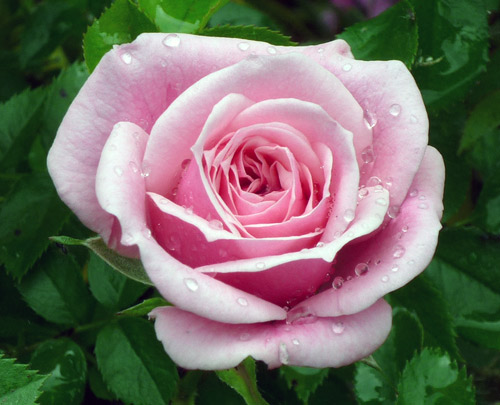
After Rain. Drops of rain on flowers add an extra romance and beauty to flower photos (see Rose top). If it rarely rains – just take a portable sprayer to add your own water – no-one will know you sprayed it!
9. Use Backgrounds for constant Colour.
Daffodil
A solid background helps avoid distracting backgrounds. Black often works very well, especially for white, light coloured flowers.
10. Wind
Trying to hold stem of flower can work. If you have an SLR set a high shutter speed 1/ 125 will help capture and freeze any blowing wind.
11. Use Macro Flash
Indoor Orchid
This orchid and daffodil (black background) was taken with a macro flash
There is much more light so you can use a high f number – small aperture, big depth of field. You can get some very nice results with this. Another bonus is you don’t really need a tripod, there is so much light, you need a very fast shutter speed (1/200)
12. Depth of Field
Don’t limit yourself to close ups of flowers. Also try take flowers, in context. For this you really need a big depth of field (high f setting). This allows less light, so you need a longer shutter speed (perhaps half a second) to compensate. Therefore, a tripod is essential. However, it enables you to capture a field of flowers and just a small number.
Related
Give us some help and your view on photograph composition
Garden design is influenced by Location, Objectives and Resources. No two people would design the same garden for the same space nor would that garden grow and develop in the same manner.
My Top Ten Garden Styles
Cottage garden
Wild or Environmentally friendly garden
Walled or Victorian garden
Family and traditional garden
Fruit and Vegetable plot
Alpine, crevise or Rock garden
National gardens, Italian, Japanese, Himalayan, Swiss, Spanish, New Zealand or Mediterranean
Sculpture garden
The Peace garden
Water garden
There are so many gardens that could be designed that a top 10 list is subjective in the extreme.
A woodland garden came very close to inclusion and is a natural feature that many want to cultivate.
I could have selected a ‘garden of rooms’ but that is more of a technique used in many of the above types of garden.
Specialist plantings like Rose gardens or Herbaceous gardens could have had there own spot but I had to finish somewhere.
Public and Open gardens can have a special charm.
Let us know what your personal favourite garden is or would be.
Also let us know what type of garden you detest. For me it is a ‘car park garden’ with all or mainly hard standing for numerous vehicles and no greenery.
If bark is removed all the way around a tree trunk the downward passage of food to the roots is stopped. Eventually the tree will die (Ok if that is what you planned).
This Girdling can happen when rabbits or deer eat the bark in winter.
Girdling can also be caused by mechanical damage like an aggresive strimmer or cultivator.
This Girdling damage can sometimes be repaired by bridge grafting.
Girdling has another meaning in USA where it also refers to the cutting of roots to prevent them from encircling the trunk and stiffling growth.
It can happen when a tree is too close to a wall or on street trees where buildings interfere.
The offending roots need to be cut and removed.
Garrotting
This is a method of deliberately restricting the growth and is often used to encourage a fruit tree to increase fruiting.
It is carried out by tying wire or metal around a branch or trunk and twisting it like a tourniquet.
This restricts the movement of sap and redistributes natural hormones made in various parts of the tree.
The effect is similar to ringing but less dramatic and lasts fewer seasons.
Ringing
This is another method to encourage fruit tree to crop better.
It works by severing or partially severing the flow of food materials and hormones that naturally pass down the tree.
A ring of bark upto quarter of and inch wide can be stripped away in April or May.
A half ring may be safer and should be tried first.
Knife ringing is done on an individual branch. No bark is removed but a knife cuts through the bark all the way around.
Nicking and Notching
The removal of a crescent of bark above a dormant bud or ‘nicking’ is often used to stimulate a fruit tree bud into growth.
A similar operation below a bud is called notching and both techniques are used to encourage the right buds to grow and the wrong or notched ones to be deprived of sap and hormones.
Explanation of Plant Food and Water Transportation
http://youtu.be/oVFRPRZDxyE
Topiary looks good on containers and plants are easy to control in this environment. You can also move the pots around the garden to show off your topiary skills.
Starting Your Topiary
Select your plant and container. Box, Laurel or Yew are good subjects to start on.
Plant your shrub with some slow release fertiliser making sure you fill in with compost around the root ball.
Use lengths of bamboo cane pushed firmly into the compost and tie them together neatly at the top to make a wigwam shape.
Tuck any stray shoots behind the canes and tie strong shoots to the cane framework with garden twine.
Snip off any remaining straggly shoots.
Your plant will fill out the framework as it grows. Simply snip off protruding shoots until the plant completely fills the frame.
Growing and Caring For Topiary
Keep your plant well watered and do not allow it to dry out for lengthy periods.
Once you desired shape has been achieved keep your cone in tip top condition with small shears. Little and often encourages smaller tighter growth.
Top up the container with fresh compost in spring.
Feed your topiary, all your prunings need to be replaced somehow.
Turn your topiary by 90 degrees every few weeks so light and wind act evenly over the pot.
Other Topiary Shapes
You can buy or make wire frames in a variety of shapes and sizes to train your plants
Balls, spirals and clouds are now very popular topiary subjects
Trains in hedges are also hobby shapes that seem popular near my home
Arches and archways can be covered in topiary of Beech or Ivy
Good luck if you tackle something like the couple of green people shown above.
Cranberry Ice, Garnet, Ruby Frost, Snowberry, Citrine and Autumn Blush are the varieties that are costing £12.99.
The colour range includes Cream with Red Eye, Red with White Edges and Yellow Eye, Red, Red with Yellow Eye, White with Red Eye and the now famous Yellow.
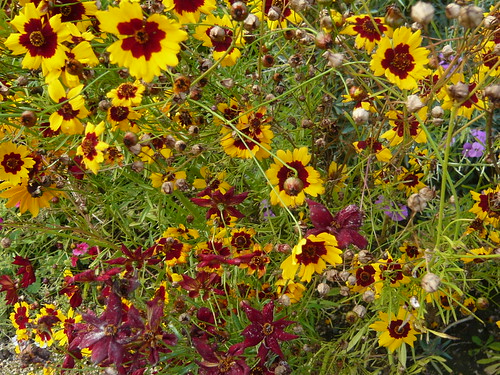
I was very pleased with the picture of Coreopsis from my garden without any comprehension of the other variety available. That was before I came across the picture below by the Dutch perennials wizard Luc Klinkhamer
Growing Coreopsis
‘Autumn Blush’ is one of the latest and perhaps the most dramatic of the new Coreopsis hybrids with boldly blotched, dark-eyed peachy-yellow flowers.
The plants should have a flush of flowers in spring and again in autumn.
Cut stems back after the first flush of flowers fade to promote a repeat bloom.
Plant in sunshine with dark foliage plants to create a contrast.
Green leaves reach a height of 24″ and spread 24″
Anyway back to my small observations.
Originally I purchased one good plant from a nursery last Autumn and split it into 3 before planting. Two plants are now larger than the original and all are flowering in a nice group.
My plants are flowering very well so I buying some more.
Coreopsis, also called Calliopsis or Tickseed are great additions to my garden design of bright yellow and oranges that will bloom most of the summer. They fit in well with most plants and have a good compact habit.
Coreopsis makes a neat 14 inch tall edging plant as well as nice cut flowers.
Check the habit of the more exotic types as they may not be as compact or floriferous
Coreopsis is attracting a lot of attention from breeders and will be a perennial plant to be reckoned with over the next few years. Watch this space or the one at your garden center.
Other Selections
Coreopsis ‘American Dream’ Thread-leaf Coreopsis, Pink Coreopsis
Coreopsis lanceolata ‘Baby Sun’ Lanceleaf
Coreopsis, Pot of Gold, Longstalk Tickseed
Coreopsis Big Bang ‘Cosmic Eye’
Coreopsis, Pot of Gold, Longstalk Tickseed
Coreopsis ‘Creme Brulee’
Coreopsis grandiflora ‘Domino’ Lanceleaf Coreopsis, Longstalk Tickseed
Coreopsis ‘Dream Catcher’ and Full Moon Big Bang Series
Coreopsis grandiflora ‘Flying Saucers’ Tickseed
Coreopsis verticillata ‘Golden Gain’
Coreopsis lanceolata ‘Goldfink’
Coreopsis ‘Gold Nugget’
Coreopsis ‘Jethro Tull’
Coreopsis ‘Little Sundial’
Coreopsis verticillata ‘Moonbeam’ Thread-leaf Coreopsis, Pot of Gold, Whorled Tickseed
Coreopsis ‘Pinwheel’
Coreopsis ‘Red Shift’
Coreopsis ‘Route 66’
Coreopsis ‘Sienna Sunset’
Coreopsis ‘Snowberry’
Coreopsis verticillata ‘Sunbeam’
Coreopsis ‘Tequila Sunrise’
Coreopsis, Pot of Gold
Coreopsis verticillata ‘Zagreb’ Thread-leaf Coreopsis, Pot of Gold, Whorled Tickseed
from Dayton Nursery Ohio