How to Concrete in Your Fence Posts

How to Concrete in Your Fence Posts

These basic tips for setting your wooden fence posts into concrete are simple, quick and easy to follow.

Making the Post Firm
That is why you are using concrete.
The hole should be 2 feet deep and at least three times as deep as the post is wide.
Use a post with straight sides and a flat bottom to add strength.

Avoiding Early Rotting
Use pressure treated or tannalised wood.
Do not have the end of the post in a pool of water. Concrete under the post to protect the end grain.
Finish the concrete above ground level and make the top of the concrete convex so water runs away from the post.
Put a cap on the top of the post so the end grain is not open to the elements. It is easier to replace a cap than a whole post.

Keep Posts Firm and in Line
Align the posts with each other using a string or rope line.
Use a spirit level to ensure the posts are upright
Allow the concrete to harden before attaching the rails or panels.
Support the post until the concrete dries with couple of timber props at either side.

Golden & Yellow Conifers for Your Garden

Golden & Yellow Conifers for Your Garden

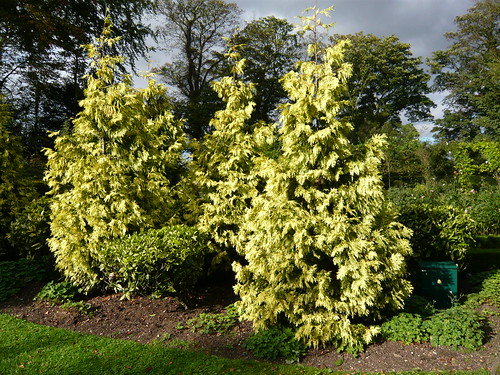
Gold and Yellow comes in various forms in plant names. Lutea is latin for yellow bodied, Aurea means `Golden` as would Aurel, Aurele, Aurelia and other derivatives. Obviously Gold or Argentea and other colours in the name will also tip you off.

Dwarf Yellow & Golden Conifers

Abies nordmanniana – Golden Spreader. A flat topped Caucasian fir with yellow leaves on top and white-yellow undersides. 8 high 48 inches spread.
Chamaecyparis lawsoniana ‘Aurea Densa’ (AGM) One of the best yellow conifers forming a compact conical bush, with closely packed foliage. 12 inches high in 10 years. Good for rock gardens.
Chamaecyparis obtusa Nana Aurea a slow growing conical form of the cypress with fan shaped sprays of foliage.
Chamaecyparis pisifers ‘Sungold’
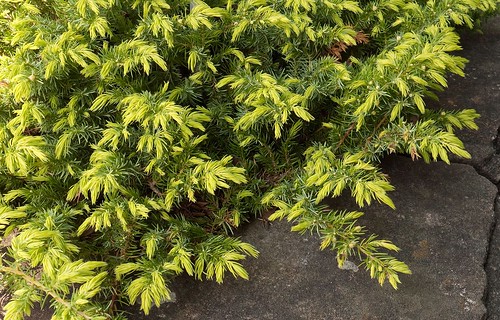
Juniperus conferta ‘All Gold’ shown below is bright yellow, developing slight bronze overtones in winter.
Juniperus conferta 'All Gold' 101010-0384

Low Growing Golden Conifers Under Six Feet

Taxus baccata ‘Standishii’ Yew will stand pruning and shaping to height.
Thuja plicata Stoneham Gold a dwarf, conical red cedar with leaves that darken with age. Grows up to 5 feet over 10 years.
Chamaecyparis lawsonii ‘Ellwoods Golden Pillar’ (AGM) Golden foliage compact, neat rounded pillar 2ft. high in 10 years

Larger Growing Golden & Yellow Conifers 30′ +

Cupressus macrocarpa Goldcrest or the Monberay Cypress is vigorous, colourful, columnar tree with dense foliage that dislikes pruning.
Golden Scots Pine Pinus syvestris Aurea turns golden in cold weather from winter through spring.
Thuja plicata Irish Gold or Aurea varieties
Cedrus deodara
Chamaecyparis Lutea

HL12383 Cupressocyparis X Leylandii Gold Rider or Leyland Cypress Conifer
Cupressocyparis X Leylandii Gold Rider

What Causes Golden & Yellow in Conifers

  • Mutations have often caused the colour to appear gold or yellow. Such trees were then propagated by cuttings.
  • Yellow and gold colouring often intensifies in cold and winter weather.
  • New growth often looks lighter and yellow with darker leaves nearer the trunk.
  • Plants are now bred and selected for the appealing gold and yellow colour.
  • Credits
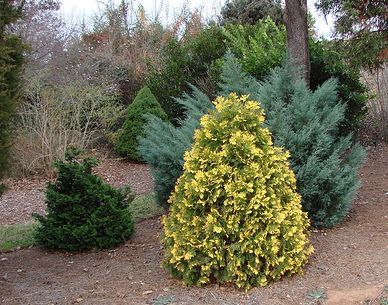
    Golden Falsecypress by Mr.Mac2009 CC BY-NC 2.0
    Juniperus conferta ‘All Gold’ 101010-0384 by Tony Rodd CC BY-NC-SA 2.0
    HL12383 Cupressocyparis X Leylandii Gold Rider or Leyland Cypress Conifer by Mike_Freck CC BY-NC 2.0

    Conifer

    Read more about Gold flowers and plants

Botanic, Species and Small Tulips

Botanic, Species and Small Tulips

Tulip

In 1592 Charles de l’Ecluse planted the first tulips in the sandy Dutch soil, where an enormous bulb industry now produces more than 2 billion tulips a year.

botanic tulips

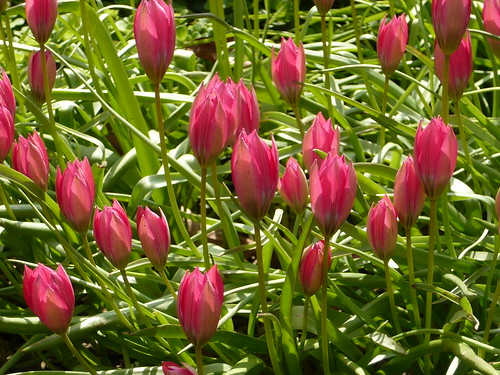
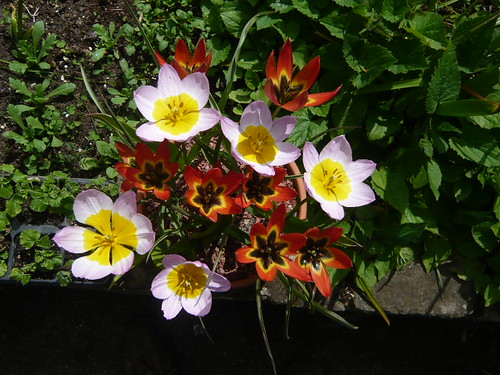
There are 100+ species of Tulip most of which are small, delicate and usually less than 8 inches tall.

Tulip

There are 15 divisions or classes of tulips plus a section for multiflowered tulips.

Tulips

Small flowered botanical or species types such as Tulipa tarda, Tulipa batalini, Tulipa marjoletti and Tulipa acuminata should be planted in autumn before other tulips.

Tulips
Species Tulip are also sometimes called Botanical Tulips. Most are small. Some are tiny. Many, given the right conditions, will spread like wildfire.

Tulip species

Sources
Tulips by ComùnicaTI, on Flickr
Tulips by Xerones, on Flickr

Tulip
Tulipa batalinii ‘Red Gem’ growing under the castle wall at Clitheroe Lancashire

Tips for Planting in Groups and Drifts

Tips for Planting in Groups and Drifts

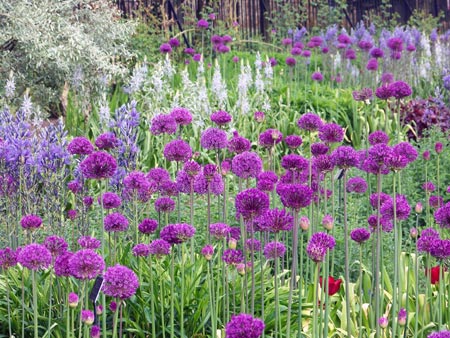
There is great power through planting in drifts. Sometimes as gardeners we are a bit tentative and plant in ones and twos and so our garden becomes a bit of a hotch potch. However, if we can be bold and plant in large groups and drifts, the effect can be very impressive.

Tips for Planting in Groups

  • Even in small gardens don’t be shy to plant in large groups.
  • The above photo is taken from Oxford Botanic Gardens and shows some purple ornamental onions flowering in May. This is a herbaceous border which focuses on large drifts of plants. At any one time, there may only be 1 or 2 plants in flower; but the theme creates an impressive display.
  • Use groups of the same plant or of similar structure.
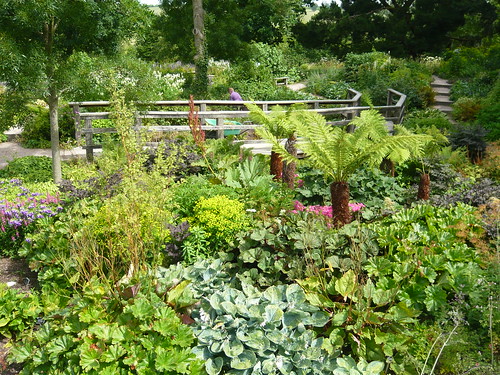
  • The leaves on the group below show how planting for shape and texture can be just as important as colour.

Hyde Hall

Tips for Planting in Drifts.

  • If you buy a large number of plants the average cost will be cheaper, you can benefit from economies of scale.
  • Don’t just plant in regimented blocks and straight lines, allow the groups to merge into each other and plant in S shapes. This helps create a more natural look.
  • Don’t just focus on the flowers but think of plants that provide all year round architectural interest.
  • The top photo shows a planting scheme carefully chosen to concentrate on a particular colour theme. This creates a calming effect. It is good to have some aspect of the garden with these conservative planting rather than always focusing on bright colour.
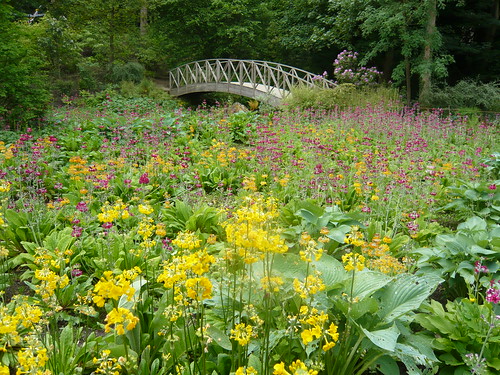
  • The photo below shows the use on one species, Primula candelabra, to provide the drifts unity and colour themes.

Harewood Himalayan Garden

Shape and Form in Your Garden

Shape and Form in Your Garden

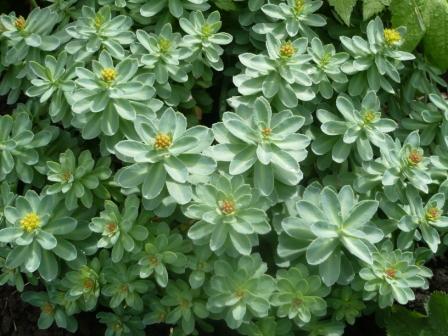
sedum

Sedum Rhodiola rosea

A garden needs visual variety and I hope we show some of that on Gardeners Tips. I know the senses we tend to focus on are sight, taste and smell but hearing and touching have their place.

Seeing Your Garden

  • Colour is often the most striking way our sight is stimulated but take time to consider and inspect the subtle variations you can achieve from leaves, barks and young shoots as well as flowers.
  • If you like topiary you will understand the impact of form and structure in your garden. Structural design can impart the essence of a gardens formality, informality or sense of fun by the features chosen and the way they are implemented.
  • The Form some plants take is also important and often the leaf or petal arrangements can be very attractive in their own right – Mother Nature knows what she is doing.
  • Texture can be seen and felt and soft grasses can complement furry leaves.

Read More Read More

Best Value Cold Frames

Best Value Cold Frames

coldframe

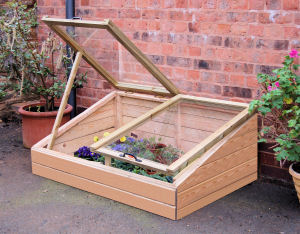
Series of well ventilated cold frames.

Cold Frames are an excellent low cost method for developing and growing young seedlings. Cold frames make a good alternative to the the cost and size of conventional greenhouses.
To some extent you can make your own cheap cold frames. See this post – Home Made Cold Frames. I have just used a redundant double glazing unit to make a cold frame for my alpine plants.

Cold Frame


A good cold frame needs to have an easy mechanism for allowing air in. The cold frame can then be closed at night to protect seedlings against frost. This wooden variety helps keep the heat in. For best results keep at a south facing wall. The wood also makes quite an attractive feature for the garden.

The only problem with cold frames, is that  once you realise how useful they are, it soon becomes full and you start wanting a greenhouse! Of course, a cold frame can be an excellent choice for those who find the greenhouse overflowing at this time of the year.

Cheapest Cold Frames

Some of the cheapest cold frames can be bought for under £50. This Gardmen cold frame holds 6 seeds trays (1000mm *650mm) and can be bought for less than £50. Cold Frames at Amazon.co.uk

The smallest Greenhouses (6ft * 6ft) will come in at over £200. Greenhouses

Dionysia Background to the Plants

Dionysia Background to the Plants

Dionysia

Dionysus was the son of Zeus and the Greek god of fertility and wine.
The Greeks need all the help they can get at the moment. Lending one of their gods to the name of these small cushion plants is a form of reciprocation I suppose.

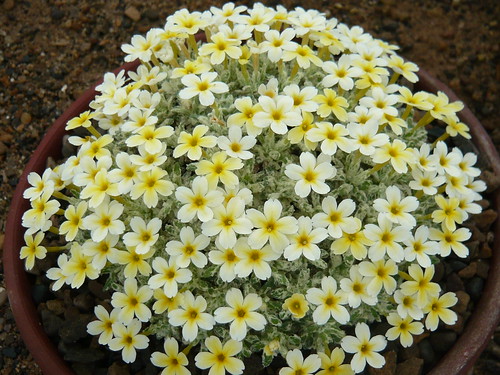
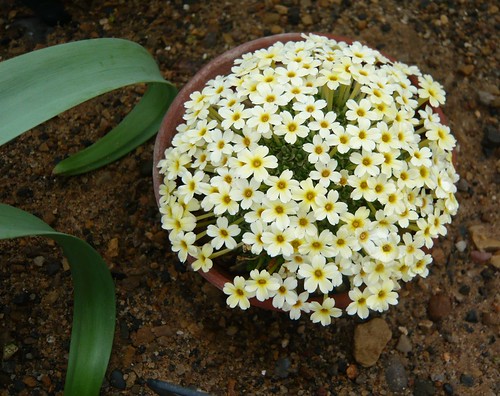
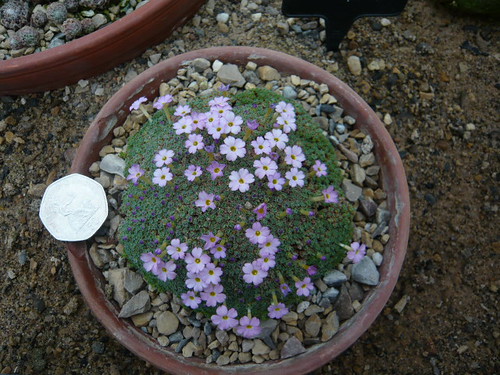
Dionysia monika

Dionysia Background to the Plants

  • The plant genus Dionysia has around 50 known species
  • Dionysia are found in the high mountains of Iran and Afganistan.
  • Dionysia species grow on limestone under overhanging rocks or in crevices.
  • Plants prefer to face south to encourage flowering.
  • Dionysia is in the family Primulaceae.

Dionysia

Study More Background on Dionysia

  • Dionysia curviflore tapetodes a species covered on Gardeners tips
  • There are lots of photographs on Dionysia 4 You
  • The Genus Dionysia, written by Chris Grey-Wilson and published by the Alpine garden society.
  • According to Kew ‘One way that alpine plants and Dionysia can cope with their harsh mountain environment is to form a low mound or cushion, hugging the stony ground or clinging to cliffs’
  • The Plant List details 66 scientific plant names of species rank for the genus Dionysia. Of these 54 are accepted species names by WCSP the World Checklist of Selected Plant Families.

Dionysia curviflora

Dionysia are not easy to grow well but the mass of flower is very rewarding if you get the conditions just right.

Dionysia curviflora x tapetodes
Dionysia curviflora x tapetodes by Kew on Flickr CC BY-NC-SA 2.0
Dionysia curviflore tapetodes & other Dionysia

Mulch around Red Shoots of Spring Peony

Mulch around Red Shoots of Spring Peony

Peonie

A four foot square clump of plump new peony shoots were highlighted at Kew Gardens by the grey, gravel mulch around them. I have not suffered from slugs on Peonies, nor have they had problems with rotting, so I do not put gravel around my plants. However if it is OK for Kew then I guess it is OK for me. At least it would be a decorative improvement on my bare soil.

Ask two gardeners about mulch and you will get three answers. For example when asking about mulching Peonies I got these answers ‘Three popular choices are straw, compost or dry leaves.’ ‘Some popular spring mulches are shredded bark, pine nuggets or straw.’ So no gravel there then!

Planting too deeply may prevent the peony from flowering, they do better for a bit of frosting on the crown apparently. Peonies can live for over 50 years and mine flower just fine so I am leaving things as they stand ie. very occasional autumn mulch when the compost heap has generated compost to spare .

peaonie

Tips Prior to Mulching

  • Remove any weeds that are growing near the peony shoots or stems. Weeds take water and nutrient and look bad.
  • Fertilise in spring with a dry compound like growmore.
  • Fertilise again in autumn with a potash based feeder.
  • Remove ant rotting vegetation that may harbour fungus or disease.
Contribute to National Gardening Week

Contribute to National Gardening Week

Crocus r us

The Royal Horticultural Society (RHS) has come up with a new wheeze to be launched for 2012. The National Gardening Week will take place from 16th April to 22 April 2012. You can contribute your skills, cash or enthusiasm if you wish.
Not surprisingly National Gardening week is warmly welcomed by the Horticultural Trades Association (HTA) whose members will be looking to benefit your garden and their bank balances.

Early Ideas for National Gardening Events

  • Make your contribution to National Gardening Week by spending early.
  • A Compost Clinic will help with other green initiatives and solutions.
  • Gardening clubs, societies, schools and local organisations are encouraged to participate and arrange special events.
  • RHS will offer a ‘Border-Boosting service’ giving 6 tips and ideas based on a photograph of your garden.
  • Contribute to the Facebook question time sessions that will be supported by scientists and gardeners from the RHS
  • RHS ‘will also be offering 20,000 starter packs with seeds, organising a career day at all four of its gardens and holding masterclasses, including a workshop on seed raising.’

Get Ahead of the Game for 2012

  • Plan early and tidy up your own patch. There is a lot you can do just by adding or changing one garden feature.
  • Start with one item that you can use to Shock and Awe from the start of April. Bulbs would fit this bill in large drifts or containers and window boxes.
  • Rhododendrons and Azalea are currently growing their buds for spring’s big show. Give them a boost of liquid feed and keep the soil moist.
  • Alpine gardens look their best in Spring. Check out your lay-out of rocks, top up grit levels and generally tidy the area now to avoid needing to do so later.
  • If you are stuck for Christmas or birthday presents what about Garden Tokens from HTA. Then you will have money to spend during National Gardening Week.

Narcissus romieauxii

More information from the RHS

To join in, please email the RHS at [email protected] telling them who you are and how you would like to get involved with National Gardening Week.

Garden Tokens from HTA

Must Do Contributions During National Gardening Week

  • Do not forget to enjoy your garden.
  • Visit other spring gardens and join in events organised for National Gardening week
  • Invite folk to see the results of your contribution to National Gardening Week
Sensual Scented Tulips

Sensual Scented Tulips

Fringed tulip

You do not always associate Tulips with fragrance but here is a selection that may be worth trying.

Tulips do not need to be planted until November but if you want specific varieties it may be worth getting your order in sooner rather than later.Now is the time to check what is flowering well in your area and select you favourites. I have receive  bulb catalogues in July and the newspaper had a special offer this morning on lily flowers tulips. If you can’t get to a specialist nursery try mail order as your bulbs will be supplied at the right time and in good condition.

Scented Botanical or Species Tulips

  • T. aucheriana rich sweet flowers open flat
  • T. celsiana Persian tulip June blooms delicious scent
  • T. gesneriana scarlet flowers sweetly scented
  • T. primulina primrose yellow flowers smelling of lily of the valley
  • T. saxatillis lilac flowers with primrose scent
  • T. suaveolensscarlet scented blooms
  • T. sylvestris Lemon-yellow with sweet perfume
  • T .fragrans pronounced scent as you would expect with a name like that

Fringed tulip

Other Fragrant Tulips worth Considering

Double tulips which can be planted in pots or near a door :

  • Marquette
  • Mme Testout
  • Murillo
  • Schoonoord
  • Tea rose

Peonie flowered Sensual Scented Tulips

  • Angelique a white tinged pink
  • Upstar series
  • Orange Princess
  • Yellow Mountain

Lily flowered and Parrot Tulips

  • Ballerina yellow flowered
  • Ellen Willmott
  • La Merveille
  • Black Parrot
  • Orange Favourite
  • Prince of Orange
  • Demeter Victory Late flowering White

Read about the Reasons & Varieties of Tulips to order

Here is a selection of sensual scented Cut Flower Tulip varieties

For the visual senses try Green Tulips

Parrot Tulips