Silene is Not Just Campion

Silene is Not Just Campion

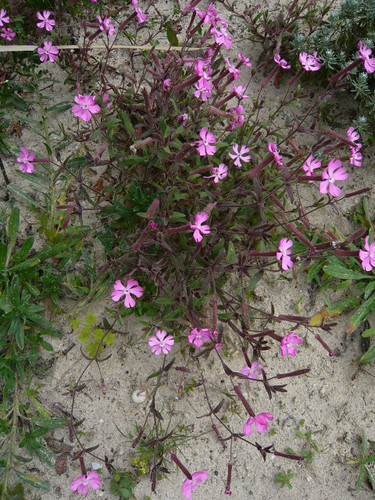
June garden silene

Silene is a genus of plants often called Campion. The ‘Catch fly’, red Campion and the white Campion, Silene latifolia, are quite well known and feature in many cottage gardens.
Siline acaulis is a variety that flowers much closer to the ground on short stems and is similar to Phlox . Some times referred to as the Cushion Pink it is a small mountain-dwelling wildflower

silene hookeri

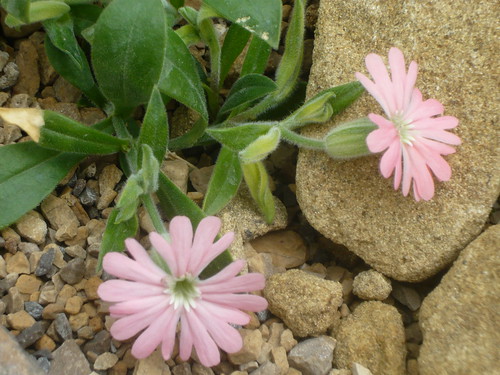
Silene Hookeri is grown as a North American rock plant and enjoys drier conditions. It has hairy gray leaves with many short spreading stems in a cluster. The flowers have deeply divided petals in white pink or purple.

Silene cambessedesii

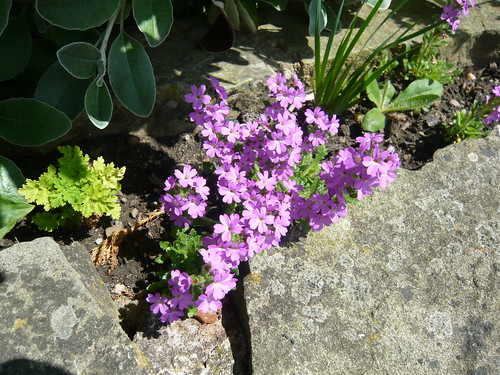
Silene cambessedesii is synonymous with Silene aegyptica and has darker purple flowers.

Silene schafta agm is a mat-forming semi-evergreen perennial.
Silene Pendula Peach Blossom is a hardy annual also called Nodding Catchfly
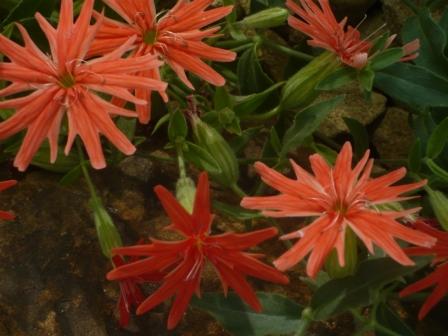
Silene Laciniata Jack Flash is an orange flowered hardy perennial.

More Silene plants and seeds at Thompson & Morgan

Many Silenes are mat forming and useful for rockeries and alpine gardens.

Instant Collection of Perennial Plants

Instant Collection of Perennial Plants

If you want a quick solution to building a stock of plants for your garden then consider buying a ready made collection.
In the Thompson & Morgan range you’ll find an impressive selection of perennial plants that are perfect for beginners and experienced gardeners alike. Also known as herbaceous plants, these perennials live for several years and flower every year.

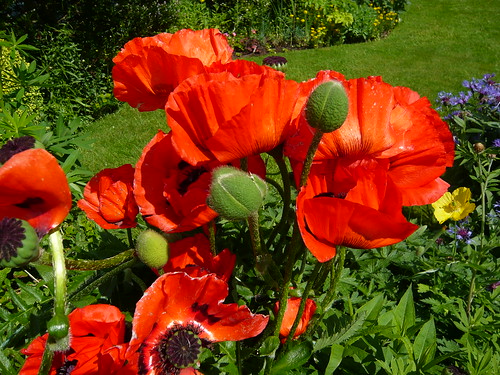
June garden 055 Oriental Poppy

Perennial Plant Collection

Fill your beds and borders with a special bargain collection of herbaceous perennials. Perennial plants bloom year after year, and many can also be cut and brought into the house for beautiful flower arrangements. Height of the plants in this collection vary up to 150cm (60″) Most will form increasingly larger clumps each year with a spread of 75cm (30″).

Buy a collection of ready grown plug plants at Thompson & Morgan

Perennial Collections may include some or all of the following

A. Coreopsis ‘Sunray’ – Neat, compact plants bear golden-yellow, semi-double flowers all summer long.
B. Echinacea ‘Magic Box’ – A stunning mix of daisy flowers and spectacular garden performance.
C. Scabiosa ‘Blue Jeans’ – Blue pincushion flowers attract bees and butterflies throughout summer.
D. Foxglove ‘Dalmatian Peach’ – Peachy trumpet flowers crowd sturdy, upright stems.
E. Poppy ‘Pizzicato’ Mixed – A neat semi dwarfing variety, producing up to 20 large flowers per plant.
F. Silene ‘Jack Flash’ – Scarlet blooms carried on elegant, slender stems over a long period.
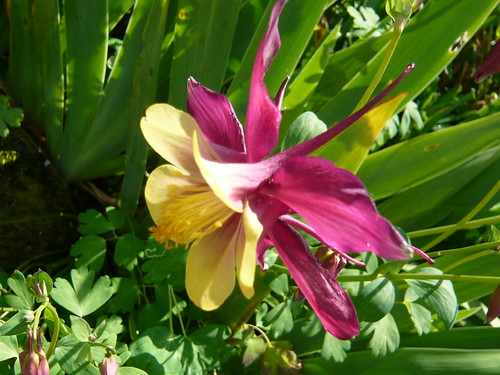
G. Aquilegia ‘Swan’ Mixed – Long flowering, large blooms on upright, multi-branched stems.
H. Lavender ‘Munstead’ – A neat, compact variety of fragrant English lavender.
I. Heuchera ‘Palace Purple’ – Glossy, semi-evergreen purple leaves provide year round colour.
J. Delphinium ‘Pacific Giants’ – Excellent adding structure and presence to the back of borders.
K. Gaillardia ‘Arizona’ – A spectacular dwarf Blanket Flower with a long-flowering period.
L. Carnation ‘Ever-blooming Mixed’ (Hardy) – Richly fragrant blooms that are ideal for cutting.

June garden Aquilegia

When plants are well grown, gradually acclimatise them to outdoor conditions over 7 to 10 days before transplanting into borders and containers.
The herbaceous perennials in this collection can be grown in any moist, fertile soil, in sun or semi shade.
Work some compost or general fertiliser into the top 20cm of the soil prior to planting.
Water when the soil is dry and add aliquid feed to get the best out of your perennials.

Grow ‘Crocus sativus’ for Saffron

Grow ‘Crocus sativus’ for Saffron

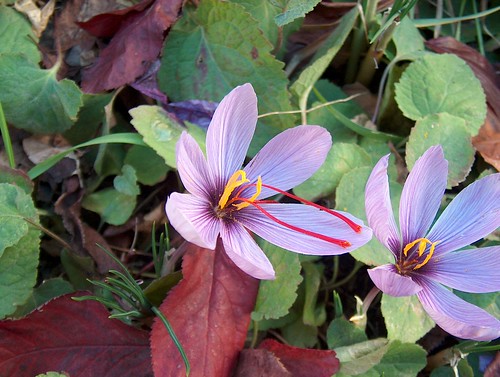
Saffron crocus

The expensive spice Saffron is made from the stamen of Crocus sativus.

What is Crocus sativus

  • Crocus sativas is an autumn flowering corm from the Iridaceae and crocus family.
  • The flowers are deep blue and the stigmas dark red or saffron coloured.
  • Crocus sativus throws up a spear of green leaves only after flowering.
  • Corms are cheap to buy and reproduction is by corm division. This crocus is infertile.
  • There are only 3 stigma to a flower so it takes 100,000 blooms to make a pound of saffron. This accounts for Saffron being worth more than gold weight for weight.

How to Grow Crocus sativus

  • Crocus sativus grow best in full sunlight.
  • I have just planted some corms in deep pots with good drainage and a bit of rotted bark to keep the compost open.
  • Raised beds would be another way of growing Saffron so harvesting and drainage problems are minimised.
  • Growing ‘Crocus sativus’ for a Saffron crop you need to collect the threads in the morning and dry the saffron.

You can buy Crocus sativus from Thompson & Morgan

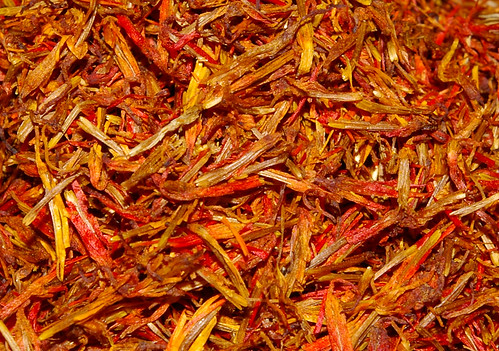
Saffron whole close up

How to Use Saffron

  • Saffron from Crocus sativus has been used for centuries to flavour and colour food.
  • It has been cultivated by Greeks, Romans and Chinese for 3500 years and is now a cash crop in Afghanistan, Kashmir and Spain.
  • The Chinese use it as a medicine, in food and as a dye.
  • Crocus sativus is a brightly coloured but short lived flower in the rockery at the end of summer or early autumn

For other Autumn crocus


Photo Credits
Saffron crocus by kightp CC BY-NC 2.0 ‘Crocus sativus. The red stigmas seen on the left bloom are the more-precious-than-gold ….. Stigmas have already been plucked from the bloom on the right. The half-dozen corms planted in my front garden bed three years ago have multiplied to the point where I’ve harvested nearly a tablespoon of threads this year – enough for several risottos, paellas and other dishes in the months ahead.’
Saffron whole close up by notafish CC BY-SA 2.0

Trees and Shrubs For Birds

Trees and Shrubs For Birds

Birds need food, cover and nesting sites to survive in your garden. A good perching point will help birds feel and be safe and good leaf cover will help in bad weather.

The more varied you make your garden the better for wild life, lawns, hedges, ponds and varied habitats all help. Avoid planting too many non-native species and choose a selection of trees and shrubs to provide insects and berries for bird food.

Shrubs

Berberis have spiny branches for cover and berries or fruit. Berberis wilsoniae is ideal for small gardens or you could try B. thunderbergii, vulgaris, gagrepainii or dawinii.

The Cotoneaster family produce many berries. Do not bother planting Cotoneaster conspicuax decora as birds will not eat the berries. Pyracantha Firethorn is very popular with birds and most gardeners.

Hedge shrubs like Hawthorn and Holly and Privet provide safe cover for small birds. Yew’s red berries feed thrushes.

Buddleia globosa the Butterfly bush attract large quantities of insects which in turn feed birds.

Trees for Perching

Birch supports insects including caterpillars as do Goat Willow Salix caprea.

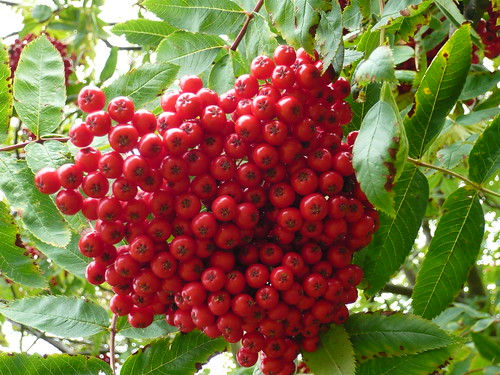
Rowan mountain Ash Sorbus aucuparia is a avian favourite.

Bird Cherry and Wild Cherry produce early fruit and are well sought after by birds.

Conifers appeal to Siskins and Tits. Try Larch Larix decidua or Scots Pine Pinus sylvestris.

Climbers

Honeysuckle bears red fruit and also provide nesting sites. Lonicera periclymenum or L.caprifolium are suitable species to grow and you get the scent thrown in.

Hedera helix or the common ivy is excellent cover, attracts insects and Thrushes, Pigeons and Robins like the fruit.

Virginia creeper are vigorous growers providing nesting and roosting cover.

Rambling Brambles, Rubus fruticosus are popular in dry weather for the juicy berries particularly for finches.

Other Plants

Good seed setters including Cornflower, Forget-me-not and Michaelmas daisy provide food over the growing months.

Sunflower seeds are popular for extra protein. Wallflowers can also be left to seed.

Unfortunately for gardeners many weeds are popular with birds including chickweed, dandelion, sowthistle and groundsel.

Lawns attract small flies and the soil provides worms for Starlings, Thrushes and Robins.

Sources of further plant selections
RHS
RSPB
Wild Life Trust
Getting birds in your garden from Garden Products


Gardeners Tips Favourite Links

Gardeners Promises

Gardeners Promises

Last winter I recorded some of the promises I had made myself about the garden and gardening. Nine months on some have worked, some have been ignored and the jury is still out on others.
This review may tip you off or give you some hints for your own set of promises.
These gardeners promises were recorded on the computer so I couldn’t escape. I also put some in a garden log book which I ‘promised’ to keep up with but seldom did – I blame the weather!

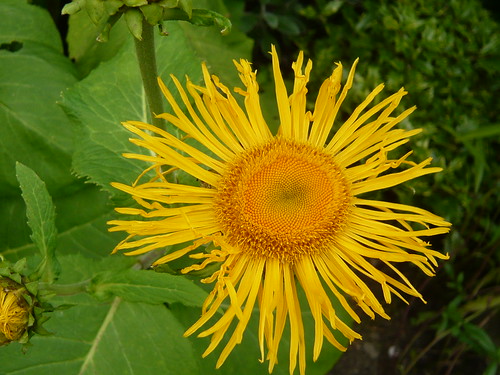
Daisy
‘Inula hookeri’

Garden Promises

  1. Get more scent from flowers particularly for the house. Fair progress with good Sweetpeas, that produced umpteen bunches and from strongly scented Phlox. Spring was a bit slow so I have just planted some ‘Narcissus Cheerfulness’ for next year.
  2. Create a plant and seed nursery. I have again failed to dedicate even a small area to sow seeds direct into the ground or a plant nursery spot for growing-on plants or taking cuttings. I am a plonker, that is I plonk in anything anywhere. The promise for next year must be to stop being a plonker.
  3. Take more care of chrysanths. I see these great flowers as high maintenance and I do not do right by them. I forget to pinch out, failed to pot on or stake as soon as needed and do not deserve to do well; nor do I.
  4. Fruit area design & order. I have reduced the veg patch and ordered more raspberries, red currants and bought a thornless blackberry. This is one promise that is well on the way.
  5. Rambler rose. I lost my rambler some year ago and intend growing another but haven’t found the space or variety yet.
  6. Lift crown on the bamboo clump. I must look out the variety of the well behaved bamboo that I grow as part of a mixed hedge. I wanted space underneath the green canopy and so pruned out some of the lower growth leaving the top untouched. Early days yet and I have probably been too cautious. 50% of a job well done I guess.
  7. Allow plants to grow old. I want to move on in the garden before plants have matured and given us the best. Again I am chopping down to early and loosing potential specimen plants before they can look old. I know I am impatient and missing out.
  8. Keep a better record of names and varieties. Failed
  9. Give plants appropriate space. Failed I still cram everything in
  10. Use more hard landscaping. Failed still clearing more ground for more plants.

Daisy

Late Flowering Autumn Perennials

Late Flowering Autumn Perennials

Autumn perennials offer some really deep vivid colours. A final flurry before the end of the season.

Here in Oxford, there are some wonderful Autumn borders.

autumn flowers

Autumn border at Christ Church College, War memorial gardens, offers a stunning back drop for this rich autumn border.

autumn

Oxford Botanic Garden’s autumn border. (This border effortlessly moves from summer to Autumn)

Great Perennials to Try for summer Colour

  • Heleniums – Deep Red ruset, daisy like flowers. Easy to stake and grow. These flower from August to October.
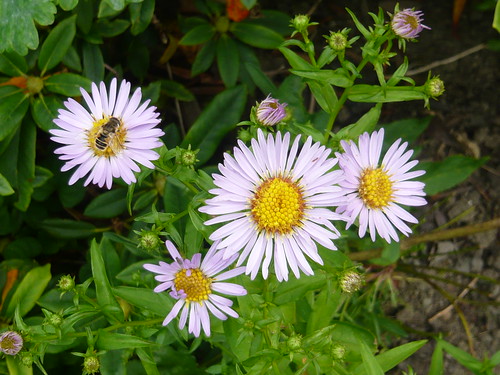
  • Aster / Michaelmas Daisies. Very easy to grow. These may need staking, but many new varieties are medium height and self-supporting. They are fairly low maintenance, though tend to be afflicted by mildew towards the end of the season
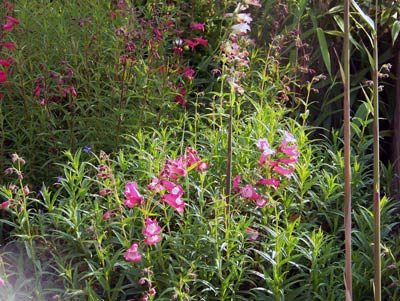
  • Penstemon. Another great perennial, which can flower from June, until the first frosts. Really the best value perennials in my garden.
  • penstemon


Autumn BOrder

Heliotropes and Asters offer a mixture of deep hues.

Autumn BOrder

Free flowing planting allows a riot of colour.

Oxford Botanic Gardens

Michaelmas Daisies

Autumn BOrder

Lovely Red Dahlias, really stand out against the darker leaves. They remind us of the hot days of summer
autumn
A close up of the dahlias; these really are offering great value. They are an excellent plant for having such a long flowering season. Dahlias can overwinter in mild winters, if you give it a good mulch. However, for safety is better to lift in November and bring inside.

autumn

enjoying the flowers

Read More Read More

Sarracenia Trumpet and Pitcher Plants

Sarracenia Trumpet and Pitcher Plants

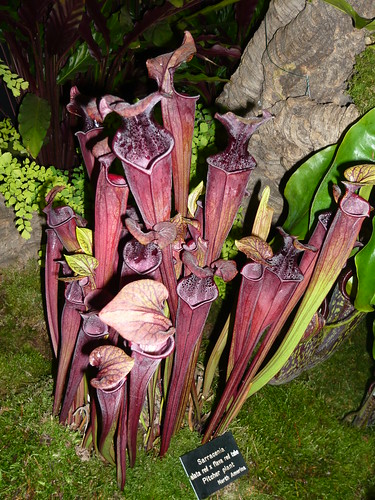
Do you want to try growing plants that eat insects rather than suffer from the exact opposite? If so then the North American family of Sarracenia Trumpet and Pitcher plants may be just what you need.
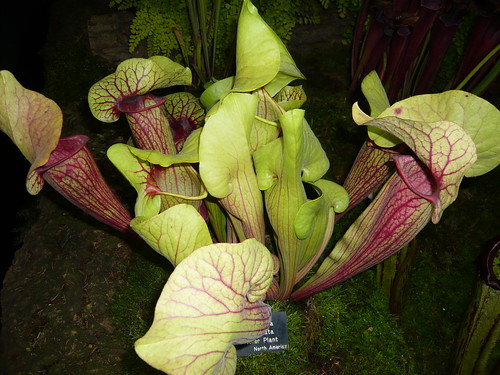
The insect trap is a vertical tube with a ‘hood’ over the entrance with a lip that secretes insect attracting nectar and scents.

Sarracenia exornata

Selection of Carnivorous Pitcher Plants

Yellow Trumpet -Sarracenia flava
Hooded Pitcher Plant – Sarracenia minor
Sweet Trumpet – Sarracenia rubra
Purple Pitcher Plant – Sarracenia purpurea
Pale Trumpet – Sarracenia alata
Sarracenia exornata one of many hybrids

Pitcher plant

Growing Tips for Trumpet and Pitcher Plants

Sarracenia like to be much wetter than Venus fly traps. You can’t really over water pitcher plants.
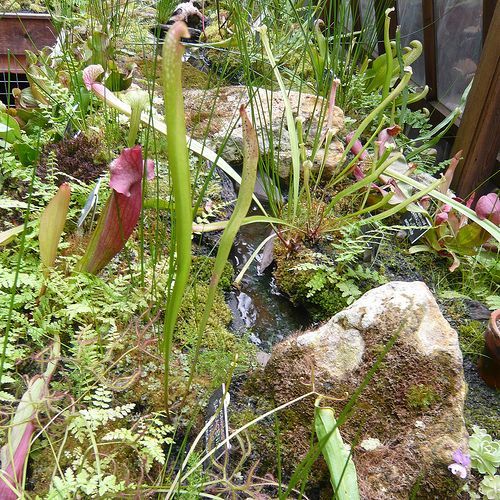
The favoured growing system is in shallow water filled ‘trays’ see a decorative version below.
Rain water or deionized water is a better idea than tap water Depending what your tap water is like it could kill them off slowly.
Pitchers and Trumpets like to be stood in a couple of inches of water and this can help insects breed.
Substitute artificial light for sunlight that they would get in natural conditions. A minimum of 7 hours per day bright light is recommended by experts.
Sarracenia do not self pollinate so hand pollination is necessary when insects may get digested.

For the enthusiast the ‘Carnivorous Plant Society’  has a wealth of help and information on  this link

Growing Carnivorous and Insectivorous Plants

Secateur and Secateurs Tips

Secateur and Secateurs Tips

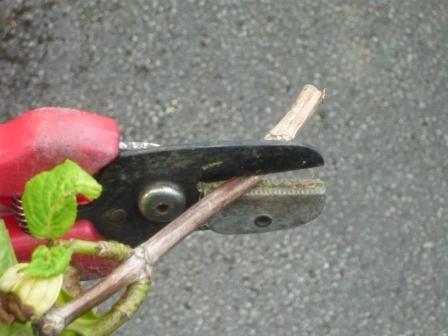
anvil-secateurs-052

Americans may call them pruning shears or hand pruners but my short handled pruners are called secateurs. Secateurs are like special scissors for cutting stems and branches that are less than a finger thick. They have a form of spring to open them and a catch to lock them in place.

Tips for Secateurs

  • Buy a good pair (or one of each style see below) and look after them.
  • Keep the blade(s) clean and honed sharp. Old plant sap needs to be wiped off at the end of use.
  • Do not twist the secateurs to cut through a stubborn stem as it can strain the blades.
  • You need to find your secateurs when you put them down so choose a bright colour or add some paint to make them visible.
  • Select a pair with good feel and balance – they will work better and so will you.
  • After use give then a spray of WD40 or plunge in an oil/sand tray.

Types of Secateurs

  • Cheap secateurs start from under £5 but you get what you pay for. A top line Felco pair will cost around £45.
  • Anvil secateurs have only one blade which closes onto a flat surface or anvil as in the picture above. They are reputed to crush the stem but I like them for many jobs particularly chopping down stems for the compost heap.

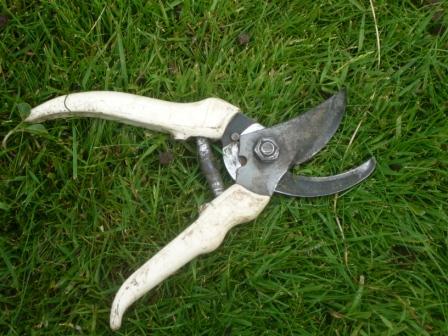
bypass-secateurs-038

  • Bypass secateurs work exactly like a pair of scissors with one blade passing the other to make the cut. At least one of the blades will be curved with a convex upper blade and either a concave or straight lower one.
  • Parrot-beak secateurs consist of two concave passing blades which trap the stem between them to make the cut. These are suitable only for narrower stems and intricate work.
  • Bonsai have there own pruning tools including leaf cutters like miniature shearing shears and sharpened pincers.


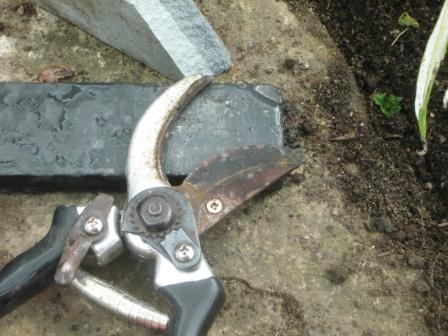
wet-stone6

Maintain Your Secateurs

  • Anvil secateurs remain reliable when slightly blunt but are easy to sharpen on a wet stone.
  • Use an oil stone or wet stone to sharpen the blade.
  • Two types of wet or oil stones are shown above.
  • The liquid quickly makes a grinding paste which is how the blade is sharpened
  • Normally 5 or 6 strokes will be enough to hone an edge but when renovating an old pair like the ones in the picture more effort may be required.
  • Only sharpen the outer blade on bypass secateurs.
  • Clean off sap and plant juice before putting secateurs away.
  • I spray moving parts monthly with WD40 to keep them in good condition


Felco and other Secatuers from Amazon link


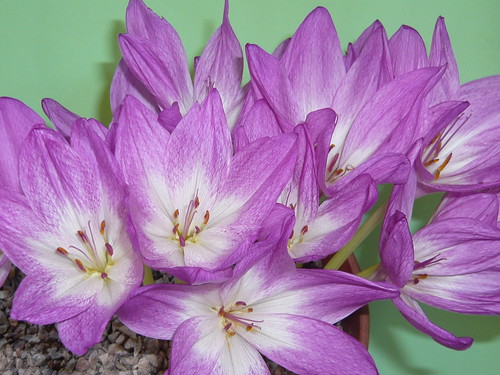
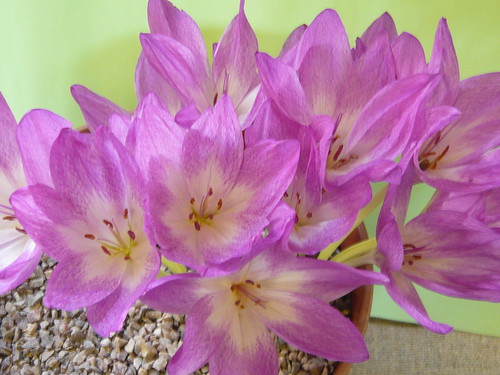
Flash Colchicum speciosum or Autumn Crocus

Flash Colchicum speciosum or Autumn Crocus

Colchicum speciosum produce autumn crocus flowers before any leaves. These plants were grown in a pot for display at alpine garden shows and competitions.

Autumn crocus

Photo Tips with Flash and Without

  • This photo was taken without a flash on the camera whilst the photo below had auto flash.
  • The colours appear more saturated if you can hold the camera still enough to avoid using a flash. Flash can burn out detail.
  • If information is available such as the variety name keep a record – I forgot
  • If the plant is in a competition or you know the name of the owner give them a credit. (West Yorkshire AGS group autumn show again I forgot the entrants name).
  • Use a plain back ground – I borrowed someones green card but I may carry a grey sheet for future.
  • Take care with framing, the plants are not going to move. My third mistake compounded by not cropping the resulting photo.

Autumn crocus

Colchicum speciosum is native to mountainous areas of northern Turkey. Do not collect wild specimens but acquire from cultivated stock or grow your own from specialist seed suppliers.
Other names for Colchicum speciosum include “Naked ladies” and “Meadow Saffron”.
Growing Colchium as Alpine Pot Plants – Colchium have 6 stamen crocus only 3.
True autumn crocus

Hosta Flower Arranging Gardeners Tips

Hosta Flower Arranging Gardeners Tips

There is a wide range of gloriously leaved Hostas that gardeners can grow for flower arranging. They produce large clumps of superb foliage and it is hard to decide which varieties to grow as you are spoilt for choice.
Hostas provide colour size texture and flower spikes so what is not to like?

hostas

Starting and Cultivating Hostas For Flower Arranging

  • Plant during October to March in sun or shade.
  • Mulch the plants and water generously. Hostas like water and damp soil but this and the taste of leaves makes them very attractive to slugs and snails.
  • Grow in pots if slugs are a real pest and you can’t control your slugs and snails any other way.
  • Use any type of soil but add manure or spent mushroom compost to the planting hole
  • For more on Hostas read ‘Growing Hostas’
  • Thompson & Morgan supply plants and seeds.

Conditioning and Arranging Hostas

  • Read more on Hostas for flower arranging
  • By the end of May little conditioning is needed other than a long drink
  • Put the ends of young stems in the early stages of growth in an inch of boiling water, then submerge them overnight. Place in a polythene bag for several days to stiffen them
  • Flowers last well without treatment.
  • Leaves can be pressed in autumn between sheets of blotting paper.
  • Most leaves are useful in a green group to add light and texture.
  • Flower stems with their pendulous bells are good for mixed groups

Hosta flowers

Varieties of Hosta for Flower Arranging

  • Hosta Thomas Hogg and albo-picta have variegated edges. Hosta albo marginata has a white edge to a smaller leaf.
  • Miniature and small host varieties are worth seeking out and growing for smaller arrangements.
  • Hosta sieboldia Elegans is a grey leaf and there are yellow, blue and a multitude of green leaved varieties.
  • Jurasic Park, Prince of Wales and Blue angel have big blue leaves
  • Captain Kirk has lime green leaves mixed with a strong yellow.
  • Try Bowden the supplier with a Royal Warrant