Icebergs Rosey and Leafy

Icebergs Rosey and Leafy

Rose Iceberg
Rosa Iceberg

Global warming has not made my Iceberg rose melt or disappear. On the contrary it is doing very well.

In the top picks for many rose enthusiast this is one shrub that can look after itself. Any floribunda rose should have lots of buds and blossom and Iceberg doesn’t disappoint. These buds are slightly pink, opening regularly through summer and autumn to display classic white roses.

Compared to other roses this plant is disease resistant, feeds some aphids and has sharp thorns but all is forgiven in lieu of its great display.

Tips

  • Icebergs bloom on new wood so prune before Easter to get good growth.
  • Encourage your Iceberg to grow tall in a ‘White Garden’ – you can also get Iceberg as a climber sport

Read More Read More

Good Value Rockery Tips

Good Value Rockery Tips

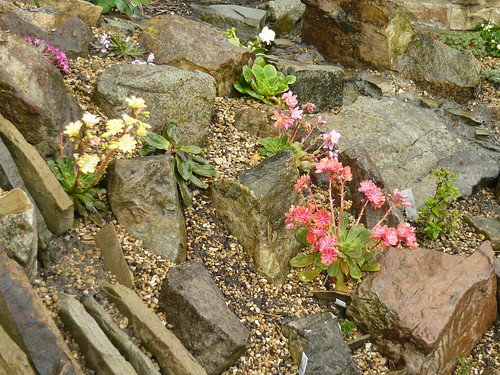
Rawdon Alpine Rockery

Save Money on Your Rockery

  • Less is more so have fewer, quality plants that you maintain to high standards.
  • Scavenge rocks from tips and waste land. Don’t take them from walls or important natural habitats. Each rock will be like treasure trove with many memories attached.
  • Make your rockery small, very small or minute. you can get a rockery in a 12″ plant pot with small rocks squeezed in on their edges.
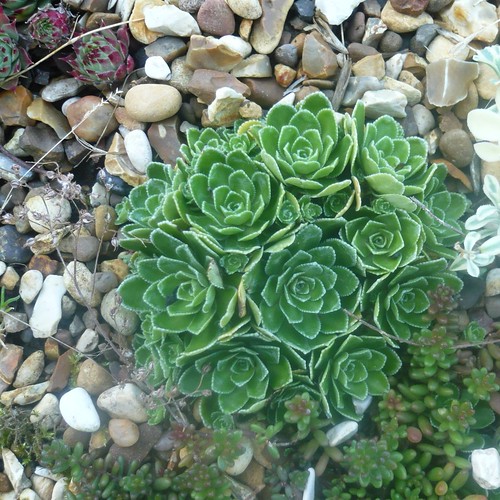
  • House leeks, Sedums and other succulents throw off new plantlets very easily and they bulk up quickly so you don’t need too many plants.
  • Pinch bits from around your own garden.
  • Beg cuttings or ‘off-sets’ from your family, friends or foes.

Rockery
See also Rock Gardens in Miniature

August Wild Flowers

August Wild Flowers

Augyst Wild Flower Garden

Wild flower gardens are generally thought to be at their best in spring but this colourful patch was a riot of colour in the middle of August.

Gardeners Tips for Wild Flowers

  • Poor soil conditions encourage flowering. Do not fertilise wild flower gardens
  • Group flowers with similar flowering times together. it would look to thin and patchy to have a mix of spring and Autumn flowers together.
  • Do not be too quick to tidy up. Let the seeds develop and drop so that annual plants renew themselves for next season.
  • If possible avoid competition from grass particularly for autumn wild flower gardens as they can choke off the flowering plants.

wild flowers

Wild Flower Mixtures

  • General; purpose meadow mixtures may contain, cowslip, oxeye daisy, knapweed, buttercup, campion, vetch and yarrow amongst others.
  • Hedgerow mixtures may have wood avens, plantains, agrimony, cowslip, oxeye daisy and knapweed,
  • Cornfield mixture as above will have corn cockle, cornflower and poppy and Forget-me-not
  • You can also get mixtures for sowing in wet marshes or for pond edges.
Liatris for Cut Flowers and Butterfly Food

Liatris for Cut Flowers and Butterfly Food

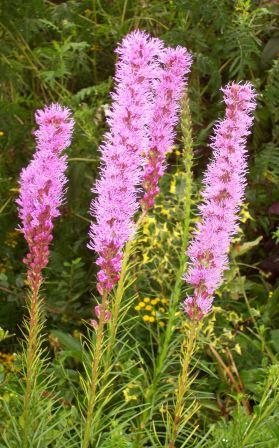
Also grown under the name Gay Feather or Blazing Star. The spikes may look like feathers but are a quite robust 1-2 feet tall. They flower blue, purple or white. I prefer a compact form like Kobold which requires no staking.

Liatris 2

Gardenerstips on Liatris spicata

  • Liatris are long lasting, excellent border and cut flowers
  • Liatris scaricosa, spitica , aspera and punctata are some of the species to consider.
  • Plant 4-6 inches apart in clumps of at least 10 bulbs for maximum impact. These were planted singly and are just bulking up.
  • The soil must be well drained over winter to stop the bulbs from rotting.
  • Fully frost hardy
  • Full sun to part shade Liatris species are used as food plants by butterfly and are magnets for insects particularly in late summer.
  • Good for cut flowers and drying
  • As a general rule divide a plant furthest away from its bloom time. So I would divide Liatris in spring.

Liatris

Propagation from Seed
Sow February to July in trays, pots, etc of good seed compost in a propagator or warm place to maintain an optimum temperature of 70-75F (20-25C). Sow in well drained compost, just covering the seed with compost. Reduce the soil temperature at night during germination.
Liatris

Sweet Potatoes on Trial

Sweet Potatoes on Trial

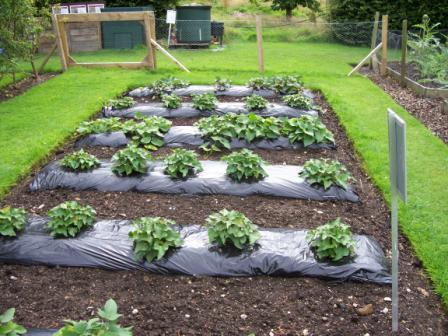
 	Sweet-potato-rhs-trial at Harlow Carr

The RHS have trialled several varieties of Sweet Potato. They picked a wet, sunless season so far but as the plants will be harvested during October (they need a long time in the ground) there is time for a good spurt of hot weather (I am an ever hopeful optimistic gardener).

Normally these plants are difficult to grow successfully in Britain but for those who are a bit adventurous you may want to try this crop next year. If so follow the results of the RHS trials.

Read More Read More

Growing Asparagus in UK

Growing Asparagus in UK

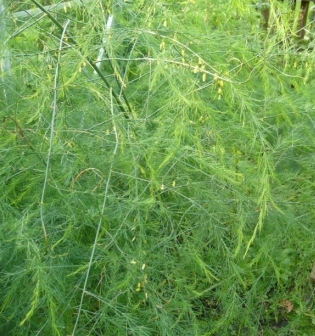
American culture and British cultivation ideas conflict over Asparagus. I will follow the British method of cutting the old ferns in Autumn to about 5cm and mulching. In America, in anticipation of heavy snows, they leave the ferns to protect the plant crowns. My bed will be in its third winter and next spring will see my first crop.

I planted Asparagus varieties Dariana and Gijnlim in a new bed prepared for the purpose.

Read More Read More

Attacting Insects To Your Garden with Spectabile

Attacting Insects To Your Garden with Spectabile

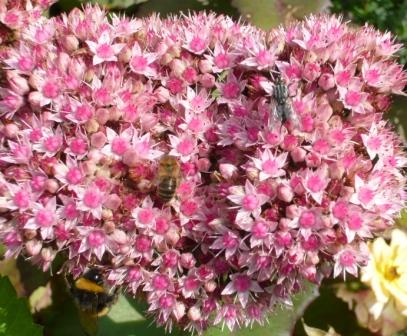
This Sedum spectabile ‘Brilliant’ has all the insects buzzing with interest. Many butterflies are attracted to various Sedum spectabile or ‘Ice plant’ species. Look out for Red Admirals, Cabbage Whites and other species in your garden.

September is a good time for flowers on these Sedums. They flower into autumn and can look architectural in winter when covered in frost.
Insects can over winter in the old stems so do not be oin a hurry to clear up the old perennials until spring.

Propagation

Read More Read More

Verbascum Banana Custard and Other Mullien

Verbascum Banana Custard and Other Mullien

Verbascum banana custaard

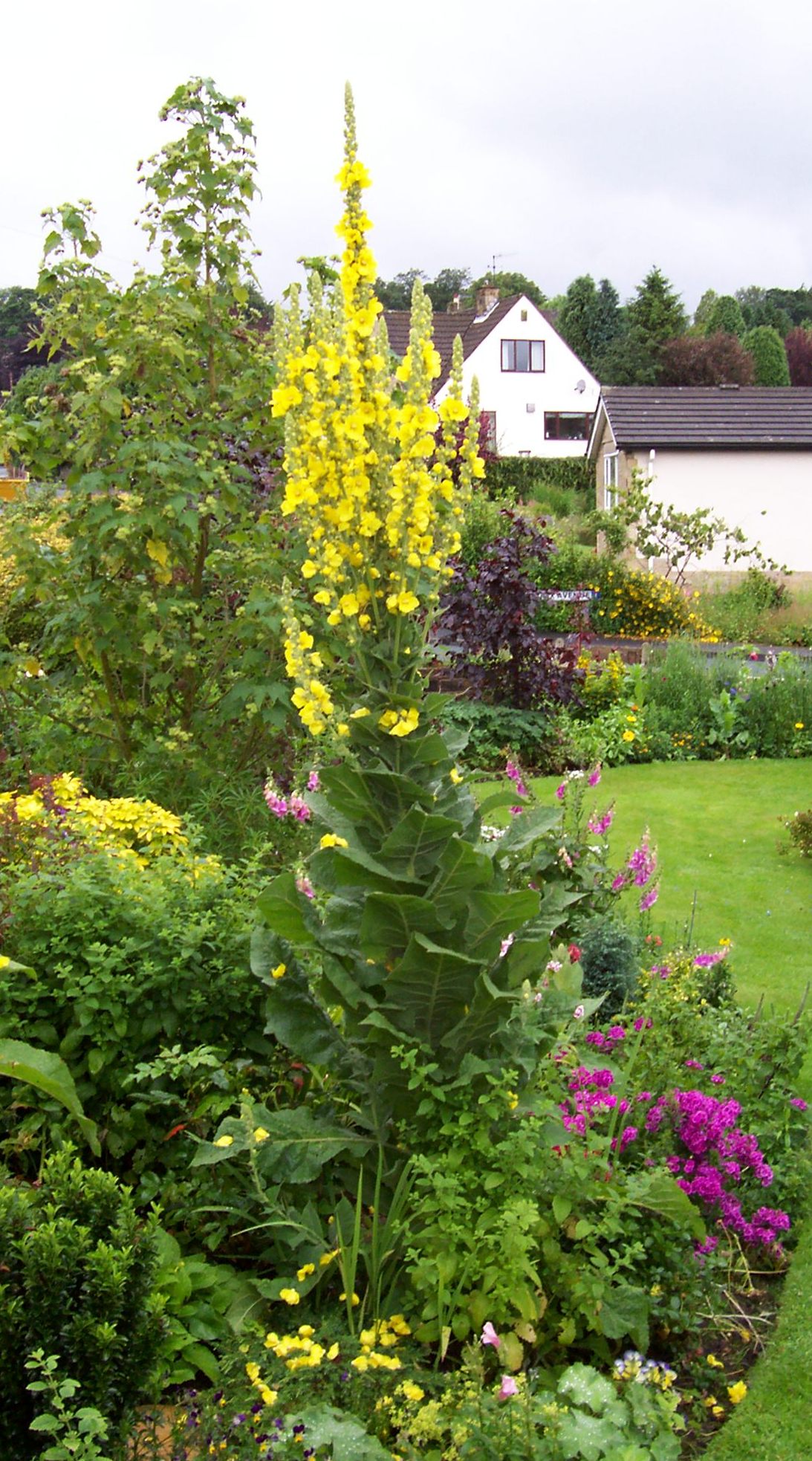
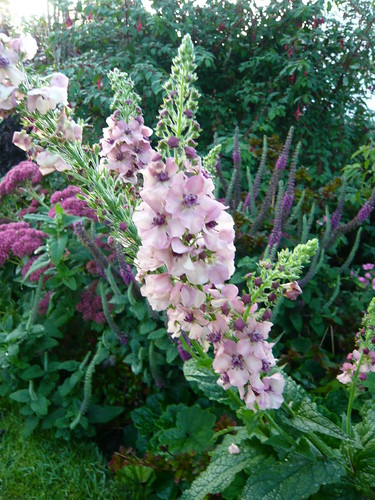
This nine foot high perennial plant has a striking spire of yellow flowers. This variety has several smaller spikes in this case an impressive fourteen at the last count and still growing. This is a Verbascum hybrida and I also have a white which is less robust but still stately.

  • The leaves are hairy and can cause skin irritation
  • In the wild ‘Mulliens’ produce prodigious volumes of seed as do the hybrids. I treat good specimens as biennial although they are perennial as they are easy to grow from seed.
  • Flowers do not open evenly up the flowering spike but have colour for many weeks in summer. If dead headed there will often be a second flush later.
  • Mulliens like sun and space but are not fussy about soil conditions
  • Try grow a variety with multiple stems. Some have only one spike.

Verbascum
Design Tips

Read More Read More

Herbs for Drinks, Pillows and Baths

Herbs for Drinks, Pillows and Baths

Herbal Teas, Tisanes and Infusions

Herb tea made from dried or fresh leaves can be drunk hot or iced. Chamomile tea is popular and can be bought in tea bags but growing your own is more satisfying. Use one or two tea spoonful of leaves, dry or fresh, to a cup of boiling water and steep for five to ten minutes then strain if you wish.

  • Mint, Fennel and Sage can be used to create teas in the same way.
  • Tinctures are make by soaking in alcohol like cider vinegar and raspberries to make raspberry vinegar

Herb Pillows

Herbs were added to straw to deter insects in less sanitary times. Today it would be enough to collect flowers and put them in a small packet or muslin bag and hang it close to the bedhead.

  • Lavenda, Mignonette, Rosemary and Lemon verbena (Aloysia) make suitably restful pillows
  • Eucalyptus leaves are good for congestion with a strong scent when crushed

Herb Baths

Aromatic herbal baths can be theraputic and pleasurable. Hang a muslin bag filled with a handful of leaves under a running hot tap as the bath fills.

  • For stimulation try Basil, Bay, Lemon balm and Verbena, Mint or Rosemary.
  • For relaxation try Chamomile Valerian, Lavender or available scented flowers.
  • Healing herbs can be used such as Calendula, Acillea and Mints

Herbal Remedies

Herbs work as both preventative and curative medicines and the Greeks and Chinese have long been exponents of the craft. Remedies can be very powerful and be treated with respect. Do not ingest with prescription medicines without consulting a doctor.

  • Sage can be used to make a gargle for infected throats
  • Feverfew leaves or Meadowsweet can be chewed to relieve a headache
  • Yarrow tea is said to be good for colds
  • Dock and plantain leaves have long been used to relieve stings
  • Buy a good herbal medicine book